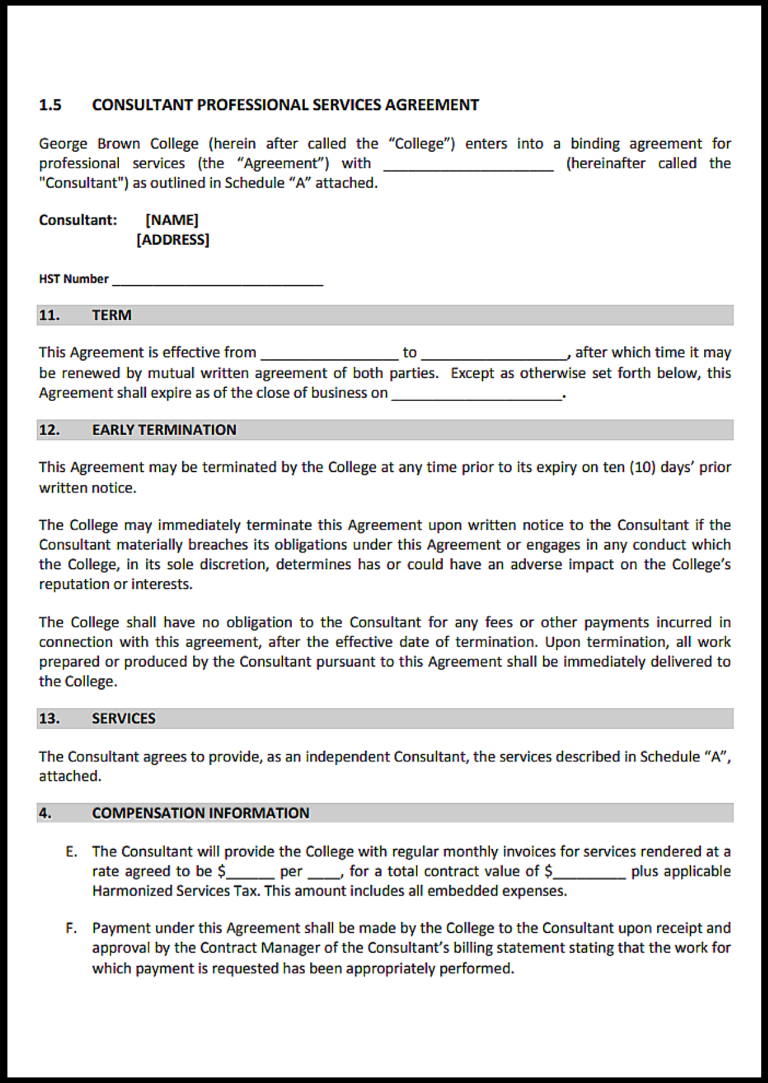
British Columbia Partnership Agreement Template & Guide
British Columbia Partnership Agreement is a legal document that explains how two or more people will run a business together. It sets clear rules so everyone knows their role, share, and responsibilities from the start.
A partnership agreement is a written contract between business partners. It explains how the business will operate, how profits will be shared, and what happens if something goes wrong.
For example, imagine two friends starting a small café in British Columbia. One handles cooking, the other manages money. Without a written agreement, confusion can easily happen—especially when profits or decisions are involved.
I have seen business partners in British Columbia end up in costly disputes simply because they relied on verbal promises instead of putting clear terms in writing. When people come to me after problems start, it is often much harder and more expensive to fix misunderstandings that a proper partnership agreement could have prevented.
Last Updated: September 2026
Having a written agreement matters because it:
- Prevents misunderstandings
- Clearly defines roles
- Protects each partner legally
Free British Columbia Partnership Agreement Template
Below is a simple and clean template you can use. You can copy, edit, and customize it based on your business needs.
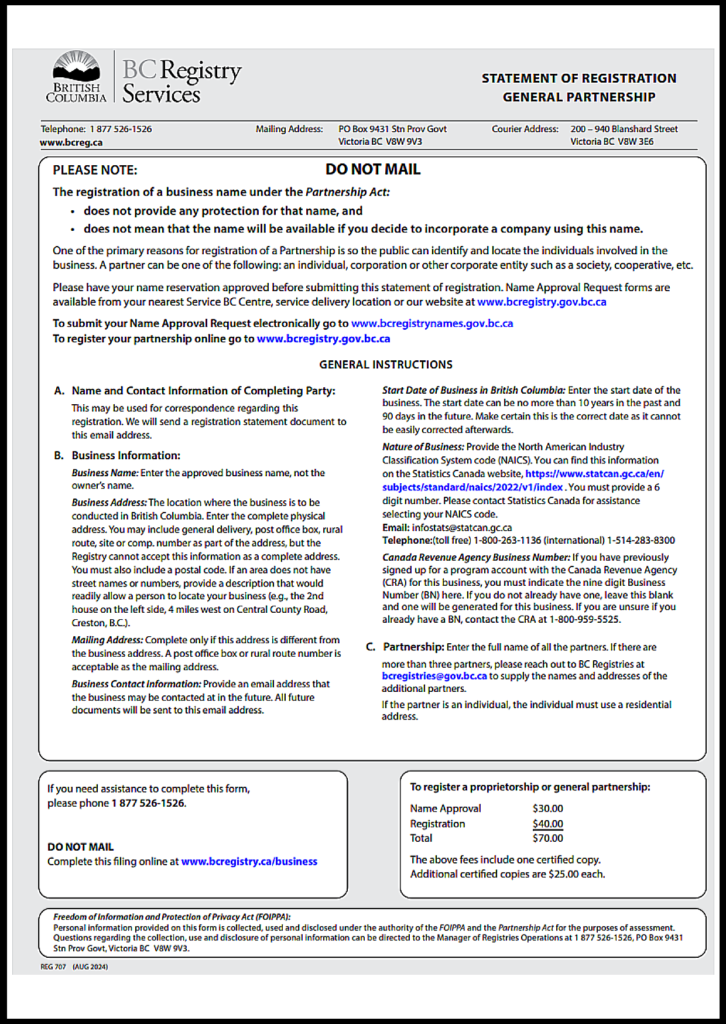
Important British Columbia Partnership Laws Business Partners Often Miss
| Topic / Issue | British Columbia Legal Rule | Governing Statute |
|---|---|---|
| Governing Legislation | Partnerships in British Columbia are governed primarily by the provincial Partnership Act and applicable common-law principles. | Partnership Act [RSBC 1996] c. 348 |
| Federal Legislation | There is no general federal partnership statute governing the internal operation of an ordinary British Columbia partnership, although federal laws can apply to matters such as taxation. | Partnership Act; applicable federal law |
| Jurisdictional Nature | Partnership law in British Columbia is primarily provincial, although federal laws can apply to particular matters such as taxation. | Partnership Act / federal law as applicable |
| Recent Legislative Context | The specific statutory rule should be checked against the current Partnership Act rather than relying on a general statement about Interpretation Act or DRIPA-related changes. | Partnership Act |
| Who Can Sign | The partnership agreement should be signed by each partner or by an authorized representative where applicable. | Partnership Act; applicable contract law |
| Witness Requirements | A witness is not generally required for an ordinary general partnership agreement. | No general statutory requirement |
| Notarization | An ordinary partnership agreement does not generally require notarization, although separate formalities may apply to particular land or registration documents. | Partnership Act / applicable property law |
| Age Requirement | British Columbia’s general age of majority is 19. The enforceability of an agreement involving a person under the age of majority depends on the applicable rules concerning contractual capacity. | Age of Majority Act, s. 1 |
| Mental Capacity | The parties should have the legal capacity required to enter into the partnership agreement and understand the obligations they are accepting. | Applicable contract and capacity law |
| Registration Deadline | A general partnership subject to section 81 must file its registration statement within 3 months after the formation of the firm. | Partnership Act, ss. 81–82 |
| LLP Name Requirement | A limited liability partnership must use a name that complies with the Partnership Act and applicable registration requirements. | Partnership Act |
| LP Structure Requirement | A limited partnership consists of one or more general partners and one or more limited partners. | Partnership Act, s. 50 |
| Registration Requirement | Registration requirements depend on the type of partnership. General partnerships covered by section 81, limited partnerships, and limited liability partnerships have separate statutory registration requirements. | Partnership Act |
| Registration Agency | Partnership registrations and filings are submitted through the BC corporate registry system in accordance with the Partnership Act. | Partnership Act / BC Registries |
| General Partnership Filing | A general partnership subject to section 81 must file a registration statement with the registrar. | Partnership Act, ss. 81–82 |
| LLP and LP Filing | Limited partnerships and limited liability partnerships have separate statutory filing and registration requirements under the Partnership Act. | Partnership Act |
| Private Nature of Agreement | The partnership agreement is generally a private document, while information required to be filed with the registrar becomes part of the applicable public registration record. | Partnership Act |
| Profit Requirement | Under section 2 of the Partnership Act, a partnership involves carrying on a business in common with a view to profit. | Partnership Act, s. 2 |
| Illegal Business Activities | A partnership is dissolved if an event occurs that makes it unlawful for the firm’s business to be carried on or for the members to carry it on in partnership. | Partnership Act, s. 37 |
| LP Management Restriction | Under section 64 of the Partnership Act, a limited partner can become liable as a general partner if the limited partner takes part in management of the business. | Partnership Act, s. 64 |
| BC Age Difference | British Columbia’s general age of majority is 19. | Age of Majority Act, s. 1 |
| Registration Timeline Difference | A general partnership subject to section 81 must file its registration statement within 3 months after formation. | Partnership Act, s. 82 |
| Continuation of Partnership | If a fixed-term partnership continues after the term expires without a new arrangement, section 30 provides for continuation in the circumstances described by the Act. | Partnership Act, s. 30 |
British Columbia’s general age of majority is 19. The enforceability of an agreement involving a person under the age of majority depends on the applicable rules concerning contractual capacity rather than age alone.
Registration is a separate issue from signing the partnership agreement. The Partnership Act requires persons associated in partnership for trading, manufacturing, or mining purposes to cause a registration statement to be filed, and section 82 provides a three-month period after formation for filing. (bclaws.gov.bc.ca)
The rules for limited partnerships are also important. Section 64 provides that a limited partner is not liable as a general partner unless the limited partner takes part in management of the business. (bclaws.gov.bc.ca)
Section 2 defines a partnership by reference to carrying on business in common with a view to profit. A partnership agreement should therefore describe the intended business arrangement accurately.
Download the free British Columbia Partnership Agreement template below to use as a starting point for recording the partners’ agreed terms.
Before forming a business relationship, it helps to review the main business contracts guide in Canada, which explains how commercial agreements are commonly structured across provinces. Business owners may also benefit from understanding whether contracts are legally binding in British Columbia before signing partnership terms.
What Is a Partnership Agreement in British Columbia?
Under British Columbia law, a partnership agreement is a contract setting out the terms on which partners intend to operate their business together.
A key point to understand:
| Type | Meaning | Risk Level |
| Verbal Partnership | Partnership terms agreed orally or inferred from conduct |
Higher difficulty proving the agreed terms
|
| Written Partnership | Partnership terms documented in writing |
Easier to establish the agreed terms
|
A partnership can exist without a detailed written agreement. However, an unwritten arrangement can make it harder to establish what the partners agreed about profits, management, contributions, or leaving the business.
Partnership agreements are often used alongside other operational contracts depending on the nature of the business arrangement. Companies hiring outside professionals may also require a consulting agreement template, while independent workers frequently rely on an independent contractor agreement for service-based relationships.
Types of Partnerships in BC
- General Partnership
Partners generally share responsibility for the firm’s debts and obligations subject to the Partnership Act and the terms of their relationship. - Limited Partnership
A limited partnership has one or more general partners and one or more limited partners. A limited partner’s liability is subject to the Partnership Act and the partner’s conduct.
British Columbia businesses may use partnership structures when partners want to operate a business together without incorporating a separate corporation.
In some business transactions, partners may also use a non-disclosure agreement in British Columbia to protect confidential financial records, client information, and internal business strategies.
When Do You Need a Partnership Agreement?
A written partnership agreement is useful whenever two or more people intend to operate a business together and want their rights and responsibilities documented.
Common situations include:
- Starting a small local business
- Freelancers joining forces for bigger projects
- Family-run businesses
- Opening a café, salon, or online store
For example, if two people open an online clothing store and one invests money while the other handles marketing, the agreement can record how those different contributions affect profits, responsibilities, and decision-making.
Key Elements Every BC Partnership Agreement Must Include
Profit and Loss Sharing
This section records how the partners have agreed to divide profits and losses, subject to any applicable statutory default rules.
| Method | Explanation | Best For |
| Fixed Percentage | Pre-decided shares (e.g., 50/50) |
Equal partnerships
|
| Flexible Sharing | Based on contribution or another agreed formula | Unequal roles |
Clear profit-sharing rules give the partners a written reference when calculating distributions.
Roles and Responsibilities
Each partner should know their duties, such as:
- Managing operations
- Handling finances
- Marketing and sales
This can reduce overlap and make responsibility for specific tasks clearer.
Capital Contributions
Partners may contribute:
- Money
- Equipment
- Skills or services
These contributions should be recorded clearly, together with any agreed ownership, profit-sharing, repayment, or capital-account rights.
Decision-Making Rules
Decide how business decisions will be made:
- Majority vote
- Unanimous agreement
- Special approval for specified major decisions
The agreement should identify which matters require ordinary approval and which require consent from all partners.
Exit and Buyout Terms
If the agreement does not address a partner’s departure, the Partnership Act may supply default rules concerning dissolution and continuation.
A good agreement should explain:
- When a partner can leave
- How their interest will be valued
- How remaining partners can buy them out
- What happens to the business after the departure
Dispute Resolution Clause
Instead of going directly to court, many agreements include:
- Mediation (neutral third party helps resolve issue)
- Arbitration (binding decision by arbitrator)
These clauses can provide an agreed process for resolving disputes, although the time and cost will depend on the circumstances.
Is a Partnership Agreement Legally Valid in British Columbia?
A partnership agreement may be enforceable when it forms a valid contract and its terms are enforceable under the circumstances and applicable law.
The parties should address:
- What business they intend to operate
- Their respective rights and duties
- Contributions and profit-sharing
- Decision-making
- Departure and dissolution
Written agreements are not generally required simply to create every partnership, but they are strongly recommended.
An unwritten partnership can be difficult to document because there may be no single record showing what the partners agreed.
Once a valid agreement is formed, the partners are generally expected to comply with its enforceable terms, subject to applicable legislation and other legal rules.
How to Fill Out the Template (Step-by-Step)
Step 1: Add partner details correctly
Include full legal names and addresses.
Step 2: Define business purpose clearly
Explain what your business will do.
Step 3: Agree on profit-sharing upfront
Record how profits and losses will be allocated.
Step 4: Assign roles honestly
Match responsibilities with the arrangement the partners actually intend to follow.
Step 5: Review and sign
All partners should carefully review the agreement before signing.
Common Mistakes to Avoid
Common partnership problems often start with unclear profit-sharing, decision-making, contribution, or exit terms.
Avoid these:
- Not defining profit-sharing clearly
- Ignoring exit rules
- Mixing personal and business finances
- Using vague language
- Copy-pasting generic templates without changes
Business Risks Without a Partnership Agreement
Without a written agreement, statutory default rules may apply to issues the partners expected to decide themselves.
Common problems include:
- Disputes over money
- Legal liability for partner actions
- Loss of control over decisions
- Business breakdown
Example: Two partners earn profits, but one believes they deserve more because they perform more work. If the agreement does not address that issue, the parties may disagree about how profits should be divided.
Tax and Financial Considerations in BC Partnerships
For Canadian income-tax purposes, a partnership generally calculates its income and allocates the partners’ shares under federal tax rules. A partnership itself generally does not pay income tax on its operating results in the same way as a corporation. Instead, the partners generally report their allocated shares. (canada.ca)
Instead:
- Income and losses are generally allocated to the partners
- Individual partners generally report their allocated shares on their tax returns
- Corporate or other entity partners may have different reporting requirements
Other key points:
- GST/HST registration and collection depend on the partnership’s taxable supplies and applicable registration rules
- PST treatment depends on the goods or services involved
- Proper accounting is essential
The CRA states that partnership income is generally reported by the partners, and certain partnerships may have T5013 information-return obligations. (canada.ca)
Keeping clear financial records helps the partners and their accountants determine each partner’s share accurately.
How a Partnership Agreement Protects Each Partner
A well-written agreement can reduce uncertainty by recording how the partners intend to handle contributions, profits, decisions, liabilities, and exits.
It helps to:
- Record agreed responsibilities
- Reduce misunderstandings
- Document investments and contributions
- Establish rules for future changes
A clear agreement can give the partners one written reference when the business changes or a disagreement develops.
FAQs
Is a partnership agreement required in BC?
No. A written partnership agreement is not generally required to create every partnership. However, a written agreement is useful because the Partnership Act contains default rules that may apply when the partners have not agreed otherwise.
Can I write my own agreement?
Yes. You can use a template, but it should be clear, complete, and tailored to the actual business arrangement.
What happens if there is no agreement?
If the partners have not agreed on an issue, applicable provisions of the Partnership Act and other law may supply default rules. Those rules may not match what the partners expected.
Can a partner leave anytime?
It depends on the partnership structure, the agreement, and the applicable provisions of the Partnership Act. For an undefined-term partnership, section 29 provides a mechanism by which a partner may end the partnership by giving notice to the other partners, subject to the Act and the agreement. (bclaws.gov.bc.ca)
Do I need a lawyer?
Not always. You can use a template for a straightforward arrangement, but legal advice can be useful for complex businesses, significant investments, limited partnerships, intellectual-property arrangements, real estate, or detailed buyout and dissolution provisions.