Are Contracts Legally Binding British Columbia? Full Guide
Are Contracts Legally Binding British Columbia is a common question, especially when people make deals without written paperwork. For example, you agree to do freelance work for a client over a phone call—no contract signed. Later, a dispute happens. You may wonder: “Was that agreement even legal?”
So Yes, contracts can be legally binding in British Columbia—but only if certain legal conditions are met. I’ve seen many people in British Columbia rely on text messages, handshake deals, or verbal promises, only to find out later they cannot properly prove what was agreed. In disputes over payment, services, or business deals, the biggest problem is usually not the agreement itself — it’s the lack of clear evidence showing the exact terms.
Under British Columbia law, both written and verbal agreements can form valid contracts. However, not every agreement becomes legally enforceable. In this guide, you’ll learn the exact rules, see real examples, use a simple template, and understand common mistakes to avoid.
Last Updated: September 2026

British Columbia Contract Laws, Time Limits & Legal Validity Rules
| Topic / Issue | British Columbia Legal Rule | Governing Statute |
|---|---|---|
| Governing Law | Private contracts in British Columbia are generally governed by common-law contract principles together with any legislation that applies to the particular transaction. | Common law of contracts |
| Minor Contracts | Contracts made by people under 19 are subject to Part 3 of the Infants Act, which generally makes an infant’s contract unenforceable against the infant unless a statutory exception applies. | Infants Act, RSBC 1996, c. 223 |
| Limitation Period | Subject to the Limitation Act and its exceptions, the basic limitation period for a court proceeding in respect of a claim is generally 2 years after the day the claim is discovered. | Limitation Act, SBC 2012, c. 13 |
| Federal Privacy Law | PIPEDA may apply to certain personal-information activities within its federal scope. British Columbia also has its own private-sector privacy legislation, the Personal Information Protection Act. | Personal Information Protection and Electronic Documents Act (PIPEDA); Personal Information Protection Act |
| Jurisdiction | Private contracts are generally governed by provincial contract law principles in British Columbia, subject to federal laws that apply to particular transactions or activities. | Provincial and federal law, depending on the transaction |
| Recent Limitation Reform | The current Limitation Act framework provides a basic 2-year limitation period for many claims, subject to the Act’s exceptions and discovery rules. | Limitation Act, SBC 2012, c. 13 |
| Corporate Transparency Changes | British Columbia has corporate transparency requirements for private companies, including requirements concerning transparency registers and significant individuals. | Business Corporations Act |
| Who Can Sign | An individual may enter a contract personally, while a corporation may act through a person with authority to bind the corporation. | Business Corporations Act |
| Witness Requirement | Most ordinary private contracts in British Columbia do not require a witness unless a particular law or type of document imposes an execution requirement. | N/A |
| Notarization Requirement | Most ordinary private contracts do not require notarization, although particular transactions or documents may have separate execution requirements. | N/A |
| Age of Majority | The age of majority in British Columbia is 19. | Age of Majority Act, s. 1 |
| Mental Capacity | Contractual capacity is fact-specific. The Representation Agreement Act contains rules about capacity for representation agreements, but section 8 should not be presented as a general test for contractual capacity. | Representation Agreement Act |
| Time Limit to Sue | A claim is generally subject to the basic 2-year limitation period from discovery, subject to the Limitation Act and its exceptions. | Limitation Act, s. 6 |
| Mandatory Contract Language | Most ordinary private contracts do not require special statutory wording, although particular types of transactions can have their own formal requirements. | Common law and applicable legislation |
| Consumer Contract Exception | Certain consumer contracts are subject to prescribed content and cancellation requirements under Part 4 of the Business Practices and Consumer Protection Act. The consumer-contract provisions were amended effective August 1, 2026. | Business Practices and Consumer Protection Act |
| Real Estate Contract Rule | Contracts respecting land are generally subject to the requirements in section 59 of the Law and Equity Act, which also contains exceptions and circumstances affecting enforceability. | Law and Equity Act, s. 59 |
| Filing Requirement | Ordinary private contracts are generally kept by the parties and are not filed in a central government registry. | N/A |
| Land Registration Exception | Interests in land may require registration under the Land Title Act and applicable land-title procedures to establish or protect priority against third parties. Registration requirements depend on the type of interest or transaction. | Land Title Act / applicable land-title rules |
| Security Interest Filing | A security interest in personal property must be perfected in accordance with the Personal Property Security Act. Registration is one method of perfection, but the appropriate method depends on the collateral and circumstances. | Personal Property Security Act |
| Writing Requirement for Land Deals | Contracts respecting land are generally subject to section 59 of the Law and Equity Act, subject to its exceptions and alternative enforceability provisions. | Law and Equity Act, s. 59 |
| Contracts With Minors | Contracts with people under 19 are generally unenforceable against the infant unless an exception in Part 3 of the Infants Act applies. | Infants Act, s. 19 |
| Illegal Contracts | A contract involving unlawful conduct may be unenforceable or otherwise affected by applicable law, depending on the nature of the illegality and the circumstances. | Applicable law |
| BC Age Difference | The age of majority in British Columbia is 19. | Age of Majority Act; Infants Act |
| Discovery Rule | Under the Limitation Act’s general discovery rule, a claim is generally discovered when the person knew or reasonably ought to have known the facts specified by section 8. | Limitation Act |
| Electronic Contracts | Under the Electronic Transactions Act, an offer, acceptance or other matter material to a contract may be expressed electronically, and a contract is not invalid or unenforceable solely because electronic records were used in its formation. | Electronic Transactions Act |
The age of majority matters when a contract involves someone under 19. BC’s Infants Act contains specific rules for contracts made while a person is an infant, so the legal consequences are not the same as for an ordinary adult contract. (bclaws.gov.bc.ca)
The basic limitation period is generally two years from discovery of the claim, subject to the Limitation Act and its exceptions. That makes prompt attention to a contractual dispute important. (bclaws.gov.bc.ca)
BC’s Electronic Transactions Act also recognizes electronic contracting. Offers, acceptances and other matters material to a contract can be expressed electronically, so an agreement does not lose legal effect simply because it was created or communicated digitally. (bclaws.gov.bc.ca)
Understanding whether a contract is legally enforceable can help businesses avoid disputes and protect commercial relationships. For a broader overview of legal agreements, you can review with the British Columbia contract writing guide.
What Makes a Contract Legally Binding in British Columbia?
Contract formation depends on the circumstances. Offer, acceptance, consideration and intention to create legal relations are important concepts, but enforceability can also depend on capacity, certainty, statutory formalities and the nature of the transaction.
Offer and Acceptance
One party must clearly offer something, and the other must accept it.
Example: A designer offers to create a logo for $500, and the client agrees. The exchange can form part of the contract, provided the other requirements for enforceability are satisfied.
Consideration (Something of Value)
There must generally be an exchange of legal value. This could be money, services, goods, a promise, or another form of consideration recognized by contract law.
Payment is one common form of consideration, but consideration is not limited to payment. Whether an agreement is enforceable depends on the full circumstances.
Intention to Create Legal Relations
Both parties must intend the agreement to have legal consequences.
Casual social promises may not ordinarily create contractual obligations, while commercial agreements are generally assessed differently. The facts and context still matter.
Legal Capacity
Parties must have the legal capacity required to enter the particular agreement.
- Be at an appropriate legal age, subject to the special rules that apply to people under 19
- Be capable of understanding and participating in the transaction
Capacity issues can affect enforceability, but the legal consequences depend on the circumstances and the particular rules that apply.
Lawful Purpose
The contract must involve a lawful purpose.
An agreement involving unlawful conduct may be unenforceable or otherwise affected by applicable law, depending on the nature of the illegality and the circumstances.
Many business arrangements rely on properly drafted agreements to establish enforceable obligations between parties. Employers may use an employment contract template, while companies working with outside professionals often require a consulting agreement.
Are Verbal Contracts Legally Binding in BC?
Yes, a verbal agreement can be legally binding in British Columbia, although proving the precise terms may be more difficult when there is no written record.
In many everyday situations, verbal agreements may be used for:
- Small freelance jobs
- Simple service agreements
- Informal business arrangements
But problems arise when there is no reliable evidence. If a dispute happens, the parties may need to establish:
- What was agreed
- When it was agreed
- What each party promised
When Written Contracts Are Required or Safer
| Situation | Verbal OK? |
Written Recommended
|
| Small services | Often possible | Recommended |
| Freelance work | Often possible |
Strongly recommended
|
| Real estate deals | Subject to statutory requirements |
Required in many cases
|
| Large business contracts | May be possible in some circumstances |
Strongly recommended
|
Written terms are often easier to establish later because they provide a record of what the parties agreed.
They can:
- Clearly define terms
- Reduce misunderstandings
- Provide evidence of the parties’ agreement
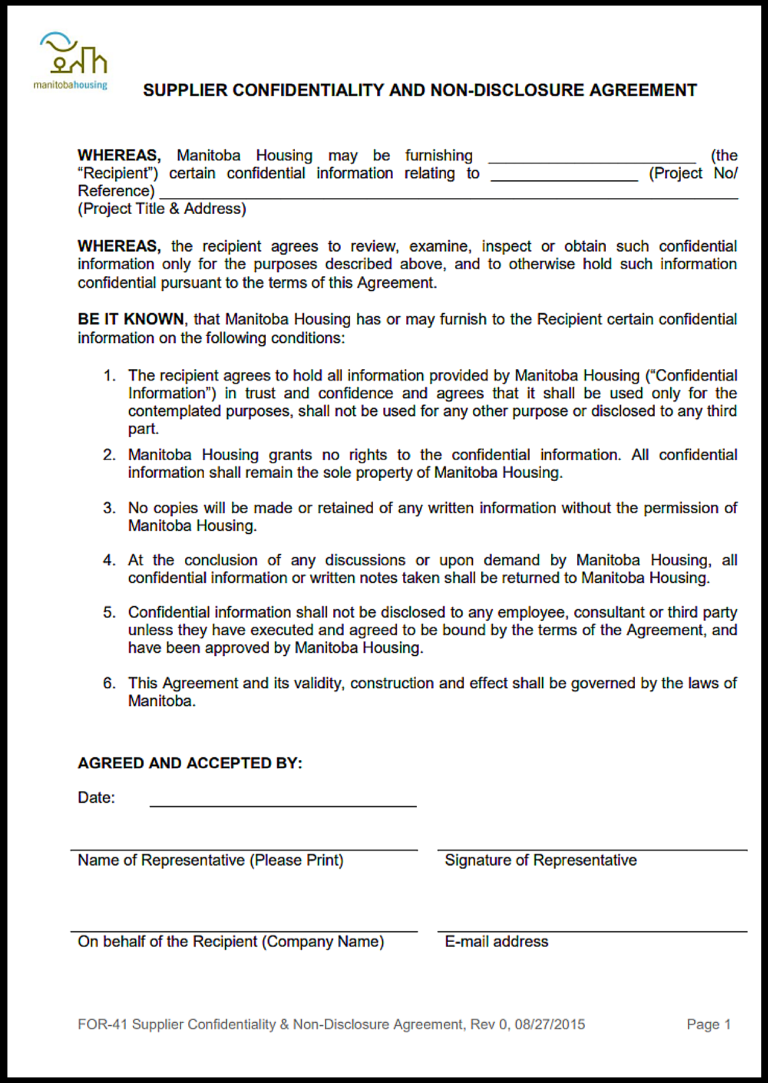
Businesses sharing sensitive commercial information may also rely on a non-disclosure agreement to strengthen confidentiality protections within legally binding arrangements.
When a Contract Is NOT Legally Binding
Even if an agreement exists, it may not be enforceable under British Columbia law.
Missing Key Elements
If key details are missing, the agreement may be too uncertain to enforce.
Example: “I’ll help you with your business someday” may be too vague to establish a sufficiently certain contractual obligation, depending on the circumstances.
Misrepresentation or Fraud
Misrepresentation or fraud can affect the enforceability of a contract and may create rights or remedies for the affected party.
Example: Selling a service while knowingly providing false information about a material matter.
Duress or Pressure
Improper pressure, threats or coercion can affect whether a contract is enforceable. The legal effect depends on the circumstances and the applicable contract-law principles.
Unclear or Vague Terms
If essential terms are too uncertain, a court may have difficulty enforcing the agreement.
Example: No timeline, no payment structure, or unclear duties.
Key Clauses Every BC Contract Should Include
A useful contract should record the commercial terms clearly enough that both parties can understand what is expected.
Scope of Work
Clearly define:
- What is being delivered
- How it will be done
- Any limitations
Payment Terms
Include:
- Total price
- Payment schedule (advance, milestone, or final)
- Any agreed late-payment terms
Termination Clause
Explain:
- When and how the contract can end
- Notice period required
- What happens to unpaid amounts or unfinished work
Liability and Indemnity
Define who is responsible if something goes wrong.
This is especially important in service-based contracts.
Dispute Resolution
State how disputes will be handled:
- Negotiation
- Mediation
- Court in British Columbia
Common Contract Disputes in British Columbia
Common contractual disputes include:
- Late or unpaid invoices
- Work not delivered as promised
- Misunderstanding of scope
- Alleged breach of contract
Parties often attempt negotiation or another form of dispute resolution before starting court proceedings, although the outcome depends on the dispute.
How to Make Your Contract Strong and Enforceable
To reduce uncertainty, consider these practical steps:
- Put important agreements in writing
- Use clear and specific language
- Include the key commercial terms
- Keep copies of the agreement and related records
- Review the document before signing
- For high-value or complex contracts, consider legal advice
In most business contract situations, clarity is your best protection.
Business Compliance Considerations in BC
Contracts can also connect to tax and record-keeping obligations.
Depending on the transaction:
- GST or PST may apply
- Businesses may need to issue appropriate invoices
- Records may need to be retained for tax purposes
Good documentation can help with:
- Tax filings
- Legal disputes
- Business records and audits
Real-Life Example: Binding vs Non-Binding Contract
Understanding the difference becomes easier with examples.
Scenario 1: Binding Contract
A freelancer signs a written agreement with a client:
- Clear scope
- Fixed payment
- Timeline defined
These terms provide strong evidence of the parties’ agreement, although enforceability still depends on the circumstances and applicable law.
Scenario 2: Non-Binding Agreement
Two people casually agree:
“I’ll help you with your project later.”
No details, no payment, no timeline.
That wording may be too uncertain to establish an enforceable agreement, although the legal outcome depends on the full circumstances and any evidence of the parties’ intentions.
FAQs
Are unsigned contracts legally binding in British Columbia?
Yes, in some circumstances. A contract does not necessarily need a signature to exist if the parties clearly agreed to contractual terms and the other requirements for formation are satisfied. A signed document is often stronger evidence of what was agreed.
Can I cancel a contract after signing?
Only where the contract or applicable law gives you a right to terminate or cancel. Depending on the circumstances, this may include an agreed termination clause, mutual agreement, breach, misrepresentation or a statutory cancellation right.
Do contracts need to be notarized in BC?
No. Most ordinary contracts do not need notarization to be enforceable. Particular documents or transactions may have different formal requirements.
What happens if someone breaks a contract?
This is generally called a breach of contract. Depending on the circumstances, the affected party may seek damages or other legal remedies available under the contract and applicable law.
Are online contracts legally valid in BC?
Yes. The Electronic Transactions Act recognizes electronic contracting, and a contract is not invalid or unenforceable solely because electronic records were used in its formation. The agreement must still satisfy the applicable requirements for contract formation and enforceability.
Final Thoughts
Whether an agreement is enforceable depends on how the contract was formed, the terms involved, the parties’ capacity and any legislation that applies. Written terms are often easier to prove, particularly when the transaction involves detailed obligations, land or significant financial commitments.
For business transactions, putting the agreed terms in writing is often the practical choice because it gives both parties a clearer record of their obligations and can make later disputes easier to assess.