Are Contracts Legally Binding Ontario? Complete Legal Guide
If you’re asking whether Are Contracts Legally Binding Ontario is a simple yes-or-no question, rental agreements are a good example of why the answer is often more complicated. Under Ontario’s Residential Tenancies Act, a signed lease can create enforceable obligations, but terms that conflict with tenant protections may not hold up when a dispute reaches the Landlord and Tenant Board.
I’ve seen situations where a landlord relied on a generic online lease, failed to provide Ontario’s required Standard Form of Lease, and later faced problems enforcing parts of the agreement during an LTB proceeding. That’s one reason national templates can create headaches here—they often miss rules that are specific to Ontario tenancies.
Below, you’ll find how Ontario determines whether a contract can be enforced, the requirements that matter most, and the common mistakes that can affect landlords and tenants alike.
Last Updated: September 2026
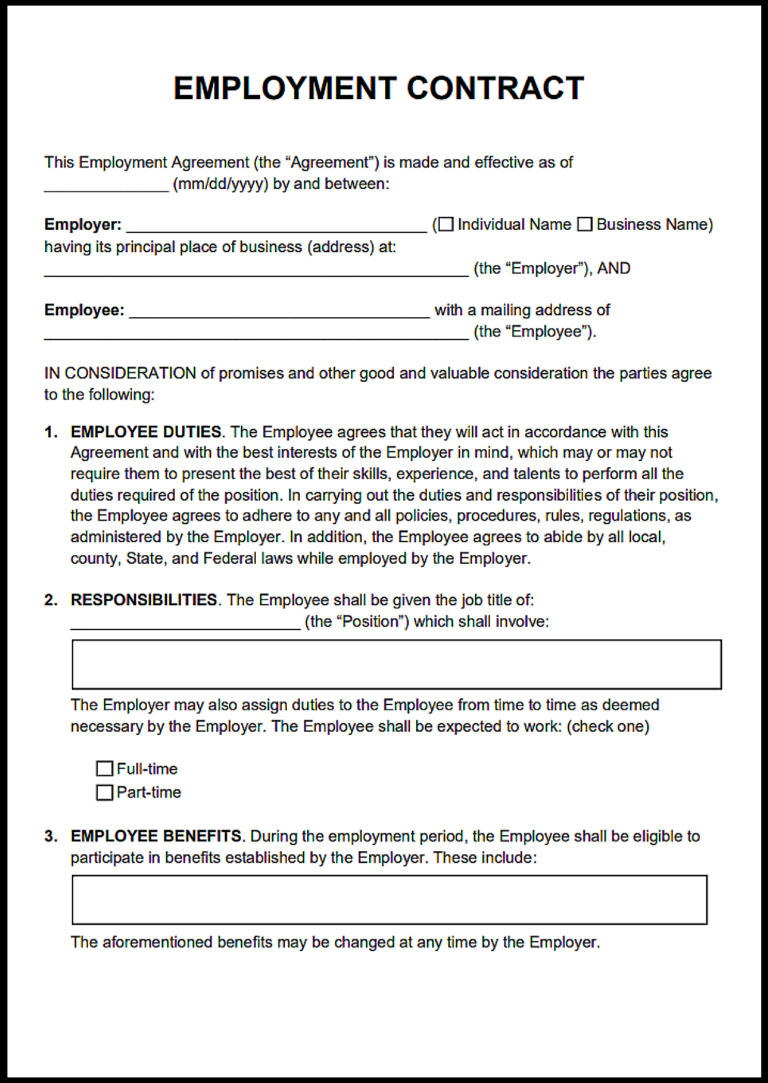
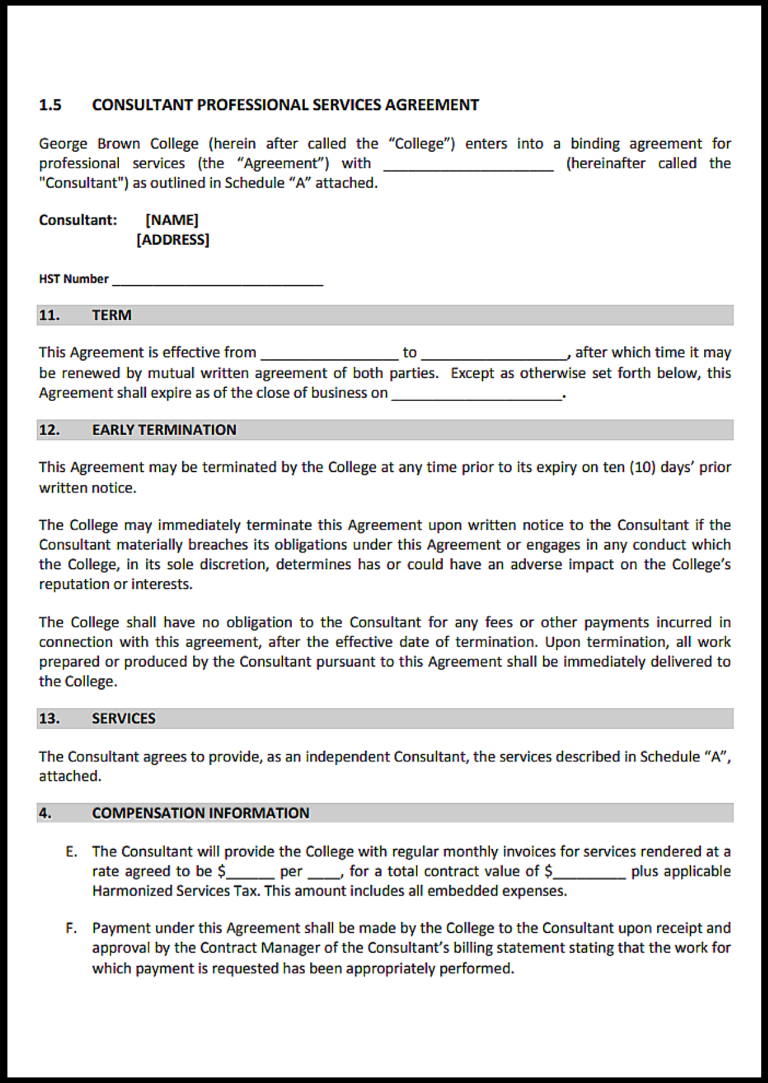
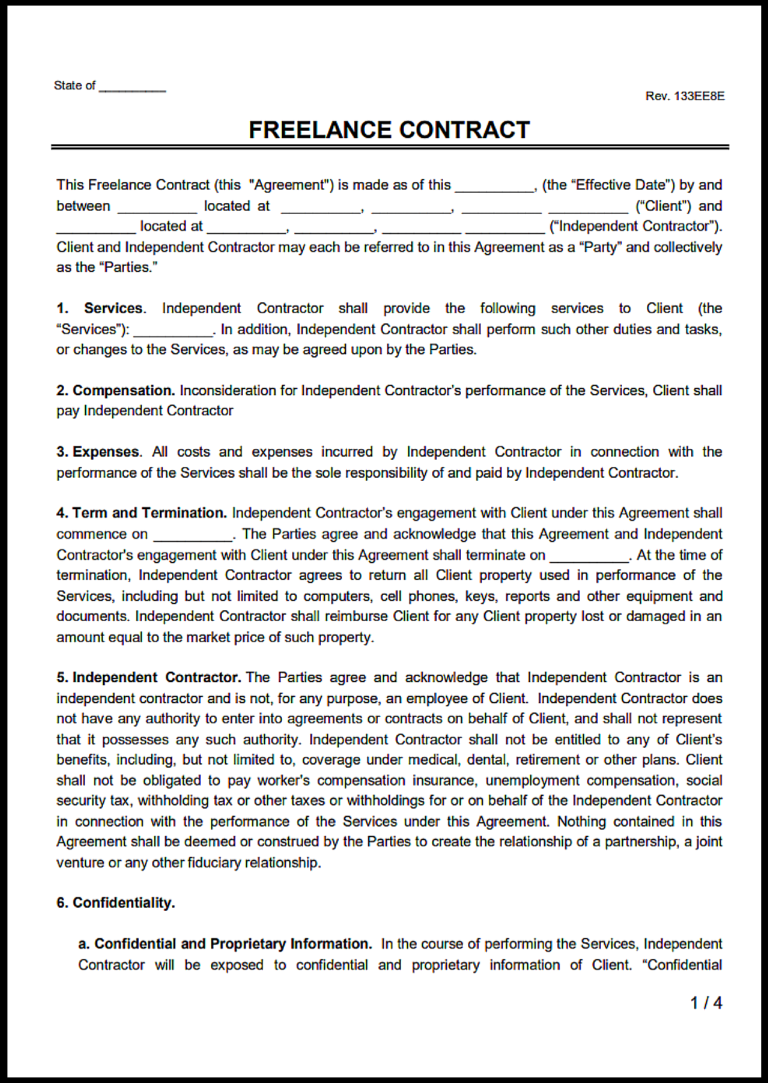
Free Contract Template (Ontario)
Here is a simple contract template you can use for basic agreements. This works for small business deals, freelance work, or personal agreements.
Ontario Contract Laws, Legal Requirements & Enforceability Rules
| Topic / Issue | Ontario Legal Rule | Governing Statute |
|---|---|---|
| Governing legislation | Contract law in Ontario is primarily based on common law principles and is supplemented or modified by applicable provincial and federal statutes. | Age of Majority and Accountability Act, R.S.O. 1990, c. A.7; Statute of Frauds, R.S.O. 1990, c. S.19; Consumer Protection Act, 2002, S.O. 2002, c. 30, Sched. |
| Sale contracts | Contracts for the sale of goods may be governed by Ontario’s Sale of Goods Act, subject to the Act’s scope and any other applicable law. | Sale of Goods Act, R.S.O. 1990, c. S.1 |
| Electronic contracts | Ontario’s Electronic Commerce Act recognizes electronic contracts and, subject to statutory exceptions and requirements, electronic signatures. | Electronic Commerce Act, 2000, S.O. 2000, c. 17 |
| Interest rate disclosures | Under the federal Interest Act, s. 4 can limit recoverable interest to 5% per annum where a written contract states interest as a daily, weekly, monthly, or other sub-annual rate without expressly stating the equivalent yearly rate, subject to the Act’s exceptions. | Interest Act, R.S.C. 1985, c. I-15, s. 4 |
| Recent consumer law reform | The Consumer Protection Act, 2023 received Royal Assent but is not yet in force. The Consumer Protection Act, 2002 remains the operative statute until the 2023 Act comes into force. | Consumer Protection Act, 2023 (Bill 142) |
| Who can sign | An individual with legal capacity may enter into a contract, and a corporation may act through persons with the authority to bind the corporation. | Applicable Ontario contract law and Business Corporations Act |
| Witness requirement | Ordinary contracts do not generally require witnesses, although particular types of agreements or statutes may impose witnessing or other formalities. | N/A |
| Notarization | Ordinary contracts do not generally require notarization, although particular transactions or documents may have separate witnessing, commissioning, registration or notarization requirements. | N/A |
| Age requirement | Ontario’s age of majority is 18, but whether a person under 18 is bound by a contract depends on the applicable rules governing contracts with minors and the nature of the agreement. | Age of Majority and Accountability Act, R.S.O. 1990, c. A.7, s. 1 |
| Mental capacity | A party must have the legal capacity required to enter into the particular contract; questions about mental capacity are generally governed by common law principles. | No statutory requirement — governed by common law principles |
| Time limit to sue | The basic limitation period for a claim under Ontario’s Limitations Act, 2002 is generally two years from the date the claim is discovered, subject to statutory exceptions and other applicable limitation rules. | Limitations Act, 2002, S.O. 2002, c. 24, Sched. B, s. 4 |
| Future performance agreements | Certain consumer agreements are subject to writing, disclosure and cancellation requirements under the Consumer Protection Act, 2002, depending on the type of agreement and the applicable statutory and regulatory requirements. | Consumer Protection Act, 2002; applicable regulations |
| Interest clause limitation | A written contract stating interest at a daily, weekly, monthly or other sub-annual rate may be subject to the 5% per annum limitation in s. 4 of the federal Interest Act unless the contract expressly states the equivalent yearly rate, subject to statutory exceptions. | Interest Act (Federal), s. 4 |
| Filing requirements | Ordinary private contracts are not generally filed in a central government registry, although particular transactions may have registration or filing requirements. | N/A |
| Real estate registration | Certain interests or instruments relating to land may need to be registered to affect or protect title or interests in land against third parties, depending on the transaction and applicable land-registration law. | Ontario land-registration law |
| PPSA registration | Registration is an important PPSA method for perfecting many security interests and establishing priority, but the applicable perfection and priority rules depend on the type of collateral and transaction. | Personal Property Security Act (PPSA) |
| Consideration requirement | Consideration is generally required for an ordinary simple contract, although exceptions and other legal mechanisms can apply. | Governed by common law principles |
| Illegal subject matter | A contract involving illegal subject matter may be unenforceable, although the legal consequences depend on the nature of the illegality and the applicable law. | Governed by common law principles |
| Writing requirement for certain agreements | Under Ontario’s Statute of Frauds, certain agreements, including specified guarantees and contracts or sales of land or interests in land, must be evidenced by a writing signed by the party to be charged or an authorized person. | Statute of Frauds, R.S.O. 1990, c. S.19, s. 4 |
| Ontario writing requirement difference | Ontario’s Statute of Frauds contains specific writing requirements for certain guarantees and contracts or sales of land and interests in land. | Statute of Frauds, R.S.O. 1990, c. S.19 |
| Consumer cancellation rights | For certain consumer agreements covered by the Consumer Protection Act, 2002, consumers may have a right to cancel within one year if the supplier fails to provide the agreement in the required form. | Consumer Protection Act, 2002 |
One of the most important Ontario contract rules is that some agreements must legally be in writing to be enforceable. Many people assume verbal agreements always work, but under Ontario’s Statute of Frauds, certain contracts involving land or guarantees may need written evidence signed by the party to be charged.
Another critical operational pitfall involves interest clauses. Under the federal Interest Act, s. 4 can limit recoverable interest to 5% per annum where a written contract states interest at a daily, weekly, monthly or other sub-annual rate without expressly stating the equivalent yearly rate, subject to statutory exceptions. This can matter when businesses use generic contract wording without checking how the interest rate is expressed.
Ontario also gives consumers cancellation rights for certain regulated agreements. Depending on the type of agreement and the applicable statutory requirements, a consumer may have up to one year to cancel if the supplier fails to provide the agreement in the required form.
Getting these details wrong can make a contract difficult to enforce, lead to financial losses, or create expensive legal disputes later. Download the free Ontario contract template below to create a stronger agreement that follows Ontario law.
What Makes a Contract Legally Binding in Ontario?
Under Ontario law, a contract may be legally binding when the requirements for contract formation are satisfied, as explained under official guidelines by the Government of Ontario. A missing requirement or an applicable statutory or common-law doctrine can affect enforceability.
Key Legal Elements
| Element | What It Means | Example |
|---|---|---|
| Offer & Acceptance | One person offers, the other agrees | “I will pay $1,000 CAD for the completed website build” → “I accept your offer as written.” |
| Consideration | Something of value exchanged | Money, service, goods, or a promise |
| Intention | Serious agreement, not merely a casual promise | Business deal vs friendly promise |
| Capacity | Parties have the legal capacity required | Parties legally capable of entering the agreement |
| Legal Purpose | The agreement concerns a lawful activity | Cannot contract for illegal activity |
Offer and Acceptance
A contract may be formed when an offer is validly accepted, together with the other requirements of contract formation under Ontario law. Both sides must agree to the applicable terms. For example, if a freelance designer states, “I will design your corporate brand assets for $1,000 CAD,” and the client clearly accepts those terms, the communications may form a binding contract.
Consideration (Something of Value)
Consideration is generally required for an ordinary simple contract. It may take the form of money, services, goods, or a promise to do something. If a promise is unsupported by consideration, it may be unenforceable as an ordinary simple contract, although exceptions can apply.
Intention to Create Legal Relations
The agreement must be intended to create legal relations. Business agreements are generally more likely to demonstrate this intention than casual social promises. The circumstances and relationship between the parties can matter when determining whether the required intention exists.
Capacity to Contract
The parties must have the legal capacity required to enter into the particular contract. Ontario’s age of majority is 18, but contracts involving minors are subject to specific rules. Mental incapacity or intoxication may affect enforceability in appropriate circumstances, but neither automatically makes every contract invalid.
Legal Purpose
The contract must concern a lawful activity. A contract involving illegal subject matter may be unenforceable, although the consequences depend on the nature of the illegality and the applicable law.
To understand whether agreements like NDAs are enforceable, you can refer to the Ontario NDA template guide, which shows how legally valid documents are structured.
Are Verbal Contracts Legal in Ontario?
Yes, verbal agreements can be legally binding in Ontario, unless the particular transaction is subject to a statutory writing or other formal requirement.
But here’s the problem: they are hard to prove.
When Verbal Contracts Work
- Small deals
- Short-term agreements
- Between trusted people
Example: Paying someone for a quick repair job.
When Written Contracts Are Better
- High-value agreements
- Business relationships
- Long-term deals
In most business situations, always use a written contract. It protects both sides and avoids confusion.
When a Contract is NOT Legally Binding
Even if a document looks like a proper contract, it may not always be legally valid. For a contract to be enforceable in Ontario, it must meet the applicable legal requirements. If a required element is missing, or a statutory or common-law doctrine applies, a contract or particular term may be unenforceable or subject to other remedies.
Common Reasons
A contract may be affected if a required element of formation is missing. Fraud or material misrepresentation can affect enforceability and may give rise to remedies such as rescission or damages, depending on the circumstances. Mistakes in key terms can also matter. A contract entered into under legally recognized duress may be voidable, depending on the circumstances and applicable law. A contract involving illegal subject matter may also be unenforceable.
Real Examples
For example, fraud or material misrepresentation about services or qualifications may affect the agreement and give rise to legal remedies. Failing to understand a contract does not by itself make it unenforceable, although doctrines such as incapacity, misrepresentation, unconscionability or mistake may apply in appropriate circumstances. Similarly, a contract entered into under legally recognized duress may be voidable.
This topic also connects with practical documents such as a service agreement and a employment contract, both of which must meet legal requirements to be binding.
Real-Life Examples
Let’s make this practical.
Freelance Design Agreement
Valid if:
- Scope is clear
- Payment is agreed
- Both parties consent
Risky if details are vague.
Residential Rental Agreement
A residential tenancy agreement is subject to the Residential Tenancies Act, 2006 and the statutory requirements that apply to residential tenancies. Most residential tenancy agreements must use Ontario’s Standard Form of Lease. If a landlord fails to provide the standard lease after the tenant makes a written request, the tenant may have a statutory right to withhold one month’s rent, subject to the requirements of the Residential Tenancies Act, 2006.
Terms that conflict with the Residential Tenancies Act, 2006 are generally void under s. 4, including prohibited pet bans and unauthorized deposits, subject to statutory exceptions and condominium rules. Many disputes governed by the Residential Tenancies Act, 2006 are decided by the Landlord and Tenant Board, although jurisdiction depends on the nature of the dispute and the applicable law.
This is a standard legally binding contract in Ontario.
Business Partnership Deal
Valid if:
- Roles and profits are defined
- Both partners agree clearly
Selling Goods Online
Valid if:
- Price is agreed
- Product is described
Even a simple online sale can create a legal contract.
Key Clauses That Strengthen a Contract
For a business contract, the most useful clauses are the ones that clearly allocate obligations, payment responsibilities, termination rights and dispute procedures. Those details also make it easier to identify what each party agreed to do if a dispute later arises.
Clear Scope of Work
This part should clearly explain what work is being done. Be very specific about tasks, deliverables, and expectations. Avoid vague descriptions because they often lead to misunderstandings and disagreements.
Payment Terms
Payment details should be written clearly so there is no confusion. Mention the total amount, how the payment will be made, and the exact due dates. It is also helpful to include late payment penalties so both parties take deadlines seriously.
Termination Clause
A good contract should explain how it can be ended. Include the notice period required before ending the agreement and the conditions under which either party can cancel. This helps avoid sudden or unfair termination.
Dispute Resolution
It is important to decide in advance how disputes will be handled. You can choose methods like court action, mediation, or arbitration. Having this clause saves time and stress if a conflict happens.
Signatures and Dates
Signatures and dates can provide strong evidence of assent and the timing of an agreement, but an ordinary contract is not necessarily unenforceable merely because it is unsigned.
How to Make Your Contract Legally Strong
Before signing an Ontario contract, check the parties, scope, payment terms, termination rights, dispute provisions and any statutory requirements that apply to the type of transaction.
- Use clear and simple language
- Avoid vague promises
- Put everything in writing
- Keep signed copies
- Review important contracts carefully
For sensitive deals, consider using an Ontario NDA template to protect confidential information.
Common Mistakes People Make
The most serious contract mistakes usually involve unclear obligations, missing statutory requirements, poor records of acceptance, or relying on a generic template for a regulated transaction.
Avoid These Errors:
- Using generic templates without editing
- Not defining responsibilities clearly
- Ignoring payment details
- Relying only on verbal agreements
- Not updating contracts over time
These mistakes often lead to disputes or financial loss.
Do You Need a Lawyer for Contracts in Ontario?
Ontario does not require a lawyer for every ordinary contract. A template may be suitable for a straightforward transaction, but complex or high-value agreements can justify professional review.
But you should consult a lawyer if:
- The contract involves large money
- You are entering a partnership
- There is a legal dispute
- Terms are complex
For employment-related contracts, see employment contract Ontario guidelines for better clarity.
FAQs
Are unsigned contracts legally binding in Ontario?
Sometimes yes, unsigned contracts can still be legally binding. An ordinary contract is not necessarily unenforceable merely because it is unsigned. If both parties act on the agreement or clearly accept the terms, it may be enforceable, subject to any statutory writing or signature requirement that applies.
Can I cancel a contract after signing?
Signing a contract does not generally create a universal right to cancel. Cancellation or rescission may be available where the contract itself permits it or where legislation or a legal doctrine provides a remedy.
Are email agreements legally binding?
Yes, an agreement formed through email can be legally binding if the requirements for contract formation are satisfied and no applicable law requires a different form. Clear terms and acceptance can provide evidence of an enforceable agreement.
What happens if someone breaks a contract?
If a party breaches a contract, available remedies may include damages and, where appropriate, specific performance, an injunction, a declaration, or other relief.