Ontario Rent Receipt Template Template | Download Free PDF & Word
Ontario Rent Receipt is an important document that proves rent has been paid. If you are renting or managing a property in Ontario, this simple paper (or digital record) can protect both tenant and landlord.
A rent receipt helps in many real-life situations—like tax filing, resolving disputes, or keeping proper records. I’ve seen Ontario tenants struggle to prove months of rent payments during disputes because they never asked for proper receipts, especially in cash-payment situations.
In my experience helping landlords and renters across Ontario, keeping a clear rent receipt record early can prevent a lot of stress later if questions come up about missed payments or tax claims. Under Ontario law, tenants also have the right to ask for it. So, understanding how it works is very important.
Table of Contents
ToggleFree Ontario Rent Receipt Template Download
Below is a simple and ready-to-use template based on Ontario best practices. You can save it as a PDF or Word.
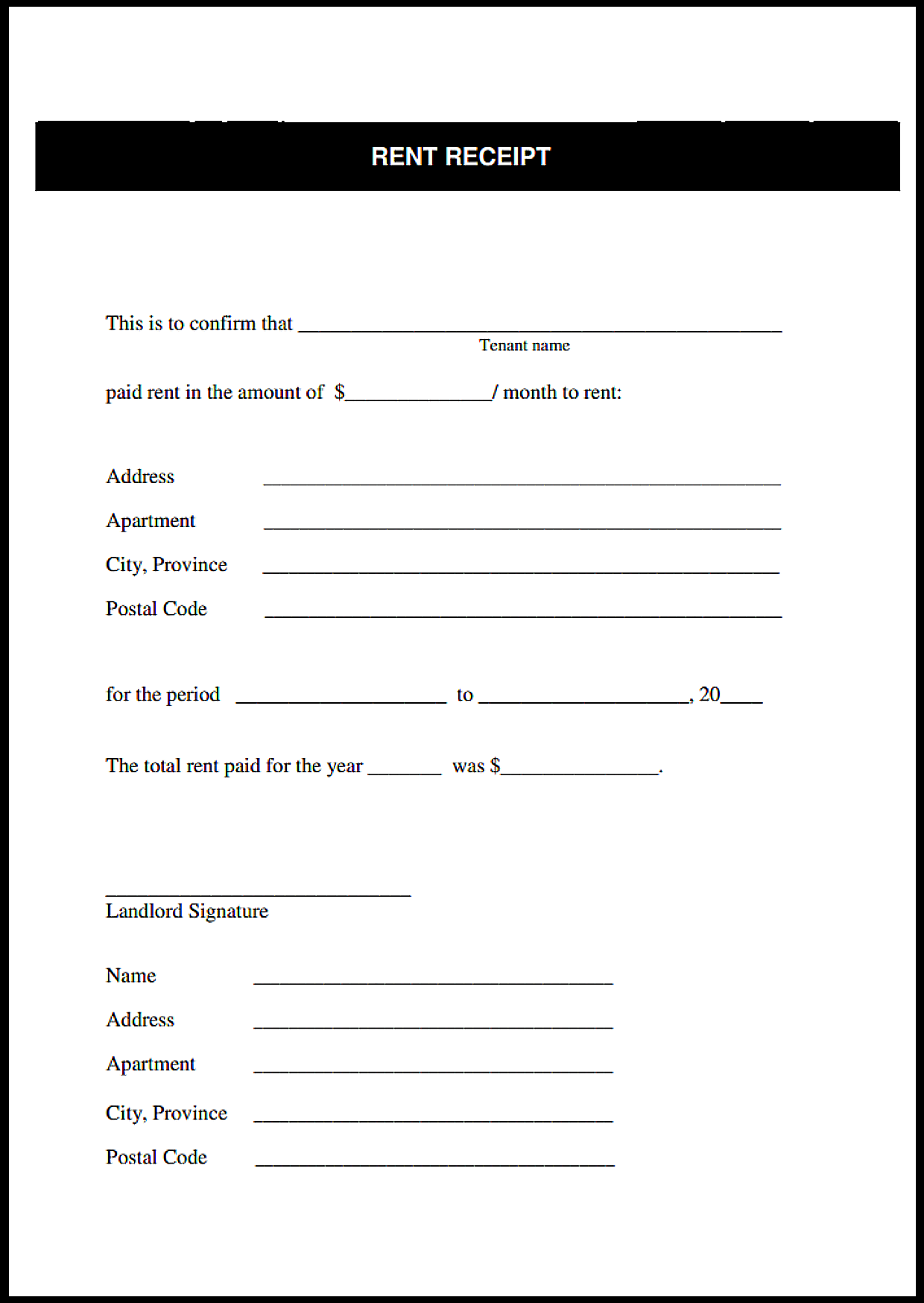
This format includes all key details required in most rental situations. It is simple, clear, and legally useful.
Ontario Rent Receipt Legal Requirements Under the Residential Tenancies Act
| Topic / Issue | Ontario Legal Rule | Governing Statute |
|---|---|---|
| Governing legislation | Ontario rent receipts are governed by provincial tenancy law under the Residential Tenancies Act, 2006. | Residential Tenancies Act, 2006, S.O. 2006, c. 17 |
| Who can legally sign | The landlord or the landlord’s authorized agent must sign the rent receipt. | Residential Tenancies Act, 2006, s. 109(1); O. Reg. 516/06, s. 9(e) |
| Witness requirements | There is no statutory witness requirement for an Ontario rent receipt. | N/A |
| Notarization or oath | Ontario law does not require notarization or an oath for a rent receipt. | N/A |
| Age and mental capacity | No specific statutory rule is provided regarding age or mental capacity for rent receipts. | N/A |
| Deadline for current tenants | A landlord must provide a rent receipt when a current tenant requests one. | Residential Tenancies Act, 2006, s. 109(1) |
| Deadline for former tenants | Former tenants can request rent receipts within 12 months after the tenancy terminated. | Residential Tenancies Act, 2006, s. 109(2) |
| Required property information | The receipt must include the address of the rental unit to which the receipt applies. | Ontario Regulation 516/06, s. 9(a) |
| Required tenant information | The receipt must state the names of the tenants to whom the receipt applies. | Ontario Regulation 516/06, s. 9(b) |
| Required payment details | The receipt must state the amount and date for each payment received. | Ontario Regulation 516/06, s. 9(c) |
| Purpose of payment | The receipt must specify what the payment was for, such as rent, a rent deposit, arrears of rent, or another amount paid to the landlord. | Ontario Regulation 516/06, s. 9(c) |
| Landlord identification | The receipt must state the name of the landlord of the rental unit. | Ontario Regulation 516/06, s. 9(d) |
| Signature requirement | The receipt must include the signature of the landlord or the landlord’s authorized agent. | Ontario Regulation 516/06, s. 9(e) |
| Last month’s rent deposit wording | If the payment is a rent deposit, the receipt should clearly identify that it is a rent deposit and state the amount and date of payment. | Residential Tenancies Act, 2006, s. 106; Ontario Regulation 516/06, s. 9(c) |
| Filing or registration requirement | Rent receipts do not need to be filed with the government or the Landlord and Tenant Board. | N/A |
| Charging a fee | Landlords cannot charge a fee for providing a rent receipt. | Residential Tenancies Act, 2006, s. 109(1) |
| Missing rental unit address | A document without the rental-unit address would not meet the minimum receipt requirements in Ontario Regulation 516/06, s. 9(a). | Ontario Regulation 516/06, s. 9(a) |
| Refusing to provide a receipt | Failing to provide a tenant or former tenant with a receipt in accordance with section 109 is an offence under section 234(h). As of July 1, 2026, the maximum fine is $100,000 for an individual and $500,000 for a corporation. | Residential Tenancies Act, 2006, s. 234(h), s. 238(1), s. 238(2) |
| Ontario-specific rule | Ontario requires landlords to provide receipts to former tenants for up to 12 months after the tenancy terminated if requested within that period. | Residential Tenancies Act, 2006, s. 109(2) |
| Free-of-charge requirement | Ontario law clearly states that rent receipts must be provided free of charge. | Residential Tenancies Act, 2006, s. 109(1) |
One of the most important rules in Ontario is that landlords must give rent receipts for free when tenants ask for them. Many tenants do not realize this, especially when paying rent in cash or by e-transfer. Another important rule is the 12-month requirement for former tenants. Even after moving out, tenants can still request receipts within 12 months after the tenancy terminated. This can become useful during tax filing, benefit applications, or disputes about unpaid rent.
The rental-unit address is one of the minimum details required by Ontario Regulation 516/06, s. 9. The regulation also requires the tenant names, payment amount and date, payment purpose, landlord name, and landlord or authorized-agent signature. Failure to provide a receipt as required by section 109 is an offence under section 234(h) of the Residential Tenancies Act.
To avoid disputes and keep proper records, use the free Ontario Rent Receipt template below and complete it correctly every time rent is paid.
What Is a Rent Receipt in Ontario?
A rent receipt is a written record that confirms a tenant has paid rent or another amount to the landlord.
Under Ontario law, landlords must provide a rent receipt if the tenant or former tenant asks for it. This rule comes from section 109 of the Residential Tenancies Act. A former tenant must make the request within 12 months after the tenancy terminated.
Here’s what you need to know:
- It applies to rental arrangements covered by the Residential Tenancies Act
- Landlords are not allowed to charge any fee
- The receipt obligation applies whether the payment was made in cash or by another payment method
In simple terms: If a tenant requests a receipt covered by section 109, the landlord must provide it free of charge.
When Do You Need a Rent Receipt? (Real-Life Situations)
A rent receipt can be useful whenever you need a clear record of a payment. Common examples include tenancy disputes, tax or benefit claims, and situations where another organization asks for evidence of rent paid.
- Tax filing – Rent information may be relevant to benefits like the Ontario Trillium Benefit, and CRA may ask for supporting receipts or other proof of payment
- Disputes – Proof if a landlord claims rent wasn’t paid
- Loan or visa applications – May help as supporting evidence of rent payments or residence when the organization accepts it
- Shared rentals – Helps track who paid what
Example: If you pay rent in cash and do not have a receipt or other payment evidence, it can become harder to prove the payment later.
Key Details Every Ontario Rent Receipt Must Include
A rent receipt must contain the minimum information required by Ontario Regulation 516/06, s. 9. Missing required details can mean that the document does not qualify as a receipt for the purposes of section 109.
Basic Information
- Tenant’s full name
- Landlord’s name
- Rental property address
Why it matters: These details identify the parties and the rental unit covered by the receipt.
Payment Details
- Exact amount paid
- Payment method (cash, e-transfer, cheque)
- Date of payment
- What the payment was for
Why it matters: Ontario Regulation 516/06 requires the amount and date for each payment and requires the receipt to specify what the payment was for.
Rental Period Covered
- Mention the exact month or date range
Why it matters: Although the regulation focuses on the amount, date, and purpose of each payment, identifying the rental period can make the record easier to understand and use later.
Signature or Confirmation
- Landlord’s signature or authorized agent’s signature
Why it matters: The landlord or the landlord’s authorized agent must sign the receipt under O. Reg. 516/06, s. 9(e).
Providing proof of payment is essential under Ontario tenancy practices, which is why this rent receipt template works alongside your lease agreement document. You should also be aware of rent increase notice rules and maintain compliance with tenant protection laws. For lease continuity, refer to a lease renewal agreement and proper Ontario lease regulations.
How to Fill Out a Rent Receipt (Step-by-Step Guide)
Filling a rent receipt is simple if you follow these steps:
Step 1: Add tenant and property details
Write the full tenant names and correct rental address.
Step 2: Enter correct payment amount
Double-check the amount to avoid errors.
Step 3: Mention exact rental period
Example: March 1 to March 31.
Step 4: Choose payment method
Tick the correct option (cash, e-transfer, etc.).
Step 5: Execute Signature and Serve the Copy to the Tenant
The landlord or authorized agent must sign the receipt pursuant to O. Reg. 516/06, s. 9(e). If the receipt supports a tax return or benefit claim, CRA generally requires the relevant supporting records to be kept for at least six years.
Electronic rent receipts may also be used where the applicable requirements for electronic documents are satisfied. Ontario’s Electronic Commerce Act generally recognizes electronic documents and electronic signatures, subject to its requirements and exceptions.
Ontario Laws About Rent Receipts (Important Rules)
Here’s a simple breakdown of legal rules under Ontario law:
| Rule | What It Means |
| Receipt must be provided |
When a tenant or qualifying former tenant asks
|
| No extra charge allowed |
Landlords cannot charge for receipts
|
| Applies to payment types |
The receipt rule covers rent and other amounts paid to the landlord under section 109
|
| No fixed format required |
But the receipt must contain the minimum information required by O. Reg. 516/06, s. 9
|
Ontario does not prescribe one single rent-receipt layout. Instead, O. Reg. 516/06, s. 9 sets out the minimum information a document must contain to constitute a receipt for the purposes of section 109.
Common Mistakes to Avoid
Many receipt problems come from missing information required by O. Reg. 516/06, s. 9 or failing to provide the receipt when requested. Avoid these:
- Missing rental-unit address
- No landlord or authorized-agent signature
- Missing tenant name
- Wrong amount written
- Missing payment date or purpose
- Not keeping copies
- Refusing to give receipt
Risks include:
- Tenant complaints
- Legal disputes
- Loss of proof in court or tax cases
- Potential statutory consequences for failing to provide a receipt required under section 109
Digital vs Paper Rent Receipts (Which Is Better?)
Paper and electronic records can both be useful. Ontario’s Electronic Commerce Act generally recognizes electronic documents and electronic signatures, subject to its requirements and exceptions.
Digital Receipts
- Easy to store and share
- Less chance of losing
- Can provide a convenient electronic record
- Can be useful for tax and legal records when they contain the required information
Paper Receipts
- Simple and traditional
- Useful for in-person payments
- Easy to provide as a physical record
Best practice: Keep an accessible copy of the receipt and any related payment evidence for your records.
Can a Tenant Create Their Own Rent Receipt?
A tenant can keep their own record of rent paid, but that personal record is not automatically the landlord’s statutory receipt under section 109.
A document constitutes a receipt for the purposes of section 109 only if it contains the minimum information required by O. Reg. 516/06, s. 9, including the rental-unit address, tenant names, payment information, landlord name, and the signature of the landlord or authorized agent.
If a landlord refuses to provide a receipt, tenants should not fabricate one. Instead, they should preserve other evidence of payment and consider contacting the Landlord and Tenant Board or obtaining legal advice about the appropriate remedy.
Tip: If landlord refuses, keep other proof like:
- Bank transfer records
- E-transfer screenshots
- Messages confirming payment
Rent Receipts and Taxes in Ontario
Rent paid in Ontario can be relevant to the Ontario Trillium Benefit, and CRA may ask for supporting receipts or other proof of payment.
- Rent receipts can support an Ontario Trillium Benefit claim where applicable
- Helps show how much rent you paid
- Receipts and other supporting records may be requested by CRA
If you rely on the receipts to support a tax return or benefit claim, CRA generally requires the relevant supporting records to be kept for at least six years.
What Happens If a Landlord Refuses to Give a Receipt?
If a landlord refuses, the tenant still has rights.
What you can do:
- Politely request again (in writing if possible)
- Keep proof of payment (bank or transfer records)
- Contact the Landlord and Tenant Board or obtain legal advice if the issue is not resolved
Under Ontario law, failing to provide a receipt as required by section 109 is an offence under section 234(h) of the Residential Tenancies Act. The current maximum fine under section 238 is $100,000 for an individual and $500,000 for a corporation.
FAQs
Is a rent receipt legally required in Ontario?
Yes, when a tenant or qualifying former tenant asks for one under section 109 of the Residential Tenancies Act. A landlord must provide the receipt free of charge. A former tenant must make the request within 12 months after the tenancy terminated.
Can a landlord charge for a receipt?
No, landlords cannot charge any fee for giving a rent receipt. Section 109 requires the receipt to be provided free of charge.
Are digital receipts valid?
Electronic rent receipts can be used where the applicable requirements for electronic documents and signatures are satisfied. The receipt should also contain the information required by O. Reg. 516/06, s. 9.
Do I need receipts for tax filing?
Rent receipts can be important supporting documents for tax and benefit claims, including the Ontario Trillium Benefit where applicable. CRA may ask for receipts or other proof of payment, so keep your supporting records.
What if I paid rent in cash?
You should ask for a receipt when paying in cash. If a payment is later disputed, the receipt can provide useful evidence of the payment. You should also keep other available proof, such as bank records, e-transfer records, or written confirmation.