Alberta Promissory Note Template (Free PDF & Word)
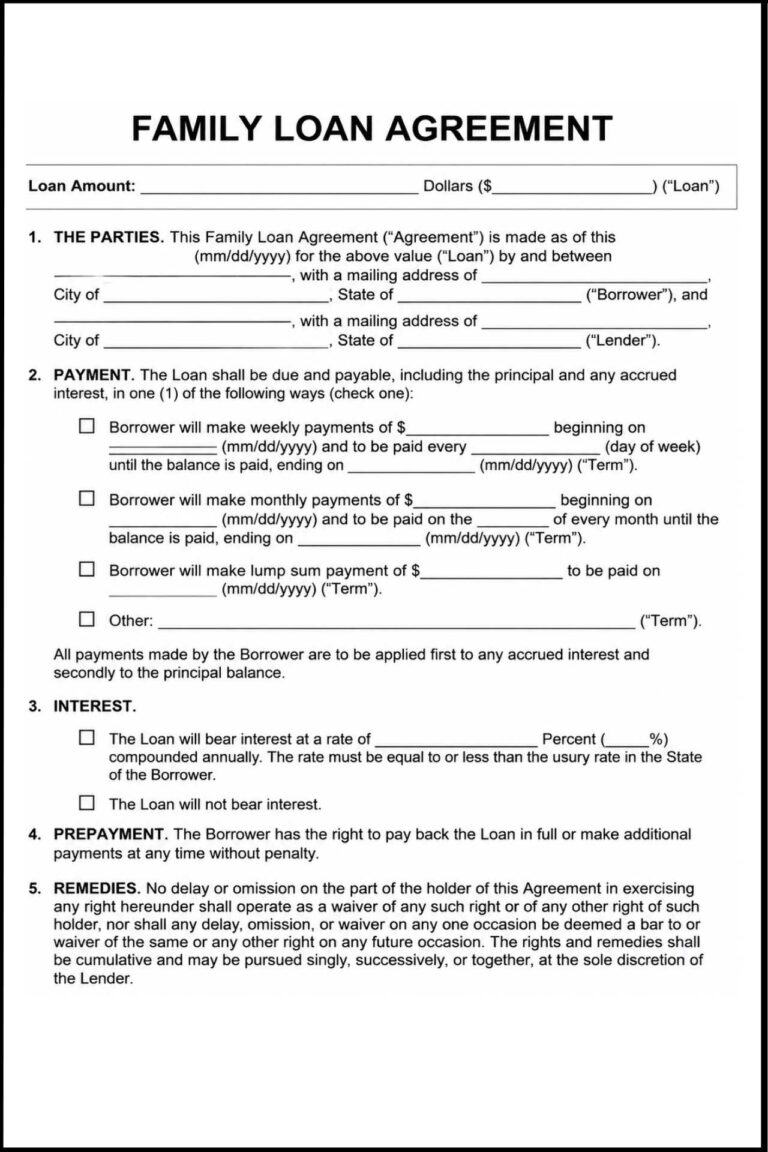
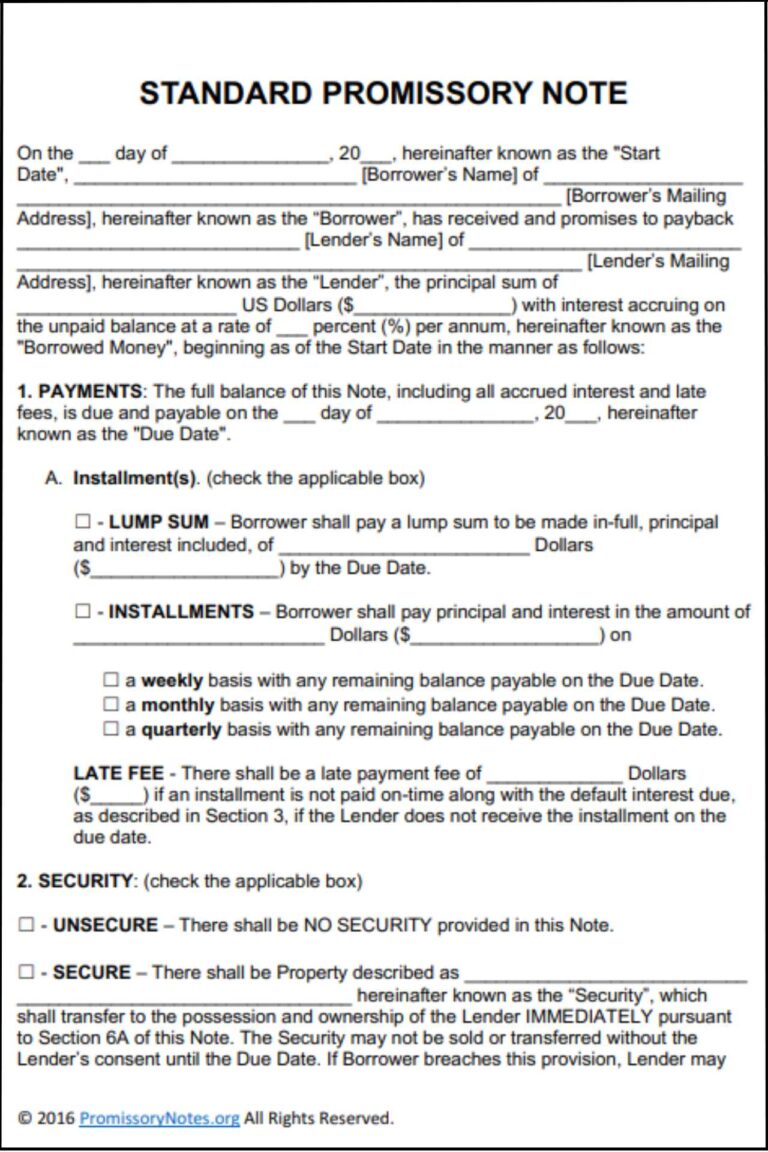
Alberta Promissory Note Template is usually searched when someone is lending money to a family member, friend, or business associate and wants the repayment terms recorded before misunderstandings develop. In Alberta, a properly drafted promissory note should satisfy the requirements set out in section 176 of the federal Bills of Exchange Act, which requires an unconditional written promise to pay rather than a simple acknowledgement that money was borrowed.
I’ve seen lenders arrive in the Court of King’s Bench of Alberta with nothing more than a handwritten IOU or a series of text messages, only to spend far more time proving the repayment terms than they expected because the document never clearly recorded them. Taking a few extra minutes to prepare the note properly can avoid many of those disputes and provide greater certainty if repayment is later questioned. Below you’ll find an Alberta Promissory Note Template together with an explanation of when to use it, what information it should contain, and the drafting mistakes that most often lead to enforcement problems.
Table of Contents
ToggleFree Alberta Promissory Note Template for Personal Loans

Key Clauses Every Alberta Promissory Note Needs
A well-written promissory note does much more than record the amount borrowed. Each clause serves a specific purpose and can affect how easily the debt can be enforced if the borrower later defaults. Missing or poorly drafted terms often become the centre of a dispute rather than the unpaid loan itself.
The Unconditional Promise to Pay
The most important clause is the unconditional promise to pay. Under section 176(1) of the Bills of Exchange Act, a promissory note must contain a written promise to pay a fixed amount of money without making repayment dependent on an uncertain future event. A promise such as “I’ll repay you if my business becomes profitable” is generally not sufficient because payment depends on something that may never occur.
I’ve seen a small business owner in Calgary lend money to a friend using nothing more than a signed letter stating that repayment would happen “once the company is doing better.” When repayment never arrived, the wording created unnecessary arguments about whether a valid promissory note even existed. A properly drafted unconditional promise avoids that uncertainty from the outset.
Repayment Terms (Demand vs. Fixed Date vs. Installments)
Every Alberta promissory note should explain how and when the money must be repaid. The repayment structure is one of the first things a court will examine if a disagreement develops.
Common repayment options include:
- Payment on demand after the lender requests repayment.
- One lump-sum payment on a specified future date.
- Regular weekly or monthly instalments until the balance is paid in full.
For example, two siblings in Edmonton might agree to a $15,000 loan to help purchase equipment for a new business. Instead of relying on verbal expectations, they record that the debt will be repaid through monthly instalments beginning on an agreed date. That simple clause removes uncertainty for everyone involved and provides a clear repayment schedule if questions arise later.
If your arrangement involves a larger or more detailed lending transaction, our Alberta Loan Agreement Template provides additional contractual provisions that may be more appropriate than a simple promissory note.
Interest Rate Disclosure
Many people assume they can simply insert an interest percentage into the document. Federal law is more specific.
Where interest is calculated using a period shorter than one year (such as a monthly or daily rate), section 4 of the Interest Act strictly mandates that the agreement disclose the equivalent annual percentage rate (APR). If a lender states only a monthly rate (e.g., “2% per month”) without providing the express equivalent annual rate (24% per annum), federal law slashes the recoverable interest down to the statutory default maximum of 5% per annum, and the borrower is legally entitled to recover or offset any excess interest paid.
Another important limitation is the federal Criminal Code, which prohibits charging interest above the applicable criminal interest threshold. Since 1 January 2025, the criminal rate has generally been 35% APR, subject to certain commercial exemptions identified in the legislation. Charging more than the permitted rate can create significant legal problems far beyond an ordinary debt dispute.
I’ve seen lenders in Red Deer download free online templates that referred only to a monthly interest rate without identifying the equivalent annual rate. A few extra words at the drafting stage could have prevented uncertainty later.
Default and Security Terms
Every promissory note should explain what happens if the borrower misses a payment. This section usually states whether the entire outstanding balance becomes immediately due after default and whether additional default interest will apply.
If the loan is unsecured, the lender generally relies on the borrower’s promise to repay. If the loan is secured, the agreement should clearly identify the collateral being used to secure the debt. In Alberta, a security interest over personal property may require registration in the Personal Property Registry (PPR) under the Personal Property Security Act before it becomes fully effective against third parties.
A contractor in Lethbridge, for example, might lend equipment financing to another business owner and secure repayment against specific machinery. Recording the collateral properly—and completing any required registration—can make a significant difference if the borrower later defaults.
If repayment has already become overdue, the next practical step may be sending an Alberta Demand for Payment Letter before starting formal recovery proceedings. Likewise, if the debt is eventually settled, an Alberta General Release of Liability Template can help document that no further claims remain between the parties.
Why Alberta Treats High Interest Rates Differently Than You’d Expect
Many lenders assume they can charge any interest rate the borrower agrees to, but Alberta law isn’t that simple. While Alberta courts generally respect freely negotiated loan agreements, the interest provisions must still comply with federal legislation. Under the Interest Act, certain interest calculations must disclose an equivalent annual rate, while section 347(1) of the Criminal Code prohibits charging interest above the applicable criminal interest threshold.
I’ve seen small business owners in Edmonton assume that because a borrower voluntarily accepted a high interest rate, the court would automatically enforce it. That isn’t always the case. If the interest exceeds the federal limit or the loan contains harsh, unconscionable terms, the lender may face serious enforcement problems. Alberta courts also have authority under the Unconscionable Transactions Act and the Judicature Act to intervene where contractual terms become oppressive or operate as penalties rather than genuine compensation for default.
The safest approach is to choose a commercially reasonable interest rate, explain exactly how it will be calculated, and avoid excessive default charges that could later be challenged.
A Real Example: A Personal Loan Between Friends in Calgary
Imagine two friends in Calgary. One lends the other $8,000 to help purchase equipment for a new landscaping business. They agree the loan will be repaid over eighteen months with interest, but instead of relying on text messages, they complete a properly drafted promissory note before any money changes hands.
The note clearly records the loan amount, repayment schedule, interest rate, default provisions, and the date both parties sign it. Twelve months later the borrower experiences financial difficulties and misses several payments. Because the repayment terms were recorded from the beginning, there is little disagreement about the amount outstanding or when default occurred. The discussion focuses on repayment rather than trying to reconstruct the agreement from emails and messages.
I’ve seen similar situations become far more complicated when the parties relied only on verbal promises. A simple written promissory note often becomes the strongest evidence of what everyone originally agreed.
Frequently Asked Questions
Does a promissory note need to be notarized in Alberta?
No. Alberta law does not require a promissory note to be notarized or witnessed. However, having signatures witnessed can help establish authenticity if the document is later challenged.
What’s the maximum interest rate I can legally charge on a personal loan?
Interest must comply with federal law. Following amendments effective 1 January 2025, the Criminal Code generally prohibits charging interest above 35% APR, subject to specific commercial exemptions.
How long do I have to collect on a promissory note if the borrower stops paying?
Under Alberta’s Limitations Act, a debt claim generally must be started within two years after the claim is discovered, subject to the 10-year ultimate limitation period.
Can I secure a promissory note against property or other assets?
Yes. If the note is secured by personal property, registration in Alberta’s Personal Property Registry (PPR) may be required under the Personal Property Security Act to protect the lender’s security interest.
What happens if the note doesn’t mention an interest rate?
A promissory note can still be valid without charging interest. If interest is intended, the rate and calculation method should be stated clearly, and where required, the equivalent annual rate should be disclosed in accordance with the Interest Act.