British Columbia Service Agreement Template (PDF & Guide)
British Columbia Service Agreement is a simple legal document that explains what work will be done, how much will be paid, and what both sides agree to. If you are hiring a freelancer, contractor, or agency, this agreement protects you from confusion and disputes.
In real business situations, many problems happen because things were not written clearly. I have seen British Columbia businesses end up in expensive payment and scope disputes simply because the service terms were discussed over calls or text messages instead of being written properly. When clients come to me after a problem starts, the biggest issue is usually that nobody clearly explained deadlines, extra work charges, or cancellation terms in the agreement.
Under British Columbia law, written agreements help prove what both parties agreed to. This article gives you a free template plus a clear, beginner-friendly explanation so you can use it with confidence.
Last Updated: September 2026
Table of Contents
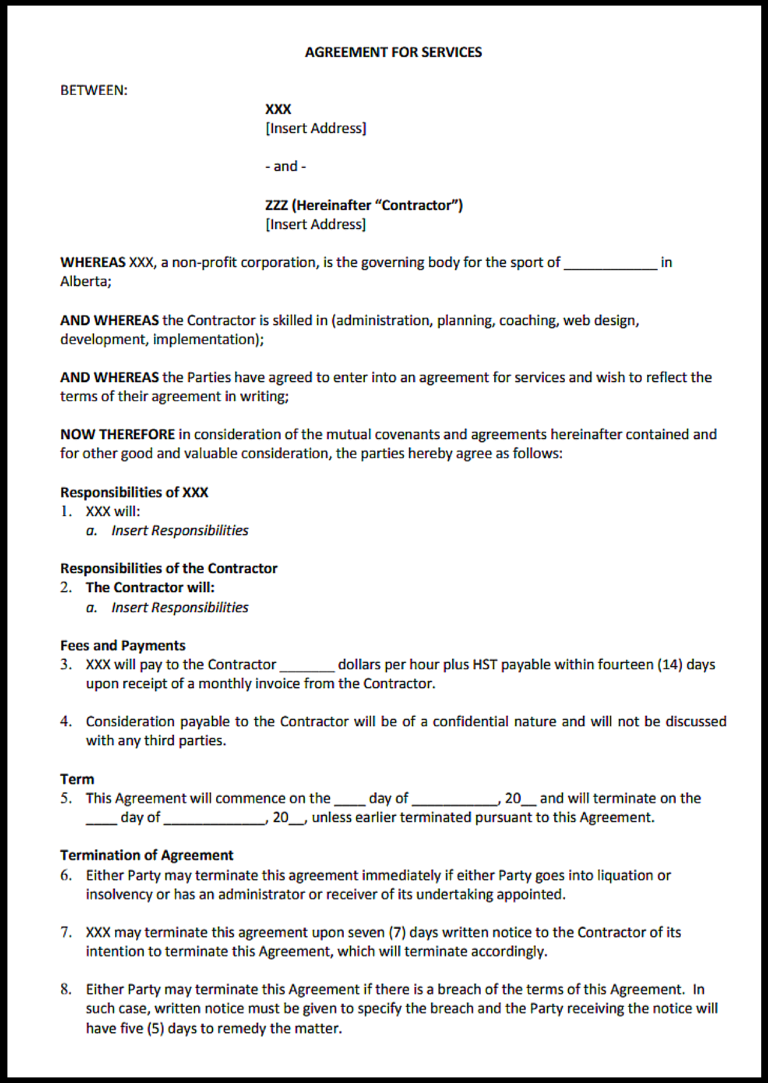
ToggleFree British Columbia Service Agreement Template
You can copy, edit, and use this template for your business or freelance work. Keep it simple but accurate.
British Columbia Service Agreement Laws, Consumer Protection Rules & Contract Requirements
| Topic / Issue | British Columbia Legal Rule | Governing Statute |
|---|---|---|
| Governing legislation | Service agreements in British Columbia are generally governed by contract law. Consumer-protection legislation can also apply where the agreement is a consumer transaction covered by the Act. | Business Practices and Consumer Protection Act [SBC 2004] c. 2; common law |
| Federal competition rules | Federal competition law can apply to deceptive marketing and other conduct covered by the Competition Act. | Competition Act [R.S.C., 1985, c. C-34] |
| Jurisdiction status | Service agreements are generally governed by provincial contract law unless a federal law or federal regulatory scheme applies to the particular relationship or industry. | Provincial and federal law as applicable |
| Recent consumer protection reforms | New consumer-contract provisions under the Business Practices and Consumer Protection Act came into force on August 1, 2026, including rules concerning contract contents, disclosure, and cancellation for covered consumer contracts. | Business Practices and Consumer Protection Amendment Act, 2025; B.C. Reg. 10/2026 |
| Who can legally sign | An individual can sign personally, while a corporation should have the agreement signed by a person with authority to bind the corporation. | Business Corporations Act; contract law |
| Witness requirements | Witnesses are not generally required for a standard service agreement. | No general statutory requirement |
| Notarization requirement | Notarization is not generally required for a standard service agreement to be effective. | No general statutory requirement |
| Age of majority | British Columbia’s general age of majority is 19. Contractual capacity is a separate legal issue governed by the applicable law and circumstances. | Age of Majority Act, s. 1 |
| Mental capacity | The parties should have the legal capacity required to enter into the agreement and understand the contractual obligations being accepted. | Applicable contract and capacity law |
| Limitation period | Subject to the Limitation Act and its exceptions, a court proceeding in respect of a claim generally must be commenced within 2 years after the claim is discovered. | Limitation Act, s. 6 |
| Required consumer-contract disclosures | For consumer contracts covered by Part 4, Division 1.1, the Business Practices and Consumer Protection Act requires specified disclosures and contract information in the circumstances set out in the Act. | Business Practices and Consumer Protection Act, ss. 18.1–18.4 |
| Cancellation rights | Covered consumer contracts may give consumers cancellation rights where the statutory contract-content or disclosure requirements are not met. | Business Practices and Consumer Protection Act, s. 18.4 |
| Service address disclosure | Certain covered consumer contracts require supplier and service information under the statutory contract-content rules. | Business Practices and Consumer Protection Act, s. 18.2 |
| Filing requirement | Standard service agreements are private contracts and are not generally filed with a government registry. | Private contractual practice |
| Security interest registration | If a transaction creates a security interest, the Personal Property Security Act may require registration or other steps to protect that interest against third parties. | Personal Property Security Act |
| Unconscionable contracts | Consumer-protection remedies can apply to unconscionable conduct in transactions covered by the Business Practices and Consumer Protection Act. Contract-law doctrines can also apply outside the consumer context. | Business Practices and Consumer Protection Act, s. 8; applicable contract law |
| Failure to provide copy | Under the current consumer-contract rules, a supplier must provide a copy of a covered future performance contract within 15 days after the contract is entered into. Other consumer contracts can have different copy and cancellation rules. | Business Practices and Consumer Protection Act, s. 23 and applicable provisions |
| Arbitration clause restrictions | Consumer agreements can be affected by statutory rules concerning dispute-resolution, class-proceeding, and low-value-claim terms. The enforceability of a particular arbitration clause depends on the applicable statutory provision and the transaction. | Business Practices and Consumer Protection Act, Part 2, Division 4 |
| BC age difference | British Columbia’s general age of majority is 19. | Age of Majority Act |
| Strict cancellation notice rules | Covered consumer contracts may have statutory cancellation rights and deadlines that depend on the type of contract and the reason for cancellation. | Business Practices and Consumer Protection Act |
One important British Columbia rule is that the Business Practices and Consumer Protection Act does not apply to every service agreement. It applies to specified consumer transactions and particular types of consumer contracts. Since August 1, 2026, Part 4 includes new contract-content and disclosure provisions, so covered consumer service arrangements should be checked against the current statutory requirements. (bclaws.gov.bc.ca)
Another important point is the copy requirement for future performance contracts. Under the current section 23, a supplier must give the consumer a copy of a covered future performance contract within 15 days after it is entered into. The Act also provides statutory cancellation rights in specified circumstances. (bclaws.gov.bc.ca)
The limitation period also needs careful wording. Section 6 of the BC Limitation Act establishes a basic 2-year limitation period after discovery, subject to the Act and its exceptions. (bclaws.gov.bc.ca)
Tax treatment also changed in 2026. As of September 1, 2026, the BC government has announced that PST will apply to certain professional services beginning October 1, 2026, including accounting, architectural, engineering and geoscience, security, and certain non-residential real-estate services. The ordinary service agreement itself is not automatically subject to PST merely because it is a service contract. (gov.bc.ca)
A service agreement helps businesses define project expectations, payment obligations, and professional responsibilities between parties. To better understand how these legal arrangements fit into commercial documentation, you can review with the guide for writing contracts in British Columbia before preparing the agreement.
What Is a Service Agreement in British Columbia?
A service agreement is a contract between a client and a service provider. It explains what services will be delivered, what each party is expected to do, and how payment will work.
In most business contract situations in British Columbia, this agreement is used for:
- Freelancers (writers, designers, developers)
- Consultants
- Agencies
- Small business services
Verbal vs Written Agreements
Under British Columbia law, a contract can sometimes be formed without a written document. A written agreement is generally easier to use as evidence because the terms are recorded in one place.
|
Type of Agreement
|
Valid in BC | Easy to Prove | Risk Level |
| Verbal Agreement | Can be valid depending on the circumstances | No | Higher |
| Written Agreement | Can be valid if the contractual requirements are met | Yes | Lower |
A written agreement gives clearer evidence of:
- What was promised
- What was delivered
- What payment was agreed
This is why written contracts are commonly preferred for ongoing or higher-value professional services.
Service providers often rely on related business contracts depending on the type of working relationship involved. Companies hiring outside professionals may also use a consulting agreement template, while self-employed workers commonly require an independent contractor agreement for project-based services.
When Should You Use a Service Agreement?
You should consider a service agreement whenever a business relationship involves defined services, payment obligations, or deliverables that the parties want documented.
Common situations include:
- Hiring a freelance graphic designer
- Paying a marketing agency
- Working with a consultant
- Outsourcing business tasks
Real-Life Example
Imagine you hire a web developer without a detailed written contract. You ask for a website, but the delivered work differs from what you expected.
Now:
- You say it’s incomplete
- They say the work is done
Without clear written terms, it can be difficult to establish what the parties originally agreed. A service agreement can set out the scope, deliverables, deadlines, revisions, and payment terms in advance.
When confidential information is shared during business operations, parties may additionally include a non-disclosure agreement to help protect sensitive client records, internal procedures, and proprietary business information.
Key Clauses Every BC Service Agreement Must Include
Scope of Work (Most Important Section)
This is the heart of your agreement.
Clearly define:
- What work will be done
- What is NOT included
- Deliverables (files, reports, designs)
Avoid vague lines like “general services.”
Clear scope helps reduce disputes about extra work and whether particular deliverables were included.
Payment Terms and Schedule
Always define payment clearly:
- Fixed price or hourly rate
- Deposit amount (if any)
- Milestone payments
- Late payment fees
Also include:
- Currency (CAD)
- Payment method (e-transfer, bank)
- Payment due dates
Timeline and Deliverables
Set clear expectations:
- Start date
- End date
- Delivery deadlines
- Number of revisions
Also mention what happens if delays occur, including delays caused by the client or service provider.
Independent Contractor Clause
A service agreement can describe the intended relationship, but simply calling a worker an “independent contractor” does not determine their legal status.
British Columbia’s Employment Standards Branch looks at the actual relationship and relevant factors when determining whether a worker is an employee or independent contractor. Those factors can include control, whose business the worker is operating, opportunity for profit or loss, and other circumstances. (gov.bc.ca)
This distinction can affect employment standards and tax obligations.
Confidentiality Clause
This protects sensitive business information like:
- Client data
- Business strategies
- Pricing details
Important for agencies, consultants, and freelancers working with private data.
Termination Clause
Every agreement should explain:
- How to end the contract
- Notice period (e.g., 7 days)
- Payment rules after termination
- What happens to unfinished work
This helps the parties understand the process if the relationship ends early.
Limitation of Liability
This clause can allocate certain risks between the parties.
It may address:
- Indirect or consequential losses
- Caps on certain liabilities
- Exclusions and exceptions
The enforceability of a limitation clause depends on its wording, the circumstances, and applicable law. Consumer-protection rules may also restrict certain contractual terms.
Is a Service Agreement Legally Valid in British Columbia?
A service agreement may be legally valid when it forms a binding contract and its terms are enforceable in the circumstances.
A contract generally involves:
- Offer → One party proposes terms
- Acceptance → The other party agrees to those terms
- Consideration → The parties exchange value or undertake legally recognized obligations
However, these concepts should not be treated as a complete statutory checklist for every agreement. Contract formation and enforceability can depend on the circumstances and the relationship between the parties.
Key Legal Points
- Written agreements are easier to use as evidence in a dispute
- Electronic contracts and signatures can be legally effective where applicable
- Service agreements are generally governed by contract law in British Columbia
- Consumer-protection legislation may impose additional requirements on covered consumer transactions
In simple terms, clear agreement and enforceable contractual terms are central to a service agreement.
How to Fill Out the Template (Step-by-Step)
Follow these simple steps:
Step 1: Add correct names and addresses
Make sure legal names are accurate.
Step 2: Clearly define services
Avoid confusion. Be specific about the work and deliverables.
Step 3: Set payment structure
Mention total cost, method, and payment deadlines.
Step 4: Add realistic deadlines
Do not promise timelines you cannot meet.
Step 5: Review before signing
Check for missing details, unclear terms, and errors.
A careful review can prevent misunderstandings later.
GST, PST, and Tax Considerations in BC Service Agreements
Taxes depend on the type of service, the service provider’s registration status, and the applicable tax rules.
Key Rules
- GST generally applies to taxable supplies when the supplier is required to collect it; registration rules include the federal small-supplier threshold
- Many ordinary services are not subject to BC PST, but specific taxable services are
- Beginning October 1, 2026, BC PST will apply to certain professional services announced in Budget 2026
- An independent contractor’s employment/tax status depends on the actual relationship, not simply the wording of the agreement
The CRA currently states that most businesses generally must register for GST/HST when they are no longer small suppliers and make taxable supplies, with a general $30,000 small-supplier threshold for most businesses. (canada.ca)
For BC PST, the province currently states that PST applies to specified taxable goods, software, and services. Effective October 1, 2026, PST will expand to specified professional services. (gov.bc.ca)
| Tax Type | Applies to Services? | Who Pays |
| GST | Depends on whether the supply is taxable and whether the provider is required to collect GST |
Client pays; provider collects where required
|
| PST | Depends on the type of service and the applicable effective date |
Depends on the taxable service and transaction
|
| Income Tax | Applies to taxable income |
Service provider generally reports their own income
|
Adding clear tax wording to the agreement can avoid misunderstandings about whether quoted prices include applicable taxes.
Common Mistakes to Avoid
Common problems include:
- Writing a vague scope of work
- Not setting a payment timeline
- Forgetting a termination clause
- Treating a contractor label as conclusive
- Using copy-paste templates without editing
Even a small drafting gap can contribute to payment or scope disputes.
Common Disputes in Service Agreements (and How to Avoid Them)
In real business situations, these are common areas of disagreement:
Payment delays
Client refuses or delays payment.
Scope creep
Client asks for extra work without a clear agreement about additional fees.
Missed deadlines
Work is not delivered on time.
Quality disagreements
Client is not satisfied with the results or believes the agreed specifications were not met.
Simple Solution
- Use clear clauses
- Keep important changes in writing
- Update the agreement when the scope or price changes
Clear documentation can make the parties’ expectations easier to establish.
Service Agreement vs Independent Contractor Agreement
These two agreements are similar but not the same.
| Feature | Service Agreement |
Independent Contractor Agreement
|
| Purpose | Defines service terms |
Defines working relationship and contractor obligations
|
| Focus | Work + payment |
Working relationship, status-related terms, and services
|
| Use Case | Projects or services |
Contractor engagements that may involve ongoing work
|
Key Difference
A service agreement focuses primarily on the services and commercial terms.
An independent contractor agreement may address the broader relationship with a contractor. However, the wording of an agreement does not by itself determine whether a worker is legally an employee or independent contractor. BC Employment Standards guidance states that the actual relationship and surrounding circumstances must be considered. (gov.bc.ca)
Frequently Asked Questions (FAQs)
Do I need a lawyer for a service agreement in BC?
No, a lawyer is not generally required to prepare an ordinary service agreement. For complex, high-value, employment-related, consumer, or heavily negotiated arrangements, legal advice can help identify issues specific to the agreement.
Can I write my own service agreement?
Yes. You can create your own service agreement. It should clearly address the services, deliverables, payment terms, timing, termination, and other terms relevant to the relationship.
Is a verbal agreement valid in British Columbia?
A verbal agreement can be legally binding in appropriate circumstances, although proving its exact terms can be more difficult than proving terms contained in a written contract.
Who pays taxes in a service agreement?
The tax treatment depends on the particular supply and the status of the parties. A service provider may have GST collection obligations if registered or required to register, and the provider is generally responsible for reporting their own business income for income-tax purposes. BC PST can apply to specified taxable services.
Can I cancel a service agreement anytime?
It depends on the contract and applicable law. Check the termination provisions, notice requirements, and any statutory cancellation rights that may apply, particularly if the agreement is a consumer contract covered by the Business Practices and Consumer Protection Act.
Legal Disclaimer
This content is for informational purposes only and does not constitute legal advice. Laws may change, and every situation is different. You should consult a qualified legal professional in British Columbia for advice specific to your case.