Alberta Rental Application Template for Landlords (Free PDF)
Alberta Rental Application is the first and most important step when choosing a reliable tenant. If you skip this step, you’re basically taking a risk with your property.
Finding the right tenant starts with using a proper application form. It helps landlords collect key details, verify information, and make fair decisions.
I’ve seen Alberta landlords end up in long disputes because they trusted a handshake conversation instead of properly screening the tenant at the start. When someone is renting out a property for the first time, they often don’t realize that asking the wrong questions on an application can also create legal problems under Alberta human rights laws.
Under Alberta law, landlords must follow privacy and human rights rules while collecting and using tenant data. This is not optional.
This article gives you a free rental application template and explains how to use it correctly—step by step.
Last Updated: October 2026
Table of Contents
ToggleFree Alberta Rental Application Template
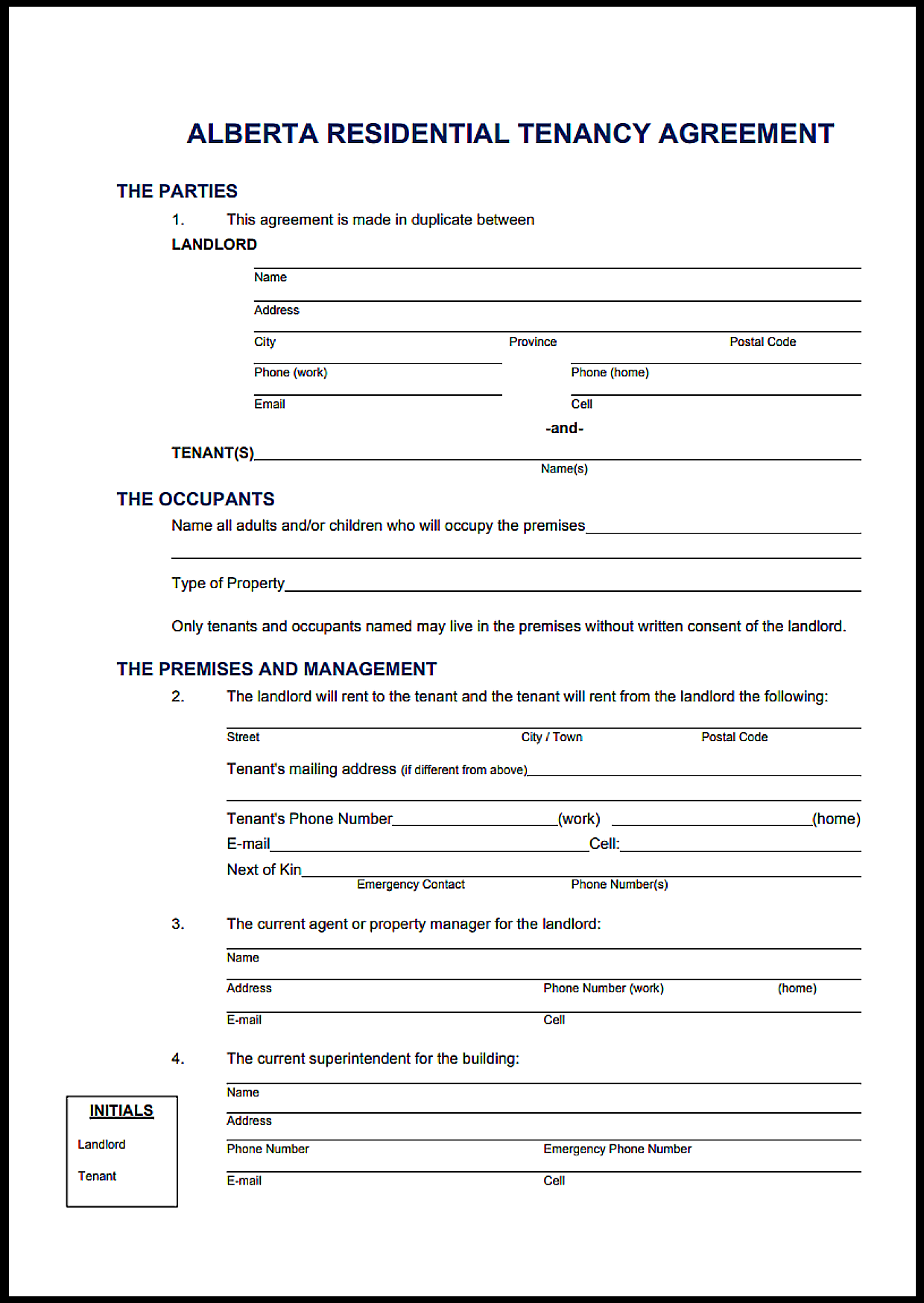
Use this simple and clean template to screen tenants properly. You can copy and paste it or format it as a PDF.
Alberta Rental Application Laws and Screening Rules
| Topic / Issue | Alberta Legal Rule | Governing Statute |
|---|---|---|
| Governing legislation | Alberta’s Personal Information Protection Act (PIPA) generally governs how private-sector landlords collect, use, and disclose applicants’ personal information. Alberta tenancy law may also be relevant to the landlord-tenant relationship, and a tenancy agreement can be written, verbal, or implied rather than signed only in writing. | Personal Information Protection Act, SA 2003, c P-6.5 |
| Federal privacy law | Alberta’s Personal Information Protection Act generally governs local private-sector privacy activities in the province. PIPEDA may still apply to federally regulated organizations and certain interprovincial or international commercial activities involving personal information. | PIPEDA / PIPA framework |
| Jurisdiction | Alberta rental applications are governed by applicable Alberta provincial laws, including privacy and human rights legislation. Federal privacy law may also apply in certain circumstances. | Applicable Alberta and federal legislation |
| Recent amendments | Effective April 1, 2026, Alberta’s Residential Tenancy Dispute Resolution Service (RTDRS) introduced tiered filing fees: $75 for claims or counterclaims of $7,500 or less, $150 for claims over $7,500, and $100 for qualifying counterclaims over $7,500 where there is already an active application between the same parties. Fee waivers remain available to eligible applicants. | Residential Tenancy Dispute Resolution Service |
| Who can legally sign | Prospective tenants and landlords or their authorized agents may sign rental applications, subject to applicable rules about authority and legal capacity. | Applicable Alberta law |
| Witness requirements | An ordinary rental application generally does not require a witness, although special requirements may apply to particular documents or transactions. | No general statutory requirement identified |
| Notarization | An ordinary rental application generally does not require notarization. | No general statutory requirement identified |
| Age requirement | Eighteen is Alberta’s age of majority. However, that does not mean a person under 18 can never submit an application or enter a tenancy arrangement; capacity and enforceability depend on the circumstances and applicable law. | Age of Majority Act, RSA 2000, c A-6 |
| Mental capacity | Applicants must have the legal capacity required for the transaction. Questions about a minor’s ability to enter a tenancy agreement depend on the circumstances and applicable law; do not assume that every applicant must be at least 18 to submit an application. | Applicable Alberta law and common law |
| Time limits | No general statutory deadline applies to completing an ordinary rental application. Separate deadlines may apply to later tenancy disputes or proceedings. | Applicable Alberta legislation and procedures |
| Privacy consent requirement | Under Alberta’s Personal Information Protection Act, organizations generally must notify individuals of the purpose for collecting personal information before or while collecting it, subject to the Act’s specific rules and exceptions. | Personal Information Protection Act, SA 2003, c P-6.5 |
| Reasonable collection rule | Under Alberta’s Personal Information Protection Act, landlords may collect personal information only for reasonable purposes and to the extent reasonably needed for those purposes. The information requested should be relevant to the proposed tenancy. | Personal Information Protection Act, SA 2003, c P-6.5 |
| Filing requirement | An ordinary rental application is generally a private document and is not filed with a government registry. It may later be relevant evidence in a tenancy dispute. | Applicable Alberta dispute procedures |
| Dispute evidence use | Rental applications and supporting records may be relevant evidence in an RTDRS or court proceeding, depending on the issues in dispute. | Alberta dispute procedures |
| Human rights violations | In Alberta, landlords must not discriminate in tenancy-related services on protected grounds under the Alberta Human Rights Act. These include grounds such as race, religious beliefs, physical or mental disability, family status, sexual orientation, and source of income. Apply lawful, consistent screening criteria without using a protected ground as the reason for refusing an applicant. | Alberta Human Rights Act, RSA 2000, c A-25.5 |
| Credit check consent | Under Alberta’s Personal Information Protection Act, consent is generally required to collect, use, or disclose personal information, subject to specific statutory exceptions. Before arranging a credit or background check, explain its purpose and obtain the consent required for that check. | Personal Information Protection Act, SA 2003, c P-6.5 |
| Waiver of tenant rights | A tenancy agreement cannot waive rights protected by Alberta’s Residential Tenancies Act where the Act makes the waiver void. Whether a particular application clause has that effect depends on its wording and circumstances. | Residential Tenancies Act, RSA 2000, c R-17.1 |
| No rent control caps | Alberta does not use the same general percentage-based rent-increase cap model as some other provinces. However, statutory rules about the timing and notice of rent increases still apply. | Residential Tenancies Act and applicable regulations |
| Source of income protection | Source of income is a protected ground under Alberta human rights guidance. A landlord should not reject an applicant simply because they receive AISH or qualifying social assistance. Screening should use relevant, consistently applied criteria without discriminating on a protected ground. | Alberta Human Rights Act and Alberta Human Rights Commission guidance |
Before requesting personal information, explain why it is needed and check the consent requirements under Alberta’s Personal Information Protection Act. Credit checks require particular care because they involve personal financial information. The application should identify the purpose of the check and record the consent required for the specific screening activity.
Source of income is a protected ground under Alberta human rights guidance. A landlord should not reject an applicant simply because they receive AISH or qualifying social assistance. Assess relevant tenancy criteria consistently, and avoid treating a protected income source as proof that an applicant cannot pay rent.
Alberta’s reasonable-collection rules also matter during everyday screening. A landlord should request information that is relevant to the proposed tenancy and reasonably needed for the stated purpose. Asking for unnecessary personal details can create privacy concerns.
A rental application should help landlords document a fair screening process without collecting unnecessary personal information. Before using the template, check that its questions, consent language, and screening criteria fit the proposed tenancy and comply with Alberta privacy and human rights requirements.
What Is an Alberta Rental Application and Why It Matters
An Alberta rental application is a screening form used to collect relevant information from a prospective tenant. It is separate from the tenancy agreement, which records the terms agreed to by the landlord and tenant.
A rental application is not generally legally required in Alberta, but it can help a landlord assess applicants consistently and keep a record of the screening process.
A useful application should help the landlord assess relevant tenancy information consistently. It should also explain how personal information will be used and avoid collecting details unrelated to the proposed tenancy.
- Helps assess relevant information about an applicant’s ability to meet rent obligations
- Allows the landlord to verify relevant rental references
- Provides a record of the screening criteria used
- Helps keep the process consistent across comparable applicants
A rental application can help a landlord make a more informed decision, but it cannot guarantee that rent will be paid or prevent future disputes.
This document is used during the tenant screening process to collect personal, financial, and rental history information. It plays an important role before entering into a formal lease agreement.
Alberta Laws You Must Follow When Screening Tenants
Privacy Rules (PIPA – Personal Information Protection Act)
Under Alberta law, the Personal Information Protection Act (PIPA) generally governs how private-sector organizations collect, use, and disclose personal information in Alberta.
When collecting applicant information, check whether the collection is reasonable, provide the required notice, and obtain consent where Alberta’s Personal Information Protection Act requires it. The Act recognizes different forms of consent and contains specific exceptions.
For example, a Social Insurance Number is generally unnecessary for ordinary rental screening. Avoid requesting it unless you have a specific, lawful reason to do so.
Landlords should also protect the information they collect and retain it only as long as reasonably necessary for the purpose and any applicable legal obligations.
Human Rights Restrictions (Alberta Human Rights Act)
The Alberta Human Rights Act protects applicants from discrimination in tenancy-related services on protected grounds.
In Alberta, landlords must not discriminate against applicants on protected grounds, which include:
- Race or ethnicity
- Religious beliefs
- Gender and sexual orientation
- Physical or mental disability
- Family status, including having children
- Source of income
Important: Questions about protected characteristics can create discrimination risks, particularly when the information is not relevant to the tenancy.
Avoid questions like:
- “Do you plan to have kids?”
- “What religion do you follow?”
Use screening questions that relate to the proposed tenancy and apply the same relevant criteria to comparable applicants.
Credit Checks & Background Screening Rules
You should arrange a credit check only after explaining its purpose and obtaining the consent required under Alberta privacy law. PIPA contains specific rules and exceptions, so do not assume that one consent format applies to every screening activity.
Many landlords use third-party services to obtain credit reports. Before using a service, make sure the applicant has been given the required information and that the collection and use of personal information comply with the applicable privacy requirements.
Without the consent required by law, running a credit check may violate privacy requirements.
Key Sections Every Alberta Rental Application Must Include
Identity & Contact Details
Ask for the applicant’s name and contact details needed to administer the application. Keep the section simple and avoid collecting unnecessary personal information.
Employment & Income Verification
A landlord may assess whether an applicant can meet the rent obligations using relevant, consistently applied criteria. Avoid treating a particular source of income, including a protected source such as social assistance, as an automatic reason for rejection.
Where relevant, an applicant may provide supporting information such as:
- Salary slips
- Employer contact details
Self-employed applicants may be able to provide suitable financial information. Request only the documents reasonably needed for the screening purpose, and handle them in accordance with applicable privacy requirements.
Rental History Check
Checking relevant rental history can help a landlord assess an application. Contact previous landlords where appropriate, explain the purpose of collecting the information, and obtain any consent required before contacting references.
Relevant questions may include:
- Whether rent was paid according to the tenancy agreement
- Whether there were documented tenancy issues
- Whether the applicant followed applicable tenancy obligations
Avoid making decisions based on unsupported assumptions or information unrelated to the proposed tenancy.
References & Emergency Contacts
References may help a landlord verify relevant information about an applicant. Explain why the information is being requested and contact references only for an appropriate purpose.
If an emergency contact is requested, make clear how that information may be used. Do not collect more personal information than reasonably necessary.
Consent & Authorization Clause
Before requesting a credit report or contacting references, explain the purpose of the check and obtain the consent required under Alberta privacy law. Keep the information collected limited to what is reasonably needed for the screening purpose.
The application should clearly describe the information the landlord intends to verify and how it will be used. A broad consent clause should not be treated as permission to collect or use information for unrelated purposes.
Once approved, applicants typically move forward with a residential rental agreement. After move-in, landlords may issue a rent receipt for each payment received.
How to Fill Out and Use the Rental Application (Step-by-Step)
Use the same relevant screening criteria for comparable applicants. Before collecting or verifying information, explain the purpose, obtain any consent required by Alberta privacy law, and keep records only as long as reasonably necessary for the purpose and any applicable legal obligations.
Steps to follow:
- Share the same form with comparable applicants
- Check whether the form is complete
- Verify relevant employment and rental references where appropriate
- Explain the purpose of a credit check and obtain the consent required
- Compare applicants using consistent, lawful criteria
- Store personal information securely and dispose of it appropriately when it is no longer needed
Keep notes about the relevant criteria and information used to make the decision. Protect those notes because they may contain personal information.
Common Mistakes Landlords Make (And How to Avoid Them)
Common screening problems include collecting unnecessary personal information, failing to explain why it is needed, and applying different criteria to comparable applicants. Alberta’s PIPA and human rights rules should guide the process from the first question through the final decision.
Common mistakes include:
- Asking questions that may lead to discrimination
- Failing to obtain consent where required
- Contacting references without an appropriate purpose or required consent
- Rejecting an applicant on a protected ground
- Keeping personal information insecurely or longer than reasonably necessary
Keep a record of the criteria used and the information relied on, while protecting applicants’ personal information. A consistent process makes it easier to explain how a decision was reached.
If an applicant provides supporting documents, collect only those that are reasonably needed for the screening purpose and handle them in accordance with Alberta privacy requirements.
Rental Application vs Lease Agreement
| Feature | Rental Application |
Lease Agreement
|
| Purpose | Screens prospective tenants |
Records the agreed tenancy terms
|
| Timing | Usually used before the tenancy is finalized |
Used when the tenancy terms are agreed
|
| Legally Binding | May create obligations depending on its wording and circumstances; it is not normally the full tenancy agreement |
Usually the agreement governing the tenancy
|
| Includes Terms | Primarily focuses on screening information |
Includes tenancy terms and obligations
|
| Main Use | Checks relevant applicant details |
Records the final tenancy arrangement
|
| Risk Level | Depends on the information collected and any commitments made |
Can have significant legal consequences
|
| Flexibility | Used during the screening process |
Governed by the agreed terms and applicable law
|
The application is primarily a screening tool, while the tenancy agreement records the agreed terms. However, the legal effect of a document depends on its wording and the circumstances, not just its title.
Real-Life Example: How a Rental Application Prevents Risk
For example, a landlord may verify relevant rental references and assess whether an applicant can meet the rent obligations. The same criteria should be used for comparable applicants, and a decision should not be based on protected characteristics or assumptions about a person’s source of income.
Screening can help a landlord make a more informed decision, but it cannot guarantee that rent will be paid or that a dispute will not arise. A written tenancy agreement and proper records remain important after an applicant is selected.
When Can a Rental Application Be Rejected in Alberta?
A landlord may assess applicants using relevant and consistently applied tenancy criteria, but must not discriminate on a protected ground under Alberta human rights law. Record the legitimate factors considered and avoid using assumptions about a person’s protected characteristics or source of income.
Potentially relevant screening factors may include:
- Relevant credit history, where lawfully obtained and assessed
- Information showing whether the applicant can meet the rent obligations
- Relevant and reliable landlord references
A landlord should not reject an applicant because of a protected ground such as religion, family status, ethnicity, disability, sexual orientation, or protected source of income.
Use the same relevant criteria for comparable applicants, and keep personal information secure.
FAQs About Alberta Rental Applications
Is a rental application legally required in Alberta?
A rental application is not generally legally required in Alberta. However, it can help landlords assess applicants consistently, record relevant screening information, and document the decision-making process.
Can landlords charge an application fee in Alberta?
Alberta government guidance states that a landlord may charge a rental application fee and should tell the applicant about it before taking the application. The fee and any related terms should be clearly disclosed. Do not assume that Alberta law imposes a universal out-of-pocket-cost ceiling or that a fee will automatically be treated as an illegal penalty; the legal result depends on the circumstances and applicable law.
Can I refuse a tenant after approval?
It depends on the circumstances and what was communicated or agreed. Refusing an applicant after making a clear commitment may create contractual or other legal issues. A landlord should review the communications and any agreement already made, and ensure the decision does not breach Alberta human rights or other applicable laws.
How long should I keep rental applications?
Keep rental applications and supporting information only as long as reasonably necessary for the purpose for which the information was collected and any applicable legal obligations. Protect the information while it is retained, then securely destroy or dispose of it when it is no longer needed.