Alberta Rent Receipt (Free PDF Template & How to Use)
Alberta Rent Receipt is a simple but important document that proves rent has been paid. Whether you are a landlord or tenant in Alberta, using a proper receipt helps avoid confusion, protects both sides, and keeps your records clear.
A rent receipt may look small, but in real life, it can prevent serious disputes. I’ve helped Alberta landlords and tenants deal with payment disputes where the biggest problem was missing or incomplete rent records. In Alberta, a proper rent receipt can become important evidence if there’s ever a disagreement about unpaid rent, deposits, or tenancy history.
I’ve seen cases where tenants claimed they paid rent, but without proof, it became a legal issue. A simple receipt could have solved everything in minutes.
Free Alberta Rent Receipt Template
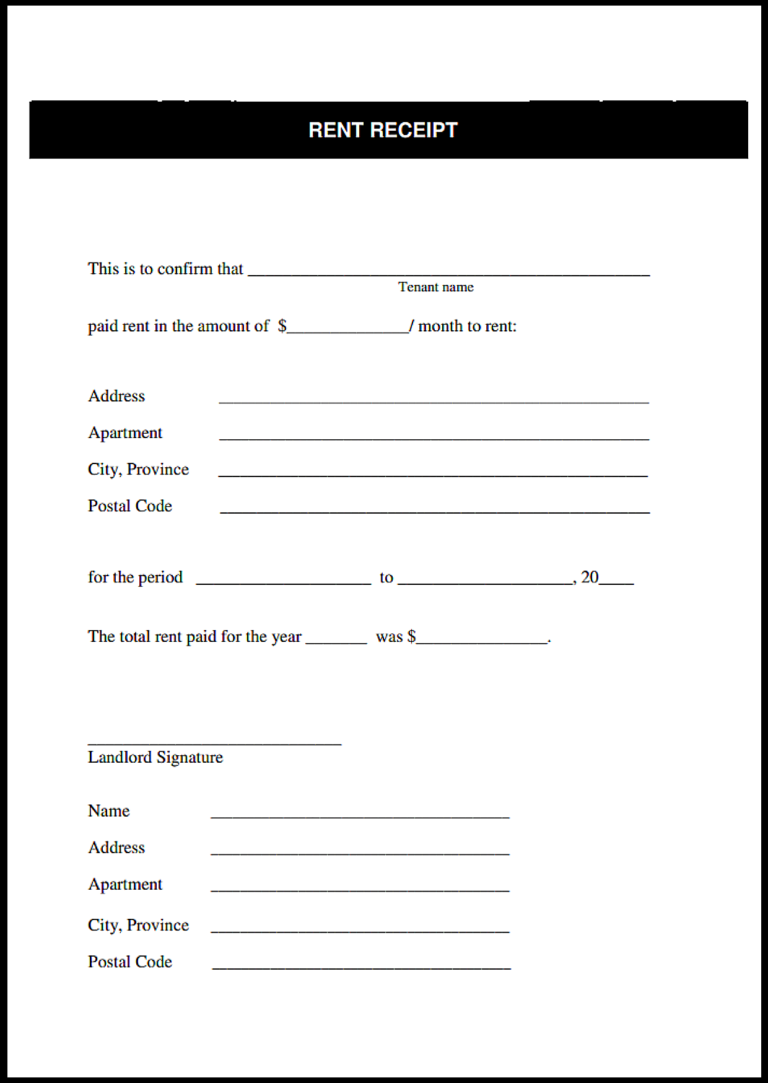
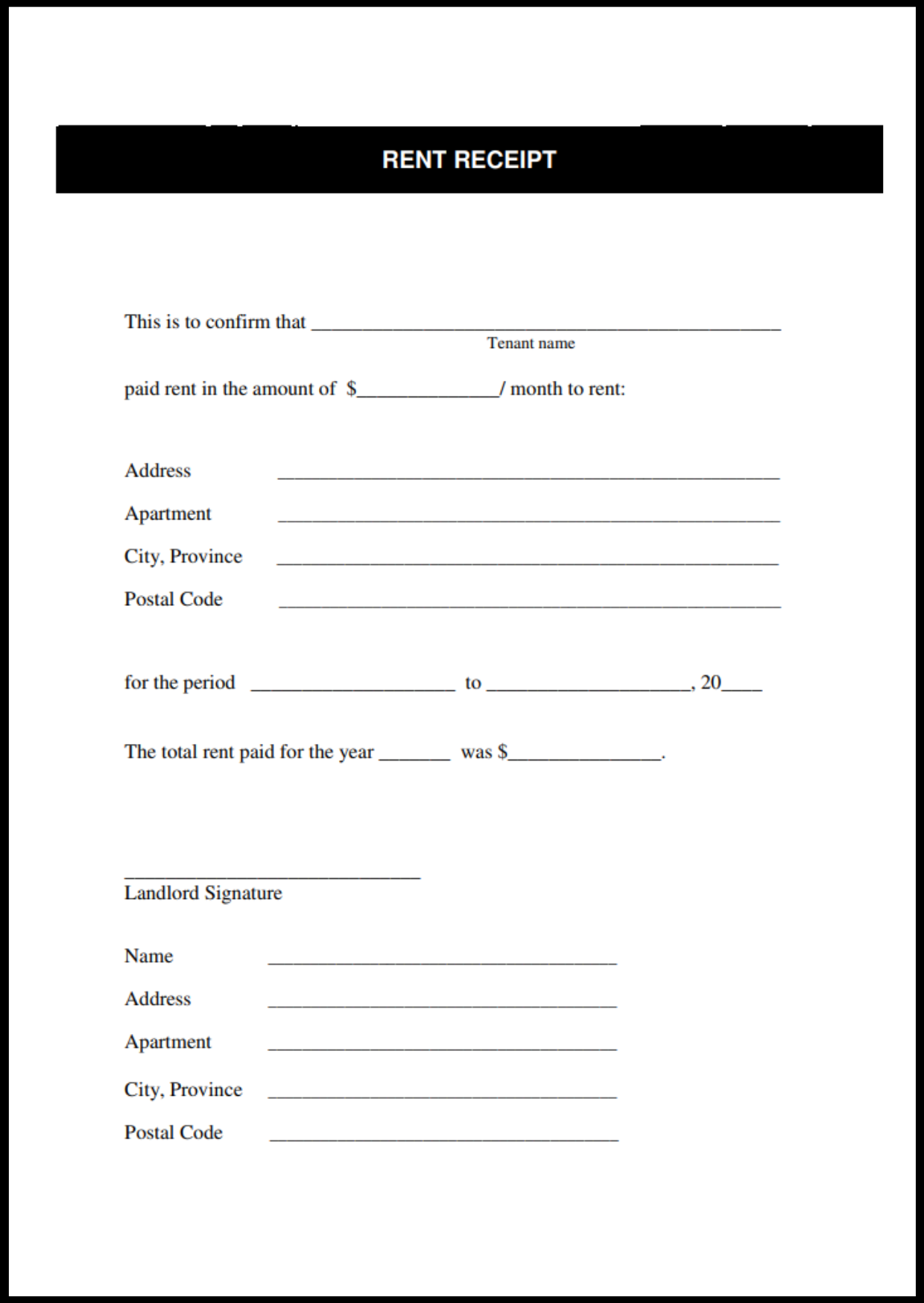
You can use this clean and practical template for any rental situation in Alberta:
What Is a Rent Receipt and Why It Matters in Alberta
A rent receipt is written proof that a tenant has paid rent to a landlord. It confirms the amount, date, and rental period.
Why it matters:
- Acts as proof of payment
- Protects both landlord and tenant
- Helps in disputes or legal situations
- Useful for budgeting and record keeping
Real-life example:
A tenant says, “I already paid last month’s rent in cash.”
The landlord says, “No, you didn’t.”
Without a receipt, it becomes one person’s word against another.
With a receipt, the issue is solved instantly.
A rent receipt serves as proof of payment and is an essential record in any tenancy arrangement. It is commonly used alongside a formal lease contract to maintain financial transparency.
Is a Rent Receipt Required by Law in Alberta?
Under Alberta law, rent receipts are not always automatically required. However, there are important rules to understand.
Key legal points:
-
There is no statutory requirement under the Residential Tenancies Act forcing a landlord to issue a rent receipt, even if a tenant explicitly requests one.
-
Providing a receipt remains an evidenced common law necessity rather than a legislative command—especially for cash payments where tracing is otherwise impossible.
-
There is no federally or provincially mandated format, meaning any clear written document showing the payment details is legally valid.
Legal vs Best Practice:
- Legal obligation: None exists under the RTA. This sets Alberta apart from provinces like Ontario or British Columbia where receipts are strictly mandated by law upon request.
- Best practice: Landlords should systematically issue a receipt for every payment received to maintain a defensible paper trail for the CRA and the RTDRS.”
From a legal expert’s view, giving receipts regularly is the safest approach. It protects you if disputes arise later.
Key Details Every Alberta Rent Receipt Must Include
A proper rent receipt should include complete and clear information. Missing details can create confusion and may reduce its value in legal situations.
Basic Identification Details
This part identifies who is involved and which property is being rented. It should clearly mention landlord name, tenant name, and rental property address.
Payment Information
This section records how much was paid, when it was paid, and how the payment was made. Accuracy here is very important because even small mistakes can cause issues later.
Rental Period Covered
The receipt must clearly mention the time period for which rent is paid. For example, it can be monthly or any custom period agreed by both parties.
Signature or Confirmation
The landlord should sign the receipt or provide confirmation. This makes the document more reliable and valid as proof.
If any of these details are missing, the receipt may not be strong enough to support your claim in case of dispute.
This document is especially useful when managing ongoing payments under a month-to-month lease agreement or during rent adjustments using a rent increase notice.
When Should You Issue a Rent Receipt?
It is always better to issue a receipt after every payment. This keeps records clear and avoids confusion later. Even though law requires it only on request, regular use is considered best practice.
You should always issue receipts in situations like:
- Cash payments
- Partial payments
- Advance rent
- Late payments
For example, in shared accommodation, different roommates may pay separately. Without receipts, it becomes difficult to track who has paid and who has not.
How to Fill Out an Alberta Rent Receipt (Step-by-Step)
Filling a rent receipt is simple if done step by step. It does not require any legal knowledge, just careful entry of details.
Step 1: Add Receipt Number and Date
Start by writing a unique receipt number and the correct date. This helps in tracking records easily.
Step 2: Enter Landlord & Tenant Details
Write full names and include the rental property address. This ensures proper identification.
Step 3: Record Payment Amount & Method
Enter the exact amount received and tick the correct payment method like cash or e-transfer.
Step 4: Mention Rental Period Clearly
Clearly define the start and end date of the rental period to avoid confusion.
Step 5: Sign and Store Copy
The landlord should sign the receipt and keep a copy. It is also good to save a digital version.
Common Mistakes to Avoid
Many people ignore small details while making receipts, which later creates big problems. These mistakes can weaken your proof in legal situations.
Common mistakes include:
- Not giving receipts for cash payments
- Missing rental period details
- Writing wrong amounts
- Not keeping a copy
- Using unclear or incomplete format
These errors can lead to disputes, confusion, and even legal trouble if proper records are not maintained.
Can Rent Receipts Be Used for Taxes in Canada?
Rent receipts can be helpful for both tenants and landlords when it comes to taxes. They act as supporting documents for financial records.
Tenants may use them for rental benefit claims or certain tax credits, depending on the program. Landlords use receipts to report rental income properly.
However, this information is general. For exact tax rules, it is better to consult a tax professional.
Digital vs Paper Rent Receipts: Which Is Better?
Both digital and paper receipts are acceptable in Alberta. The choice depends on convenience and situation.
| Type | Benefits |
| Digital Receipts |
Easy storage, quick sharing, less paperwork
|
| Paper Receipts |
Good for cash, simple to use, no technology needed
|
The best approach is to use both. For example, give a paper receipt and keep a digital backup for safety.
What Happens If You Don’t Provide a Rent Receipt?
Not providing a rent receipt can create serious issues. It can lead to misunderstandings and weaken your position in disputes.
Problems may include:
- Tenant claiming unpaid or extra payment
- No proof in court or legal matters
- Loss of trust between both parties
For example, if a landlord does not give receipts for cash payments, later it becomes difficult to prove how much was actually paid.
Alberta Rent Receipt vs Lease Agreement
| Feature | Rent Receipt | Lease Agreement |
| Purpose | Proof of payment | Legal rental contract |
| Timing | After payment | Before tenancy |
| Legal Role | Evidence | Binding agreement |
A rent receipt only proves payment, while a lease agreement defines the full terms and conditions of the rental.
FAQs About Alberta Rent Receipts
Do landlords have to give receipts for rent in Alberta?
Yes, landlords must provide a receipt if the tenant requests one. This is especially important for cash payments as proof of payment.
Can I write my own rent receipt?
Yes, you can create your own rent receipt. It should include key details like tenant name, amount paid, date, and signature.
Is an email rent receipt valid?
Yes, digital receipts such as email or PDF are valid. They must clearly show payment details to be accepted as proof.
What if I lose my rent receipt?
If you lose your receipt, you can ask your landlord for a copy. Keeping digital backups is always a good idea.
Can rent receipts be used in court?
Yes, rent receipts can be used as evidence in court. They must be properly filled out and signed to be valid.