Ontario Sworn Affidavit Form (Free Template & Guide)
Ontario Sworn Affidavit is a written statement of facts that you promise is true under oath. It is commonly used in courts, legal matters, and official processes across Ontario.
A sworn affidavit helps you prove facts legally without always needing to appear in court. This makes it a powerful and widely used legal document.
I have seen affidavit applications delayed or rejected in Ontario simply because the statement was signed incorrectly or important facts were left out. When someone is already dealing with court deadlines or legal stress, even a small mistake in a sworn affidavit can create serious problems later.
Last Updated: September 2026
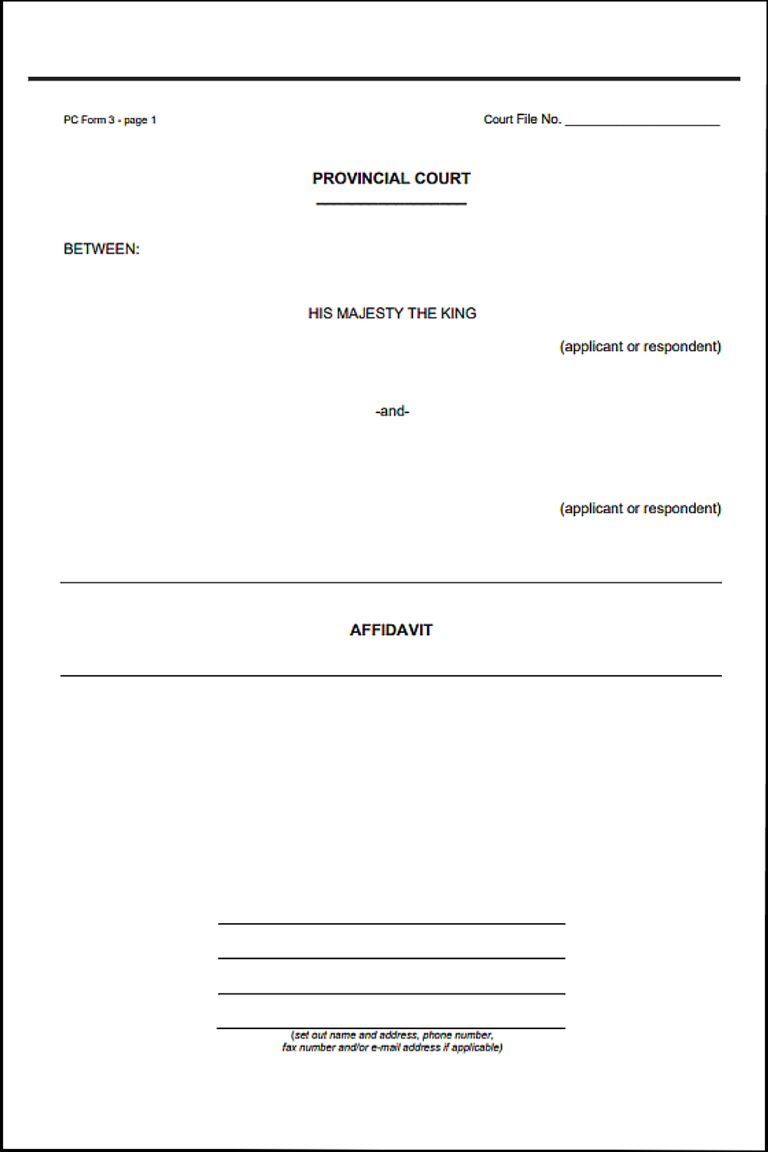
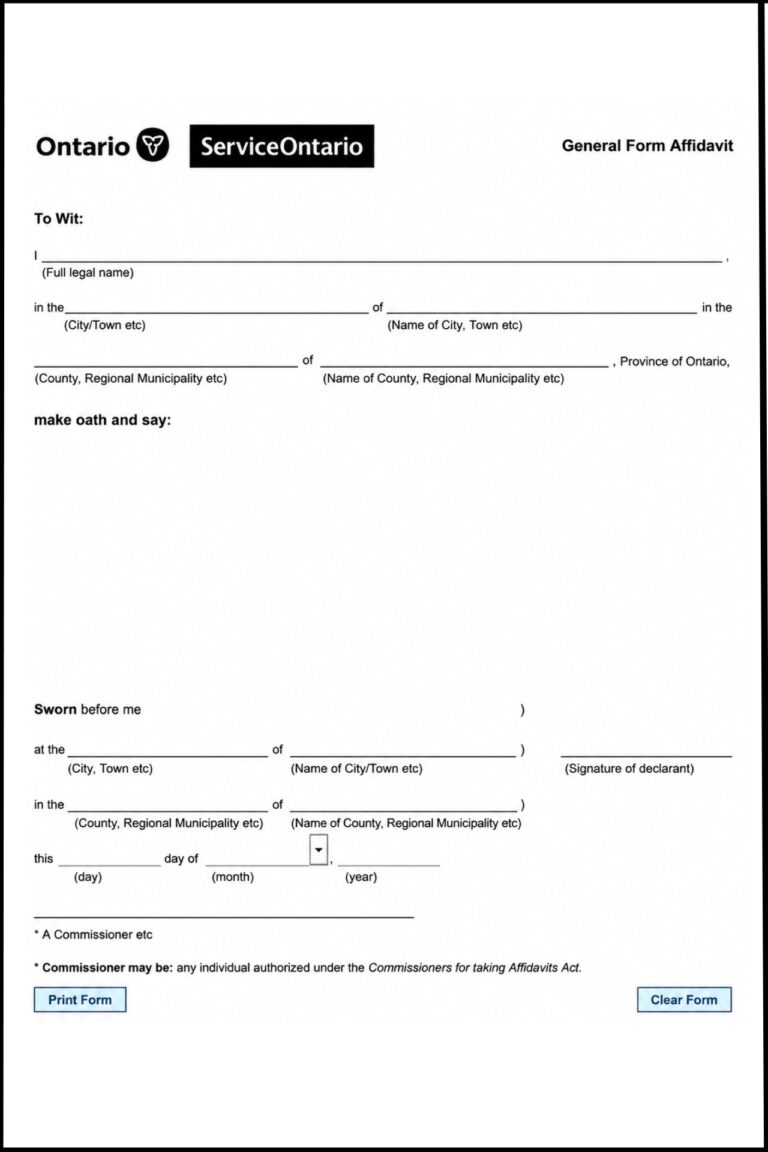
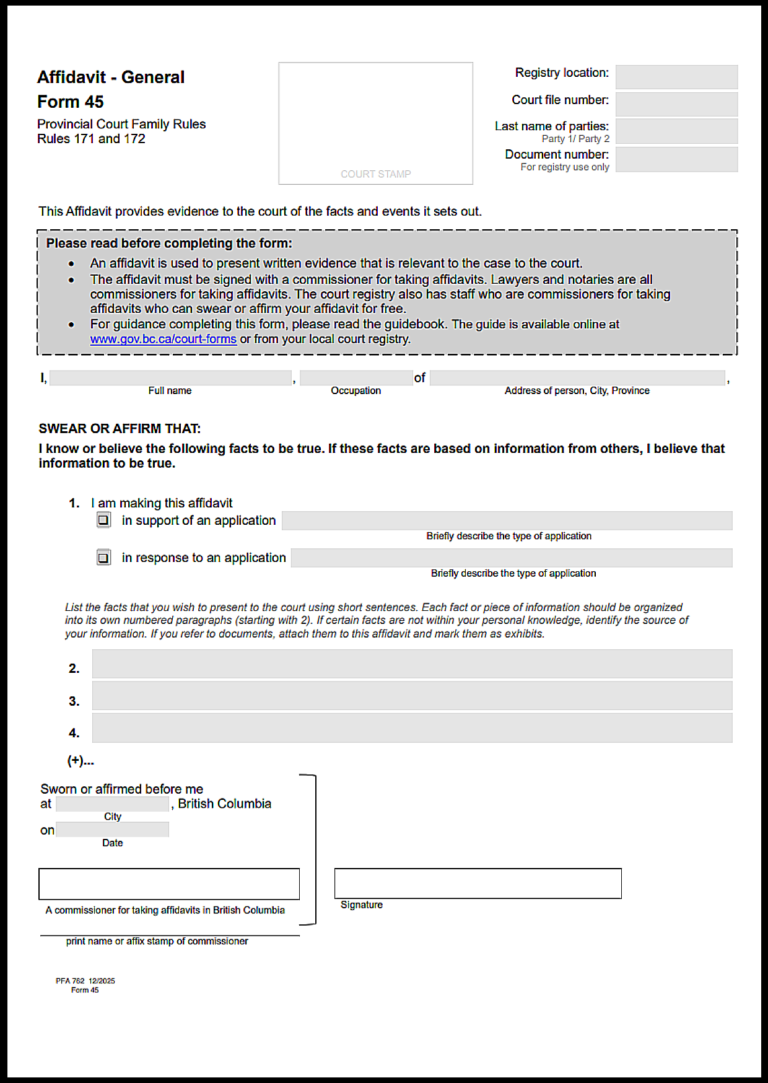
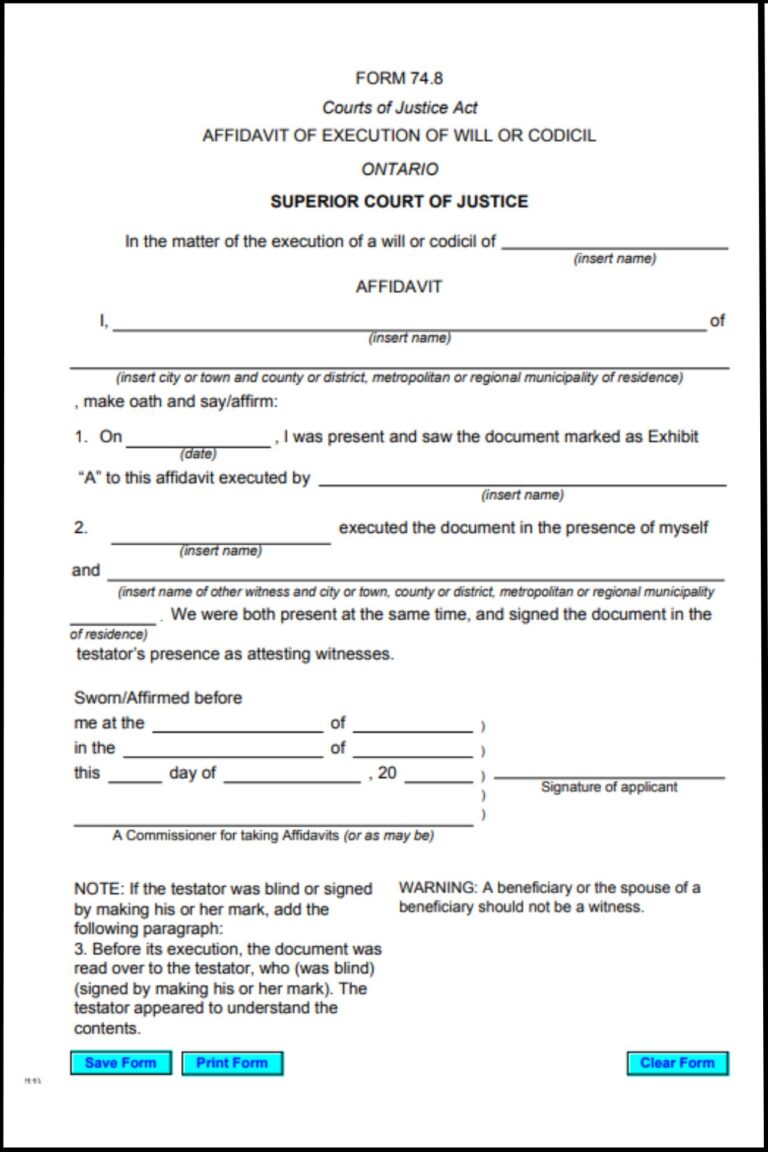
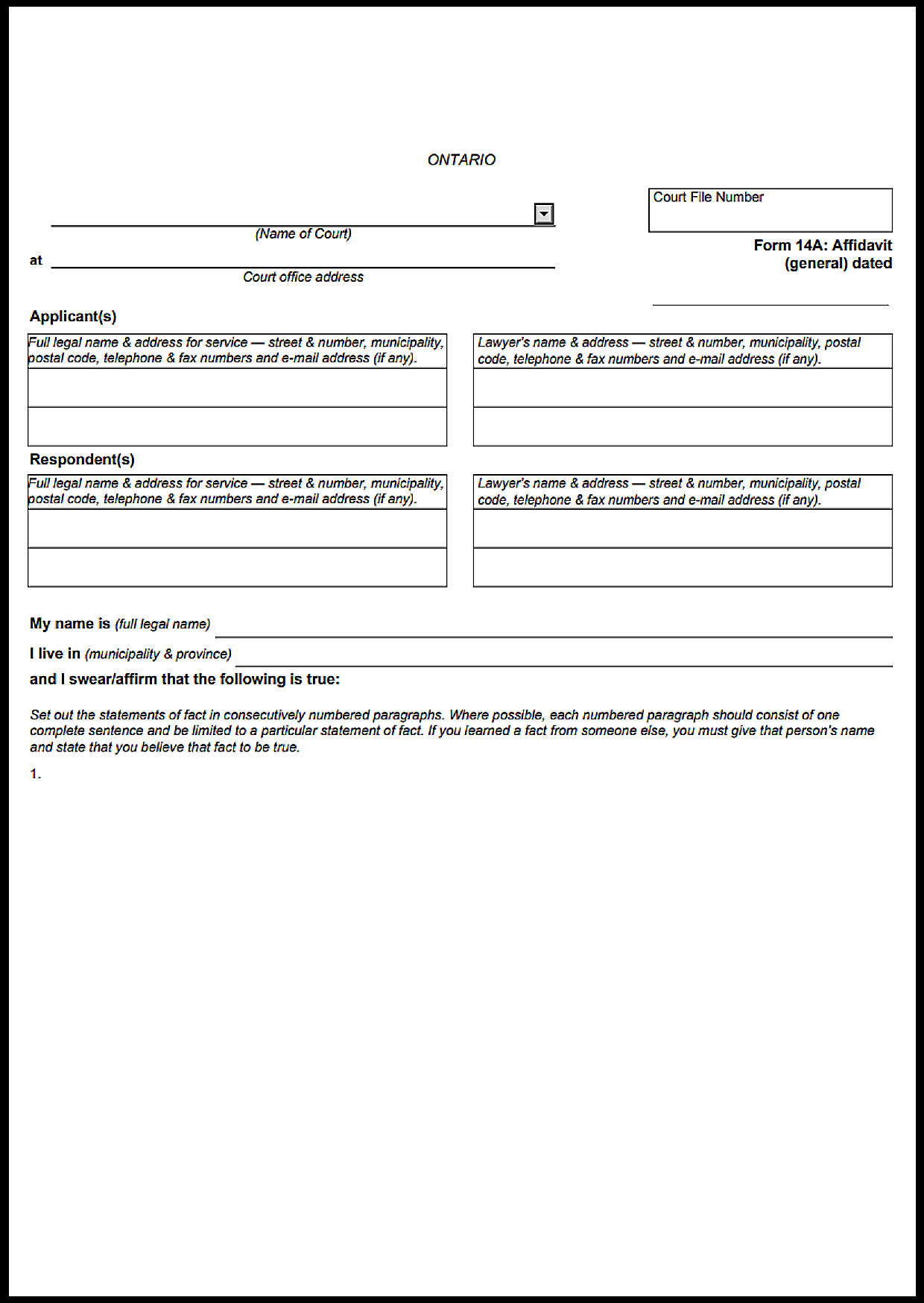
Free Ontario Sworn Affidavit Template
Below is a simple and legally usable Ontario sworn affidavit template. You can copy, edit, and use it based on your situation.
Ontario Sworn Affidavit Rules, Court Requirements & Commissioner Laws
| Topic / Issue | Ontario Legal Rule | Governing Statute |
|---|---|---|
| Governing legislation | Ontario sworn affidavits are mainly governed by provincial affidavit and evidence laws. | Commissioners for Taking Affidavits Act, R.S.O. 1990, c. C.17 |
| Evidence and oath rules | Ontario evidence law governs the use of oaths and affirmations and related evidence requirements. | Evidence Act, R.S.O. 1990, c. E.23 |
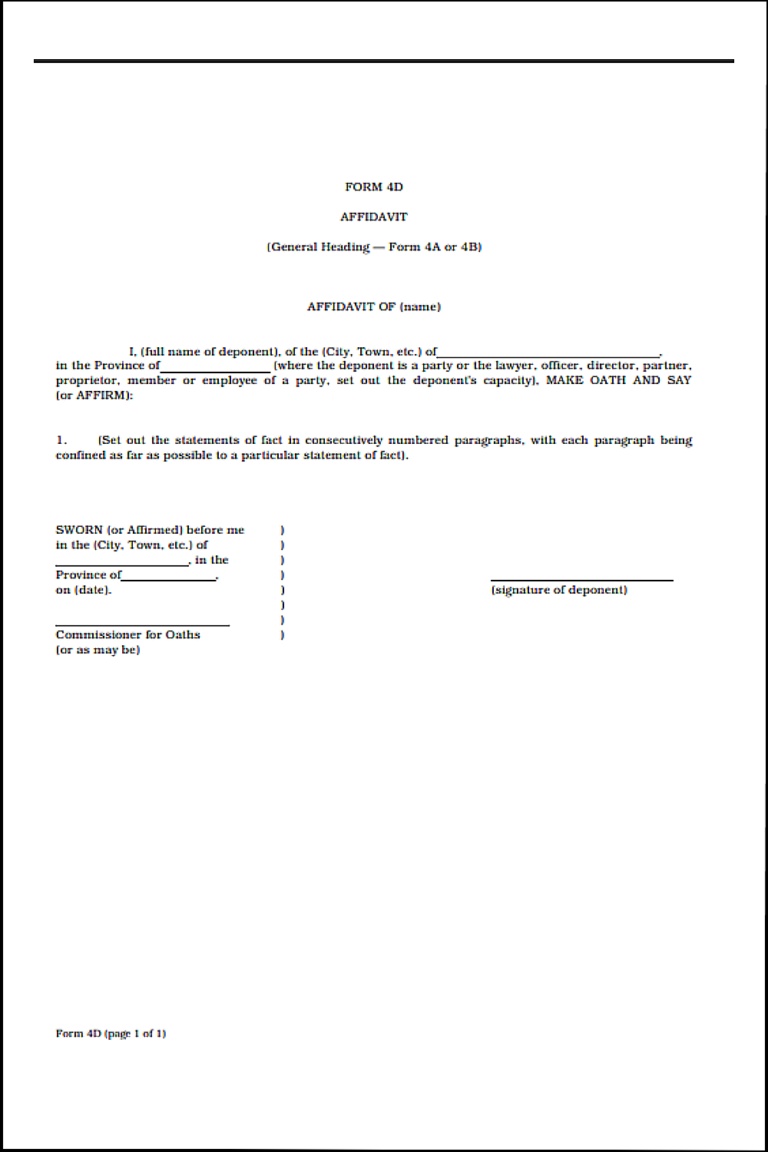
| Court affidavit formatting | Affidavits used in Ontario civil proceedings must comply with the applicable Rules of Civil Procedure, including Rule 4.06. | Rules of Civil Procedure, R.R.O. 1990, Reg. 194, Rule 4.06 |
| Federal affidavit use | Federal requirements may apply when an affidavit is submitted in a federal proceeding or federal administrative process, so the requirements of the particular authority should be checked. | Canada Evidence Act, R.S.C. 1985, c. C-5 |
| Remote commissioning | Ontario permits remote administration of oaths and declarations when the requirements of O. Reg. 431/20 are met. | O. Reg. 431/20 |
| Who can sign | The person making the affidavit is the deponent and signs it before it is sworn or affirmed in accordance with the applicable requirements. | Rules of Civil Procedure, Rule 4.06(1) |
| Witness requirement | The affidavit must be sworn or affirmed before a person authorized to administer oaths or affirmations; a separate lay witness is not generally required. | Commissioners for Taking Affidavits Act, s. 9 |
| Authorized commissioner | The affidavit must be sworn or affirmed before a person authorized to administer oaths or affirmations. | Commissioners for Taking Affidavits Act |
| Age requirement | Ontario’s Evidence Act provides that a person of any age is presumed competent to give evidence, subject to the Act’s rules concerning competency and witnesses under 14. | Evidence Act, s. 18 |
| Mental capacity | Ontario’s Evidence Act provides that a person of any age is presumed competent to give evidence, subject to the Act’s rules concerning competency and witnesses under 14. | Evidence Act, s. 18 |
| Filing deadlines | Affidavit service and filing deadlines depend on the proceeding. Rule 39.01 sets specific deadlines for affidavits used on motions and applications. | Rules of Civil Procedure, Rule 39.01 |
| Oath or affirmation wording | The oath or affirmation must be administered in accordance with the applicable Ontario requirements. | Applicable Ontario requirements |
| Remote jurat wording | For remote commissioning, the modified jurat or declaration must indicate that the oath or declaration was administered in accordance with O. Reg. 431/20 and state the required locations of the administrator and deponent or declarant. | O. Reg. 431/20 |
| Exhibit certification | For affidavits governed by Rule 4.06, exhibits referred to in the affidavit must be marked and handled in accordance with Rule 4.06(3). | Rules of Civil Procedure, Rule 4.06(3) |
| Court filing requirement | Court affidavits must be served and filed according to the requirements of the applicable proceeding and court rules. | Ontario court rules and procedures |
| Administrative filing | An affidavit may need to be submitted to a government body, tribunal, or other authority when that authority specifically requires or accepts one. | Applicable authority’s procedures |
| Private affidavit status | A private affidavit is not generally subject to a central government filing requirement, although the person or organization receiving it may have its own submission requirements. | Depends on purpose and receiving authority |
| Pre-signing procedure | Do not sign the affidavit before the oath or affirmation is administered unless the person administering it confirms that the applicable procedure permits the document to be signed in that manner. | Commissioners for Taking Affidavits Act, s. 9 |
| Legal argument restriction | For affidavits governed by the Rules of Civil Procedure, the contents should comply with Rule 4.06 and any applicable exceptions, including the specific rules governing information and belief on motions and applications. | Rules of Civil Procedure, Rule 4.06 |
| Information and belief rule | Where the applicable Rules permit statements based on information and belief, the affidavit should identify the source of the information and the fact of the belief. | Rules of Civil Procedure, Rule 4.06 and Rule 39.01 |
| Ontario paralegal authority | Ontario lawyers and paralegals are commissioners for taking affidavits by virtue of office. Other people may become commissioners through the applicable appointment process. | Commissioners for Taking Affidavits Act; applicable regulations |
| Ontario trial evidence rule | Affidavit requirements depend on the proceeding and purpose for which the affidavit is used. Rule 4.06 addresses affidavit contents, while Rule 39.01 contains specific rules for affidavits used on motions and applications. | Rules of Civil Procedure, Rules 4.06 and 39.01 |
Ontario affidavit requirements depend on how the document will be used. For civil proceedings, Rule 4.06 sets requirements concerning the form, contents, signing and exhibits of affidavits.
The person making the affidavit signs it before a person authorized to administer the oath or affirmation. Ontario also permits remote commissioning when the requirements of O. Reg. 431/20 are followed.
Ontario also has rules about affidavit content and exhibits. For affidavits governed by the Rules of Civil Procedure, the contents generally concern evidence that the deponent could give as a witness, subject to applicable exceptions. Exhibits referred to in an affidavit must also be handled according to Rule 4.06(3).
These rules matter in real situations because affidavits can be used in court proceedings, applications, motions, administrative processes, and other matters where sworn evidence is required. Always check the specific requirements of the court, tribunal, government body, or organization receiving the affidavit.
When to Use This Template
You can use this sworn affidavit template as a starting point in situations such as:
- Court filings in civil or family matters
- Identity or residency matters where an affidavit is specifically requested
- Business or legal declarations where an affidavit is required
- Other proceedings or applications that specifically call for sworn evidence
What Is a Sworn Affidavit in Ontario?
A sworn affidavit is not just an ordinary written statement. It is a formal statement that is sworn or affirmed according to the applicable legal procedure.
This means the person making the affidavit, known as the deponent, confirms the truth of the statements through an oath or affirmation.
In simple terms, the difference is:
- A normal statement → an ordinary written statement
- A sworn affidavit → a formal statement sworn or affirmed according to the applicable legal procedure
Affidavits are governed by laws and procedural rules such as the Commissioners for Taking Affidavits Act, the Evidence Act, and, where applicable, the Rules of Civil Procedure.
A sworn affidavit is a formal statement that may be used as evidence where the applicable law or procedure permits it. For a complete understanding of how affidavits are created and used, refer to the main affidavit template page, which covers core legal requirements.
How the Oath Process Works in Ontario
The commissioning step is straightforward, but the person administering the oath or affirmation must follow Ontario’s requirements.
Swearing vs Affirming
When completing your affidavit, you generally have two ways to confirm the truth of the statement:
- Swearing → making a religious oath
- Affirming → making a solemn non-religious affirmation
An affirmation can have the same force and effect as an oath under Ontario’s evidence law.
Who Can Witness Your Affidavit
The affidavit must be sworn or affirmed before a person authorized to administer oaths or affirmations.
Depending on the circumstances, this can include:
- Lawyers and Licensed Paralegals: Ontario lawyers and paralegals are commissioners for taking affidavits by virtue of office.
- Students at Law: Certain articling students and Law Practice Program candidates are designated as commissioners by virtue of office under Ontario’s current regulations, subject to the applicable conditions.
- Notaries Public: Notaries public have statutory authority to exercise applicable commissioner powers under Ontario law.
- Appointed Commissioners: Other individuals may be appointed as commissioners through the applicable provincial process.
What Actually Happens
In a typical affidavit commissioning process:
- You bring the affidavit and appropriate identification if required.
- The person administering the oath or affirmation confirms your identity.
- You swear or affirm the contents of the affidavit.
- You sign the affidavit as directed by the person administering the oath or affirmation.
- The person administering the oath or affirmation completes the jurat or declaration.
Important: Do not sign the affidavit in advance unless the person administering the oath or affirmation confirms that the applicable procedure permits it.
Legal Validity of a Sworn Affidavit in Ontario
Whether an affidavit meets the applicable formal requirements depends on how and where it will be used. For affidavits governed by Ontario’s Rules of Civil Procedure, Rule 4.06 sets requirements concerning form, contents, signing and exhibits.
When It Is Accepted
An affidavit should be prepared to meet the applicable requirements, including:
- It is sworn or affirmed properly.
- It is signed by the deponent according to the applicable procedure.
- It is administered by a person authorized to administer the oath or affirmation.
- It follows the required format for the proceeding.
- Any required exhibits are properly identified and handled.
Key Validity Rules
Here is a quick summary:
| Requirement | Why It Matters |
| Properly sworn or affirmed |
Confirms that the deponent has made the required oath or affirmation
|
| Signed according to the applicable procedure |
Helps satisfy the formal requirements for the affidavit
|
| Contains appropriate evidence |
Keeps the affidavit within the applicable evidentiary rules
|
| Proper structure used |
Helps satisfy court or authority requirements
|
| Required exhibits properly marked |
Ensures referenced exhibits comply with applicable rules
|
What Can Make It Invalid
Problems can arise when an affidavit does not comply with the applicable requirements. Common issues include:
- Signing the affidavit improperly or outside the required commissioning procedure
- Missing signatures or required jurat information
- Failing to follow the required court form
- Including information that is not permitted under the applicable rules
- Failing to properly identify or mark required exhibits
- Providing false or misleading information
The exact consequence depends on the nature of the defect and the proceeding.
Key Elements of a Proper Sworn Affidavit
Every affidavit should be prepared carefully. The exact requirements depend on the proceeding and authority receiving it.
Deponent Information
This section identifies you as the person making the affidavit. For an affidavit governed by Rule 4.06, the deponent’s full name and relevant identification details should be included in the required form.
Statement of Facts
This is the main part of your affidavit. Facts should generally be presented clearly in numbered paragraphs.
For affidavits governed by Rule 4.06, the affidavit is generally confined to facts that the deponent could give as a witness, subject to applicable exceptions.
Each statement should be:
- Clear and specific
- Relevant to the matter
- Based on evidence the deponent can properly provide
- Easy to understand
Where the applicable Rules permit statements based on information and belief, the affidavit should identify the source of the information and the fact of the belief.
Jurat (Signature Section)
The jurat records the administration of the oath or affirmation. Its wording must comply with the applicable form and procedure.
When an affidavit is commissioned remotely under O. Reg. 431/20, the modified jurat or declaration must indicate that the oath or declaration was administered under the regulation and state the required locations of the person administering it and the deponent or declarant.
Commissioner Details
The person administering the oath or affirmation must complete and sign the jurat or declaration as required by the applicable procedure.
For remote commissioning, additional requirements apply under O. Reg. 431/20, including identity confirmation, real-time communication, location information, reasonable precautions, and record-keeping requirements.
When Do You Need a Sworn Affidavit in Ontario?
In practice, affidavits can be used in many different situations. You may need one when:
- You are involved in a court case
- A court rule requires affidavit evidence
- A tribunal requires an affidavit
- You need to prove identity or another fact for an organization that specifically requests an affidavit
- You are dealing with property or financial matters where sworn evidence is requested
- You are supporting an application or proceeding that specifically requires an affidavit
In most cases, the important question is not simply whether an affidavit can be used, but whether the applicable procedure specifically requires or accepts one.
This general format can be adapted for specific purposes such as an identity verification affidavit or an address confirmation affidavit. You can also review structural guidelines in the affidavit format in Canada to ensure compliance.
Step-by-Step: How to Fill Out a Sworn Affidavit
Filling out an affidavit is straightforward when you follow the requirements that apply to your matter.
- First, write your personal details clearly in the appropriate section. Make sure your name is accurate and consistent with your identification and the proceeding.
- Next, write your facts in numbered paragraphs. Keep them clear, specific, and relevant.
- Review the content carefully. Follow the applicable rules concerning personal knowledge and information and belief.
- Complete any required exhibit references and make sure exhibits are handled according to the applicable rules.
- Leave the commissioning section for the appropriate procedure. Do not sign in advance unless the person administering the oath or affirmation confirms that the procedure permits it.
- Finally, meet with an authorized person to administer the oath or affirmation and complete the jurat or declaration.
For court matters, also check the applicable service and filing deadlines. Rule 39.01 contains specific requirements for affidavits used on motions and applications.
Sworn Affidavit vs Statutory Declaration (Ontario)
Many people are unsure whether to use an affidavit or a statutory declaration. The documents are related, but they are not simply different versions of the same document.
| Feature | Sworn Affidavit |
Statutory Declaration
|
| Oath or affirmation | An affidavit is sworn or affirmed according to the applicable procedure |
A statutory declaration is made as a solemn declaration under the applicable statutory authority
|
| Legal use | Commonly used as evidence where the applicable court, tribunal, or other rules permit |
Used where legislation, a government body, organization, or other authority requires or accepts a statutory declaration
|
| Verification | Sworn or affirmed before a person authorized to administer oaths or affirmations |
Made as a solemn declaration before a person authorized to administer the declaration
|
| Legal effect | Depends on the applicable law and the purpose for which the affidavit is used |
Depends on the statute or authority under which the declaration is made
|
When to Use Each
Use a sworn affidavit when the applicable court, tribunal, statute, or other procedure calls for an affidavit or sworn evidence.
Use a statutory declaration when a statute, government ministry, organization, or other authority specifically requires or accepts a statutory declaration.
The legal effect of either document depends on the law and purpose for which it is used. Knowingly making a false statement under oath or solemn affirmation, with the required intent, can engage the federal Criminal Code, including its provisions concerning perjury and affidavit-related offences.
Common Mistakes to Avoid
Many affidavit problems come from simple procedural or drafting errors. You can reduce the risk by checking the requirements before signing.
Some common mistakes include:
- Writing opinions or conclusions that are not appropriate under the applicable rules
- Using unclear or confusing language
- Forgetting important details
- Missing required signatures or jurat information
- Not numbering statements properly
- Failing to identify or properly handle exhibits
- Signing outside the required commissioning procedure
- Including information based on belief without complying with the applicable information-and-belief rules
Avoiding these mistakes can help prevent unnecessary delays or procedural problems.
Real-Life Example Scenarios
To understand how affidavits may be used, here are a few practical examples.
In a family court matter, a person may submit an affidavit containing facts relevant to an application or motion. The court then considers that evidence under the applicable procedural and evidentiary rules.
In another situation, an organization may request an affidavit to confirm identity, residency, or another fact when its procedures specifically require sworn evidence.
An affidavit may also be used in other proceedings where legislation, court rules, tribunal rules, or an authority’s procedures call for one.
These examples show why the purpose of the affidavit matters. The correct format and commissioning procedure can depend on where the document is being submitted.
Commissioner for Taking Affidavits in Ontario
Where You Can Find One
Depending on your location and the type of document, you may be able to find an authorized commissioner through:
- Law offices
- Notary and commissioner service providers
- Certain government or public offices
- Other persons authorized or appointed under Ontario law
Always confirm in advance that the person is authorized to administer the particular oath or affirmation you need.
Cost
The cost depends on the person or organization providing the service.
Some public or government services may be available without a separate fee, while private lawyers, notaries, commissioners, or other service providers may charge for the service.
It is best to ask about the fee before attending.
Frequently Asked Questions
Is a sworn affidavit legally binding in Ontario?
A properly sworn or affirmed affidavit is a formal legal document. Whether it is accepted as evidence, and what weight it receives, depends on the applicable proceeding and rules.
Can I write my own affidavit?
Yes. You can prepare your own affidavit, but it must comply with the requirements that apply to the proceeding or authority receiving it. Court affidavits may need to follow specific formatting and content rules, including Rule 4.06 of Ontario’s Rules of Civil Procedure.
Do I need a lawyer?
No, a lawyer is not necessarily required to prepare an affidavit. However, legal guidance may be useful when the affidavit concerns a complex proceeding, significant rights, or detailed procedural requirements.
Can I swear an affidavit online?
Yes, Ontario permits remote administration of oaths and declarations when the requirements of O. Reg. 431/20 are met. The process requires real-time communication, identity confirmation, appropriate modified jurat or declaration wording, required location information, and reasonable precautions by the person administering the oath or declaration.
What if the affidavit is false?
Knowingly making a false statement under oath or solemn affirmation, with intent to mislead, can constitute perjury under section 131 of the federal Criminal Code. Other affidavit-related offences may also apply depending on the circumstances.
The consequences depend on the facts and the applicable law.