Ontario Living Will (Free PDF Template, Guide)
Ontario Living Will is a document where you write your medical wishes for the future. It is used if you cannot speak or make decisions for yourself. This helps doctors and your family understand what kind of treatment you want.
I have seen families in Ontario end up in painful disputes because a person’s treatment wishes were only discussed verbally and never written down clearly. I always tell clients that even a simple document can make an enormous difference when doctors or substitute decision-makers are forced to make urgent medical decisions under Ontario’s consent laws.
In Ontario, a living will is not always a separate legal document. It is usually included in a Power of Attorney for Personal Care. Many people also call it an “advance directive,” but this is just an informal name.
This article will help you understand how to use a template, what types exist, when you need it, and how the law works in Ontario.
Last Updated: October 2026
Free Ontario Living Will Template
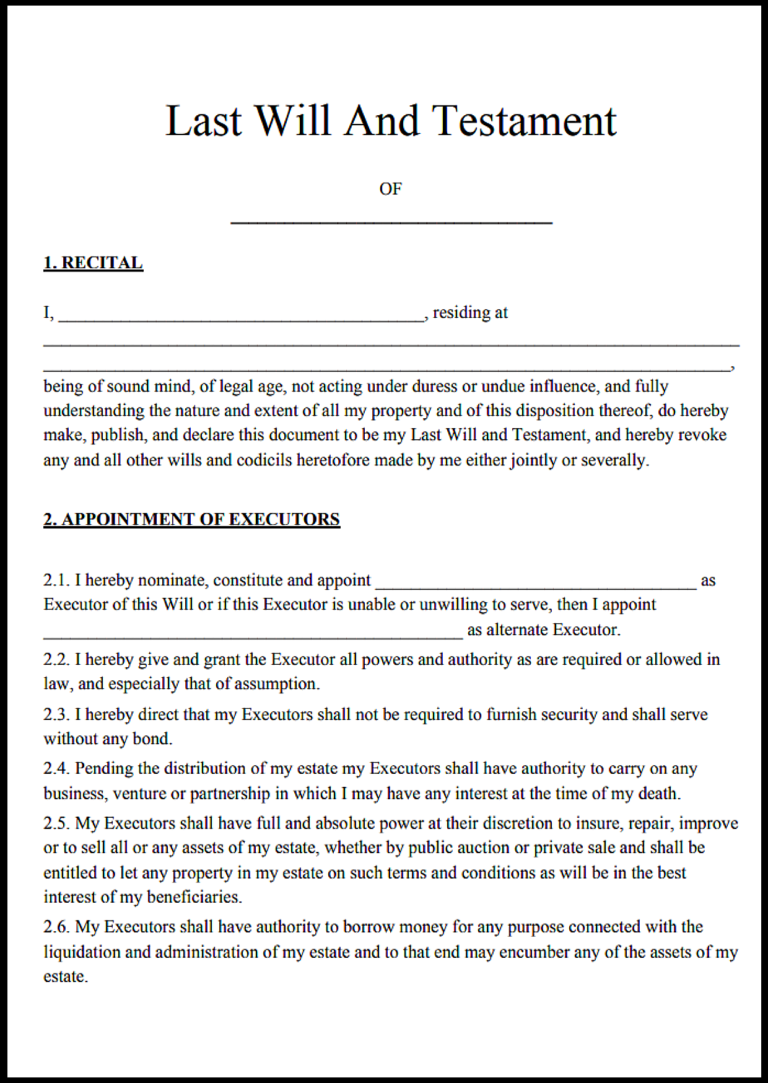
Below is a simple and practical template that works for most people. It covers basic treatment decisions, life support, and end-of-life care.
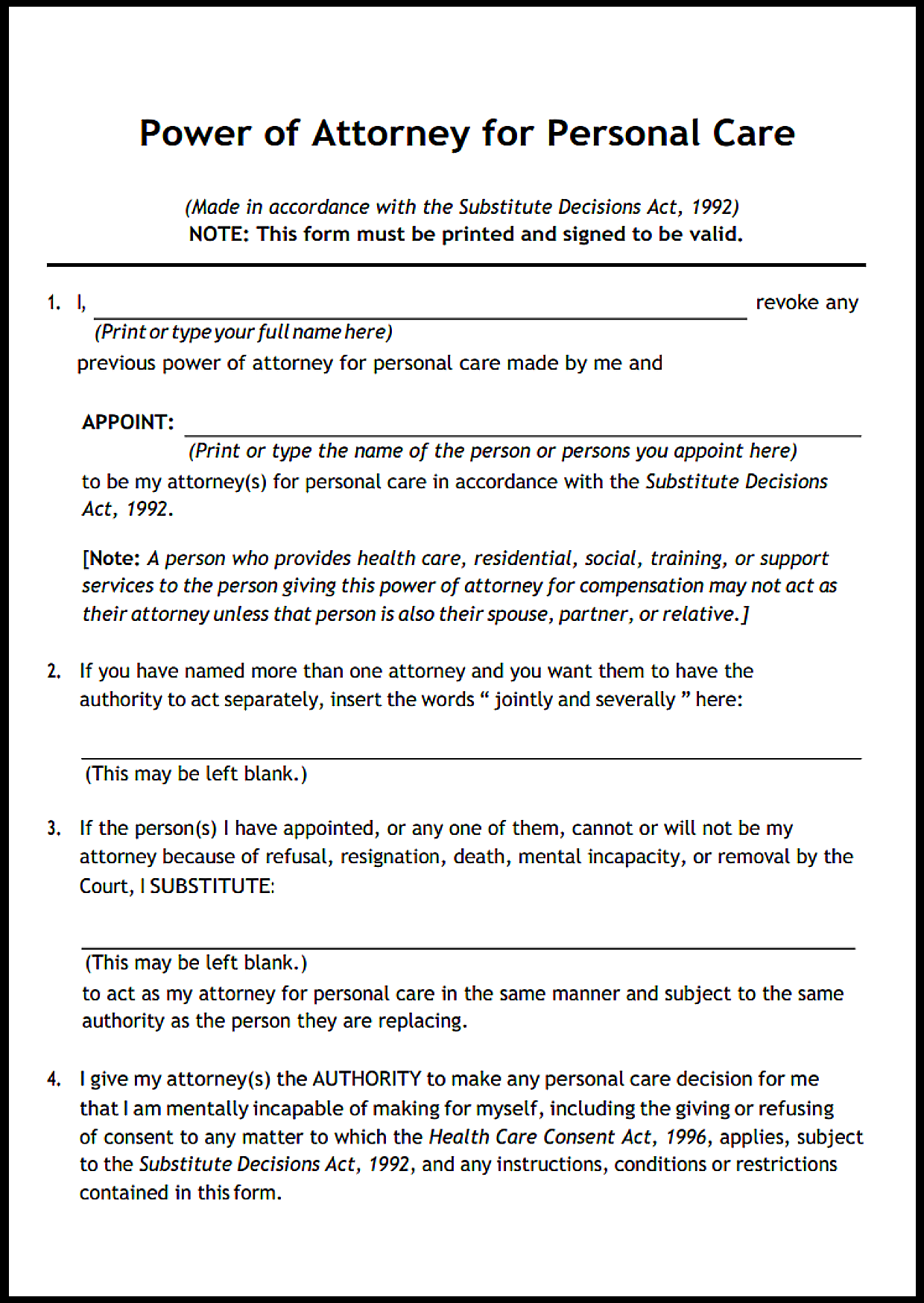
Ontario Living Will Rules, Witness Requirements, and Legal Validity
| Topic / Issue | Ontario Legal Rule | Governing Statute |
|---|---|---|
| Primary governing law | Ontario Living Wills and related personal care authority documents are governed under Ontario substitute decision-making and healthcare consent laws. | Substitute Decisions Act, 1992, S.O. 1992, c. 30 |
| Health care consent authority | Ontario’s Health Care Consent Act, 1996, sets rules for consent to treatment and for substitute decision-makers who act for an incapable person. | Health Care Consent Act, 1996, S.O. 1996, c. 2, Sched. A |
| Federal law involvement | The main rules discussed in this guide come from Ontario legislation, including the Substitute Decisions Act, 1992, and the Health Care Consent Act, 1996. | Provincial legislation |
| Recent amendment | Ontario permits remote witnessing of a Power of Attorney for Personal Care under section 3.1 of the Substitute Decisions Act, 1992. The process must use real-time audio-visual communication, at least one witness must be a licensee under the Law Society Act, signatures must be made contemporaneously, and any prescribed requirements must be met. | SDA, s. 3.1 |
| Who can sign | A person making a Power of Attorney for Personal Care must meet Ontario’s minimum-age and capacity requirements. | SDA, ss. 44 and 47 |
| Witness requirements | A Power of Attorney for Personal Care must be signed in the presence of two witnesses, each of whom must sign as a witness. Ontario’s remote-witnessing rules may apply if their statutory conditions are met. | SDA, ss. 3.1 and 48(1) |
| Disqualified witnesses | Under sections 48(2) and 10(2) of Ontario’s Substitute Decisions Act, 1992, prohibited witnesses include the attorney or the attorney’s spouse or partner, the grantor’s spouse or partner, the grantor’s child or a person the grantor has demonstrated a settled intention to treat as their child, a person whose property is under guardianship or who has a guardian of the person, and anyone under 18. | SDA, ss. 48(2) and 10(2) |
| Notarization requirement | Ontario’s Substitute Decisions Act, 1992, sets out the signing and witnessing requirements for a Power of Attorney for Personal Care and does not generally require notarization. Check whether a separate receiving authority has additional requirements for the document you are using. | SDA, s. 48 |
| Minimum age requirement | Ontario government guidance states that a person must be at least 16 years old to make a Power of Attorney for Personal Care. The person must also meet the capacity test in section 47(1). | SDA, ss. 44 and 47(1) |
| Mental capacity requirement | A person is capable of giving a Power of Attorney for Personal Care if they can understand whether the proposed attorney has a genuine concern for their welfare and appreciate that they may need the proposed attorney to make decisions for them. | SDA, s. 47(1) |
| Expiry rules | A Power of Attorney for Personal Care may be terminated in the circumstances set out in section 53 of the Substitute Decisions Act, 1992. The effect of a particular document should be checked against the statute and the circumstances. | SDA, s. 53 |
| Required intent language | A written Power of Attorney for Personal Care may authorize the named attorney to make personal-care decisions on the grantor’s behalf, subject to Ontario’s statutory requirements. | SDA, s. 46(1) |
| Healthcare wishes rule | A substitute decision-maker who knows of an applicable wish expressed by the person while capable and after attaining 16 years of age must give or refuse consent in accordance with that wish. If no applicable wish is known, or compliance is impossible, the substitute decision-maker must act in the person’s best interests. | HCCA, s. 21(1) |
| Filing requirement | This article does not identify a general filing step for the healthcare wishes described here. Keep the document accessible and share it with the people who may need to understand or apply your wishes. Confirm any document-specific requirements with the relevant authority. | Confirm requirements for the specific document |
| Storage recommendation | Copies should be shared with the Attorney, family members, and the Grantor’s doctor. | Ontario practice guidance |
| Improper witnessing | A Power of Attorney for Personal Care that does not meet the statutory execution requirements may be ineffective, although the court has a limited power under section 48(4) to declare a non-compliant document effective in the grantor’s interests. | SDA, ss. 48(2)–(4) |
| Contemporaneous signing rule | The grantor and witnesses must sign in each other’s presence, physically or under Ontario’s remote-witnessing rules where the statutory conditions are met. | SDA, ss. 3.1 and 48(1) |
| Mental incapacity at signing | The grantor must meet the capacity test in section 47(1) when giving a Power of Attorney for Personal Care. | SDA, s. 47(1) |
| Ontario minimum age difference | Ontario government guidance states that a person must be at least 16 years old to make a Power of Attorney for Personal Care. Age rules differ across jurisdictions, so do not apply this Ontario rule to other provinces. | SDA, s. 44; Ontario government guidance |
| Ontario “Living Will” difference | Ontario law provides for written healthcare wishes and for a Power of Attorney for Personal Care, which appoints an attorney to make personal-care decisions. A wish may also be relevant under the Health Care Consent Act, 1996, even if it does not appoint an attorney. | SDA, s. 46; HCCA, s. 21 |
In Ontario, recording healthcare wishes and appointing someone to make personal-care decisions are two different planning steps. A Power of Attorney for Personal Care appoints an attorney, while a prior wish may still be relevant under section 21 of the Health Care Consent Act, 1996. A written statement of wishes does not, by itself, appoint an attorney.
Ontario has specific rules about who may witness a Power of Attorney for Personal Care. The prohibited-witness rules include the attorney, certain family members and anyone under 18. Sections 48(2) and 10(2) of the Substitute Decisions Act, 1992, set out the relevant exclusions, so check the list before signing.
Ontario government guidance states that a person must be at least 16 years old to make a Power of Attorney for Personal Care, and the person must also meet the statutory capacity test. The rules for other provinces may differ. Before using a template, check that it distinguishes healthcare wishes from a formal appointment and reflects Ontario’s signing requirements.
What Is an Ontario Living Will?
A living will is an informal term for a document that records healthcare wishes for a future situation. In Ontario, those wishes may be relevant under the Health Care Consent Act, 1996. The applicable consent and capacity rules depend on the treatment decision and the circumstances.
You might record preferences about resuscitation, life-sustaining treatment, pain relief or comfort-focused care. Clear wording can help others understand your priorities if a future treatment decision is difficult.
Under section 21(1) of Ontario’s Health Care Consent Act, 1996, a substitute decision-maker who knows of an applicable wish expressed while the person was capable and after attaining 16 years of age must follow it. If no applicable wish is known, or compliance is impossible, the substitute decision-maker must act in the person’s best interests.
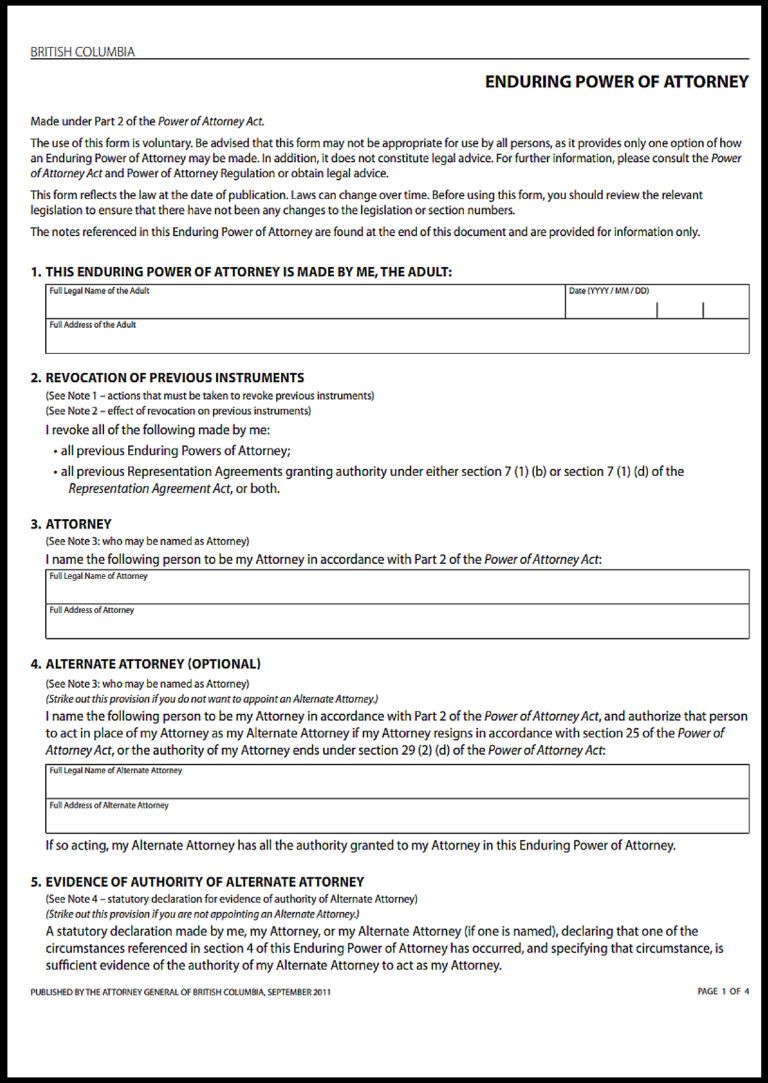
A Power of Attorney for Personal Care lets you appoint an attorney to make personal-care decisions when authorized under Ontario law. You can also record instructions about those decisions. The appointment and the statement of wishes serve different purposes.
Understanding how a living will works in Ontario is essential when planning future medical decisions. This guide explains the structure and legal purpose of these documents, while also connecting with related forms like the personal directive used for healthcare instructions. You can also explore how this document compares to other estate tools through the difference between living wills and power of attorney.
Types of Living Will Arrangements in Ontario
People record healthcare wishes in different ways, from a short statement of preferences to a detailed advance-care plan. These are descriptive planning approaches, not necessarily separate statutory document types in Ontario. If you want to appoint someone to make personal-care decisions, consider a Power of Attorney for Personal Care.
Basic Living Will (General Medical Wishes)
A short statement can record your priorities, values and treatment preferences. In Ontario, an applicable wish may be relevant to a substitute decision-maker under section 21 of the Health Care Consent Act, 1996. Use specific wording so the person applying your wishes can understand what matters to you.
Living Will Within Power of Attorney for Personal Care
A Power of Attorney for Personal Care lets you appoint an attorney to make personal-care decisions when authorized under Ontario law. You can also include instructions about decisions the attorney may make. Sections 46 and 47 of the Substitute Decisions Act, 1992, address the appointment and capacity requirements.
Whether this arrangement is appropriate depends on your circumstances and the decisions you want to plan for. Consider legal advice if you need help choosing or preparing the document.
End-of-Life Directive (Life Support Decisions)
Some people focus their advance-care wishes on life-sustaining treatment, resuscitation or comfort care. Describe your wishes as clearly as possible, then discuss them with your healthcare team and attorney for personal care so the instructions can be understood in context.
Mental Health Care Directive
If you want to record preferences about mental healthcare, explain those preferences clearly and discuss them with a qualified healthcare professional. Do not assume that a document labelled a “mental health directive” automatically operates as a separate statutory instrument in Ontario.
Detailed Advance Care Plan (Expanded Version)
A detailed advance-care plan can explain your values, beliefs, goals and preferences for different treatment scenarios. It can help your attorney or other substitute decision-maker understand what matters to you, although it does not itself appoint an attorney.
Real-Life Situations Where a Living Will Helps
Advance-care wishes are useful when a future treatment decision may be difficult or you may not be able to express your preferences. In Ontario, the relevant consent and capacity rules matter; inability to speak does not by itself answer every legal question about who may consent to treatment.
You might want to explain your views on resuscitation, life-sustaining treatment, pain relief or comfort-focused care. Specific preferences are easier to understand than broad phrases that do not explain what you mean.
Review your wishes when your health, relationships or preferences change, and make sure the people who may need the document know where to find it.
Recording mental-health preferences may help communicate your priorities, but do not assume that a document labelled a mental health directive automatically determines treatment decisions in every circumstance.
Clear healthcare wishes can help family members and healthcare professionals understand your priorities. They do not guarantee a particular treatment outcome, and they do not replace the statutory consent process.
Advance-care planning may involve several documents. Review the linked advance care directive for long-term medical planning to understand how it relates to your wishes, and make sure each document’s purpose is clear under Ontario law.
Key Elements of a Valid Living Will in Ontario
Clear, specific healthcare wishes are easier for others to understand and apply. Ontario’s signing rules for a Power of Attorney for Personal Care should not be confused with the rules governing whether a prior wish is relevant under the Health Care Consent Act, 1996.
Clear Medical Instructions
Describe the treatments or outcomes that matter to you, and explain the circumstances in which a preference should apply. Avoid broad phrases such as “no extreme care” unless you explain what you mean.
Consent and Refusal Statements
You may wish to record preferences about resuscitation, life-sustaining treatment and pain relief. Discuss medical questions with a qualified healthcare professional so your instructions reflect your priorities and are understandable.
Personal Values and Wishes
Explain the values behind your preferences. If a future situation is not covered by a specific instruction, those values may help your attorney or substitute decision-maker understand what matters to you.
Naming a Substitute Decision-Maker
A Power of Attorney for Personal Care is the Ontario instrument used to appoint an attorney to make personal-care decisions. A separate statement of wishes does not appoint that person; consider whether you need both documents.
Signature and Witness Requirements
If you are signing a Power of Attorney for Personal Care, follow the two-witness requirement in section 48 of the Substitute Decisions Act, 1992, including the restrictions on who may witness it. A separate statement of wishes should not automatically be treated as having the same execution requirements.
How to Create an Ontario Living Will?
Start by recording the treatments and outcomes that matter most to you. Use concrete language so another person can understand what you mean.
Then decide whether you also want to appoint an attorney for personal care. A statement of wishes does not appoint an attorney by itself.
If you use a template, check that it reflects Ontario law and clearly distinguishes your healthcare wishes from a Power of Attorney for Personal Care.
If you prepare a Power of Attorney for Personal Care, check Ontario’s two-witness requirement and the rules about who may act as a witness before signing. Keep the document accessible and share it with the people who may need to understand or apply your wishes.
Legal Overview in Ontario (What You Should Know)
In Ontario, distinguish between recording healthcare wishes and appointing an attorney for personal care. The Health Care Consent Act, 1996, addresses how substitute decision-makers apply known, applicable prior wishes; the Substitute Decisions Act, 1992, governs Powers of Attorney for Personal Care.
Here is a simple table to understand the legal framework:
| Topic | Explanation |
| Legal Status |
“Living will” is an informal term for healthcare wishes; it does not itself appoint an attorney.
|
| Governing Law | |
| Health Decisions |
Health Care Consent Act
|
| Doctor’s Role |
Treatment consent follows the applicable statutory rules.
|
| Decision-Maker Role |
Must follow a known, applicable prior wish under HCCA s. 21(1), or act in the person’s best interests when the statutory fallback applies.
|
Under section 21(1) of Ontario’s Health Care Consent Act, 1996, a substitute decision-maker must follow an applicable wish expressed by the person while capable and after attaining 16 years of age, if the decision-maker knows of the wish. If no applicable wish is known, or it is impossible to comply with it, the decision-maker must act in the person’s best interests.
Common Mistakes to Avoid
-
Many people make small mistakes that can create big problems later. One common mistake is writing unclear instructions like “no extreme care” without explaining what that means.
-
Another issue is not updating the document after major life changes such as marriage, illness, or aging.
-
Some people also forget to inform their family or decision-maker, which makes the document useless in emergencies.
-
Using US-based templates is another common mistake, as they may not follow Ontario law properly.
Avoiding these issues can make your living will much more effective.
How to Choose the Right Living Will Type?
Choose the arrangement based on your goal. If you want to record healthcare preferences, write them clearly and discuss them with your healthcare team. If you want to appoint someone to make personal-care decisions, consider a Power of Attorney for Personal Care under Ontario law. You may need both, but the documents serve different purposes.
| Your Situation | Best Option |
| Basic planning | Basic Living Will |
| Need a decision-maker |
Power of Attorney for Personal Care
|
| Focus on life support |
End-of-Life Directive
|
| Mental health planning |
Mental Health Directive
|
| Detailed planning |
Advance Care Plan
|
These labels are descriptive planning options, not confirmed separate statutory document types. Focus on whether you want to record wishes, appoint an attorney, or do both.
Frequently Asked Questions
Is a living will legally valid in Ontario?
A healthcare wish may be relevant under Ontario’s Health Care Consent Act, 1996, if it applies to the circumstances and was expressed while the person was capable and after turning 16. A living will does not, by itself, appoint an attorney for personal care. The effect of a particular document depends on its wording and the applicable legal rules.
Do I need a lawyer to create one?
A lawyer is not generally required simply to record healthcare wishes. Legal advice may be helpful if you are preparing a Power of Attorney for Personal Care, have complex circumstances, or want to make sure the documents work together as intended.
What is the difference between a living will and POA?
A living will is an informal term for a record of healthcare wishes. A Power of Attorney for Personal Care appoints an attorney to make personal-care decisions when authorized under Ontario law. The two serve different purposes.
Can I change my living will later?
You can revise your healthcare wishes as your preferences change. If you have signed a Power of Attorney for Personal Care, check the statutory rules before replacing or revoking it, and make sure the people who hold copies receive the updated document.
Who should keep a copy?
Consider giving a copy to your attorney for personal care, relevant family members and your healthcare provider, and tell them where the current version is kept.
What happens if I don’t have one?
If you have not recorded your wishes, a substitute decision-maker may need to make treatment decisions under Ontario’s statutory rules. Recording your preferences and discussing them with the people close to you can help them understand your values.