British Columbia Rent Increase Notice Template Guide
British Columbia Rent Increase Notice is a legal document landlords must use to increase rent properly under BC law. If the process is not followed correctly, the increase becomes invalid and tenants do not have to pay it.
Under British Columbia law, rent increases are strictly regulated. This means landlords cannot increase rent anytime or by any amount. I have seen BC landlords lose months of expected rent increases because the notice was served a few days too early or used the wrong approved form. I also regularly speak with tenants who panic after getting a rent increase notice and do not realize the increase may be invalid if the legal steps were not followed exactly.
They must follow rules set under the Residential Tenancy Act, including timing, notice period, and yearly limits. This guide explains everything in simple terms so both landlords and tenants can understand their rights.
Last Updated: August 2026
Table of Contents
ToggleFree British Columbia Rent Increase Notice Template
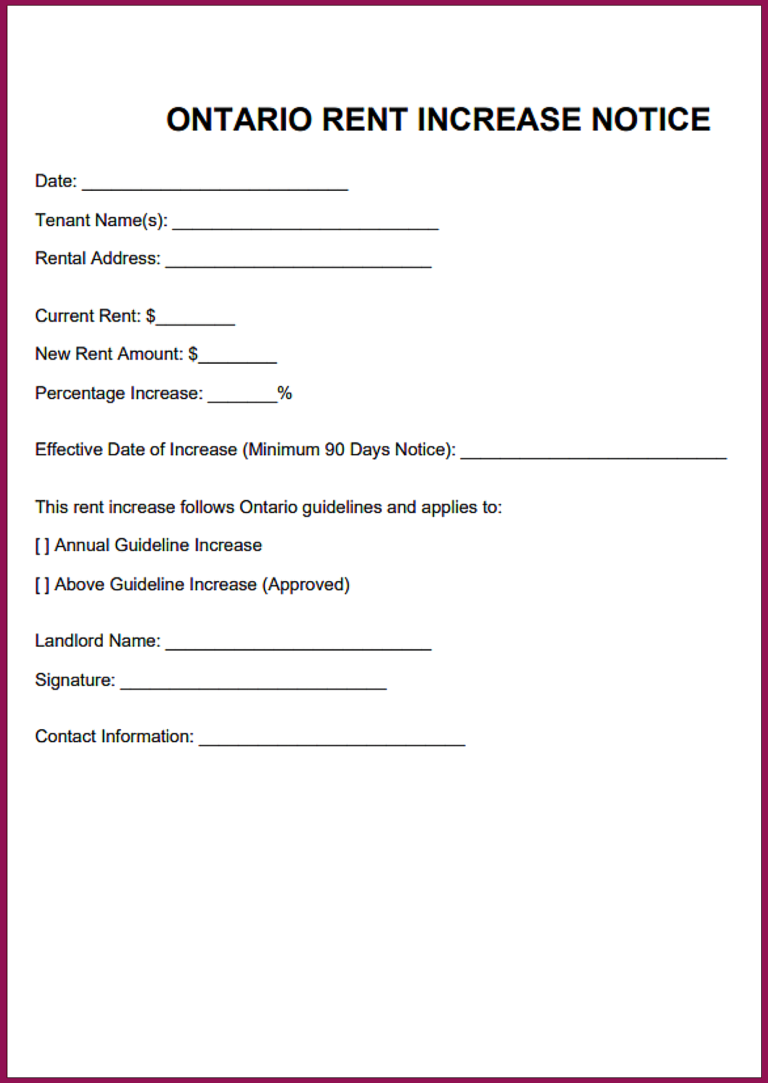
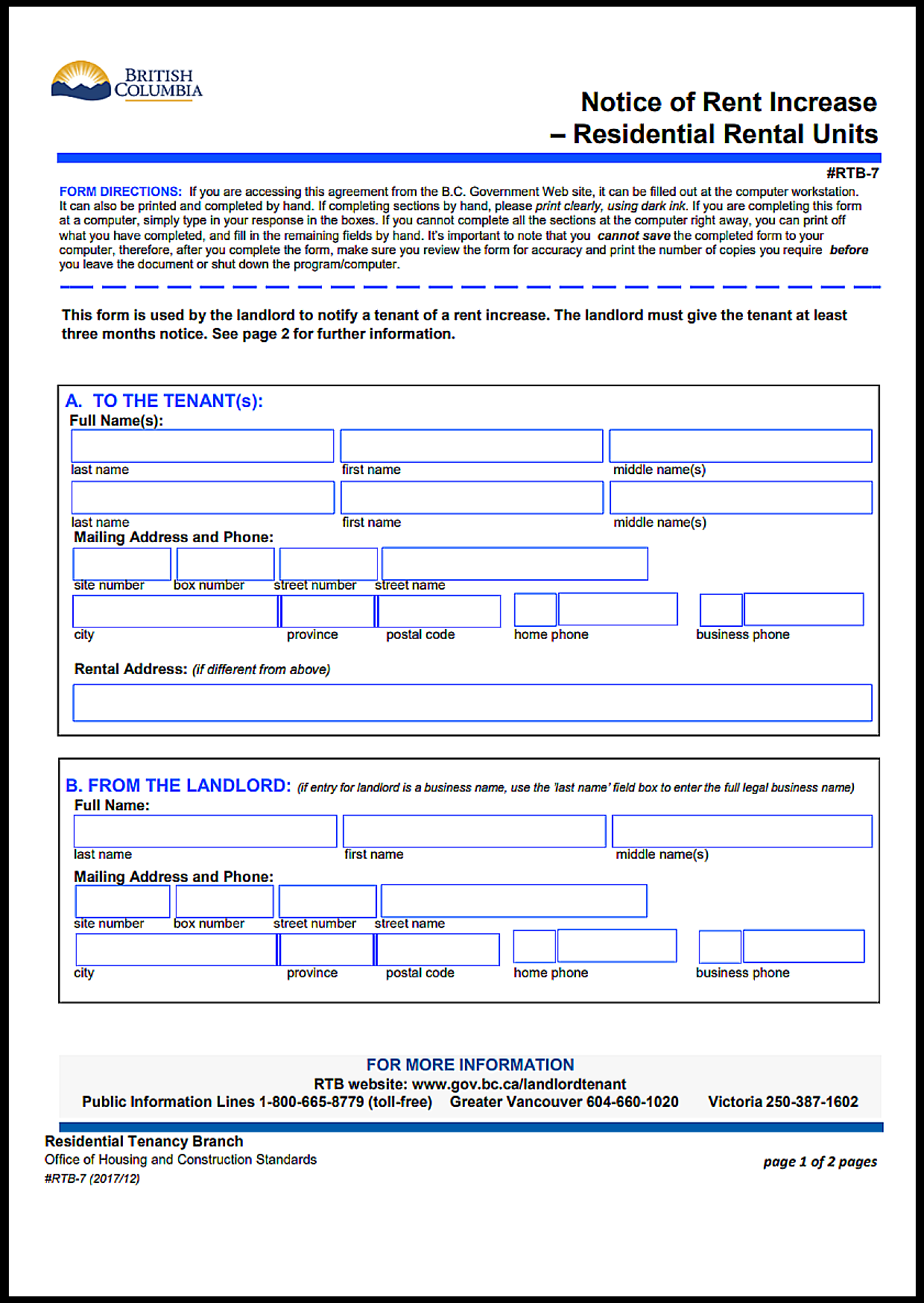
You can use this simple and legally structured template for BC rent increases. It includes all required details that must be present in the notice.
British Columbia Rent Increase Laws and Notice Requirements
| Topic / Issue | British Columbia Legal Rule | Governing Statute |
|---|---|---|
| Governing legislation | Residential rent increases in BC are governed by the Residential Tenancy Act and Residential Tenancy Regulation. | Residential Tenancy Act [SBC 2002] c. 78; Residential Tenancy Regulation |
| Federal law | Residential tenancy rules for ordinary residential tenancies are primarily governed by provincial or territorial law. | Residential Tenancy Act |
| 2026 annual limit | The maximum annual rent increase for residential tenancies in 2026 is 2.3%. | Ministerial Order under the Residential Tenancy Regulation |
| Who can sign | The landlord must use the approved RTB-7 Notice of Rent Increase form when giving a rent increase notice. | Residential Tenancy Act, s. 42(3) |
| Witness requirement | The Residential Tenancy Act does not require a witness signature on the RTB-7 rent increase notice. | Residential Tenancy Act, s. 42 |
| Notarization | The Residential Tenancy Act does not require the RTB-7 rent increase notice to be notarized. | Residential Tenancy Act, s. 42 |
| Capacity requirement | The Residential Tenancy Act does not impose a general age-19 requirement for entering a tenancy agreement; section 3 expressly permits a person under 19 to enter a tenancy agreement. | Residential Tenancy Act, s. 3 |
| Notice deadline | Landlords must give tenants at least 3 full months’ notice before a rent increase takes effect. | Residential Tenancy Act, s. 42(2) |
| Frequency limit | Rent can only be increased if at least 12 months have passed since the rent was first payable or since the effective date of the last lawful rent increase. | Residential Tenancy Act, s. 42(1) |
| Approved form requirement | BC landlords must use the approved RTB-7 Notice of Rent Increase form for residential rent increases. | Residential Tenancy Act, s. 42(3) |
| Mandatory notice details | The RTB-7 must provide the information required by the approved form, including the rent increase amount and the effective date. | Residential Tenancy Act, s. 42(3) |
| Filing requirement | A standard annual rent increase notice is served on the tenant using the approved RTB-7 form; it does not require advance filing with the Residential Tenancy Branch. | Residential Tenancy Act, s. 42 |
| Additional rent increases | A landlord seeking an increase above the amount permitted under the regulations may apply to the Residential Tenancy Branch in the circumstances allowed by law; a higher increase may also be agreed to by the tenant in writing. | Residential Tenancy Act, s. 43 |
| Incorrect notice period | If the notice does not provide the required timing, the rent increase takes effect on the earliest date that complies with section 42. | Residential Tenancy Act, s. 42(4) |
| Exceeding annual limit | A landlord may not impose an increase above the amount permitted under Part 3 unless it is authorized by an RTB order or agreed to by the tenant in writing as permitted by section 43. | Residential Tenancy Act, s. 43 |
| Timing restriction | Rent cannot be increased until at least 12 months have passed since the rent was first payable or since the effective date of the last lawful rent increase. | Residential Tenancy Act, s. 42(1) |
| Approved form difference | BC requires a rent increase notice to be given in the approved form, currently Form RTB-7 for residential rental units. | Residential Tenancy Act, s. 42(3) |
| CPI-related increase system | BC’s annual rent increase limit is set under the provincial regulatory framework and is published by the Residential Tenancy Branch. | Residential Tenancy Regulation |
| No post-2018 exemption | Most residential tenancies covered by the Residential Tenancy Act are subject to its rent-increase rules, although statutory exemptions and special tenancy arrangements can apply. | Residential Tenancy Act |
One of the most important rules in British Columbia is the requirement to use the official RTB-7 form for rent increases. The landlord must use the approved RTB-7 Notice of Rent Increase form.
Another rule that causes confusion is the “3 full months” notice requirement. This does not simply mean 90 days. The effective date must leave three full months between the notice and the increase.
The annual rent increase limit is also important because landlords cannot freely choose any percentage they want. For 2026, the annual rent increase limit is 2.3%. A landlord seeking a higher increase must use a lawful route under section 43, such as an applicable RTB approval process or written agreement with the tenant.
Mistakes involving timing, the required form, or the permitted amount can create disputes. Use the free British Columbia Rent Increase Notice template as a starting point, and check the completed notice against the current RTB requirements.
What Is a Rent Increase Notice in British Columbia?
A rent increase notice is more than an informal message. For a statutory rent increase, the landlord must give the tenant the approved RTB-7 form and allow the required three full months before the increase takes effect.
In most rental situations, tenants are protected by the rules in the Residential Tenancy Act. If a rent increase does not comply with Part 3 of the Act, the tenant does not have to pay an unlawful increase. However, some timing defects cause the increase to take effect later rather than making the notice permanently ineffective.
This document helps:
- Inform the tenant clearly
- Provide legal proof of notice
- Ensure the increase follows BC rules
A statutory rent increase must comply with the Residential Tenancy Act, including its notice and approved-form requirements.
Landlords usually provide this notice when rental pricing changes during an active tenancy. Before updating the amount payable each month, it can help to review the British Columbia tenancy law guide to understand notice periods, legal limits, and provincial compliance requirements tied to residential housing agreements.
When Can a Landlord Increase Rent in BC?
In British Columbia, landlords cannot increase rent whenever they want. There are clear timing rules that must be followed.
- Rent can only be increased once every 12 months
- A minimum of 3 full months’ notice is required
- The increase must follow the annual rent increase limit set by the government
For example, if the rent was first payable on June 1, 2024, the earliest date for a lawful annual increase is generally after 12 months have passed. The landlord must also give at least three full months’ notice before the effective date.
This type of notice is often connected to an existing residential rental contract, especially when tenants continue occupying the property beyond the original term. In longer rental relationships, landlords may also prepare a renewed tenancy arrangement to update conditions without drafting completely new paperwork.
BC Rent Increase Rules You Must Follow
Understanding these rules helps avoid legal problems and disputes.
Annual Rent Increase Limit
Each year, the government of British Columbia sets a maximum percentage for rent increases. Landlords are not allowed to go above this limit unless another lawful authorization applies.
This rule protects tenants from sudden and unlawful increases.
Proper Notice Period
The three-full-month requirement is not simply a 90-day calculation. The effective date must leave three full months between the notice and the increase.
For example:
- Notice given on March 15
- First full month = April
- Second = May
- Third = June
- Increase starts July 1
If the notice does not provide the required timing, the rent increase takes effect on the earliest date that complies with section 42.
Approved Notice Format
The landlord must use the approved RTB-7 form. The form identifies the tenant, rental address, current rent, increase amount and effective date, among other required information.
- Tenant name
- Property address
- Current and new rent
- Percentage increase
- Effective date
A text message or verbal communication is not a substitute for the approved notice required for a statutory rent increase.
After the revised amount takes effect, property owners commonly continue maintaining records through a written rent payment receipt for bookkeeping and dispute prevention purposes. Flexible housing arrangements may also transition into a monthly periodic tenancy where rent adjustments occur more frequently over time.
Month-to-Month vs Fixed-Term Tenancies
The rules apply slightly differently depending on tenancy type.
| Tenancy Type | Rent Increase Allowed | Key Rule |
| Month-to-Month | Yes |
Once every 12 months with notice
|
| Fixed-Term | Yes, if the statutory requirements are met |
12-month rule, three-full-month notice, approved form and permitted amount apply
|
A fixed-term tenancy is not automatically exempt from lawful rent increases. The landlord must still comply with the 12-month rule, three-full-month notice requirement, approved form and permitted increase amount.
What Happens If the Notice Is Invalid?
If the rent increase does not comply with Part 3 of the Residential Tenancy Act, the tenant does not have to pay an unlawful increase. However, a timing defect may cause the increase to take effect on a later compliant date.
- The tenant may not have to pay an unlawful increase
- The landlord may face disputes or complaints
- The increase may take effect on a later compliant date
For example, if a landlord gives only 2 months’ notice instead of 3, the notice does not comply with the statutory timing requirement. Under section 42(4), the increase takes effect on the earliest date that complies with the Act.
Step-by-Step: How to Fill Out the Rent Increase Notice
Step 1 – Enter Tenant and Property Details
Write the full name of the tenant and the correct rental address. This ensures there is no confusion about who the notice applies to.
Step 2 – Add Current and New Rent Amount
Clearly mention the current rent and the new rent. Always double-check numbers to avoid disputes.
Step 3 – Calculate the Percentage Increase
Make sure the increase follows the legal yearly limit. You can calculate it using a simple percentage formula.
Step 4 – Set the Correct Effective Date
This is important. The date must provide at least 3 full months’ notice and comply with the 12-month timing rule.
Step 5 – Sign and Deliver the Notice
The landlord must complete the approved notice. Then it must be delivered using a permitted method.
How to Deliver the Notice Properly
Delivery method matters under BC law. The landlord should use a service method permitted by the Residential Tenancy Act.
- In person → the record is generally received when delivered
- By ordinary or registered mail → generally deemed received on the fifth day unless received earlier
- By attaching it to a door or other conspicuous place → generally deemed received on the third day unless received earlier
Always keep proof of delivery. This helps in case of disputes.
Common Mistakes Landlords Make
Many rent increases create problems because of simple mistakes.
- Increasing rent before 12 months
- Exceeding the legal percentage limit
- Giving less than 3 full months’ notice
- Sending informal messages instead of the approved notice
- Setting the wrong effective date
Checking the 12-month date, permitted increase amount, RTB-7 form and service method before serving the notice can reduce avoidable disputes.
Can Tenants Dispute a Rent Increase?
Yes, tenants have the right to challenge an increase if it does not follow the law.
They can dispute when:
- Notice period is incorrect
- Increase exceeds legal limit
- Notice format is incomplete
Tenants can file a dispute with the Residential Tenancy Branch. They should keep:
- Copy of the notice
- Rent records
- Communication with landlord
Keeping the notice, rent records and relevant communications gives the parties clearer evidence if the issue proceeds to RTB dispute resolution.
Real-Life Example of a Rent Increase in BC
Here is a straightforward example of how the three-full-month rule works.
A landlord gives notice on January 15. The 3 full months will be:
- February
- March
- April
So, if the tenancy’s rent is payable on the first of the month, the rent increase can take effect on May 1.
If the landlord tries to make the increase effective April 1, the notice does not comply with the timing requirement and the increase takes effect on the earliest date that complies with section 42.
Rent Increase Notice vs Lease Renewal
This comparison helps understand the difference clearly.
| Feature | Rent Increase Notice | Lease Renewal |
| Purpose | Increase rent | Extend tenancy |
| Timing | Subject to the 12-month rule |
At lease end or as otherwise agreed
|
| Legal Limit | Yes |
A renewal does not by itself remove the Residential Tenancy Act’s rent-increase limits where the Act applies
|
| Notice Required | Yes (3 months) | Depends |
A rent increase changes the rent payable during a tenancy; a lease renewal concerns the continuation or replacement of the tenancy agreement.
Frequently Asked Questions
How much can rent increase in BC each year?
The government sets a maximum percentage each year. For 2026, the annual rent increase limit is 2.3%. Landlords must follow this limit unless another lawful authorization applies.
Can a landlord increase rent without notice?
For a statutory rent increase, the landlord must give at least 3 full months’ notice using the approved RTB-7 form.
What if I disagree with the rent increase?
You can file a dispute with the Residential Tenancy Branch if you believe the increase does not comply with the Residential Tenancy Act.
Does the rule apply to all rental units?
Most residential rental units are covered, but some statutory exceptions and special tenancy arrangements may apply.
Can rent increase during a fixed-term lease?
A fixed-term tenancy is not automatically exempt from lawful rent increases. The landlord must still comply with the 12-month rule, three-full-month notice requirement, approved form and permitted increase amount.