Ontario Boat Bill of Sale Template | Complete Legal Guide
Ontario Boat Bill of Sale is one of the most important documents when buying or selling a boat privately in Ontario. It acts as proof of ownership and protects both the buyer and the seller from future disputes.
Buying or selling a boat in Ontario requires proper documentation. In most private sale situations, there is no dealer paperwork, so a clear written record becomes essential. A boat bill of sale helps confirm the details of the transaction, including price, condition, and ownership transfer.
I have seen Ontario buyers lose thousands because they relied on a handshake deal or a vague receipt that did not clearly identify the boat, motor, or trailer involved in the sale. When ownership details are incomplete, it can create serious problems later with registration, taxes, liens, or disputes over who legally owns the vessel.
This article gives you a free template, explains the legal rules, and shows you exactly how to use it step by step.
Last Updated: September 2026
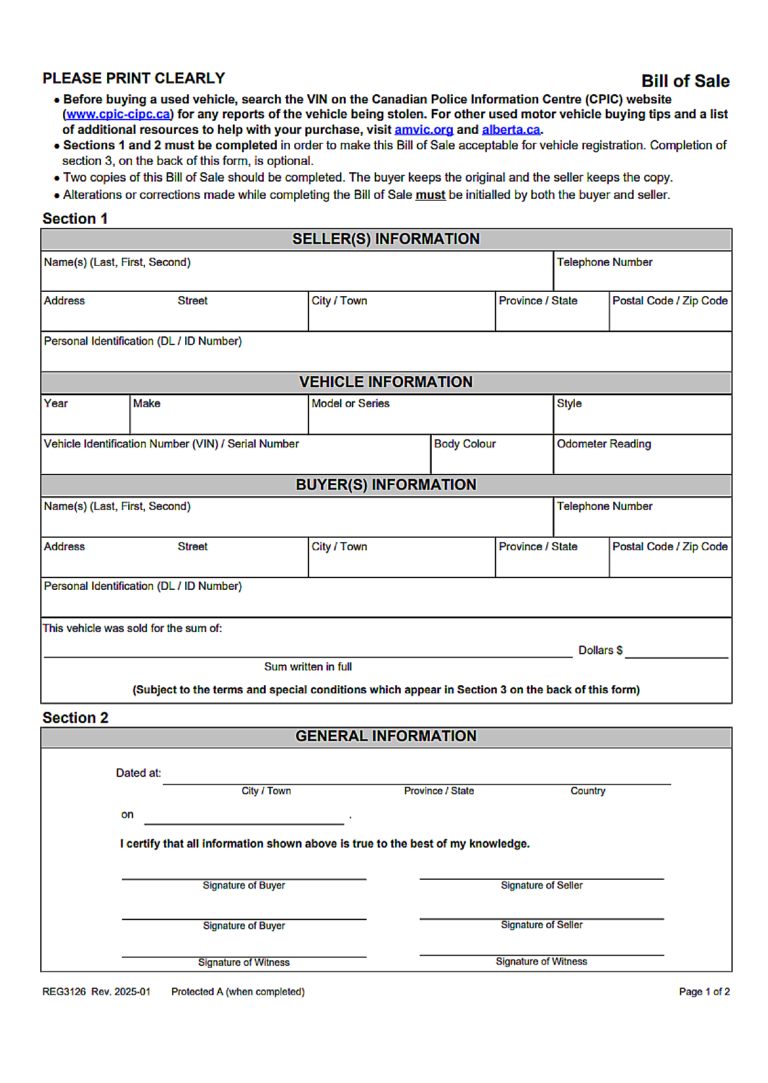
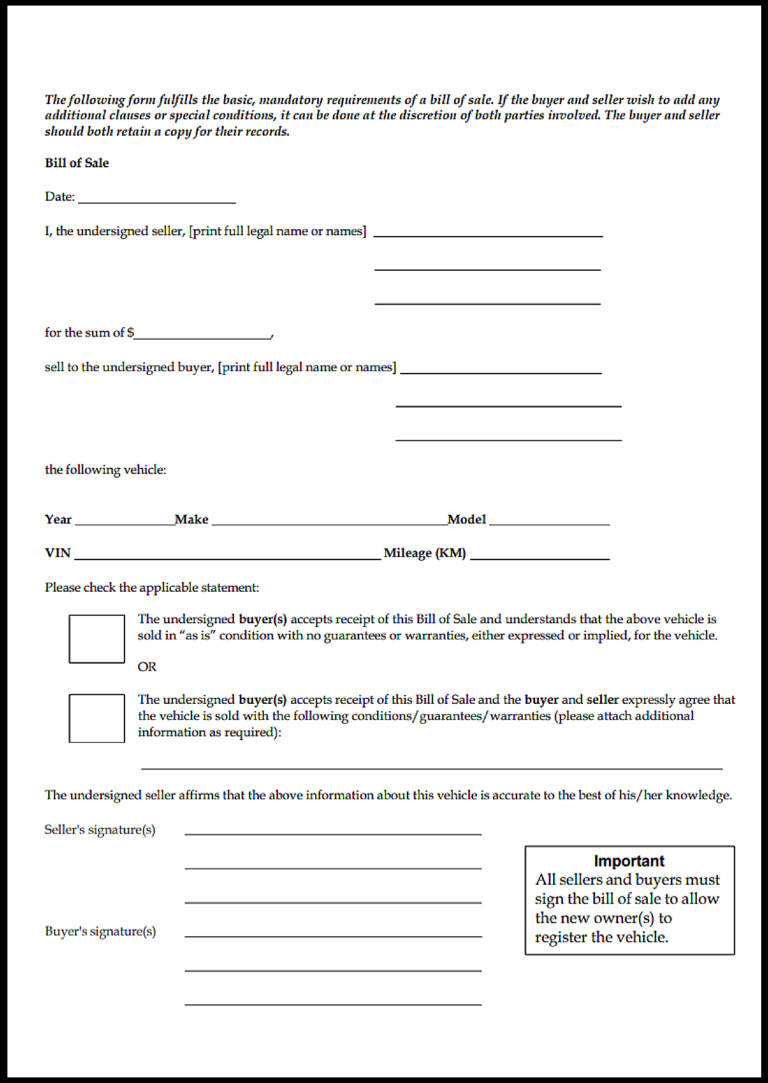
Free Ontario Boat Bill of Sale Template
You can copy, download, or customize the template below based on your situation.
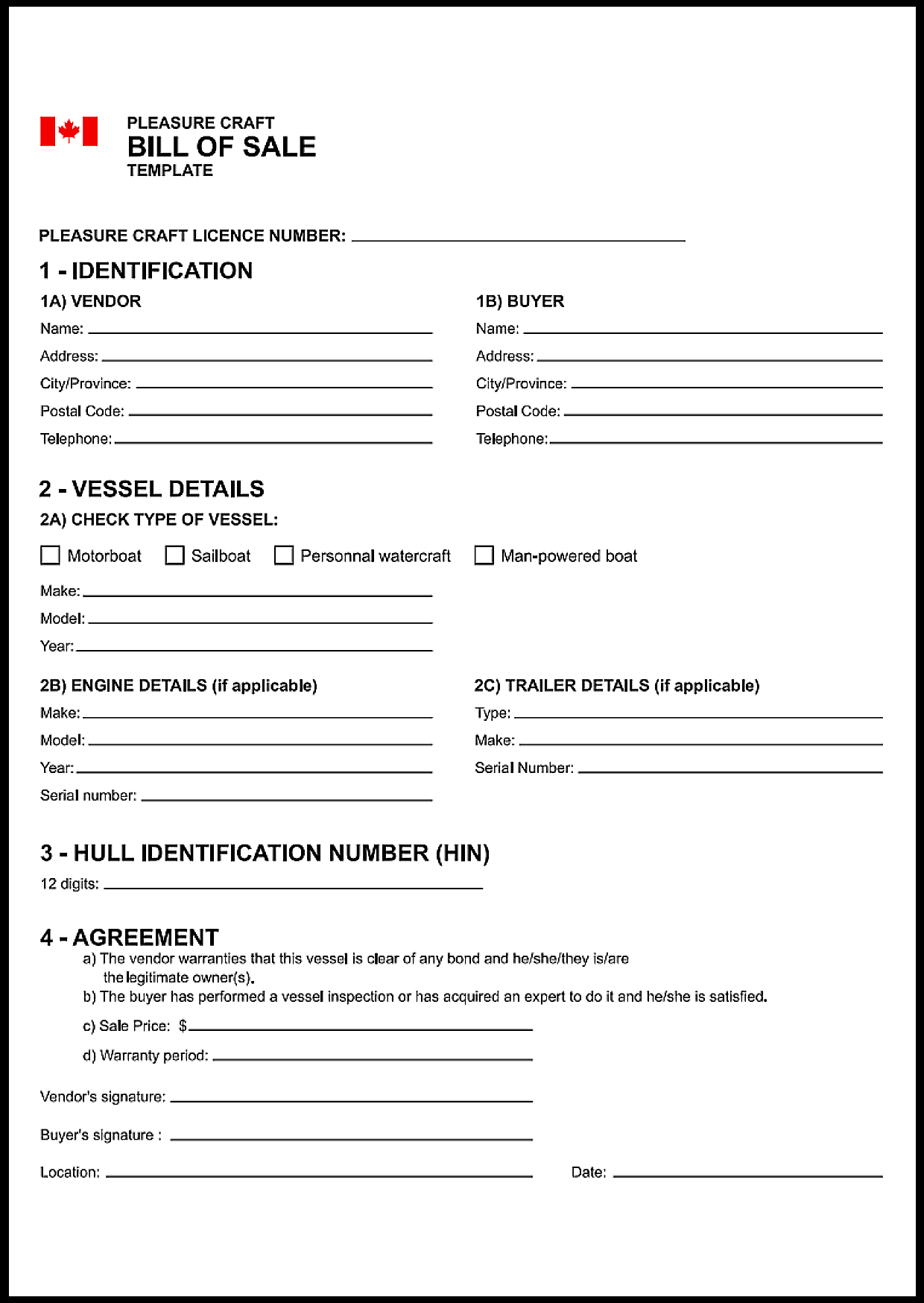
Note: Ontario does not provide an official boat bill of sale template. However, you can use the following pleasure craft bill of sale template for private sales. It includes all the required details such as buyer and seller information, vessel details, and signatures.
Ontario Boat Bill of Sale Laws and Legal Requirements
| Topic / Issue | Ontario Legal Rule | Governing Statute / Authority |
|---|---|---|
| Governing Legislation | Pleasure Craft Licence and federal vessel requirements are administered federally, while Ontario rules can apply to the private sale, taxation, and registration of a boat trailer. | Canada Shipping Act, 2001; Small Vessel Regulations; Ontario Retail Sales Tax rules; Highway Traffic Act |
| Recent Amendments | New, transferred, and renewed Pleasure Craft Licences are now valid for 5 years. A fee applies to new, transferred, renewed, or duplicate licences. | Transport Canada |
| Who can legally sign | The seller and buyer should sign the bill of sale or ownership-transfer document. Transport Canada may require authorization when someone other than an owner submits an application on the owner’s behalf. | Transport Canada Pleasure Craft Licence requirements |
| Witness Requirements | A general statutory witness requirement does not apply to an ordinary private boat bill of sale. | Transport Canada / applicable contract rules |
| Notarization/Oath | A normal bill of sale does not generally have to be notarized. A declaration under oath may be required when other proof of ownership is unavailable or in specified ownership situations. | Transport Canada |
| Age & Capacity | Ontario’s age of majority is 18, but contractual capacity is governed by applicable law. A blanket rule that every boat-sale party must be 18 is not stated by the federal Pleasure Craft Licence rules. | Ontario Age of Majority and Accountability Act; applicable contract law |
| Deadlines | If a licensed pleasure craft is transferred, the buyer must transfer the Pleasure Craft Licence within 30 days. Ontario also requires a new permit application within 6 days after becoming the owner of a motor vehicle or trailer for which a permit has been issued. | Small Vessel Regulations, s. 103; Highway Traffic Act, s. 11(2) |
| Mandatory Ownership Details | Transport Canada accepts proof of ownership containing the seller’s name, address and signature, the new owner’s name and signature, a description of the pleasure craft, and the HIN if available. | Transport Canada |
| Declaration of Transfer | The bill of sale should clearly identify the vessel and state that the seller is transferring the vessel to the buyer. It does not have to use a specific phrase such as “all rights, title, and interest.” | Transport Canada proof-of-ownership requirements |
| Consideration | The purchase price should be stated clearly so the parties have an accurate written record of the transaction and the buyer can address applicable tax obligations. | Ontario Retail Sales Tax rules; general contract principles |
| Filing & Registration | A bill of sale can be used as proof of ownership when applying for or transferring a Pleasure Craft Licence. It is not itself the same thing as a federal vessel registration record. | Transport Canada |
| Ontario Tax Requirement | A purchaser who privately buys a boat in circumstances where Ontario RST applies generally must pay 13% RST. Transport Canada does not collect this tax when the boat is registered. | Ontario Ministry of Finance |
| HIN | The HIN should be checked carefully and included when available because Transport Canada uses vessel identification information when processing ownership/licensing applications. | Transport Canada |
| Lack of Consideration | The historical $40 writing requirement in the Sale of Goods Act was repealed. A written bill of sale remains valuable because Transport Canada accepts bills of sale as proof of ownership and it creates a clear record of the transaction. | Sale of Goods Act; Transport Canada |
| Undisclosed Liens | Buyers should investigate applicable security interests or other encumbrances before completing a purchase. The treatment of a security interest depends on the type of vessel, asset, and registration system involved. | Canada Shipping Act, 2001; Ontario Personal Property Security Act, where applicable |
| Ontario Digital Signing Rules | Ontario generally recognizes electronic signatures, subject to the Electronic Commerce Act and any applicable statutory exceptions or reliability requirements. | Electronic Commerce Act, 2000 |
One important point for Ontario buyers is that the transaction can involve both federal and provincial requirements. Transport Canada administers Pleasure Craft Licences and federal vessel registration, while Ontario separately administers matters such as Retail Sales Tax and trailer permits. Completing a private sale does not automatically complete every related licensing, registration, or tax obligation.
The Hull Identification Number (HIN) is also important. Transport Canada lists the HIN, if available, among the information that can form part of acceptable proof of ownership. Before signing, compare the HIN and other vessel details with the existing documents and the boat itself.
Buyers should also consider whether there are security interests or other encumbrances affecting the boat or related property. The appropriate search depends on the type of vessel and asset involved, so it is safer to verify the relevant federal and provincial records rather than assume that one search covers every possible claim.
These Ontario-specific and federal requirements show why a properly completed boat bill of sale matters. Keep a signed copy with the other transaction records and use the appropriate government process to complete any required licensing, registration, tax, or trailer steps.
What Is a Boat Bill of Sale in Ontario?
A boat bill of sale is a written document that records the sale or transfer of a boat from one person to another.
It can help establish:
- That a sale or transfer took place
- The identities of the buyer and seller
- The vessel that was transferred
- The purchase price and other agreed terms
It is commonly used for:
- Fishing boats
- Small recreational boats
- Jet skis or personal watercraft
- Boats sold with motors or trailers
A bill of sale can be particularly useful as proof of ownership when the buyer needs to complete a Pleasure Craft Licence application or transfer. Transport Canada specifically lists bills of sale among documents that can serve as proof of ownership.
When transferring ownership of a watercraft, this document provides a clear record of the transaction. For a broader legal understanding, you can review the Ontario bill of sale guide and similar documents like the vehicle sale agreement.
Is a Boat Bill of Sale Legally Required in Ontario?
A boat bill of sale is not a universal standalone requirement for every private boat sale. However, a written bill of sale is strongly recommended because Transport Canada accepts it as proof of ownership for Pleasure Craft Licence purposes.
You will often need ownership documentation for:
- Proof of ownership
- Transferring an existing Pleasure Craft Licence
- Applying for a Pleasure Craft Licence
- Insurance or other administrative purposes
Transport Canada says acceptable proof of ownership can include a bill of sale, signed agreement of transfer, or certain other documents. The proof should identify the seller, new owner, and pleasure craft, with the HIN included if available.
A valid transaction does not depend on a rigid checklist stating that every bill of sale must contain “offer, acceptance, consideration, and signatures” as a statutory formula. Instead, the document should clearly record the parties’ agreement and the essential terms of the sale.
Without a written document, it can become much harder to establish what was sold, for how much, and on what terms.
When Do You Need a Boat Bill of Sale?
You should use a boat bill of sale in the following situations:
- Private sale between individuals
- Buying a used boat without dealership paperwork
- Selling a boat with a trailer or motor included
- Transferring ownership within a family
- Keeping records for tax, insurance, or ownership purposes
Even for smaller boats, having written proof can prevent confusion later.
Key Details That Must Be Included
A complete and accurate bill of sale reduces the risk of confusion and gives both parties a clear record of what was agreed.
Buyer and Seller Information
- Full legal names
- Addresses
- Contact details, where useful
- Signatures of the parties
For a Pleasure Craft Licence application, Transport Canada requires proof of ownership showing the seller’s name, address, and signature and the new owner’s name and signature.
Boat Identification Details
- Make, model, and year
- Hull Identification Number (HIN), if available
- Colour
- Pleasure Craft Licence number, if already licensed
- Registration or licence information, where applicable
Transport Canada identifies the make, model, colour, HIN if available, and existing Pleasure Craft Licence number as relevant ownership information.
For licensing and registration requirements, you can also refer to Government of Canada resources.
Sale Information
- Exact sale price
- Date of transaction
- Payment method
- Any deposit or balance owing
Included Equipment
Clearly list anything included in the sale:
- Trailer
- Outboard motor
- Safety gear
- Electronics
- Accessories
- Other equipment
Condition Clause
The parties may include an “as-is” clause if that accurately reflects their agreement.
An as-is clause can state that the buyer accepts the boat in its existing condition, but it should not be described as automatically eliminating every possible responsibility of the seller.
Ontario’s Sale of Goods Act allows express agreements to vary certain implied rights, duties, and liabilities, subject to the Act. The exact effect of an as-is clause therefore depends on its wording and the circumstances of the transaction.
It is also sensible to disclose known defects and record any agreed repairs or conditions before signing.
Boat Registration and Licensing Rules in Canada
Boat ownership and licensing involve federal requirements, but Ontario also has separate provincial requirements for matters such as Retail Sales Tax and boat trailers.
After purchase, you may need to:
- Transfer an existing Pleasure Craft Licence into your name
- Apply for a new Pleasure Craft Licence if the boat requires one
- Complete federal vessel registration steps if the vessel is federally registered
- Pay applicable Ontario Retail Sales Tax
- Transfer the trailer permit if a trailer is included
Here’s a simple breakdown:
| Requirement | Applies To | Authority |
| Pleasure Craft Licence | Recreational pleasure craft that meet the applicable federal licensing criteria, including craft with one or more primary propulsion engines totalling at least 7.5 kW (10 hp) |
Federal — Transport Canada / Small Vessel Regulations
|
| PCL Transfer | A pleasure craft with an existing Canadian PCL being transferred to a new owner |
Federal — Transport Canada
|
| Federal Vessel Registration | Vessels that meet the federal registration requirements or are registered under the Canada Shipping Act system |
Federal — Transport Canada / Canada Shipping Act, 2001
|
| Ontario RST | Private purchases of boats where Ontario RST applies |
Ontario Ministry of Finance
|
| Trailer Permit | A boat trailer for which an Ontario permit has been issued |
Provincial — ServiceOntario / Highway Traffic Act
|
Current Transport Canada guidance states that a PCL is required for recreational pleasure craft with one or more engines totalling at least 10 horsepower (7.5 kW), subject to the applicable rules and exceptions. New, transferred, and renewed PCLs are valid for 5 years.
If an already licensed pleasure craft is purchased, Transport Canada says the buyer must transfer the licence into their name within 30 days of the ownership change. The Small Vessel Regulations also provide a temporary operating rule for a transferred pleasure craft when the required ownership documents are carried on board.
For a boat trailer, Ontario’s Highway Traffic Act requires a person who becomes the owner of a motor vehicle or trailer for which a permit has been issued to apply for a new permit within 6 days.
After buying, make sure the applicable Pleasure Craft Licence is transferred into your name and, if the vessel is federally registered, that the appropriate federal registration records are updated.
Boat transactions may also require clarity on legal obligations, which can be explored in the Ontario legal requirements guide. If you’re drafting your own version, refer to how to structure a bill of sale.
How to Fill Out the Boat Bill of Sale (Step-by-Step)
Filling out the form correctly is just as important as having one.
Follow these steps:
- Enter buyer and seller details clearly
- Add accurate boat information and double-check the HIN if available
- Write the full sale price
- List all included items
- State the agreed condition terms clearly
- Include any known defects or special conditions
- Both parties sign and date the document
Keep copies safely for future reference. The buyer should also keep copies of the documents needed for any Transport Canada licensing or ownership process.
Common Mistakes to Avoid in Boat Sales
Many disputes happen because important transaction details are left unclear.
Avoid these common errors:
- Missing or incorrect HIN information
- Not listing included items such as the motor or trailer
- Relying only on verbal agreements
- Understating the sale price to avoid applicable Ontario tax
- Forgetting signatures
- Failing to complete the applicable PCL transfer
- Failing to address the trailer transfer separately
Ontario requires 13% RST on a private purchase of a boat when RST applies. Deliberately providing false information or wilfully evading RST can create legal consequences under Ontario’s Retail Sales Tax legislation. It is therefore important to record the actual transaction accurately rather than attempt to reduce tax by understating the price.
Before signing, compare the HIN and other vessel details with the existing documents, record every item included in the sale, and keep a signed copy of the Bill of Sale.
Real-Life Example of a Boat Sale Scenario
Here’s a simple real-world situation:
John sells his fishing boat to Mike. The boat includes a trailer and motor. They complete a bill of sale, identify the boat and included equipment, state the purchase price, and record the agreed condition terms.
Result:
- The included items are clearly identified
- The buyer has written proof of the transaction
- The agreed condition is documented
- The buyer has a useful ownership document for applicable licensing steps
This shows how a simple document can help prevent confusion and create a reliable record of the transaction.
Boat Bill of Sale vs Ownership Transfer (Key Difference)
Many people confuse these two, but they serve different purposes.
| Document | Purpose |
| Bill of Sale |
Written evidence of the sale and proof of ownership that may be used for applicable government processes
|
| Pleasure Craft Licence |
Federal licence used to identify a licensed pleasure craft; it is not itself proof of ownership
|
| Vessel Registration |
Federal registration record for vessels registered under the Canada Shipping Act system
|
| Trailer Permit |
Ontario government record for the ownership and operation of a registered trailer
|
You may need more than one document to complete a safe and properly documented transfer. Transport Canada specifically distinguishes a Pleasure Craft Licence from proof of ownership.
FAQs – Ontario Boat Bill of Sale
Do I need a bill of sale for a used boat in Ontario?
A bill of sale is strongly recommended for a private boat purchase. Transport Canada accepts bills of sale as proof of ownership for applicable Pleasure Craft Licence processes, provided the document contains the necessary ownership and vessel information.
Is a handwritten bill of sale valid?
A handwritten document can serve as a bill of sale if it clearly records the transaction and contains sufficient information to identify the parties, vessel, and agreed terms. For government ownership or licensing purposes, make sure the document contains the information required by the relevant authority.
What is a Hull Identification Number (HIN)?
A Hull Identification Number (HIN) is a unique identification number assigned to a pleasure craft. Transport Canada may require the HIN as part of proof-of-ownership documentation when it is available.
Do I need to register my boat after purchase?
It depends on the vessel and the applicable federal requirements. If the boat already has a Pleasure Craft Licence, the buyer generally needs to transfer it into their name within 30 days. Federal vessel registration is a separate system and should not be confused with a Pleasure Craft Licence.
Can I sell a boat without a bill of sale?
A private sale may occur without a formal bill of sale, but doing so creates unnecessary risk. A written bill of sale provides useful evidence of the transaction and may be needed as proof of ownership for Transport Canada purposes.