Free British Columbia Trailer Bill of Sale Template Guide
British Columbia Trailer Bill of Sale is one of the most important documents when you buy or sell a trailer privately in BC. A simple handshake is not enough under British Columbia law—you need written proof to avoid problems later.
In most private sale situations, this document protects both the buyer and seller. It clearly records ownership transfer, payment details, and the trailer’s condition. In this guide, you’ll learn how it works, what to include, and you’ll also get a ready-to-use template.
Last Updated: August 2026
Free British Columbia Trailer Bill of Sale Template
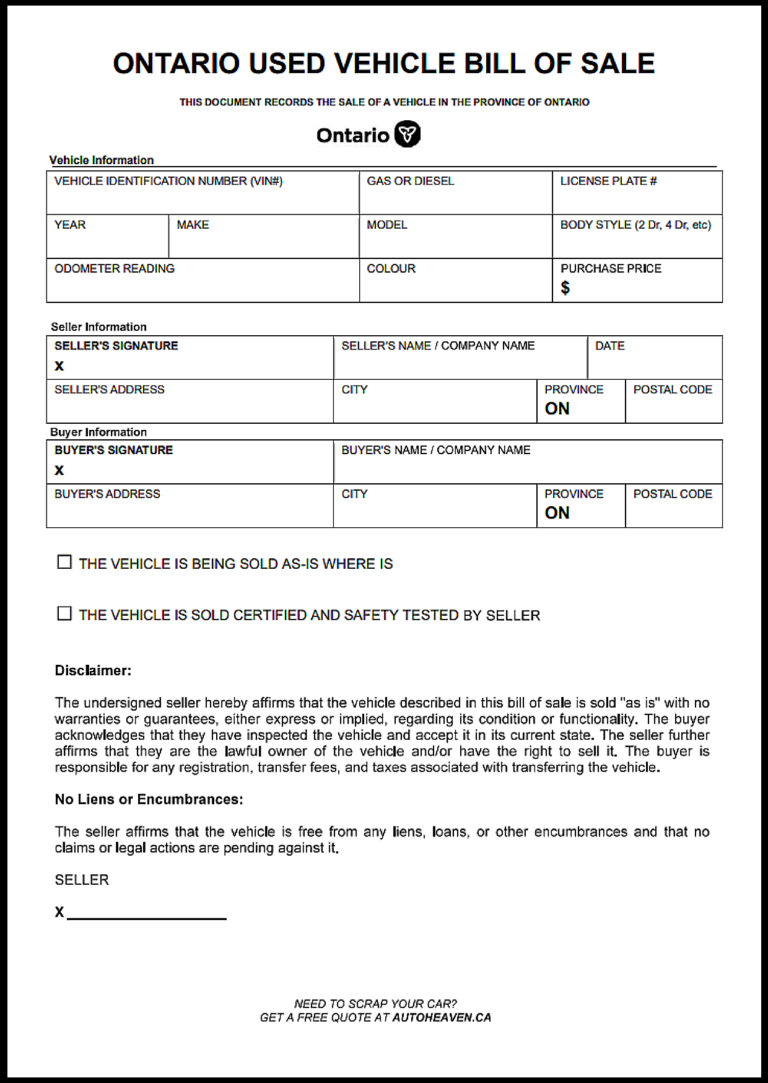
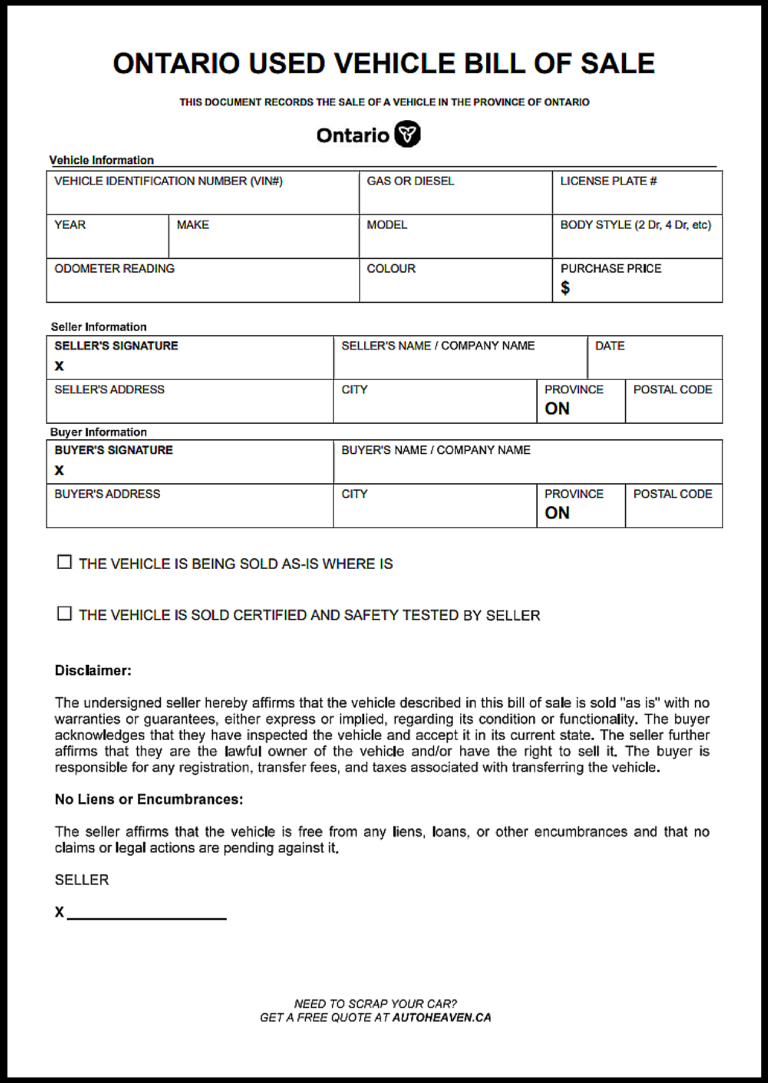
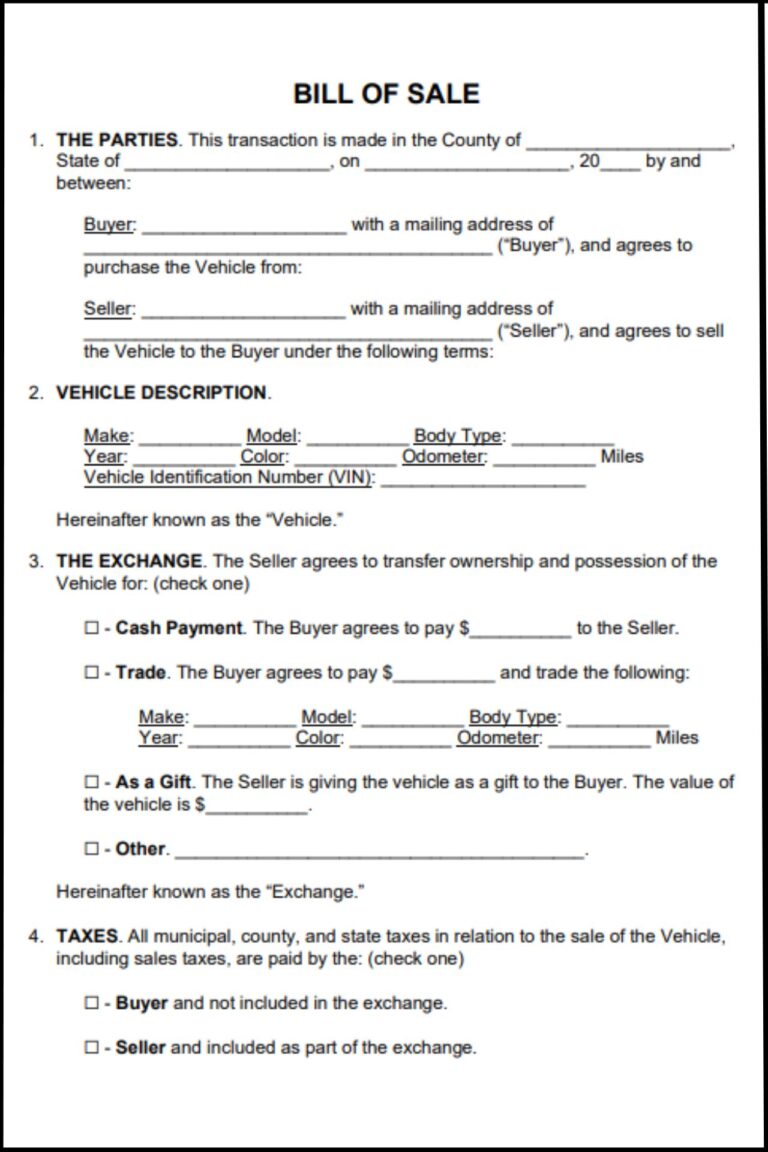
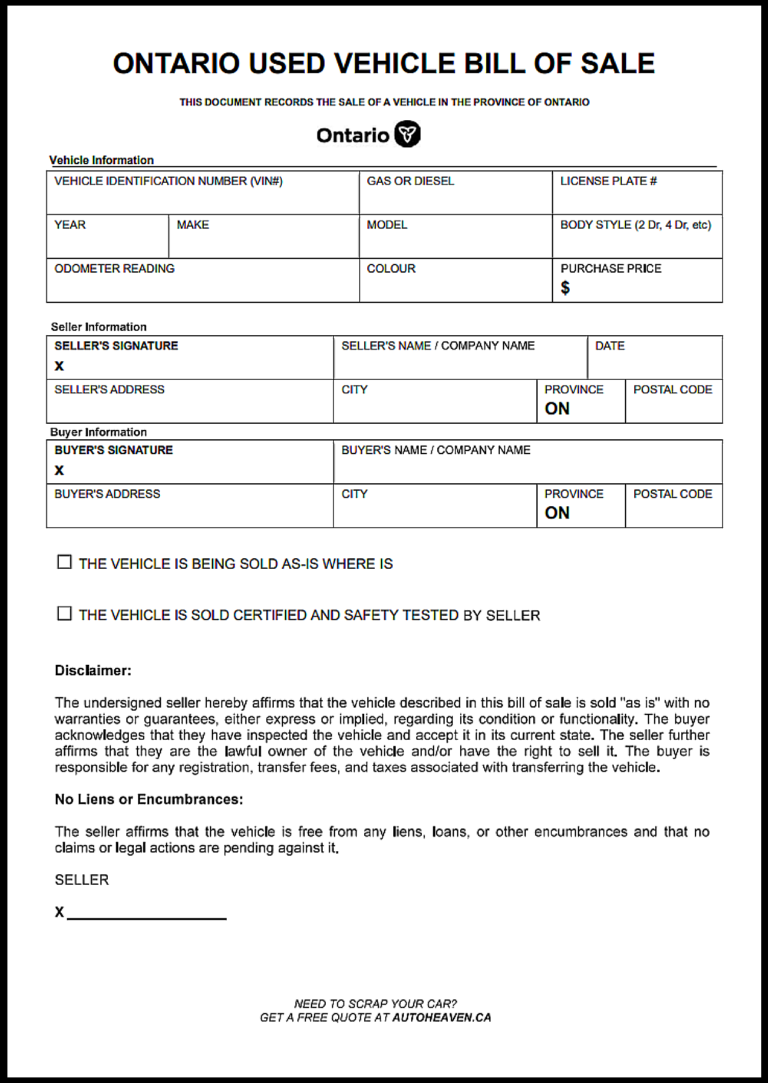
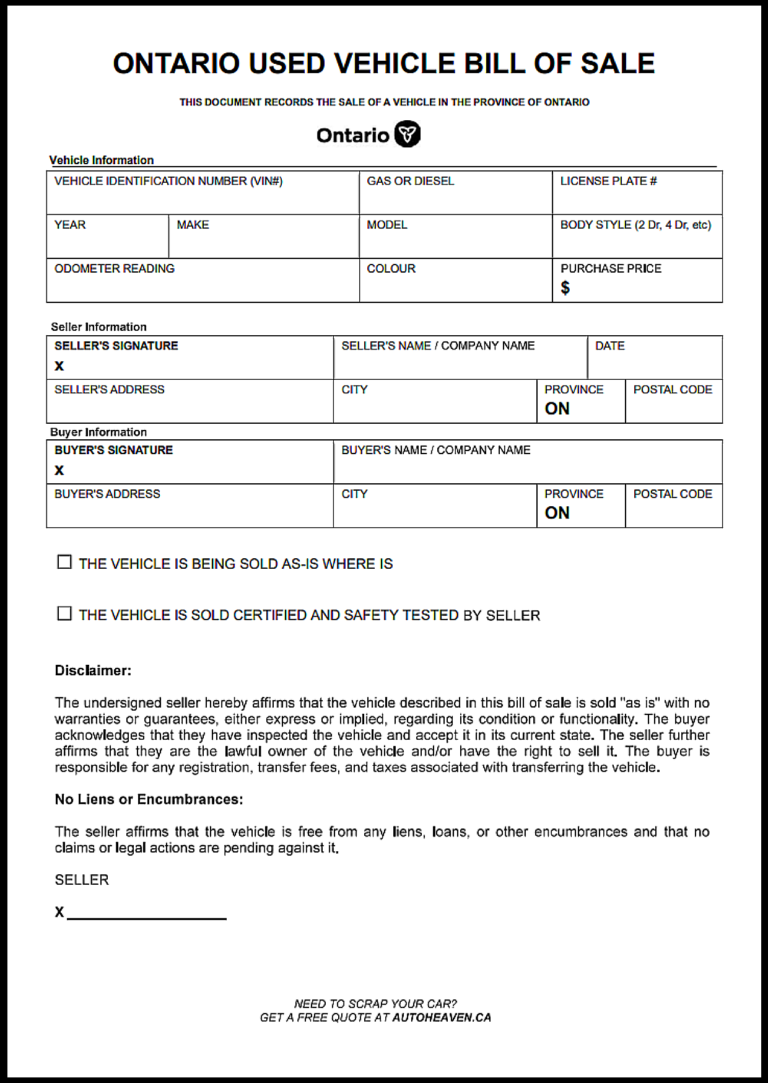
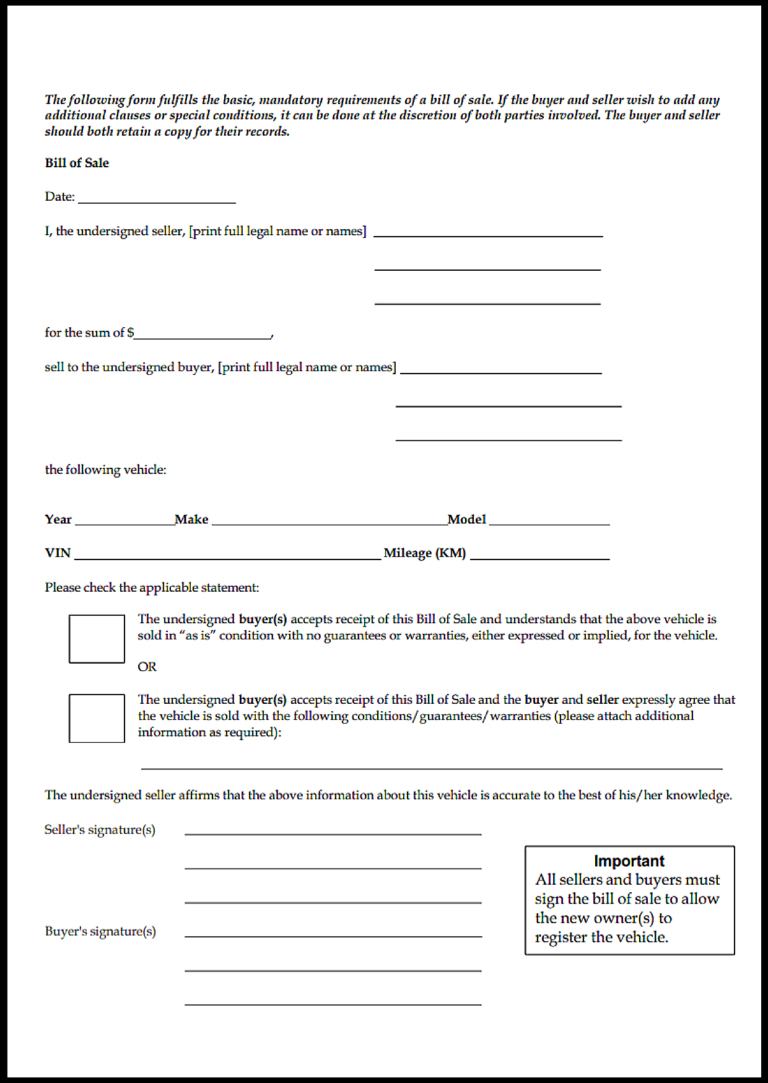
You can copy and use the template below for your private sale. Keep it simple, but make sure all details are filled correctly.
Important British Columbia Boat Bill of Sale Laws and Ownership Rules
| Topic / Issue | British Columbia Legal Rule | Governing Statute |
|---|---|---|
| Governing legislation | Boat sales can involve British Columbia contract and sale-of-goods law, while federally registered or licensed vessels are subject to federal vessel rules. | Sale of Goods Act, [RSBC 1996] c. 410; Canada Shipping Act, 2001, S.C. 2001, c. 26 |
| Vessel registration rules | Vessel registration is administered federally through Transport Canada and the Canadian Register of Vessels. | Canada Shipping Act, 2001 |
| 2023 amendments | Federal vessel-law and licensing procedures have changed over time. The current Transport Canada licensing or registration process should be checked for the vessel involved. | Canada Shipping Act, 2001; Small Vessel Regulations |
| Who can sign | The seller and buyer should sign the bill of sale to create a clear written record. For registered vessels, Transport Canada may require specific ownership-transfer documents and signatures. | Applicable contract law; Canada Shipping Act, 2001 |
| Witness requirements | A witness is not generally required for an ordinary bill of sale. | Applicable contract law |
| Notarization | An ordinary bill of sale is not generally required to be notarized. A declaration under oath may be used in specific situations where other proof of ownership is unavailable. | Transport Canada requirements |
| Age of capacity | British Columbia’s general age of majority is 19, while contractual capacity depends on the applicable law and circumstances. | Age of Majority Act, [RSBC 1996] c. 7 |
| Mental capacity | The parties should have the legal capacity required to enter into the transaction. | Applicable contract and capacity law |
| Ownership reporting deadline | If you acquire a pleasure craft that already has a Canadian Pleasure Craft Licence, you must transfer the licence into your name within 30 days of the ownership change and before operating the pleasure craft. | Canada Shipping Act, 2001; Transport Canada licensing rules |
| “As-Is” wording | An “as-is” term may be included, but its legal effect depends on the wording and applicable law. It does not automatically exclude every statutory or contractual obligation. | Sale of Goods Act |
| Identification requirements | A bill of sale should identify the vessel clearly, including the Hull Identification Number (HIN) where available and other identifying information. | Transport Canada requirements |
| Pleasure craft licensing | A pleasure craft generally requires a Pleasure Craft Licence if it is equipped with one or more engines totalling at least 10 horsepower (7.5 kW) and is principally operated and maintained in Canada, subject to applicable exceptions. | Canada Shipping Act, 2001; Small Vessel Regulations |
| Vessel registration filing | Federally registered vessels are dealt with through the Canadian Register of Vessels. Registration requirements differ from Pleasure Craft Licence requirements. | Canada Shipping Act, 2001 |
| Lien searches | Buyers should check for registered security interests and other encumbrances that may affect the transaction. | Personal Property Security Act; applicable federal vessel records |
| Missing HIN | A missing or incorrect HIN can make it harder to identify the vessel and may delay a licensing or registration application. It does not automatically make every bill of sale void. | Transport Canada requirements; Sale of Goods Act |
| Lack of consideration | A sale normally involves consideration, usually money or another agreed form of value. The document should accurately record the consideration agreed by the parties. | Contract law |
| Undisclosed liens | The Sale of Goods Act contains an implied warranty that goods are free from undisclosed third-party charges or encumbrances unless the circumstances show a different intention. | Sale of Goods Act, s. 16 |
| Age of majority difference | British Columbia’s general age of majority is 19. | Age of Majority Act, s. 1 |
| PST on private boat sales | A boat purchased at a private sale in BC is generally subject to PST at 12% of the purchase price, including applicable accessories, unless an exemption applies. | Provincial Sales Tax Act; BC PST 108 |
A Hull Identification Number is an important identifying detail, but it should not be described as a rule that automatically makes a bill of sale void if omitted. Transport Canada accepts proof-of-ownership documents that identify the seller, buyer, pleasure craft, and HIN if available. Where other proof of ownership is unavailable, a declaration under oath may be required.
Another important issue is security interests and other encumbrances. Section 16 of the BC Sale of Goods Act contains an implied warranty that goods are free from a third-party charge or encumbrance that was not declared or known to the buyer when the contract was made.
The Pleasure Craft Licence rules should also be kept separate from vessel registration. Transport Canada states that when ownership of a licensed pleasure craft changes, the new owner must transfer the licence within 30 days and before operating the pleasure craft.
Download the free British Columbia Boat Bill of Sale template to help create a clear written record of the transaction.
Boat ownership transfers can involve different federal and provincial requirements depending on whether the craft is licensed, registered, financed, commercial, or privately sold. To understand how these sale documents are commonly structured, you can review with the step-by-step bill of sale writing guide for British Columbia.
What Is a Boat Bill of Sale and Why It Matters
A boat bill of sale is a written record of a boat transaction. It identifies the parties and describes the property being sold, the agreed price, the date, and other transaction terms.
It serves several purposes:
- Confirms who bought and sold the boat
- Shows the agreed price and payment method
- Records the condition of the boat at the time of sale
A written record can be particularly useful when the parties later need to establish what was agreed about the vessel or payment.
A proper bill of sale helps create a clearer record of the transaction and can also serve as proof of ownership when required by Transport Canada. For a pleasure-craft licensing application, Transport Canada lists bills of sale and signed agreements of transfer among the documents that may be accepted as proof of ownership.
Is a Boat Bill of Sale Legally Required in British Columbia?
In British Columbia, a separate boat bill of sale is not always legally required for every private transaction. However, it is strongly recommended because it provides written evidence of the transaction.
Under the Sale of Goods Act (British Columbia):
- A contract of sale may be made in writing, orally, partly in writing and partly orally, or implied from conduct
- A written bill of sale provides useful evidence of the agreed transaction
For a licensed pleasure craft, Transport Canada may require proof of ownership when the purchaser applies to transfer the licence. Acceptable proof can include a bill of sale or signed agreement of transfer.
So while a bill of sale may not be mandatory for every sale, it is a practical document to keep with the vessel’s ownership and licensing records.
Recreational asset sales may involve additional ownership paperwork depending on the equipment included in the transaction. Sellers transferring towing equipment may also require a trailer bill of sale form, while standard transportation transfers often use a vehicle ownership transfer document.
When You Need a Boat Bill of Sale in BC
In most private sale situations, this document is used when ownership changes hands.
Common examples include:
- Buying a used boat from an individual
- Selling a boat to friends or family
- Private marketplace or online sales
- Transferring ownership for licensing or insurance
Even if you trust the other party, documenting the transaction can make later ownership, tax, and payment questions easier to resolve.
Key Details Every BC Boat Bill of Sale Must Include
Buyer and Seller Information
You should include full legal names and useful contact details. This helps identify both parties clearly.
Accuracy matters because:
- Mistakes can create uncertainty about the parties
- Incorrect names can make later proof of the transaction more difficult
Boat Identification Details
The boat should be described clearly enough to identify the vessel being sold.
Important details include:
- Make, model, and year
- Hull Identification Number (HIN)
- Registration or licence number, if applicable
The HIN is especially useful because it helps identify the particular vessel. Transport Canada also asks for the HIN where available when reviewing proof-of-ownership documents.
Sale Price and Payment Terms
Clearly mention:
- Total sale price in Canadian dollars
- Payment method (cash, transfer, installments)
If payments are in parts, write the schedule clearly.
Condition and “As-Is” Clause
A private boat agreement may include an “as-is” term. However, the wording should not be treated as a blanket exclusion of every legal obligation.
Under British Columbia law:
- A seller should not make false or misleading statements about the boat
- The parties should record important known condition issues and agreed terms
- The buyer should inspect the boat and documents before purchase
Signatures and Date
Both parties should sign the document to create a clear written record of the transaction.
You can also:
- Add a witness (optional)
- Keep copies of the signed document
When used boats are sold privately, many parties include an as-is sale agreement to document the current condition of the watercraft and reduce future disputes over the transaction.
Boat Registration and Transfer Rules in Canada
Boat ownership rules depend on whether the vessel is licensed or registered.
Here is a simple comparison:
| Type | Required For | Authority | Key Feature |
| Pleasure Craft Licence | Pleasure craft that meet the federal licensing requirements, including motorized pleasure craft with one or more engines totalling at least 10 horsepower (7.5 kW) | Transport Canada |
Identification number for the pleasure craft
|
| Vessel Registration | Vessels that meet the federal registration requirements, including certain commercial vessels and vessels subject to a registered marine mortgage | Transport Canada |
Federal registration and official ownership record
|
A Pleasure Craft Licence is not the same as vessel registration and is not proof of ownership. Transport Canada describes a PCL as an identification document, while proof of ownership is required separately when applying for a PCL.
You may need the bill of sale along with:
- Previous ownership documents
- ID proof
- Application forms
For a licensed pleasure craft, the new owner must transfer the licence within 30 days of the ownership change and before operating it.
Taxes on Boat Sales in British Columbia (PST & GST)
Taxes can apply depending on how the boat is sold.
| Situation | PST Applies | GST Applies |
| Private sale | Usually Yes |
Usually No where the seller is not a GST registrant
|
| Dealer sale | Yes, subject to the applicable rules |
May apply where the dealer makes a taxable GST supply
|
| Commercial purchase | Depends |
Depends on the transaction
|
For a boat purchased at a private sale in BC, the current BC Government PST guidance states that PST is generally 12% of the purchase price of the boat, including accessories, unless a specific exemption applies. If a boat is purchased in BC from a GST registrant, different PST rules can apply.
BC’s PST rules can also differ for boats brought into British Columbia from elsewhere in Canada or from outside Canada. The taxable amount in those situations can be calculated under different statutory rules.
Always check the current tax rules before completing the transaction.
How to Fill Out a Boat Bill of Sale (Step-by-Step)
Filling out the form correctly is simple if you follow these steps.
Step 1: Gather correct boat details
Make sure you have the HIN, registration or licence number where applicable, and relevant vessel information ready.
Step 2: Verify ownership and documents
Ask the seller for proof of ownership before paying. Transport Canada lists bills of sale and signed agreements of transfer as possible proof of ownership for a pleasure-craft licensing application.
Step 3: Agree on price and payment
Decide the full amount and how it will be paid.
Step 4: Complete and review the form
Double-check all identifying details, payment terms, and condition statements.
Step 5: Sign and keep copies
Both parties should keep a signed copy for records.
Common Mistakes to Avoid
Many people rush the process and make avoidable mistakes.
Common issues include:
- Missing or incorrect HIN
- Not clearly writing payment terms
- Forgetting signatures
- Not checking ownership documents
- Relying only on verbal agreements
These mistakes can make a later ownership, payment, tax, or condition dispute harder to resolve.
Buyer vs Seller Responsibilities
Seller Responsibilities
Under British Columbia law, sellers should:
- Provide accurate information about the boat
- Disclose known issues that should be disclosed
- Confirm their ownership or authority to sell the boat
The Sale of Goods Act also contains implied terms concerning the seller’s right to sell and undisclosed third-party charges or encumbrances, unless the circumstances show a different intention.
Selling a stolen or misrepresented boat can lead to serious legal consequences.
Buyer Responsibilities
Buyers also have important duties:
- Inspect the boat carefully
- Verify ownership documents
- Check for registered security interests and other encumbrances
- Pay applicable taxes
- Complete licensing or registration if required
A buyer should not assume that an inspection is legally required in every private sale, but a careful inspection can help identify condition issues before payment is made.
Legal Risks Without a Proper Bill of Sale
Skipping this document can create serious problems.
Possible risks include:
- Ownership disputes
- Fraud or stolen boat claims
- Registration or licensing issues
- Difficulty proving payment
- Uncertainty about the agreed condition
A written agreement cannot prevent every dispute, but it can provide useful evidence of the transaction.
Frequently Asked Questions (FAQs)
Do I need to notarize a boat bill of sale in BC?
No, an ordinary boat bill of sale is not generally required to be notarized. Transport Canada may require a declaration under oath in specific situations where other acceptable proof of ownership is unavailable. That declaration must be signed before a person authorized to administer oaths, such as a lawyer, notary, Justice of the Peace, or Commissioner of Oaths.
Is a handwritten bill of sale valid?
A handwritten bill of sale can be used as a written record of the transaction if it accurately identifies the parties, vessel, price, date, and other agreed terms. The underlying contract of sale does not have to be in a particular written format simply because it is a private boat transaction.
Can I use the same form for a used boat?
Yes. A general boat bill of sale can be used for a new or used boat transaction, provided it accurately records the relevant details. Additional federal licensing or registration documents may still be required.
What if the boat has no registration?
You may still be able to complete a private sale, but you should establish proof of ownership before payment and determine whether the vessel requires a Pleasure Craft Licence or federal registration. Transport Canada provides a process for proving ownership where standard documents are unavailable.
Who keeps the original copy?
Both buyer and seller should keep a signed copy. The buyer should also retain other ownership, licensing, registration, payment, and tax records related to the transaction.