Free Alberta Non Disclosure Agreement Template
Alberta Non Disclosure Agreement is a simple legal contract used to protect private business information. It is commonly used when someone shares ideas, data, or plans with another person for work or business purposes.
In real-life situations, people use NDAs when hiring employees, working with freelancers, or discussing business ideas with partners. I have seen Alberta business owners rely on verbal promises during early partnership or contractor discussions, only to find out later that their ideas or client information were shared without permission. When an NDA is unclear or missing key confidentiality terms under Alberta contract law, proving misuse becomes much harder and far more expensive than most people expect.
Last Updated: August 2026
It helps prevent misuse of confidential information and gives legal protection if something goes wrong.
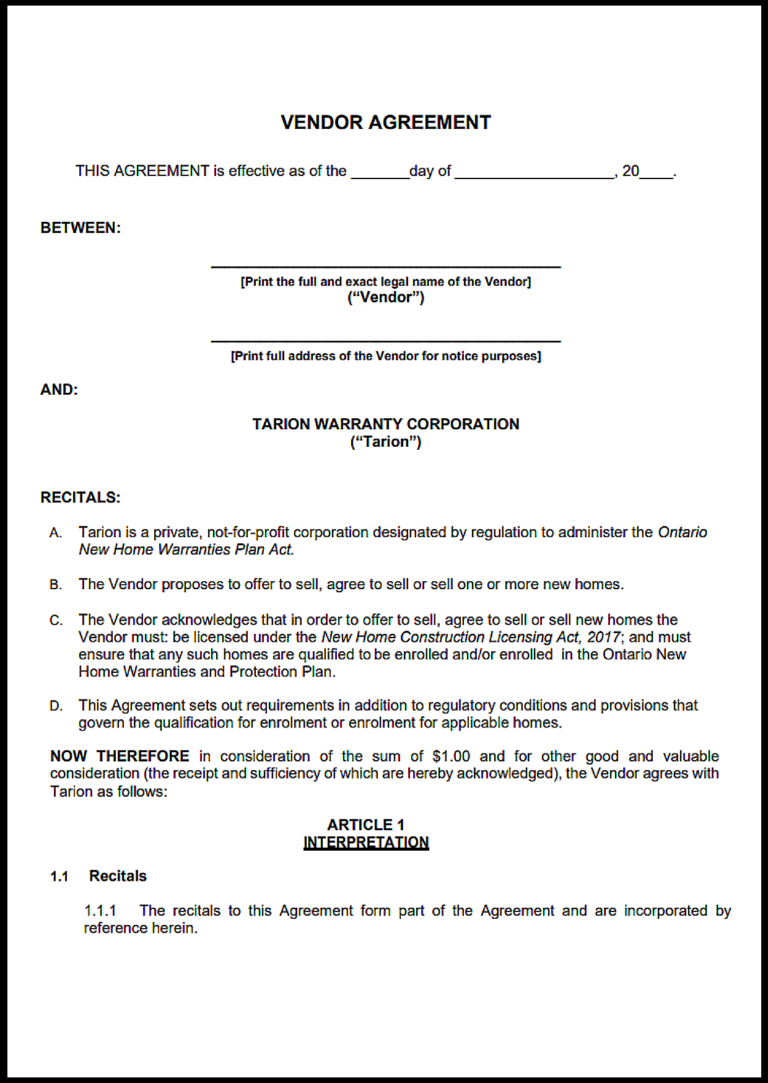
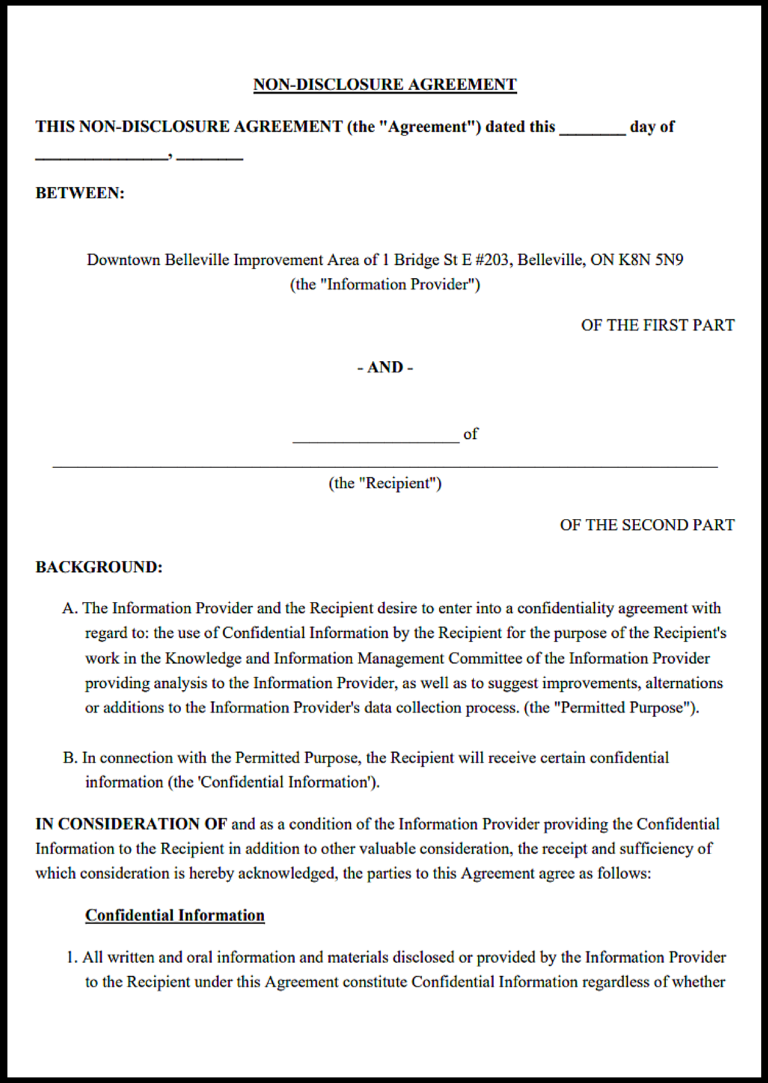
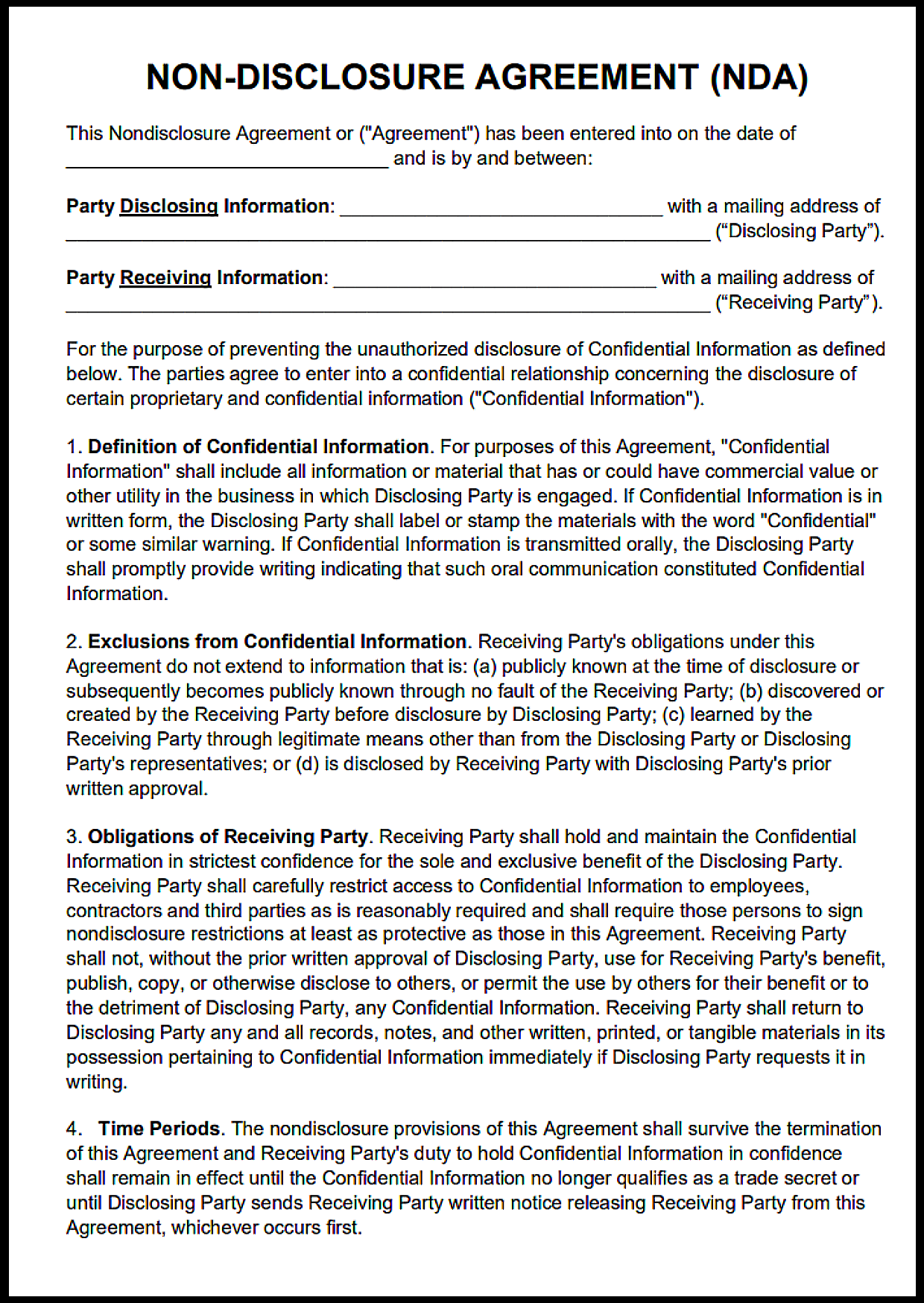
Free Alberta Non Disclosure Agreement Template
Below is a basic and practical Alberta NDA template. You should always edit it based on your needs and situation.
Alberta NDA Laws That Can Affect Enforceability
| Topic / Issue | Alberta Legal Rule | Governing Statute |
|---|---|---|
| Primary governing law | NDAs in Alberta are governed mainly by common law contract principles. | Common law of contract |
| Privacy rules for public bodies | FOIP applies when one party is a provincial public body. | Freedom of Information and Protection of Privacy Act (FOIP) |
| Commercial personal data protection | PIPA applies to the collection, use, and disclosure of personal information by private-sector organizations in Alberta. | Personal Information Protection Act (PIPA) |
| Corporate signing authority | Individuals with legal capacity or authorized corporate representatives may sign NDAs. | Business Corporations Act, RSA 2000, c B-9 |
| Witness requirement | Witnesses are not legally required for an NDA. | Governed by common law principles |
| Notarization requirement | Notarization is not legally required unless the NDA is used as an affidavit. | Notaries and Commissioners Act, SA 2013, c N-5.5 |
| Age requirement | The age of majority in Alberta is 18 years old. | Age of Majority Act, RSA 2000, c A-6, s. 1 |
| Mental capacity requirement | A person must understand the contract and its consequences when signing. | Common law (Hart v. O’Connor) |
| Time limit for legal action | Lawsuits for NDA breaches generally must begin within 2 years after discovery of the breach. | Limitations Act, RSA 2000, c L-12, s. 3(1) |
| Mandatory wording | Alberta law does not require specific statutory wording for NDAs. | Governed by common law principles |
| Employment confidentiality clauses | NDA restrictions in employment settings must be reasonable and narrowly defined. | Common law restraint of trade principles |
| Filing requirements | Standard NDAs are private contracts and are not filed with any Alberta government office. | Alberta civil contract practice |
| Public court record | An NDA only becomes public if filed as evidence in court. | Alberta Court of King’s Bench procedures |
| Lack of consideration | NDAs signed without a new benefit after employment or deal completion may be invalid. | Common law principle of Past Consideration |
| Public policy violations | NDAs cannot legally hide criminal activity or block crime reporting. | Common law Public Policy doctrine |
| Overly vague confidentiality definitions | NDAs may become unenforceable if “Confidential Information” is defined too broadly. | Common law Doctrine of Uncertainty |
| Alberta age difference from other provinces | Alberta recognizes 18-year-olds as adults for contract purposes. | Age of Majority Act |
| Alberta limitation period difference | Alberta applies a strict 2-year limitation period after discovering a confidentiality breach. | Limitations Act |
One of the most important Alberta NDA rules is the strict 2-year limitation period. If a business discovers confidential information was leaked but waits too long to start legal action, the right to sue may completely disappear. This catches many companies by surprise because they assume they have unlimited time to enforce an NDA.
Another major issue is overbroad confidentiality clauses. Alberta courts may refuse to enforce NDAs that try to control “everything” a person knows or unfairly block someone from working in the same industry. In real business situations, this matters a lot for employers, freelancers, startups, and partnerships. A poorly written NDA can become almost useless during a dispute.
The rule about “consideration” is also critical. If an employee signs an NDA after already starting work and receives no new benefit, the agreement may not hold up in court. That can leave sensitive business information exposed without proper protection.
Download the free Alberta NDA template to create a clearer and more enforceable confidentiality agreement.
What Is a Non Disclosure Agreement in Alberta?
A Non Disclosure Agreement in Alberta is a legal contract that protects confidential information between two or more parties. It ensures that shared information is not used or disclosed without permission.
Under Alberta law, an NDA must follow basic contract rules. This means there must be agreement between parties, a clear purpose, and something of value exchanged.
There are two main types of NDAs:
- One-way NDA → only one party shares information
- Mutual NDA → both parties share confidential information
For example, a startup may share its idea with a developer before hiring. In this case, an NDA helps protect the idea from being copied or leaked.
This document is part of a broader framework explained in the Free Alberta NDA Template Guide, which outlines how confidentiality clauses function within Canadian contract law. You can also explore the legal meaning of NDAs in Alberta for better clarity.
When Should You Use an NDA in Alberta?
NDAs are used in many business situations where sensitive information is shared. They are especially helpful when trust is important but risk is high.
Common situations include:
- Hiring employees or contractors
- Sharing ideas with investors
- Working with vendors or business partners
- Selling a business
- Protecting trade secrets
For example, if a business owner shares a product idea with a manufacturer, an NDA ensures that the manufacturer cannot use that idea without permission.
Is an NDA Legally Enforceable in Alberta?
Yes, NDAs are legally enforceable in Alberta if they meet contract law requirements. Courts will check if the agreement is fair, clear, and reasonable.
To be valid, an NDA must:
- Have clear agreement between both parties
- Include consideration (something of value)
- Be reasonable in scope and duration
What Makes an NDA Invalid?
An NDA may not be enforceable if:
- The duration is too long without proper reason
- It tries to cover public or already known information
- The wording is unclear or too vague
- The terms are too strict or unfair
NDAs are commonly paired with agreements like a service agreement or a freelance contract template, especially when sharing sensitive project details. In more formal business setups, a consulting agreement may also include confidentiality clauses.
Key Elements of a Strong Alberta NDA
A strong NDA is clear, specific, and balanced. It should properly define what is protected and how it should be handled.
Important Elements Overview
| Element | Why It Matters |
| Confidential Information |
Clearly defines what is protected
|
| Purpose of Disclosure |
Limits how information can be used
|
| Time Duration |
Prevents unfair long-term restrictions
|
| Obligations |
Sets clear rules for the receiving party
|
| Exceptions |
Avoids covering public information
|
| Governing Law |
Ensures Alberta law applies
|
Clear Definition of Confidential Information
You should clearly list what type of information is confidential, such as business plans, data, or trade secrets.
Purpose of Disclosure
Always mention why the information is shared. This prevents misuse outside that purpose.
Time Duration (Reasonable Period)
Most NDAs last between 2 to 5 years. Longer durations must be justified.
Obligations and Restrictions
Explain what the receiving party can and cannot do with the information.
Exceptions Clause
Exclude information that is already public or legally known.
Legal Jurisdiction (Alberta Law)
Always include that the agreement is governed by Alberta law.
How to Fill Out an Alberta NDA (Step-by-Step)
Filling an NDA is simple if you follow the correct steps. Each part should be clear and specific.
- Write full legal names and addresses of both parties
- Clearly define what information is confidential
- Mention the purpose of sharing the information
- Set a reasonable time period
- Sign and date the agreement properly
A common mistake is copying templates without editing them. This can make the NDA weak or invalid.
One-Way vs Mutual NDA – What’s Better?
Choosing the right type of NDA depends on your situation.
One-Way NDA
Used when only one party shares confidential information. This is common in employment or freelance work.
Mutual NDA
Used when both parties share sensitive information, such as in partnerships or joint ventures.
Which One Should You Choose?
| Situation |
Recommended NDA
|
| Hiring employee | One-Way NDA |
| Freelancer work | One-Way NDA |
| Business partnership | Mutual NDA |
| Joint project | Mutual NDA |
Choose based on who is sharing confidential information.
Common Mistakes to Avoid in Alberta NDAs
Many NDAs fail because of simple errors. Avoid these common mistakes:
- Using unclear or vague definitions
- Setting unlimited or unreasonable time periods
- Not mentioning the purpose of disclosure
- Forgetting to include Alberta as jurisdiction
- Not signing the agreement properly
These issues can make the NDA difficult to enforce in court.
Legal Risks of Not Using an NDA
Not using an NDA can create serious problems for your business. Without legal protection, it becomes harder to control how your information is used.
Some major risks include:
- Idea theft
- Data leaks
- Loss of business advantage
- Difficulty proving ownership
For example, if you share a business idea with a contractor without an NDA, they may reuse it. In such cases, legal action becomes difficult.
Alberta Laws That Affect NDAs
NDAs in Alberta are mainly based on contract law principles. This means agreements must be fair, clear, and agreed by both parties.
Important points to remember:
- Courts may reject unfair or overly broad NDAs
- Privacy laws can apply if personal data is involved
- Written agreements are stronger than verbal ones
Under Alberta law, clarity and fairness are very important for enforceability.
Real-Life Example of an NDA Use Case
A small business owner shares a product idea with a manufacturer to start production.
Without an NDA, the manufacturer may copy or sell the idea to others. With an NDA, the business owner has legal protection and can take action if the agreement is broken.
This shows how NDAs help reduce risk in real business situations.