Alberta Car Bill of Sale Template (Free & Legal)
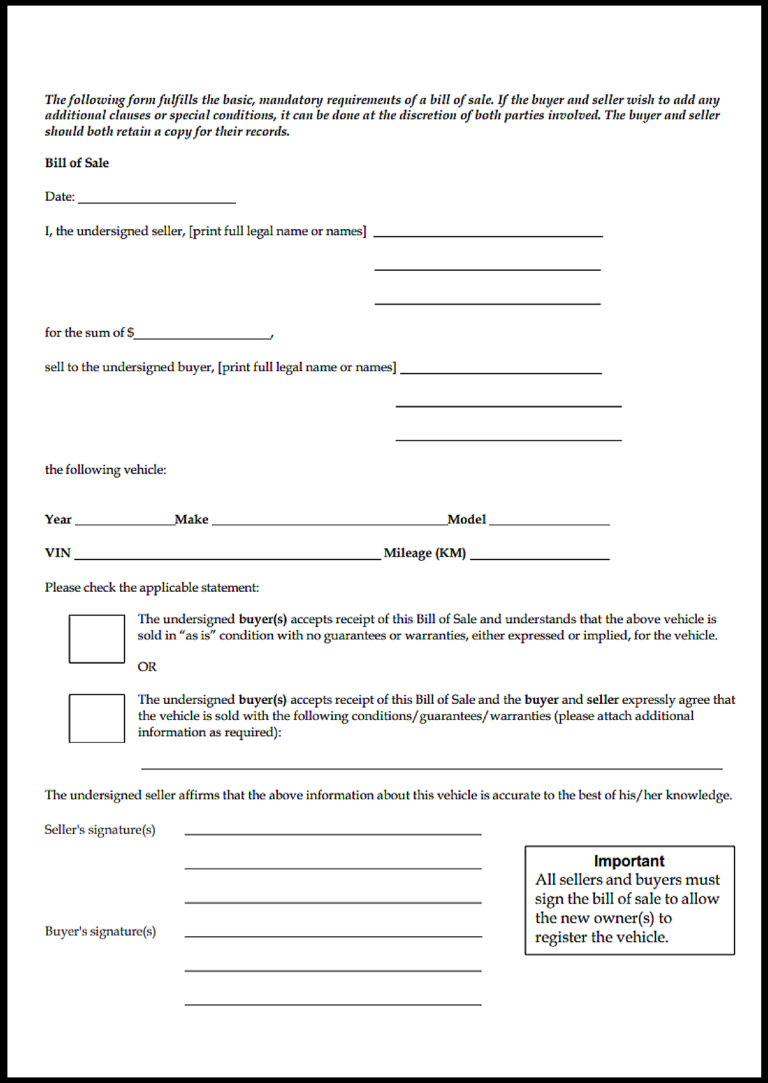
An Alberta Car Bill of Sale is a simple legal document that proves a vehicle has been sold from one person to another. In most private sale situations, this document is very important because it helps confirm ownership transfer and protects both the buyer and seller.
It is commonly used when buying or selling a used car in Alberta. Without it, there can be confusion about who owns the vehicle or how much was paid. This document acts as strong proof and helps avoid future disputes.
I have seen buyers in Alberta run into registration delays and even ownership disputes because the bill of sale was missing important details or signed incorrectly. When people are already stressed about a private vehicle sale, this one document often becomes the main proof that protects them if a disagreement happens later.
Last Updated: August 2026
Key benefits include:
- Proof of ownership transfer
- Legal protection for both parties
- Clear record of price and vehicle details
- Required for vehicle registration in most cases
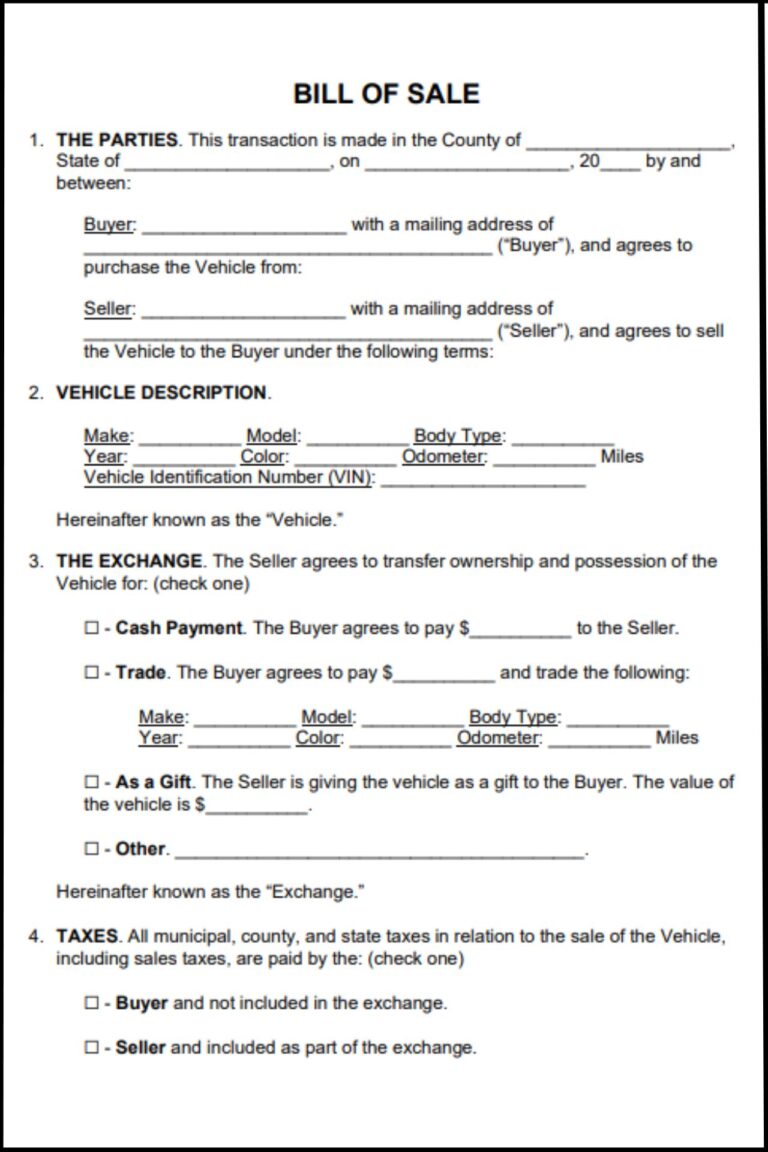
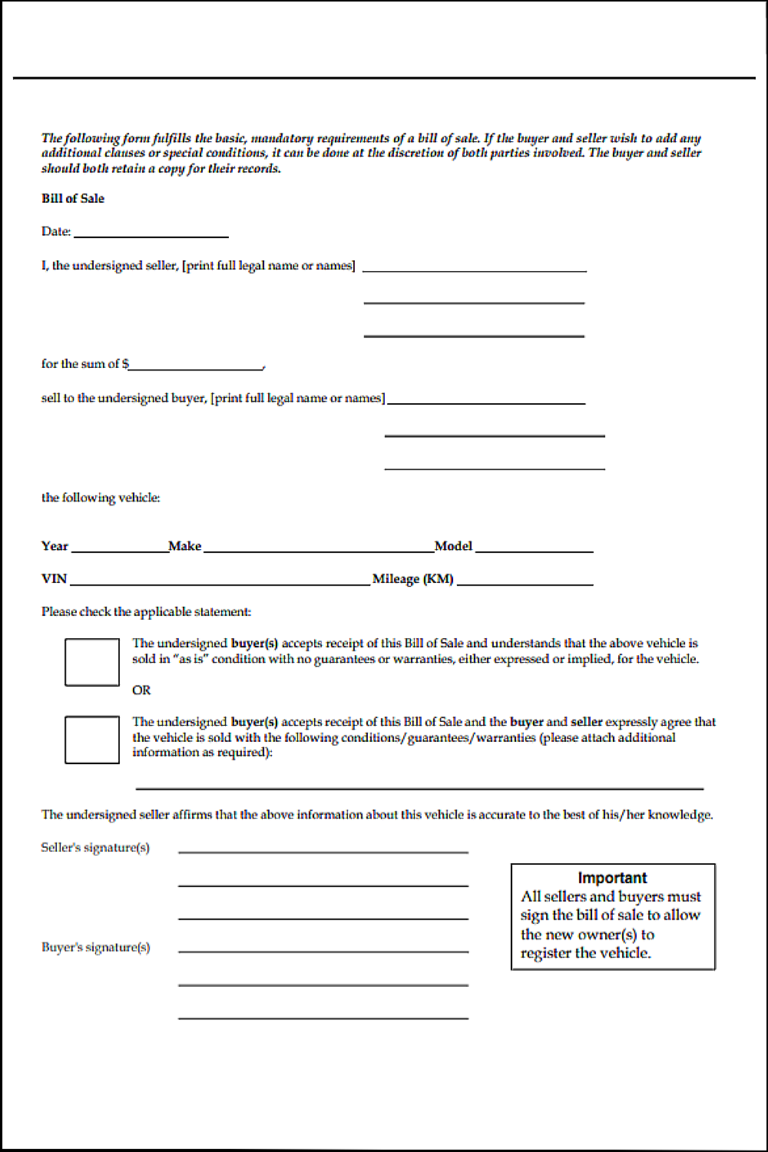
Free Alberta Car Bill of Sale Template
Below is a simple and ready-to-use template. You can copy and fill it easily:
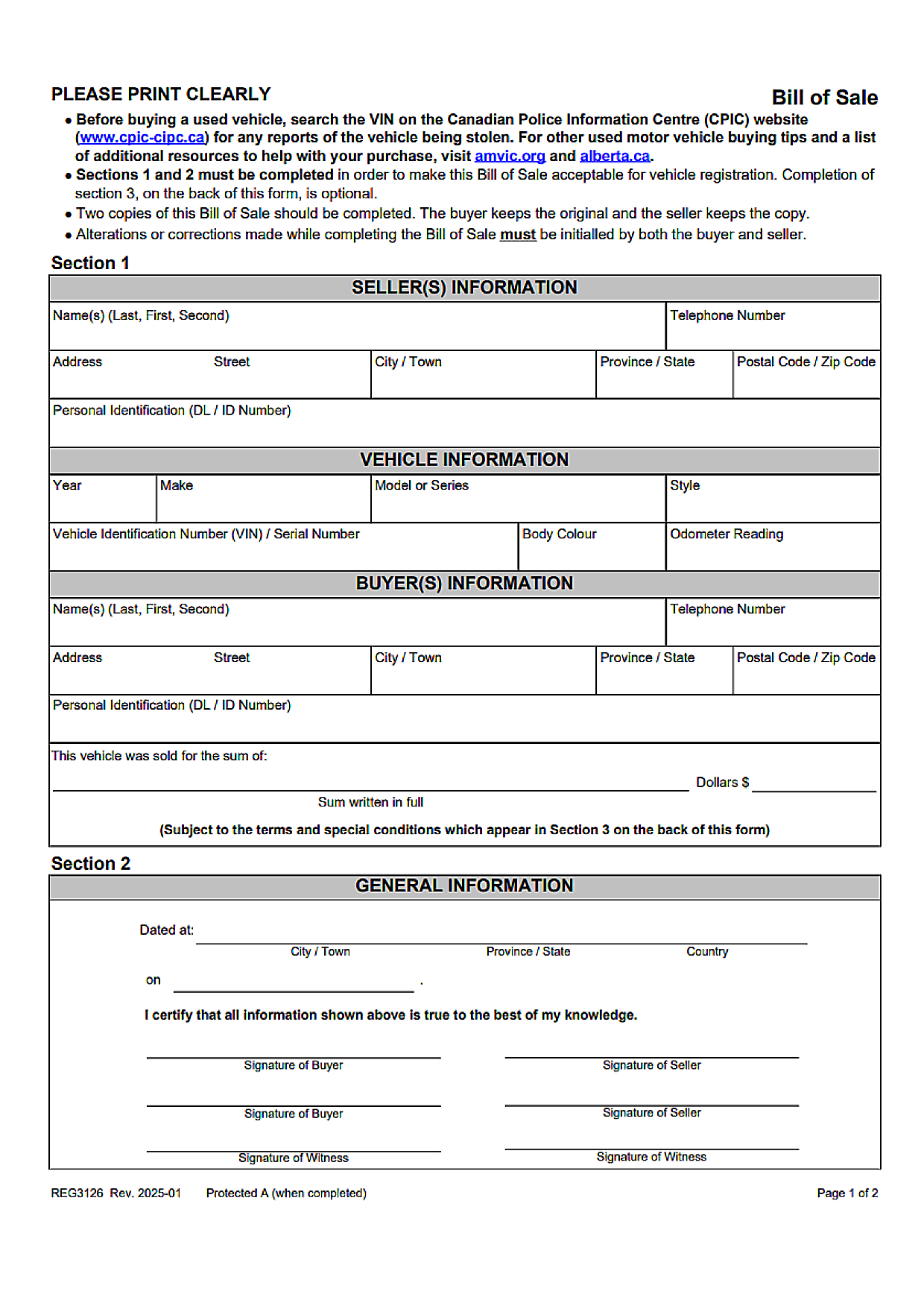
This template is suitable for most private car sales in Alberta. Always make sure both parties keep a signed copy for safety.
Alberta Car Bill of Sale Legal Rules and Registration Requirements
| Topic / Issue | Alberta Legal Rule | Governing Statute |
|---|---|---|
| Governing legislation | Alberta car bill of sale transactions are governed under provincial vehicle registration and consumer protection laws. | Traffic Safety Act, RSA 2000, c T-6 |
| Provincial regulation | Vehicle registration and ownership transfer procedures are governed through Alberta vehicle control regulations. | Operator Licensing and Vehicle Control Regulation, Alta Reg 320/2002 |
| Federal role | Federal law mainly applies to manufacturing standards and imported vehicles, not private vehicle sale contracts. | Motor Vehicle Safety Act (SC 1993, c. 16) |
| Jurisdiction | Vehicle title transfer and registration rules fall under Alberta provincial jurisdiction. | Provincial jurisdiction under Alberta law |
| Recent amendments | Alberta introduced administrative updates involving digital signatures and electronic registries through 2022 legislative changes. | Service Alberta Statutes Amendment Act, 2022 |
| Who can legally sign | The registered vehicle owner or authorized agent with valid Power of Attorney may sign the bill of sale. | Traffic Safety Act, s. 52 |
| Witness requirements | Witnesses are not legally required for Alberta car bill of sale validity. | Governed by common law principles |
| Notarization requirement | Notarization is not required for standard private vehicle sales. | Governed by common law principles |
| Age and mental capacity | A person generally must be at least 18 years old for full legal capacity regarding registration. | Age of Majority Act, s. 1 |
| Licence plate transfer grace period | Buyers transferring an existing valid Alberta licence plate from a sold vehicle to their newly acquired vehicle have up to 14 days to complete the transfer at a registry, provided they carry proof of ownership and insurance. | Operator Licensing and Vehicle Control Regulation, Alta Reg 320/2002, s. 86 |
| Required buyer and seller details | Full legal names and addresses of buyer and seller must be included. | Operator Licensing and Vehicle Control Regulation |
| Required vehicle information | Bills of sale must include VIN, make, model, year, and vehicle style. | Operator Licensing and Vehicle Control Regulation |
| Required financial details | The document must clearly include the purchase price and sale date. | Operator Licensing and Vehicle Control Regulation |
| Signature requirement | Both buyer and seller must sign the bill of sale. | Operator Licensing and Vehicle Control Regulation |
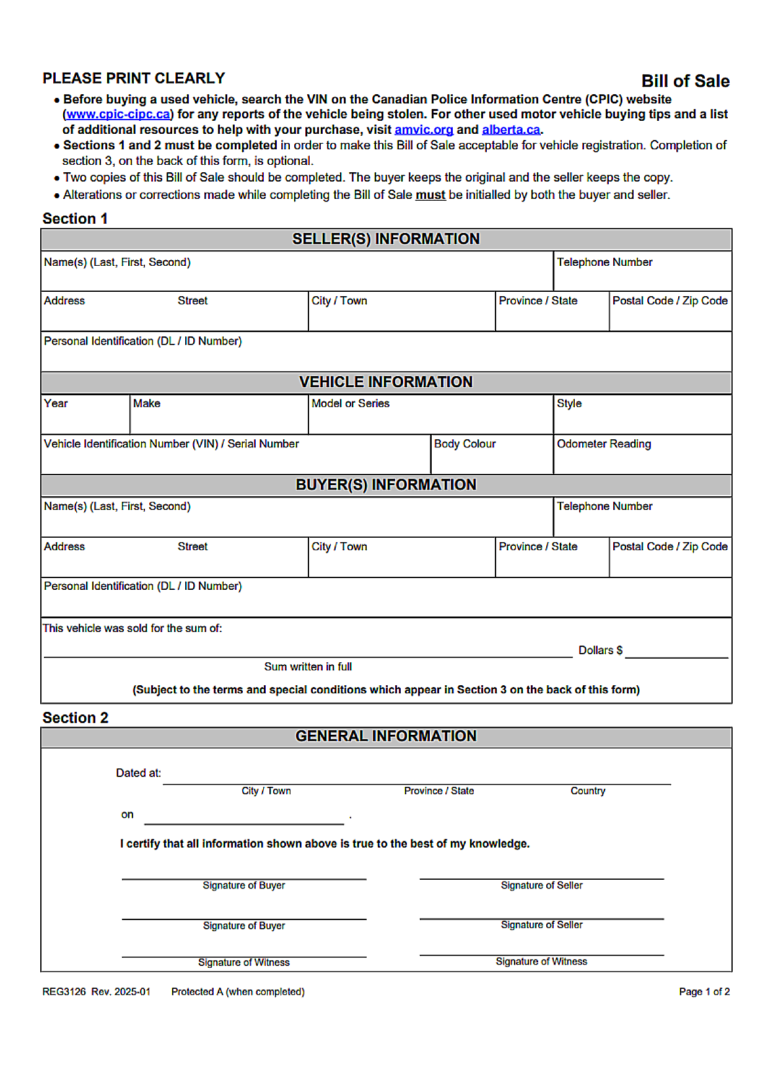
| Optional lien section | Alberta’s standard REG3126 form includes an optional lien disclosure section that is strongly recommended. | Government of Alberta Form REG3126 |
| Filing requirement | The original bill of sale must be presented to a licensed Registry Agent for registration transfer. | Service Alberta Registry process |
| Buyer registration requirements | Buyers must provide the original bill of sale, proof of insurance, and valid ID during registration. | Service Alberta Registry process |
| Incorrect VIN consequences | A bill of sale may become invalid for registration if the VIN does not match official records or the physical vehicle. | Traffic Safety Act, s. 52 |
| Seller authority requirement | Bills of sale signed by someone other than the registered owner without valid authority are ineffective for registration. | Traffic Safety Act, s. 52 |
| Ambiguous purchase price issues | Unclear or incomplete purchase price details may lead to rejection by Registry Agents. | Service Alberta Registry Agent Operating Policies |
| Alberta grace period difference | Alberta allows buyers to temporarily use existing plates for up to 14 days after purchase. | Traffic Safety Act, s. 7 |
| Flexible form requirement | Alberta allows handwritten or custom bill of sale formats as long as all mandatory information is included. | Alberta vehicle registration framework |
One of the most important Alberta car bill of sale rules is the VIN accuracy requirement. Even a single incorrect character in the VIN can cause the Registry Agent to reject the ownership transfer completely. Many buyers only discover this problem when they attempt registration, which can delay the process and create unnecessary stress.
Another major rule involves seller authority. If the person signing the document is not the registered owner and does not have valid Power of Attorney, the bill of sale may become legally ineffective for registration purposes. This is especially important in family sales or situations involving shared ownership.
Alberta’s 14-day licence plate grace period is also unique compared to many provinces. Buyers may temporarily use their existing plates on the newly purchased car, but only if they carry the bill of sale and proof of insurance. Failing to carry these documents can result in fines or registration problems during traffic stops.
To avoid registration delays and ownership disputes, download the free Alberta Car Bill of Sale template and complete it carefully before finalizing your vehicle sale.
What Is an Alberta Car Bill of Sale?
An Alberta car bill of sale is a written agreement that records the sale of a vehicle. It works as legal proof that ownership has been transferred from the seller to the buyer.
For example, if you sell your car to someone you know, and later they claim they paid a different amount, this document protects you. It clearly shows the agreed price, date, and details of both parties.
This document is a specific version of the broader Alberta bill of sale template guide, tailored for private vehicle transactions. If you’re dealing with other vehicle types, the general vehicle sale document and the motorcycle ownership transfer form offer similar legal structures.
A simple receipt is not enough in most cases. A proper bill of sale includes full details and gives stronger legal protection.
| Feature | Receipt | Bill of Sale |
| Details | Basic | Complete |
| Legal value | Low | High |
| Registry use | Not accepted | Accepted |
| Protection | Limited | Strong |
Is a Car Bill of Sale Required in Alberta?
Under Alberta law, a bill of sale is not always a fixed government form, but it is commonly required for private vehicle sales and registration.
When the buyer goes to a registry office, they usually need:
- Bill of sale
- ID and insurance
- Vehicle information
Without this document, the registration process can become difficult or delayed.
In most private sale situations, it is not optional if you want a safe and smooth transaction.
To ensure your agreement meets provincial standards, you should review the legal requirements for a bill of sale. You can also compare it with the “as-is” sale format if the vehicle is being sold without warranties.
Key Information Required in an Alberta Car Bill of Sale
A proper bill of sale must include complete and accurate details. Missing information can cause problems later.
Buyer and Seller Details
Both parties should include their full legal names and contact details. This helps identify them clearly if any issue arises.
Vehicle Identification Details
Vehicle details must be correct and complete. The VIN is especially important because it confirms the identity of the car and helps prevent fraud.
Sale and Payment Information
The purchase price and payment method should be clearly written. This avoids confusion about how much was paid and how.
Odometer Disclosure
The mileage must be accurate at the time of sale. This protects the buyer from fraud and ensures transparency.
Signatures and Date
Both buyer and seller must sign the document. Without signatures, the agreement may not be legally valid.
How to Fill Out an Alberta Car Bill of Sale (Step-by-Step)
Filling out the document correctly is important for legal safety. Start by collecting all vehicle details from the registration papers and double-check the VIN.
Next, verify ownership and make sure there are no liens on the vehicle. Then enter full legal details of both the buyer and seller.
After that, write the exact sale price and mention how payment was made, such as cash or bank transfer. Finally, both parties should sign the document and keep copies.
You can follow these simple steps:
- Collect accurate vehicle details
- Verify ownership and VIN
- Enter buyer and seller information
- Add price and payment method
- Sign and keep copies
Alberta Vehicle Registration After Sale
Once the bill of sale is completed, the buyer must register the vehicle. This step is necessary to legally drive the car in Alberta.
The buyer is responsible for getting insurance and completing registration at a registry office. The seller, on the other hand, should remove their license plates and keep a copy of the bill of sale for records.
Registration should be done quickly after the sale to avoid delays or legal issues.
Common Mistakes to Avoid
Many people make small mistakes that can create big problems later. It is important to be careful while preparing the document.
Some common mistakes include missing VIN, incorrect details, or not signing the document. Using a generic or incomplete template can also cause issues.
- Missing or wrong VIN
- No signatures
- Incomplete information
- Not checking liens
- Wrong odometer reading
Avoiding these mistakes will make the process smooth and safe.
Legal Risks Without a Proper Bill of Sale
Not having a proper bill of sale can lead to serious legal and financial problems. This document protects both parties in many situations.
Without it, there can be disputes about ownership or payment. The seller might still be linked to the vehicle if it is not properly transferred.
There are also risks of fraud, especially if the vehicle is stolen or has hidden issues. In some cases, the seller could even face problems related to tickets or accidents.
Real-Life Example of a Car Sale in Alberta
Suppose a person sells their used car to a buyer for a fixed amount. They create a proper bill of sale with all details, including VIN, price, and signatures.
Later, if any issue comes up, both parties can refer to the document for clarity. It protects them from misunderstandings.
Without this document, disagreements about payment or ownership could easily happen, making the situation stressful and complicated.
Alberta Car Bill of Sale vs Other Provinces
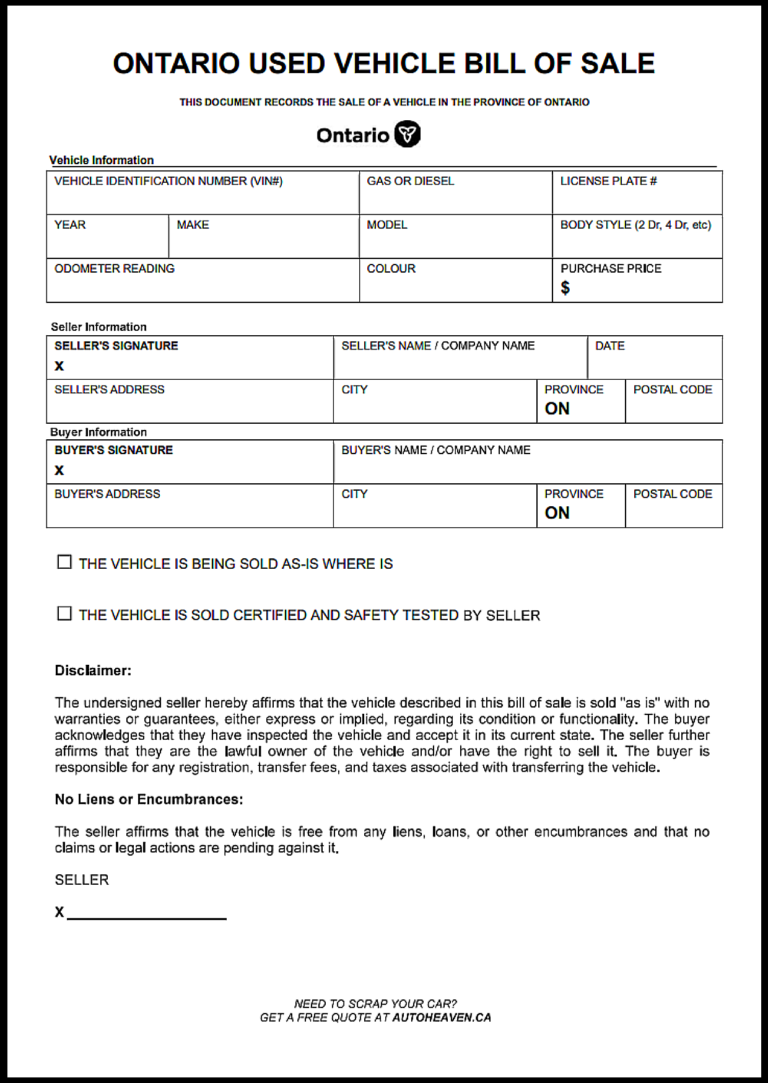
Rules are similar across Canada, but some differences exist. Alberta allows flexible formats, while other provinces may follow more structured systems.
| Feature | Alberta | Ontario |
British Columbia
|
| Format | Flexible | More structured | Structured |
| VIN required | Yes | Yes | Yes |
| Registration use | Required | Required | Required |
| Notarization | Not needed | Not needed | Not needed |
Using a province-specific template is always the best option because it matches local requirements.
FAQs About Alberta Car Bill of Sale
Can I write my own bill of sale in Alberta?
Yes, you can create your own document as long as it includes all required details like VIN, price, and signatures.
Does it need to be notarized?
No, notarization is not required in Alberta.
Is a handwritten bill of sale valid?
Yes, it is valid if it is clear, complete, and signed by both parties.
Who keeps the original copy?
Both buyer and seller should keep signed copies for their records.
Can I cancel a signed bill of sale?
It is difficult to cancel once signed. Both parties must agree, and legal issues may arise if payment is already completed.