Free Ontario Affidavit of Residence | Legal Form & Instructions
Ontario Affidavit of Residence is often required when you need to prove your address but don’t have standard documents like utility bills. In Ontario, many people face this issue—especially students, tenants, or those living with family. This legal document helps you confirm your residence under oath.
In Ontario, proof of address is commonly required for school admissions, banking, immigration, or legal matters. But not everyone has documents like hydro bills or lease agreements in their name. That’s where an affidavit of residence becomes useful.
It is a sworn legal statement confirming where you live. Because it is made under oath, organizations often accept it when other proof is missing. “I’ve seen Ontario institutions reject applications simply because the affidavit was missing key details, wasn’t sworn properly, or didn’t clearly explain the living situation. When people are already stressed about school, immigration, or banking deadlines, fixing those mistakes later can cause serious delays.
Last Updated: September 2026
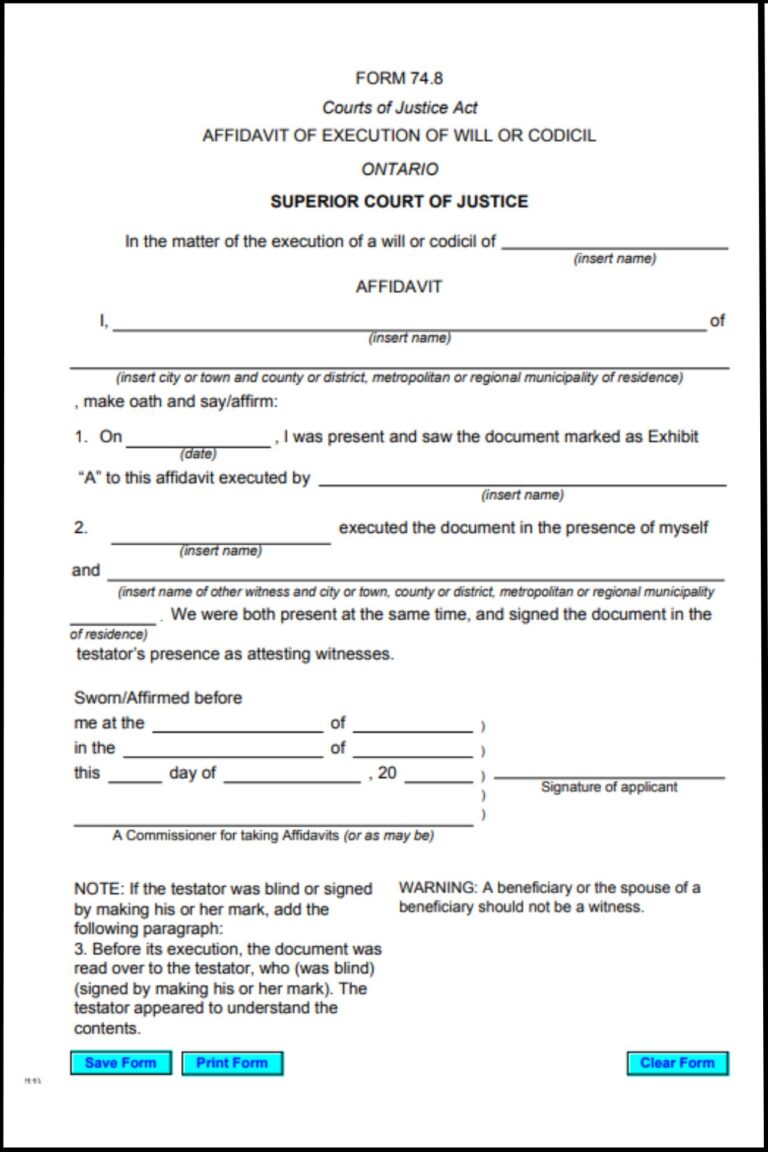
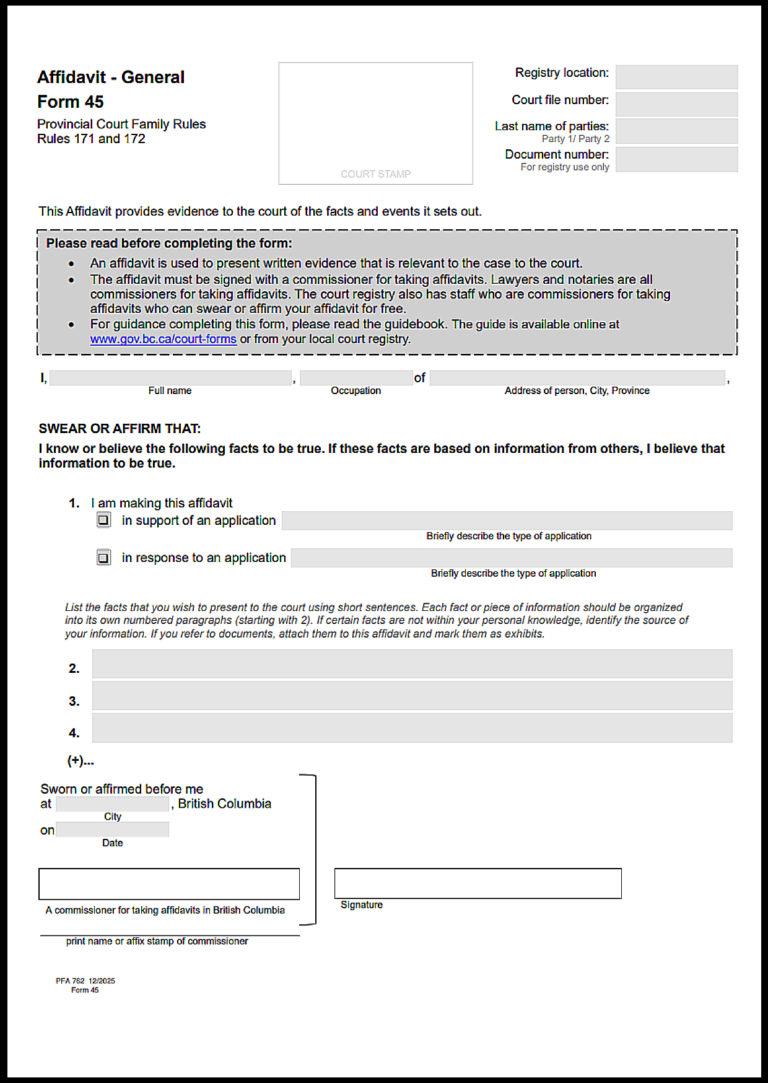
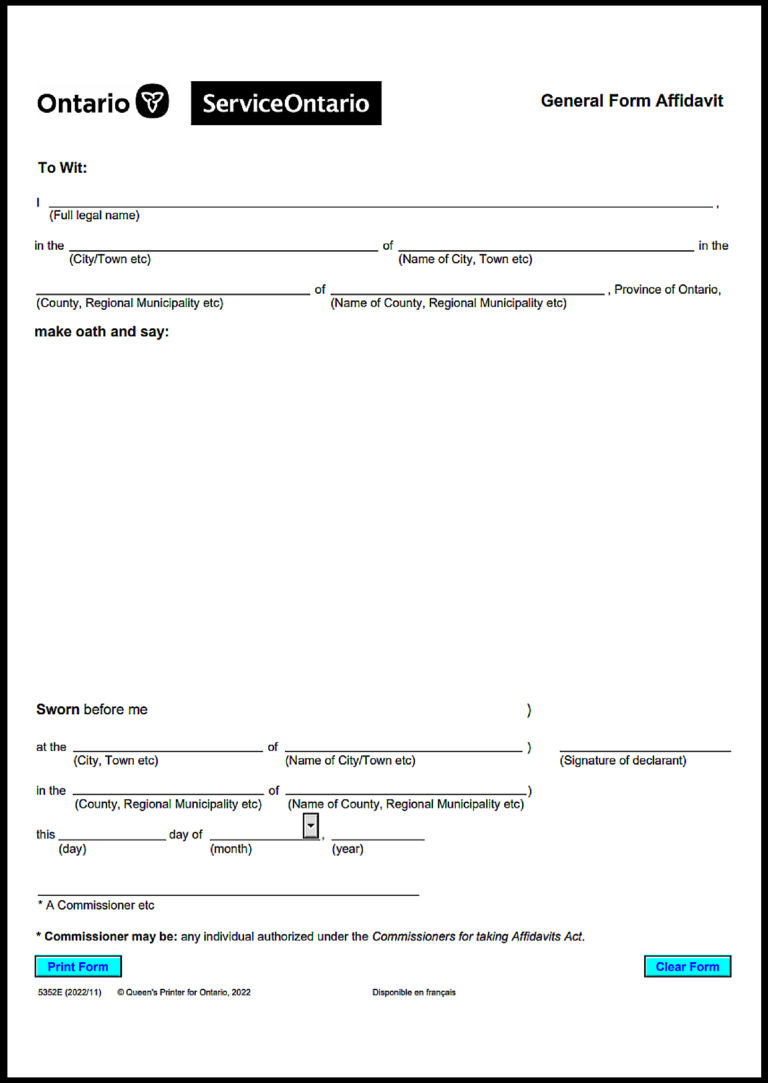
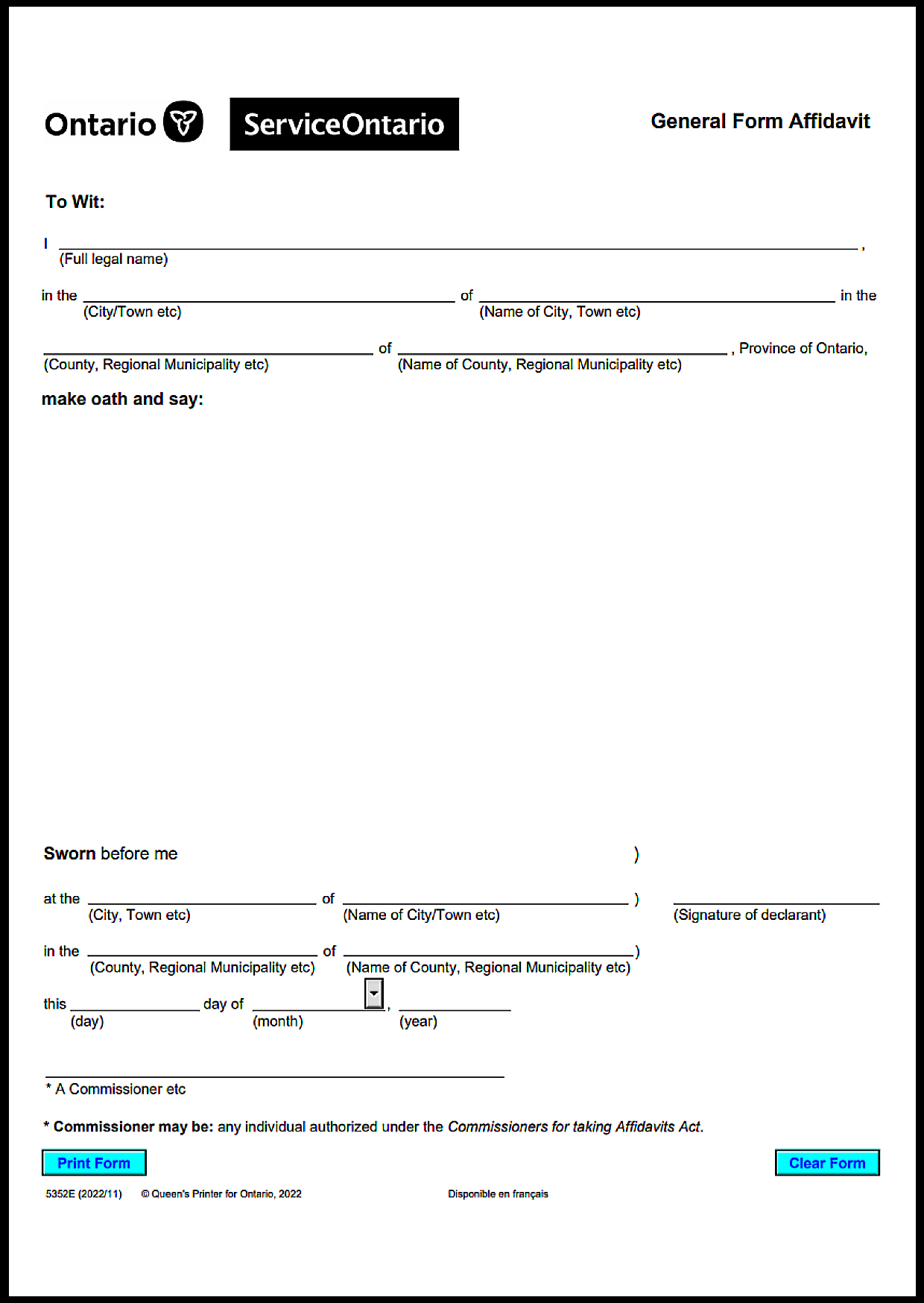
Free Ontario Affidavit of Residence Template
Below is a simple, ready-to-use Ontario affidavit form. You can copy and fill it.
Ontario Affidavit of Residence Laws, Commissioner Rules & Validity Requirements
| Topic / Issue | Ontario Legal Rule | Governing Statute |
|---|---|---|
| Governing legislation | Ontario affidavits of residence are governed by the applicable commissioning rules and, where they are used in a court or tribunal proceeding, the rules and procedures of that proceeding. | Commissioners for Taking Affidavits Act, R.S.O. 1990, c. C.17 |
| Federal affidavit use | Federal requirements may apply when an affidavit is submitted in a federal proceeding or federal administrative process, so the requirements of the particular authority should be checked. | Canada Evidence Act, R.S.C., 1985, c. C-5 |
| Remote commissioning legalization | Ontario permits remote administration of oaths and declarations by electronic communication when the conditions in O. Reg. 431/20 are met. | O. Reg. 431/20; Commissioners for Taking Affidavits Act |
| Who can sign | A person may make an affidavit, but where it is used in a proceeding governed by the Rules of Civil Procedure, the affidavit must comply with the applicable requirements concerning the deponent and the evidence stated. | Ontario Evidence Act, R.S.O. 1990, c. E.23; Rules of Civil Procedure, R.R.O. 1990, Reg. 194 |
| Witness requirement | The affidavit must be sworn or affirmed before a person authorized to administer oaths or affirmations, either in person or remotely where the requirements of O. Reg. 431/20 are met. | Commissioners for Taking Affidavits Act, s. 9; O. Reg. 431/20 |
| Authorized commissioner | The affidavit must be sworn or affirmed before a person authorized by Ontario law to administer oaths or affirmations. | Commissioners for Taking Affidavits Act |
| Age and mental capacity | Ontario’s Evidence Act provides that a person of any age is presumed competent to give evidence, subject to the Act’s rules concerning challenges to competence and witnesses under 14. | Ontario Evidence Act, s. 18 |
| Affidavit freshness requirement | There is no general Ontario statutory rule requiring every affidavit of residence to be dated within 30 to 90 days. A particular organization may impose its own date requirement. | Organization-specific requirements |
| Mandatory jurat wording | A properly commissioned affidavit must contain the jurat or declaration required by the applicable Ontario rules, including any additional information required for remote commissioning. | Commissioners for Taking Affidavits Act |
| Remote commissioning wording | For remote commissioning, the modified jurat or declaration must indicate that the oath or declaration was administered in accordance with O. Reg. 431/20 and state the location of the person administering it and the deponent or declarant at the time of administration. | Commissioners for Taking Affidavits Act; O. Reg. 431/20 |
| Filing requirement | An affidavit of residence is not generally subject to a central Ontario registration requirement, but it may need to be filed or submitted to the particular court, tribunal, government body, or organization requesting it. | Applicable court, tribunal, or agency procedure |
| Government submissions | An affidavit of residence may be submitted to a government body, educational institution, court, or other authority when that particular authority requires or accepts it. | Agency-specific procedures |
| Public record status | Whether an affidavit is publicly accessible depends on where it is filed or submitted and the applicable court, tribunal, government, or access rules. | Court, tribunal, and agency procedures |
| Pre-signing prohibition | Do not sign the affidavit in advance unless the person administering it confirms that the applicable commissioning procedure permits it; the administrator must comply with the statutory requirements before signing the jurat. | Commissioners for Taking Affidavits Act, s. 9 |
| Jurat location requirement | Where remote commissioning is used, the modified jurat must state the locations required by O. Reg. 431/20. Court proceedings may also have additional formatting or filing requirements. | Rules of Civil Procedure; O. Reg. 431/20 |
| Exhibit attachment requirement | For proceedings governed by the Rules of Civil Procedure, exhibits referred to in an affidavit must be handled in accordance with Rule 4.06(3), including the applicable marking, attachment, and filing requirements. | Rules of Civil Procedure, Rule 4.06(3) |
| Ontario paralegal authority | Ontario government guidance states that people holding certain offices, including lawyers and paralegals, are automatically commissioners for taking affidavits by virtue of office. | Commissioners for Taking Affidavits Act |
| Ontario remote witnessing difference | Ontario permits remote commissioning when the requirements of O. Reg. 431/20 are met, including real-time communication, identity confirmation, required modified wording, and reasonable precautions. | O. Reg. 431/20 |
The commissioning step deserves particular attention. Under Ontario’s Commissioners for Taking Affidavits Act, the person administering the oath or declaration must satisfy themselves of the genuineness of the signature and properly administer the oath or declaration before completing the jurat.
Ontario also has specific affidavit requirements for proceedings governed by the Rules of Civil Procedure. Rule 4.06 addresses the form and contents of affidavits, while other rules address filing, service, and procedural deadlines. A missing required commissioning detail can create a procedural defect that may need to be corrected.
Ontario permits remote administration under O. Reg. 431/20. The process requires real-time audiovisual communication, identity confirmation, a modified jurat or declaration stating the required locations, and reasonable precautions by the person administering the oath or declaration.
These requirements matter because an affidavit that does not meet the recipient’s requirements may need to be corrected or supplemented. Before submitting an Ontario Affidavit of Residence, check the specific requirements of the organization, court, tribunal, or government body requesting it.
Understanding Affidavit of Residence in Ontario
What Is an Affidavit of Residence?
Under Ontario law, an affidavit is a written statement sworn or affirmed before a person authorized to administer an oath or affirmation.
An affidavit of residence can state facts about where you live, such as:
- Where you currently live
- Since when you have lived there
- Other relevant facts about your residence when required for the particular purpose
Why Not Just Use Informal Proof?
The usefulness of an affidavit depends on what the receiving organization has asked for. If it specifically requests an affidavit, the document provides a formal sworn or affirmed statement that can be considered alongside any other required evidence.
An affidavit is a formal document because:
- It is sworn or affirmed
- It is administered before a person authorized by law
- Knowingly making a false statement can have legal consequences
When Do You Need It? (Real-Life Uses)
An affidavit of residence may be useful when ordinary proof of address is unavailable or does not meet the requirements of the organization requesting it.
Common situations may include:
- School or college admission
- Immigration or visa applications where the relevant process accepts an affidavit
- Banking or identity-related requirements where the institution accepts one
- Court or legal filings when residence is relevant
- Documenting residence in a tenancy or household situation where additional evidence is requested
An affidavit can document where someone lives, but it does not replace the legal requirements that apply to a tenancy. For covered residential tenancies, the landlord must comply with the requirements of the Residential Tenancies Act, 2006, including the applicable Ontario Standard Lease requirements.
Example: If you live with family or are not named on utility statements, an affidavit may provide additional evidence of your residence. Whether it satisfies a third party’s proof-of-address requirements depends on that organization’s rules.
An affidavit of residence is commonly used to confirm an individual’s address for legal or administrative purposes. To see how this document aligns with other sworn statements, review the [Ontario affidavit template hub], which explains how affidavits are structured under provincial law.
Legal Validity & Requirements in Ontario
Is It Legally Valid?
Yes, an affidavit can be legally effective when it is properly prepared and sworn or affirmed according to the requirements that apply to its intended use.
The person administering the oath or affirmation must:
- Comply with the applicable commissioning requirements
- Satisfy themselves of the genuineness of the signature
- Properly administer the oath or affirmation
If the affidavit is not properly sworn or affirmed, the receiving court, tribunal, organization, or other authority may require it to be corrected or may refuse to accept it.
Key Legal Rules
- The affidavit must be sworn or affirmed before a person authorized by law
- It should contain accurate information relevant to its purpose
- Knowingly making a false statement can result in legal consequences
When It May Be Rejected
A receiving organization may refuse an affidavit if:
- It was not properly sworn or affirmed
- Required information is missing
- Additional proof of address is required
- The document does not meet the organization’s specific submission requirements
Key Information Required in the Affidavit
Personal Identification Details
Include:
- Full legal name
- City and province
Complete Residential Address
Include:
- Full address, including postal code where appropriate
- A clear and accurate description of the residence
Duration of Residence
Include:
- The date you began living at the address or how long you have lived there, if relevant to the purpose of the affidavit
Purpose of the Affidavit
State:
- Why you need to provide proof of residence
Signature and Swearing Clause
- Sign and swear or affirm the affidavit according to the applicable commissioning procedure
Supporting Documents That Strengthen Your Affidavit
An affidavit may not be enough on its own if the receiving organization requires additional proof of address. Depending on the purpose, it may ask for supporting documents such as:
- Government ID, such as a driver’s licence or passport
- Lease agreement, if available
- Letter from a landlord or homeowner
- Bank statements or official mail
Practical Tip:
Before attaching supporting documents, check what the receiving organization actually accepts. An affidavit does not automatically become sufficient merely because additional documents are attached.
This document is often required alongside a [legal identity affidavit] or a [general sworn affidavit template]. If you are preparing documents for official submission, it’s helpful to follow the steps outlined in [how to notarize an affidavit in Ontario].
How to Complete the Affidavit (Step-by-Step)
Follow these steps carefully:
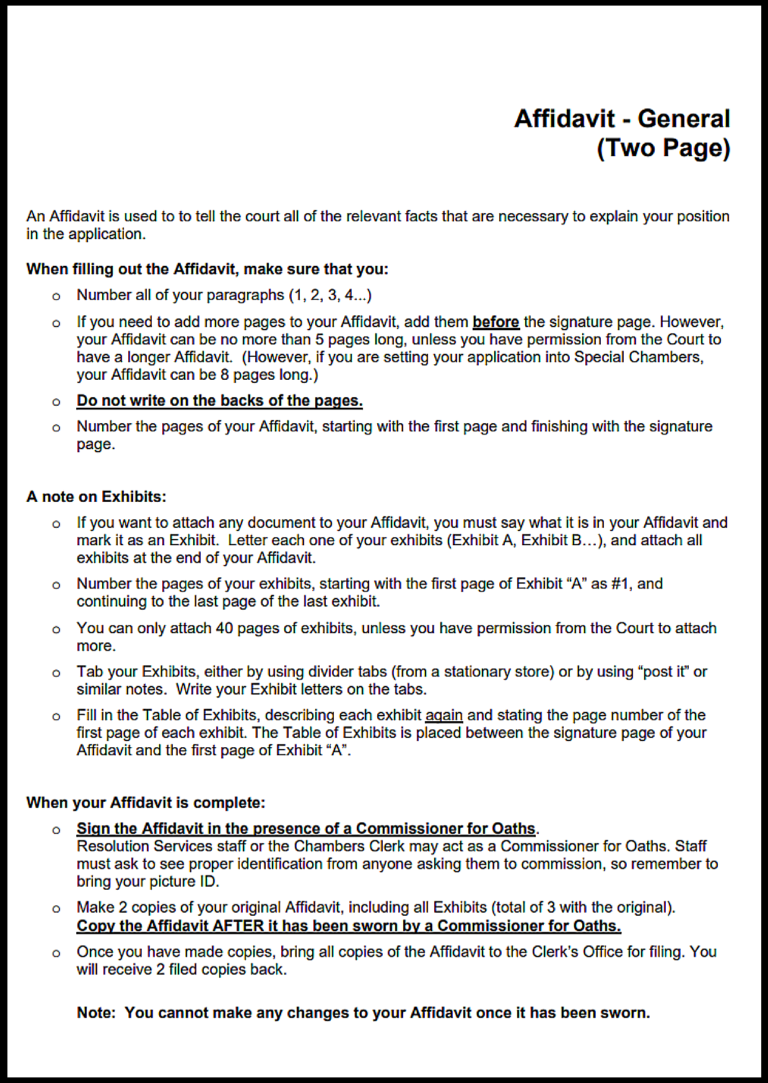
- Fill in your full name and address
- Write the correct start date of residence, if relevant
- Clearly mention the purpose
- Do NOT sign yet unless the person administering the affidavit confirms another procedure applies
- Visit a person authorized to administer oaths or affirmations
- Sign and swear or affirm the affidavit according to the applicable commissioning procedure
- Keep a copy for your records and submit the completed document as required
Commissioner of Oaths vs Notary Public
Many people get confused between these two.
| Feature | Commissioner of Oaths | Notary Public |
| Role | May administer oaths and affirmations when authorized |
May perform notarial functions and administer oaths and affirmations when authorized
|
| Cost | Depends on the provider and service |
Depends on the provider and service
|
| Where to find | Availability varies by office and provider |
Commonly available through legal and notarial service providers
|
| When needed | Appropriate when the receiving authority requires a properly commissioned affidavit |
Useful when notarization or another notarial service is specifically required
|
In many situations, a properly authorized commissioner can administer an affidavit. However, check whether the organization receiving the document specifically requires notarization.
Common Mistakes That Make an Affidavit Invalid
Avoid these errors:
- Signing before meeting the person administering the affidavit
- Providing an incomplete address
- Using false or exaggerated claims
- Missing required dates or signatures
- Not stating the purpose clearly
- Failing to follow the requirements of the organization receiving the document
Procedural mistakes can cause delays, require corrections, or lead the receiving authority to refuse the document.
Affidavit of Residence vs Statutory Declaration
These two are similar but not the same.
| Feature | Affidavit |
Statutory Declaration
|
| Oath | Sworn under oath or made by solemn affirmation |
Made as a formal solemn declaration under the applicable statutory authority
|
| Legal effect | Depends on the applicable law and the purpose for which the affidavit is used |
Depends on the statute or authority under which the declaration is made
|
| Usage | Commonly used as evidence where the applicable court, tribunal, or other rules permit |
Used where legislation, a government body, organization, or other authority requires or accepts a statutory declaration
|
Situations Where It May Be Rejected
A receiving organization may refuse an affidavit if:
- It was not properly sworn or affirmed
- Required information is missing
- Additional proof is required
- The document does not meet the organization’s specific submission requirements
Always check requirements before submitting.
FAQs
Can I write my own affidavit of residence?
Yes. You can generally prepare your own affidavit using a suitable format, provided it meets the requirements of the court, tribunal, organization, or other authority receiving it and is properly sworn or affirmed.
Does it need to be notarized in Ontario?
Not always. An affidavit can generally be sworn or affirmed before a person authorized to administer oaths or affirmations. Notarization may be required if the receiving authority specifically asks for it.
Is affidavit enough without proof of address?
Sometimes, but it depends on the organization requesting the document. Some organizations may accept an affidavit alone, while others may require additional proof of address.
Who can act as a Commissioner of Oaths?
Lawyers, paralegals, and certain other prescribed office holders may act as commissioners in Ontario. The person administering the affidavit must have the required legal authority.
Can I use this for immigration purposes?
An affidavit may be useful in an immigration matter if the particular immigration process accepts it. Immigration authorities may also require specific forms or additional supporting documents, so check the requirements for the application involved.
Final Thoughts
An affidavit of residence can be useful when you need formal evidence of where you live.
Before submitting it:
- Provide accurate information
- Follow the applicable commissioning procedure
- Include any supporting documents required by the recipient
Following the applicable requirements can help avoid common procedural problems, but acceptance depends on the requirements of the organization, court, tribunal, or other authority receiving the affidavit.
Always confirm the requirements of the organization requesting it.