Free British Columbia Bill of Sale Template & Guide
British Columbia Bill of Sale is a simple legal document that proves ownership transfer from a seller to a buyer. In British Columbia, this document is very useful in private sales because it gives clear proof of what was sold, for how much, and when the transfer happened. It helps both buyer and seller stay protected if any dispute comes later.
I’ve seen private sales in British Columbia turn into expensive disputes simply because the parties relied on text messages or verbal promises instead of a proper bill of sale. When buyers come to me after problems with ownership, payment, or vehicle registration, the missing details in this document are often what create the biggest legal headaches.
In this article, you will get a free template, understand different types of bills of sale used in BC, learn the legal basics under the Sale of Goods Act, and see how to fill the document correctly. This page also works as a hub, so you can choose the right template based on what you are selling.
Last Updated: August 2026
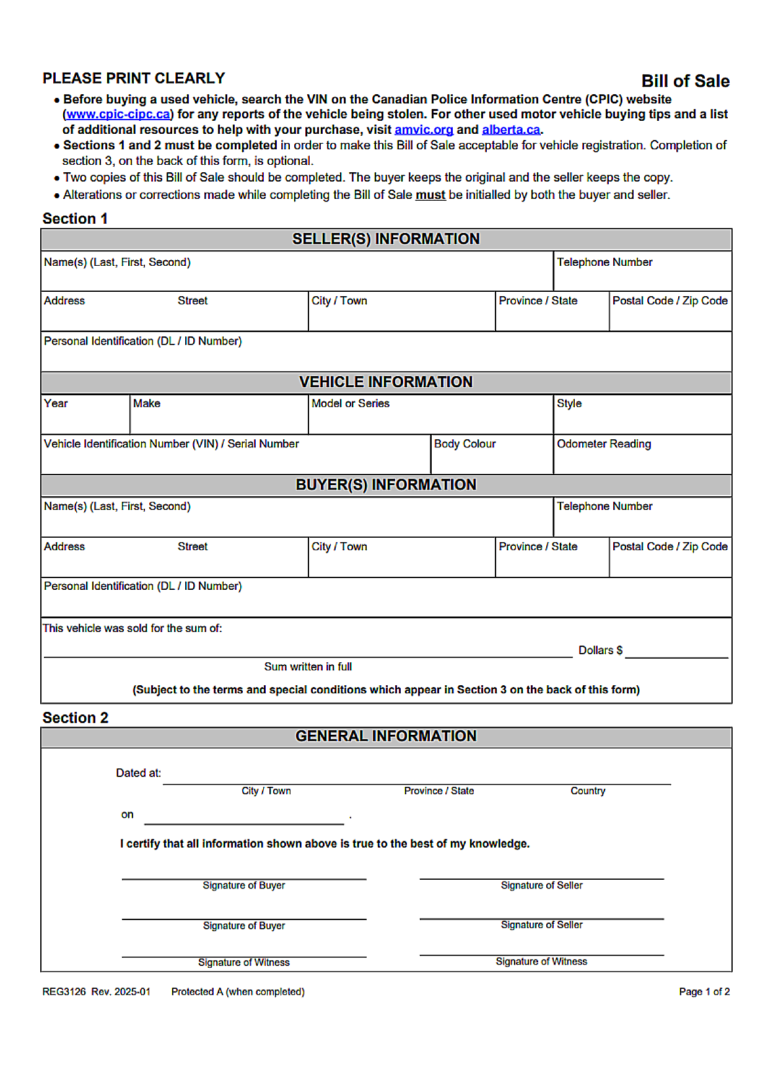
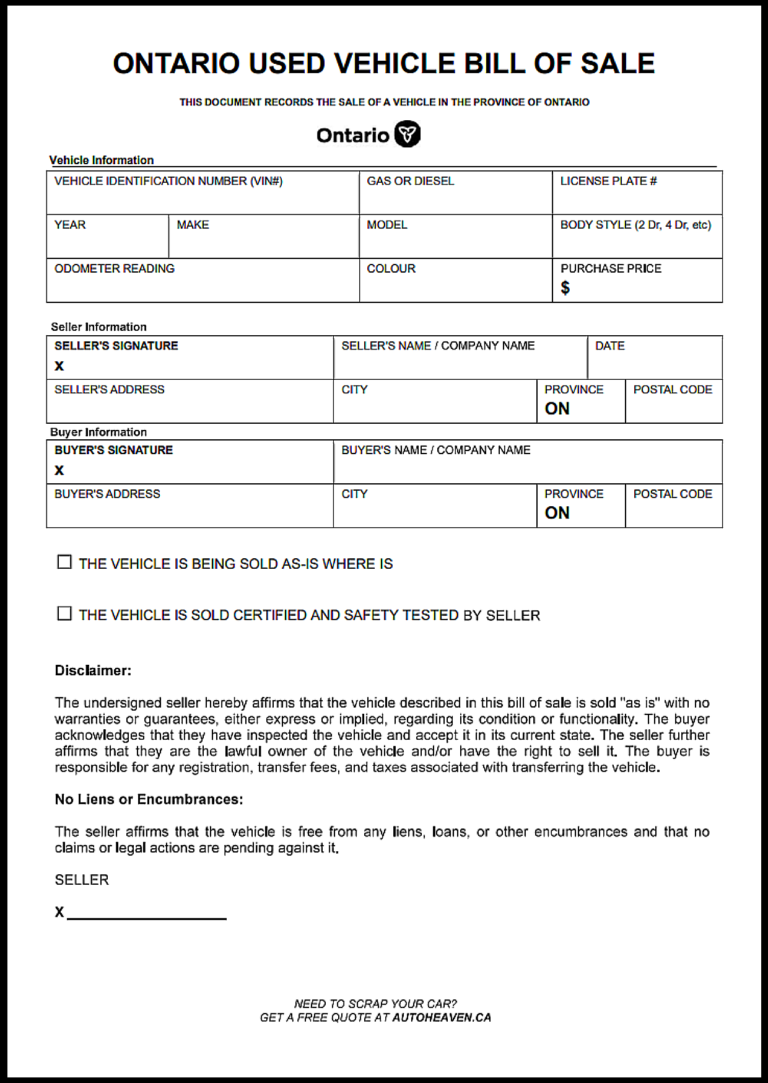
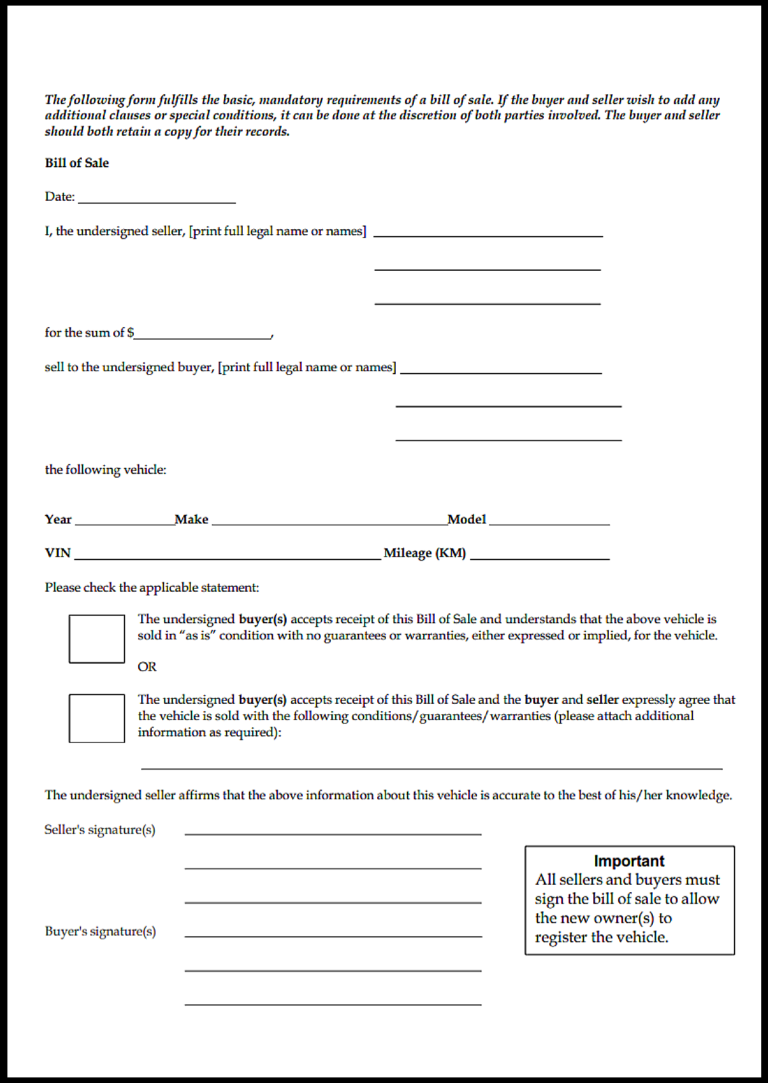
Free British Columbia Bill of Sale Template
A general bill of sale template works well for simple personal property like furniture, electronics, or small items. It is commonly used in Canada and follows a legally accepted structure. However, it is not suitable for regulated items like vehicles, boats, or firearms, where specific details are required.
Important British Columbia Bill of Sale Laws You Should Know
| Topic / Issue | British Columbia Legal Rule | Governing Statute |
|---|---|---|
| Main provincial law | Contracts for the sale of goods in British Columbia are governed in part by the Sale of Goods Act, while other laws may apply depending on the property and transaction. | Sale of Goods Act, [RSBC 1996] c. 410 |
| Vehicle transfer regulation | Vehicle transfers and taxation involve separate ICBC and provincial statutory requirements. | Motor Vehicle Act, [RSBC 1996] c. 318 and Provincial Sales Tax Act, [SBC 2012] c. 35 |
| Federal involvement | Federal law can apply to particular types of property and transactions, including registered Canadian vessels and firearms. | Applicable federal legislation |
| Nature of jurisdiction | General bill-of-sale and sale-of-goods rules are primarily governed by British Columbia law, subject to federal laws that apply to particular transactions. | Applicable provincial and federal legislation |
| Recent tax update | BC’s tax rules can change through legislation and regulations. The current PST rules applicable to the particular vehicle and transaction should be checked before calculating tax. | Provincial Sales Tax Act and regulations |
| Who can sign | The parties should sign the written bill of sale so there is a clear record of the transaction. | Sale of Goods Act, ss. 6–8 |
| Witness requirement | The Sale of Goods Act does not prescribe a general witness-signature requirement for an ordinary bill of sale. | Sale of Goods Act |
| Notarization | The Sale of Goods Act does not impose a general notarization requirement for an ordinary private bill of sale. | Sale of Goods Act |
| Age requirement | British Columbia’s general age of majority is 19, but contractual capacity is governed by the applicable law rather than a blanket requirement that every seller or buyer be 19 or older. | Age of Majority Act; Sale of Goods Act, s. 7 |
| Mental capacity | The parties should have the legal capacity required to enter into the transaction. | Applicable contract and capacity law |
| Vehicle transfer deadline | For a registered vehicle transfer, the transferee must deliver the prescribed notice of transfer to ICBC within 10 days of the transfer. | Motor Vehicle Act, s. 17 |
| Required vehicle details | For vehicle transactions, the VIN and other vehicle information should be recorded accurately and should match the ICBC transfer documentation. | Motor Vehicle Act; ICBC requirements |
| As-Is clause | An “as-is” term may affect contractual warranties, but it does not automatically exclude every statutory protection or claim. | Sale of Goods Act and contract law |
| Dealer disclosure rules | Dealers can have additional disclosure and consumer-law obligations that do not apply in the same way to ordinary private sales. | Business Practices and Consumer Protection Act |
| General property filing | Most ordinary bills of sale are private transaction records and do not require separate government filing. | Applicable sale-of-goods and contract law |
| Vehicle filing requirement | A bill of sale can support a vehicle transaction, but the statutory ICBC transfer process separately requires the prescribed transfer documentation. | Motor Vehicle Act; ICBC process |
| Secured interest registration | Where a seller retains a security interest, registration under the Personal Property Security Act may be used to perfect that security interest. | Personal Property Security Act |
| Failure to describe goods | A clear description is important because, where goods are sold by description, the goods must correspond with that description. | Sale of Goods Act, s. 17 |
| Illegal consideration | A transaction involving an illegal purpose may be unenforceable depending on the applicable law and circumstances. | Applicable common law and legislation |
| Seller without title | Unless an exception applies, the Sale of Goods Act protects the buyer through implied terms concerning the seller’s title and the buyer’s quiet possession. | Sale of Goods Act, s. 16 |
| PST on private vehicle sales | Private vehicle purchases may be subject to PST, with the applicable rate and taxable-value rules depending on the vehicle and transaction. | Provincial Sales Tax Act |
| Age of majority difference | British Columbia’s general age of majority is 19. | Age of Majority Act |
| No dedicated Bill of Sale Act | The legal framework for bills of sale involves several statutes depending on the transaction, including the Sale of Goods Act and Personal Property Security Act. | Applicable British Columbia legislation |
Private vehicle sales in British Columbia can be subject to PST. The taxable value is governed by the Provincial Sales Tax Act and related rules, so the tax is not necessarily based only on the amount written on the bill of sale.
British Columbia’s general age of majority is 19, but that does not create a blanket rule that a person under 19 cannot enter every sale transaction. The Sale of Goods Act leaves contractual capacity to the general law concerning capacity to contract and to transfer or acquire property.
For a registered vehicle transaction, the transferor and transferee must complete the required ICBC transfer process. The transferee must deliver the prescribed notice of transfer to ICBC within 10 days. A bill of sale can provide supporting evidence, but it does not replace the required transfer paperwork.
These rules matter because a bill of sale can provide a useful written record of the parties, property, price, date, and other agreed terms.
Download the free British Columbia Bill of Sale template to record the transaction clearly and keep copies of the completed document with the other transaction records.
This document is commonly used to record private sales and ownership transfers throughout the province. To understand how these legal records fit into broader provincial requirements, you can review with the step-by-step writing guide for British Columbia.
Types of Bill of Sale in British Columbia
In British Columbia, different transactions may require different supporting documents and information. The appropriate paperwork depends on what is being sold and whether registration, taxation, or other legal requirements apply.
Vehicle Bill of Sale (Car, Motorcycle, RV)
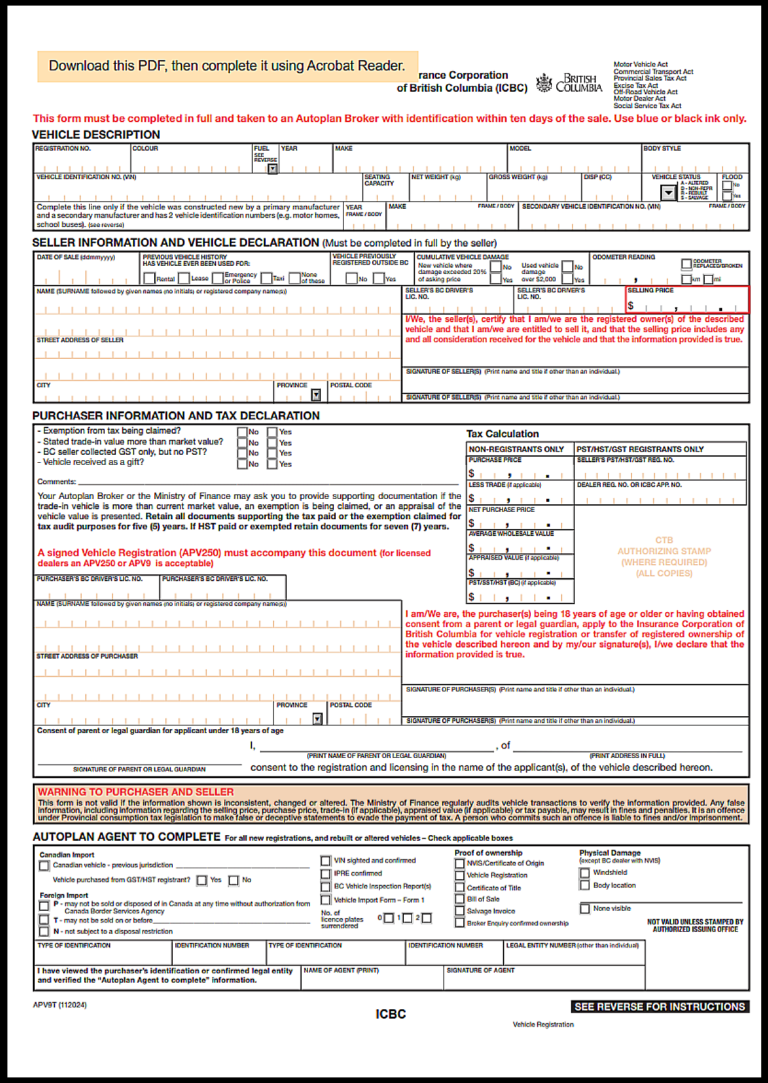
A vehicle bill of sale is used to document a private vehicle transaction and can support the transfer process with ICBC. It should accurately record details such as the VIN, vehicle description, sale price, and date. The bill of sale does not replace the prescribed ICBC transfer documents.
Boat / Vessel Bill of Sale
This type is used to document the sale of boats and other watercraft. It can help establish the transaction and may be useful for registration, insurance, financing, or recordkeeping depending on the vessel.
Firearm Bill of Sale
Firearm transactions are subject to Canadian federal firearms law. A private bill of sale does not replace required federal licensing, transfer, registration, or verification procedures that apply to the particular firearm and transaction.
Equipment Bill of Sale
This is commonly used in business, construction, and private sales involving machinery, tools, or other equipment. It should identify the equipment, including serial numbers where applicable, and can record its condition and agreed price.
General Personal Property Bill of Sale
This is used for items like furniture, appliances, or electronics. It can identify the property, purchase price, date, payment method, and any agreed condition or other terms.
Livestock Bill of Sale
Livestock transactions may require additional identification or agricultural records depending on the circumstances. A written bill of sale can document the animals transferred, the parties, the price, and the transaction date.
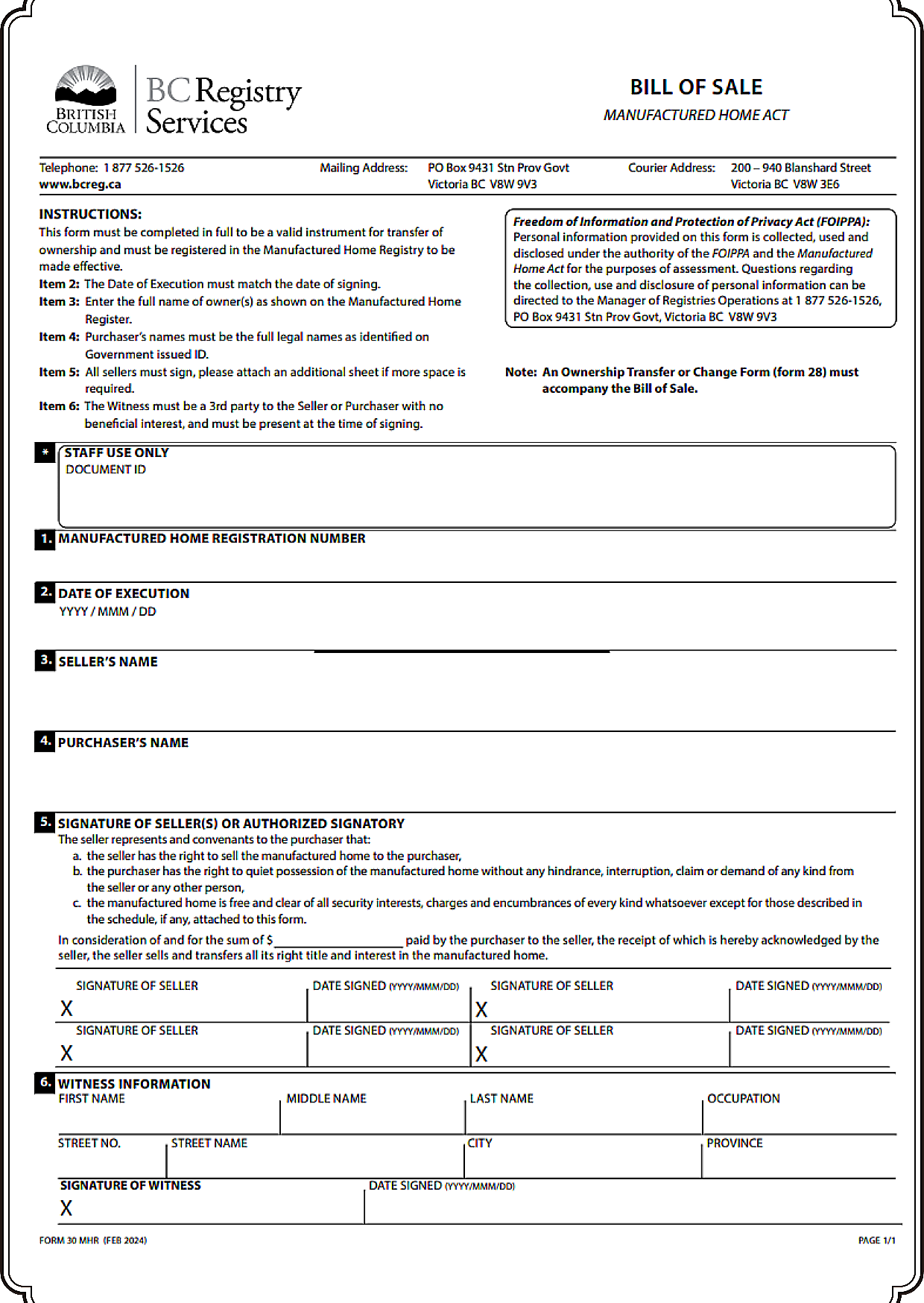
Some transactions require more specific ownership paperwork depending on the type of asset being sold. Motor vehicle purchases may involve a vehicle transfer document, while watercraft sales often use a boat bill of sale template for registration and recordkeeping purposes.
Real-Life Use Cases in British Columbia
A bill of sale can be useful in many private transactions. For example, when someone sells a used vehicle privately, a written bill of sale can record the buyer, seller, vehicle, price, and date. The required ICBC transfer documents should still be completed separately.
It can also document the sale of equipment, furniture, electronics, livestock, or other personal property. In each case, the value of the document is that it creates a written record of what the parties agreed was being transferred.
Key Elements of a Valid Bill of Sale
A useful bill of sale should contain enough information to identify the parties, the property, and the terms of the transaction.
- Full legal names and contact details of buyer and seller
- Clear description of the item (including serial number or VIN if applicable)
- Exact purchase price and payment method
- Date of sale
- Condition of the item and any agreed condition terms
- Signatures of both parties
These details make the document a clearer record of the transaction under British Columbia law.
Before completing the transaction, buyers may also want to review the guide explaining whether a bill of sale is required in British Columbia to better understand provincial documentation rules.
How to Create or Complete a Bill of Sale
Creating a bill of sale is straightforward when the transaction details are recorded accurately. First, choose the appropriate type based on what you are selling. Then enter the buyer and seller details and identify the property clearly.
Add the purchase price and payment method, include the date, and describe any condition terms. Both parties should sign the document and keep a copy.
Legal Overview in British Columbia
Under British Columbia law, a separate bill of sale is not mandatory for every type of private sale. It is nevertheless a useful written transaction record. Certain property, including registered vehicles, has additional statutory transfer or registration requirements.
Private sales of goods are governed in part by contract law and the Sale of Goods Act. The Act contains implied terms concerning matters such as the seller’s right to sell and the buyer’s quiet possession, unless the circumstances show a different intention.
| Situation | Required or Not | Purpose |
| Vehicle sale | Strongly recommended |
Provides a written record of the vehicle transaction and supports ownership/registration documentation
|
| Furniture sale | Not generally required |
Proof of purchase and transaction terms
|
| Equipment sale | Not generally required |
Business or transaction record
|
| Firearm sale | Not a substitute for federal requirements |
Documents the transaction, while federal firearms requirements still apply
|
In some cases, additional documents like registration papers, licences, transfer forms, or other government records may also be needed.
Common Mistakes to Avoid
Most bill-of-sale problems are avoidable when the transaction details are checked before signing. A common issue is using a general document for an asset that has separate legal or registration requirements. Another is leaving out an important identifying number such as a VIN or serial number.
- Not describing the property clearly
- Incorrect buyer or seller details
- Missing signatures
- Not keeping a copy of the document
- Failing to complete separate government transfer requirements where applicable
Keeping the completed bill of sale together with related payment and registration records can make the transaction easier to document later.
Choosing the Right Bill of Sale
Choosing the correct type of bill of sale depends on what is being sold and whether another legal process applies. For a vehicle, a vehicle-specific document can make it easier to record the VIN and other transaction details. A vessel transaction may require additional registration information.
For ordinary personal property, a general bill of sale can usually record the parties, property, price, payment, date, and condition. For regulated property such as firearms, the bill of sale does not replace the federal legal requirements that apply.
Frequently Asked Questions
Is a Bill of Sale legally required in British Columbia?
A separate bill of sale is not legally required for every private transaction. For vehicle transfers, the required ICBC transfer documents must be completed, and a bill of sale can provide useful supporting evidence of the transaction.
Can I write my own Bill of Sale in BC?
Yes. You can prepare your own bill of sale. It should accurately identify the parties and property and record the price, date, payment terms, and other important conditions of the transaction.
Does a Bill of Sale need to be notarized in BC?
No general notarization requirement applies to an ordinary private bill of sale under the Sale of Goods Act. Some specialized transactions may have separate documentation requirements.
What’s the difference between a Bill of Sale and a receipt?
A receipt generally records payment, while a bill of sale records the transaction and the property being transferred. A bill of sale can also include payment information, condition, and other agreed terms.
Can I use one template for all items?
Not always. A general bill of sale may work for ordinary personal property, but vehicles, vessels, firearms, and other regulated or registered property can require additional information or separate legal procedures.
What happens if I don’t use a Bill of Sale?
You may have less written evidence of the price, property, payment, condition, or other terms of the transaction. Other records may still be available, but a clear bill of sale can make the transaction easier to document.
Legal Disclaimer
This content is for informational purposes only and should not be taken as legal advice. Laws in British Columbia may change over time. For specific situations, it is best to consult a qualified legal professional.