Free Alberta Bill of Sale Template (Printable PDF & Word)
Alberta Bill of Sale is a simple document used to show that ownership of an item has been transferred from a seller to a buyer.
In Alberta, this document is very important in private sales. It acts as proof of purchase and helps both buyer and seller stay legally protected. In many cases, especially for vehicles, it is also required when transferring ownership.
I’ve seen many people in Alberta run into problems later because they relied on a verbal deal or incomplete paperwork, especially in private vehicle sales. When disputes happen over payment, condition, or ownership, a properly written Bill of Sale often becomes the first document everyone asks for.
This article will help you understand everything in a simple way. You will get a free template, learn about different types, understand legal basics, and know how to choose the right format for your situation.
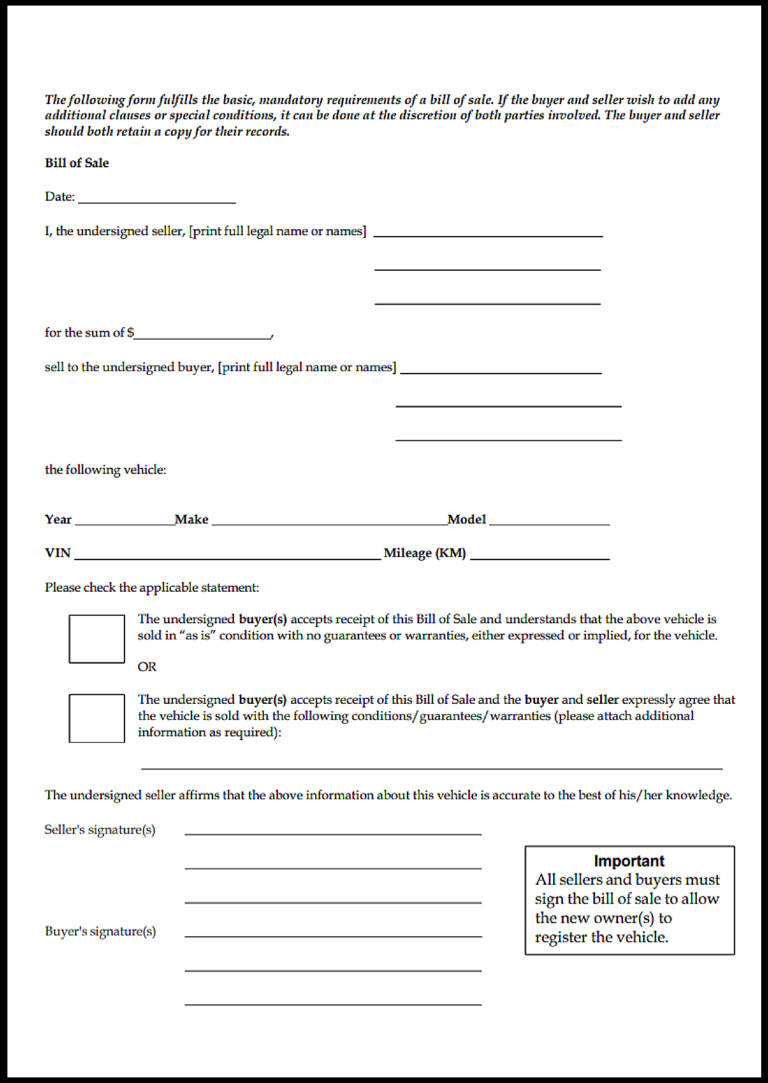
Free Alberta Bill of Sale Template
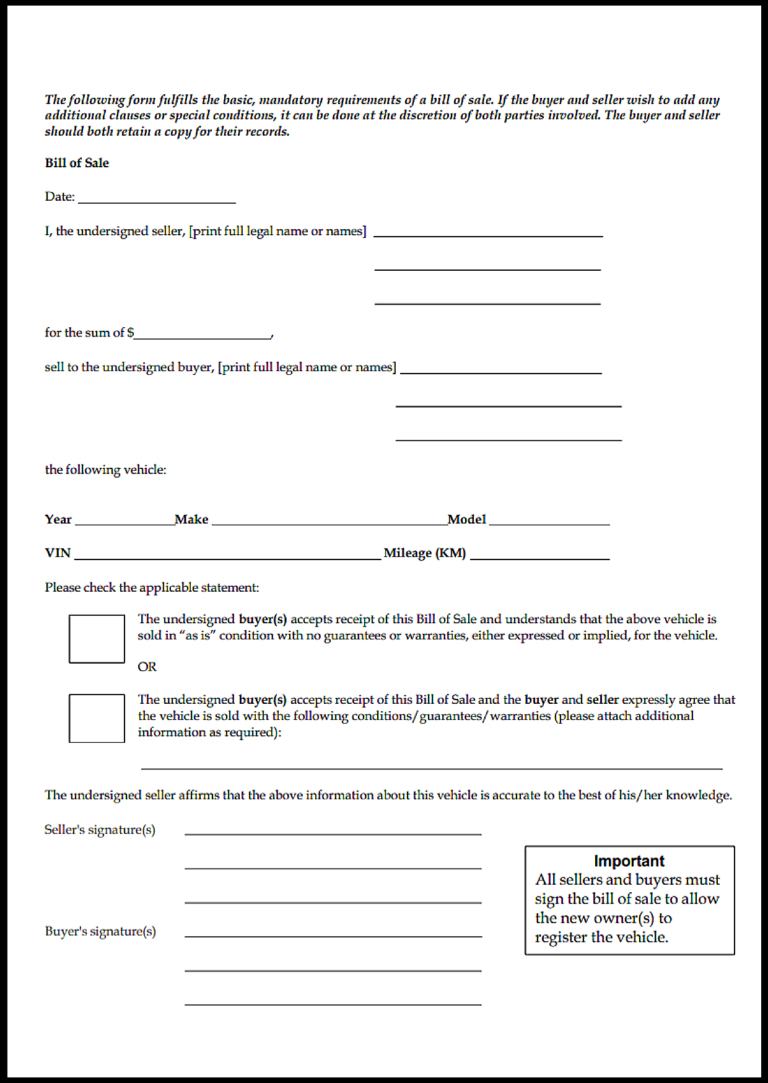
A general Alberta bill of sale template is useful for simple private sales like furniture, electronics, or small equipment. It is based on common Alberta practices and includes the basic legal elements needed.
However, this type of template is not suitable for regulated items like vehicles or firearms. For those, you should always use a specific format.
Types of Bill of Sale in Alberta
In Alberta, different types of assets require different bills of sale. Using the correct one ensures your document is valid and accepted where required.
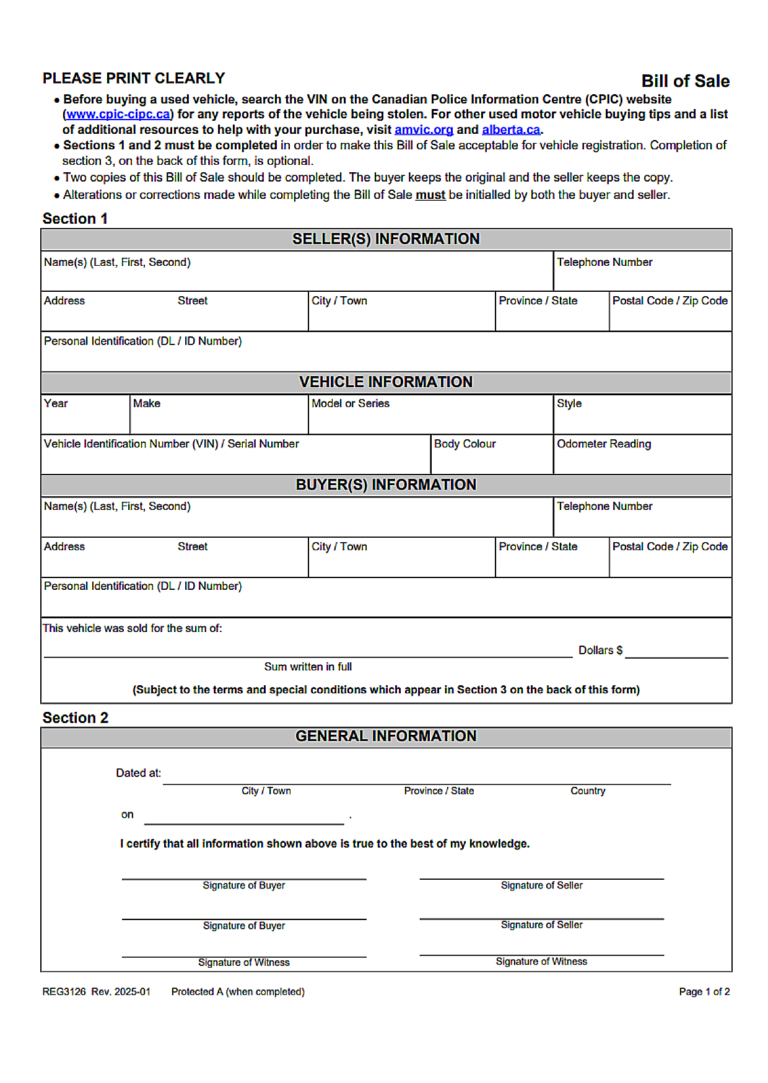
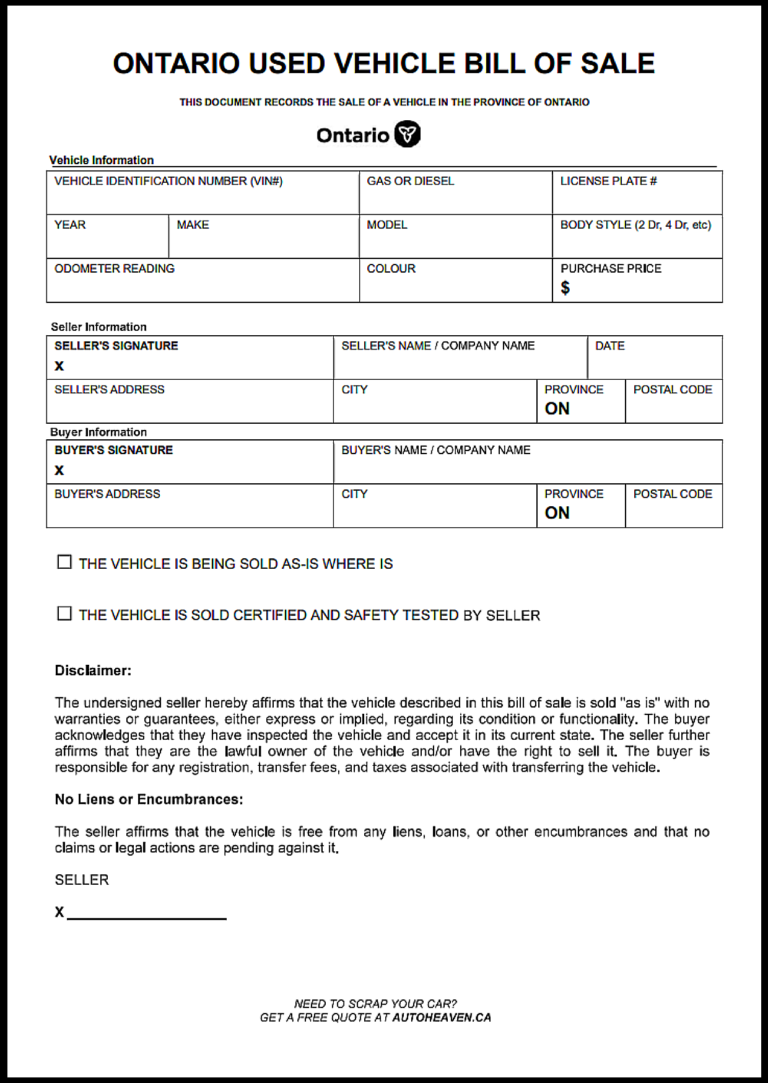
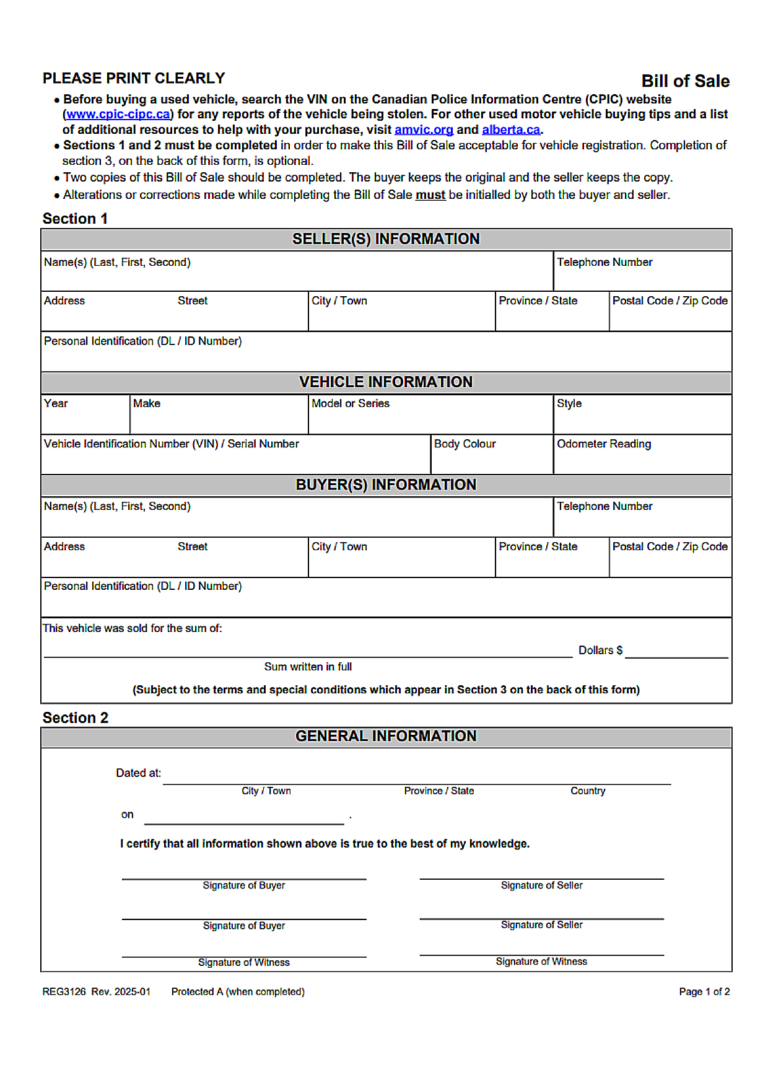
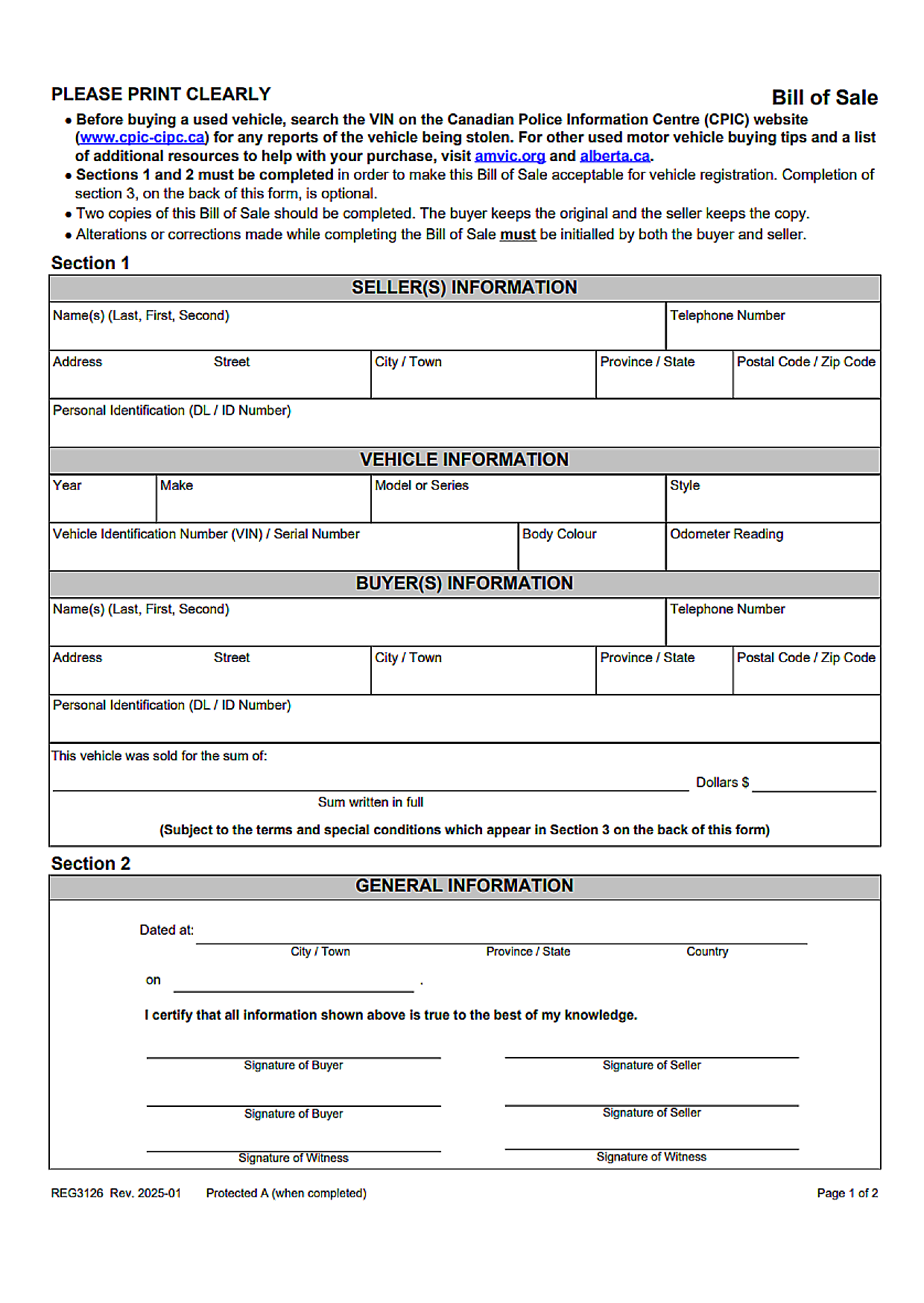
Vehicle Bill of Sale (Car, Truck, Motorcycle)
This is the most commonly used type in Alberta. It is required when registering a vehicle and transferring ownership. The document must clearly include details like VIN, make, model, and odometer reading.
- Used for private car sales
- Required at Alberta registry offices
- Helps confirm legal ownership
Boat (Vessel) Bill of Sale
A boat bill of sale is used when buying or selling watercraft. It may include registration details depending on the type of boat.
- Includes hull identification number
- Useful for ownership proof
- Required in some registrations
Firearm Bill of Sale
This type is used in private firearm transactions. It must follow Canadian federal firearm laws and is important for recordkeeping.
- Helps track ownership
- Must follow federal rules
- Used in private transfers
Trailer Bill of Sale
This document is used for utility trailers and RV trailers. It is often needed for registration or resale.
- Covers small and large trailers
- Required in many registry cases
- Helps prove ownership
Equipment / Personal Property Bill of Sale
This is used for general items like furniture, electronics, or machinery. It is simple and does not require registration in most cases.
- Best for basic private sales
- No strict legal format needed
- Easy to create and use
Livestock Bill of Sale (Rural Use)
In Alberta, livestock sales are common, especially in rural areas. This document helps track ownership of animals.
- Used for cattle, horses, and farm animals
- Important for recordkeeping
- Helps prevent disputes
Real-Life Use Cases in Alberta
In daily life, a bill of sale is used in many simple but important situations. If you are selling your car to a neighbour, the buyer will need this document to register the vehicle. If you bought a used ATV online, this acts as proof that you are the new owner.
Some common examples include:
- Selling a used car privately
- Buying a second-hand boat
- Selling farm animals
- Selling expensive equipment
In most private sale situations, this document becomes your main proof that the transaction actually happened.
To understand how ownership transfer works under provincial law, you can explore this complete Alberta bill of sale guide, which explains how sale documentation is used as legal proof between buyers and sellers. For specific use cases, documents like the vehicle ownership transfer form in Alberta and the car sale agreement format provide more targeted structure.
Key Elements of a Valid Alberta Bill of Sale
A proper bill of sale must include certain important details. Without these, the document may not be useful in case of disputes.
Buyer and Seller Details
Both parties should include their full legal names and addresses. This helps clearly identify who was involved in the transaction.
Description of the Item
The item must be described clearly. For example, include VIN for vehicles or serial numbers for equipment. A clear description avoids confusion.
Sale Price and Payment Method
The exact amount paid should be written clearly. Also mention how the payment was made, such as cash or bank transfer.
Date of Sale
The date is important for legal and tax purposes. It also confirms when ownership was transferred.
Signatures of Both Parties
Both buyer and seller must sign the document. This confirms that they agreed to the terms.
“As-Is” Clause (Important Protection)
This clause protects the seller. It means the buyer accepts the item in its current condition and cannot later claim issues.
Different assets require slightly different formats, which is why templates such as the boat bill of sale document or the trailer sale record are commonly used. If you’re unsure about legal requirements, reviewing the Alberta bill of sale requirements guide can help ensure compliance.
How to Create or Complete an Alberta Bill of Sale
Creating a bill of sale is simple if you follow the correct steps. You do not need legal expertise for basic transactions.
Start by choosing the correct type based on what you are selling. Then carefully fill in all the details and double-check the item description. Both parties should review everything before signing.
- Choose the correct template
- Fill accurate details
- Review before signing
- Keep copies safely
Taking a few extra minutes here can save you from legal problems later.
Legal Overview in Alberta
In Alberta, there is no single law that specifically governs bills of sale. Instead, they are based on general contract law principles. This means the agreement is valid as long as both parties agree and the terms are clear.
However, some items are regulated separately. Vehicles must follow Alberta registry rules, and firearms must follow federal laws.
Below is a simple overview:
| Item Type |
Requirement in Alberta
|
| Vehicles |
Bill of sale required for registration
|
| Firearms |
Must follow federal firearm laws
|
| General items |
Not required but strongly recommended
|
Even when not mandatory, having a bill of sale is always a smart and safe choice.
In many cases, sellers and buyers also compare documents like the difference between bill of sale and ownership to understand their legal roles. If you’re preparing your own document, the step-by-step bill of sale writing guide is a helpful reference.
Common Mistakes to Avoid
Many people make simple mistakes that can lead to problems later. These mistakes are easy to avoid if you pay attention while creating the document.
Some common errors include:
- Using the wrong template for regulated items
- Missing important details like VIN or serial number
- Not adding an “as-is” clause
- Writing incorrect names
- Not keeping a signed copy
- Relying only on verbal agreements
Always remember, a written and signed document is much stronger than a verbal promise.
Choosing the Right Bill of Sale
Choosing the correct bill of sale depends on what you are selling. Using the wrong type can create problems during registration or legal verification.
Here is a simple guide to help you:
| Situation |
Recommended Bill of Sale
|
| Selling a vehicle | |
| Selling a boat | Boat Bill of Sale |
| Selling personal items |
General Bill of Sale
|
| Selling regulated items |
Specific legal template
|
This simple approach helps reduce confusion and ensures you are using the correct format.
FAQs
Is a Bill of Sale required in Alberta?
It is not always required, but it is mandatory for vehicle registration and strongly recommended for other sales.
Can I write my own Bill of Sale?
Yes, you can create your own as long as it includes all key details.
Does it need to be notarized?
No, notarization is not required in most private sales.
What is an “as-is” Bill of Sale?
It means the buyer accepts the item in its current condition without guarantees.
Is a handwritten Bill of Sale valid?
Yes, handwritten documents are valid if properly completed and signed.
Do I need a Bill of Sale for private car sales?
Yes, it is required for transferring and registering a vehicle in Alberta.