Personal Loan Agreement Alberta Template (Free PDF)
Personal Loan Agreement Alberta is a phrase many people search after agreeing to lend money to a family member, friend, or business associate and deciding the arrangement should be recorded before the funds are advanced. While a verbal promise may establish that a loan exists, a carefully drafted written agreement leaves far less room for disagreement over repayment dates, interest, or what happens if the borrower defaults, and Alberta’s limitation rules become important if recovery is ever necessary.
I’ve seen private loan disputes reach the Court of King’s Bench of Alberta where bank records proved the money changed hands, yet the parties spent far more time arguing about the repayment terms because the agreement was incomplete or never signed. A few extra minutes spent preparing the document properly can prevent months of unnecessary litigation later. Below you’ll find a Personal Loan Agreement Alberta template, the clauses every agreement should include, and the drafting mistakes that most often create enforcement problems.
Table of Contents
TogglePersonal Loan Agreement Alberta

Key Clauses in an Alberta Personal Loan Agreement
Every personal loan agreement should clearly explain what each party has agreed to before money changes hands. Most disputes don’t begin because someone forgets that a loan existed—they begin because the agreement never explained exactly how or when the money would be repaid. A well-drafted agreement reduces uncertainty and gives the parties a clear record if repayment later becomes an issue.
Loan Amount and Disbursement
The agreement should identify the exact amount being borrowed, the date the funds will be advanced, and how payment will be made. Even when lending money to a close family member, recording these details removes uncertainty about whether the payment was intended as a loan or a gift.
I’ve seen parents in Lethbridge transfer money to help an adult child purchase a vehicle without preparing any written agreement. Years later, the family disagreed over whether the money was expected to be repaid. A simple written clause confirming the loan amount and the date the funds were advanced could have prevented that dispute.
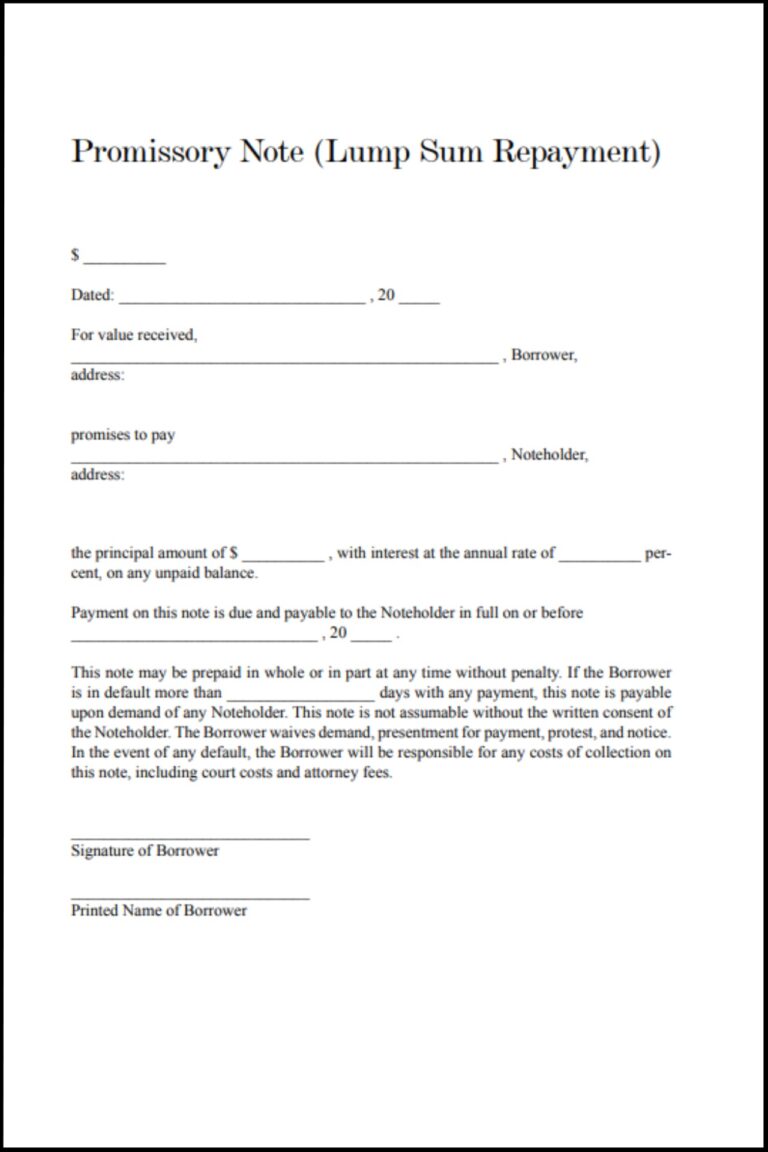
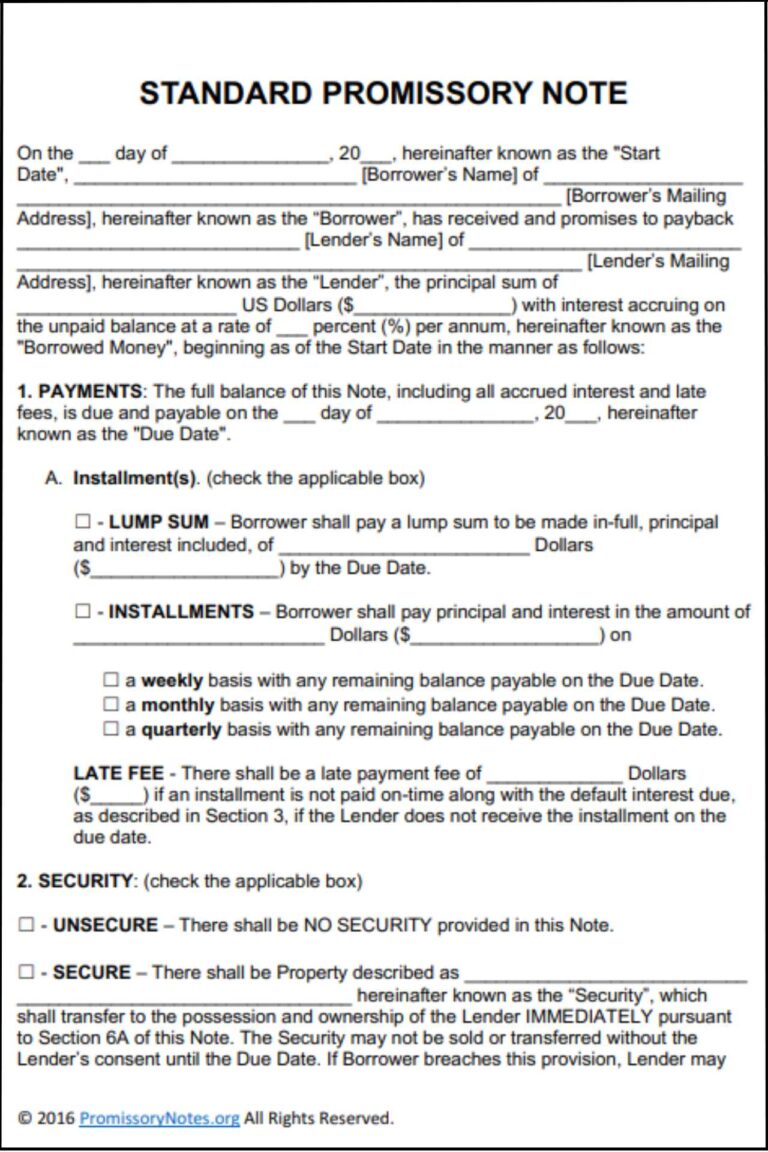
If you’re making a smaller loan with straightforward repayment terms, our Alberta Promissory Note Template may be a suitable alternative to a full loan agreement. On the other hand, if the loan is backed by collateral, an Alberta Secured Promissory Note Template may provide additional protection.
Repayment Schedule
One of the most important sections of any loan agreement explains when repayment is due. Without a repayment schedule, disagreements can arise even where everyone agrees that money was borrowed.
Common repayment structures include:
- A single lump-sum payment on a specified date.
- Monthly or weekly instalments.
- Repayment on demand by the lender.
For example, two friends in Calgary might agree that a $12,000 loan will be repaid over two years through equal monthly instalments. Recording those dates from the beginning gives both people the same expectations and makes later disagreements much less likely.
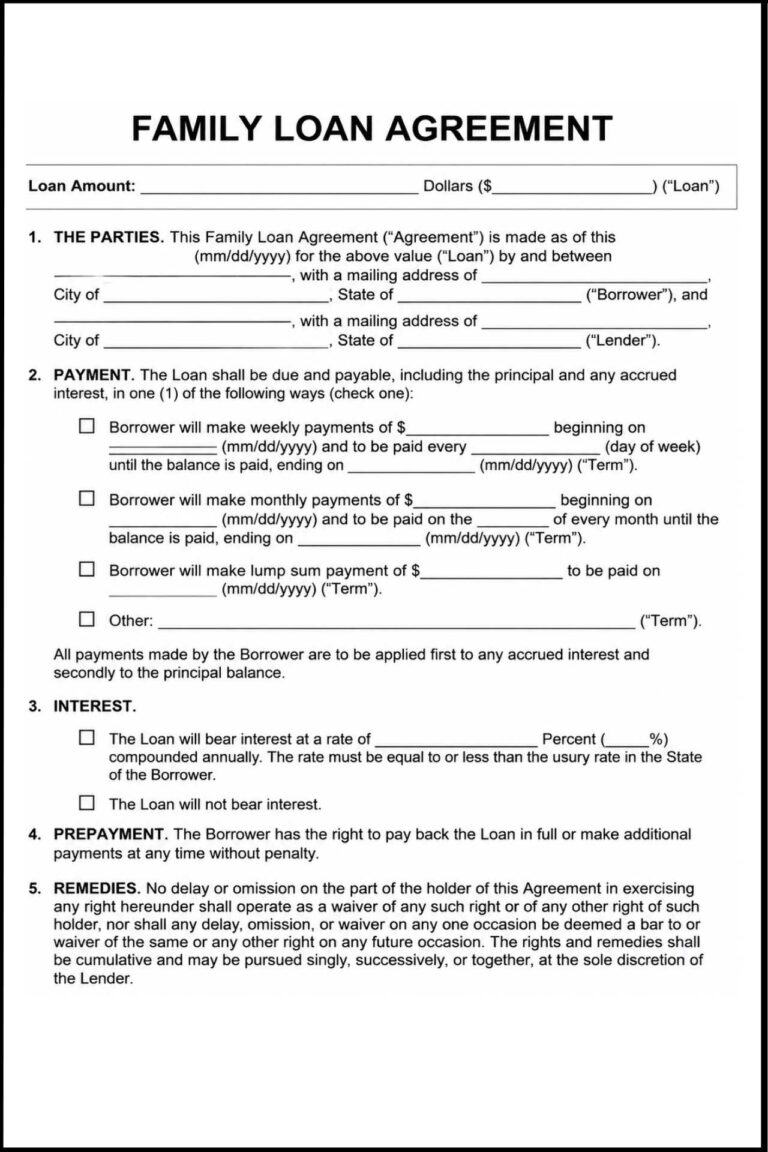
Where the agreement is intended to operate as a family loan agreement Alberta, a written repayment schedule often helps preserve personal relationships by avoiding misunderstandings that arise from verbal arrangements.
Interest Rate Disclosure
Many private lenders choose not to charge interest. Others do, particularly where larger sums are involved or repayment will occur over several years.
Where interest is calculated daily, weekly, monthly, or for another period shorter than one year, section 4 of the Interest Act mandates that the agreement state the equivalent annual percentage rate (APR). If that disclosure is missing, federal law slashes the lender’s recoverable interest to the statutory default maximum of 5% per annum, and the borrower is legally entitled to recover or deduct any excess interest paid.
Federal law also limits how much interest may legally be charged. Under section 347 of the Criminal Code, the criminal interest threshold is generally 35% APR, including applicable fees and charges. Charging more than that amount can create serious legal consequences.
Default and Security Terms
The agreement should explain what happens if the borrower misses a payment. Most loan agreements state whether the lender can demand immediate repayment of the remaining balance after default and whether any additional interest applies to overdue amounts.
If the loan is unsecured, repayment depends solely on the borrower’s contractual promise. If it is secured, the agreement should clearly identify the collateral being provided. According to the verified legal requirements, loans secured by personal property may require registration in Alberta’s Personal Property Registry (PPR), while loans secured against real property may require registration through the Alberta Land Titles Office.
I’ve seen business owners in Edmonton lend equipment to another company while relying on an unsigned security arrangement that was never properly documented. The loan itself wasn’t the problem—the lack of clear security documentation became the real issue after default.
If repayment is overdue, sending an Alberta Demand for Payment Letter is often the first practical step before formal recovery proceedings. Once a disputed loan has been fully settled, an Alberta General Release of Liability Template can help document that no further claims remain between the parties.
What Makes a Personal Loan Agreement Enforceable in Alberta
A personal loan agreement is strongest when it clearly records the obligations each person has agreed to before any money changes hands under a written contract. Under Alberta law, the lender and borrower must each be at least 18 years of age and have the legal capacity to enter into the agreement. The document should also state the loan amount, repayment terms, interest provisions, and any default clauses in plain language so there is little room for disagreement later.
If interest is charged for a period shorter than one year, section 4 of the Interest Act requires the agreement to disclose the equivalent annual interest rate. This is one of the most commonly overlooked drafting requirements in private lending arrangements. Alberta law does not require a personal loan agreement to be witnessed or notarized, although many lenders choose to have signatures witnessed because it can make authenticity easier to prove if a dispute later arises.
I’ve seen lenders in Calgary rely on downloaded templates that simply listed a monthly interest rate without explaining the equivalent annual rate. That omission created unnecessary arguments after repayment stopped, even though everyone agreed the loan itself had been made.
Rights and Obligations of the Lender and Borrower
A personal loan agreement protects both sides by clearly recording what each person is expected to do. The lender’s primary obligation is to advance the agreed loan amount, while the borrower agrees to repay it according to the repayment schedule set out in the contract.
If the borrower fails to make payments, the lender may pursue recovery through the courts, provided the claim is started within Alberta’s limitation period.Under the Limitations Act, a lender generally has two years from the date the claim is discovered to commence legal proceedings.. The verified legal requirements also confirm that a written acknowledgment of the debt or a partial payment made by the borrower can reset that limitation period under section 8 of the Act.
For example, a lender in Red Deer may believe the limitation period has expired, only to discover that a partial payment made several months earlier restarted the clock. Keeping accurate payment records is just as important as preparing the original agreement.
If your loan is straightforward and doesn’t require detailed contractual terms, our Alberta Promissory Note Template may be a simpler alternative.
What Happens If the Borrower Breaches the Loan Agreement
A breach usually occurs when the borrower misses a scheduled payment, fails to repay the loan when due, or otherwise breaks one of the agreed terms.
Many agreements include an acceleration clause, allowing the lender to demand immediate repayment of the remaining balance after default. The lender may then attempt to recover the debt through negotiation or commence legal proceedings before the applicable limitation period expires.
Alberta courts can also review the fairness of the agreement itself. Under the Unconscionable Transactions Act, a court may reopen or revise a loan agreement if it concludes the transaction was harsh, unconscionable, or involved excessive borrowing costs. Likewise, interest that exceeds the federal criminal interest threshold established by section 347 of the Criminal Code may not be enforceable.
I’ve seen disputes in Edmonton where the unpaid balance wasn’t the primary issue. Instead, the court focused on whether the interest charges and penalty provisions were so excessive that they should be reduced or set aside.
If repayment has already become overdue, sending an Alberta Demand for Payment Letter often provides a practical first step before commencing legal proceedings.
When You Don’t Need a Lawyer vs. When You Do
Many private loans between family members or close friends can be documented using a carefully prepared written agreement, particularly where the repayment terms are simple and no collateral is involved.
Professional legal advice is often worthwhile when:
- The loan involves a substantial amount of money.
- The agreement is secured against personal property or real estate.
- Complex repayment arrangements are being negotiated.
- Significant interest charges or commercial lending terms are involved.
- A dispute has already developed between the parties.
For example, a family loan agreement Alberta involving parents helping an adult child purchase a home may appear straightforward at first. If repayment is expected over many years or the loan will be secured against property, obtaining legal advice before signing can prevent much larger problems later.
Summary of Applicable Laws
| Topic | Rule | Governing Statute |
|---|---|---|
| Interest disclosure | Annual interest rate must be disclosed if calculated over a shorter period | Interest Act, RSC 1985, c I-15, s. 4 |
| Interest on Arrears (Real Estate) | Prohibits charging higher interest on arrears than on the principal for mortgage-secured loans. | Interest Act, RSC 1985, c I-15, s. 8 |
| Maximum interest rate | Cannot exceed 35% APR (including applicable fees) | Criminal Code, RSC 1985, c C-46, s. 347 |
| Time to sue on default | Generally two years from discovery of the claim | Limitations Act, RSA 2000, c L-12, s. 3(1) |
| Harsh or unconscionable loans | Alberta courts may revise or set aside unfair loan agreements | Unconscionable Transactions Act, RSA 2000, c U-2, s. 2 |
Why Alberta’s Unconscionability Rules Matter for Private Loans
Many people assume unconscionability laws only apply to payday lenders or commercial finance companies. Alberta’s legislation is broader. Under the Unconscionable Transactions Act, courts have the authority to examine private lending arrangements where borrowing costs are excessive or the agreement is considered harsh because of a significant imbalance between the parties.
I’ve seen situations where a lender believed an unusually high interest rate was acceptable simply because the borrower had agreed to it. Alberta courts can look beyond the signature and consider whether the overall transaction should be revised. That makes it especially important to use reasonable interest rates and clearly drafted repayment terms instead of relying on informal verbal agreements.
A Real Example: A Family Loan in Lethbridge
A parent in Lethbridge lends an adult child $20,000 to purchase a vehicle. Everyone trusts one another, so they transfer the money immediately and plan to “sort out the paperwork later.” Months pass without a written agreement, repayments become irregular, and family members disagree about whether interest was ever intended to be charged.
Had the loan been recorded in a written agreement from the beginning, the repayment schedule, interest provisions, and default terms would already have been clear. Instead of debating what was originally agreed, everyone could focus on resolving the outstanding balance.
Frequently Asked Questions
Does a personal loan agreement need to be notarized in Alberta?
No. Alberta law does not require a personal loan agreement to be notarized or witnessed, although witnessed signatures may assist if authenticity is later disputed.
What’s the maximum interest rate I can legally charge a family member?
The Criminal Code generally limits the criminal rate of interest to 35% APR, subject to applicable federal exceptions.
How long does a lender have to sue if a borrower stops paying?
Under Alberta’s Limitations Act, a lender generally has two years from the date the claim is discovered to begin legal proceedings.
Can a partial payment restart the limitation period?
Yes. The verified legal requirements confirm that a partial payment or a written acknowledgment of the debt signed by the borrower may restart the limitation period under section 8 of the Limitations Act.
What happens if my loan agreement doesn’t mention an interest rate?
The agreement can still be valid. If interest is intended, however, it should be clearly stated together with any disclosure required by the Interest Act.