Free Alberta Partnership Agreement Template Guide
An Alberta Partnership Agreement is a simple legal document that explains how two or more people run a business together. It clearly sets rules about profit sharing, roles, and responsibilities so there is no confusion later. In Alberta, many people start partnerships informally, but without a written agreement, even small misunderstandings can turn into serious disputes.
I’ve seen Alberta business owners run into expensive disputes simply because the scope of work or payment terms were never clearly written down. When clients or contractors come to me after a disagreement has already started, the biggest problem is usually that both sides thought they understood the deal differently.
On this page, you will find everything you need in one place. This includes a free template, different types of partnerships, legal basics under Alberta law, and practical tips to avoid common mistakes. This page also works as a main hub, so you can explore more detailed templates if your situation is more specific.
Last Updated: August 2026
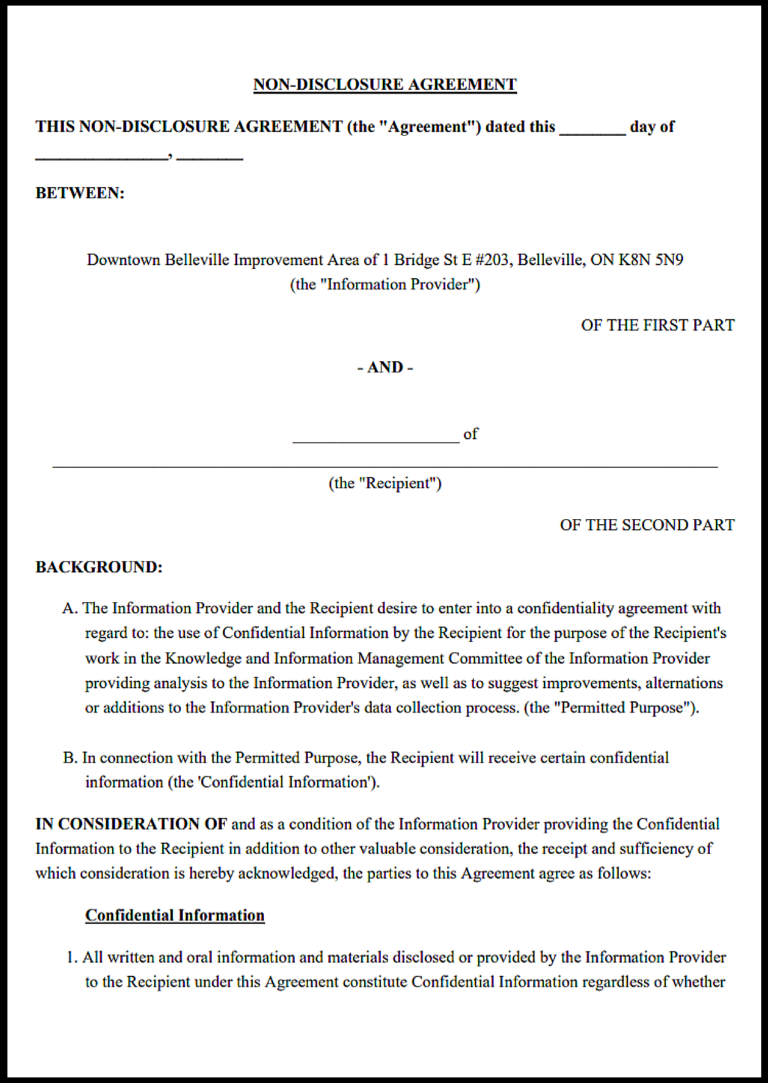
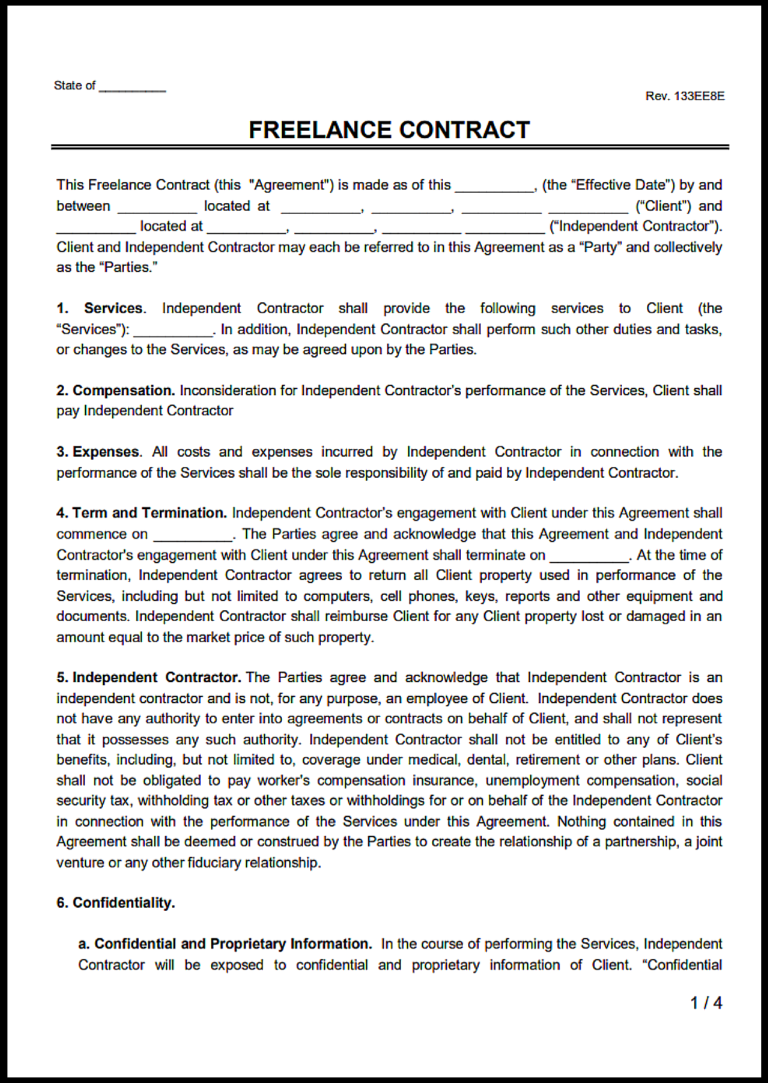
Free Alberta Partnership Agreement Template
Below is a basic partnership agreement template. It is suitable for simple partnerships like small businesses or startups. It is written in clear language and follows common Alberta business practices.
Get PDF
Note: Open PDF in Adobe Acrobat
This template works as a starting point . If your partnership involves investors, professionals, or special roles, you should explore the specific partnership types below.
Alberta Partnership Registration and Liability Rules Explained
| Topic / Issue | Alberta Legal Rule | Governing Statute |
|---|---|---|
| Primary governing law | Partnerships in Alberta are governed under provincial partnership laws. | Partnership Act, RSA 2000, c P-3 |
| Federal involvement | Partnership law is provincial jurisdiction under property and civil rights rules. | Constitution Act, 1867, s. 92 |
| Who can legally sign | Any individual or corporation with legal capacity may enter a partnership agreement. | Partnership Act, s. 1(g) |
| Witness requirements | Witnesses are not legally required for partnership agreements. | Governed by common law principles |
| Notarization requirement | Notarization is not legally required unless filing an affidavit in court. | Governed by common law principles |
| Age of majority | A person must generally be at least 18 years old. | Age of Majority Act, RSA 2000, c A-6, s. 1 |
| Mental capacity requirement | A partner must understand the nature of the contract. | Common Law (Partnership Act, s. 86) |
| Registration deadline | Partnerships must register within 6 months after formation. | Partnership Act, RSA 2000, c P-3, s. 106 |
| Mandatory wording | Alberta law does not require specific “magic words” for general partnership agreements. | Partnership Act |
| LLP naming requirement | LLP names must contain “Limited Liability Partnership” or “LLP.” | Partnership Act, RSA 2000, c P-3, s. 83 |
| LP naming restriction | Limited partner names generally cannot appear in the firm name unless also a general partner. | Partnership Act, s. 55 |
| Registration requirement | Partnerships involved in trading, manufacturing, or mining must register. | Partnership Act, RSA 2000, c P-3, s. 106(1) |
| Registration agency | Registration is completed through Service Alberta Corporate Registry agents. | Service Alberta and Red Tape Reduction |
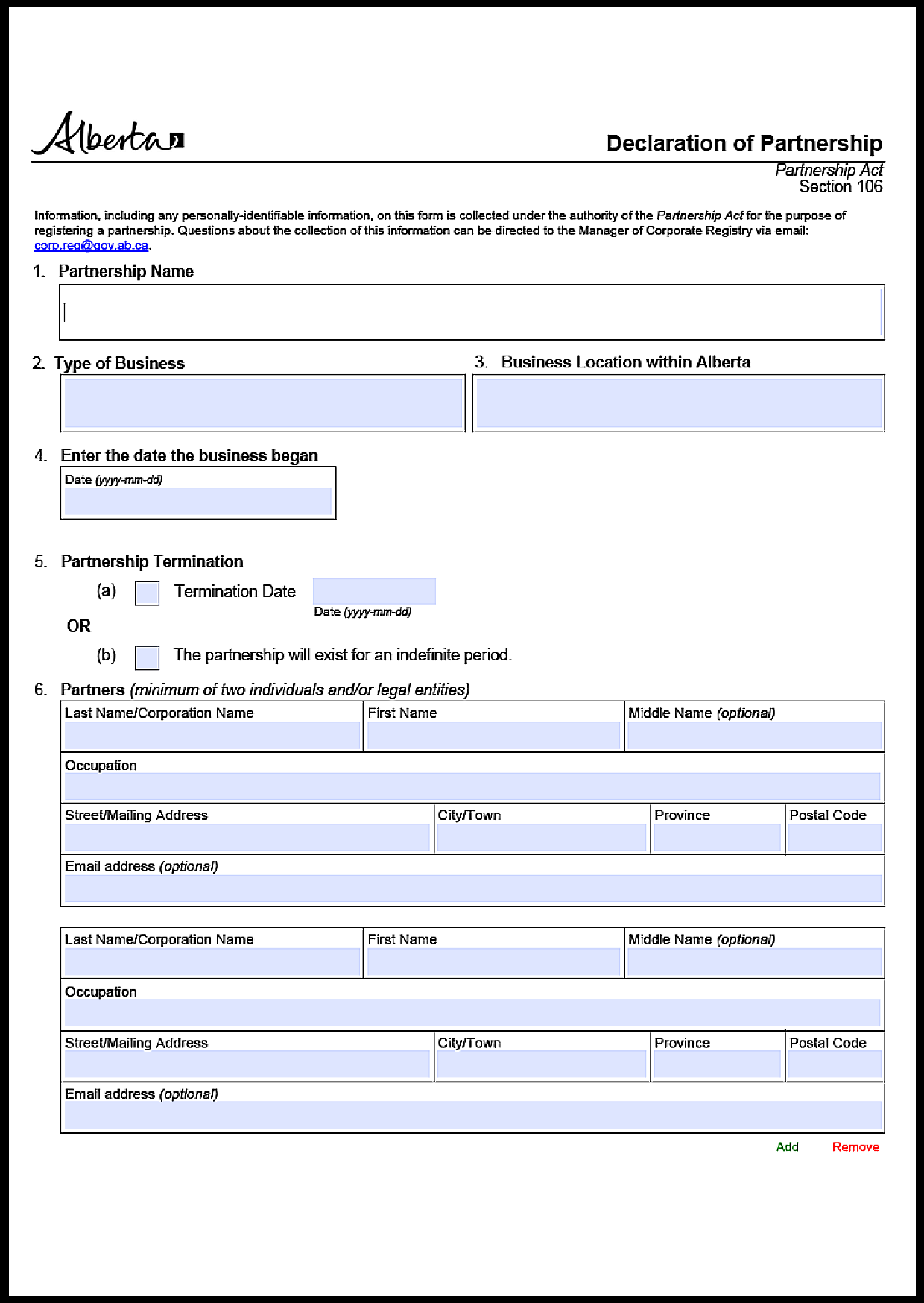
| Required filing document | A Declaration of Partnership (Form 1) must be filed. | Service Alberta Corporate Registry requirements |
| Public vs. private information | The partnership agreement itself remains private and is not filed publicly. | Partnership Act |
| Illegal business purpose | A partnership may dissolve if the business becomes unlawful. | Partnership Act, s. 38 |
| Minimum number of partners | A valid partnership must involve at least two persons. | Partnership Act, s. 1(g) |
| Profit intention requirement | A venture without profit intention is not considered a partnership under Alberta law. | Partnership Act, s. 1(g) |
| Alberta registration grace period | Alberta allows a 6-month window to register partnerships after formation. | Partnership Act, RSA 2000, c P-3, s. 106 |
| Alberta family relationship impact | Adult Interdependent Partner relationships may affect partnership asset division. | Adult Interdependent Relationships Act; Family Property Act |
| Limited partnership modernization | Alberta no longer requires public filing of limited partners’ capital contributions. | Red Tape Reduction Implementation Act, 2021 amendments |
One of the most important Alberta partnership rules is the 6-month registration window. Many new business owners assume registration must happen immediately, but Alberta law gives partnerships extra time compared to some other provinces. Even so, ignoring registration requirements can still create legal and operational problems later.
Another major point is that Alberta partnership agreements stay private. Only the basic Declaration of Partnership becomes public record. This matters for business owners who want flexibility in setting profit-sharing, management roles, or internal rules without publicly disclosing every detail.
The rule requiring at least two persons is also critical. A single individual cannot legally create a partnership alone under Alberta law. Courts also focus heavily on profit intention. If the arrangement is not truly for profit, it may be treated as a different type of business relationship entirely.
Naming rules for LLPs and LPs are equally important because incorrect business names can create registration issues or confusion about liability protection.
Download the free Alberta Partnership Agreement template to create a clearer and legally structured business partnership.
Types of Partnership Agreements in Alberta
Choosing the right partnership type is very important because it affects liability, control, and risk.
General Partnership Agreement
A general partnership is the simplest structure where all partners share profits and responsibilities. In most cases, each partner is also personally responsible for business debts. This type is commonly used by small businesses, family-run shops, or early-stage startups because it is easy to set up and manage.
Limited Partnership (LP) Agreement
A limited partnership includes both general partners and limited partners. General partners run the business, while limited partners only invest money. The key advantage is that limited partners have restricted liability, which makes this structure useful for investment-based businesses.
Limited Liability Partnership (LLP) Agreement
An LLP provides protection to partners from the actions or negligence of other partners. This structure is widely used by professionals such as lawyers and accountants. It allows each partner to focus on their work without being fully responsible for mistakes made by others.
Business Partnership with Unequal Roles
In many real-life situations, partners do not contribute equally. One partner may invest money while another handles daily operations. This type of agreement allows flexibility in defining roles, profit sharing, and responsibilities.
Short-Term or Project-Based Partnership
Some partnerships are created only for a specific project or time period. These are common in collaborations or joint ventures where businesses work together temporarily. Once the project ends, the partnership is dissolved as per the agreement.
This document connects with the Free Alberta NDA Template Guide when partners need to protect shared business information. You can also review legal enforceability of contracts in Alberta.
Real-Life Use Cases in Alberta
Partnership agreements are not just legal documents—they solve real business problems.
Starting a Small Local Business Together
Two friends opening a café may divide roles like one managing customers and the other handling finances. Without a written agreement, profit sharing or workload issues can cause conflict later.
Bringing in an Investor Without Giving Full Control
A business owner may take funding from a silent partner. In this case, a limited partnership helps ensure the investor does not interfere in daily operations but still earns a share of profits.
Professionals Forming a Practice
When lawyers or accountants start a firm together, an LLP structure protects each partner from liability caused by others. This is very important in professional services.
Temporary Collaboration Between Businesses
Two companies may work together on one project. A short-term agreement clearly defines responsibilities, payment terms, and deadlines, reducing the risk of disputes.
Partnership agreements often work alongside a service agreement or a consulting agreement depending on business operations. Financial arrangements may also involve a loan agreement template.
Key Elements of a Valid Partnership Agreement
A strong agreement focuses on clear and practical terms. Under Alberta law, these elements help make the agreement enforceable and useful.
Partner Details and Contributions
Every agreement should clearly mention who the partners are and what they are contributing. This may include money, property, or skills.
Profit and Loss Sharing Structure
Profit sharing must be clearly defined. Partners can choose equal sharing or divide profits based on contribution. If nothing is written, profits are usually assumed to be shared equally.
Roles, Duties, and Decision-Making
Each partner’s role should be clearly explained. This avoids confusion about responsibilities and authority in decision-making.
Liability and Risk Allocation
In general partnerships, partners are personally liable for business debts. This means personal assets may be at risk, which is why choosing the right structure is important.
Exit, Withdrawal, and Dissolution Terms
Planning for exit is essential. The agreement should explain what happens if a partner leaves, retires, or if the business closes.
Dispute Resolution Process
Most agreements include mediation or arbitration to resolve disputes without going to court. This saves time and cost.
How to Create or Complete a Partnership Agreement
Creating a partnership agreement does not have to be complicated. It is about clear communication and proper documentation.
Step 1 – Define Business Structure
Decide whether you need a general partnership, LP, or LLP based on your risk level and business goals.
Step 2 – Agree on Contributions and Roles
Partners should openly discuss what each person is bringing into the business and what they will handle daily.
Step 3 – Set Profit Sharing Terms
Agree on how profits and losses will be divided. This should be realistic and fair.
Step 4 – Add Legal Clauses
Include important clauses like exit terms, dispute resolution, and liability allocation.
Step 5 – Review and Sign the Agreement
Before signing, all partners should review the document carefully. It is always a good idea to keep signed copies for everyone involved.
Legal Overview in Alberta
Understanding the legal basics helps you make better decisions.
Alberta Partnership Laws
Partnerships in Alberta are governed by provincial law. A partnership can legally exist even without a written agreement if people are doing business together and sharing profits.
Importance of Written Agreements
Although verbal agreements are valid, they are difficult to prove. Written agreements provide clarity and legal protection in most business contract situations.
Liability Considerations
|
Partnership Type
|
Liability Level | Best For |
| General Partnership | Unlimited personal liability |
Small businesses
|
| Limited Partnership | Limited for investors |
Investment projects
|
| LLP | Protection from other partners | Professionals |
Common Mistakes to Avoid
Many partnership problems happen because of simple mistakes.
- Not clearly defining profit-sharing terms
- Ignoring exit or buyout conditions
- Relying only on verbal agreements
- Mixing personal and business finances
- Choosing the wrong partnership structure
Avoiding these issues can save time, money, and relationships.
Choosing the Right Partnership Type
Selecting the right structure depends on your goals and risk level.
| Situation |
Recommended Type
|
| Equal control among partners |
General Partnership
|
| Investors involved |
Limited Partnership
|
| Need liability protection | LLP |
| Temporary project |
Project-Based Partnership
|
This simple comparison helps you make a quick and practical decision.
Related Templates in Alberta
You may also need other related agreements depending on your business setup. These include general partnership agreements, LLP templates, joint venture agreements, and independent contractor agreements. Exploring these documents helps you build a complete legal structure for your business.