Free Alberta Power of Attorney Template & Guide
A Power of Attorney (POA) is an important part of estate planning in Alberta. It helps make sure your money, property, and legal matters are handled properly if you are unavailable or unable to make decisions. This document gives authority to a trusted person, known as your “attorney,” to act on your behalf in real-life situations like illness, travel, or aging.
I have seen families in Alberta run into serious problems because a Power of Attorney was signed too late or completed incorrectly, especially when a sudden illness or hospital stay happens. I always tell clients that having a clear, legally valid POA in place early can prevent delays, frozen accounts, and stressful disputes between family members.
This article explains everything in simple language so you can confidently create and use a POA without confusion.
Last Updated: August 2026
Table of Contents
ToggleFree Alberta Power of Attorney Template
You can use a general Alberta Power of Attorney template to legally appoint someone to act on your behalf. This type of template is commonly used for basic financial and legal authority and is suitable for most everyday situations.
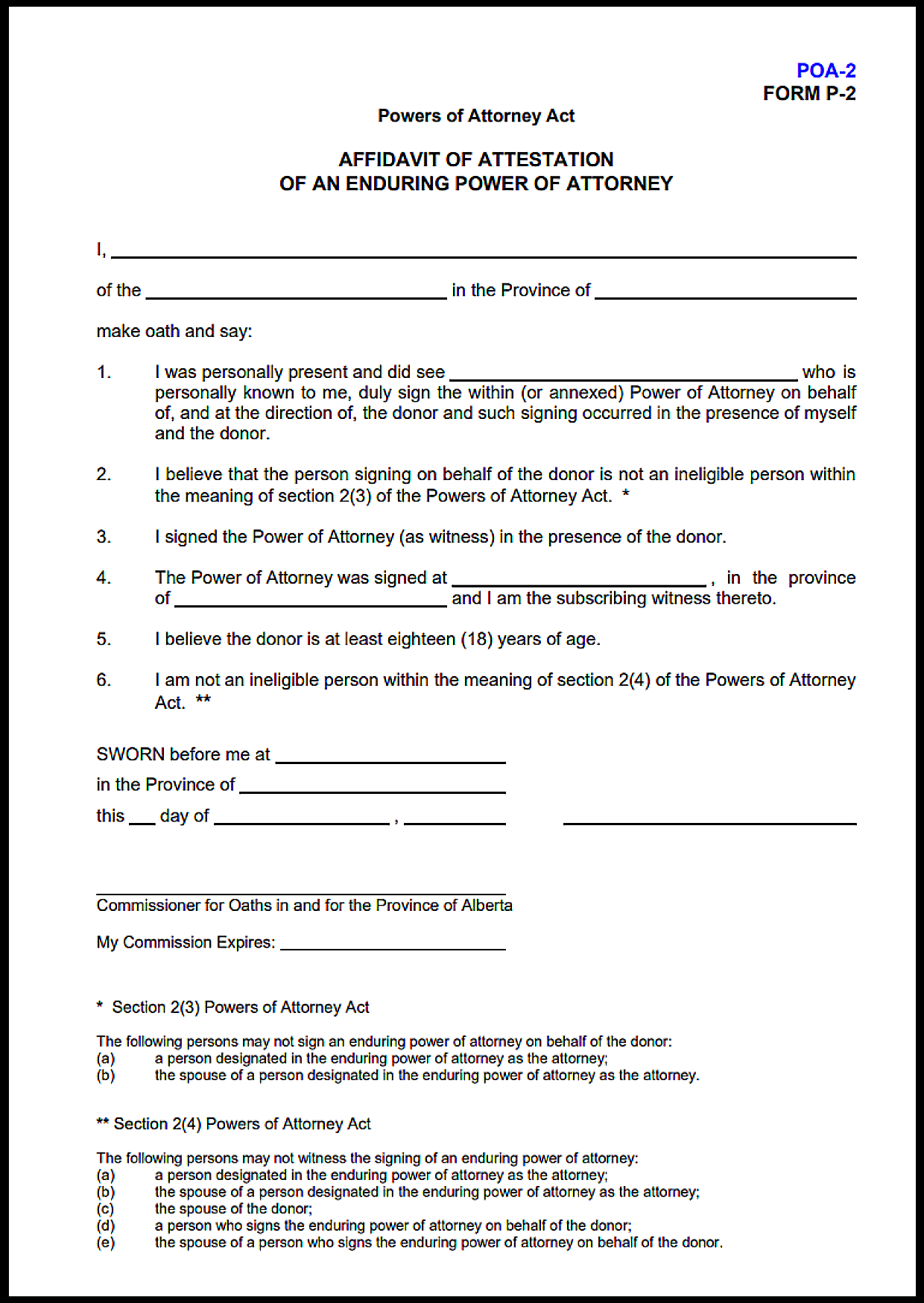
Alberta Power of Attorney Rules Many Families Discover Too Late
| Topic / Issue | Alberta Legal Rule | Governing Statute |
|---|---|---|
| Main governing law | Powers of Attorney in Alberta are governed primarily by Alberta provincial law, including the Powers of Attorney Act. | Powers of Attorney Act, RSA 2000, c P-20 |
| Federal jurisdiction | No federal legislation governs Alberta Powers of Attorney. | Provincial jurisdiction only |
| Major amendment | The Powers of Attorney Act has been amended over time, including amendments addressing the operation of joint attorneys. | Powers of Attorney Act |
| Who can sign | An adult donor may sign the enduring power of attorney; if the donor is physically unable to sign, another person may sign in the donor’s presence and at the donor’s direction, subject to the Act’s restrictions. | Powers of Attorney Act |
| Witness requirement | The donor’s signature must be witnessed, and the witness must sign in the donor’s presence, subject to the statutory restrictions on who may act as the witness. | Powers of Attorney Act |
| Disqualified witnesses | The attorney, the attorney’s spouse or adult interdependent partner, the donor’s spouse or adult interdependent partner, a person signing for the donor, and that person’s spouse or adult interdependent partner cannot act as witnesses. | Powers of Attorney Act |
| Notarization rule | A separate notarization requirement should not be assumed for every Alberta Power of Attorney; land-title transactions may have additional document and registration requirements. | Powers of Attorney Act / Land Titles requirements |
| Capacity and age | The donor must be an adult and have the required mental capacity when making the enduring power of attorney. | Powers of Attorney Act |
| Expiration rules | An ordinary Power of Attorney does not provide the statutory continuing authority of an enduring power of attorney after the donor loses mental capacity, and a Power of Attorney also ends on the donor’s death. | Powers of Attorney Act |
| Enduring clause requirement | To qualify as an enduring power of attorney, the document must state that the attorney’s authority continues despite later mental incapacity or that the authority takes effect upon the donor’s mental incapacity. | Powers of Attorney Act |
| Required enduring wording | The document must state either that the authority continues despite later mental incapacity or that the authority takes effect when the donor becomes mentally incapacitated. | Powers of Attorney Act |
| Filing requirement | There is no general registration requirement stated here for every Alberta Power of Attorney; specific transactions may have separate filing or registration requirements. | Alberta law and applicable registration procedures |
| Land title filing | When a Power of Attorney is used in a land-title transaction, the applicable Land Titles registration requirements must be followed; the documents required depend on the transaction and the instrument being registered. | Land Titles Act |
| Invalid witness situation | An enduring power of attorney that is witnessed contrary to the statutory witness restrictions may be invalid. | Powers of Attorney Act |
| Missing enduring clause | Without the required enduring wording, the document does not qualify as an enduring power of attorney and cannot provide the statutory continuing authority that an enduring power of attorney provides after incapacity. | Powers of Attorney Act |
| Lack of mental capacity | An enduring power of attorney may be void if the donor lacked the required mental capacity to understand its nature and effect when it was created. | Powers of Attorney Act |
| Alberta witness difference | Alberta requires a witness for an enduring power of attorney, subject to the statutory restrictions on who may act as the witness. | Alberta statutory rule |
| Designated person safeguard | An enduring power of attorney can identify who is to make the written declaration that a specified event, such as the donor’s loss of capacity, has occurred; if the document does not identify that person, Alberta’s current guidance says two medical practitioners must make the written declaration. | Powers of Attorney Act |
| Springing POA trigger | An Alberta enduring power of attorney can be drafted to take effect when the donor loses capacity, with the document specifying who makes the required written declaration; if no person is specified, two medical practitioners must make the declaration. | Powers of Attorney Act |
The enduring wording is one of the details Alberta donors should check carefully. An enduring power of attorney must state either that the attorney’s authority continues despite later mental incapacity or that the authority takes effect when the donor becomes mentally incapacitated. Without that wording, the document does not provide the statutory enduring authority needed for incapacity planning.
Witness selection deserves care. Alberta’s rules exclude several people from witnessing an enduring power of attorney, including the named attorney, the attorney’s spouse or adult interdependent partner, the donor’s spouse or adult interdependent partner, and certain people who sign on the donor’s behalf. A document signed with a prohibited witness can face validity problems.
Capacity matters at the time the document is created. Alberta law requires the donor to have the capacity needed to understand the nature and effect of the enduring power of attorney. If that requirement is not met, the document can be invalid, which is one reason advance planning is preferable to waiting until a serious illness or incapacity has already developed.
Types of Power of Attorney in Alberta
Choosing the correct type of Power of Attorney is very important because each type works differently depending on your situation.
General Power of Attorney
A General Power of Attorney gives broad authority to manage financial and legal matters. It is mostly used for temporary situations where you need someone to handle things for you.
For example, an ordinary Power of Attorney may be useful when someone needs another person to handle financial matters during a temporary absence. It does not provide the enduring authority designed to continue after the donor loses capacity, so it should not be treated as a substitute for an enduring power of attorney when incapacity planning is the goal.
Enduring Power of Attorney
An Enduring Power of Attorney continues even if you lose mental capacity. This type is commonly used for long-term financial planning because it can continue to operate after the donor loses mental capacity.
People usually choose this when planning for aging, serious illness, or unexpected medical conditions. To make it legally effective as an enduring power of attorney, the document must contain the required wording concerning its operation during or upon mental incapacity.
For many people planning for possible future incapacity, an enduring power of attorney provides important continuity in financial decision-making.
A power of attorney allows someone to make financial or legal decisions on your behalf. To understand how this fits into estate planning, review the Alberta will guide, which explains how decision-making authority is structured.
Specific (Limited) Power of Attorney
A Limited Power of Attorney can be drafted for a specific task, transaction or period, with its authority ending according to the terms of the document and applicable law.
This type is useful in situations like:
- Selling a house
- Managing one bank account
- Signing documents for a single transaction
It is a simple and practical option when you do not want to give full control over your affairs.
Immediate vs Springing Power of Attorney
This category explains when your Power of Attorney becomes active. It is an important decision because it affects control and timing.
- Immediate POA can take effect according to the terms of the document, including when it is executed
- A springing POA starts when the specified triggering event occurs and the required declaration or confirmation is made according to the document and Alberta law
A springing POA may provide more control over when the attorney’s authority begins, but it can require a declaration or other confirmation before the authority becomes active.
This document is often supported by more specific forms like a financial power of attorney or guidance on how to set up power of attorney in Alberta.
Comparison Table
| Type | Starts When | Ends on Incapacity | Best Use |
|---|---|---|---|
| General POA | According to the document | Does not provide enduring authority after incapacity | Temporary help |
| Enduring POA | Immediate/Springing | No, where properly drafted as enduring | Long-term planning |
| Limited POA | Task-based | Depends on the document and applicable law | Specific work |
Real-Life Use Cases
Power of Attorney is used in many real-life situations, making it a very flexible legal tool. Understanding these examples helps you choose the right type.
A senior person planning for future loss of capacity may choose an enduring POA to ensure someone can manage finances later. A person working in another country may give a general POA to handle banking in Alberta. A homeowner might use a limited POA to allow someone to complete a property sale.
In many families, adult children also help manage their parents’ finances during illness using a properly drafted POA. The important point is to match the document and its powers to the donor’s actual needs.
Key Elements of a Valid Power of Attorney
An enduring power of attorney must satisfy Alberta’s statutory requirements for execution, witnessing, capacity and wording. A defect in one of these requirements can affect whether the document is legally effective.
Clear Identification of Parties
The document should clearly identify the people involved. This includes the full legal name of the donor and the attorney. Accurate identifying information helps avoid uncertainty about who gave and received the authority.
Scope of Authority
This section explains what powers are being given. It should be written clearly and specifically to avoid confusion.
Common powers include:
- Managing bank accounts
- Paying bills
- Handling investments
- Managing or selling property
Enduring Clause (if applicable)
If you are creating an enduring POA, the document must state either that the authority continues despite later mental incapacity or that the authority takes effect when the donor becomes mentally incapacitated.
Activation Conditions
The document should clearly state when the enduring power of attorney takes effect. Alberta guidance recognizes immediate, date-based and event-based activation.
Signatures and Witnessing
Proper signing is very important. The donor must sign the document, and it must be witnessed according to Alberta rules.
The witness must also meet the statutory requirements. Using a prohibited witness can affect the validity of the enduring power of attorney.
How to Create or Complete This Document
Preparing an Alberta Power of Attorney requires more than filling in names. The donor should choose the appropriate type of authority, identify the attorney, decide when the authority begins, and make sure the document satisfies Alberta’s execution and witnessing requirements.
First, decide which type of POA fits your needs. Then choose a trusted person who is responsible and capable of managing your affairs. Clearly define what powers you want to give and use a proper Alberta template.
Make sure the document is signed and witnessed correctly. After that, store it safely and inform your attorney about its location so they can access it when needed.
Legal Overview in Alberta
In Alberta, Powers of Attorney are governed by provincial laws that set clear rules about how they work. These laws ensure that the donor is protected and that the attorney acts responsibly.
Under Alberta law, the donor must have the required mental capacity at the time the document is created. An attorney also has statutory duties when acting under an enduring power of attorney, including duties concerning the donor’s interests and the proper handling of the donor’s affairs.
Some key legal points include:
- A POA is valid only while the donor is alive
- It does not replace a will
- Misuse of authority can lead to legal consequences
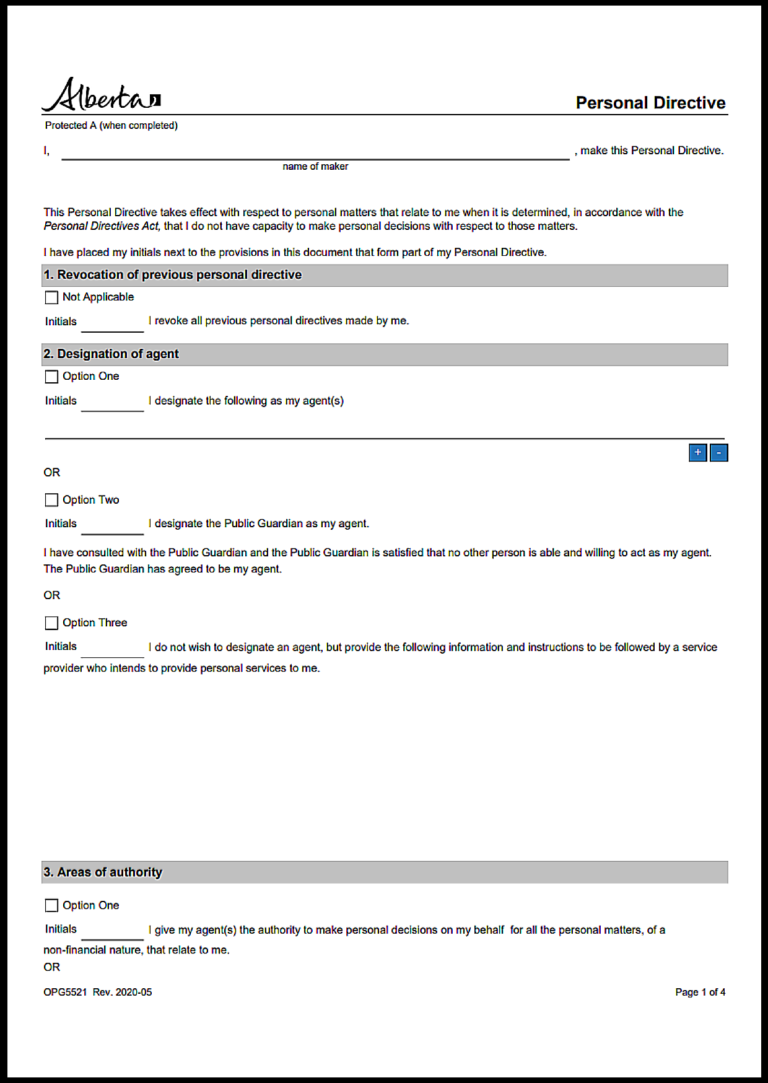
For complete estate planning, a POA should be used together with other documents like an Alberta Last Will and Testament and a Personal Directive.
Common Mistakes to Avoid
Most avoidable problems arise from choosing the wrong type of authority, leaving the scope unclear, overlooking the enduring wording, or failing to follow the witnessing requirements.
Common mistakes include:
- Choosing someone who is not trustworthy
- Not clearly defining powers
- Forgetting the enduring clause
- Improper signing or witnessing
- Not updating the document after major life changes
Even a small mistake can make your POA unusable when you need it most.
Choosing the Right Power of Attorney
The choice mainly depends on when you want the attorney’s authority to begin and whether you want it to continue if you lose capacity. Alberta’s enduring power of attorney framework allows both immediate and event-based arrangements.
- If you need short-term help → General POA
- If you want long-term protection → Enduring POA
- If you need specific authority → Limited POA
- If you want control over timing → Immediate or Springing
For many people planning for possible future incapacity, an enduring POA provides important continuity in financial decision-making.
Related Templates in Alberta
A Power of Attorney works best when combined with other estate planning documents. These documents help protect different areas of your life.
You should also consider:
- Alberta Last Will and Testament
- Alberta Personal Directive (Living Will)
- Alberta Representation Agreement
- Alberta Trust Agreement
- Alberta Estate Planning Checklist
These documents address different parts of advance and estate planning. An enduring power of attorney deals with financial and legal decisions during your lifetime, while a personal directive addresses personal decisions and a will deals with your estate after death.
FAQs
What is the difference between enduring and general POA?
An enduring POA continues after mental incapacity when the document satisfies Alberta’s statutory requirements, while a general POA does not provide that statutory enduring authority after incapacity.
Do I need a lawyer to create a POA in Alberta?
You do not always need a lawyer to prepare a Power of Attorney. However, the Government of Alberta says it is safest to make an enduring power of attorney with a lawyer to help ensure that it is legal and that your financial interests are protected.
Can I have more than one attorney?
Yes, you can appoint multiple attorneys. They can act together or separately depending on how you structure the document and the applicable Alberta rules.
When does a Power of Attorney end?
A Power of Attorney can end if the donor dies or revokes it, and it may also end under the terms of the document or applicable law. An enduring power of attorney can also end in circumstances recognized by Alberta law, including certain court or trusteeship events.
Is a Power of Attorney the same as a will?
No. A POA works while you are alive, while a will takes effect after death.