Bill of Sale VS Ownership Alberta Full Guide
Bill of Sale VS Ownership Alberta is a very common confusion among buyers in Alberta. Many people believe that once they get a bill of sale, they automatically become the legal owner. But under Alberta law, this is not correct.
In most private sale situations, a bill of sale only proves that a transaction happened between two parties. It does not prove legal ownership in government records. Ownership is only confirmed when the item (especially a vehicle) is registered in your name through Alberta registries. I have seen buyers in Alberta come into my office with a signed bill of sale thinking the deal was complete, only to discover the vehicle was never properly transferred into their name at the registry. In disputes involving unpaid fines, liens, or registration problems, the government records almost always carry more legal weight than the private paperwork.
When people buy used cars, trailers, or even expensive goods, they often depend only on a bill of sale. But legally, that is only one part of the process. Ownership is controlled by official registry records, not just private documents.
This means you can pay money and have a signed bill of sale, but still not be the legal owner. That is why understanding this difference is very important before completing any purchase.
Last Updated: August 2026
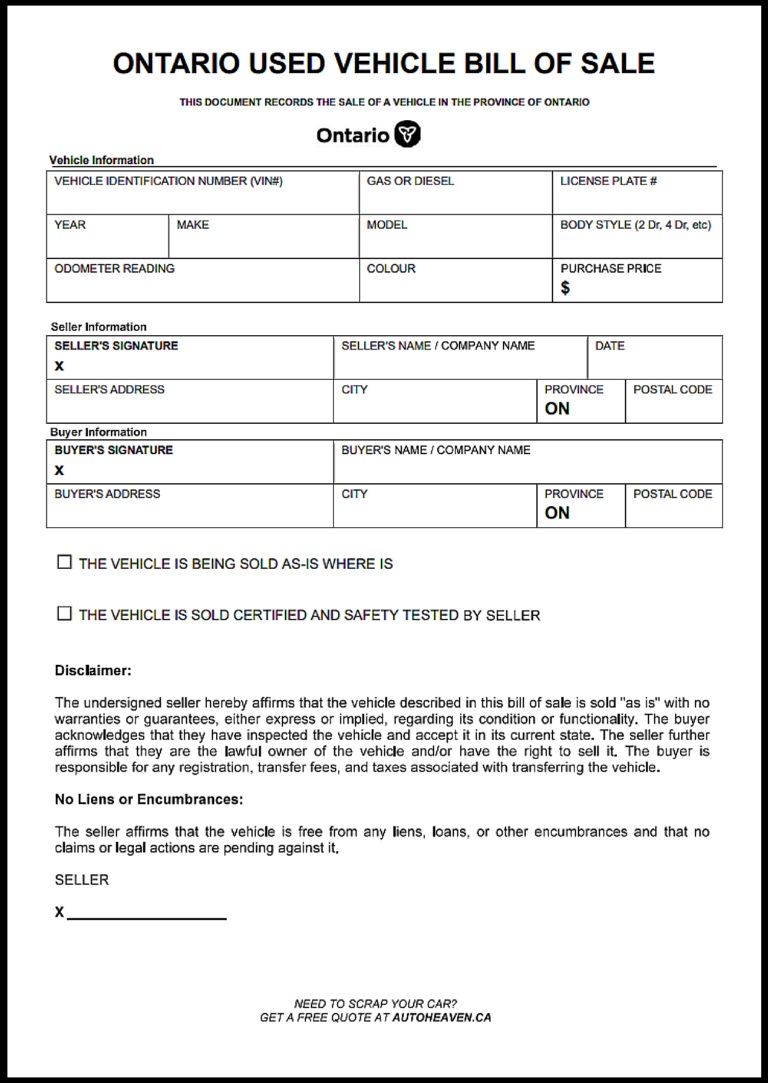
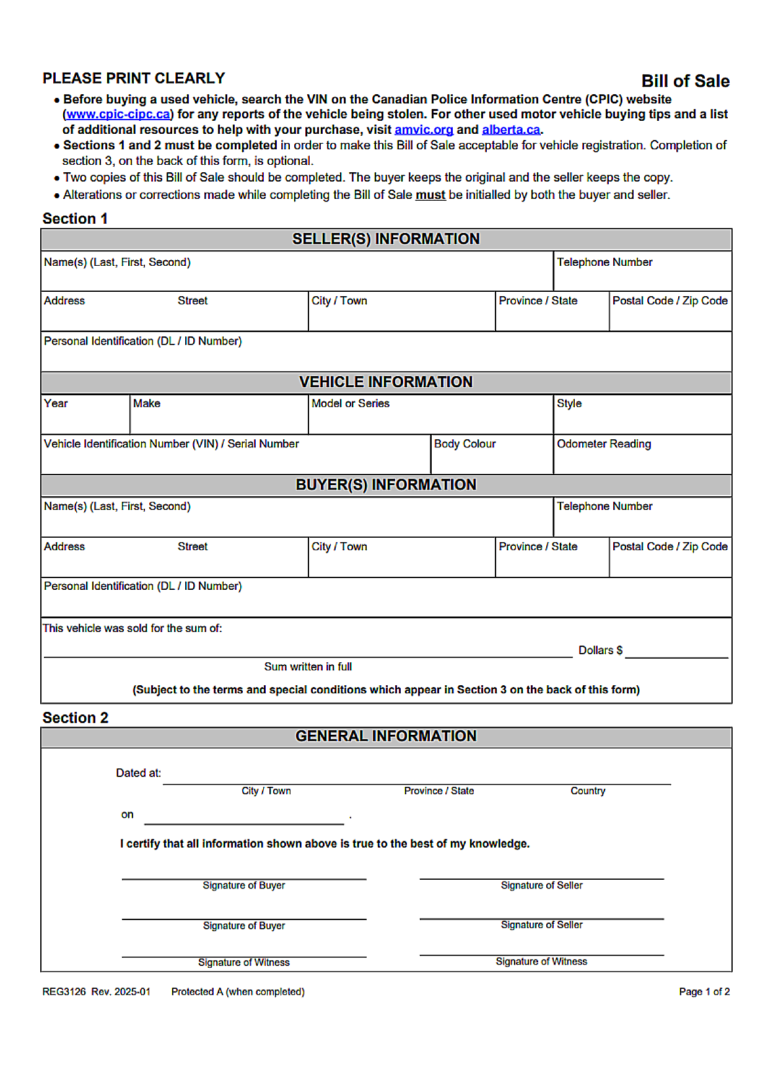
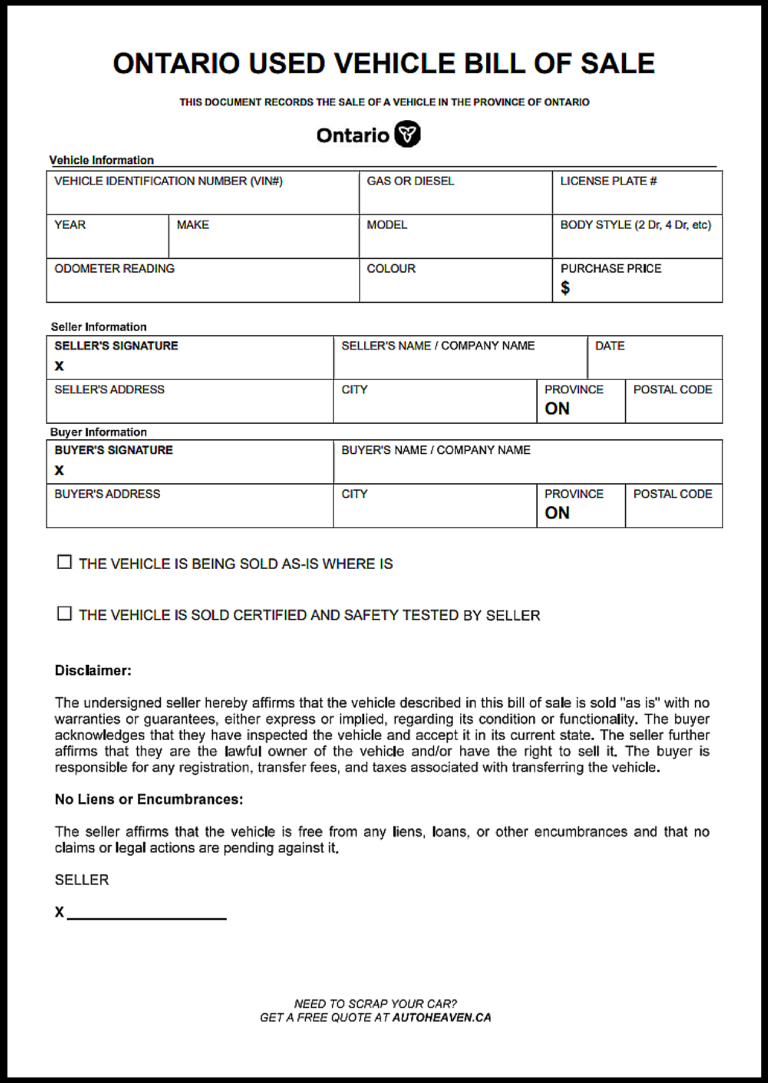
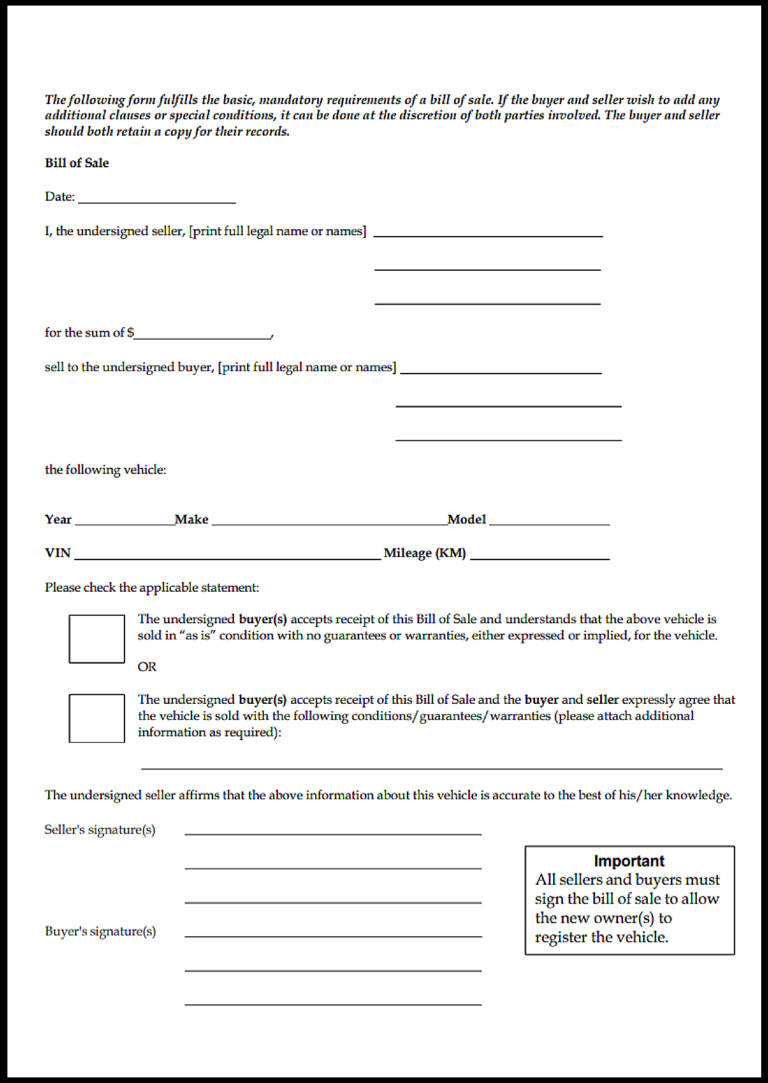
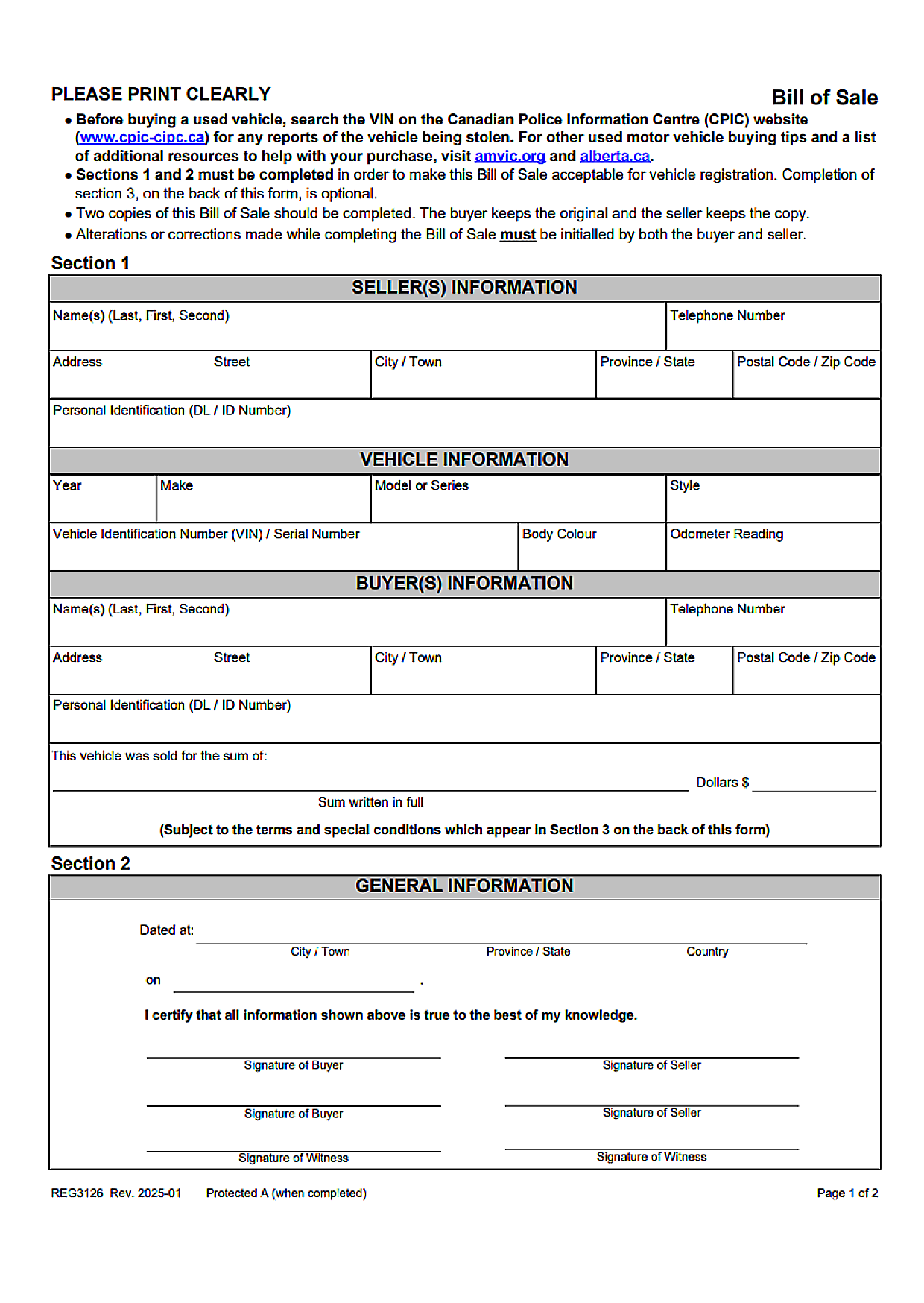
Free Bill of Sale Template (Alberta)
Use this simple and legally relevant template for Alberta transactions:
Alberta Registry Rules That Decide Real Ownership
| Topic / Issue | Alberta Legal Rule | Governing Statute |
|---|---|---|
| Governing law for sale of goods | Contracts for the sale of goods are governed under Alberta sale laws. | Sale of Goods Act, RSA 2000, c S-2 |
| Vehicle ownership and registration | Vehicle ownership transfer and registration requirements are controlled through Alberta registry rules. | Traffic Safety Act, RSA 2000, c T-6 |
| Federal involvement | Standard Bills of Sale for personal property are under provincial jurisdiction only. | No federal act applies |
| Who can sign | The seller and buyer must sign the agreement. | Sale of Goods Act, s. 4 |
| Witness requirements | Witnesses are not legally required. | Governed by common law principles |
| Notarization | Notarization is not legally required unless using a Power of Attorney. | Governed by common law principles |
| Legal capacity | Parties must have legal capacity to contract. | Sale of Goods Act, RSA 2000, c S-2, s. 5 |
| Registration deadline | Buyers may use a valid, existing Alberta licence plate on a newly acquired vehicle for up to 14 days from the date on the Bill of Sale. | Operator Licensing and Vehicle Control Regulation, Alta Reg 320/2002, s. 86 |
| Required vehicle description | Vehicle details must include Year, Make, Model, and VIN. | Operator Licensing and Vehicle Control Regulation |
| Identification of parties | Full legal names and addresses of buyer and seller must appear on the Bill of Sale. | Operator Licensing and Vehicle Control Regulation |
| Date of sale requirement | The exact transaction date must be included. | Operator Licensing and Vehicle Control Regulation |
| Purchase price requirement | The total amount paid must be clearly written. | Operator Licensing and Vehicle Control Regulation |
| Signature requirement | Both buyer and seller signatures are required for registry acceptance. | Operator Licensing and Vehicle Control Regulation |
| “As-Is, Where-Is” clause | This clause is optional and used to exclude implied warranties in private sales. | Sale of Goods Act, s. 15-16 |
| Filing rules for general goods | Bills of Sale for personal property are private contracts and are not filed with the government. | Alberta practice requirement |
| Vehicle registry update | Bills of Sale for vehicles and trailers must be presented to an authorized Alberta Registry Agent. | Service Alberta and Red Tape Reduction Registry Standards |
| Financing protection | Sellers financing a sale should register their interest in the Personal Property Registry. | Personal Property Security Act |
| Missing or incorrect VIN | Vehicle title transfer may be rejected if the VIN is wrong or incomplete. | Traffic Safety Act registration standards |
| Missing signatures | Alberta Registry agents may reject a vehicle Bill of Sale without both signatures. | Alberta Registry practice requirements |
| Vague item description | Vehicle details must be clear and specific to identify the exact property being transferred. | Sale of Goods Act, RSA 2000, c S-2, ss. 15, 19 |
| Alberta 14-day plate grace period | Buyers may use existing valid plates for up to 14 days after purchase if carrying the Bill of Sale and proof of insurance. | Traffic Safety Act |
| No provincial sales tax | Alberta does not require PST disclosure on the Bill of Sale. | Alberta tax practice |
One of the biggest misunderstandings in Alberta is believing that a signed Bill of Sale automatically makes someone the legal owner of a vehicle. In reality, Alberta registry records control ownership, not private paperwork alone. This becomes very important when dealing with accidents, unpaid fines, insurance claims, or registration disputes.
The VIN requirement is another critical rule that many buyers ignore. If the VIN is incomplete or does not match the vehicle exactly, Alberta Registry agents can reject the ownership transfer completely. That means a buyer could pay for a vehicle and still face delays or legal problems later. The rule requiring both buyer and seller signatures is also important because unsigned documents may not be accepted during registration.
Alberta’s 14-day plate transfer rule is unique compared to many provinces and gives buyers temporary flexibility after purchasing a vehicle. At the same time, Alberta’s lack of provincial sales tax keeps the registration process simpler for private vehicle sales.
Download the free Alberta Bill of Sale template to make sure your document includes all the required information correctly.
What Is a Bill of Sale in Alberta?
A bill of sale is a written document that proves a sale took place between a buyer and a seller. It is commonly used in private sales such as vehicles, trailers, or personal goods. It helps both parties keep a record of the deal and protects them if any dispute happens later.
This comparison helps clarify how the bill of sale document differs from ownership records in Alberta. For real-world examples, you can review the vehicle bill of sale and car sale agreement.
What It Proves
A bill of sale clearly shows important details of the transaction. It includes who the buyer and seller are, what item was sold, and how much money was paid. It also shows the condition of the item, especially when it is sold “as-is,” meaning no guarantee is given.
It helps in situations where:
- There is a payment dispute
- The condition of the item is questioned
- Proof of agreement is needed
What It Does NOT Prove
Even though a bill of sale is important, it does not give you legal ownership in government records. It also does not mean that the registration has been transferred.
Important limitations:
- It is not proof of ownership in registry systems
- It does not transfer title automatically
- It does not confirm the item is free from loans or liens
What Does “Ownership” Mean in Alberta?
In Alberta, a signed Bill of Sale is the legal contract that actually transfers ownership (title) of the vehicle from the seller to the buyer. However, holding the Bill of Sale is only half the job. Under the Traffic Safety Act, you cannot legally drive the vehicle or establish your public operating status until you register the vehicle and transfer the licence plate at an Alberta Registry Agent. If you fail to register, the registry system still links the previous owner to the vehicle for municipal fines, photo radar, and highway enforcement.
Proof of Ownership Includes
Ownership is confirmed through official government records. These records are used for legal, insurance, and liability purposes.
Common proofs include:
- Vehicle registration certificate
- Government-issued ownership record
- Registry database entry
Who Controls Ownership Records
Ownership records are managed by Alberta Registry Services. After buying a vehicle, the buyer must visit a registry office and update the ownership details.
If this step is not completed:
- The seller may still appear as the owner
- Legal responsibility may remain unclear
- You may face problems with insurance
To ensure proper usage, check the legal requirements for validity. You may also benefit from the bill of sale writing guide when preparing your document.
Bill of Sale vs Ownership
Many people confuse these two, but they serve completely different purposes.
| Feature | Bill of Sale |
Ownership (Registration)
|
| Purpose | Proof of transaction |
Proof of legal ownership
|
| Issued by | Buyer & Seller |
Government registry
|
| Legal status | Supporting document | Official proof |
| Required for registration | Yes |
Already part of system
|
| Shows payment details | Yes | No |
Simple understanding:
- Bill of Sale = You bought the item
- Ownership = You legally own the item
Why This Difference Matters (Real-Life Scenarios)
In real life, this difference can create serious problems if ignored.
Scenario 1 – Buying a Used Car
You buy a car and receive a bill of sale but do not transfer ownership. Legally, the vehicle still belongs to the seller. This can create issues when you try to register or insure the car.
Scenario 2 – Accident or Ticket Issues
If ownership is not updated and the car is involved in an accident or traffic violation, there can be confusion about responsibility. In some cases, the seller may still be linked to the vehicle.
Scenario 3 – Fraud or Disputes
If the bill of sale is incomplete or fake, you may not have strong legal proof. Without ownership transfer, your rights as a buyer become weak and difficult to enforce.
How to Properly Transfer Ownership in Alberta
To become the legal owner, you must complete the ownership transfer process correctly. This is required under Alberta law.
Step-by-Step Process
Follow these steps carefully:
- Get a signed bill of sale
- Complete vehicle inspection (if required)
- Visit a registry office
- Pay applicable fees and taxes
- Register the vehicle in your name
Documents You Need
When visiting an Alberta Registry Agent, bring:
- The original signed Bill of Sale,
- Valid Alberta photo identification,
- Your valid Alberta insurance pink card in the registrant’s name
- Out of Province Inspection Certificate if the vehicle was previously registered outside Alberta
Legal Requirements in Alberta You Must Follow
Under Alberta law, certain details must be correct in your documents. Incorrect or missing information can cause legal problems.
Important rules:
- Bill of sale must include accurate details
- VIN must match official records
- Both buyer and seller must sign
- Information should be clear and complete
Alberta-Specific Rules
Some additional rules apply in Alberta:
- Certain vehicles require inspection before registration
- GST may apply depending on the situation
- Ownership should be updated immediately after purchase
Common Mistakes to Avoid
Many buyers make simple mistakes that lead to big problems later. These mistakes are very common in private sales.
- Thinking bill of sale equals ownership
- Entering wrong VIN or missing details
- Not registering the vehicle
- Not checking seller identity
- Not keeping copies of documents
Always double-check everything before completing payment.
When a Bill of Sale Alone Is Enough
In some situations, a bill of sale is enough because no official ownership system exists.
Suitable Cases
A bill of sale works fine for:
- Low-value personal items
- Furniture
- Electronics
- Household goods
When It Is NOT Enough
You must complete ownership transfer for:
- Vehicles
- Trailers
- Boats that require registration
Without this, you are not the legal owner.
FAQs
Is a bill of sale legally required in Alberta?
It is not always required, but it is strongly recommended. It provides proof of transaction and protects both parties.
Can I drive with only a bill of sale?
No, you cannot legally drive without proper registration and insurance.
How long do I have to transfer ownership?
It should be done immediately after purchase to avoid legal and insurance issues.
Can a handwritten bill of sale be valid?
Yes, it is valid if it includes all required details like names, item description, price, and signatures.