Ontario Affidavit of Identity Template PDF | Download Free
An Ontario Affidavit Template can save time when you need to present sworn evidence, but the details matter more than many people realise. In Ontario, affidavits must be properly sworn or affirmed before a commissioner for taking affidavits and prepared in a format recognised by the court rules, otherwise the document may not be accepted as evidence.
I’ve seen self-represented parties arrive at the Ontario Superior Court of Justice with affidavits they had already signed at home, only to discover the document had to be completed again before it could be used in their proceeding. Whether you’re preparing evidence for a court matter, an LTB dispute, or another legal process, getting the commissioning step right is often where problems arise.
Below you’ll find an Ontario affidavit template, execution requirements, common mistakes to avoid, and practical tips for preparing a document that meets Ontario requirements.
Last Updated: September 2026
Table of Contents
ToggleFree Ontario Affidavit Template
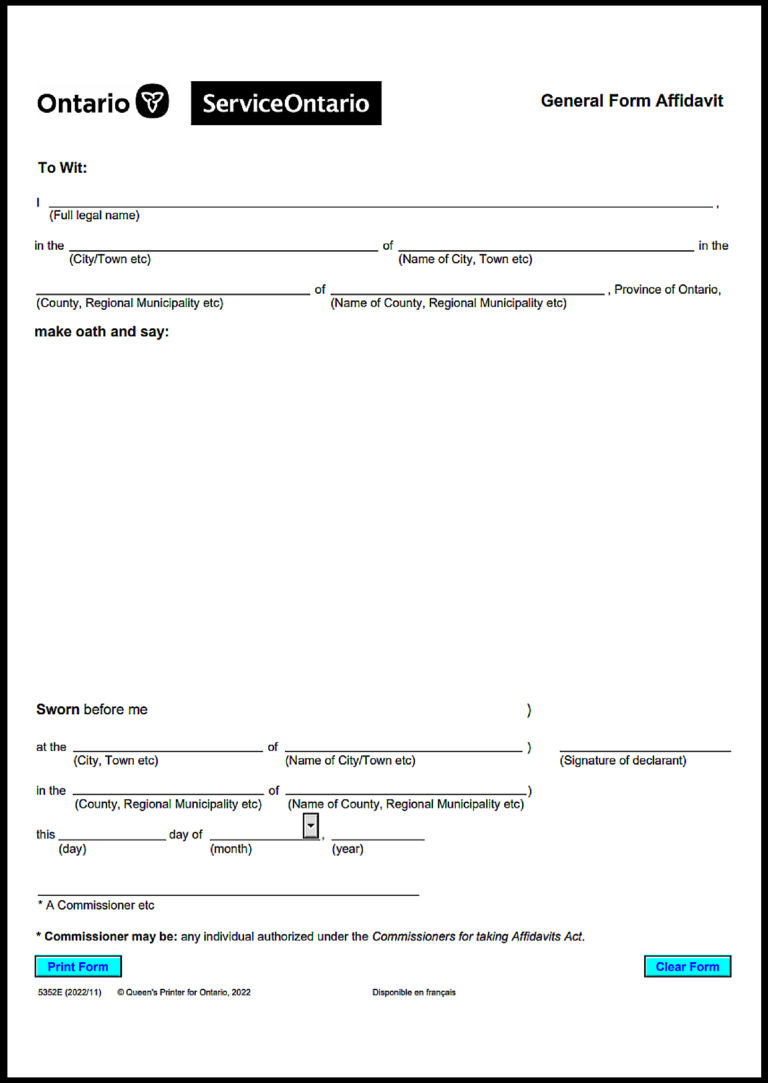
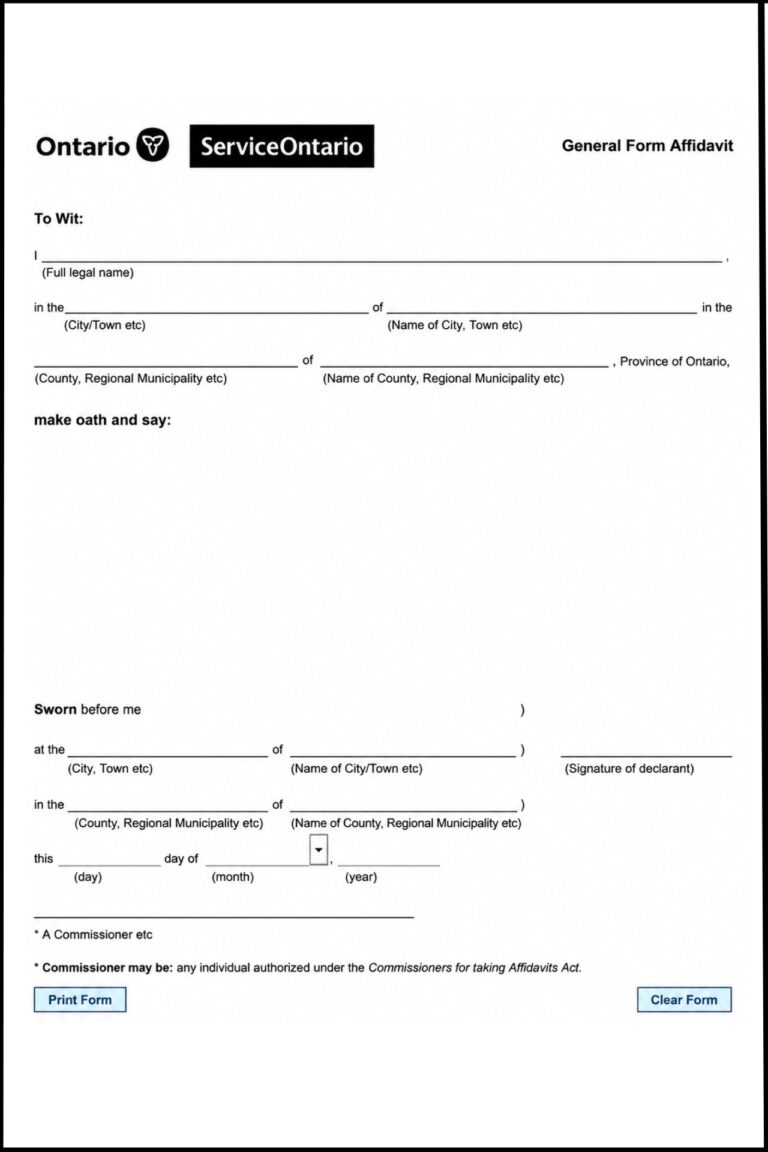
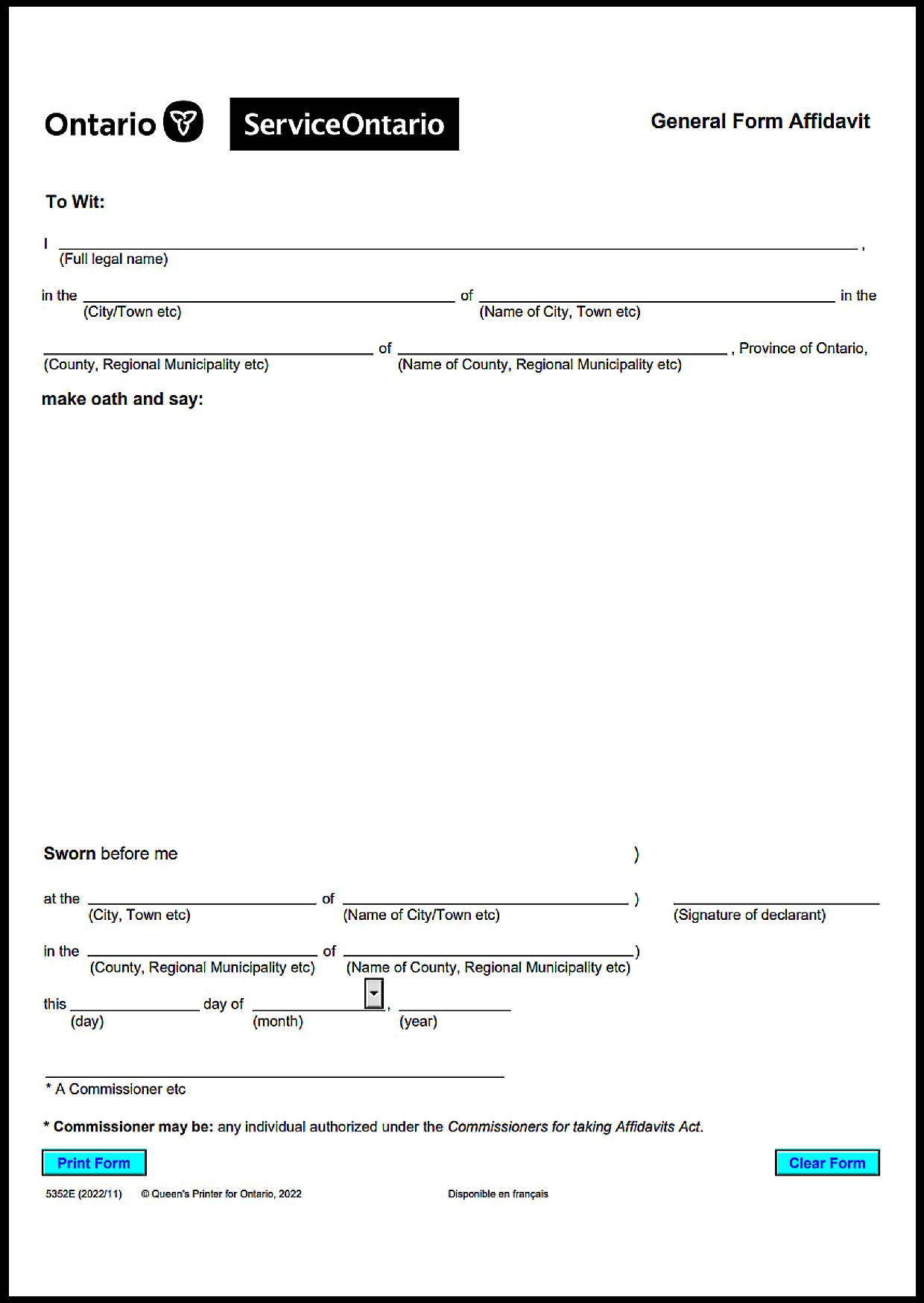
Below is a general-purpose affidavit template based on common Ontario legal format. It includes essential elements like oath wording and signature sections.
O
Ontario Affidavit Rules, Court Requirements & Legal Validity Guide
| Topic / Issue | Ontario Legal Rule | Governing Statute |
|---|---|---|
| Governing legislation | Ontario affidavits may be governed by the applicable court rules, evidence legislation, and commissioning requirements, including the Rules of Civil Procedure, Evidence Act, and Commissioners for Taking Affidavits Act. | Rules of Civil Procedure, R.R.O. 1990, Reg. 194; Evidence Act, R.S.O. 1990, c. E.23; Commissioners for Taking Affidavits Act, R.S.O. 1990, c. C.17 |
| Federal affidavit use | Federal requirements may apply when an affidavit is used in an immigration matter, federal court proceeding, or other federal process, so the requirements of the particular authority or proceeding should be checked. | Canada Evidence Act, R.S.C. 1985, c. C-5 |
| Remote commissioning | Ontario permits remote administration of oaths and declarations where the conditions in O. Reg. 431/20 are met, including real-time audiovisual communication, identity confirmation, and the required commissioning wording. | O. Reg. 431/20 under the Commissioners for Taking Affidavits Act |
| Who can sign | A person may swear or affirm an affidavit, but an affidavit used in an Ontario proceeding must comply with the applicable rules concerning the deponent and the evidence stated in the affidavit. | Rules of Civil Procedure, Rule 4.06 |
| Witness requirement | The affidavit must be sworn or affirmed before a person authorized by law to administer oaths or affirmations. | Commissioners for Taking Affidavits Act |
| Commissioning requirement | Affidavits must be sworn or affirmed before a person authorized to administer oaths or affirmations. | Commissioners for Taking Affidavits Act |
| Age and capacity | Ontario’s Evidence Act provides that a person of any age is presumed competent to give evidence, subject to the specific rules concerning witness competence. | Evidence Act, s. 18 |
| Filing deadlines | For a motion or application made on notice, affidavits on which it is founded generally must be served and filed at least seven days before the hearing, while affidavits in opposition or reply generally must be served and filed at least four days before the hearing, subject to the applicable Rules and any court order. | Rules of Civil Procedure, Rule 39.01 |
| Mandatory oath wording | An Ontario affidavit must include the applicable oath or affirmation and jurat requirements for the proceeding and manner of commissioning. | Applicable Ontario affidavit and commissioning requirements |
| Mandatory jurat | An affidavit must contain a jurat or other commissioning wording that complies with the applicable Ontario requirements, including additional information required for remote commissioning. | Commissioners for Taking Affidavits Act; O. Reg. 431/20 |
| Remote commissioning wording | For remote commissioning, the modified jurat or declaration must indicate that the oath or declaration was administered in accordance with O. Reg. 431/20 and state the location of the person administering it and the deponent or declarant at the time of administration. | Commissioners for Taking Affidavits Act, s. 9(2); O. Reg. 431/20 |
| Information and belief statements | An affidavit for use on a motion may contain statements based on information and belief if the source of the information and the fact of the belief are specified. An affidavit for use on an application may also contain information-and-belief statements concerning facts that are not contentious, subject to Rule 39.01. | Rules of Civil Procedure, Rules 39.01(4) and 39.01(5) |
| Court filing requirement | Where an affidavit is required in an Ontario court proceeding, it must be served and filed using the procedure and within the time required by the applicable court rules. | Applicable Ontario court rules |
| Private affidavit status | An ordinary private affidavit is not generally subject to a separate government registration requirement, although the organization, court or authority receiving it may impose its own submission requirements. | N/A |
| Physical or virtual presence rule | The person administering the oath or declaration must comply with the applicable commissioning requirements. Ontario also permits remote administration where the conditions in O. Reg. 431/20 are met. | Commissioners for Taking Affidavits Act, s. 9; O. Reg. 431/20 |
| Lack of personal knowledge | An affidavit should generally contain facts within the deponent’s personal knowledge or other evidence the deponent could give as a witness, subject to exceptions such as the information-and-belief provisions in Rule 39.01. | Rules of Civil Procedure, Rules 4.06 and 39.01 |
| Incomplete jurat problem | Missing required commissioning information, such as a date, location or required signature, can create a defect that may require correction before the affidavit can be relied on. | Commissioners for Taking Affidavits Act |
| Ontario paralegal authority | Ontario paralegals do not automatically have commissioner authority merely because they are licensed paralegals; the person administering the oath must be authorized under Ontario law to do so. | Commissioners for Taking Affidavits Act |
| Ontario formatting requirements | An affidavit used in a proceeding governed by Ontario’s Rules of Civil Procedure must be in Form 4D. Documents in a proceeding generally also require a backsheet in accordance with Form 4C, subject to the applicable Rules and requirements. | Rules of Civil Procedure, Rule 4.02 and Rule 4.06; Forms 4C and 4D |
One important Ontario affidavit requirement is that the person administering the oath or declaration must comply with the statutory commissioning requirements and satisfy themselves of the genuineness of the deponent’s signature.
For proceedings governed by Ontario’s Rules of Civil Procedure, Rule 4.06 requires an affidavit to be in Form 4D, while Rule 4.02 addresses the required backsheet. Filing and service deadlines also depend on the particular proceeding. Missing required commissioning information can create a procedural defect that may need to be corrected.
Ontario permits remote administration of oaths and declarations under O. Reg. 431/20. The process requires real-time audiovisual communication, identity confirmation, a modified jurat or declaration stating the required locations, and reasonable precautions to ensure the deponent understands what is being signed.
Types of Affidavits in Ontario
Different situations require different affidavits, and choosing the wrong one can lead to procedural problems. Each type is designed for a specific purpose, so it’s important to understand what the receiving court, tribunal, organization or authority actually requires.
Affidavit of Service
An Affidavit of Service, including Form 16B where applicable under the Rules of Civil Procedure, is used to provide evidence of service of documents.
Operational Trap: For LTB proceedings, follow the LTB’s current Rules of Procedure and forms. Where a Certificate of Service is required, the LTB Rules provide for a completed Certificate of Service to be filed with the Board.
Affidavit of Identity
An affidavit of identity may be requested by a particular organization or authority when additional evidence of identity is needed. The exact requirements depend on the organization or proceeding requesting it.
Statutory Declaration (Ontario)
A statutory declaration is different from an affidavit and is used where legislation, a government body, organization or other authority requires or accepts a declaration made under the applicable statutory procedure.
Court Affidavit (Litigation Affidavit)
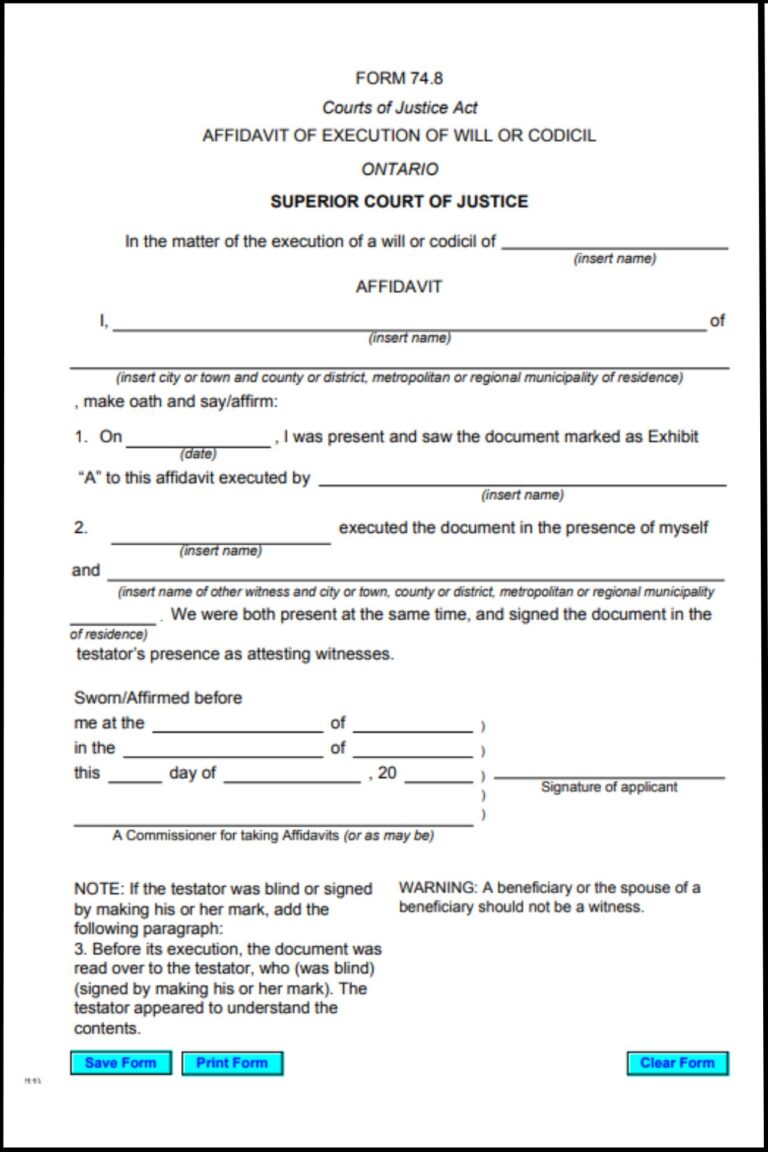
An affidavit used in an Ontario civil proceeding must comply with the applicable court rules, including Rule 4.06 where the Rules of Civil Procedure apply.
Affidavit of Residency
An affidavit of residency may be requested by a school, organization, government authority or other recipient when proof of residence is required. The recipient’s requirements determine whether an affidavit is appropriate.
Affidavit of Support
An affidavit or other supporting declaration may be requested in some immigration matters, but the required evidence depends on the specific IRCC application, sponsorship category or visa process.
If you are preparing a sworn statement under Ontario law, this page serves as your starting point for understanding the correct structure and legal use of affidavits. You can also explore specific document variations such as an official sworn affidavit format in Ontario or learn the step-by-step process in how to obtain an affidavit in Ontario.
Real-Life Use Cases in Ontario
The appropriate document depends on what the court, organization or authority has actually requested:
| Situation |
Right Document
|
| “I need to prove I sent legal papers” |
Affidavit of Service
|
| “Bank asked me to confirm identity” |
Affidavit of Identity
|
| “Court needs written evidence” | Court Affidavit |
| “School wants address proof” |
Affidavit of Residency
|
| “Immigration needs financial proof” |
Affidavit or other supporting document required by the specific immigration process
|
The receiving authority should determine which document is appropriate. A generic affidavit should not be substituted where a prescribed form or procedure is required.
Key Elements of a Valid Affidavit in Ontario
For an affidavit used in an Ontario proceeding governed by the Rules of Civil Procedure, Rule 4.06 sets out specific requirements for the form, contents, numbering and commissioning of the affidavit.
Full Legal Name of the Deponent
For an affidavit used in an Ontario proceeding, state the deponent’s full name as required by Rule 4.06 and follow any identification requirements imposed by the receiving authority.
Clear Statement of Facts
An affidavit should generally state facts within the deponent’s personal knowledge or other evidence the deponent could give as a witness, subject to applicable exceptions. Avoid unsupported argument or speculation.
Oath or Affirmation Clause
A person may take an oath or, instead, make an affirmation or declaration having the same force and effect as an oath under Ontario law.
Signature of the Deponent
The affidavit must be signed and sworn or affirmed in accordance with the applicable Ontario requirements. If the commissioning procedure requires the signature to be made in the presence of the person administering the oath, do not sign it in advance.
Commissioner or Notary Signature
The person administering the oath or affirmation must comply with the applicable commissioning requirements, satisfy themselves of the genuineness of the signature, administer the oath or affirmation, and complete the required jurat or declaration.
Different situations require different affidavit types. For identity verification, you may need an affidavit of identity template, while address confirmation may require an proof of residence affidavit. It’s also important to understand the distinction between affidavits and declarations using this affidavit vs statutory declaration comparison.
How to Create or Complete an Affidavit?
Follow these simple steps:
Step 1: Choose the correct affidavit type
Step 2: Write clear and truthful statements
Step 3: Do not sign yet
Step 4: Visit a person authorized to administer oaths or affirmations
Step 5: Sign and swear or affirm the affidavit according to the applicable commissioning procedure
Step 6: Keep copies for your records
The basic preparation process is straightforward, but the required form, commissioning method and filing procedure depend on the court proceeding or authority receiving the affidavit.
Legal Overview in Ontario
Under Ontario law:
- Affidavits must be sworn or affirmed before a person authorized to administer oaths or affirmations, which may include:
- A Commissioner for Taking Affidavits
- A Notary Public
- Another person authorized by law
- They may be used as evidence in courts where the applicable rules permit.
- Knowingly making a false statement under oath or solemn affirmation with intent to mislead can constitute perjury under section 131 of the Criminal Code, in addition to other possible consequences.
- Some affidavits must follow rules under Ontario’s civil procedures, especially affidavits used in proceedings governed by the Rules of Civil Procedure.
Common Mistakes to Avoid
Procedural errors can create problems when an affidavit is filed or submitted, particularly when the required form, commissioning procedure or filing deadline has not been followed.
- One common mistake is writing opinions instead of facts. An affidavit should generally include facts within the deponent’s personal knowledge or other evidence permitted by the applicable rules. Another frequent issue is signing the document before meeting the person administering the oath. Follow the applicable Ontario commissioning procedure before signing or completing the jurat.
- Using the wrong type of affidavit can also cause delays or require corrections. Each affidavit serves a particular purpose, so check what the court, tribunal, organization or other authority has requested. Missing required information such as the deponent’s name, date, location or commissioning details can also create a procedural defect.
- Finally, court affidavits must comply with the applicable court format rules. For proceedings governed by the Rules of Civil Procedure, Rule 4.06 sets out requirements for affidavits, including the use of Form 4D.
Before signing, review the affidavit against the requirements of the particular Ontario court or receiving authority, including the applicable form, commissioning details and filing or service deadline.
Choosing the Right Affidavit (Quick Guide)
Use this quick decision guide when the receiving authority has asked for a particular type of document:
- Need to prove service → Check whether an Affidavit of Service is required
- Need to confirm identity → Ask the requesting organization whether it accepts an Affidavit of Identity
- Court requires evidence → Use the form required by the applicable court rules
- Government or administrative use → Check whether a statutory declaration is specifically required
- Proof of address → Confirm whether the recipient requires an affidavit, declaration or another form
The receiving court or authority should determine which document is appropriate; a generic affidavit should not be substituted where a prescribed form or procedure is required.
FAQs
What is the difference between affidavit and statutory declaration?
An affidavit is a formal statement sworn or affirmed before a person authorized to administer oaths or affirmations. A statutory declaration is made under the applicable statutory procedure and is used where legislation or the receiving authority requires or accepts one.
Who can sign an affidavit in Ontario?
The affidavit must be sworn or affirmed before a person authorized by law to administer oaths or affirmations. Depending on the circumstances, this may include a Commissioner for Taking Affidavits or a Notary Public.
Can I write my own affidavit?
Yes. You can generally prepare your own affidavit, provided it complies with the requirements of the applicable court, tribunal or receiving authority and is properly sworn or affirmed.
Is an affidavit legally binding in Ontario?
An affidavit is a formal sworn or affirmed statement that may be used as evidence where the applicable rules permit. Knowingly false statements can have serious legal consequences.
Do I need a lawyer for an affidavit?
Not always. You may be able to prepare a straightforward affidavit yourself. If the affidavit concerns a complex proceeding or important legal rights, obtaining legal advice may be useful.
Where can I get an affidavit signed in Ontario?
You can contact:
- Law offices
- Notary services
- Commissioners for Taking Affidavits
- Other authorized persons or offices that provide commissioning services
The person administering the oath or affirmation must be legally authorized to do so, and remote commissioning may be available where the requirements of O. Reg. 431/20 are met.