Free British Columbia Lease Agreement Template Guide
A British Columbia Lease Agreement is a legal contract between a landlord and a tenant that explains rental terms clearly. It covers rent, duration, responsibilities, and rules for the property.
If you are renting in BC, this guide helps you understand everything in simple words. You will learn how to use a free template, choose the right lease type, and follow the rules under the Residential Tenancy Act. Even if you have no legal knowledge, you can still use this guide easily.
Last Updated: August 2026
Free British Columbia Lease Agreement Template
A simple lease template is useful for most rental situations like apartments, houses, or basement units. It helps both landlord and tenant stay clear about terms from the start.
British Columbia Lease Laws and Legal Requirements You Must Know
| Topic / Issue | British Columbia Legal Rule | Governing Statute |
|---|---|---|
| Governing legislation | Residential tenancy agreements are governed by the Residential Tenancy Act and Residential Tenancy Regulation. | Residential Tenancy Act [SBC 2002] c. 78 |
| Federal jurisdiction | Residential tenancy law is provincial jurisdiction under property and civil rights. | Constitution Act, Section 92(13) |
| 2024 amendments | Bill 14 (2024) added rules requiring a provincial web portal for personal-use evictions and extended required occupancy to 12 months. | Residential Tenancy Act amendments under Bill 14 (2024) |
| 2026 amendments | Bill 11 (2026) expanded eviction grounds related to weapons and misconduct in supportive housing. | Residential Tenancy Act amendments under Bill 11 (2026) |
| Who can sign | The landlord, owner, lessor, agent, and tenant may sign the agreement. | Residential Tenancy Act, ss. 1 & 13 |
| Witness requirement | No witness is legally required for a BC lease agreement. | Common law principles |
| Notarization | Notarization is not legally required. | Common law principles |
| Age requirement | Age of majority is 19, but leases signed by minors may still be enforceable. | Infants Act, s. 3; RTA, s. 3 |
| Mental capacity | Parties must understand the nature and consequences of the agreement. | Adult Guardianship Act |
| Deadline for signed copy | Landlords must provide a signed copy of the lease within 21 days. | RTA, s. 13(3) |
| Mandatory standard terms | All BC tenancy agreements automatically include the Standard Terms under the Regulation. | RTA, s. 13; Schedule 1 of the Regulation |
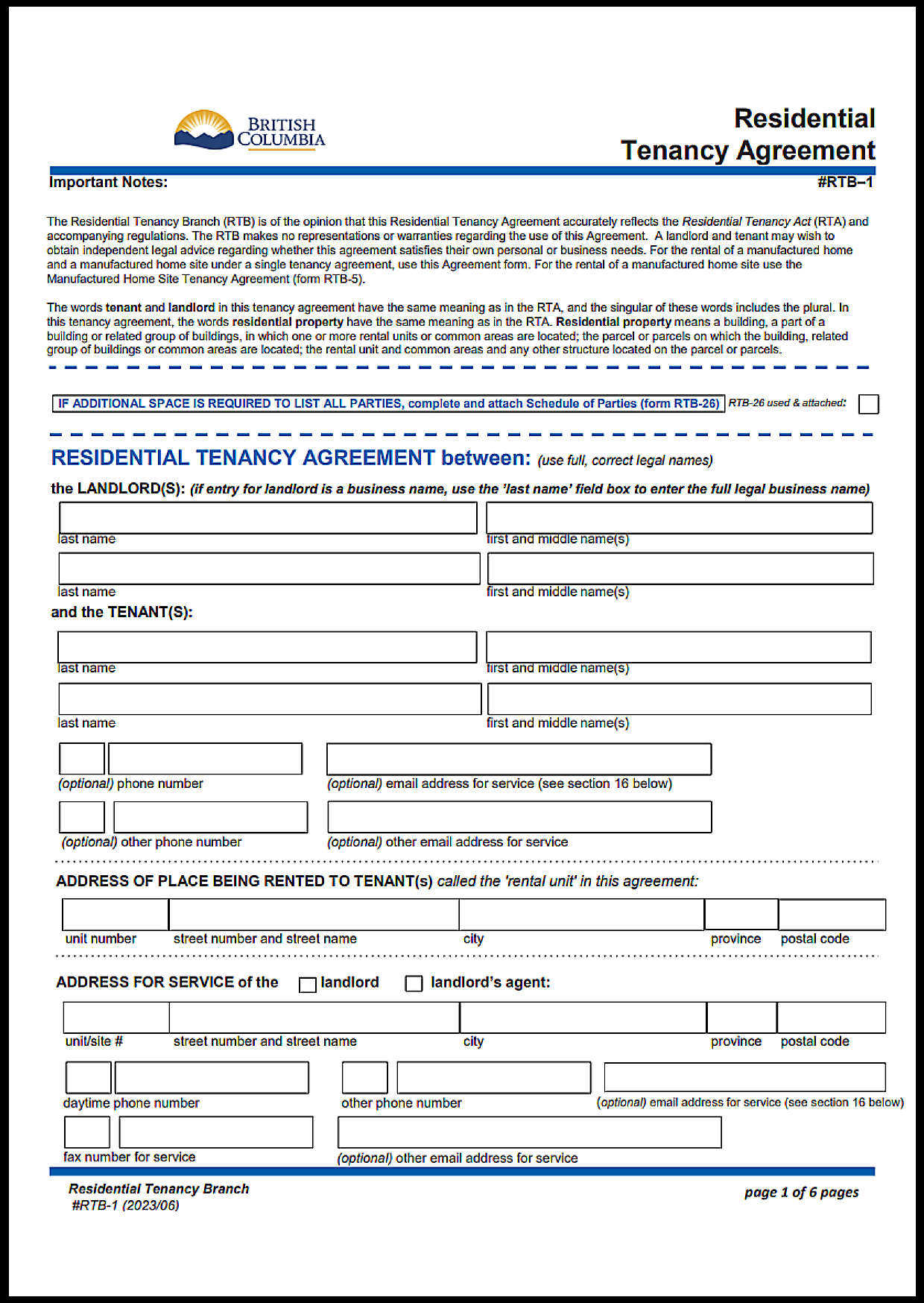
| Required lease information | Lease must include names, rental address, tenancy dates, landlord contact details, rent terms, and deposit details. | RTA, s. 13(2) |
| Illegal contract terms | Any term that conflicts with the RTA is void and unenforceable. | RTA, s. 5 |
| Filing requirements | Residential leases do not need government filing to be legally valid. | Private contract under BC law |
| Registration exception | Leases exceeding 3 years may be registered with the Land Title Office. | Land Title Act, RSBC 1996, c. 250, s. 20 |
| RTB portal requirement | Certain landlord-use eviction notices must be generated through the RTB portal. | Residential Tenancy Branch administrative rules (2024) |
| Unconscionable terms | Grossly unfair lease terms may be unenforceable. | RTA, s. 6(3) |
| Missing material terms | Missing rent amount or rental address can make the lease invalid for uncertainty. | Common law; RTA, s. 13 |
| Pet deposit rule | Landlords may charge a pet damage deposit up to half a month’s rent. | Residential Tenancy Act deposit rules |
| Fixed-term lease conversion | Fixed-term leases automatically become month-to-month unless specific legal exceptions apply. | Residential Tenancy Act fixed-term tenancy rules |
One of the most important rules in British Columbia is that every residential lease automatically includes the province’s Standard Terms, even if they are not written in the agreement. This surprises many landlords because custom clauses that conflict with the Residential Tenancy Act are simply not enforceable. For example, a landlord cannot force a tenant to waive legal rent increase protections or require automatic professional carpet cleaning in every situation.
Another major rule is the automatic conversion of fixed-term leases into month-to-month tenancies. Many people still believe tenants must leave automatically at the end of a lease term, but BC law no longer works that way in most residential situations.
The 21-day deadline for providing a signed lease copy also matters in real life because disputes often happen when tenants never receive proper documentation. Missing important details like rent amount or property address can even make the agreement legally uncertain.
Using a clear and legally compliant lease helps both landlords and tenants avoid expensive disputes and misunderstandings. Download the free British Columbia Lease Agreement template to create your document correctly from the start.
Types of Lease Agreements in British Columbia
Different situations need different lease types. Choosing the wrong one can create legal problems later.
Fixed-Term Lease Agreement
A fixed-term lease runs for a specific period, usually one year. It is best when both landlord and tenant want stability. Rent stays predictable, and the tenant cannot leave early without conditions.
Month-to-Month Rental Agreement
This lease continues until either party gives proper notice. It is more flexible and works well when plans are not fixed.
Sublease Agreement
A sublease allows a tenant to rent the unit to another person. In most cases, landlord permission is required. This is common when someone moves temporarily.
Roommate Agreement
This is used when multiple tenants share a space. It helps divide rent, chores, and house rules clearly. It is usually not part of the landlord’s main contract.
Commercial Lease Agreement
This lease is for business use, not residential living. It includes detailed terms like business usage and rent structure. These agreements are not governed by residential tenancy laws.
Assignment of Lease Agreement
This transfers the lease from one tenant to another. The landlord must approve it. It is useful if a tenant wants to leave early without breaking the lease.
Many landlords use this document to clearly define rent payments, occupancy rules, and maintenance responsibilities before a tenant moves into the property. If you are still learning how residential tenancy contracts work in the province, the guide explaining lease agreements in British Columbia gives a broader overview of the legal structure behind these arrangements.
Real-Life Use Cases
In real life, different people use different lease types based on their needs. A student renting for one year usually prefers a fixed-term lease because it gives stability. Someone who is unsure about staying long may choose a month-to-month agreement for flexibility.
If a tenant is going abroad for a few months, they may use a sublease to rent the unit temporarily. Friends sharing a flat often create a roommate agreement to manage expenses and responsibilities. A shop owner renting a store space will need a commercial lease instead of a residential one.
These examples make it easier to understand which agreement fits your situation.
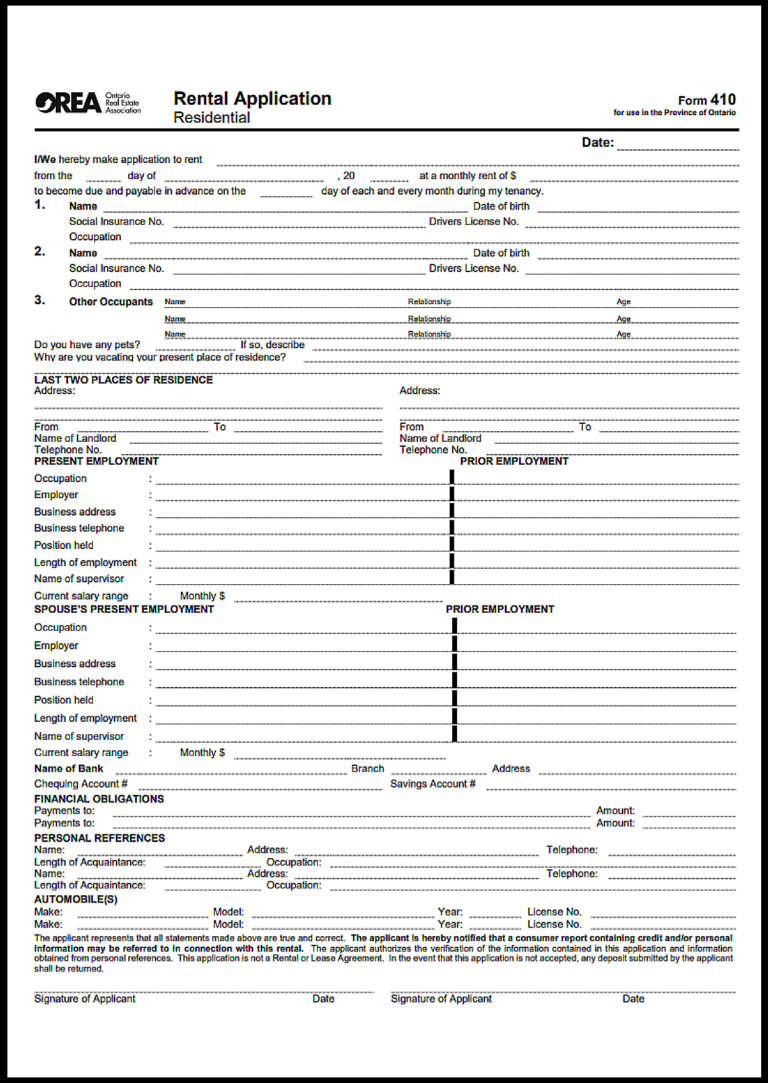
Before approving a new renter, property owners often collect information through a tenant application form to verify employment, references, and rental history. Once the tenancy begins, records such as a proof of rent payment document can help both parties keep track of monthly transactions.
Key Elements of a Valid Lease Agreement
Every lease agreement must include certain key details to be legally clear and useful.
Names and Contact Details
The full legal names of both landlord and tenant should be written clearly. Contact details like phone number or email should also be included so both parties can communicate easily.
Property Description
The full address of the rental unit must be mentioned. If parking, storage, or other areas are included, they should also be clearly listed.
Rent and Payment Terms
The agreement should clearly state the monthly rent, due date, and how the payment will be made. This avoids confusion later.
Lease Duration
It should mention whether the lease is fixed-term or month-to-month. If it is fixed, both start and end dates must be included.
Security Deposit Rules
Under British Columbia law, the security deposit cannot be more than half of one month’s rent. The conditions for returning the deposit should also be clear.
Rights and Responsibilities
Both landlord and tenant responsibilities should be written. This includes maintenance, repairs, and rules about pets or smoking.
Rental terms sometimes change after the initial agreement is signed. In those situations, landlords may switch to a flexible month-to-month arrangement or prepare a renewal contract for continuing tenants instead of drafting a completely new agreement.
Key Lease Rules in BC
| Topic |
Rule in British Columbia
|
| Security Deposit |
Max 50% of monthly rent
|
| Rent Increase | Allowed once every 12 months with 3 full months’ written notice on the official RTB form |
| Notice Period |
Must follow legal notice rules
|
| Repairs |
Landlord must ensure safe living conditions
|
| Entry by Landlord |
Must give proper notice (usually 24 hours)
|
These rules come from the Residential Tenancy Act and must be followed in most rental situations.
How to Create or Complete This Document
Creating a lease agreement is simple if you follow the right steps. First, choose the correct lease type based on your situation. Then fill in the names of landlord and tenant and add full property details.
Clearly define the rent amount, due date, and lease duration. Add any specific rules for the property, like pet policies or maintenance duties. Before signing, both parties should review everything carefully to avoid misunderstandings.
It is always important that both landlord and tenant keep a signed copy of the agreement for future reference.
Legal Overview in British Columbia
Lease agreements in BC are governed by the Residential Tenancy Act. This law protects both landlords and tenants and sets clear rules.
Under British Columbia law, tenants have the right to safe housing and privacy. Landlords must complete necessary repairs and follow proper notice rules before entering the property.
It is also important to understand that not all leases are treated the same. Residential agreements must follow strict legal rules, while commercial leases have more flexibility and fewer protections.
Always make sure your lease follows provincial law to avoid disputes.
Common Mistakes to Avoid
Many people make small mistakes in lease agreements that later cause big problems. One common issue is using the wrong type of lease, such as creating a sublease without landlord permission.
Sometimes rent details or due dates are not clearly written, which leads to confusion. Ignoring BC-specific rules is another mistake that can make parts of the agreement invalid.
Missing important clauses like deposits, repairs, or responsibilities can also create disputes. Verbal agreements are risky because they are hard to prove if a problem arises.
Choosing the Right Lease Agreement
Choosing the correct lease depends on your situation. If you want long-term stability, a fixed-term lease is the best option. If you need flexibility, a month-to-month agreement works better.
If you are leaving temporarily, a sublease is useful. When sharing a space with others, a roommate agreement helps avoid conflicts. For business purposes, always use a commercial lease instead of a residential one.
Lease Type Comparison Table
| Lease Type | Best For | Flexibility | Legal Control |
| Fixed-Term | Long-term tenants | Low | High |
| Month-to-Month | Short/uncertain plans | High | Medium |
| Sublease | Temporary absence | Medium | Needs approval |
| Roommate | Shared living | Medium |
Private agreement
|
| Commercial | Business use | Varies | Flexible |
This table helps you quickly decide which lease suits your needs.
Related Templates in British Columbia
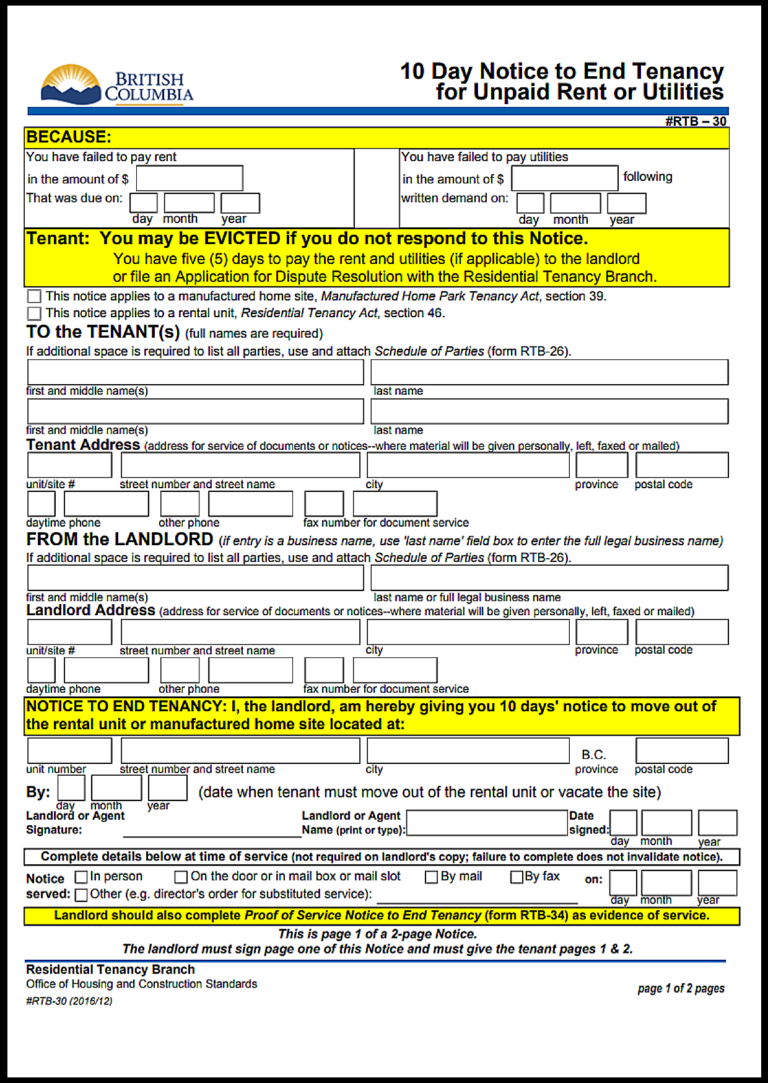
If you need more specific documents, you can explore related templates. These include Fixed-Term Lease Agreement BC, Month-to-Month Rental Agreement BC, Sublease Agreement BC, Roommate Agreement BC, Commercial Lease Agreement BC, Lease Assignment Agreement BC, Rental Application Form BC, and Notice to End Tenancy BC.
Using the right template for your situation makes your agreement stronger and clearer.
FAQs
Is a written lease required in British Columbia?
A written lease is not always required, but it is strongly recommended. It provides clear proof of terms and protects both parties.
Can a landlord increase rent anytime?
No, landlords are not allowed to increase rent anytime. Under BC law, rent increases must follow specific rules and timing.
What happens if there is no lease agreement?
The tenancy still exists, but it becomes harder to resolve disputes because there is no written proof of terms.
Can tenants break a lease early?
Yes, but conditions apply. It depends on the type of lease and whether proper notice or agreement is given.
Is a verbal agreement legally valid?
Sometimes yes, but it is difficult to prove. Written agreements are always safer and more reliable.
Legal Disclaimer
This content is for informational purposes only. It does not replace legal advice. Laws may change, and every situation can be different. For specific concerns, you should consult a qualified legal professional in British Columbia.