Statutory Declaration Ontario Template (Free PDF & Guide)
A statutory declaration Ontario template can save time, but only if it’s prepared and commissioned in a way that satisfies Ontario’s legal requirements. In practice, one of the most common problems is that people sign the declaration before meeting with a commissioner for taking affidavits or rely on a generic Canadian template that doesn’t reflect the wording prescribed under Ontario’s Evidence Act.
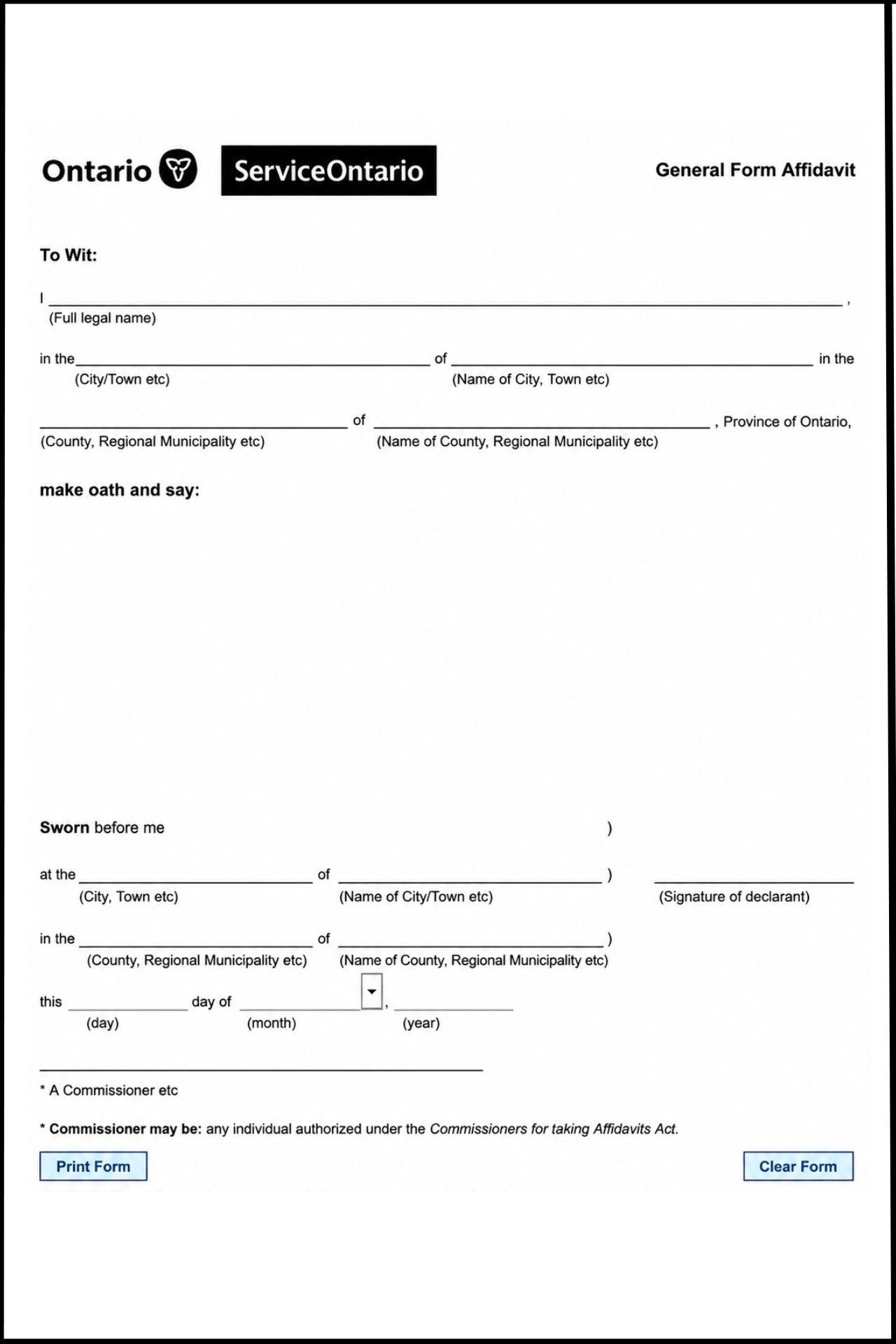
I’ve seen declarations delayed because the document had to be signed again in the commissioner’s presence before it could be accepted for filing or submitted to the requesting authority. Whether you’re preparing a declaration for a government agency, employer, financial institution, or another official purpose, using the correct format from the outset helps avoid unnecessary delays. Below you’ll find an Ontario-specific statutory declaration template, an explanation of when it’s appropriate to use one, and guidance on completing it correctly.
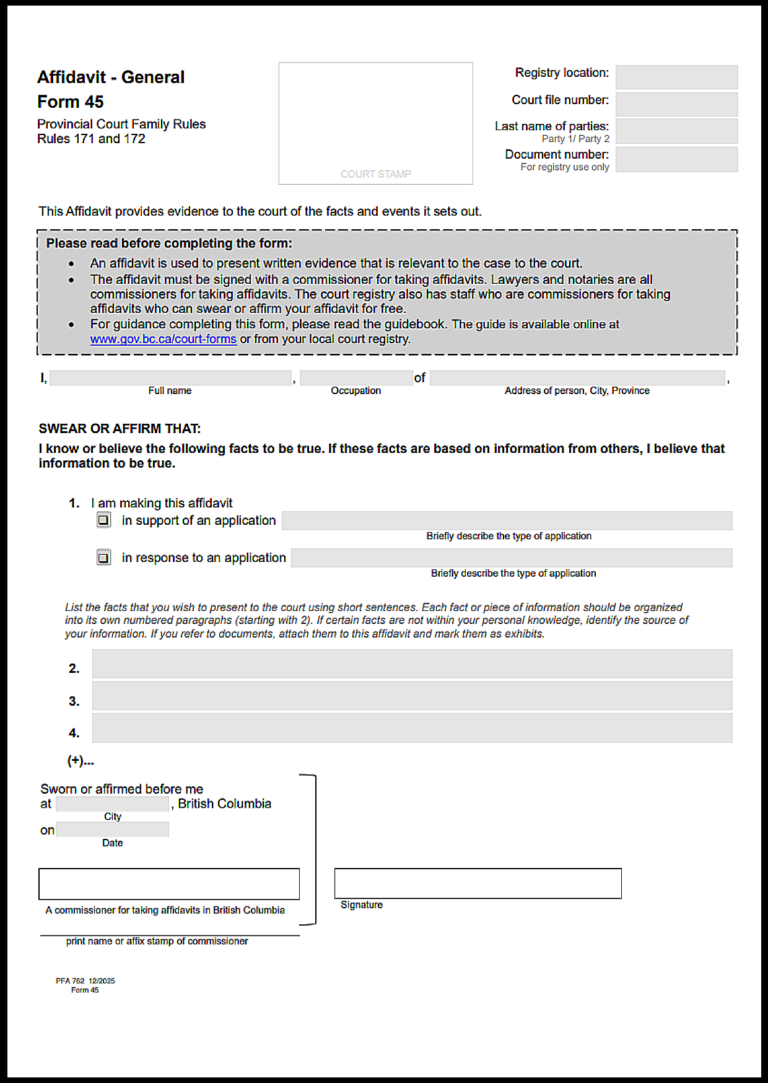
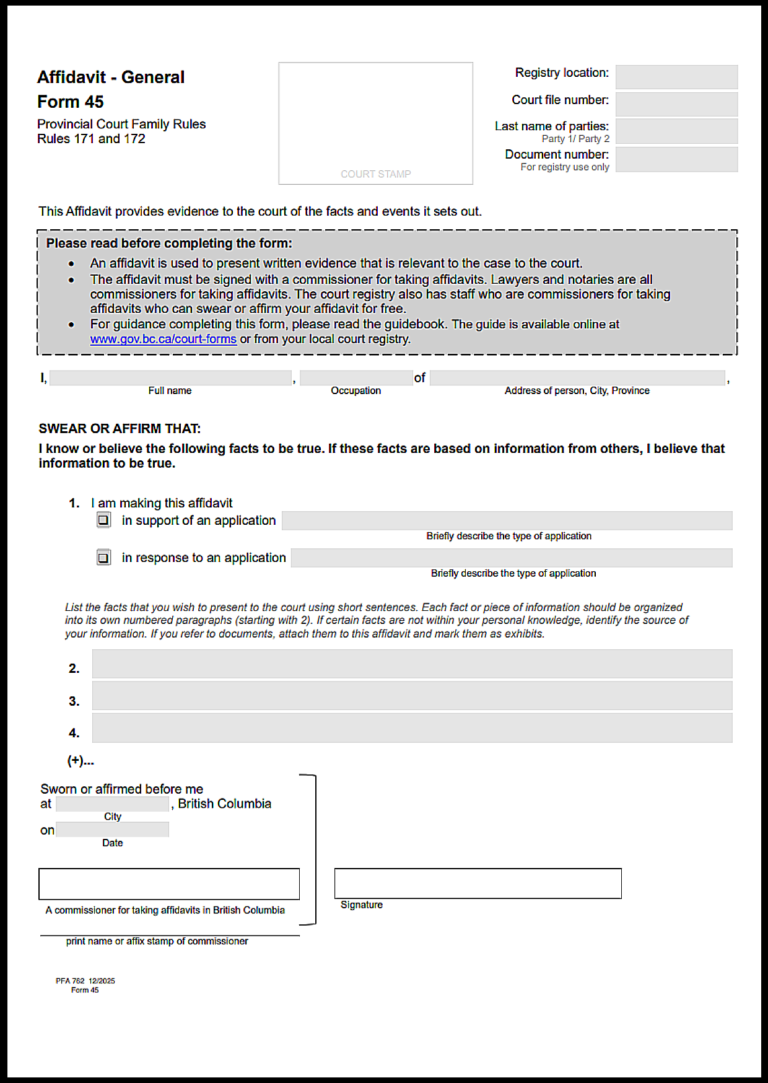
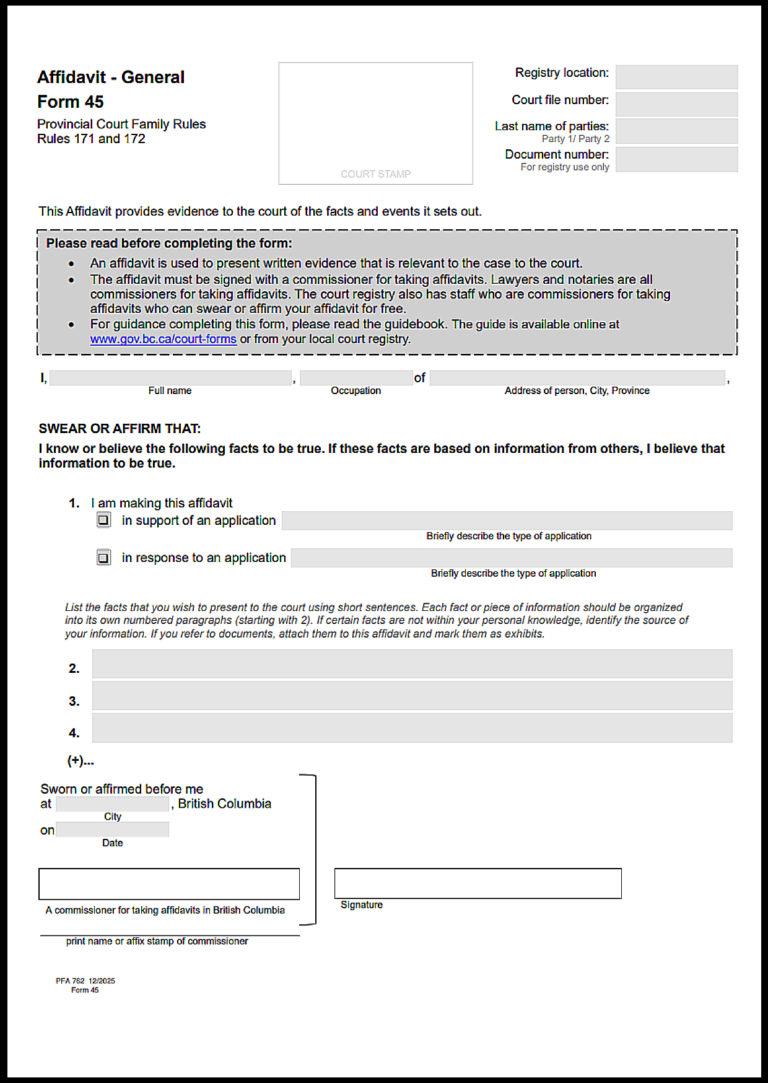
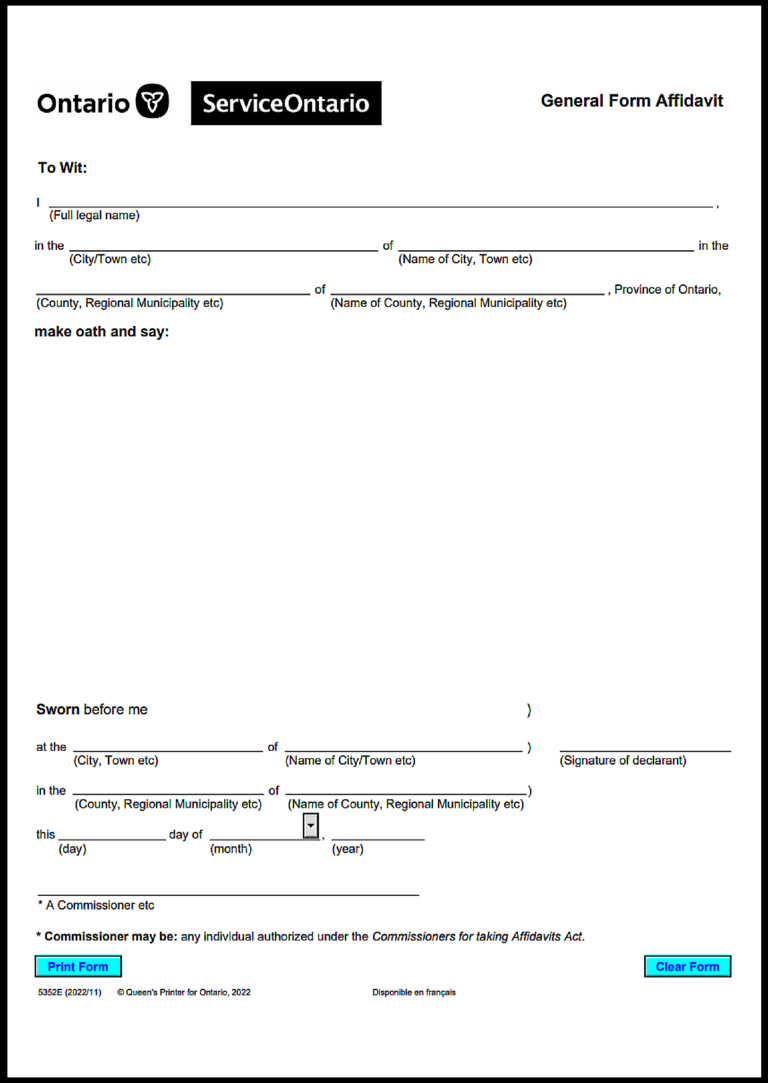
Statutory Declaration Ontario Template
When Do You Actually Need a Statutory Declaration in Ontario?
Most people don’t search for a statutory declaration until someone specifically asks them to provide one. Unlike contracts or agreements, this document is used to confirm facts that cannot easily be proven through another official record. It gives the receiving organization a formal written statement that carries the same legal effect as if it had been made under oath.
In Ontario, statutory declarations are frequently requested for government applications, legal name changes, vehicle ownership matters, insurance claims, pension applications, lost identification documents, and real estate transactions. A property owner might need to explain missing historical information during a title correction, while a buyer may be asked to confirm circumstances surrounding a vehicle transfer when supporting paperwork is unavailable.
I’ve also seen declarations requested by employers, educational institutions, and financial organizations when an applicant must verify information that cannot be supported by another document. In those situations, the declaration becomes evidence of facts that are personally known by the declarant.
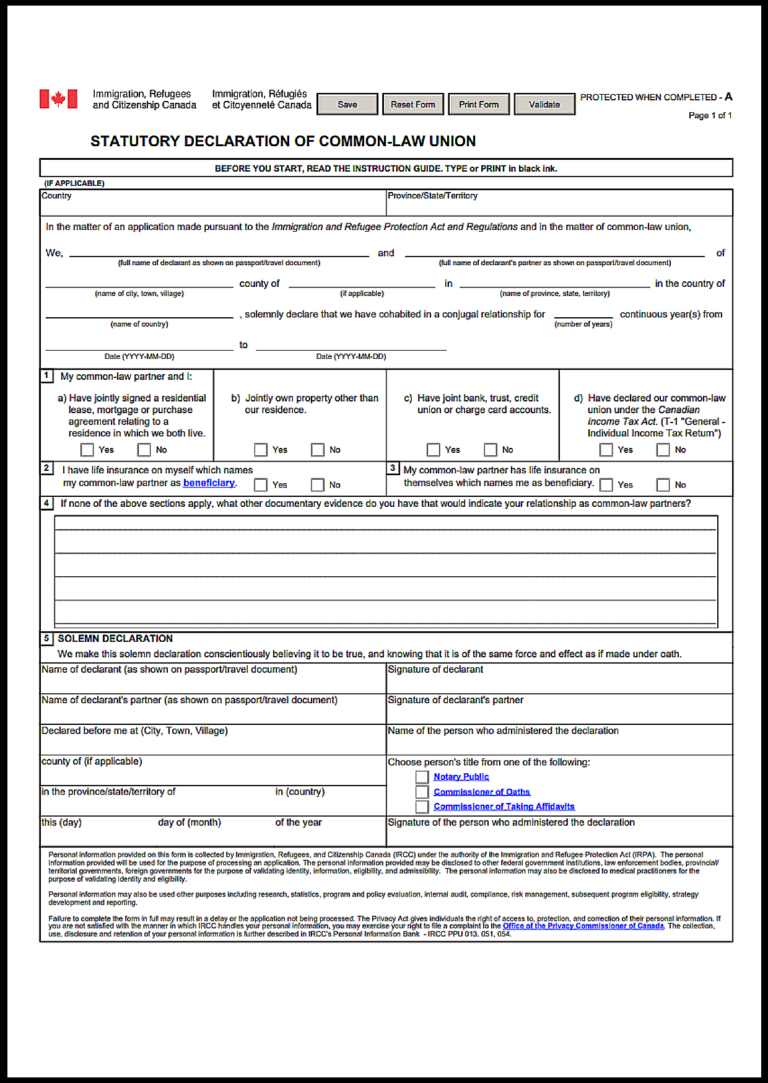
A statutory declaration isn’t appropriate for every purpose. Some Ontario ministries publish their own prescribed declaration forms that must be used instead of a general template. Likewise, court proceedings often require an affidavit prepared under the applicable court rules rather than a statutory declaration. Before completing any declaration, check whether the organization requesting it has supplied its own mandatory form. You can verify whether an official Ontario form is required by visiting the Government of Ontario.
Who Can Commission a Statutory Declaration in Ontario?
Completing the declaration is only the first step. For the document to have legal effect, it must be declared before someone who is authorized under Ontario law to administer statutory declarations.
The following individuals are authorized under Ontario law to commission a statutory declaration:
-
Commissioners for Taking Affidavits
-
Notaries Public (under the Notaries Act)
-
Ontario lawyers and licensed paralegals in good standing (by virtue of office under O. Reg. 386/12)
-
Articling students and Law Practice Program (LPP) candidates (by virtue of office under O. Reg. 21/26)
Many people mistakenly believe they only need two witnesses. That’s incorrect. A statutory declaration requires an authorized commissioner who confirms the declarant’s identity, ensures the declaration is made voluntarily, and administers the declaration according to Ontario law.
Ontario also permits remote commissioning. Since O. Reg. 431/20 permanently authorized virtual commissioning using live two-way audio-visual technology, many declarations can now be completed without attending an office in person. However, the remote process has its own requirements, including recording the physical locations of both the declarant and the commissioner within the execution block.
In practice, I’ve seen people email a signed declaration to a lawyer expecting them to simply add a signature or stamp. Unfortunately, commissioning doesn’t work that way. The commissioner must actually witness the declaration being made, either face to face or during a compliant live video appointment. If the declaration has already been signed, it will usually need to be executed again.
It’s also worth remembering that commissioning and notarization are not identical services. Although many notaries can commission statutory declarations, the authority exercised by Commissioners for Taking Affidavits and Notaries Public comes from different legislation. If the organization requesting the declaration specifically asks for notarization, confirm those requirements before arranging your appointment.
What Happens If You Swear a False Statutary Declaration?
A statutory declaration is far more than an administrative form. By signing it before an authorized commissioner, you’re formally confirming that every material statement is true to the best of your knowledge. The declaration carries the same legal effect as if it had been made under oath, which is why accuracy is so important.
Knowingly making a false statutory declaration may amount to a criminal offence under the Criminal Code of Canada. The consequences extend well beyond having an application rejected. False declarations can affect court proceedings, government programs, property transactions, insurance claims, power of attorney matters, and other legal matters where truthful evidence is required.
Most problems, however, arise from carelessness rather than dishonesty. Someone may rely on memory instead of checking official records, overlook an important fact, or misunderstand what the requesting organization is asking them to confirm. Before attending your commissioning appointment, read the declaration carefully and verify every statement. If something is uncertain, revise the wording instead of making assumptions.
It’s equally important to understand the limits of a statutory declaration. It confirms only the facts that you personally declare to be true. If the receiving organization also requires supporting documents, identity records, or additional evidence, those materials must still be provided. A statutory declaration is an important evidentiary document, but it doesn’t replace every other legal requirement.
Statutory Declaration vs. a Regular Affidavit — What’s the Real Difference?
Although people often use the terms interchangeably, a statutory declaration and an affidavit are not the same document. Both are made before a Commissioner for Taking Affidavits or another authorized official, but they serve different purposes and follow different wording.
A statutory declaration is generally used outside court proceedings to confirm facts for government agencies, employers, insurers, financial institutions, or other organizations. Instead of taking an oath, the declarant makes a solemn declaration using the wording prescribed under section 41 of the Canada Evidence Act.
An affidavit, on the other hand, is commonly required in court proceedings where evidence must be sworn or affirmed under the applicable court rules. If a court specifically requests an affidavit, submitting a statutory declaration instead may not satisfy the filing requirements.
For example, someone applying for a government benefit may be asked to provide a statutory declaration confirming residency, while a party involved in civil litigation would usually file an affidavit as evidence before the court. Understanding which document is required can prevent delays and unnecessary paperwork.
Where Does an Ontario Statutory Declaration Get Submitted?
Unlike documents that must be registered with a government office before becoming effective, a statutory declaration generally has no central filing or registration process in Ontario. Once it has been properly commissioned, it is submitted directly to the organization requesting it.
Common recipients include:
- ServiceOntario
- Ontario courts
- Financial institutions
- Insurance companies
- Employers
- Land Registry Office (Teraview)
- Federal government departments
- Provincial ministries
For example, if ServiceOntario requests a statutory declaration as part of a name change application, the declaration accompanies the application package. If the declaration supports a real estate matter, it is normally provided with the relevant land registration documents rather than filed independently.
Always confirm whether the receiving organization has published its own prescribed declaration form. Many government programs require their own official forms instead of a general statutory declaration template.
Summary of Applicable Laws
| Topic | Ontario Rule | Governing Law |
|---|---|---|
| Statutory wording | Must contain the prescribed solemn declaration wording | Canada Evidence Act |
| Commissioning | Must be declared before a Commissioner for Taking Affidavits or Notary Public | Commissioners for Taking Affidavits Act, R.S.O. 1990, c. C.17 |
| Remote commissioning | Permitted using live two-way audio-visual technology | O. Reg. 431/20 |
| False declarations | Knowingly making a false declaration may constitute a criminal offence | Criminal Code, R.S.C. 1985, c. C-46, ss. 131 & 134 |
| Capacity | Declarant must understand the legal nature of the declaration | Substitute Decisions Act, 1992 and Evidence Act |
Provincial vs. Federal — Why This Document Answers to Both
One feature that makes Ontario statutory declarations unique is that both federal and provincial law apply.
The Canada Evidence Act provides the statutory declaration wording that gives the document its legal force throughout Canada. Ontario legislation, however, governs who may commission the declaration and how the commissioning process must occur within the province.
For Ontario residents, this means the declaration must satisfy both legal frameworks. Using the proper declaration wording alone isn’t enough if the document wasn’t commissioned by an authorized individual or if Ontario’s remote commissioning requirements weren’t followed.
Common Mistakes That Invalidate an Ontario Statutary Declaration
Most rejected statutory declarations involve simple procedural errors rather than complicated legal issues.
Common mistakes include:
- Signing the declaration before appearing before the commissioner.
- Leaving out the prescribed statutory declaration wording.
- Forgetting to include remote commissioning details where the declaration was signed virtually.
- Including statements that cannot be personally verified.
- Using a generic Canadian template when an organization requires its own prescribed form.
- Altering the declaration after it has been commissioned.
- Assuming ordinary witnesses can replace a Commissioner for Taking Affidavits.
One situation I frequently encounter involves someone downloading a generic declaration from another province. Although the document may look similar, it often omits Ontario-specific commissioning requirements or uses wording that doesn’t reflect the applicable legislation. Correcting those issues usually requires preparing and commissioning a new declaration.
Myth-Busting: Is a Virtually Signed Statutory Declaration Actually Legal in Ontario?
Yes. Ontario permanently permits remote commissioning through live two-way audio-visual technology.
Many people still believe virtual commissioning was only a temporary pandemic measure. That isn’t correct. Ontario made remote commissioning a permanent option through O. Reg. 431/20, provided the statutory requirements are followed.
Remote commissioning doesn’t simply mean emailing a signed document to a commissioner. The commissioner must observe the declaration being made through a live audio-visual meeting, confirm the declarant’s identity, and ensure the execution block records that the declaration was commissioned remotely together with the physical locations of both participants.
If those requirements aren’t satisfied, the declaration may need to be commissioned again before the receiving organization accepts it.
Frequently Asked Questions
Is a statutory declaration the same as an affidavit?
No. Although both are made before an authorized official, a statutory declaration is generally used outside court proceedings, while affidavits are commonly used as court evidence.
Can I commission my own statutory declaration?
No. The declaration must be made before an authorized Commissioner for Taking Affidavits or Notary Public.
Does a statutory declaration expire?
Ontario law doesn’t establish a general expiry date. However, the organization requesting the declaration may require a recently executed document.
Can an Ontario paralegal commission a statutory declaration?
Yes. Licensed Ontario paralegals are Commissioners for Taking Affidavits by virtue of office.
Do I need a lawyer to prepare a statutory declaration?
No. Many people prepare their own declarations using an appropriate template before arranging a commissioning appointment.
Will ServiceOntario accept a remotely commissioned statutory declaration?
Generally, Ontario law permits remote commissioning. However, you should always confirm the receiving organization’s document requirements before submitting your declaration.