British Columbia Affidavit of Identity [Free PDF Template]
British Columbia Affidavit of Identity is a legal document used to confirm who you are through a sworn statement. It is commonly used when your regular ID is missing, unclear, or not accepted.
In British Columbia, this document matters because many institutions—like banks, courts, and immigration offices—require verified identity. When your documents are lost or there is a mismatch, an affidavit can help support your identity legally.
People who usually need it include students, immigrants, individuals in legal cases, or anyone dealing with lost ID situations.
An affidavit of identity is a written statement where you confirm your identity under oath. This means you are legally declaring that the information you provide is true.
Under British Columbia law, affidavits are serious legal documents. If you give false information, you can face penalties. This is why the affidavit must be signed in front of an authorized official.
In most affidavit situations, this document acts as supporting proof—not a full replacement for official ID but a strong legal statement.
Last Updated: September 2026
Free British Columbia Affidavit of Identity Template
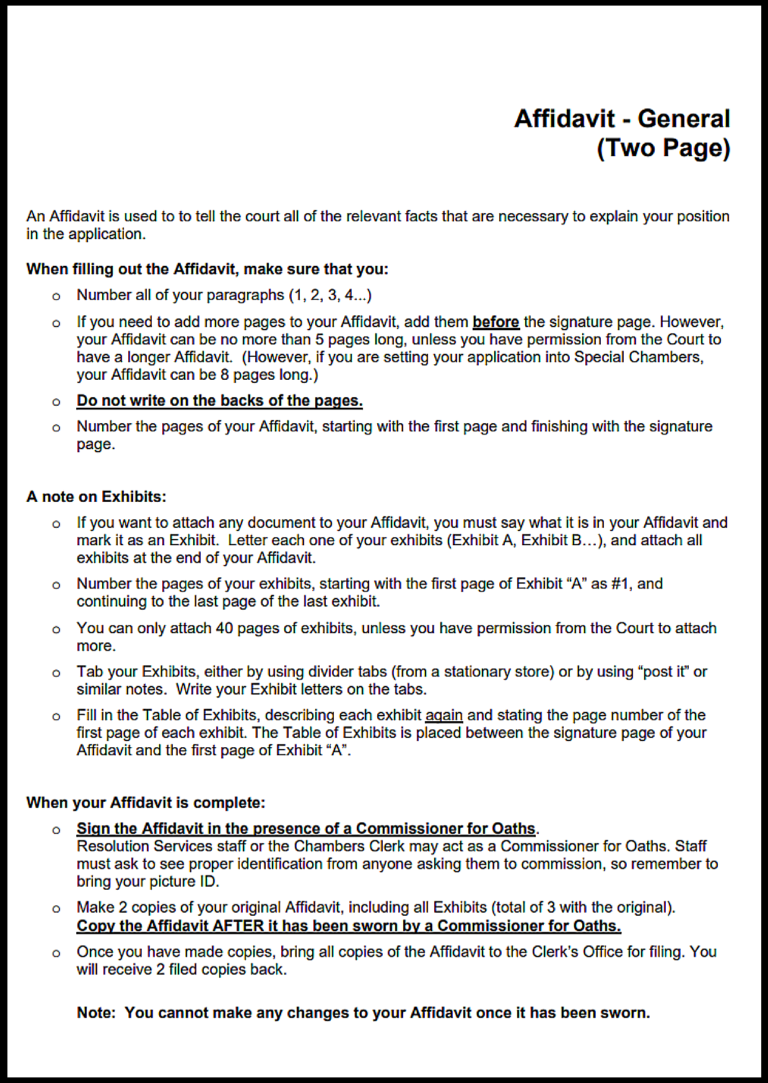
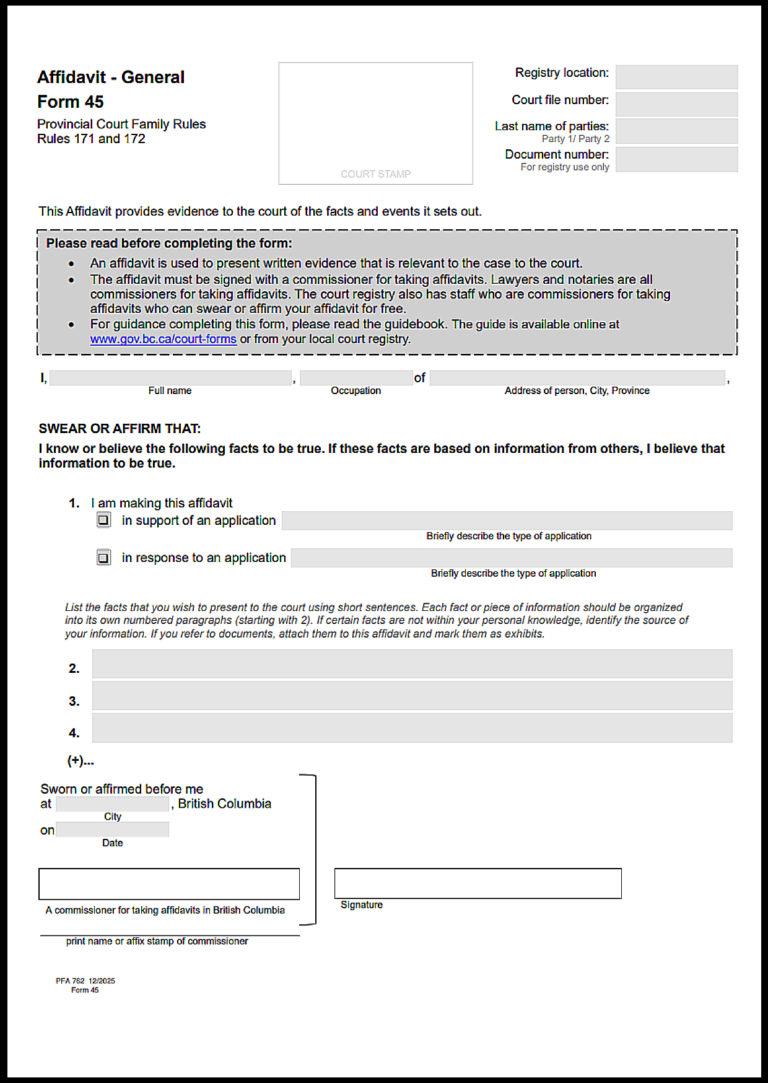
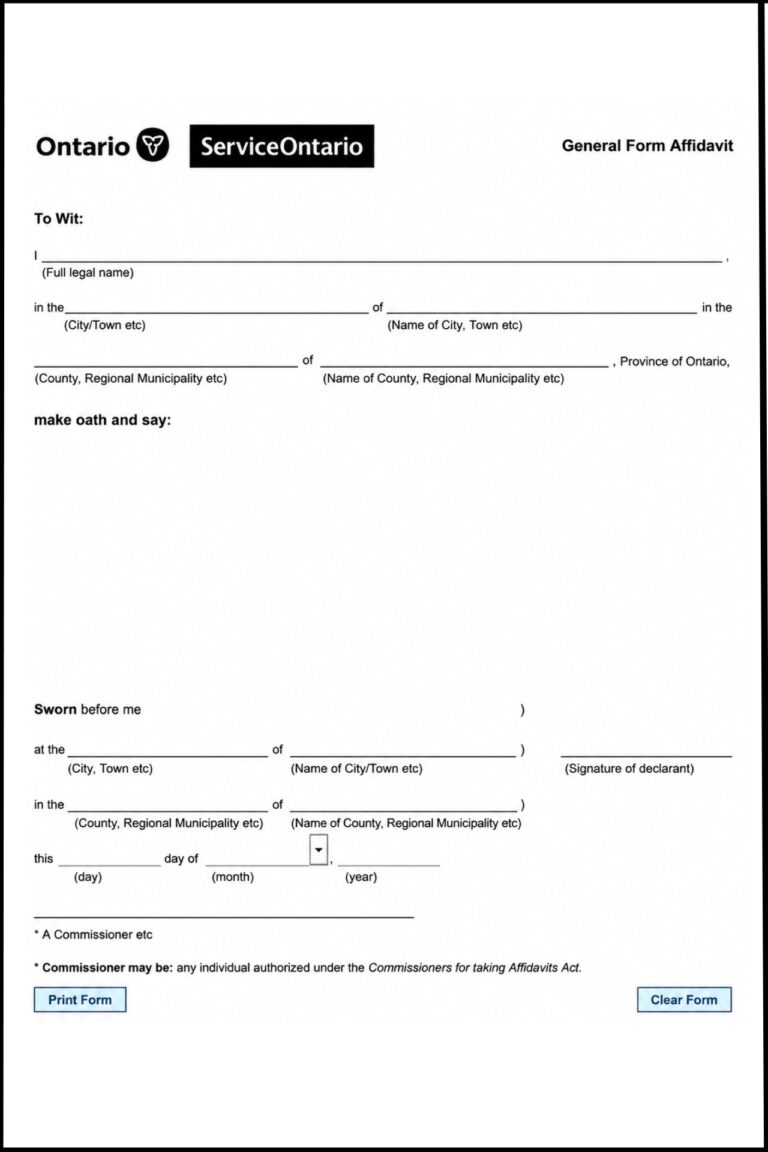
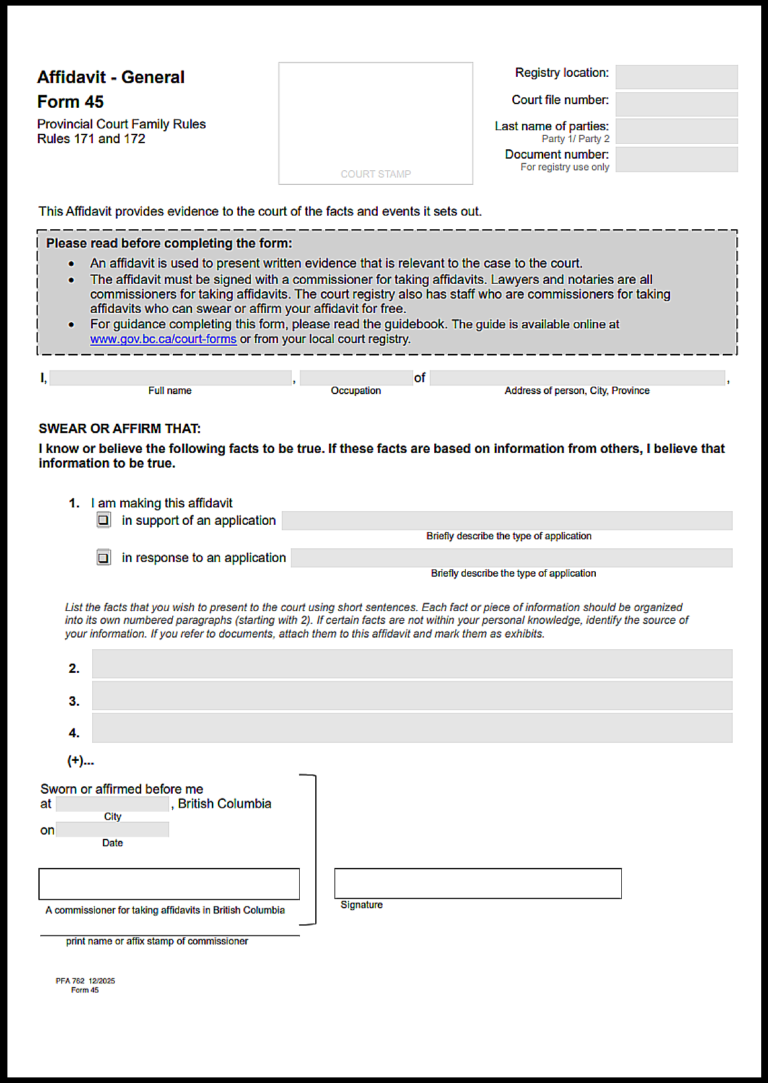
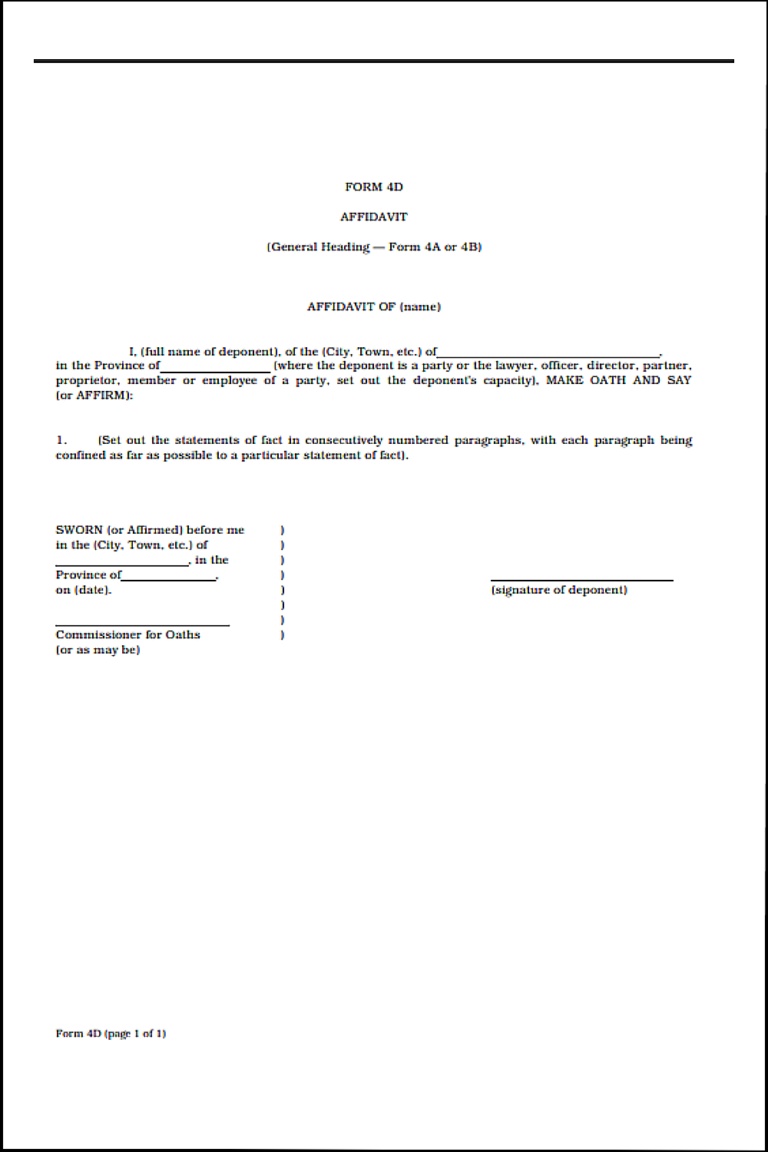
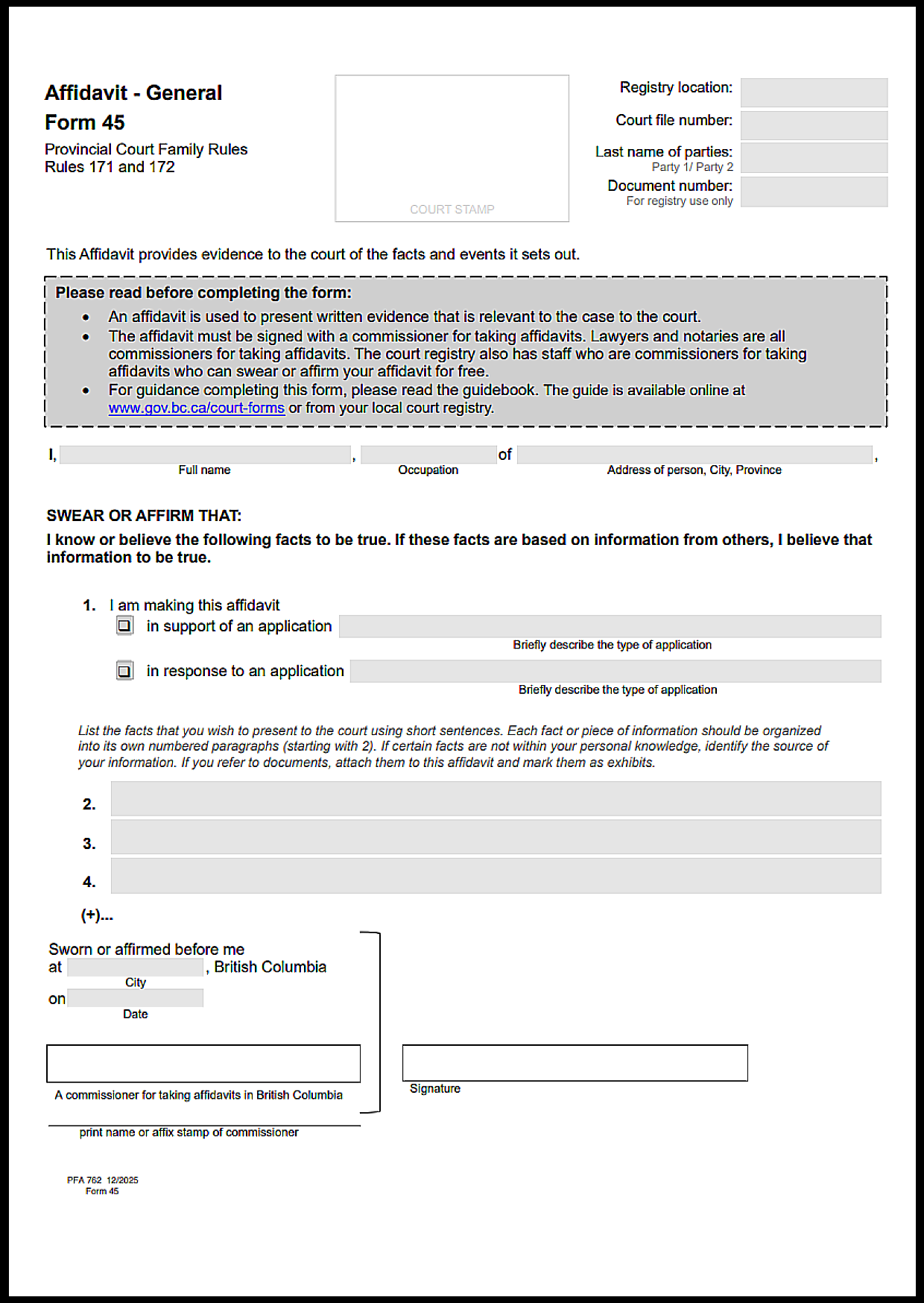
Below is a simple, copy-paste ready template you can use. Make sure to fill it carefully and sign it in front of a commissioner or notary.
British Columbia Affidavit of Identity Legal Requirements & Statutory Rules
| Topic / Issue | British Columbia Legal Rule | Governing Statute |
|---|---|---|
| Governing legislation | Affidavits of identity in British Columbia are governed by the Evidence Act and, when used in a proceeding, the applicable court or tribunal rules. Federal legislation and rules may also apply where the affidavit is being used in a federal matter. | Evidence Act, RSBC 1996, c. 124; Canada Evidence Act, R.S.C. 1985, c. C-5 |
| Remote online commissioning | British Columbia’s court rules permit affidavits to be sworn or affirmed by video conference in specified circumstances, with prescribed wording confirming the video-conference process. | Supreme Court Civil Rules, Rule 22-2(6.1); applicable court rules |
| Who can sign (Deponent) | The person making the affidavit must swear or affirm the contents and sign the affidavit in accordance with the applicable rules. | Supreme Court Civil Rules, Rule 22-2 |
| Witness requirements | An affidavit must be sworn or affirmed before a person authorized to take affidavits, such as an authorized commissioner, practising lawyer, or notary public. | Evidence Act; applicable court rules |
| Disqualified witnesses | The person taking the affidavit must be legally authorized to do so and must comply with the applicable professional and procedural requirements. | Evidence Act; applicable professional and court rules |
| Authorized officials | Practising lawyers, notaries public, and other persons authorized under the Evidence Act may take affidavits in British Columbia. | Evidence Act, including s. 60 |
| Age requirement | The Evidence Act does not establish the article’s former general minimum-age rule for affidavit deponents. The person making the affidavit must be capable of making and understanding the sworn or affirmed statement. | Evidence Act; applicable court rules |
| Mental capacity | The person making the affidavit must understand the statement being made and the oath or solemn affirmation being administered. | Evidence Act and applicable court rules |
| Time limits | Some organizations may require a recent affidavit, but any recency requirement depends on the particular agency, court, or institution requesting it. | Organization- or process-specific |
| Solemn declaration wording | An affidavit must contain the form of oath or affirmation and the jurat or statement required by the applicable process. Statutory declarations are governed separately. | Evidence Act; applicable court rules |
| Jurat requirements | A court affidavit must contain the jurat or statement required by the applicable court rules, including the required date and location details. | Supreme Court Civil Rules, Rule 22-2 |
| Land Title filing use | Some land-title transactions may require affidavits or other evidence to address identity or execution issues. The exact requirement depends on the particular Land Title Act process and LTSA requirements. | Land Title Act, including s. 42 |
| Private use | Some affidavits are prepared for private or administrative purposes and are not filed with a government office unless the applicable process requires filing. | Process-specific |
| Absentee signing | The affidavit must be properly sworn or affirmed before an authorized person. Where video-conference commissioning is permitted, the applicable court rules must be followed. | Supreme Court Civil Rules, Rule 22-2 |
| Commissioner information requirements | The commissioner must complete the jurat or statement and provide the identification required by the applicable court form or rule. | Applicable court rules and forms |
| Uncorrected alterations | The person before whom the affidavit is sworn or affirmed must initial alterations. If alterations are not initialled, the affidavit must not be used in a proceeding without leave of the court. | Supreme Court Civil Rules, Rule 22-2(11) |
| LTSA officer certification requirement | Certain land-title instruments must be witnessed or otherwise certified in accordance with the Land Title Act and applicable LTSA requirements. | Land Title Act, ss. 41–43 |
| Remote commissioning technical standards | BC court rules contain specific requirements for affidavits sworn or affirmed by video conference, including prescribed wording. | Supreme Court Civil Rules, Rule 22-2(6.1) |
Execution requirements depend on where the affidavit will be used. For BC Supreme Court affidavits, Rule 22-2 sets out the signing and commissioning process and permits video-conference commissioning with prescribed wording. Land-title matters can have additional requirements under the Land Title Act.
Hearsay can matter when an affidavit is used in court. In Supreme Court civil proceedings, Rule 22-2 limits affidavit evidence and sets out when information-and-belief statements may be used. Procedural defects should also be addressed carefully rather than assumed to make the affidavit automatically invalid.
To avoid mistakes and create a properly formatted document, download the free British Columbia Affidavit of Identity template below.
An affidavit of identity is often used to confirm personal information during legal, financial, or administrative procedures. For a broader understanding of sworn legal statements, you can review the Canadian affidavit resource along with the guide explaining how to obtain an affidavit in British Columbia.
What Is an Affidavit of Identity in British Columbia?
An affidavit of identity is a sworn or affirmed statement setting out facts about a person’s identity. It may supplement ordinary identification where an organization or legal process calls for additional evidence.
The main difference between regular ID and an affidavit is:
- Regular ID: Government-issued proof like passport or driver’s licence
- Affidavit: A sworn or affirmed statement confirming facts about your identity
An affidavit is made when the person swears or affirms it, signs it, and the authorized person completes the required statement in accordance with the applicable rules.
Real-Life Example
Imagine you lost your passport and need to open a bank account. The bank may ask for an affidavit of identity along with other documents to confirm who you are.
Some verification situations may require additional supporting declarations depending on the purpose of the document. Address confirmation often involves an affidavit of residence template, while more formal declarations may rely on a sworn affidavit form.
When You May Need an Affidavit of Identity
You may need this affidavit in several situations:
- Lost or stolen ID documents
- Different names on documents, such as after marriage
- Immigration or visa applications
- Banking or financial verification
- Court or legal proceedings
An affidavit generally provides supporting evidence rather than replacing government-issued identification. The organization receiving it may still require additional documents.
Key Information Required in the Affidavit
To prepare an affidavit that meets the relevant requirements, include the information requested by the receiving organization or legal proceeding.
Personal Details of the Deponent
You should clearly provide:
- Full legal name
- Date of birth
- Residential address
The information should be accurate and consistent with any supporting documents you provide.
Identity Confirmation Statement
This is an important part of the affidavit. State clearly that:
- You are the person named in the affidavit
- Any alternate or former names, if applicable
Keep the statement factual and direct.
Purpose of the Affidavit
Explain why you are creating this affidavit.
Examples:
- To provide identity information for a bank verification
- To support an immigration application
- To address a name discrepancy
Oath or Affirmation Clause
This is where you make the required oath or solemn affirmation concerning the truth of your statement.
Under British Columbia law, a solemn affirmation may be used instead of an oath and has the same force and effect as an oath.
Commissioner / Notary Section
Your affidavit should include the execution details required by the applicable process, including:
- Signature of the person making the affidavit
- Signature and required identification of the authorized person taking the affidavit
The document must be properly completed before it is submitted for its intended purpose.
Before submitting identity-related documents, individuals may also need information about notarizing an affidavit to ensure the declaration is completed in accordance with the applicable requirements.
Oath vs Affirmation – What’s the Difference?
In British Columbia, a person may make an oath or a solemn affirmation where an oath is required.
| Feature | Oath | Affirmation |
| Form | Sworn oath |
Solemn affirmation
|
| Legal validity | Equal force and effect |
Equal force and effect
|
| Religious element | May reflect a person’s religious beliefs |
Does not require a religious oath
|
| Requirement | Made before an authorized person |
Made before an authorized person
|
Under the Evidence Act, a solemn affirmation has the same force and effect as an oath.
Choose the form that is appropriate for you and permitted by the applicable procedure.
How to Fill Out the Affidavit of Identity (Step-by-Step)
Before signing, check whether the organization or proceeding has prescribed a particular form or format.
Step 1: Enter your personal details exactly as required
Step 2: Write a clear identity statement
Step 3: Add the purpose of the affidavit
Step 4: Do NOT sign the document yet
Step 5: Visit a Commissioner for Oaths or Notary Public and complete the oath or affirmation in front of them
For an affidavit to be properly made, the person must swear or affirm it and sign it, while the authorized person completes the required statement.
Legal Rules in British Columbia You Must Follow
The requirements for a BC affidavit depend on the purpose and proceeding. Court affidavits, for example, are governed by the applicable court rules as well as the Evidence Act.
- Must be sworn or affirmed before an authorized person
- False statements made knowingly with intent to mislead can have serious legal consequences
- Must contain the oath or affirmation and other wording required by the applicable process
- Must be signed and completed in the manner required by the applicable rules
Commissioner vs Notary Public
| Role | Commissioner for Oaths | Notary Public |
| Can administer oaths | Yes, within the scope of their authority | Yes |
| Can notarize documents | Not generally acting as a notary unless separately authorized | Yes |
| Common use | Affidavits and other authorized services |
Notarial services and affidavits, depending on the matter
|
| Cost | Varies by provider or service |
Varies by provider or service
|
Both can be authorized to take affidavits, but the authority and service available should be confirmed for the particular document and purpose.
Common Mistakes That Make Affidavits Invalid
Common problems include:
- Signing before the affidavit is properly sworn or affirmed
- Incorrect or incomplete personal details
- Vague or unclear purpose
- Missing oath or affirmation wording required by the applicable process
- Inconsistent supporting documents
Some errors can cause an affidavit to be questioned, returned, or require correction, depending on how and where it is used. An irregularity does not automatically prevent an affidavit from being received in evidence.
Situations Where Your Affidavit May Be Rejected
Your affidavit may be questioned, returned, or not accepted for its intended purpose if:
- The recipient requires supporting identity documents and they are not provided
- Required signatures or commissioner details are missing
- The format does not meet the applicable requirements
- It is submitted to an authority that requires a different form or procedure
- The information is unclear or inconsistent with the supporting evidence
Where supporting documents are requested, the recipient may review them together with the affidavit to verify the information provided.
Affidavit of Identity vs Statutory Declaration
These two documents are often confused but are different.
- Affidavit = sworn or affirmed statement
- Statutory declaration = solemn declaration made before a person authorized by law to receive it
In British Columbia:
- Affidavits are commonly used in courts and other legal proceedings
- Statutory declarations are commonly used for administrative and legal purposes where legislation permits or requires them
Some authorities may prefer one over the other depending on the situation.
Practical Tips to Make Your Affidavit Strong
Before signing, check the receiving organization’s requirements. Use the required form if one is prescribed, state the facts clearly, and make sure your supporting documents are accurate and consistent. Then complete the oath or affirmation process with an authorized person.
Frequently Asked Questions
Is an affidavit of identity legally valid in BC?
A properly sworn or affirmed affidavit can be a valid sworn statement, but whether an affidavit of identity will be accepted depends on the requirements of the court, authority, or organization receiving it.
Can I write my own affidavit without a lawyer?
Yes. You can generally draft your own affidavit, provided it meets the requirements of the court, authority, or organization for which it is intended.
Who can notarize or witness my affidavit?
A person authorized to take affidavits in British Columbia, including a practising lawyer or notary public, can administer the oath or affirmation and complete the required affidavit statement.
Is an affidavit enough as ID proof?
Usually not. An affidavit generally provides supporting evidence rather than replacing government-issued identification, and the receiving organization may require additional documents.
Can I use this affidavit outside British Columbia?
It depends on the receiving authority and jurisdiction. Additional witnessing, notarization, authentication, or other verification may be required.
Legal Disclaimer: This article provides general legal information about affidavits of identity in British Columbia and is not legal advice. Requirements can differ depending on the court, government agency, financial institution, or other organization requesting the affidavit.