Notarizing Affidavit Ontario: A Complete Legal Guide
Notarizing Affidavit Ontario is the process of officially verifying your sworn statement so it can be accepted by courts, government offices, and legal authorities. In Ontario, an affidavit is not valid unless it is properly sworn or affirmed before an authorized person.
I’ve seen many Ontario affidavits rejected because people signed them before meeting with the notary or commissioner, not realizing the oath must be witnessed properly under Ontario law. When clients come to me stressed about court deadlines or immigration filings, it’s usually because no one explained that even a small notarization mistake can delay or weaken their case.
If you are filing documents for court, immigration, or property matters, notarization gives your affidavit legal weight and credibility.
Last Updated: September 2026
In this article, you’ll get:
- A free Ontario affidavit template (notarized version)
- A clear explanation of how notarization works
- A step-by-step process
- Common mistakes that can invalidate your affidavit
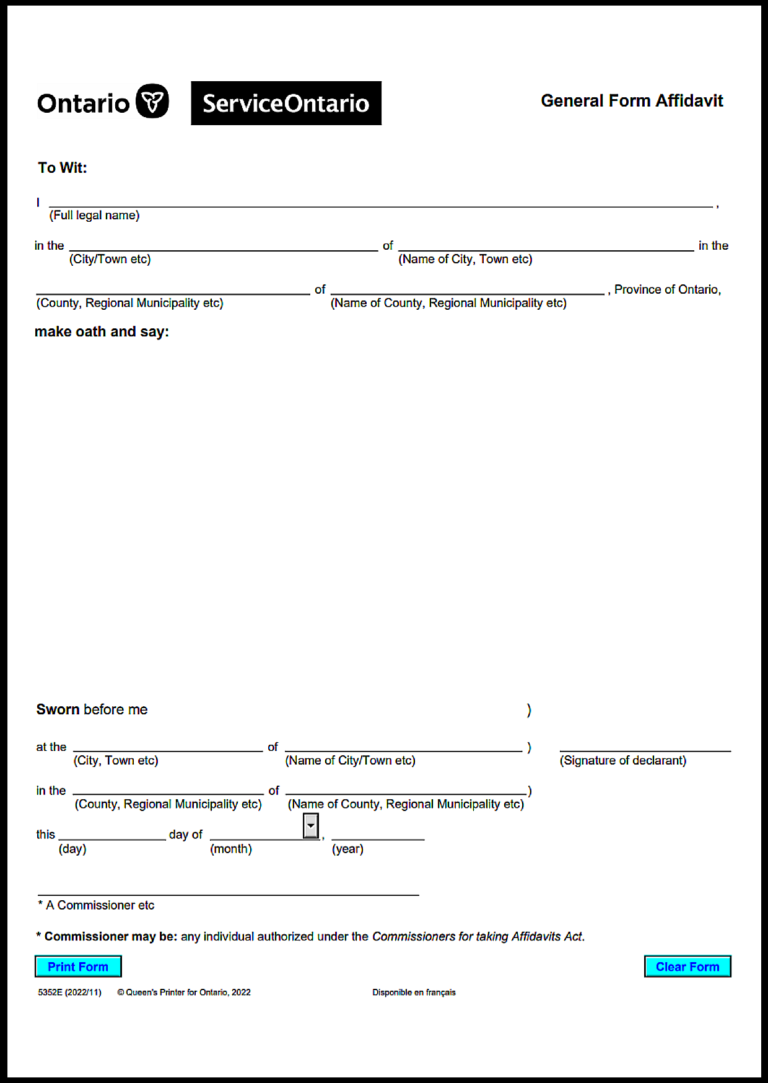
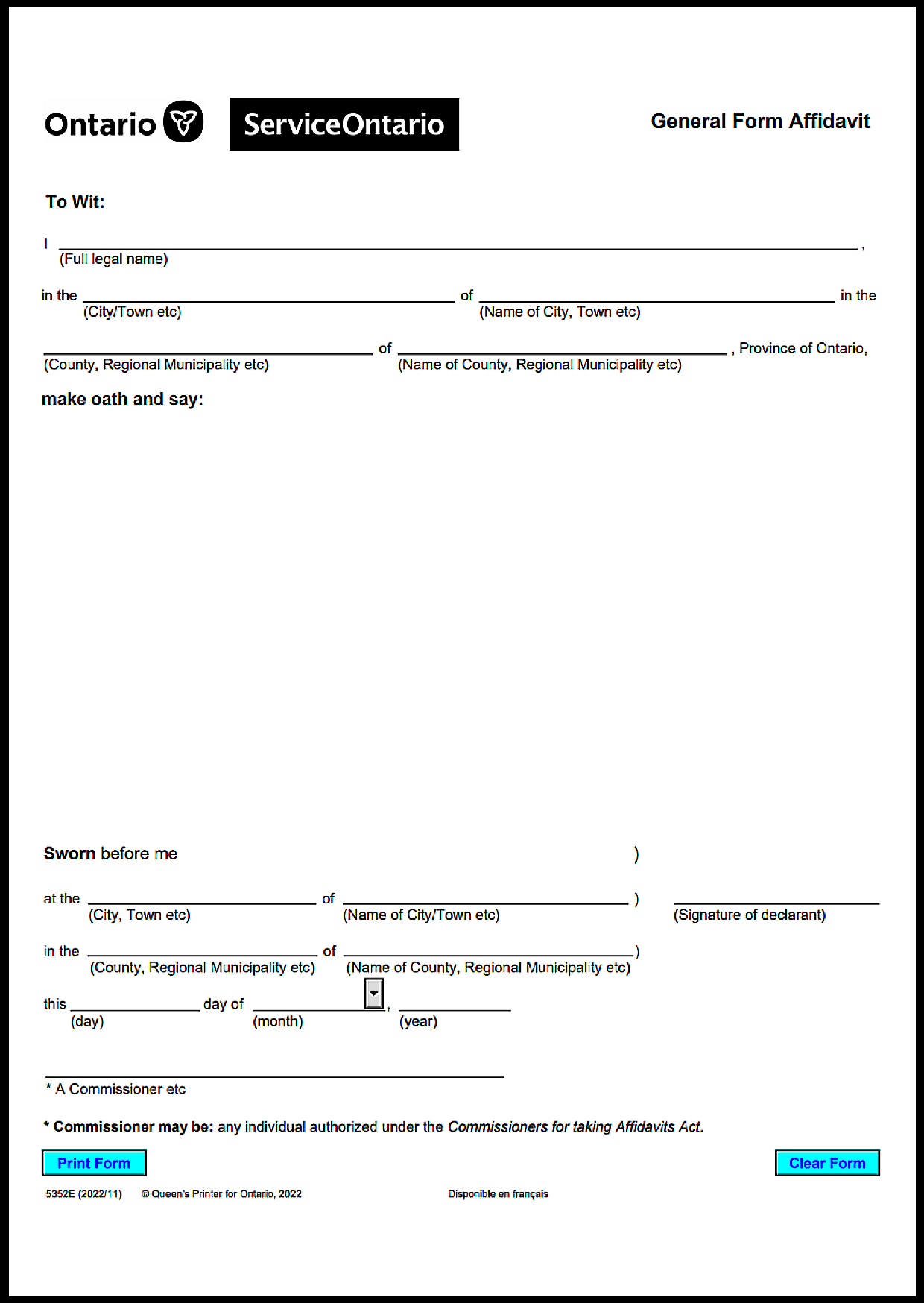
Free Notarizing Affidavit Template (Ontario)
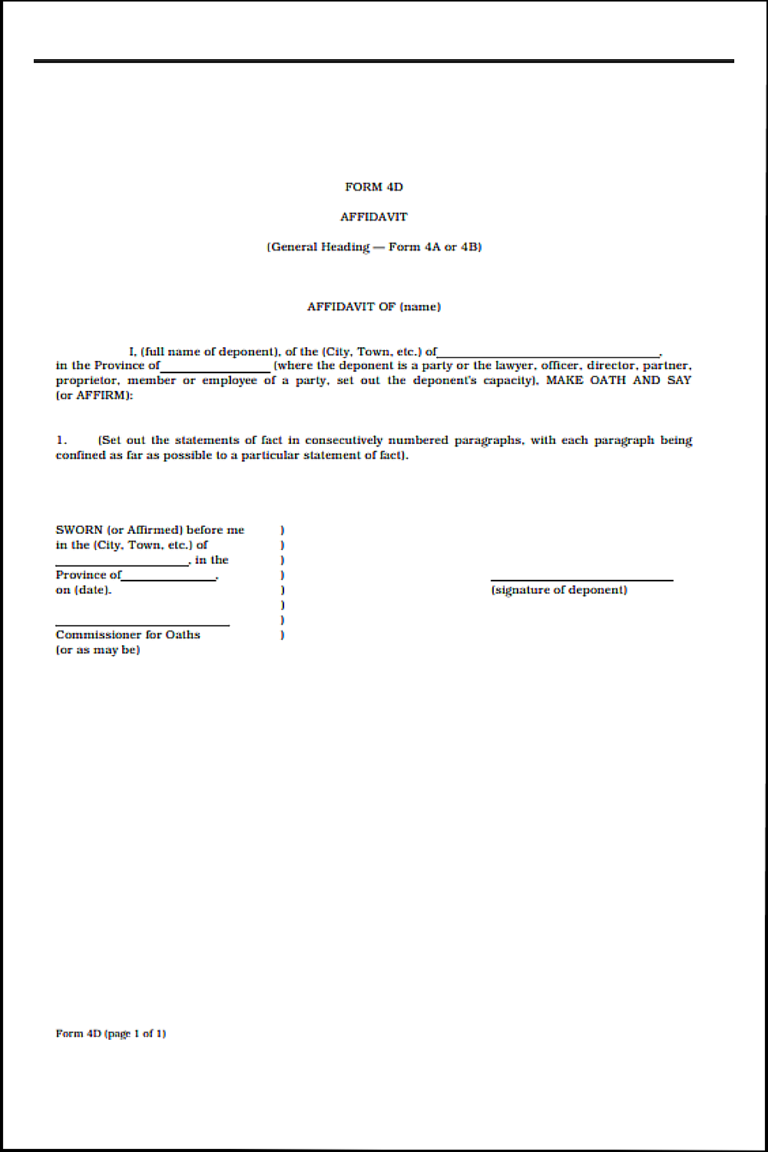
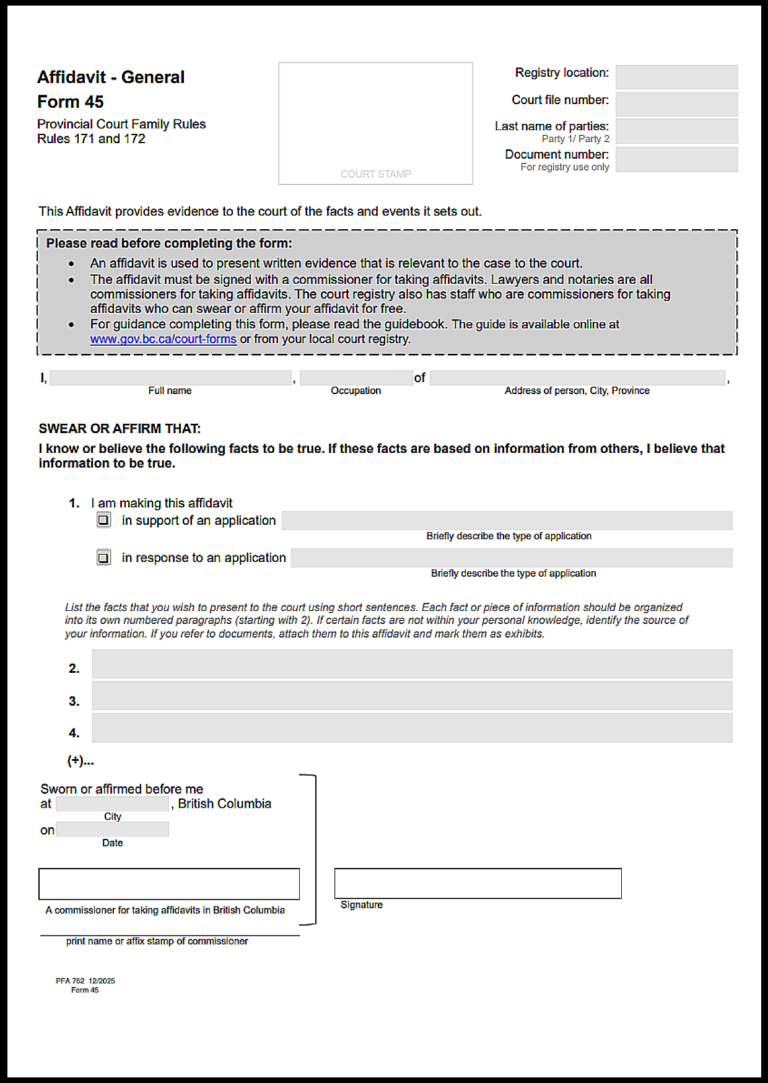
Below is a simple, legally accepted format you can use in most affidavit situations in Ontario.
Ontario Notarization Laws and Affidavit Validation Rules
| Topic / Issue | Ontario Legal Rule | Governing Statute |
|---|---|---|
| Primary Ontario affidavit laws | Affidavits and the administration of oaths in Ontario are governed by the applicable commissioning, evidence, court, and notarization rules. | Commissioners for Taking Affidavits Act, R.S.O. 1990, c. C.17; Notaries Act, R.S.O. 1990, c. N.6 |
| Federal interaction | Federal laws and the requirements of the receiving federal authority may apply to documents used for federal purposes, including some immigration matters. | Canada Evidence Act, R.S.C. 1985, c. C-5 and applicable federal requirements |
| Remote commissioning | Ontario permits an oath or declaration to be administered remotely when the conditions in O. Reg. 431/20 are satisfied. The current regulation has applied in its amended form since March 1, 2026. | O. Reg. 431/20 under the Commissioners for Taking Affidavits Act |
| Who can act as official | Persons authorized by the Commissioners for Taking Affidavits Act and its regulations may administer affidavits. This includes lawyers and certain other prescribed persons. | Commissioners for Taking Affidavits Act; O. Reg. 386/12 |
| Witness requirements | The oath or affirmation must be administered by an authorized person. In an in-person process, the deponent must be physically present; remote administration is permitted only when the regulation’s conditions are met. | Commissioners for Taking Affidavits Act, s. 9; O. Reg. 431/20 |
| Official qualifications | Ontario law specifies who is a commissioner by virtue of office and also permits appointments by the Attorney General. | Commissioners for Taking Affidavits Act, ss. 1 and 4; O. Reg. 386/12 |
| Age requirement | The applicable rules require the person administering the oath to ensure the deponent understands what is being signed. Specific age and capacity issues can depend on the circumstances and applicable law. | O. Reg. 431/20; applicable law |
| Mental capacity requirement | For remote commissioning, the person administering the oath must take reasonable precautions to ensure the deponent understands what is being signed. | O. Reg. 431/20 |
| Expiry and deadlines | An affidavit does not have one universal expiry period. The court, tribunal, government office, or other receiving authority may require a recently sworn affidavit. | Applicable procedural rules and receiving authority |
| Jurat requirement | An affidavit normally includes a jurat or other appropriate sworn/affirmed execution section showing that the oath or affirmation was administered. | Applicable Ontario affidavit and court rules |
| Oath or affirmation wording | The deponent must swear or affirm the truth of the affidavit in accordance with the applicable procedure. | Commissioners for Taking Affidavits Act and applicable procedural law |
| Remote commissioning wording | A remotely administered oath or declaration requires a modified jurat or declaration stating that the process complied with O. Reg. 431/20 and identifying the locations of the person administering the oath and the deponent or declarant. | O. Reg. 431/20, as amended by O. Reg. 21/26 |
| Private affidavits | An affidavit does not generally require separate government registration simply because it is sworn or affirmed. Filing requirements depend on the purpose of the affidavit. | Applicable Ontario law and procedure |
| Court affidavit filing | Affidavits used in court proceedings must comply with the procedural rules and filing requirements of the applicable court or proceeding. | Rules of Civil Procedure, R.R.O. 1990, Reg. 194, and applicable court rules |
| Property affidavit registration | Land and electronic real-estate documents can have additional execution and registration requirements. The requirements depend on the particular land transaction and registration system. | Land Registration Reform Act; Land Titles Act; applicable land-registration procedures |
| Absentee signing prohibition | A deponent must not simply sign an affidavit without the required administration of the oath or affirmation. Remote signing is permitted only when the statutory and regulatory conditions are met. | Commissioners for Taking Affidavits Act, s. 9; O. Reg. 431/20 |
| Identification verification | The person administering the oath must satisfy themselves of the genuineness of the deponent’s signature. For remote commissioning, the regulation specifically requires identity confirmation. | Commissioners for Taking Affidavits Act, s. 9; O. Reg. 431/20 |
| Hearsay and opinion restrictions | Court affidavits must comply with the applicable evidentiary and procedural rules. For example, Rules 39.01(4) and (5) address information-and-belief statements and hearsay in certain motions and applications. | Rules of Civil Procedure, R.R.O. 1990, Reg. 194 |
| Ontario paralegal authority | Licensed lawyers are commissioners by virtue of office under Ontario’s regulations. Other persons may have commissioner authority only where the legislation or regulations provide it. Notarial authority is separate from commissioner authority. | Commissioners for Taking Affidavits Act; O. Reg. 386/12; Notaries Act |
| Permanent virtual notarization framework | Ontario permits remote administration of oaths and declarations under O. Reg. 431/20, subject to its conditions. The regulation was amended effective March 1, 2026. | O. Reg. 431/20; O. Reg. 21/26 |
One of the most important Ontario rules is that the oath or affirmation must be properly administered before the official signs the jurat. For an in-person appointment, the deponent must be physically present. Ontario also permits remote administration when the conditions in O. Reg. 431/20 are met.
Another Ontario-specific rule involves remote commissioning. Since March 1, 2026, the amended regulation requires real-time electronic communication, identity confirmation, a modified jurat or declaration identifying compliance with the regulation and the locations of the participants, along with other required safeguards.
These rules matter because affidavits are used in court proceedings, immigration matters, property transactions, and many other legal settings. The affidavit also has to comply with the requirements of the authority receiving it. A properly commissioned affidavit can help avoid problems caused by an incomplete execution process.
What Does “Notarizing an Affidavit” Mean in Ontario?
Notarizing an affidavit is commonly used to describe having an affidavit sworn or affirmed before an authorized official. Strictly speaking, a commissioner for taking affidavits and a notary public have different legal roles and powers.
When you swear or affirm an affidavit, the authorized official administers the oath or affirmation and completes the required execution section. The official must also satisfy themselves of the genuineness of the signature before signing the jurat or declaration.
There are two common types of officials involved:
- A Notary Public, who has notarial powers under Ontario law
- A Commissioner of Oaths, properly referred to as a Commissioner for Taking Affidavits, who is authorized to administer affidavits within the scope of their authority
Both may be authorized to administer an affidavit, but their legal authority is not identical.
Another important part is the oath or affirmation. An oath and an affirmation provide alternative ways of making the required solemn declaration. The appropriate procedure should be followed by the person administering the affidavit.
Who Can Notarize an Affidavit in Ontario?
Under Ontario law, an affidavit must be administered by a person who is authorized to do so.
Ontario’s regulations identify various people who are commissioners by virtue of their office. These include lawyers licensed under the Law Society Act, judges, and other prescribed persons. Ontario also permits appointments of commissioners under the Commissioners for Taking Affidavits Act.
You can usually find authorized officials at:
- Law offices
- Government service centres
- Legal clinics
- Other offices that provide commissioning or notarization services
Online commissioning may also be available where the person and document qualify for Ontario’s remote process.
A commissioner may be sufficient when the receiving authority only requires an affidavit to be sworn or affirmed in Ontario. If a document will be used outside Ontario, the receiving authority may have additional requirements, and a notary may be specifically requested.
When Do You Need to Notarize an Affidavit?
The precise requirement depends on the purpose of the affidavit and the authority receiving it.
For example, if an affidavit is being used as evidence in a court proceeding, it generally needs to be properly sworn or affirmed in accordance with the applicable court rules and law. The fact that a document is called an affidavit does not by itself determine whether notarization by a notary public is required.
You may encounter affidavit requirements in matters such as family law proceedings, immigration applications, property matters, or financial declarations.
In short, check the instructions of the court, government department, tribunal, or other organization that will receive the affidavit. That authority may specify whether it requires a commissioner, notary, particular form, or additional certification.
Step-by-Step Process to Notarize an Affidavit in Ontario
The process is straightforward, but the oath or affirmation must be administered correctly.
Step 1 – Prepare Your Affidavit
Start by writing your affidavit using the format required for your particular matter. Keep the statements clear and factual, and organize them into numbered paragraphs where appropriate.
Step 2 – Bring Valid Identification
Bring identification requested by the commissioner or notary. For remote commissioning, Ontario’s regulation specifically requires the person administering the oath to confirm the deponent’s identity.
Step 3 – Do NOT Sign Before Meeting the Notary
Do not simply sign the affidavit in advance and hand it to the commissioner. The oath or affirmation must be administered in accordance with Ontario law before the official signs the jurat. For remote commissioning, the parties must follow the specific regulatory process instead of treating it as an ordinary pre-signed document.
Step 4 – Take the Oath or Affirmation
The official will administer the oath or affirmation and confirm the required details. You should understand what you are signing before making the sworn or affirmed statement.
Step 5 – Notary Signs and Stamps
Finally, the authorized official completes and signs the jurat or other required execution section. A seal or stamp may be required depending on the official’s authority and the document.
Notarizing or commissioning an affidavit is an important execution step, but it does not by itself guarantee that every receiving authority will accept the document. Before reaching this stage, you should review the Ontario affidavit template guide to ensure your document is properly prepared.
Legal Requirements for a Valid Notarized Affidavit in Ontario
For your affidavit to be accepted, it must meet the legal and procedural requirements that apply to the particular matter.
The affidavit must be sworn or affirmed before an authorized person using the applicable procedure. It should also contain the appropriate jurat or execution section. For remote commissioning, additional requirements apply under O. Reg. 431/20, including identity confirmation and a modified jurat or declaration.
If these requirements are not followed, the receiving court, tribunal, government office, or other authority may require the document to be corrected or re-executed.
Common Mistakes That Can Make Your Affidavit Invalid
Many people make simple execution mistakes that can delay their matter.
Some common issues include signing the document without properly taking the oath or affirmation, using the wrong execution section, or failing to follow the requirements for remote commissioning.
Other problems can include incomplete information, unclear statements, or failing to provide identification when the official requires it.
A good habit is to review the affidavit before your appointment and check the instructions of the organization receiving it. This can help avoid having to redo the document.
Notary vs Commissioner of Oaths
Here is a simple comparison to help you understand the difference:
| Feature | Notary Public |
Commissioner of Oaths
|
| Authority | Has notarial powers under Ontario law and may have authority for documents requiring notarization |
Authorized to administer affidavits and declarations within the scope of their authority
|
| Role | May perform notarial acts and, where authorized, administer affidavits |
Primarily administers oaths and takes affidavits or declarations
|
| Use | Can be relevant for Ontario matters and documents that specifically require notarization |
Commonly used for affidavits and declarations where commissioning is sufficient
|
| Seal | Requirements depend on the official’s authority and the document |
Stamp or seal requirements depend on the applicable law and the commissioner’s authority
|
In many local affidavit matters, a properly authorized commissioner may be sufficient. If the receiving organization specifically requires notarization or the document will be used outside Ontario, check its requirements before choosing the official.
You will typically notarize or commission documents such as an sworn affidavit template or purpose-specific forms like an identity affidavit. Proper formatting, as explained in the Canadian affidavit format guide, can help avoid execution problems.
Real-Life Examples of Notarized Affidavits
To make things clearer, let’s look at real situations.
A parent involved in a child-custody proceeding may submit an affidavit explaining relevant facts. Someone applying for immigration might provide an affidavit where the receiving authority accepts that type of sworn statement.
In business, affidavits may be used to confirm facts in agreements or disputes. People may also use affidavits in matters involving identity, address, or other factual information.
If you want to understand similar documents, you can read our affidavit vs statutory declaration Ontario guide.
Can You Notarize an Affidavit Online in Ontario?
Yes. Ontario permits remote administration of oaths and declarations when the requirements of O. Reg. 431/20 are satisfied. The participants must be able to see, hear, and communicate with one another in real time throughout the transaction, and the person administering the oath must confirm the deponent’s identity.
The regulation also requires a modified jurat or declaration identifying compliance with the regulation and the locations of the person administering the oath and the deponent or declarant. The person administering the oath must also take reasonable precautions to ensure that the deponent understands what is being signed.
However, the receiving court, government department, tribunal, or other organization may have its own requirements. It is therefore sensible to confirm acceptance before using a remotely commissioned affidavit.
Frequently Asked Questions (FAQs)
How much does it cost to notarize an affidavit in Ontario?
There is no single province-wide fee that applies to every notary or commissioner. Fees can vary by provider and service. Ask the official about the fee before your appointment.
Can I notarize an affidavit without a lawyer?
Yes. A lawyer is not always required. An affidavit can be administered by another person who is legally authorized to take affidavits, depending on the applicable Ontario rules and the purpose of the document.
Is notarization mandatory for all affidavits?
No. An affidavit generally needs to be properly sworn or affirmed before an authorized person, but that does not mean every affidavit must be notarized specifically by a Notary Public. The requirements depend on the applicable law and the authority receiving the affidavit.
How long does notarization take?
The time varies depending on the document, the official, and whether the affidavit is being commissioned in person or remotely. If the affidavit is complete and your identification is ready, the appointment itself may be relatively brief.
Can I use the same affidavit outside Ontario?
Not necessarily. A commissioner may be authorized to take an affidavit, but the organization or jurisdiction receiving the document may have additional requirements for notarization, authentication, legalization, or other certification. Check the receiving authority’s requirements before relying on an Ontario-commissioned affidavit.