Affidavit vs Statutory Declaration Ontario (Differences You Should Know)
Affidavit VS Statutory Declaration Ontario is one of the most confusing legal topics for beginners. Many people think both documents are the same—but under Ontario law, they are used in different situations.
In simple words, both are written statements of truth. But one is sworn under oath, and the other is declared without oath. In my Ontario paralegal work, I’ve seen people submit a statutory declaration when the court or government office actually required a sworn affidavit, and the document was rejected immediately. I know this process can feel confusing the first time, especially when deadlines are involved, but using the wrong document can delay immigration files, court matters, and even provincial applications.
This small difference changes where and how you can use them. In this article, I’ll explain everything clearly—when to use each, legal rules, common mistakes, and give you a free template you can use right away.
Last Updated: September 2026
Table of Contents
ToggleFree Affidavit vs Statutory Declaration Template (Ontario)
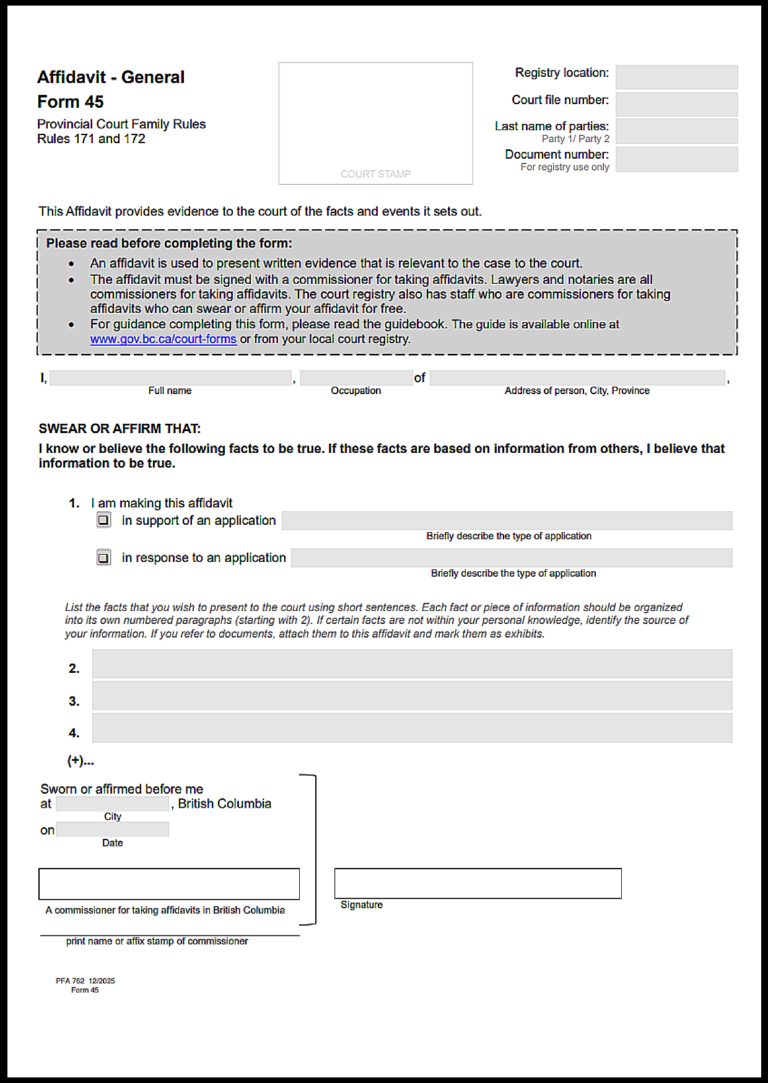
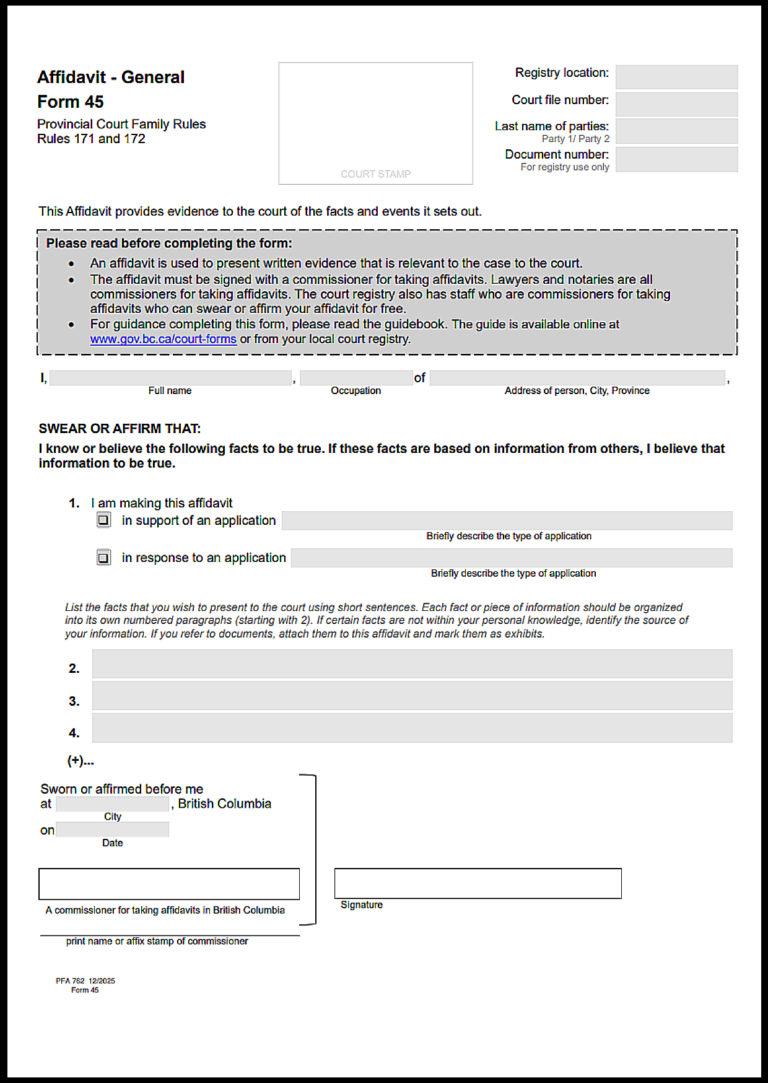
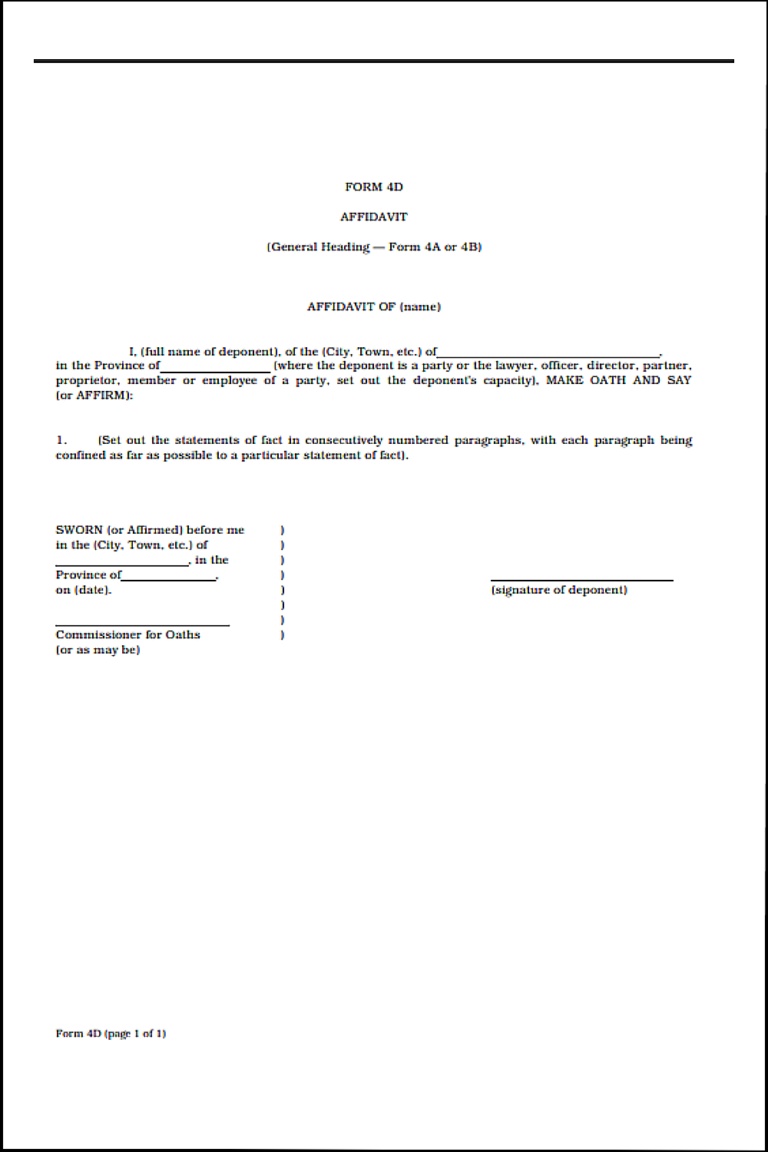
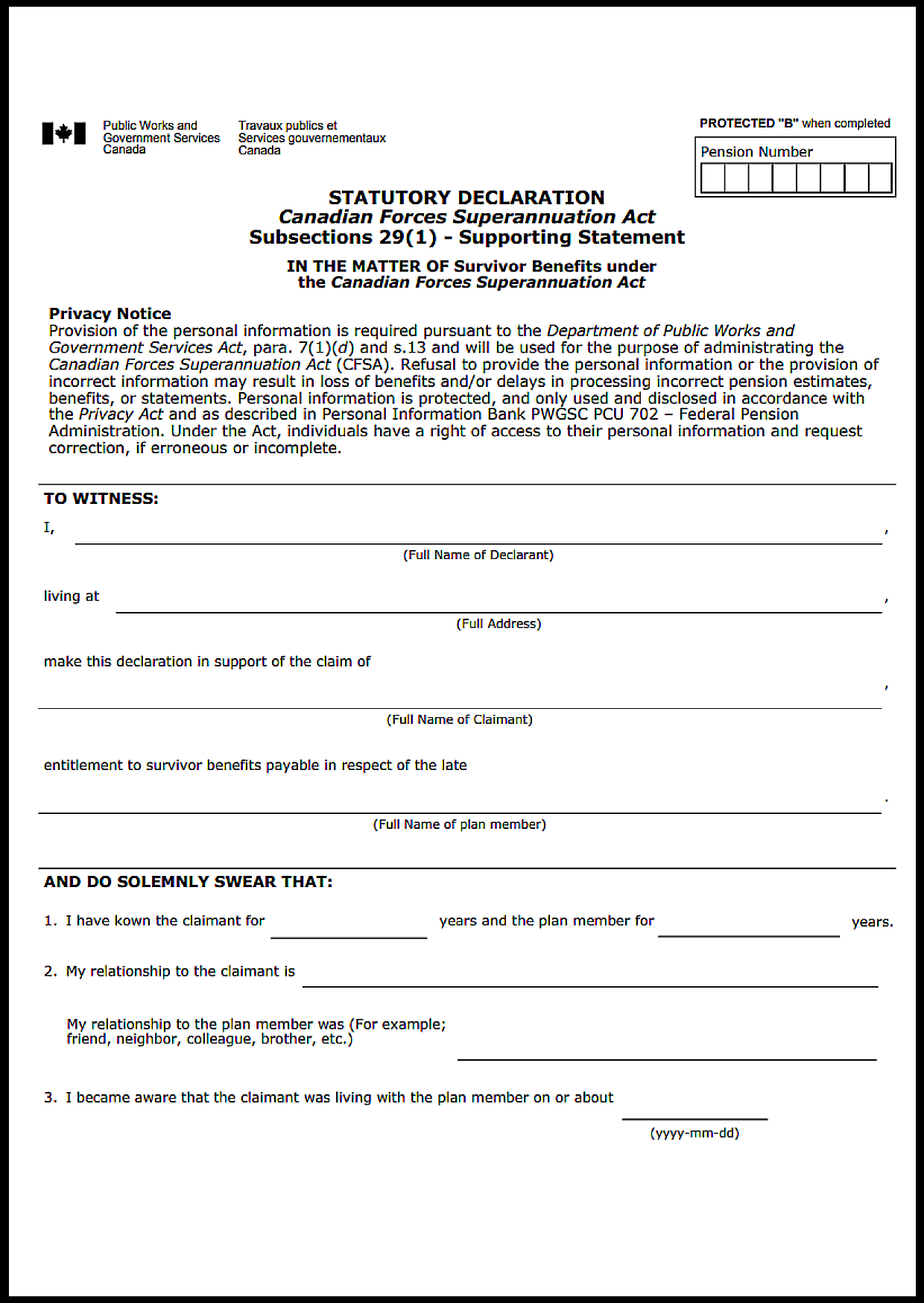
Below is a combined learning template. You must adjust wording depending on whether you’re making an affidavit or a statutory declaration.
Ontario Legal Rules for Affidavits vs Statutory Declarations
| Topic / Issue | Ontario Legal Rule | Governing Statute |
|---|---|---|
| Provincial affidavit and declaration laws | Ontario affidavits and statutory declarations are governed by provincial evidence and commissioning laws. | Evidence Act, R.S.O. 1990, c. E.23; Commissioners for Taking Affidavits Act, R.S.O. 1990, c. C.17 |
| Federal declaration laws | Federal evidence rules apply where the matter falls under federal jurisdiction. | Canada Evidence Act, R.S.C. 1985, c. C-5 |
| Remote commissioning | Ontario permits remote administration of an oath or declaration by an electronic communication method when the conditions in O. Reg. 431/20 are met. | O. Reg. 431/20 under the Commissioners for Taking Affidavits Act |
| Authority to sign | The deponent or declarant must complete the oath or declaration in the physical presence of the person administering it unless the applicable Ontario remote-commissioning requirements are met. | Commissioners for Taking Affidavits Act, s. 9 |
| Witness / Commissioner requirement | A person administering an affidavit or declaration must be authorized to do so under Ontario law, such as an authorized commissioner, notary public or other person with the required authority. | Commissioners for Taking Affidavits Act, ss. 1, 4, 7 and 9 |
| Witness qualifications | The person administering the oath or declaration must comply with the applicable commissioning requirements and satisfy themselves of the genuineness of the signature before signing the jurat or declaration. | Commissioners for Taking Affidavits Act, s. 9 |
| Notarization rules | Notarization is not automatically required for every Ontario affidavit or statutory declaration. The receiving court, government office, institution or other authority may specify whether a commissioner or notary is required. | Notaries Act, R.S.O. 1990, c. N.6; applicable receiving-authority requirements |
| Capacity requirements | Evidence Act s. 18 concerns competency to give evidence. The person administering an affidavit or declaration must instead comply with the applicable commissioning requirements, including confirming the genuineness of the signature. | Evidence Act, s. 18; Commissioners for Taking Affidavits Act, s. 9 |
| Filing deadlines | There is no universal deadline for every affidavit or statutory declaration, but particular court rules, orders, statutes or application procedures may impose deadlines. | Rules of Civil Procedure and applicable proceeding |
| Mandatory statutory declaration wording | Where Ontario Evidence Act s. 43 applies, a solemn declaration follows the form prescribed by that section. A particular statute or receiving authority may prescribe its own form. | Evidence Act, s. 43 |
| Mandatory affidavit jurat | An affidavit used in an Ontario proceeding must be signed and sworn or affirmed in accordance with the applicable commissioning requirements and court rules. | Ontario Rules of Civil Procedure, r. 4.06; Commissioners for Taking Affidavits Act |
| Mandatory remote wording | For remote administration, the modified jurat or declaration must comply with O. Reg. 431/20, including the regulation’s requirements concerning the electronic communication method and the locations of the participants. | Commissioners for Taking Affidavits Act, s. 9; O. Reg. 431/20, as amended |
| Court filing requirements | Where an affidavit is required in an Ontario court proceeding, it must be served and filed according to the rules and procedures governing that particular proceeding. | Ontario court rules and applicable court procedure |
| Real estate registration | Land-related documents have specific registration requirements, and whether an affidavit must be registered depends on the particular land-registration transaction and applicable requirements. | Applicable Ontario land-registration legislation and procedures |
| Private-use documents | Private affidavits or declarations used for contracts, insurance matters or other private purposes are not automatically government-registered documents. Their requirements depend on the purpose and receiving authority. | Applicable contract, insurance or other requirements |
| Absentee commissioning prohibition | The commissioner or other authorized person must administer the oath or declaration in accordance with the applicable in-person or remote requirements. | Commissioners for Taking Affidavits Act, s. 9; O. Reg. 431/20 |
| Oath administration requirement | The oath or declaration must be properly administered before the jurat or declaration is signed. A person who knowingly uses a document that was not taken in conformity with the applicable requirements may also face consequences under the Commissioners for Taking Affidavits Act. | Commissioners for Taking Affidavits Act, ss. 9–11 |
| Conflict of interest restriction | The commissioner must have legal authority to administer the oath or declaration and comply with any applicable limits on that authority. | Commissioners for Taking Affidavits Act |
| Ontario paralegal authority | Ontario paralegals may act as Commissioners for Taking Affidavits by virtue of office where the applicable prescribed-office requirements are met. | Commissioners for Taking Affidavits Act; O. Reg. 386/12 |
| Ontario virtual commissioning system | Ontario has a permanent statutory framework allowing remote administration of oaths and declarations where the conditions in O. Reg. 431/20 are met. | O. Reg. 431/20 |
One of the most important Ontario rules is that affidavits and statutory declarations are not interchangeable. An affidavit is a written statement confirmed by oath or affirmation, while a statutory declaration is a solemn declaration made in the form required by the applicable law or authority. Using the wrong format can cause a court, government office, immigration authority, or other receiving organization to reject the document or refuse to use it for the intended purpose.
Another major Ontario-specific rule involves remote commissioning. Ontario permits remote administration through O. Reg. 431/20 when its conditions are met. The current regulation requires the oath or declaration to be administered through an electronic communication method that allows the participants to see, hear and communicate with each other in real time throughout the transaction, together with the other requirements set out in the regulation.
These rules matter in real life because affidavits are commonly used in court proceedings, while declarations may be required for government, institutional, insurance, business or other administrative purposes. Even technical mistakes—such as signing before the authorized person administers the oath or declaration—can create problems with the document and delay an application or proceeding. Use the Ontario affidavit and statutory declaration template as a starting point, but always check the requirements of the authority receiving your document.
Affidavit vs Statutory Declaration
Key Difference in One Line
- Affidavit = a written statement confirmed by oath or affirmation
- Statutory declaration = a solemn declaration made in the form required by the applicable law or authority
This may sound small, but legally it matters a lot.
| Feature | Affidavit |
Statutory Declaration
|
| Oath / Affirmation | Usually confirmed by oath or affirmation |
Solemn declaration made in the prescribed or required form
|
| Used In | Commonly used as evidence in court proceedings where the applicable rules permit or require affidavit evidence |
Used where an applicable statute, form, government office, institution or other authority calls for a declaration
|
| Legal Weight | Its evidentiary role depends on the applicable court rules and circumstances |
Its legal effect depends on the applicable statute, form and receiving authority
|
| Signed Before | An authorized person who can administer the oath or affirmation |
An authorized person who can receive the declaration
|
| Risk if False | A knowingly false statement that meets the elements of perjury can constitute an offence under Criminal Code s. 131; s. 132 provides a maximum penalty of 14 years |
Criminal Code s. 134 addresses certain knowingly false statements made by affidavit, solemn declaration or deposition and makes the offence punishable on summary conviction
|
An affidavit is commonly used as evidence in court proceedings, while statutory declarations are often used for administrative or official purposes. Neither document is automatically “stronger” in every situation. The required document depends on the rules, statute, form or authority governing the particular matter.
Affidavits and statutory declarations are both formal legal statements, but they serve different purposes under Ontario law. To understand how affidavits are structured, you can review the main affidavit template resource.
What Is an Affidavit in Ontario (And When You Need It)
An affidavit is a written document where you state facts and confirm them by oath or affirmation. Under Ontario law, an affirmation can have the same force and effect as an oath.
In many affidavit situations, it is used as evidence. That means judges and lawyers may consider it when making decisions, subject to the applicable rules of evidence and procedure. Because of this, the commissioning process must be followed properly.
You will usually need an affidavit in situations like:
- Family law cases such as divorce or child custody
- Civil disputes
- Immigration processes where the relevant application specifically requires an affidavit
- Proving facts like identity or events where the receiving authority requires an affidavit
A commissioner for taking affidavits or another authorized person must administer the oath or affirmation and satisfy themselves of the genuineness of the signature before signing the jurat. If the applicable commissioning process is not followed, the affidavit may create validity or admissibility problems.
One important legal point: if you knowingly provide a false statement in circumstances that meet the Criminal Code definition of perjury, it can constitute a criminal offence in Canada. So always be careful and honest.
What Is a Statutory Declaration in Ontario?
A statutory declaration is a formal written statement in which a person solemnly declares that the stated facts are true. It is not simply an informal statement without an oath.
Under Ontario’s Evidence Act, s. 43 provides a prescribed solemn-declaration form stating that the declarant makes the declaration conscientiously believing it to be true and knowing that it has the same force and effect as if made under oath.
Statutory declarations are commonly used for things like:
- Confirming identity or address
- Replacing lost documents where the relevant authority accepts a declaration
- Supporting government applications
- Insurance or business declarations where the relevant organization requires one
In everyday life, if you are not dealing with a court case but still need to confirm facts officially, a statutory declaration may be appropriate. However, do not assume that every non-court matter requires one. The document requested by the receiving authority should control.
Under Rule 39 of the Ontario Rules of Civil Procedure, evidence on a motion or application may be given by affidavit unless a statute or the Rules provide otherwise. The rule does not create a blanket prohibition against statutory declarations. Whether another form of evidence can be used depends on the applicable rules, legislation and circumstances. Administrative tribunals may also have statutory authority to admit relevant documentary evidence under their governing legislation.
When to Use Affidavit vs Statutory Declaration
Choosing between these two depends on the situation and, most importantly, on the requirements of the authority receiving the document. Many people make mistakes here, which can lead to rejection or delays.
Use an Affidavit When
You should generally use an affidavit when the applicable court rules, statute, prescribed form or legal proceeding requires or permits affidavit evidence. For example, if you are submitting evidence on an Ontario court motion or application, Rule 39 specifically addresses evidence by affidavit.
Use a Statutory Declaration When
You should use a statutory declaration when the applicable statute, government form, institution or other authority asks for a declaration. It is commonly used for confirming facts in government forms, identity verification, or administrative processes.
A simple way to remember:
- Court proceeding = an affidavit is commonly used when the applicable rules call for affidavit evidence
- Administrative or official requirement = use a statutory declaration when the applicable authority requires one
Commissioner of Oaths & Notary Rules in Ontario
Both affidavits and statutory declarations must be completed before a person who is legally authorized to administer the oath, affirmation or declaration, subject to Ontario’s remote-commissioning rules.
In Ontario, the following people may have authority to handle this process depending on the circumstances:
- Commissioner for Taking Affidavits
- Notary Public
- Lawyers or paralegals who have the applicable authority
Their job is not to investigate whether every factual statement in your document is true. Instead, the person administering the document must carry out the commissioning process required by law, including satisfying themselves of the genuineness of the signature and properly administering the oath, affirmation or declaration.
Many people think notarization is always required, but that is not true. A commissioner for taking affidavits may be sufficient unless the particular court, government office, institution or other receiving authority specifically requires a notary.
Key Components That Must Be Included
The required structure depends on the type of document, the applicable law, the court rules and the authority receiving it. Missing a required component can create problems with the document.
For an affidavit used in an Ontario proceeding, the document must follow the applicable court rules or prescribed form. Under Rule 4.06 of the Ontario Rules of Civil Procedure, an affidavit used in a proceeding must be in Form 4D, be expressed in the first person, identify the deponent as required, use consecutively numbered paragraphs, and be signed and sworn or affirmed in accordance with the Commissioners for Taking Affidavits Act.
For a statutory declaration, you still need your personal details, a clear statement of the facts being declared, the declaration wording required by the applicable law or form, and proper completion before an authorized person.
The most important thing is clarity. Always write facts in simple sentences and avoid opinions or assumptions when the document is intended to provide factual evidence.
Common Mistakes That Make These Documents Invalid
From practical experience, many documents can run into problems because of small errors. Some of the most common mistakes include:
- Signing the document before meeting the commissioner
- Using the wrong format (affidavit instead of declaration or vice versa)
- Missing required wording like an oath, affirmation or declaration clause
- Providing incorrect or misleading information
- Leaving out important personal details
Even a minor mistake can delay your application or create legal issues, especially when a court or government authority has specific requirements for the document.
Real-Life Examples
Let’s make this simple with real situations.
- If you are filing for divorce or dealing with an Ontario court proceeding, an affidavit may be required or permitted under the applicable court rules.
- If you lost your ID and need to confirm your identity, a statutory declaration may be appropriate if the relevant authority accepts or requests one.
- In immigration cases, the required document depends on the particular application. Some processes may require an affidavit, while others may ask for a declaration or another prescribed document.
Legal Risks You Should Know
These documents are legally serious. A person should not sign an affidavit or statutory declaration without making sure the information is accurate and the required process has been followed.
If you knowingly make a false statement in circumstances that meet the Criminal Code definition of perjury, it can lead to criminal charges. Criminal Code s. 131 addresses perjury, while s. 132 provides a maximum penalty of 14 years’ imprisonment. Section 134 separately addresses certain knowingly false statements made by affidavit, solemn declaration or deposition and makes that offence punishable on summary conviction.
Also, using the wrong document or failing to follow required procedures can lead to the document being rejected, challenged or not accepted for its intended purpose. This can result in delays, which may affect your case or application.
How to Fill the Template Correctly (Step-by-Step)
Filling the template correctly is simple if you first check the requirements of the authority that will receive it.
- Start by writing only true and clear facts. Use short sentences and number each point properly when the applicable form or court rule requires numbered paragraphs. Do not add unnecessary details.
- Do not sign the document in advance. Always wait until you are in front of the commissioner, notary or other authorized person, unless you are following the specific remote-commissioning process permitted by Ontario law.
- Carry a valid ID with you, as identification may be required by the person administering the document. Before signing, read the document carefully to make sure everything is correct.
- Taking a few extra minutes to review can save you from major problems later.
Affidavits, such as an Ontario sworn affidavit, must be sworn or affirmed before an authorized person, while declarations follow a different process. If you are preparing either document, it’s useful to understand how notarization works in Ontario.
FAQs
Is affidavit stronger than statutory declaration in Ontario?
Neither document is automatically stronger in every situation. An affidavit is commonly used as evidence where the applicable court rules require or permit affidavit evidence, while a statutory declaration is used where the applicable law, form or receiving authority calls for a declaration.
Can I use statutory declaration in court?
It depends on the particular court proceeding and the applicable rules or statute. For Ontario motions and applications, Rule 39 specifically addresses evidence by affidavit, so you should follow the document requirements of the applicable court rule or prescribed form.
Who can commission these documents in Ontario?
Depending on the circumstances, a Commissioner for Taking Affidavits, Notary Public, lawyer, paralegal or another person with the required legal authority can administer the oath, affirmation or declaration.
Is notarization mandatory?
Not always. A commissioner for taking affidavits may be enough unless the particular court, government office, institution or other receiving authority specifically requires notarization.
Can I write both in one document?
Do not combine the two formats unless the applicable law, prescribed form or receiving authority specifically allows it. The document should clearly follow the required affidavit or statutory-declaration format for the purpose for which it is being used.