Free Manitoba Eviction Notice Template | Download PDF & WORD
A Manitoba Eviction Notice is often the first step landlords take when a tenancy has broken down, but small procedural mistakes can create major delays. Under Manitoba’s residential tenancy framework, landlords are generally required to use the prescribed Notice of Termination forms that match the specific reason for ending the tenancy rather than relying on a generic letter.
In practice, I’ve seen situations where a landlord attempted to recover possession for unpaid rent using a homemade notice, only to discover during proceedings before the Residential Tenancies Branch that the notice did not meet Manitoba’s requirements and the process had to start over. For tenants, receiving an eviction notice can be confusing and stressful, particularly when there are questions about notice periods, service requirements, or the reason for termination.
This page explains the forms, notice requirements, service rules, and common issues that arise when a tenancy is being ended in Manitoba.
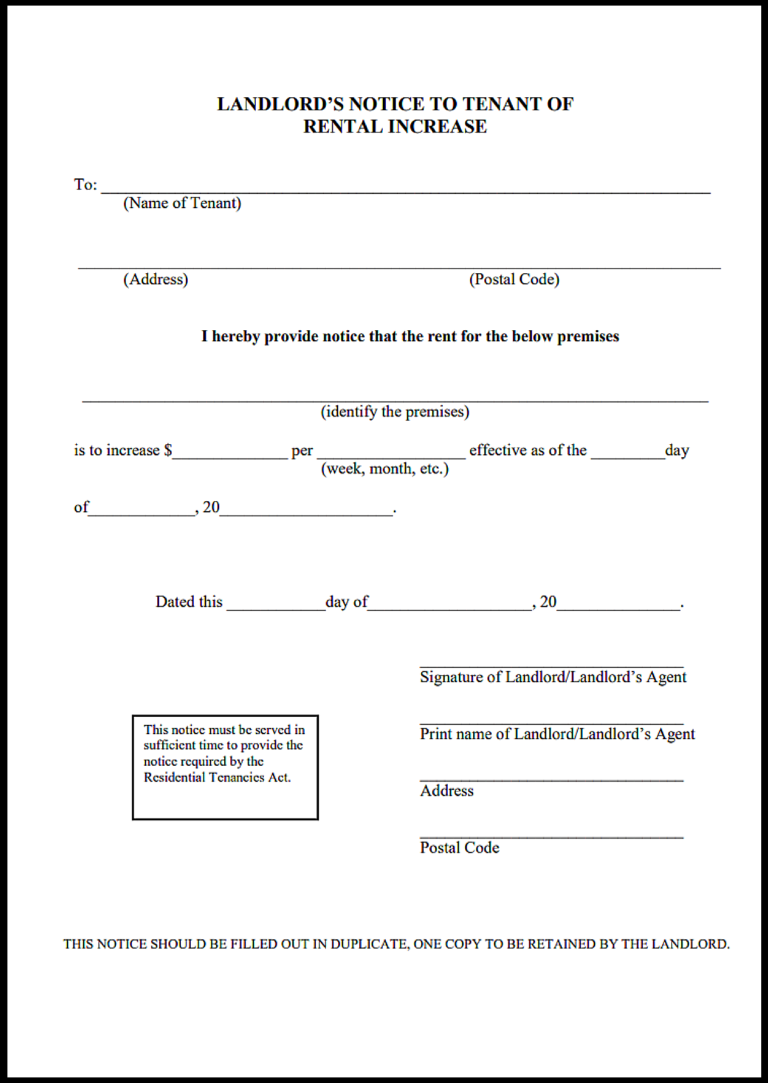
Free Eviction Notice Template (Manitoba)
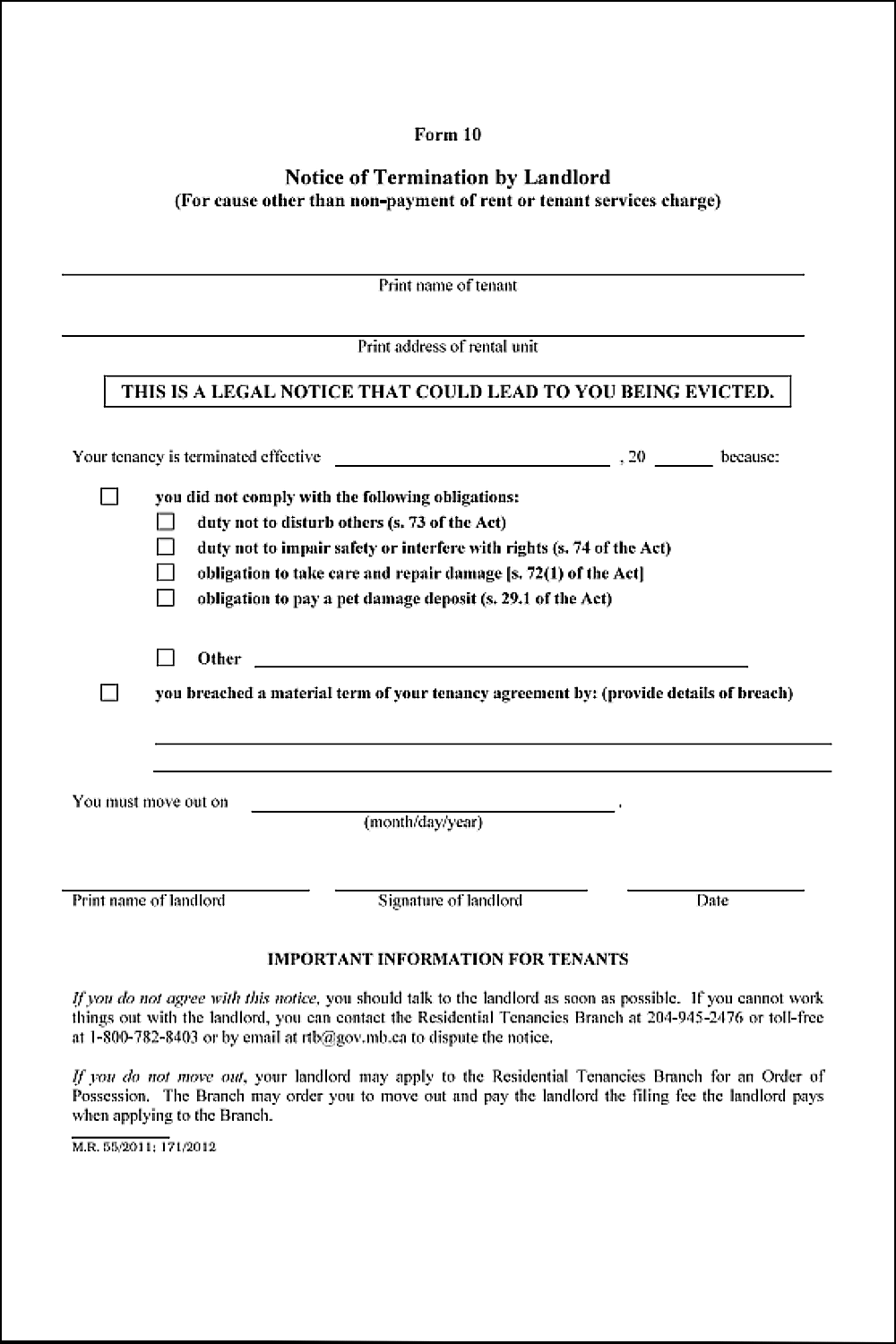
This template reflects Manitoba legal requirements, but landlords should use the correct Residential Tenancies Branch (RTB) forms—typically Form 7, 8, 9, or 10—depending on the reason for termination.
How Manitoba Eviction Actually Works (Notice vs Removal)
A Notice of Termination is not an immediate eviction.
This is a common misunderstanding.
Under Manitoba law:
- Notice = legal warning or tenancy termination notice
- RTB = dispute and enforcement authority
- Order of Possession = legal enforcement order
- Sheriff = physical removal authority
Landlords are not allowed to remove tenants themselves by changing locks, seizing property, or shutting off utilities.
Only a Sheriff can physically remove a tenant after an Order of Possession is granted.
Manitoba’s Main Eviction Categories
- Non-payment of rent
- Habitual late payment
- Cause or lease breach
- Extraordinary damage
- Health or safety urgency
Each category may involve different forms and timelines.
Mandatory Legal Requirements That Make a Notice Valid
Even strong landlord claims can fail if the notice is legally defective.
Required Tenant and Property Information
The notice should clearly identify:
- Full tenant names
- Rental address
Mistakes here can create confusion or disputes.
Specific Legal Reason
The landlord must state the lawful reason clearly.
Examples:
- Non-payment
- Lease breach
- Extraordinary damage
Vague complaints may fail.
Correct Deadline
The notice must match Manitoba’s legal timing rules.
Mandatory Warnings
For many non-payment cases:
- Tenant may avoid moving by paying arrears before deadline
- Tenant must be informed of dispute rights
Proper Delivery Method
Accepted methods often include:
- Personal service
- Adult occupant service
- Registered mail
- Posting (with RTB permission)
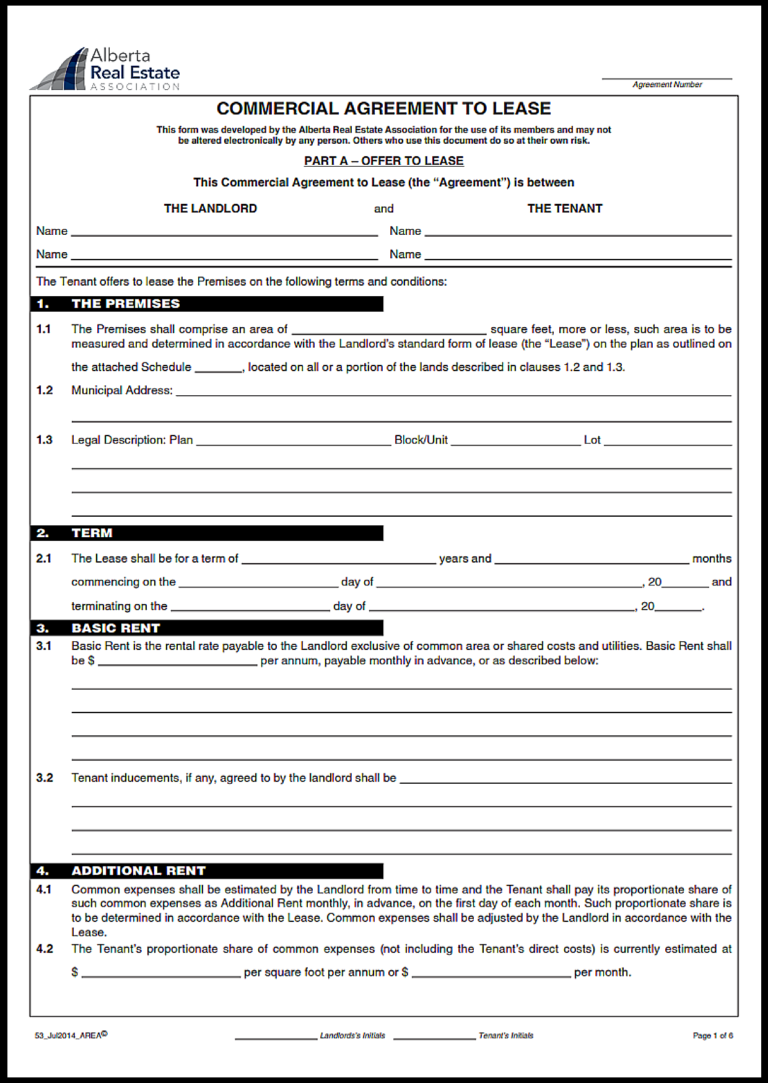
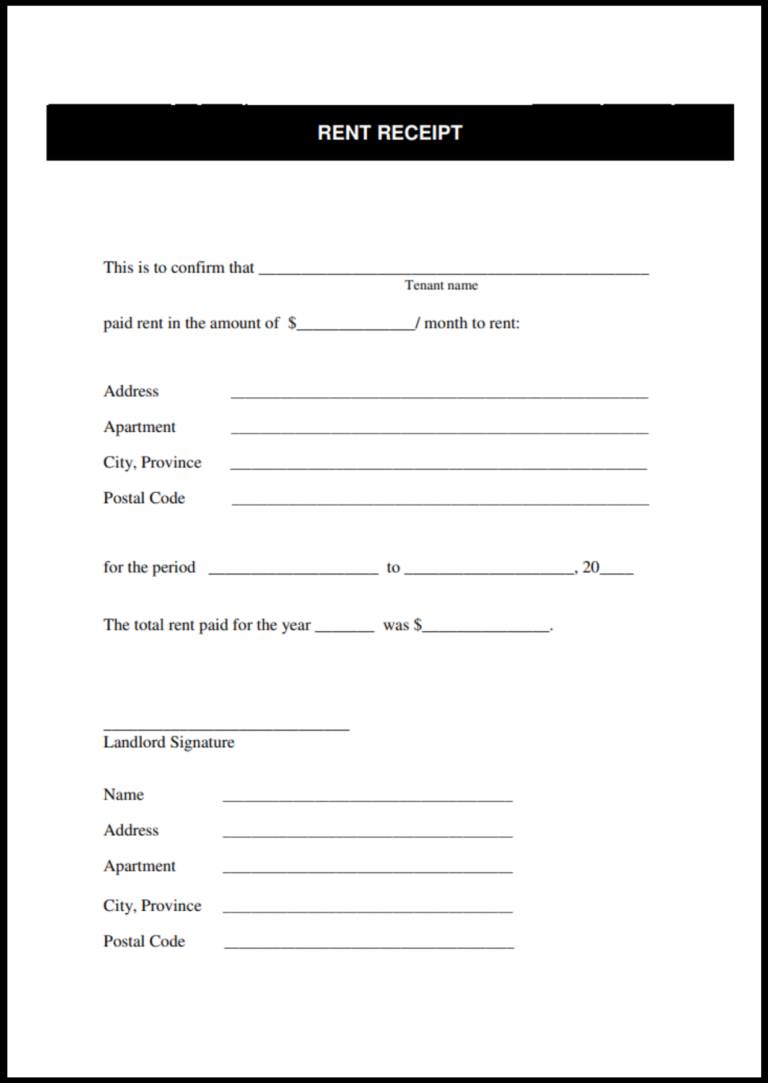
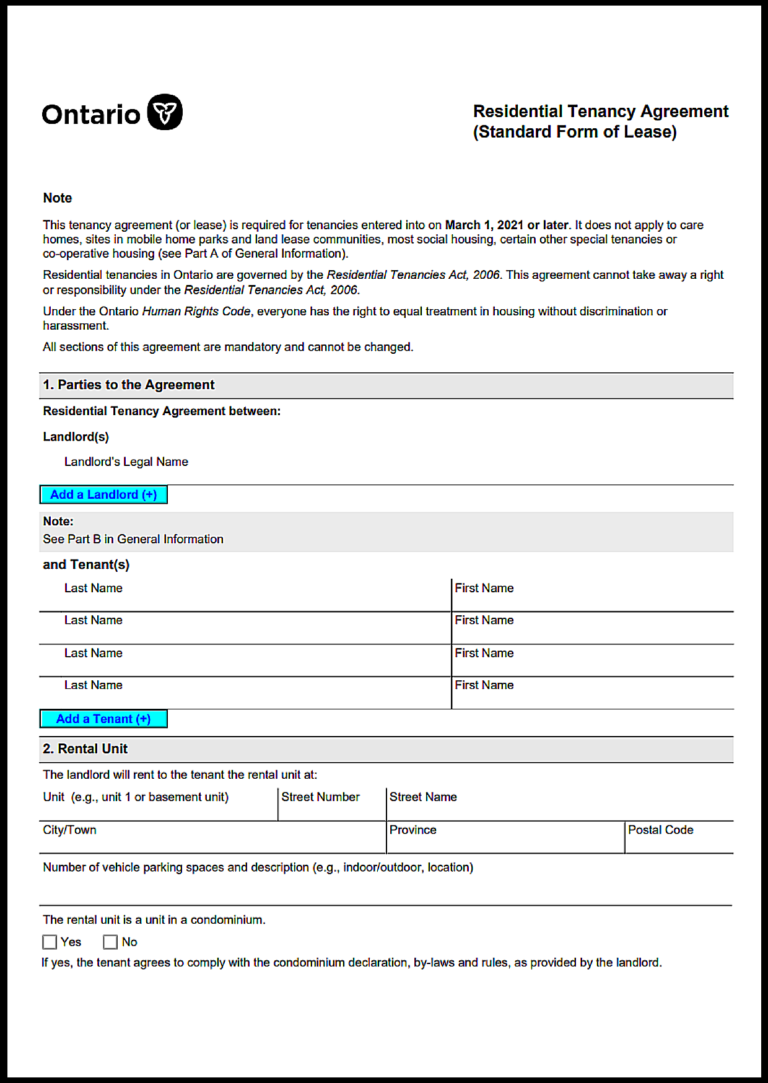
An eviction notice is commonly connected with the original Manitoba lease agreement signed at the beginning of the tenancy. Property owners may also need a rent receipt template to help document missed or incomplete rent payments during the dispute process.
Non-Payment vs Habitual Late Payment (Critical Difference)
This distinction matters.
Non-Payment
This means rent is currently overdue.
Habitual Late Payment
This means repeated late payments over time, often with prior warnings.
One missed payment alone may not justify habitual late payment termination.
Practical landlord tip:
Keep written payment records and prior warnings.
Without documentation, disputes become harder to prove.
Illegal Evictions and “Self-Help” Mistakes Landlords Must Avoid
Under Manitoba law, self-help evictions are strictly prohibited.
Landlords are not allowed to:
- Change locks
- Shut off utilities
- Remove tenant belongings
- Threaten or intimidate tenants
- Retaliate after repair complaints or legal rights use
Legal Consequences
Illegal actions can lead to:
- Tenant compensation claims
- RTB penalties
- Delayed possession
- Court costs
- Administrative problems
Shortcuts often create larger legal problems.
Step-by-Step: How to Serve a Manitoba Eviction Notice Properly
Practical Process Table
| Step | Action |
| 1 |
Identify lawful termination reason
|
| 2 |
Choose correct RTB form
|
| 3 |
Complete required disclosures
|
| 4 |
Serve notice lawfully
|
| 5 |
Keep service records
|
| 6 |
Apply for Order of Possession if tenant remains
|
Documentation is often what determines success.
Common Mistakes That Void or Delay Eviction
Many landlords lose time because of preventable mistakes.
Common issues:
- Wrong form
- Missing tenant rights language
- Incorrect notice period
- No prior warning where needed
- Improper service method
Even valid landlord concerns can fail due to paperwork errors.
Tenant Rights After Receiving a Notice of Termination
Tenants have important legal protections.
In many situations, tenants may have:
- Right to pay overdue rent and cure default
- Right to dispute
- Right to RTB hearing
- Protection from retaliation
- Protection from illegal eviction methods
Receiving notice does not always mean automatic removal.
Real-Life Manitoba Eviction Scenarios
Tenant Pays Overdue Rent
Non-payment issue may resolve before removal.
Habitual Late Payment
Landlord uses documented prior warnings.
Severe Property Destruction
Urgent legal timelines may apply.
Unsafe Criminal Activity
Health and safety concerns may justify faster action.
Landlord Changes Locks Improperly
This may trigger landlord liability.
Financial and Practical Costs of Eviction
Evictions affect both parties.
Landlord Costs:
- Filing fees
- Lost rent
- Repairs
- Delays
Tenant Costs:
- Relocation hardship
- Housing instability
- Potential legal consequences
Mistakes increase costs for everyone.
FAQ
Can I evict a tenant immediately for unpaid rent in Manitoba?
Usually no. Notice timing rules still apply, though non-payment notices may often begin on the 5th day rent is overdue.
What RTB form should I use?
It depends on the legal reason for termination, such as Form 7, 8, 9, or 10.
Can tenants stop eviction by paying rent?
In many non-payment cases, yes—if arrears are paid before the legal deadline.
Can landlords change locks?
No. Self-help eviction is generally prohibited.