What is Lease Agreement Manitoba?: Key Legal Information
If you’re searching for What is Lease Agreement Manitoba, you’re probably about to sign a rental agreement or want to make sure the one you already have follows Manitoba requirements. In Manitoba, tenancy agreements operate within the framework established by The Residential Tenancies Act and the province’s prescribed tenancy forms, which means a generic Canadian lease often misses details that matter once a dispute arises.
I’ve seen situations where a landlord relied on an informal agreement, only for questions about included services and tenancy terms to surface later before the Residential Tenancies Branch with little written evidence to support either position. That kind of problem usually doesn’t appear when the tenancy starts—it appears months later when rent, renewals, or responsibilities are being challenged.
Understanding how Manitoba lease agreements work from the beginning can help landlords and tenants recognise what must be included, when standard forms are required, and how tenancy terms are enforced in practice.
What Is a Lease Agreement in Manitoba?
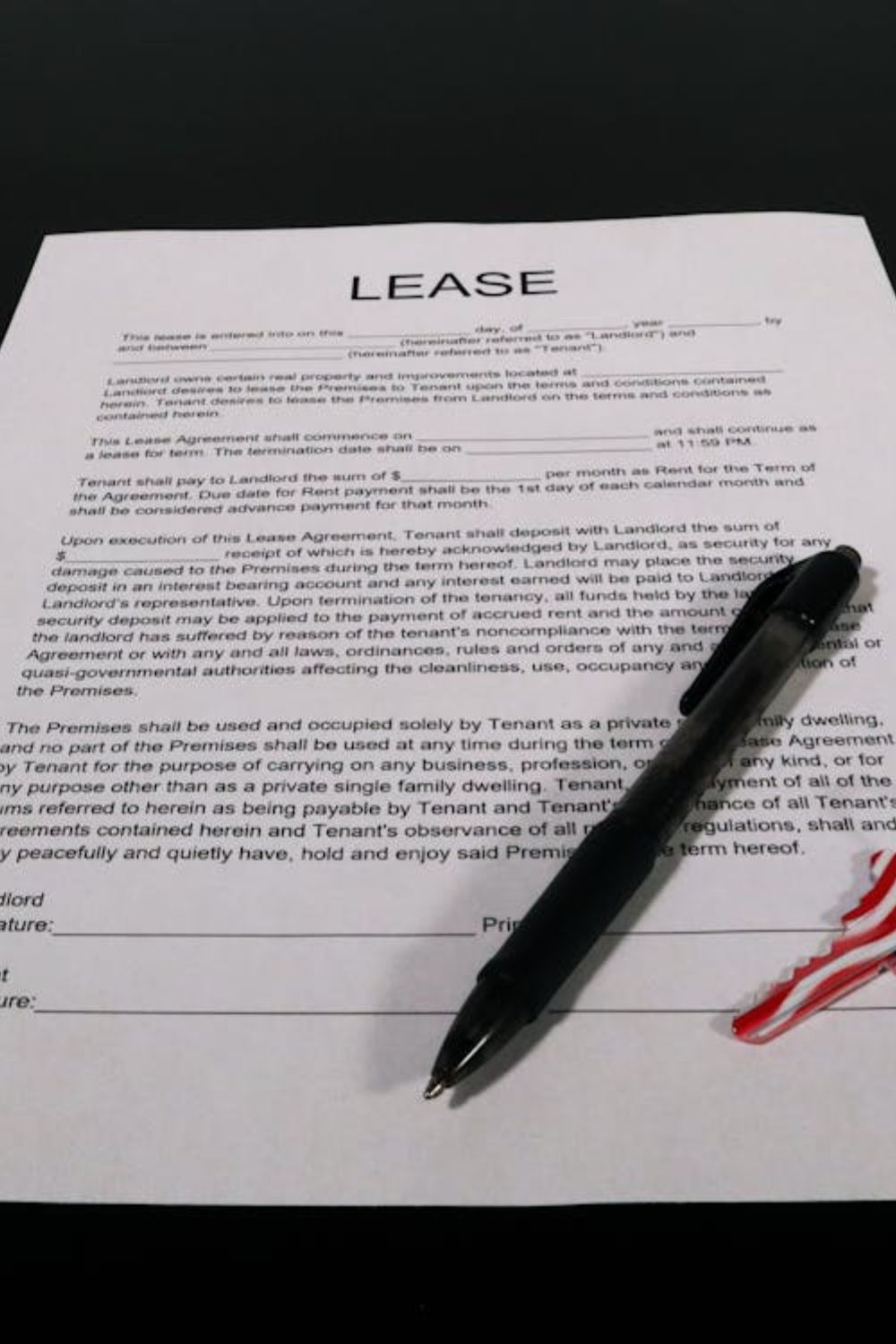
A lease agreement is a legal contract that explains the rights and responsibilities of both the landlord and tenant during a rental period.
The agreement creates legal duties for both sides. The tenant agrees to pay rent and follow property rules. The landlord agrees to provide the rental unit and maintain it according to Manitoba law.
In most rental situations, having a written agreement reduces confusion and helps avoid disputes later.
What the Agreement Usually Covers
A Manitoba residential lease normally includes:
- Monthly rent amount
- Security deposit details
- Length of tenancy
- Repair responsibilities
- Utility payments
- Pet restrictions
- Smoking rules
- Notice requirements
- Parking terms
- Building rules
The lease should also identify the legal landlord and include a Manitoba address where legal notices can be served.
Fixed-Term vs Month-to-Month Agreements
A fixed-term lease has a specific start and end date.
Example:
A student signs a one-year lease from September 1 to August 31.
A month-to-month tenancy renews automatically every month unless proper notice is given.
Example:
A tenant rents a basement suite without a fixed ending date and pays rent monthly.
In Manitoba, fixed-term leases are common for apartments and student housing. Month-to-month agreements are often used for long-term tenants who want more flexibility.
This type of rental document is often connected with a Manitoba rental application form used during tenant screening, while ongoing occupancy arrangements may also require a lease renewal agreement when extending the tenancy period.
Manitoba Laws That Control Residential Leases
Summary of Applicable Laws
| Topic | Rule | Governing Statute |
| Residential tenancy rules | Main law controlling residential rentals | Residential Tenancies Act, C.C.S.M. c. R119 |
| Lease regulations | Additional rental procedures and rules | Residential Tenancies Regulation, Man. Reg. 157/92 |
| Rent regulation | Rent increase guidelines and controls |
Residential Rent Regulation, Man. Reg. 156/92
|
| Legal age | Age of majority is 18 | The Age of Majority Act, C.C.S.M. c. A7 |
| Property registration | Long-term lease registration rules | The Real Property Act, C.C.S.M. c. R30 |
Why Manitoba Lease Laws Matter
Under Manitoba law, a lease cannot remove or override tenant rights protected by the Residential Tenancies Act.
If a lease includes illegal terms, those clauses are automatically void even if the tenant signed the agreement.
For example, a landlord cannot legally include a clause saying:
- “No repairs will be provided”
- “Tenant gives up RTB rights”
- “Full yearly rent becomes due after one missed payment”
The Residential Tenancies Branch (Manitoba) can investigate complaints and resolve disputes between landlords and tenants.
Role of the Residential Tenancies Branch (RTB)
The Residential Tenancies Branch is the provincial authority that manages residential tenancy issues in Manitoba.
The RTB handles:
- Tenant complaints
- Security deposit disputes
- Rent increase applications
- Repair disputes
- Eviction matters
- Landlord compliance issues
In many cases, the RTB acts like a neutral decision-maker between both parties.
Shared living situations may involve additional housing documents such as a roommate agreement template or a sublease agreement form to clarify occupancy responsibilities between tenants.
Mandatory Rules Every Manitoba Lease Must Follow
Standard Form Requirements
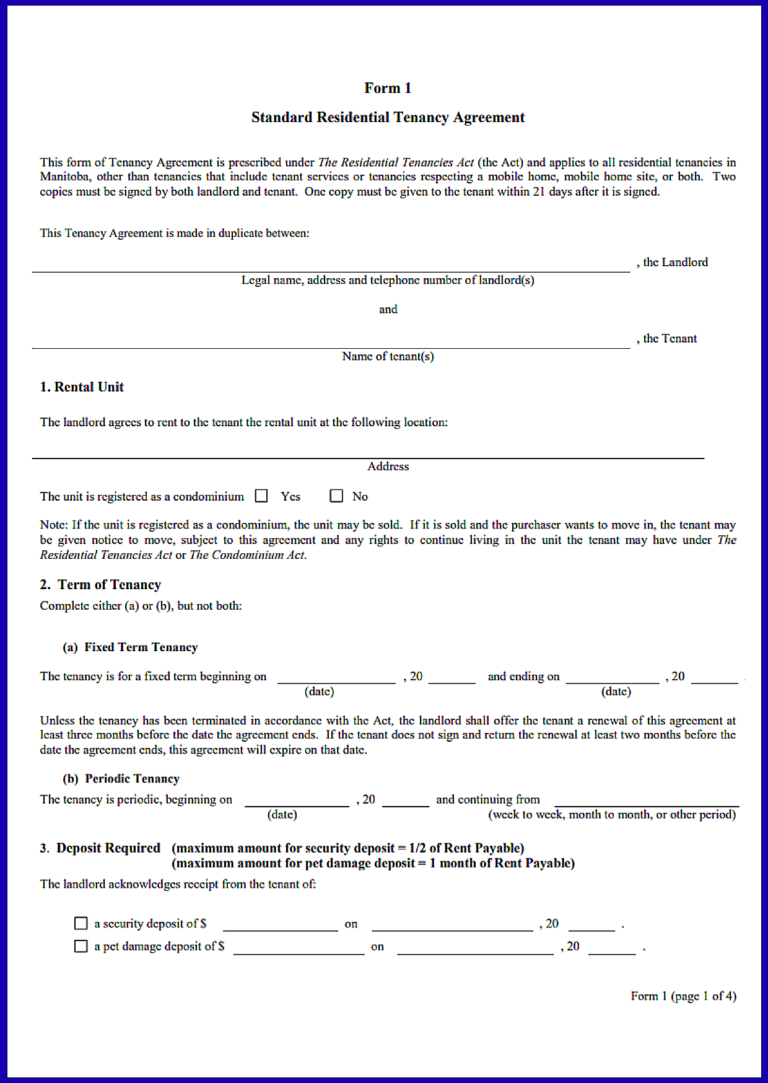
Landlords must use the Manitoba Form 1 Standard Residential Tenancy Agreement or a custom lease containing all required information from Form 1.
Under the Residential Tenancies Act:
- Two signed copies should be completed
- Both landlord and tenant must sign
- The tenant must receive a signed copy within 21 days
A landlord who fails to provide the signed lease copy may face problems during disputes.
Security Deposit Rules
Manitoba strictly limits security deposits.
The maximum security deposit is one-half of one month’s rent.
| Monthly Rent | Maximum Security Deposit Allowed |
| $900 | $450 |
| $1,200 | $600 |
| $1,800 | $900 |
Landlords must also pay interest on the deposit according to Manitoba rules.
Example:
If monthly rent is $1,400, the highest legal security deposit is $700.
Landlords are not allowed to charge extra “damage deposits” above the legal limit for standard residential rentals.
Required Landlord Information
The lease must clearly include:
- Legal landlord name
- Manitoba service address
- Contact information
A P.O. Box alone is usually not enough because tenants need a physical Manitoba address where legal notices can be served.
This rule helps tenants properly deliver RTB documents or legal notices if needed.
Notice to New Tenant Form
If the rental property is subject to rent control, landlords must provide a completed Notice to New Tenant (Form 2) at the beginning of the tenancy.
This document explains important information about rent regulation and tenant rights.
Failing to provide this notice can create issues during rent increase disputes.
Condo Disclosure Requirements
If the rental unit is a condominium, the lease must include wording explaining that the property is a condo unit.
The lease should state:
“The unit is registered as a condominium. If it is sold and the purchaser wants to move in, the tenant may be given notice to move.”
This disclosure matters because condo sales can affect tenancy rights in certain situations.
Important Lease Clauses Tenants Should Read Carefully
Rent Payment Terms
The lease should clearly explain:
- Monthly rent amount
- Due date
- Accepted payment methods
- Late fee rules
Under Manitoba regulations, late fees are limited to:
- $10 for the first late day
- $2 per day afterward
- Maximum total late fee of $100
Landlords cannot create unlimited late penalties.
Pet and Smoking Rules
In Manitoba, landlords may restrict:
- Pets
- Smoking
- Cannabis smoking inside units
However, landlords usually cannot change these rules during an active lease unless the tenant agrees.
Example:
If pets were originally allowed, a landlord generally cannot suddenly ban them mid-lease without consent.
Tenants should carefully review pet clauses before signing because violating these rules may lead to disputes.
Maintenance and Repair Responsibilities
Landlords are responsible for maintaining the property in a safe and livable condition.
This normally includes:
- Heating systems
- Plumbing
- Electrical systems
- Structural repairs
Tenants are responsible for:
- Keeping the unit reasonably clean
- Reporting problems quickly
- Avoiding intentional damage
A common dispute involves repair delays. Tenants should always document repair requests in writing.
Entry and Privacy Rules
Tenants have privacy rights under Manitoba law.
In most situations, landlords must provide reasonable notice before entering the rental unit unless there is an emergency.
Emergency situations may include:
- Flooding
- Fire
- Gas leaks
- Serious safety risks
Unreasonable or repeated entry without proper notice may violate tenant rights.
Illegal or Unenforceable Lease Clauses in Manitoba
Clauses That Violate the Residential Tenancies Act
Some lease terms are illegal even if both parties signed the agreement.
Examples include:
- Accelerated rent clauses
- Mandatory post-dated cheques
- Illegal application fees
- Seizing tenant property for unpaid rent
Under Manitoba law:
- Landlords cannot charge rental application processing fees
- Landlords cannot require post-dated cheques
- Landlords cannot seize furniture or personal property for unpaid rent
- Accelerated rent clauses are unenforceable
Example:
A lease saying “all remaining yearly rent becomes immediately due after one missed payment” would normally be void.
What Happens if a Lease Includes Illegal Terms
Illegal lease clauses are automatically unenforceable under the Residential Tenancies Act.
This means:
- The clause may be ignored legally
- The RTB may refuse to enforce it
- The landlord could face disputes or administrative problems
Tenants should not assume every signed clause is automatically valid.
Common Mistakes Made by First-Time Landlords
Many new landlords accidentally violate Manitoba tenancy rules.
Common mistakes include:
- Copying lease forms from U.S. websites
- Charging excessive deposits
- Forgetting required disclosures
- Using verbal-only agreements
- Adding illegal penalties
A properly written lease reduces the risk of costly RTB disputes later.
How to Fill Out a Manitoba Lease Agreement Properly
Information Landlords Should Prepare
Before drafting the lease, landlords should organize:
- Property address
- Utility details
- Monthly rent amount
- Deposit calculations
- Parking information
- Tenant contact details
Having clear written terms prevents misunderstandings later.
Information Tenants Should Verify Before Signing
Tenants should carefully review:
- Rent amount
- Included utilities
- Repair obligations
- Lease term
- Parking rights
- Pet restrictions
- Building rules
It is much easier to fix unclear terms before signing than during a dispute later.
Why Both Parties Should Keep Copies
Both landlord and tenant should keep signed copies of the lease.
The agreement may become important during:
- Deposit disputes
- Repair claims
- RTB hearings
- Rent disagreements
- Eviction proceedings
A signed lease provides proof of the agreed terms.
Does a Manitoba Lease Agreement Need to Be Registered?
Standard Residential Lease Rules
Most residential leases in Manitoba do not need government registration to be legally valid.
In normal apartment or house rentals, the signed contract itself is usually enough.
Long-Term Leases Over Three Years
Leases longer than three years may be registered through a Caveat at the Land Titles Office.
This can help protect the tenant’s interest if the property is later sold.
Long-term lease registration is more common in commercial or specialized rental situations than ordinary residential rentals.
When the RTB May Request the Lease
The RTB may ask to review the lease during:
- Tenant disputes
- Rent increase applications
- Compliance investigations
- Deposit disagreements
Keeping organized records helps both parties during investigations or hearings.
Real-Life Manitoba Rental Scenarios
Example of a Legal Lease Agreement
A landlord rents a condo in Winnipeg for $1,600 per month.
The landlord:
- Charges an $800 security deposit
- Provides Form 1 information
- Gives signed copies within 21 days
- Includes the condo disclosure wording
This would generally comply with Manitoba residential tenancy rules.
Example of an Invalid Lease Clause
A landlord charges:
- $75 application fee
- Mandatory post-dated cheques
- Full yearly rent after one missed payment
These clauses would likely violate Manitoba law and may be unenforceable.
Example of a Tenant-Landlord Dispute
A tenant repeatedly reports heating problems during winter, but repairs are delayed.
The tenant files a complaint with the RTB.
The RTB may:
- Review communication records
- Inspect the property
- Order repairs
- Decide compensation issues
Written leases and written repair requests often become important evidence during these disputes.
Manitoba Lease Agreement FAQs
Is a verbal lease agreement legal in Manitoba?
Yes. Verbal rental agreements can be legally valid in Manitoba. However, written leases are strongly recommended because they provide clear evidence of the agreed terms.
Can a landlord charge an application fee?
No. Manitoba landlords are not allowed to charge application or processing fees for residential rentals.
What is the maximum security deposit allowed?
The maximum security deposit is one-half of one month’s rent.
Can a landlord require post-dated cheques?
No. A landlord may accept post-dated cheques voluntarily, but cannot require them as a lease condition.
Does a lease need a witness or notary?
No. Manitoba law does not require witnesses or notarization for a standard residential lease agreement.
Can a landlord ban pets in Manitoba?
Yes. A landlord may include no-pet rules in the original lease agreement.
How long does a landlord have to provide a signed copy?
The tenant should receive a signed lease copy within 21 days after signing.