Alberta Commercial Lease Agreement (Free PDF Template)
Alberta Commercial Lease Agreement is a legal contract used when a business rents a property like a shop, office, or warehouse. If you’re planning to start or expand a business in Alberta, this agreement helps protect both the landlord and the tenant.
It clearly explains rent, responsibilities, and rules. I’ve seen Alberta business owners run into expensive disputes because lease details about maintenance, operating costs, or renewal terms were never properly written down. When you’re signing your first commercial lease, it’s easy to overlook small clauses that can later affect your business finances in a big way.
This reduces confusion and avoids disputes later. Don’t worry if you are new—this guide is simple, practical, and also gives you a free template.
A commercial lease agreement is simply a business rental contract. It is used when someone wants to rent a property for business purposes instead of living.
In Alberta, many businesses need this, such as: Retail shops, Offices, Warehouses. It is especially helpful for beginners because everything is written clearly and easy to follow.
Last Updated: November 2026
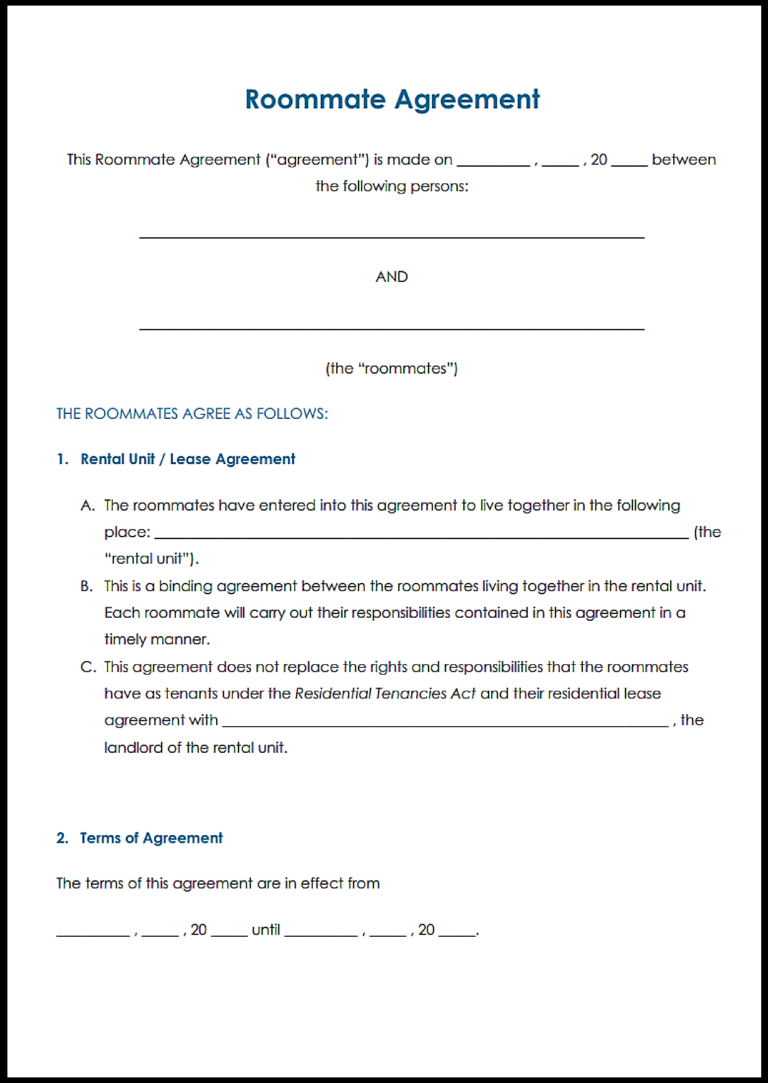
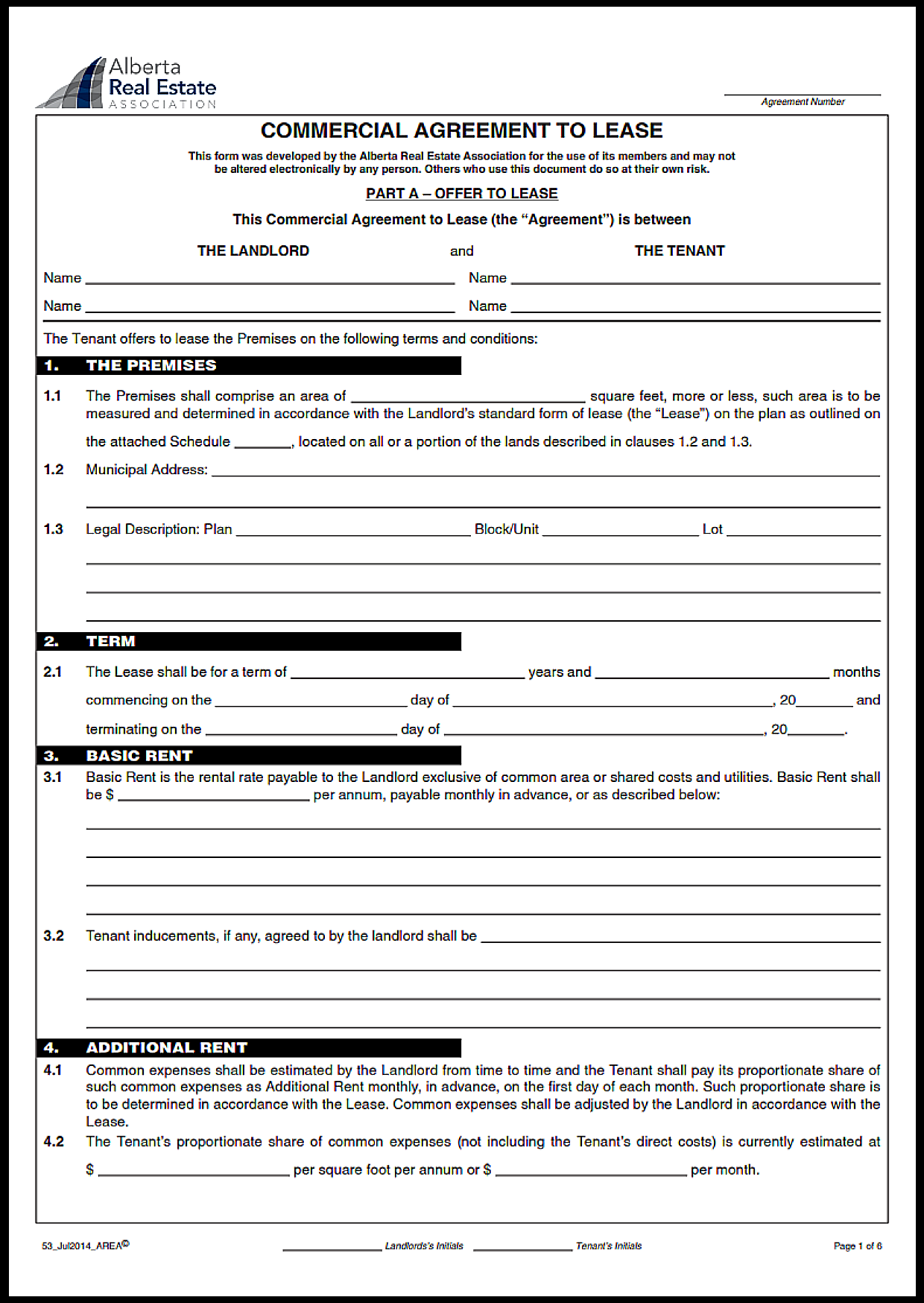
Free Alberta Commercial Lease Agreement Template
You can use this basic template and edit it as per your needs.
Alberta Commercial Lease Laws and Registration Rules You Should Know
| Topic / Issue | Alberta Legal Rule | Governing Statute |
|---|---|---|
| Governing legislation | Commercial leases in Alberta are generally governed by the lease agreement, contract and property law principles, and applicable legislation. The Land Titles Act also sets requirements for certain leases affecting titled land. | Law of Property Act, RSA 2000, c L-7; Land Titles Act, RSA 2000, c L-4 |
| Registration of leases | A lease of titled land for more than 3 years must be executed in the prescribed form under section 95(1) of the Land Titles Act. Registration can help protect the tenant’s interest against later registered interests. | Land Titles Act, RSA 2000, c L-4, s. 95 |
| Personal guarantees | A qualifying personal guarantee is subject to Alberta’s statutory acknowledgment requirements. The guarantor must appear before a notary public, acknowledge executing the guarantee, and sign the required statement in the notary’s presence. | Guarantees Acknowledgment Act, RSA 2000, c G-11, ss. 1, 3 and 4 |
| Who can sign | An individual who has reached Alberta’s age of majority can generally enter into contracts, subject to applicable capacity rules. An Alberta corporation has the capacity and powers of a natural person under section 16 of the Business Corporations Act. | Age of Majority Act, RSA 2000, c A-6, s. 1; Business Corporations Act, RSA 2000, c B-9, s. 16 |
| Witness requirements | Under section 155 of the Land Titles Act, an instrument executed in Alberta that may be registered under the Act generally must be witnessed, and the witness must make an affidavit in the prescribed form. Section 157 disqualifies a party to the instrument and a spouse consenting under the Dower Act from acting as witness. Statutory exceptions apply. | Land Titles Act, RSA 2000, c L-4, ss. 155–159 |
| Notarization rules | The lease itself does not automatically have to be notarized. However, an individual-executed instrument submitted for Land Titles registration generally requires the prescribed witnessing and affidavit of attestation. The affidavit must be sworn before an official authorized to take it. | Land Titles Act, RSA 2000, c L-4, ss. 155–159; Alberta Land Titles Procedures Manual – AFF-1 |
| Legal capacity | Alberta’s age of majority is 18. However, reaching that age does not by itself answer every question about contractual capacity. A person’s ability to understand and enter into the agreement must also be considered where capacity is in doubt. | Age of Majority Act, RSA 2000, c A-6, s. 1 |
| Registration requirements for longer leases | Under section 95(1), when titled land is to be leased for a term of more than 3 years, the owner must execute a lease in the prescribed form. The lease must contain a sufficient description of the land. Registration is important to protect the tenant’s interest against later purchasers and encumbrancers. | Land Titles Act, RSA 2000, c L-4, s. 95 |
| Personal guarantee certificate | For a guarantee covered by the Guarantees Acknowledgment Act, the guarantor must appear before a notary public, acknowledge executing the guarantee, and sign the required statement in the notary’s presence. The notary must examine the guarantor and issue the prescribed certificate after being satisfied that the guarantor understands the guarantee. | Guarantees Acknowledgment Act, RSA 2000, c G-11, ss. 3–4 |
| General lease clauses | Alberta does not prescribe one universal list of commercial lease clauses. However, leases for more than 3 years must meet the applicable form requirements under the Land Titles Act. Section 96 also provides certain implied tenant covenants unless the lease shows a contrary intention. | Land Titles Act, RSA 2000, c L-4, ss. 95–96 |
| Filing and registration | A qualifying lease of more than 3 years may be registered as a lease using the prescribed form. A caveat may also be used where appropriate to give notice of a claimed interest in land. A caveat is not the same as registering the lease itself, and the correct option depends on the interest being protected. | Land Titles Act, RSA 2000, c L-4; Alberta Government – Register a Land Title Document or Plan |
| Invalid guarantee | A guarantee covered by the Guarantees Acknowledgment Act has no effect unless the statutory acknowledgment and certificate requirements are met. The Act’s definition of a guarantee contains exclusions, so it is important to confirm that the particular obligation falls within the legislation. | Guarantees Acknowledgment Act, RSA 2000, c G-11, ss. 1, 3–4 |
| Unclear lease terms | Unclear or incomplete terms can lead to disputes about the parties’ obligations. Identify the landlord and tenant, premises, permitted use, rent, term, additional costs, repair duties, and renewal or termination rights as clearly as possible. | Contract law principles; Land Titles Act, RSA 2000, c L-4, s. 95 |
| Illegal business purpose | A lease does not automatically become void simply because the tenant’s proposed business may not comply with a municipal zoning rule. The business may be unable to operate lawfully without the required approval, permit, or change of use. Check the applicable municipality’s land-use requirements before signing. | Applicable municipal land-use bylaws and general contract law principles |
| Alberta legal difference | Alberta does not have a generally applicable commercial tenancies statute equivalent to the residential tenancy legislation. Commercial leasing is largely governed by the lease, contract and property law principles, and other legislation that applies to the particular transaction. | Residential Tenancies Act, SA 2004, c R-17.1; Land Titles Act, RSA 2000, c L-4 |
| Alberta guarantee requirements | Alberta’s Guarantees Acknowledgment Act imposes a specific notarial acknowledgment process for guarantees within its scope. The required official is a notary public, not simply any lawyer, and the statutory exclusions must be considered. | Guarantees Acknowledgment Act, RSA 2000, c G-11, ss. 1, 3–4 |
One important point for Alberta business owners is the rule about personal guarantees. If you are asked to guarantee a company’s commercial lease personally, check whether the guarantee falls within the Guarantees Acknowledgment Act. For a guarantee covered by the Act, the guarantor must appear before a notary public, acknowledge signing the guarantee, and sign the required statement in the notary’s presence. The notary must also examine the guarantor and issue the prescribed certificate after being satisfied that the guarantor understands the guarantee. A lawyer’s involvement alone does not replace these statutory steps unless the lawyer is acting as a notary public and completes the required process. The Act also contains exclusions, so not every personal obligation connected with a lease will necessarily qualify as a guarantee under the statute.
Lease registration is another point worth checking before you sign. Under section 95(1) of Alberta’s Land Titles Act, a lease of titled land for a term of more than 3 years must be executed in the prescribed form. Registration can help protect a tenant’s interest if the property is later transferred or encumbered. Alberta’s Land Titles Procedures Manual also explains that a lease for more than 3 years may be registered as a lease, while a caveat may be appropriate in other situations. A caveat gives notice of a claimed interest; it is not the same as registering the lease itself. The effect of registration, the length of the lease, and any existing mortgage or encumbrance should be reviewed before relying on registration to protect your rights.
Alberta does not have a generally applicable commercial tenancies statute like the legislation that governs most residential rentals. Commercial landlords and tenants therefore need to pay close attention to the terms they negotiate. The Land Titles Act still contains important rules, including the prescribed-form requirement for longer leases and certain implied tenant covenants under section 96 unless the lease shows a contrary intention. A clear agreement should deal with rent, permitted business use, operating costs, repairs, insurance, renewal rights, and what happens if either party defaults.
Before signing, review the lease against the actual premises and your business plans. If the agreement includes a personal guarantee, a lease term longer than 3 years, or unusual repair and operating-cost obligations, consider getting advice from an Alberta commercial real estate lawyer. You can also download the free Alberta Commercial Lease Agreement template and adapt it to the transaction.
What Is an Alberta Commercial Lease Agreement (And Who Needs It?)
A commercial lease agreement is a contract between a landlord and a tenant for the use of property for business purposes. It is commonly used when a business rents a shop, office, warehouse, or other commercial space.
People who may need one include:
- Shop owners
- Office renters
- Warehouse businesses
Unlike a residential rental agreement, a commercial lease is generally negotiated around the needs of the business and the terms the parties agree to. That flexibility also means you should read the details carefully. A clause about operating costs, repairs, insurance, or renewal can have a real effect on your business expenses.
When Should You Use a Commercial Lease in Alberta?
Use a commercial lease when you are renting premises to operate a business or carry out commercial activities.
For example, it may be useful when:
- You are starting a new business
- Opening a second branch
- Renting shared office or retail space
- Taking property for long-term or short-term use
A small café, for example, may rent a retail unit for three years. The lease should say what the café can sell, who pays for utilities and common-area costs, who looks after repairs, and whether the tenant can renew the lease. Without clear terms, the landlord and tenant may disagree about what was included in the rent or who must pay for a repair.
This document is used for renting business properties and includes terms specific to commercial use. It differs from residential contracts explained in the general lease agreement guide.
Key Elements Every Alberta Commercial Lease Must Include
There is no single statutory checklist of clauses that every Alberta commercial lease must contain. The terms should reflect the property, the type of business, and the responsibilities the parties have agreed to. If the lease is for more than 3 years, also check the prescribed-form requirements under section 95 of Alberta’s Land Titles Act.
Property and Business Use Details
Identify the premises clearly and describe the business activities the tenant is allowed to carry out. This is particularly important where the property is in a shopping centre, office building, or industrial area with restrictions on permitted uses.
Include:
- Full address and, where relevant, the legal description of the property
- The permitted business use
- Any restrictions on signage, deliveries, hours, or customer access
- Responsibility for checking zoning, permits, and business licensing requirements
Do not assume that a previous tenant’s business approval automatically covers your business. Confirm the proposed use with the municipality before committing to the lease.
Rent, Deposits, and Payment Terms
Set out the rent and explain how it will be calculated and paid. Commercial rent may include more than the basic monthly amount, so check whether the tenant must also pay operating costs, property taxes, utilities, insurance contributions, or common-area maintenance charges.
Include:
- Base rent and any applicable rent increases
- Payment due date and payment method
- Any security deposit and the conditions for its return
- Additional rent, operating costs, and common-area charges
- Interest or other consequences for late payment, if agreed
Commercial lease deposits and payment arrangements should not be confused with residential security-deposit rules. The parties should state the agreed amount and how it will be held, applied, and returned.
Lease Duration and Renewal Options
State the start date and the length of the lease. If the tenant has an option to renew, explain how and when that option must be exercised.
- Fixed-term lease, such as a 1-year, 3-year, or 5-year term
- Renewal option and the deadline for giving notice
- Rent payable during the renewal term
- Any conditions that must be met before renewal
For a lease of titled land lasting more than 3 years, section 95(1) of Alberta’s Land Titles Act requires the owner to execute a lease in the prescribed form. A renewal option can also affect the parties’ long-term plans, so its wording should be reviewed carefully.
Maintenance and Repair Responsibilities
Do not assume the landlord is always responsible for major repairs or that the tenant is responsible only for daily cleaning. Commercial leases often allocate repair and maintenance duties in detail.
The agreement should explain who is responsible for:
- Structural repairs and the building’s exterior
- Heating, ventilation, air conditioning, plumbing, and electrical systems
- Interior maintenance and repairs caused by the tenant
- Snow removal, landscaping, parking, and shared spaces
- Common Area Maintenance (CAM) charges and how they are calculated
Section 96 of Alberta’s Land Titles Act implies certain tenant covenants in leases covered by section 95, including covenants relating to rent, rates and taxes, and keeping the premises in good and tenantable repair. Those implied covenants apply unless a contrary intention appears in the lease. This is one reason to review the repair wording rather than relying on a general description of who handles maintenance.
Insurance Requirements
A commercial lease may require the tenant to maintain insurance throughout the tenancy. The type and amount of coverage should match the business and the risks associated with the premises.
Check whether the lease requires:
- Commercial general liability insurance
- Contents, equipment, and inventory coverage
- Tenant improvements and betterments insurance
- Additional insured status for the landlord
- Proof of coverage and notice of cancellation
Do not assume that the landlord’s building insurance will cover the tenant’s inventory, equipment, or business interruption losses. Confirm the required coverage with an insurance professional.
Termination and Exit Clauses
The lease should explain when and how the agreement can end. A fixed-term commercial lease does not necessarily give the tenant a general right to leave early without consequences.
Review:
- The end date of the lease
- Any break or early-termination option
- Notice requirements for exercising an option
- Events of default and any opportunity to remedy a breach
- The tenant’s obligations when handing back the premises
- Any restoration or removal requirements for fixtures and improvements
Business leases may also involve obligations similar to those found in other commercial contracts. If the parties later agree to extend the term, they can document the new arrangement using a lease renewal agreement.
Alberta Laws That Affect Commercial Leases
Alberta’s Residential Tenancies Act generally applies to residential rental premises, not to a business premises rented solely for commercial use. The Alberta government explains that the Act does not apply to premises occupied for business purposes that also have living accommodation attached where both are rented under one agreement. Mixed-use arrangements should therefore be reviewed carefully rather than automatically treated as ordinary commercial leases.
Commercial leases are generally governed by the terms of the agreement, contract and property law principles, and legislation that applies to the particular transaction. For example, the Land Titles Act sets out requirements for leases of titled land for more than 3 years. Section 96 also provides certain implied tenant covenants unless the lease shows a contrary intention.
This means the written lease matters. Check the permitted use, rent, additional costs, repair obligations, insurance, renewal rights, and default provisions before signing. Municipal zoning bylaws, building requirements, and business licensing rules may also affect whether you can operate from the premises.
How to Fill Out a Commercial Lease Agreement (Step-by-Step)
Take your time when completing the agreement. A missing address, unclear rent calculation, or incomplete renewal clause can cause problems later.
- Step 1: Add the full legal names of the landlord and tenant. If a corporation is signing, identify the corporation correctly and make sure the person signing has authority to do so.
- Step 2: Write the complete property address and, where needed, the legal land description.
- Step 3: Set out the base rent, payment schedule, additional rent, and any agreed deposit.
- Step 4: Define the permitted business use and each party’s maintenance, repair, insurance, and operating-cost responsibilities.
- Step 5: Review the lease term, renewal options, default provisions, and termination conditions.
- Step 6: Make sure the correct parties sign the agreement. If the lease will be submitted to Alberta Land Titles, check the applicable execution, witnessing, affidavit, and prescribed-form requirements.
Tip: Check the corporation’s legal name and the signing person’s authority before the agreement is completed. For a lease of titled land for more than 3 years, review section 95 of the Land Titles Act and the Land Titles registration requirements.
Common Mistakes to Avoid in Alberta Commercial Leases
A commercial lease can create obligations that last for years. Before signing, check for these common problems:
- Not clearly defining the business activities permitted at the premises
- Overlooking additional costs such as operating expenses, property taxes, utilities, or maintenance
- Failing to explain who is responsible for repairs to building systems and structural components
- Missing a renewal deadline or misunderstanding how the renewal rent will be calculated
- Relying on verbal promises that are not included in the written agreement
- Agreeing to a personal guarantee without understanding the liability and the requirements of Alberta’s Guarantees Acknowledgment Act
- Failing to check whether a lease longer than 3 years should be executed in the prescribed form and registered
Read the full agreement before signing. If a clause is unclear, ask for it to be explained or revised in writing rather than relying on an informal promise.
Commercial Lease vs Residential Lease
| Feature | Commercial Lease |
Residential Lease
|
| Purpose | Renting premises for business activities |
Renting a place to live
|
| Main legal framework | Generally governed by contract and property law principles, the lease terms, and applicable legislation |
Primarily governed by Alberta’s Residential Tenancies Act, where it applies
|
| Negotiation | Many terms are negotiated between the parties |
Subject to statutory residential tenancy protections
|
| Rent terms | Base rent, additional rent, and operating costs are set out in the lease |
Subject to applicable residential tenancy rules
|
| Maintenance | Responsibilities are largely allocated in the commercial lease, subject to applicable law |
Statutory landlord and tenant obligations apply
|
| Risk and obligations | Business costs, personal guarantees, permitted use, and repair duties can create substantial obligations |
Residential tenancy legislation provides specific protections
|
Real-Life Scenario
Imagine a person opening a clothing store in Alberta. They agree to rent a retail unit with the following terms:
- Rent: $2,000 per month
- Deposit: $4,000
- Lease term: 3 years
These figures are an example of negotiated commercial lease terms, not statutory limits. The agreement should explain whether the rent includes operating costs, who pays utilities, who handles repairs, and whether the tenant has a renewal option.
The tenant should also check that the clothing store is an allowed use at the premises and review any requirements for signage, insurance, and renovations. If the tenant is asked to provide a personal guarantee, the parties should check whether the Guarantees Acknowledgment Act applies and complete the required notarial process if it does.
A written agreement gives both sides a record of what they have accepted. It cannot prevent every dispute, but clear terms make it easier to identify each party’s responsibilities.
Legal Risks and Disputes in Commercial Leasing
Commercial lease disputes often arise because the agreement does not clearly explain what happens when something goes wrong.
Common issues include:
- Disagreements over base rent, operating costs, or additional charges
- Disputes about damage, repairs, or maintenance
- A landlord or tenant failing to follow the lease’s termination provisions
- A tenant using the premises for a business activity that is not permitted under the lease or applicable municipal rules
- Disagreements about renewal options, rent adjustments, or lease assignments
- Claims under a personal guarantee after a business fails to pay its obligations
A carefully drafted lease can reduce uncertainty, but the result of a dispute will depend on the wording of the agreement, the applicable law, and the facts. If a significant amount of money or a long-term business commitment is involved, consider having an Alberta commercial real estate lawyer review the lease before signing.
Frequently Asked Questions (FAQs)
Is a commercial lease legally required in Alberta?
A written commercial lease is strongly recommended, but the absence of a written agreement does not automatically mean that no tenancy or contractual relationship exists. The parties’ conduct and communications may be relevant. However, a lease of titled land for a term of more than 3 years is subject to the prescribed-form requirement in section 95(1) of Alberta’s Land Titles Act. A written agreement is the safer way to record the rent, permitted use, repair duties, additional costs, and other important terms.
Can a commercial lease be verbal?
A verbal commercial rental arrangement may create contractual obligations, but it can be difficult to prove exactly what the parties agreed to. There are also formal requirements for certain interests in land. In particular, section 95(1) of Alberta’s Land Titles Act requires the owner to execute a lease in the prescribed form when titled land is leased for more than 3 years. For that reason, put the agreement in writing and get legal advice if the arrangement involves a longer term or a significant property interest.
Who pays for repairs in Alberta commercial leases?
The lease usually sets out how repair and maintenance costs are divided. Do not assume that the landlord must pay for every major repair or that the tenant is responsible only for routine upkeep. Section 96 of Alberta’s Land Titles Act implies certain tenant covenants in leases covered by section 95, including a covenant to keep the premises in good and tenantable repair, unless a contrary intention appears in the lease. Review the actual repair clauses carefully because the wording can change the parties’ responsibilities.
Can rent be increased anytime?
A landlord cannot simply disregard the agreed rent provisions and impose an increase whenever they choose. For a commercial lease, check the rent-review or escalation clause, any renewal terms, and any later written agreement between the parties. The residential rent-increase rules under Alberta’s Residential Tenancies Act should not be assumed to apply to premises rented solely for commercial use.
What happens if a tenant breaks the lease early?
Leaving before the lease ends may put the tenant in breach of the agreement. The consequences depend on the lease wording, the circumstances, and the remedies available under applicable law. The agreement may contain an early-termination clause, an assignment or subletting process, or provisions dealing with unpaid rent and other losses. Review those terms before leaving the premises, and consider getting legal advice if the potential financial liability is significant.