Manitoba Lease Renewal Agreement [Free Pdf, Template]
A Manitoba Lease Renewal Agreement is often used when a landlord and tenant want to continue a fixed-term tenancy without uncertainty about rent, dates, or occupancy rights. In Manitoba, renewal obligations under The Residential Tenancies Act can create unexpected results if the required process isn’t followed on time, particularly where a fixed-term tenancy may continue despite assumptions that it simply ends.
I’ve seen situations where a landlord failed to provide a renewal agreement within the required timeframe and the dispute later landed before the Residential Tenancies Branch, which had to determine whether the tenancy renewed automatically. That’s one reason generic Canadian lease templates can miss important Manitoba-specific requirements and deadlines.
This page explains how lease renewals work in Manitoba, when a renewal agreement should be used, and the key details landlords and tenants should address before signing.
Last Updated: September 2026
Free Lease Renewal Agreement Template (Manitoba)
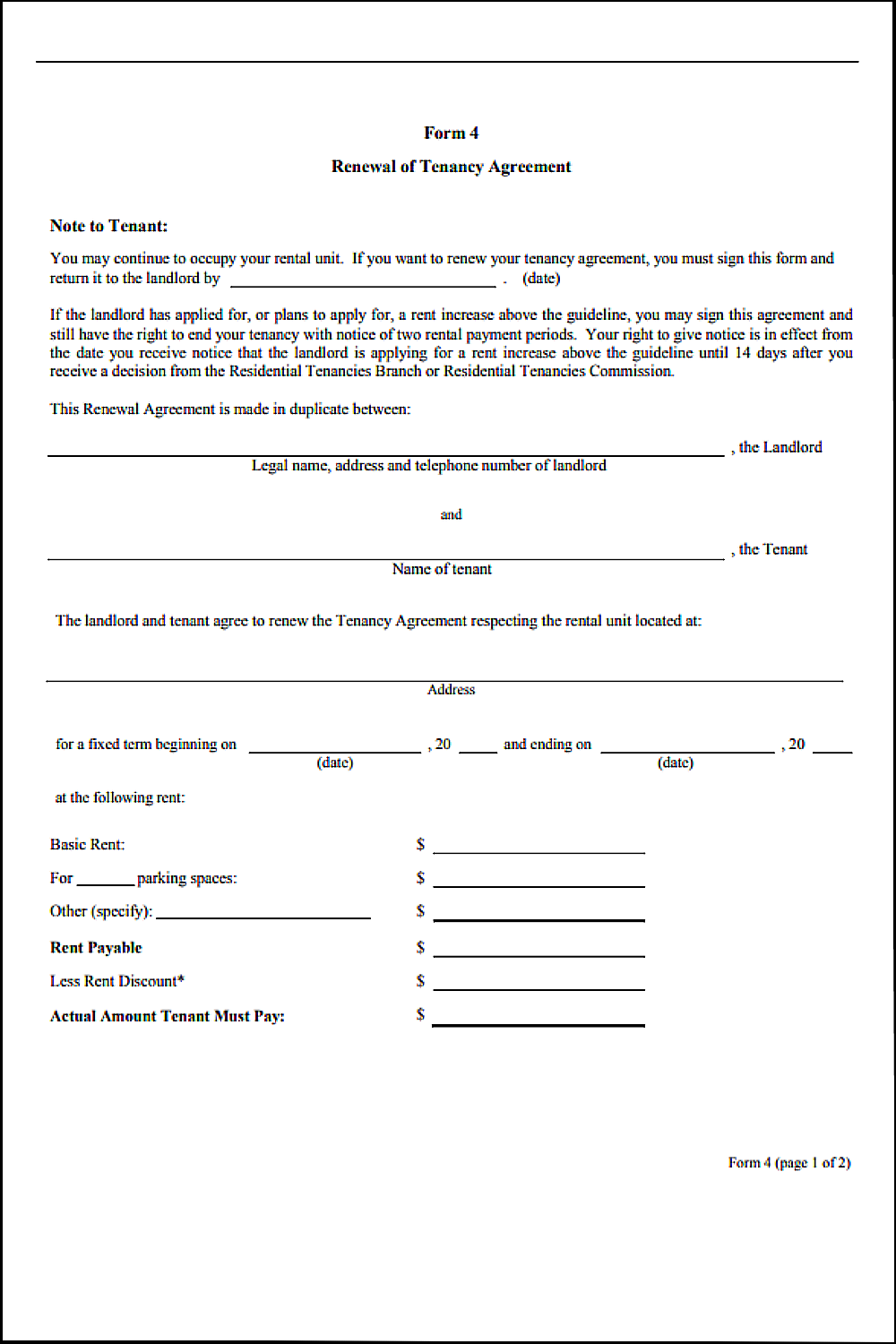
This template reflects Manitoba Form 4 principles for a Renewal of Tenancy Agreement.
Important: Landlords should ensure full compliance with Manitoba rental law and any above-guideline filing obligations through the official above-guideline increase process.
Manitoba Lease Renewal Deadlines, Rent Rules, and Invalid Renewal Terms
| Topic / Issue | Manitoba Legal Rule | Governing Statute |
|---|---|---|
| Governing legislation | Residential lease renewals in Manitoba are governed primarily by The Residential Tenancies Act, C.C.S.M. c. R119, and the Residential Tenancies Regulation, M.R. 71/2010. | The Residential Tenancies Act, C.C.S.M. c. R119 and Residential Tenancies Regulation, M.R. 71/2010 |
| Federal jurisdiction | Residential landlord-tenant relationships in Manitoba are primarily governed by provincial tenancy legislation, including The Residential Tenancies Act. | The Residential Tenancies Act, C.C.S.M. c. R119 |
| 2026 rent increase guideline | Manitoba’s annual rent increase guideline for 2026 is 1.8%, effective January 1, 2026, although some rental units are exempt from specified rent-regulation provisions. | Residential Tenancies Branch annual guideline information |
| Who can legally sign | The prescribed renewal form identifies the landlord and tenant and sets out the renewal terms. Parties should ensure the renewal is properly completed and signed by the landlord and tenant. | The Residential Tenancies Act, s. 21 and prescribed Form 4 |
| Witness requirements | Manitoba’s prescribed Form 4 does not set out a general witness requirement for the renewal. | Residential Tenancies Regulation, M.R. 71/2010, Form 4 |
| Notarization requirement | Manitoba’s prescribed Form 4 does not require notarization or commissioning as part of the standard renewal process. | Residential Tenancies Regulation, M.R. 71/2010, Form 4 |
| Age and mental capacity | Parties should have legal capacity to enter into the tenancy agreement. The prescribed renewal form does not establish a separate notarization or commissioning requirement. | Applicable Manitoba contract and tenancy law |
| Landlord renewal deadline | For a written fixed-term tenancy, the landlord must give the tenant a new tenancy agreement no later than 3 months before the existing agreement ends, unless the tenancy has been terminated in accordance with the Act. | The Residential Tenancies Act, s. 21(1) |
| Tenant response deadline | If the tenant intends to renew, the tenant must sign and return the new tenancy agreement at least 2 months before the existing agreement ends. | The Residential Tenancies Act, s. 21(3)(b) |
| Mandatory renewal form | Manitoba prescribes Form 4 – Renewal of Tenancy Agreement. A renewal should use the prescribed form or contain the prescribed information required by Manitoba law. | The Residential Tenancies Regulation, M.R. 71/2010, Form 4 |
| Rent increase disclosure wording | Form 4 sets out the rent payable under the renewed tenancy and contains specific information for situations involving a rent increase above the guideline. | The Residential Tenancies Act, s. 21(3) and prescribed Form 4 |
| Rent increase notice requirement | A landlord generally must give the tenant written notice of a rent increase at least 3 months before the increase takes effect. | The Residential Tenancies Act, s. 25 |
| Tenant right to challenge above-guideline increases | Where the statutory above-guideline process applies, a tenant may object to the proposed increase within the time allowed by The Residential Tenancies Act. | The Residential Tenancies Act, ss. 123–125 |
| Filing requirement for renewals | A standard fixed-term renewal does not generally have a separate filing requirement with the Residential Tenancies Branch, although rent-increase notices and other documents may have separate reporting requirements. | The Residential Tenancies Act, including ss. 21 and 28 |
| RTB filing for rent increases | A landlord must give the director a copy of the rent-increase notice within 14 days after giving it to the tenant, subject to the statutory exceptions. | The Residential Tenancies Act, s. 28(1) |
| Late renewal offer consequences | If a landlord fails to comply with the renewal requirement and the tenant continues to occupy the unit after the existing agreement ends, the existing agreement is deemed renewed under s. 21(5). | The Residential Tenancies Act, s. 21(5) |
| Automatic renewal terms | When s. 21(5) applies, the existing agreement is deemed renewed for the same term or a term of 12 months, whichever is less, with the same benefits and obligations, subject to lawful rent and applicable tenant services charge increases. | The Residential Tenancies Act, s. 21(5) |
| Illegal reduction of services | A renewal generally carries forward the same benefits and obligations. Separate Manitoba rules apply when a landlord seeks to reduce or withdraw services or facilities. | The Residential Tenancies Act, s. 21 and Part 9.1 where applicable |
| Invalid above-guideline rent increases | A rent increase above the annual guideline is subject to Manitoba’s above-guideline application and approval process where that process applies. Exceeding the guideline does not by itself make the increase automatically void. | The Residential Tenancies Act, ss. 123–125 |
| Manitoba “sign-or-expire” rule | If the tenant does not sign and return the new agreement within the time required by s. 21(3)(b), the existing tenancy terminates on the date specified for it to end, subject to the Act. | The Residential Tenancies Act, s. 21(4) |
| Manitoba dual reporting rule | For a rent increase, the landlord must give the required notice to the tenant and a copy of that notice to the director within the statutory 14-day period. | The Residential Tenancies Act, s. 28(1) |
| Manitoba prescribed renewal forms | Manitoba prescribes Form 4 – Renewal of Tenancy Agreement for use under the Act. | Residential Tenancies Regulation, M.R. 71/2010, Schedule, Form 4 |
The timing rules are one of the most important parts of a Manitoba lease renewal. For a written fixed-term tenancy, the landlord must provide the new agreement no later than three months before the existing agreement ends. If the tenant wants to renew, the signed agreement must be returned at least two months before the existing agreement ends.
Rent increases require separate attention. Manitoba’s 2026 annual rent increase guideline is 1.8%, but a landlord may apply for an above-guideline increase where the statutory process allows it. A proposed increase above the guideline should therefore not simply be treated as automatically void. The notice, application and approval rules matter.
Existing benefits and obligations also matter when a tenancy is renewed. Section 21 generally provides for the same benefits and obligations to continue, subject to lawful rent and applicable tenant services charge increases. Separate rules apply if services or facilities are reduced or withdrawn.
Download the free Manitoba Lease Renewal Agreement template below to help organize the renewal terms and keep the important dates in view.
A lease renewal agreement is commonly used when landlords and tenants decide to continue an existing fixed-term rental arrangement. To understand how renewal documents fit within provincial tenancy rules, you can review the complete lease agreement guide in Canada together with the Manitoba lease agreement laws guide before updating the contract.
Manitoba Lease Renewal Timeline
| Timeline |
Legal Requirement
|
| 3 months before expiry |
Landlord must give the tenant a new tenancy agreement, unless the tenancy has been terminated in accordance with the Act
|
| 2 months before expiry |
Tenant must sign and return the new agreement if the tenant intends to renew
|
| Missed landlord deadline |
If the tenant remains after expiry, deemed renewal protections under s. 21(5) may apply
|
| Missed tenant deadline |
The existing tenancy may terminate on its specified end date under s. 21(4)
|
If the landlord fails to provide the required renewal agreement and the tenant continues to occupy the unit after the existing agreement ends, section 21(5) deems the existing agreement renewed for the same term or 12 months, whichever is less, with the same benefits and obligations, subject to lawful rent and applicable tenant services charge increases.
Late renewal paperwork can also affect the timing and administration of a rent increase because rent increases are governed by separate statutory notice and approval rules.
This document is usually connected with the original Manitoba lease agreement signed at the beginning of the tenancy. Landlords may also review a rent receipt template to confirm payment history before approving the renewal process.
What Must Be Included in a Valid Lease Renewal
A Manitoba fixed-term renewal should contain the prescribed renewal information and clearly identify the new rental term, rent and other agreed terms.
New Rent Disclosure
The renewal agreement should clearly state the rent payable under the renewed tenancy. Depending on the circumstances, it may also need to address a proposed rent increase and the tenant’s rights under Manitoba’s above-guideline increase process.
The agreement should clearly state:
- Current rent
- New rent
- Increase amount, where applicable
- Other rent or tenant services charges included in the renewal, where applicable
Form 4 also contains specific information for a renewal involving a rent increase above the maximum increase permitted by the regulations.
Lease Term Length
In most rental situations:
- The renewal is generally offered for the same term as the existing tenancy agreement
- The landlord and tenant may agree to a different term and different benefits or obligations where Manitoba law permits
Existing Benefits and Obligations
Section 21 generally provides that a renewed written fixed-term tenancy carries forward the same benefits and obligations, subject to lawful rent and applicable tenant services charge increases.
Examples may include:
- Parking
- Laundry
- Utilities
- Storage
If a landlord proposes to reduce or withdraw a service or facility, separate Manitoba rules may apply.
Mandatory Legal Statements
A valid renewal should use Form 4 or contain the prescribed information required for the renewal.
The renewal process should also address:
- Ongoing compliance with The Residential Tenancies Act
- Any applicable rent increase
- Tenant rights concerning an above-guideline increase where applicable
For flexible occupancy arrangements, some property owners may instead consider a month-to-month lease agreement or a sublease agreement template depending on the tenant’s future housing plans.
Rent Increases During Renewal (Where Many Mistakes Happen)
Many lease renewal disputes involve rent increases because the renewal agreement and the rent-increase rules operate together.
For 2026:
- Manitoba’s annual rent increase guideline = 1.8%
If a landlord wants to exceed this amount:
- An above-guideline application may be required
- The statutory application and notice deadlines matter
- The Residential Tenancies Branch may determine the maximum increase permitted under the applicable process
Why Renewal and Rent Increase Are Connected
A renewal often includes updated rent, but Manitoba’s rent rules still apply.
Landlords cannot use renewal paperwork to avoid the statutory notice or approval requirements that apply to rent increases.
Tenant Protection
If a renewal includes a rent increase above the maximum permitted by the regulations, additional tenant rights may apply.
In particular, section 91 can allow a tenant who enters into a fixed-term tenancy with an above-guideline increase, before the appropriate amount has been determined under Part 9, to terminate the tenancy in accordance with the statutory notice rules.
Form 4 also specifically tells the tenant about this right where the renewal includes an increase above the maximum permitted by the regulations.
No Unilateral Lease Changes (Major Tenant Protection)
A lease renewal generally continues the existing tenancy rather than giving the landlord an automatic right to remove existing benefits or impose unrelated new obligations.
Landlords cannot simply treat a renewal as a way to:
- Remove parking without following the applicable Manitoba rules
- Remove laundry without agreement or lawful authority
- Shift existing service responsibilities without addressing the applicable tenancy terms
- Add surprise fees that are not authorized by the tenancy agreement or Manitoba law
- Cut services or facilities without following the applicable legal process
Examples of Invalid Renewal Terms
The legal result depends on the exact circumstances and the applicable Manitoba rules. Examples of terms that may require correction or separate legal treatment include:
- “Parking removed without following the applicable Manitoba rules”
- “Tenant now pays all utilities unexpectedly”
- “Laundry access removed without addressing the applicable service and facility rules”
Under Manitoba law, a written fixed-term renewal generally carries forward the same benefits and obligations unless a lawful change or agreed arrangement applies.
Automatic Renewal vs New Lease
This is an important distinction in Manitoba.
Renewal:
- Continues the existing tenancy
- Generally carries forward the same term, benefits and obligations under s. 21
- May include lawful rent or tenant services charge increases
New Lease:
- May involve different negotiated terms
- May involve a different rental term
- Must still comply with Manitoba tenancy law
Key Rule
For a written fixed-term tenancy covered by section 21, the landlord generally must provide the required new tenancy agreement unless the tenancy has been terminated in accordance with The Residential Tenancies Act.
Common Lease Renewal Mistakes
The most important renewal errors usually involve missed statutory dates, incomplete paperwork, or rent changes that were not handled under the separate rent-increase rules.
Common landlord mistakes:
- Offering the renewal late
- Calculating the rent increase incorrectly
- Missing required information on the renewal
- Reducing services without following the applicable Manitoba rules
- Failing to follow the above-guideline application process where required
Common tenant mistakes:
- Missing the two-month response deadline
- Ignoring the renewal paperwork
- Assuming every fixed-term tenancy automatically becomes month-to-month
- Overlooking rights connected with an above-guideline rent increase
Practical tip:
Calendar the three-month landlord deadline and the two-month tenant response deadline as soon as the original fixed-term agreement is signed.
Real-Life Manitoba Lease Renewal Disputes
Tenant Signs but Challenges Rent Increase
This may happen when a renewal includes an increase above the maximum permitted by the regulations before the appropriate amount has been determined under Manitoba’s rent-increase process.
Section 91 can provide a termination right in qualifying circumstances, and Form 4 specifically addresses this situation.
Landlord Misses Notice Date
If the landlord fails to comply with the renewal requirement and the tenant remains in the unit after the existing agreement ends, section 21(5) may deem the existing agreement renewed.
Rent increases are also subject to separate notice and approval requirements.
Parking Removed Unfairly
A tenant may dispute a proposed reduction or withdrawal of a service or facility.
The legal result depends on the nature of the service, the tenancy agreement and the applicable Manitoba provisions governing reductions or withdrawals.
Fixed-Term Confusion
A fixed-term tenancy covered by section 21 does not simply depend on the parties’ assumptions about what happens at expiry.
The landlord’s renewal deadline and the tenant’s response deadline can affect the legal outcome.
Lease Ends but Tenant Stays
If the landlord failed to comply with section 21(1) and the tenant continues to occupy the rental unit after the existing agreement ends, section 21(5) may deem the agreement renewed for the same term or 12 months, whichever is less.
A tenant whose tenancy is deemed renewed under section 21(5) may also have termination rights under section 87(5).
Step-by-Step: How to Complete a Manitoba Lease Renewal Properly
Practical Completion Checklist
| Step | Action |
| 1 |
Review the current lease
|
| 2 |
Confirm the existing expiry date
|
| 3 |
Calculate any proposed lawful rent increase
|
| 4 |
Use Form 4 or a form containing the prescribed information
|
| 5 |
Disclose the renewal terms and applicable rent information
|
| 6 |
Sign and return the renewal before the applicable deadline
|
Keeping the statutory dates and rent rules together makes the renewal process easier to manage.
Financial and Practical Considerations
A Manitoba renewal can affect the timing of a rent increase, the continuation of existing benefits and obligations, and whether the tenant remains under another fixed-term agreement.
For Landlords:
- Vacancy risk
- Turnover costs
- Legal compliance
- Rent planning
- Renewal deadlines
For Tenants:
- Budgeting
- Housing security
- Service continuity
- Relocation choices
- The deadline for returning the renewal agreement
The most avoidable problems are usually missed deadlines and misunderstandings about what a renewal does to the existing tenancy.