How to Write Lease Agreement Manitoba? [Requirements & Tips]
When searching for How to Write Lease Agreement Manitoba, most people are trying to make sure their rental arrangement reflects Manitoba’s actual tenancy rules rather than a generic form found online. Under Manitoba’s residential tenancy framework, the contents of a lease matter just as much as the signatures, and missing prescribed information can create problems later when the agreement is reviewed.
In practice, I’ve seen disputes reach the Residential Tenancies Branch where a landlord relied on an out-of-province lease template and discovered that important tenancy terms were unclear or incomplete when they were needed most. That situation can leave either side arguing over responsibilities that should have been settled in writing from the start.
The information below explains what a Manitoba lease agreement should contain, which forms are commonly used, and the steps that help avoid common drafting mistakes.
Last Updated: October 2026

Manitoba Lease Drafting Rules, Legal Limits, and Invalid Clauses
| Topic / Issue | Manitoba Legal Rule | Governing Statute |
|---|---|---|
| Governing residential tenancy law | Residential tenancy agreements in Manitoba are governed primarily by The Residential Tenancies Act and its regulations. | The Residential Tenancies Act, C.C.S.M. c. R119 and Residential Tenancies Regulation |
| Commercial lease exceptions | Commercial leases and residential tenancies outside the scope of The Residential Tenancies Act may be governed by different Manitoba legislation. | The Landlord and Tenant Act, C.C.S.M. c. L70 |
| Jurisdiction | Standard residential tenancy agreements and their enforcement are governed by applicable Manitoba provincial law. | Constitution Act, 1867, provincial jurisdiction |
| Legislative updates | Manitoba periodically updates rent guidelines, exemptions, and tenancy rules, so current legislation and regulations should be checked before relying on a rule. | Consolidated Manitoba legislation and current rent guideline information |
| Who can legally sign | A written tenancy agreement must be signed by the landlord and tenant or their agents. | The Residential Tenancies Act, s. 7(2) |
| Witness requirements | The Residential Tenancies Act does not impose a witness requirement for an ordinary written residential tenancy agreement. | The Residential Tenancies Act |
| Notarization requirement | The Residential Tenancies Act does not require an ordinary residential tenancy agreement to be notarized or commissioned. | The Residential Tenancies Act |
| Minor tenants and capacity | The age of majority in Manitoba is 18. Questions involving a minor’s capacity to enter a tenancy agreement can depend on the circumstances. | The Age of Majority Act (Manitoba) and applicable law |
| Deadline for signed copy | Within 21 days after the tenant signs a written tenancy agreement and gives it to the landlord, the landlord must give the tenant a copy signed by both the landlord and tenant. | The Residential Tenancies Act, s. 8 |
| Mandatory lease form | For written residential tenancy agreements, Manitoba requires the prescribed form requirements to be met. The Residential Tenancies Branch states that landlords may use the standard form or their own form containing all prescribed information, with different prescribed forms applying to certain tenancy types. | The Residential Tenancies Act and Residential Tenancies Regulation |
| Prohibition on deleting terms | A tenancy agreement that is not in the prescribed form is deemed to include the provisions of the prescribed form, and provisions inconsistent with the prescribed form or The Residential Tenancies Act are void. | The Residential Tenancies Act, s. 7(4) |
| Additional rules and addendums | Additional provisions and house rules may be included if they comply with The Residential Tenancies Act, the prescribed form and applicable condominium requirements, and any obligation imposed on a tenant must be reasonable. | The Residential Tenancies Act |
| Invalid contradictory clauses | A tenancy provision that is inconsistent with the prescribed form or The Residential Tenancies Act is void, and an agreement cannot validly waive or restrict rights and obligations under the Act. | The Residential Tenancies Act, ss. 6 and 7(4) |
| Filing requirement | An ordinary residential tenancy agreement does not generally need to be filed with the Residential Tenancies Branch simply to become effective, although separate land-registration rules can apply to longer leases. | The Residential Tenancies Act and applicable land-registration legislation |
| RTB administrative use | Tenancy agreements and related records may be relevant in Residential Tenancies Branch proceedings, including disputes and rent-increase applications. | Residential Tenancies Branch procedures |
| Invalid custom lease forms | A custom or non-prescribed tenancy agreement is not automatically void because it is not Form 1; under section 7(4), it is deemed to include the prescribed-form provisions, while inconsistent provisions are void. | The Residential Tenancies Act, s. 7(4) |
| Illegal security deposit clauses | A security deposit must not be more than one-half of the first month’s rent payable under the tenancy agreement. | The Residential Tenancies Act |
| Illegal pet deposit clauses | A pet damage deposit must not exceed one month’s rent, subject to the statutory rules concerning service animals. | The Residential Tenancies Act |
| Non-refundable deposits and holding fees | A landlord cannot require or receive a payment or other consideration from a tenant or prospective tenant unless it is permitted by The Residential Tenancies Act or The Life Leases Act. | The Residential Tenancies Act |
| Waiving tenant rights | An agreement cannot validly restrict or waive rights or obligations under The Residential Tenancies Act. | The Residential Tenancies Act, s. 6 |
| Manitoba’s mandatory Form 1 system | Manitoba requires written tenancy agreements to meet prescribed-form requirements, but the Residential Tenancies Branch states that landlords may use their own form if it contains all prescribed information. | The Residential Tenancies Act and Residential Tenancies Regulation |
| Manitoba late fee limits | A landlord may charge up to $10 for the day rent is due and up to $2 for each day afterward, to a maximum of $100, subject to the required written notice. | Residential Tenancies Regulation |
| Lease renewal obligations | For a written fixed-term tenancy, the landlord must give the tenant a new tenancy agreement no later than three months before the expiry date. If the landlord fails to do so and the tenant continues to occupy the unit, the existing agreement is deemed renewed for the same term or 12 months, whichever is less. | The Residential Tenancies Act, s. 21 |
The prescribed-form requirement is one of the first things to check when preparing a Manitoba tenancy agreement. The Residential Tenancies Act requires a written agreement to meet the prescribed-form requirements, but the Residential Tenancies Branch also states that a landlord may use a different form if it contains all prescribed information. Manitoba also sets rules that a private tenancy agreement cannot override.
Another important rule involves deposits. Manitoba limits security deposits to one-half of the first month’s rent and pet damage deposits to one full month’s rent. A landlord also cannot require payments or other consideration that are not permitted by Manitoba tenancy legislation.
The lease renewal rule is also important. For a written fixed-term tenancy, the landlord must provide a new tenancy agreement no later than three months before the expiry date. If the landlord fails to do so and the tenant remains in the unit, section 21 sets out a deemed-renewal rule.
Before preparing a rental contract, landlords should review the complete lease agreement guide in Canada together with the Manitoba lease agreement laws guide to understand important tenancy terms, payment clauses, and provincial rental requirements.
What Makes a Lease Agreement Legally Valid in Manitoba?
Manitoba’s Mandatory Standard Lease Rules
A written Manitoba tenancy agreement must meet the prescribed-form requirements in section 7 of The Residential Tenancies Act. Additional provisions are allowed, but they cannot conflict with the prescribed form or Manitoba tenancy legislation.
For example, a landlord cannot legally add clauses that:
- Make deposits exceed legal limits
- Ignore Manitoba rent increase rules
- Force tenants to pay prohibited fees
- Remove or waive rights protected by The Residential Tenancies Act
Signing a tenancy agreement does not make a provision enforceable if the provision is void or inconsistent with the prescribed form or The Residential Tenancies Act.
Handwritten leases or heavily modified agreements can create legal problems if they omit prescribed information or contain provisions that conflict with Manitoba law.
Who Can Legally Sign the Lease?
The age of majority in Manitoba is 18 years old.
Adults can generally enter residential lease agreements on their own. The Residential Tenancies Act does not provide a simple rule saying that a minor may sign a residential lease because housing is a necessity. If a proposed tenant is under 18, the parties should consider the person’s legal capacity and the circumstances rather than rely on a blanket rule.
Landlords may also request:
- A co-signer
- A guarantor
- Parent involvement for younger tenants
Any screening or guarantee arrangement should still comply with applicable Manitoba law.
When the Lease Becomes Enforceable
Manitoba tenancy agreements may be written, oral, or implied. For a written agreement, section 7 addresses the prescribed form and signatures, while section 8 requires the landlord to provide the tenant with a copy signed by both parties within 21 days after the tenant signs and gives the agreement to the landlord.
Landlords should always keep copies of signed leases, inspection reports, and payment records because these documents may later become evidence during RTB disputes.
When drafting this type of legal housing document, property owners often use a Manitoba rental application form to collect tenant details before creating the agreement. Long-term rental arrangements may also require a lease renewal agreement if the tenancy continues beyond the original term.
Step-by-Step Guide to Writing a Manitoba Lease Agreement
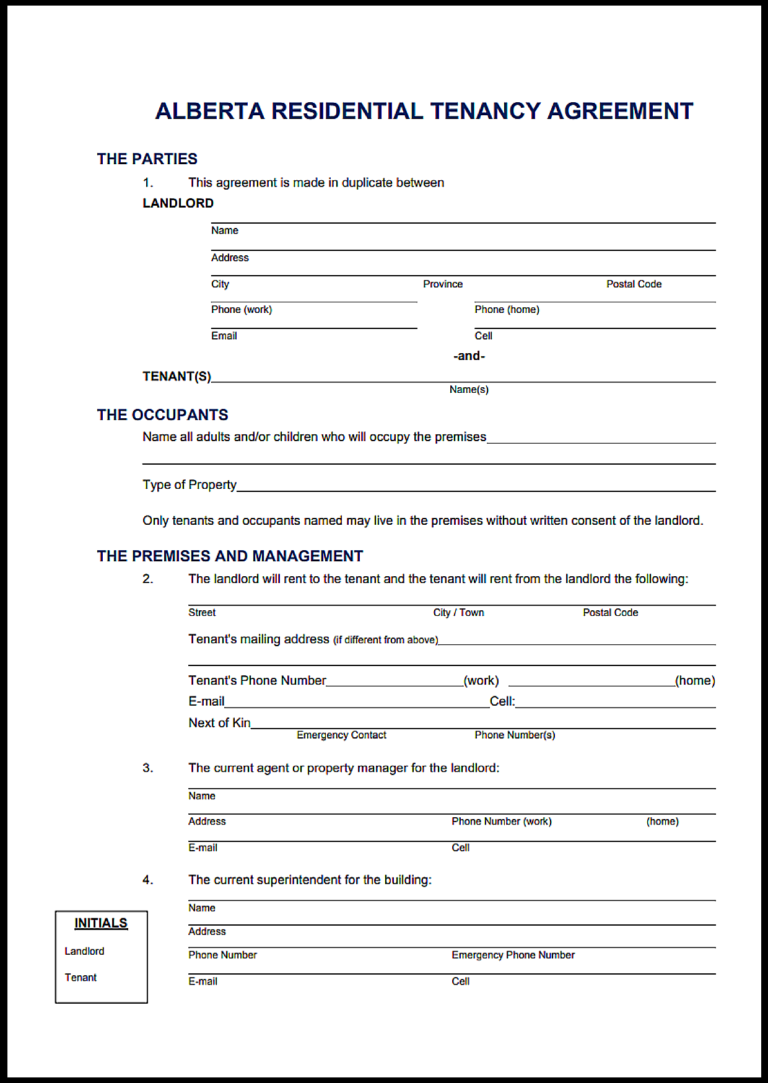
Step 1 — Add Full Names and Contact Information
Start by writing the legal names of all parties involved in the tenancy.
Include:
- Landlord’s full legal name
- Tenant’s full legal names
- Phone numbers
- Email addresses
- Mailing addresses if different from the rental property
Emergency contact information can also be useful, but it is different from the landlord or agent information Manitoba requires when a tenancy begins. Section 13 requires the landlord to provide specified contact information for the landlord or responsible agent.
Avoid using nicknames or incomplete names because they may create identification problems later.
Step 2 — Describe the Rental Unit Correctly
The lease should clearly identify the rental property.
Include details such as:
- Full property address
- Apartment or suite number
- Parking stalls
- Storage lockers
- Shared spaces
- Furnished or unfurnished status
This section is especially important in basement apartment rentals and duplexes where tenants may share laundry rooms, entrances, parking areas, or utility systems.
If parking is included, explain exactly which parking space belongs to the tenant.
Step 3 — Choose the Lease Type
The agreement should clearly explain the type of tenancy.
| Lease Type | Description | Common Use |
| Fixed-term lease | Ends on a specific date |
Apartments and condos
|
| Month-to-month tenancy | Continues until properly terminated | Flexible rentals |
| Sublease | Existing tenant rents to another person |
Temporary moves
|
| Condo rental | Residential tenancy subject to applicable condominium requirements |
Rental of a condominium unit
|
A fixed-term Manitoba tenancy has a specified expiry date and is subject to the renewal rules in section 21.
A tenancy without a specified end date continues for successive rental payment periods under Manitoba’s tenancy rules unless it is otherwise terminated or replaced.
If the rental unit is a condominium unit, additional notice and document requirements can apply under Manitoba law.
Step 4 — Clearly State Rent Terms
The rent section should be very detailed and easy to understand.
Include:
- Monthly rent amount
- Rent due date
- Accepted payment methods
- NSF cheque handling
- Utility payment responsibilities
Under Manitoba law, late fees are limited.
The maximum late payment fee is:
- $10 for the day rent is due
- Up to $2 for each additional day
- Maximum total of $100
Before charging a late payment fee, the landlord must advise the tenant in writing of the intention to charge the fee.
Landlords are not allowed to charge higher late penalties than the amount permitted under Manitoba regulations.
It is also important to know that landlords cannot require tenants to provide post-dated cheques or mandatory automatic withdrawals as a condition of renting.
Step 5 — Add Security and Pet Deposits Properly
Manitoba law limits how much landlords can collect for deposits.
| Deposit Type | Maximum Allowed |
|---|---|
| Security deposit | One-half of one month’s rent |
| Pet deposit | One month’s rent |
For example, if monthly rent is $1,500:
- Maximum security deposit = $750
- Maximum pet deposit = $1,500
Charging more than the legal limit may violate Manitoba tenancy laws.
A tenant is not liable for reasonable wear and tear, while a landlord may make a claim against a deposit for qualifying damage or extraordinary cleaning permitted by the Act.
A landlord may make a claim against a security or pet damage deposit for liabilities permitted by The Residential Tenancies Act. The statutory deposit-claim process should be followed where the tenant does not agree.
Step 6 — List Utilities and Maintenance Duties
Write utility responsibilities in concrete terms. For example, state who pays electricity, whether heat is included in rent, how a shared utility bill is divided, and who handles snow removal or lawn care.
The lease should clearly explain responsibility for:
- Heat
- Electricity
- Water
- Internet
- Snow removal
- Lawn care
Maintenance duties should also be written clearly.
For example:
- Landlord handles plumbing repairs
- Tenant replaces light bulbs
- Shared snow removal schedule
- Garbage collection rules
Instead of saying that the tenant “handles maintenance,” identify the particular tasks the tenant is responsible for and leave landlord repair obligations governed by The Residential Tenancies Act.
Step 7 — Include Property Rules Carefully
Reasonable property rules are allowed if they follow Manitoba law.
Common lease rules include:
- Smoking restrictions
- Noise limits
- Guest policies
- Parking rules
- Garbage disposal instructions
- Pet restrictions
Manitoba human-rights law protects people who rely on service animals, and the Residential Tenancies Act prohibits a landlord from requiring a pet damage deposit for a tenant who relies on a service animal.
A general “no pets” rule may still apply to ordinary pets, but it cannot override applicable human-rights protections.
Step 8 — Sign and Deliver the Agreement
Both the landlord and tenant should sign and date the lease agreement.
Electronic signatures may satisfy applicable Manitoba signature requirements where the requirements of The Electronic Commerce and Information Act are met.
Within 21 days after the tenant signs a written tenancy agreement and gives it to the landlord, the landlord must provide the tenant with a copy signed by both the landlord and tenant.
Good recordkeeping practices include:
- Saving digital copies
- Keeping payment records
- Documenting repairs
- Storing inspection reports
These documents can become important evidence if disputes later reach the RTB.
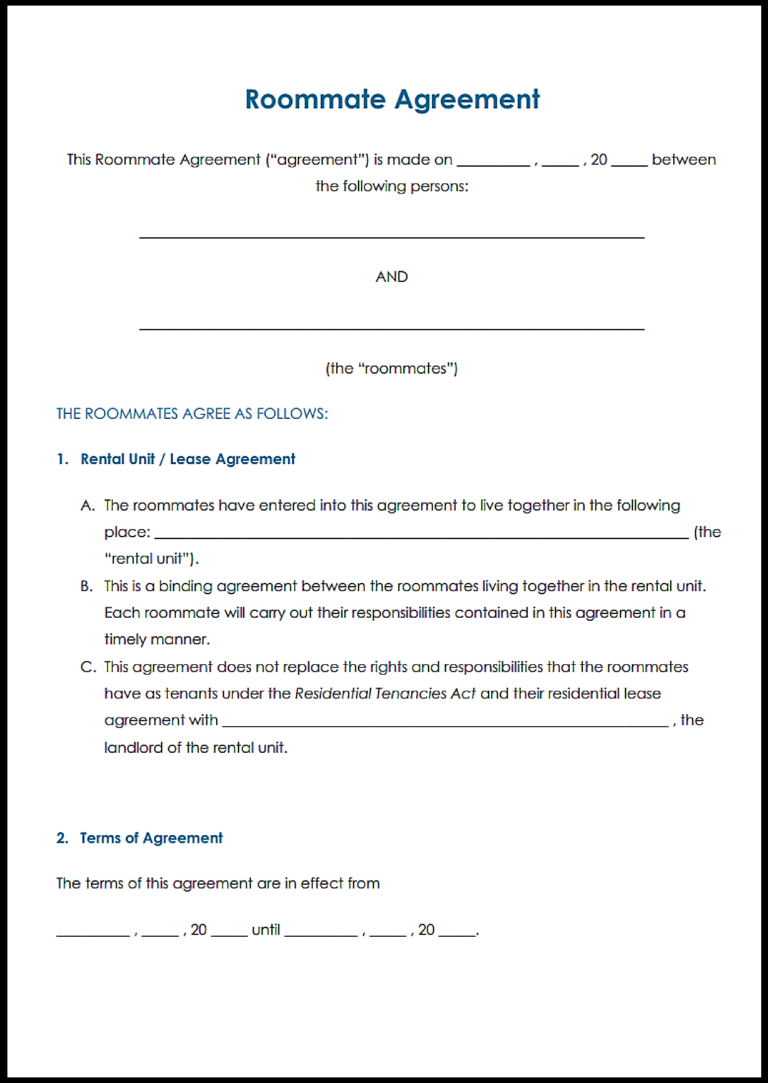
Shared occupancy situations sometimes involve additional housing paperwork such as a roommate agreement template or a sublease agreement form to clarify responsibilities between tenants.
Clauses Manitoba Landlords Cannot Legally Include
Illegal Deposit Clauses
Some deposit terms violate Manitoba law even if tenants agree to them.
Illegal examples include:
- Charging deposits above legal limits
- Automatic carpet cleaning deductions where not legally justified
- Non-refundable security deposits
- Charges for ordinary wear and tear
A tenant is not liable for reasonable wear and tear, while a landlord may make a claim against a deposit for qualifying damage or extraordinary cleaning permitted by the Act.
Illegal Payment Requirements
Landlords are not allowed to require:
- Post-dated cheques
- Mandatory automatic withdrawals
- Forced pre-authorized debit payments
Tenants may voluntarily agree to payment methods where permitted, but landlords cannot require post-dated cheques as a condition of renting.
Illegal Pet Restrictions
While landlords can generally establish reasonable pet rules, service animals are treated differently under Manitoba human-rights law.
Landlords must comply with applicable protections for people who rely on service animals.
Trying to prohibit protected assistance animals may create legal problems and human-rights complaints.
Application Fees Are Not Allowed
Manitoba landlords cannot require or receive application, processing, investigation or acceptance fees from prospective tenants.
Illegal examples include:
- Administrative fees
- Application processing charges
- Background check fees charged to applicants
This rule often surprises landlords who move from provinces or countries where application fees are common.
Special Rules for Condo and Apartment Lease Agreements
Mandatory Condo Disclosure Notice
Before a prospective tenant enters into a tenancy agreement for a condominium unit, the landlord must give written notice that the unit is governed by The Condominium Act and must provide the applicable condominium declaration provisions, by-laws and rules required by Manitoba law.
The required condominium information can include:
- Notice that the unit is governed by The Condominium Act
- Applicable declaration provisions
- Applicable by-laws
- Applicable rules
These requirements help tenants understand the condominium rules that may affect their use and occupancy of the rental unit.
Rent Increase Rules in Manitoba
Manitoba limits how often landlords can increase rent for rental units subject to the province’s rent-increase rules.
Important rules include:
- Rent generally cannot increase more than once in a 12-month period
- Landlords generally must provide at least 3 months’ written notice
- Above-guideline increases may require RTB approval
A landlord generally must give at least three months’ written notice of a rent increase, using the required information and form under the Act and regulations.
If a landlord wants to increase rent above the permitted guideline amount, they may need to file an application with the Residential Tenancies Branch.
Condition Inspection Reports Matter
A rental unit condition report can be important evidence in a Manitoba tenancy dispute. The Act allows the landlord or tenant to request one on or before the tenancy begins, and the prescribed Form 5 is used for the report.
Form 5 condition reports can help document:
- Existing damage
- Flooring condition
- Appliance condition
- General cleanliness
A landlord may have difficulty proving a damage claim without reliable condition records.
Photos and videos can also help support inspection reports.
Common Mistakes People Make When Writing Manitoba Leases
Using American or Generic Canadian Templates
A generic lease can miss Manitoba-specific requirements even when its basic structure looks familiar.
The problem is not simply that a form came from another province. The important question is whether its terms comply with Manitoba law.
Generic templates may contain:
- Illegal deposit terms
- Incorrect notice periods
- Unlawful fees
- Invalid eviction language
Landlords should check the prescribed-form requirements and review additional clauses against Manitoba tenancy legislation before using a generic form.
Forgetting Mandatory Manitoba Disclosures
Some Manitoba notices and documents are separate from the tenancy agreement itself.
Common mistakes include:
- Missing condo notices
- Missing rent increase information
- Incomplete inspection documentation
For example, condominium rentals can trigger specific disclosure requirements, while rent increases are subject to statutory notice requirements and prescribed information. A condition report under section 39 can also provide important evidence about the unit’s condition.
Vague Utility or Repair Terms
Avoid phrases such as “utilities shared equally” unless the agreement explains exactly how the amount will be calculated and paid.
For example:
- “Utilities shared equally”
- “Tenant handles maintenance”
- “Repairs done when needed”
These phrases may sound simple but can lead to disagreements later.
The lease should identify the particular responsibility rather than assigning an undefined duty to the tenant.
Not Keeping Signed Copies
Landlords should keep organized lease records.
This becomes particularly important during disputes involving:
- Property damage
- Unpaid rent
- Security deposits
- Repair responsibilities
Keeping signed copies protects both landlords and tenants and can provide useful evidence during an RTB proceeding.
Real-Life Example of a Manitoba Lease Situation
Example — Basement Apartment Rental in Winnipeg
A landlord rents a basement apartment in Winnipeg for $1,450 per month.
The lease states:
- Security deposit of $725
- Shared internet included
- Hydro split between upstairs and downstairs tenants
- No regular pets allowed
- Quiet hours after 10 PM
Before move-in, both parties complete a condition inspection report with photographs.
Six months later, the tenant disputes damage charges related to old carpet stains. Because the landlord has signed inspection records showing the stains existed before move-in, those records could provide important evidence when the RTB considers any later claim for carpet damage.
This example shows why clear lease wording and inspection records matter in real rental situations.
Summary of Applicable Laws
Manitoba Residential Lease Laws Table
| Topic | Rule |
Governing Statute
|
| Standard residential lease | Written tenancy agreements must meet prescribed-form requirements; landlords may use their own form if it contains all prescribed information |
The Residential Tenancies Act and Residential Tenancies Regulation
|
| Security deposit limit | Maximum one-half month’s rent |
The Residential Tenancies Act
|
| Pet deposit limit | Maximum one month’s rent, subject to service-animal protections |
The Residential Tenancies Act
|
| Late fee limits | $10 for the day rent is due, up to $2 additional per day, maximum $100, subject to required written notice |
Residential Tenancies Regulation
|
| Condo disclosures | Specific written notice and condominium documents may be required |
The Residential Tenancies Act
|
| Service animals | Service-animal protections apply under Manitoba law |
The Human Rights Code and The Residential Tenancies Act
|
| Age of majority | 18 years old |
The Age of Majority Act (Manitoba)
|
When a Lease Agreement May Need Registration
Residential Leases Longer Than 3 Years
Most ordinary residential tenancies in Manitoba do not require land registration simply to operate as a tenancy.
Leases for more than three years can engage Manitoba’s land-registration legislation. The Registry Act applies to leases longer than three years, and the Real Property Act provides for registration of qualifying leases and leasehold estates.
Registration is separate from the ordinary Residential Tenancies Branch requirements that apply to residential tenancies.
Above-Guideline Rent Increase Applications
Manitoba uses annual rent increase guidelines for rental units subject to the province’s rent-increase rules.
If landlords want to increase rent above the permitted guideline amount, they may need approval from the Residential Tenancies Branch.
This process may involve:
- Filing an application
- Providing the information required by the RTB
- Providing financial information supporting the requested increase
- Waiting for RTB review and a decision
The annual guideline percentage may change from year to year.
Frequently Asked Questions
Does Manitoba require a written lease agreement?
Manitoba tenancy agreements can be written, oral or implied. For written agreements, The Residential Tenancies Act requires the prescribed-form requirements to be met.
Can a landlord write their own lease in Manitoba?
Yes. Manitoba’s Residential Tenancies Branch states that a landlord may use the standard form or a form of the landlord’s own that contains all prescribed information. Any additional terms must comply with The Residential Tenancies Act and applicable rules.
Can landlords charge application fees in Manitoba?
No. Manitoba landlords cannot require or receive application, processing, investigation or acceptance fees from prospective tenants.
What is the maximum security deposit allowed?
The maximum security deposit is one-half of one month’s rent.
Are digital signatures allowed on Manitoba leases?
Electronic signatures may satisfy applicable Manitoba signature requirements when the requirements of The Electronic Commerce and Information Act are met.
Can landlords require post-dated cheques?
No. Tenants may voluntarily provide them, but landlords cannot require post-dated cheques as a condition of renting.
What happens if the lease violates Manitoba law?
A signed lease does not make a provision enforceable if it is inconsistent with the prescribed form or The Residential Tenancies Act, or if it improperly restricts or waives rights under the Act.