Ontario Consulting Agreement Template PDF & Word (Free Download)
Ontario Consulting Agreement is one of the easiest ways to protect your work, define expectations, and make sure you actually get paid. If you’re a freelancer, consultant, or small business owner in Ontario, this simple contract can save you from major headaches later.
A consulting agreement is a written contract between a client and a consultant. It clearly explains what work will be done, how much will be paid, and what rules both sides must follow.
In Ontario, this matters more than most people think. Without a proper agreement, disputes about payment, deadlines, or ownership of work can quickly become messy. A simple contract gives you legal clarity and protects your time, effort, and income.
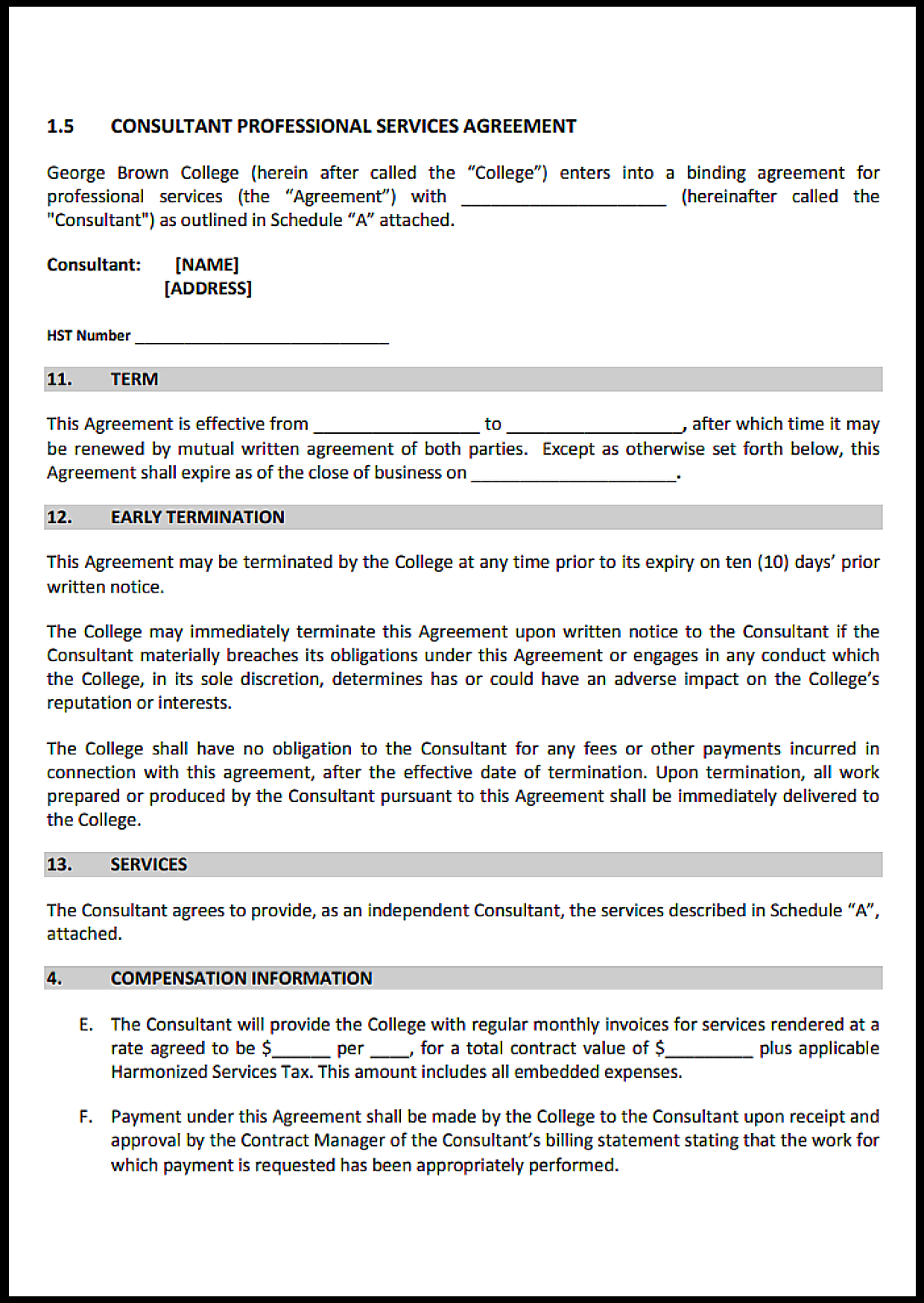
Free Ontario Consulting Agreement Template
You can copy and use the template below right away. It’s simple, clean, and suitable for most basic consulting projects in Ontario.
What Is an Ontario Consulting Agreement?
In simple terms, an Ontario consulting agreement is a legal contract where a consultant agrees to provide services to a client in exchange for payment.
Consultant vs Employee
Many people confuse consultants with employees. They are not the same.
| Feature | Consultant | Employee |
| Control | Works independently |
Controlled by employer
|
| Taxes | Pays own taxes |
Employer deducts taxes
|
| Benefits | No benefits |
May receive benefits
|
| Contract | Project-based |
Ongoing employment
|
Under Ontario law, this distinction is very important. Misclassifying someone can lead to legal and tax issues.
Common Industries Using Consulting Agreements
- Marketing and social media
- IT and software development
- Business strategy
- Graphic design
- Financial consulting
Real-Life Example
A startup in Toronto hires a freelance social media manager for 3 months. Without a contract, they argue about payment and deliverables. With a consulting agreement, everything is clearly defined from day one.
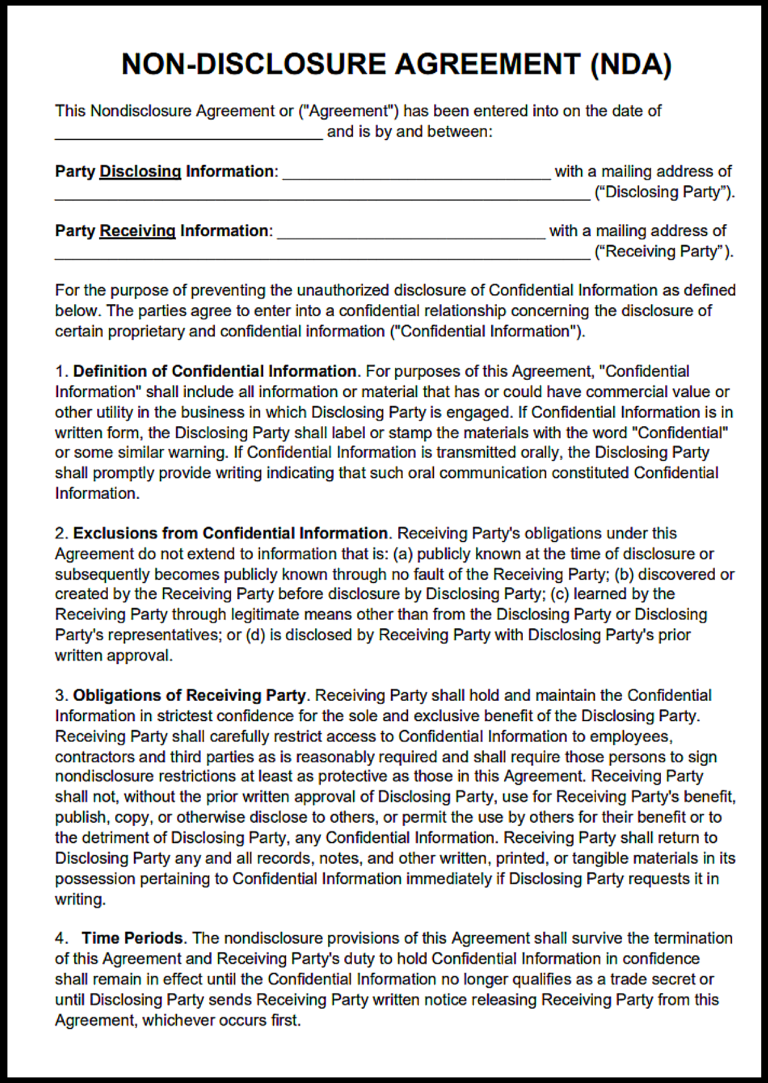
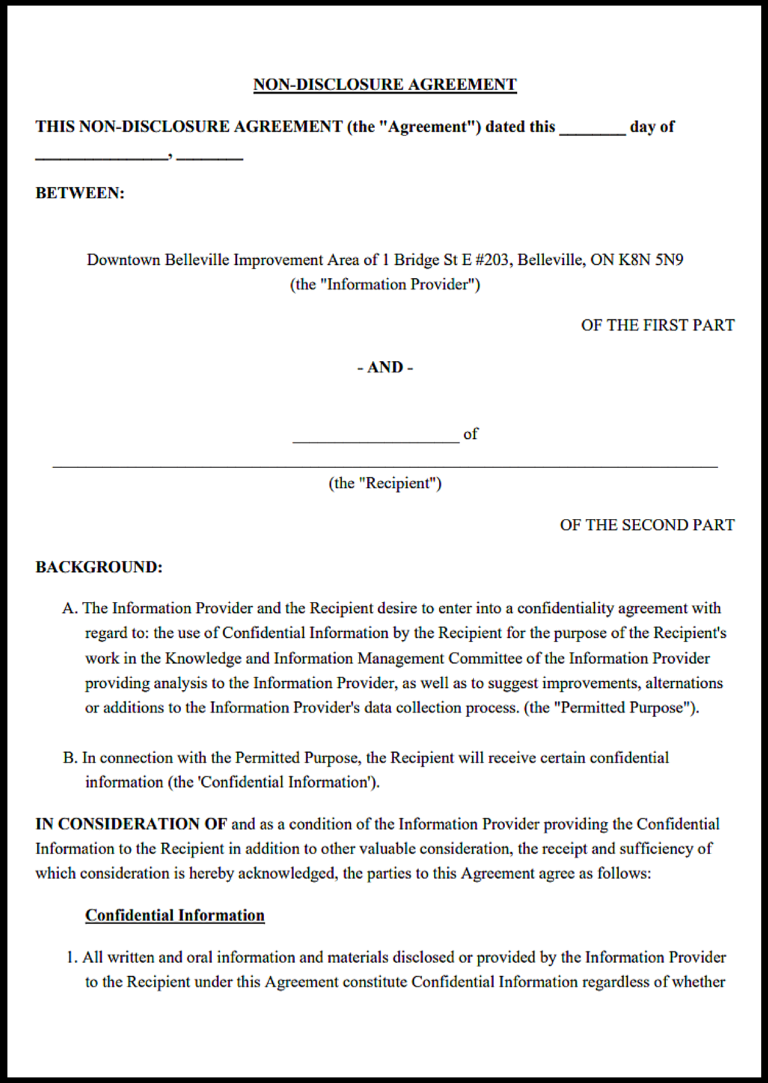
Consultants often handle confidential business data, which is why it’s important to review the NDA template resource when creating a legally complete agreement.
When Should You Use a Consulting Agreement in Ontario?
You should use this agreement anytime you are working with an independent professional.
Common situations:
- Hiring freelancers
- Short-term or project-based work
- Remote consulting (very common now)
- Any paid service arrangement
Most important rule: Always sign before work starts.
Verbal agreements are risky. Even if they are sometimes enforceable, they are much harder to prove.
Key Elements Every Ontario Consulting Agreement Must Include
Clear Scope of Work
This is where most problems happen.
- Describe exactly what will be done
- Include deliverables
- Add deadlines
Avoid vague phrases like “marketing support.” Be specific.
Payment Terms
Clearly define how and when payment happens.
- Hourly rate, fixed fee, or milestones
- Payment schedule (weekly, monthly, per project)
- Late payment penalties (optional but helpful)
Independent Contractor Clause
This protects both parties.
It confirms the consultant is not an employee and is responsible for:
- Their own taxes
- Their own benefits
- Their own tools
Confidentiality Clause
Important for protecting business information.
This ensures the consultant cannot share:
- Client data
- Business strategies
- Financial information
Intellectual Property Ownership
One of the most overlooked sections.
Ask clearly:
- Who owns the final work?
Under s. 13(1) of the Copyright Act, R.S.C. 1985, c. C-42, the independent contractor automatically retains copyright ownership unless an explicit, written assignment is executed. Additionally, the agreement must contain an express written waiver of Moral Rights (s. 14.1), which cannot be assigned under Canadian law.
Termination Clause
Defines how either party can end the agreement.
Include:
- Notice period (e.g., 7–14 days)
- Conditions for termination
Is a Consulting Agreement Legally Enforceable in Ontario?
Yes—if it meets basic legal requirements.
Under Ontario law, a contract is legally binding when it includes:
- Offer → One party offers services
- Acceptance → The other agrees
- Consideration → Payment or value is exchanged
Ontario follows common law principles, which recognize written contracts as strong evidence.
While verbal agreements can be valid, written agreements are much easier to enforce and prove.
This type of agreement is closely related to a service agreement format and may also align with a contractor agreement structure depending on the working relationship.
Ontario Laws That Affect Consulting Agreements
Independent Contractor vs Employee Rules
Ontario law looks at:
- Level of control
- Ownership of tools
- Financial risk
If a consultant is treated like an employee, legal issues can arise.
Tax Obligations
In most consulting agreements:
- The consultant handles their own taxes
- They may need to charge HST (if applicable)
Employment Standards Confusion
Ontario employment laws apply to employees—not independent contractors.
Many people misunderstand this. A consultant is generally not entitled to employee protections unless misclassified.
Common Mistakes to Avoid
Here are the most common issues I see in real-world agreements:
- Not defining the scope clearly
- Missing payment terms
- Ignoring intellectual property ownership
- Using US-based templates (not suitable for Ontario)
- Not signing before work starts
Avoiding these alone can prevent most disputes.
Real-Life Example
A small business hires a freelance social media manager.
Without Agreement:
- No clear deliverables
- Payment delays
- Arguments about expectations
With Agreement:
- Clear tasks and deadlines
- Fixed payment schedule
- Smooth working relationship
This is exactly why written agreements matter.
Consulting Agreement vs Independent Contractor Agreement
These terms are often used interchangeably—but there are slight differences.
| Type | Key Feature | Risk |
| Freelancer | Works per project | Low |
| Independent Contractor | Ongoing but independent | Medium |
| Employee | Controlled by employer |
High (if misclassified)
|
The CRA (Canada Revenue Agency) looks at:
- Control over work
- Ownership of tools
- Chance of profit or loss
Misclassification can lead to penalties and tax issues.
Tax and Payment Considerations for Ontario Freelancers
As a freelancer, you must handle your own taxes.
Key points:
- Report all income to the CRA
- Mandatorily register for, collect, and remit GST/HST if gross taxable supplies from commercial activities exceed the $30,000 CAD statutory small supplier threshold across any single calendar quarter or four consecutive calendar quarters.
- Excise Tax Act, R.S.C. 1985, c. E-15
- Keep invoices and records
Why contracts help:
They provide proof of income and payment terms during audits.
What Happens If a Client Doesn’t Pay?
If a client refuses to pay, follow these steps:
- Send a polite reminder
- Refer to your contract terms
- Send a formal demand letter
- Consider commencing an action in the Ontario Small Claims Court (a branch of the Superior Court of Justice), provided the principal claim amount does not exceed the statutory monetary jurisdiction cap of $35,000 CAD (exclusive of interest and costs) pursuant to O. Reg. 626/93.
Your contract becomes your strongest evidence.
Without it, your case becomes much harder.
How to Fill Out the Freelance Contract (Step-by-Step)
Follow these steps carefully:
- Add full names and contact details
- Describe services clearly (no vague terms)
- Set clear payment terms
- Include realistic deadlines
- Review everything before signing
- Keep a signed copy for records
Tip: Never start work before the contract is signed.
Frequently Asked Questions
Do I need a freelance contract in Ontario?
Yes, while it is not legally required, a freelance contract is strongly recommended. It helps avoid disputes and protects your work and payment terms.
Can I write my own freelance agreement?
Yes, you can create your own freelance agreement. It is valid as long as it includes basic legal elements like offer, acceptance, and consideration.
Is a digital signature valid in Ontario?
Yes. Electronic and digital signatures carry full legal validity and are functionally equivalent to traditional wet-ink signatures under Ontario’s Electronic Commerce Act, 2000, S.O. 2000, c. 17, provided they satisfy the reliability, integrity, and attribution standards set out in sections 11 and 12 of the Act.
What if there is no written contract?
If there is no written contract, a verbal agreement may still be valid. However, it can be difficult to prove if a dispute arises.
Can I reuse the same contract for all clients?
Yes, you can reuse the same contract template. Just make sure to customize important details like scope of work, payment terms, and deadlines for each client.
Conclusion
A well-written Ontario Consulting Agreement or freelance contract protects your work, your time, and your income.
It:
- Sets clear expectations
- Prevents misunderstandings
- Gives you legal protection
Use the free template above, customize it for your project, and always get it signed before starting work.
It’s one of the simplest ways to look professional—and stay protected. For professional legal help or to find qualified lawyers in Ontario, you can refer to the Law Society of Ontario.