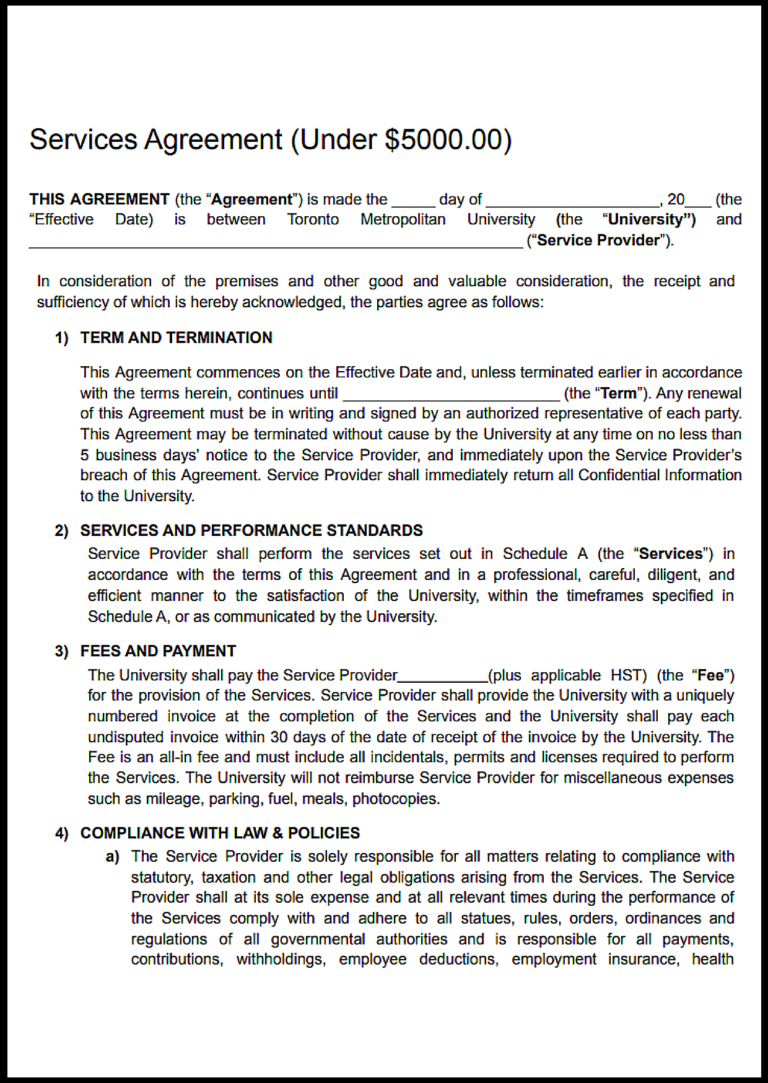
What is NDA Ontario? Definition, Uses, and Legal Requirements
What is NDA Ontario? It’s a question I hear regularly from business owners and employers who are about to share sensitive information and want to know whether a confidentiality agreement will actually hold up if something goes wrong. In Ontario, an NDA is generally assessed under contract law principles, which means the wording matters far more than many people realise.
I’ve seen situations where a business relied on a generic online template, only to face a dispute in the Ontario Superior Court of Justice after confidential information was disclosed and the agreement failed to clearly identify what was supposed to remain private. When that happens, the cost of proving confidentiality can quickly outweigh the convenience of using a one-size-fits-all form.
Below, you’ll find what an NDA is, how it works in Ontario, when it should be used, and the key terms that help make it effective.
Last Updated: September 2026
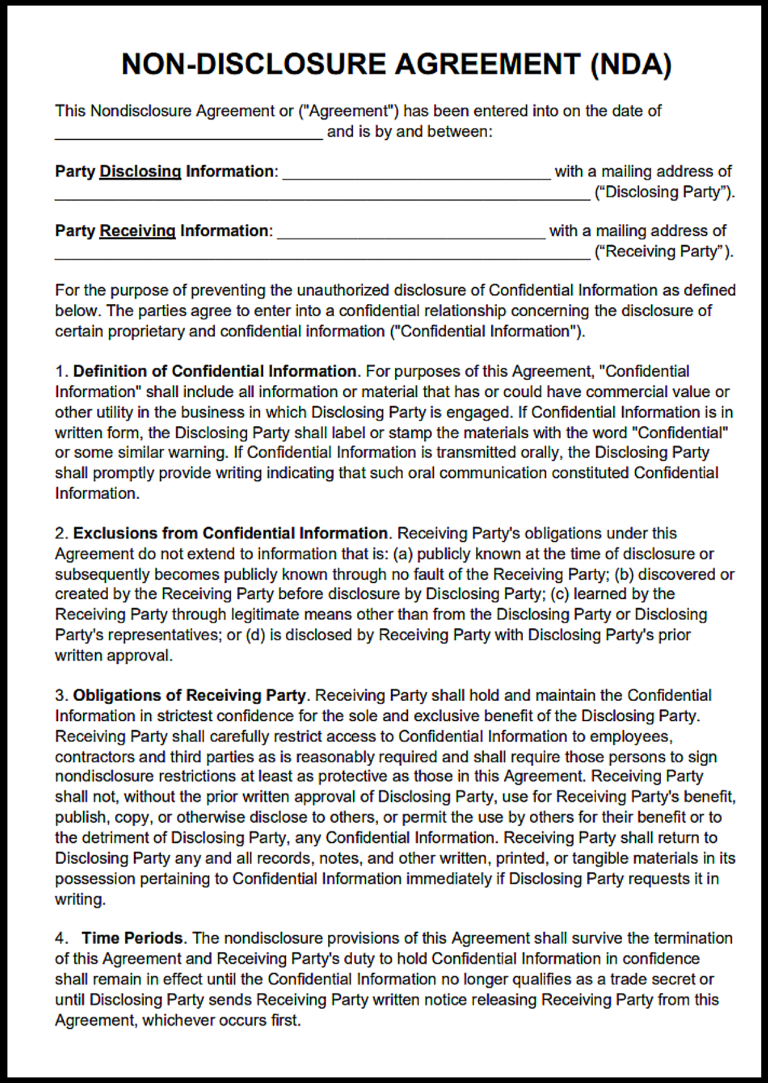
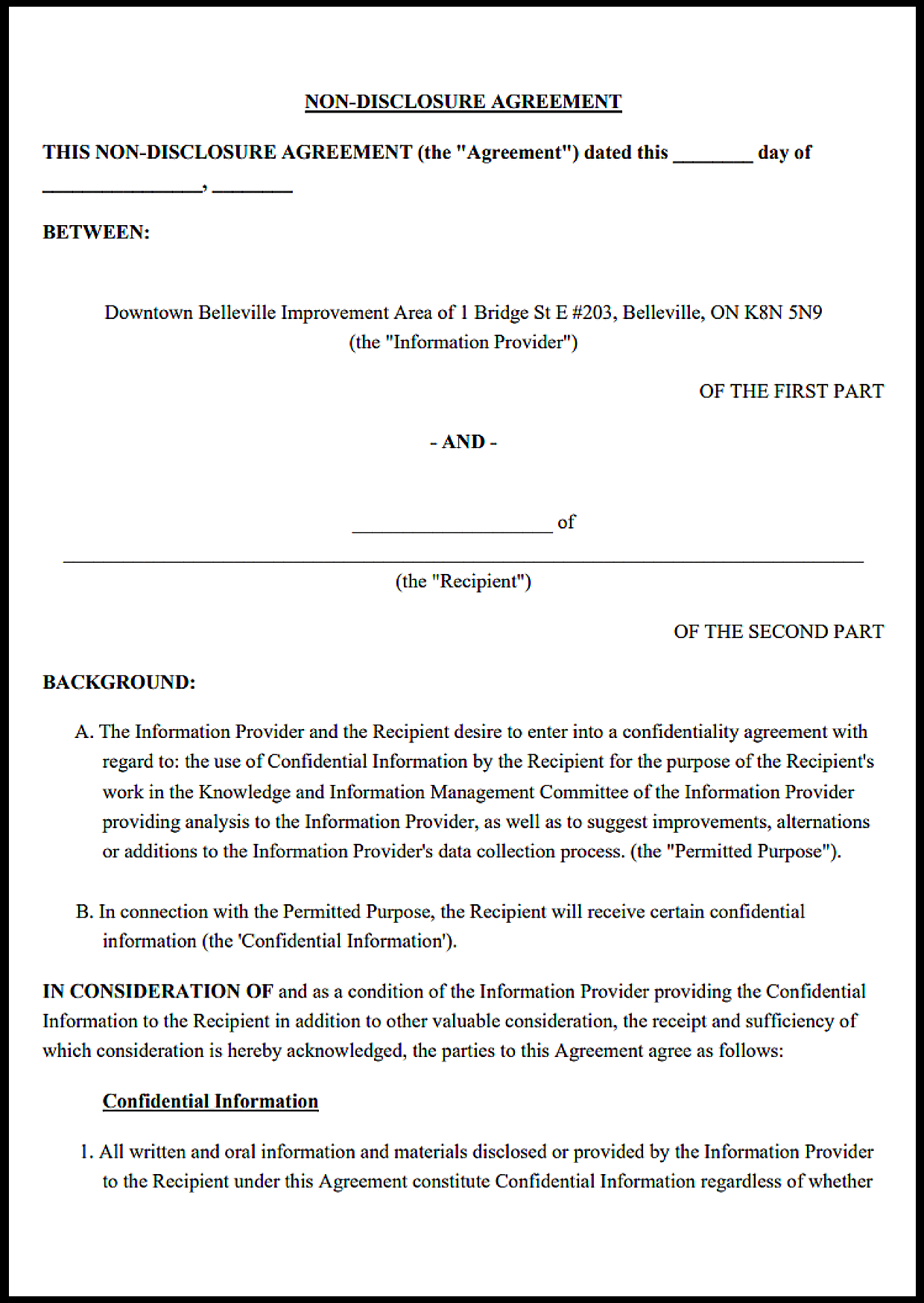
Free NDA Template Ontario
You can copy and use this simple template for most situations. It follows basic Ontario contract principles.
Ontario NDA Laws, Non-Compete Rules & Legal Limits
| Topic / Issue | Ontario Legal Rule | Governing Statute |
|---|---|---|
| Governing Law & Framework | Commercial and B2B NDAs are primarily governed by Ontario contract law. Employment-related NDAs are also subject to applicable employment legislation, including the Employment Standards Act, 2000. PIPEDA may apply to personal information handled in commercial activities within its federal scope. | Ontario Common Law of Contract; Employment Standards Act, 2000, S.O. 2000, c. 41; Personal Information Protection and Electronic Documents Act (PIPEDA), S.C. 2000, c. 5 |
| Recent Legislative Modernization | Ontario prohibits employment non-compete agreements under section 67.2 of the Employment Standards Act, 2000, subject to statutory exceptions. The Working for Workers Four Act, 2024 introduced additional employment-law changes, while Ontario has also consulted on possible restrictions on NDAs in settlements involving workplace sexual harassment, misconduct or violence. | Employment Standards Act, 2000, s. 67.2; Working for Workers Four Act, 2024, S.O. 2024, c. 3 |
| Who can sign | An NDA should be signed by individuals who have legal capacity to enter into the agreement and, for a corporation, by a person with appropriate authority to bind the corporation. | No statutory requirement — governed by common law principles |
| Witness requirement | An ordinary NDA generally does not require a witness, although having a witness can provide additional evidence about the signing of the agreement. | No statutory requirement — governed by common law principles |
| Notarization | Notarization is not generally required for a standard NDA, although particular transactions or documents may have separate formal requirements. | No statutory requirement — governed by common law principles |
| Age requirement | Ontario’s age of majority is 18, although the enforceability of an agreement involving a person under 18 depends on the applicable rules governing contracts with minors. | Age of Majority and Accountability Act, R.S.O. 1990, c. A.7, s. 1 |
| Mental capacity | A party must have the legal capacity required to enter into the particular contract; questions about mental capacity are generally governed by common law principles. | No statutory requirement — governed by common law principles |
| Time limit to sue | The basic limitation period for many court claims is generally two years from when the claim is discovered, subject to exceptions under the Limitations Act, 2002. | Limitations Act, 2002, S.O. 2002, c. 24, Sched. B, s. 4 |
| Whistleblowing and reporting protections | An NDA should not purport to restrict communications that a person is legally entitled or required to make to regulators, law enforcement, courts, tribunals or other authorities under applicable law. | Applicable Ontario and federal legislation |
| Waiver of employee rights | An NDA cannot validly require an employee to give up rights or protections that cannot lawfully be waived under the Employment Standards Act, 2000 or other applicable legislation. | Employment Standards Act, 2000, s. 5 |
| Non-compete restrictions | An NDA should not be drafted as a disguised prohibition on post-employment competition. Ontario’s statutory non-compete prohibition applies to agreements that meet the ESA definition of a non-compete; a genuine non-disclosure agreement is not automatically a non-compete. | Employment Standards Act, 2000, s. 67.2 |
| Filing requirement | Standard NDAs are private contracts and are not generally registered with the government. | N/A |
| Court filing exception | An NDA is generally a private contract, but it may become part of a court or tribunal proceeding when the agreement is relevant to the dispute. | Ontario Superior Court of Justice procedures |
| Invalid non-compete clauses | A contractual restriction that actually prohibits an employee from competing after employment may fall within Ontario’s statutory non-compete prohibition. A properly drafted confidentiality obligation is different because it protects confidential information rather than generally preventing someone from working. | Employment Standards Act, 2000, s. 67.2 |
| Obstruction of Justice & Public Policy | An NDA should not be drafted to interfere with lawful reporting, investigations or communications required or protected by applicable law. Clauses that conflict with statutory duties or public policy may be unenforceable. | Criminal Code, R.S.C. 1985, c. C-46; applicable common law principles |
| Unconscionability | Ontario courts may refuse to enforce contractual provisions in appropriate circumstances, including where recognized doctrines such as unconscionability apply. In Uber Technologies Inc. v. Heller, 2020 SCC 16, the Supreme Court considered unconscionability in the context of an arbitration clause. | Common law principles; Uber Technologies Inc. v. Heller |
| Ontario’s non-compete ban | Ontario’s Employment Standards Act, 2000 prohibits employers from entering into employment non-compete agreements, subject to statutory exceptions including certain executives and qualifying business-sale situations. | Employment Standards Act, 2000, s. 67.2 |
| Working for Workers framework | Ontario’s employment legislation regulates how contractual terms interact with employee rights and workplace protections. | Employment Standards Act, 2000; Working for Workers legislation |
| Limitation period difference | The basic limitation period for many court claims in Ontario is two years from discovery, but the applicable limitation period for an NDA-related claim depends on the claim and any statutory exceptions. | Limitations Act, 2002, s. 4 |
One of the biggest surprises for many Ontario employers and business owners is that an NDA should not be drafted to secretly function like a non-compete agreement. Ontario law prohibits employment non-compete agreements in specified circumstances, but a genuine confidentiality agreement is different because it protects confidential information rather than generally preventing someone from working in their industry. This matters in real life because many businesses still use old NDA templates copied from the internet that may not match Ontario’s current rules.
Another important issue is that an NDA should not interfere with lawful reporting, investigations or communications protected or required by applicable law. If an agreement tries to restrict conduct that a person is legally entitled or required to undertake, that provision may be unenforceable. Ontario courts may also consider recognized contractual doctrines where an agreement or particular term is challenged.
Getting these rules wrong can lead to expensive lawsuits, unenforceable contracts, or loss of confidential business information when you need protection the most. Download the free Ontario NDA template below to create a stronger agreement that follows Ontario law.
For more detailed agreements, see our Ontario NDA template page or combine it with an Ontario service agreement template for business deals.
Understanding NDAs in Ontario
What is an NDA?
A Non-Disclosure Agreement, often called a confidentiality agreement, sets contractual rules for information that the parties agree should remain confidential. The document usually defines the information, explains why it is being shared and sets limits on its use and disclosure.
- Protect sensitive business information
- Prevent misuse or sharing
- Create contractual responsibility if someone breaches the confidentiality obligations
Example:
You share confidential information about an app with a developer. A properly drafted NDA can create contractual obligations concerning the information covered by the agreement, but the NDA does not automatically give the underlying idea broader intellectual-property protection.
Before using any confidentiality document, you should understand its purpose by reviewing the complete NDA template guide, which shows how these agreements are structured in real situations.
When Do You Need an NDA in Ontario?
An NDA is most useful when one party needs to disclose information that is not intended for general use or disclosure. The right scope depends on what is being shared and the relationship between the parties.
Common use cases:
- Starting a business partnership
- Hiring employees or freelancers
- Talking to investors
- Selling or buying a business
Real-life scenario:
A startup founder in Toronto shares confidential product information with a freelancer. Before sharing details, they sign an NDA. A properly drafted agreement can establish contractual obligations concerning the confidential information covered by the NDA.
Is an NDA Legally Valid in Ontario?
Yes, an NDA can be enforceable in Ontario when the requirements for contract formation are satisfied and its terms are enforceable under applicable law, as outlined by the Government of Ontario.
A contract may involve:
| Requirement | Meaning |
| Offer |
One party proposes terms.
|
| Acceptance |
The other party agrees.
|
| Consideration |
Consideration is generally required for an ordinary contract. Where an employer seeks to impose a new contractual term on an existing employee after the employment relationship is already in place, the enforceability of the change can raise separate consideration and contract-variation issues. The circumstances should be reviewed rather than assuming that continued employment is always sufficient or always insufficient.
|
| Intention |
Both parties intend it to be legally binding.
|
Important:
The drafting becomes more important when the NDA is unusually broad, difficult to comply with, or used in an employment relationship where statutory rights may also apply.
Ontario courts may reject or limit contractual provisions that are:
- Too broad
- Unfair in circumstances recognized by law
- Impossible or unreasonable to comply with
NDAs are commonly included within broader agreements such as a service contract arrangement or a partnership agreement format to protect shared business information.
Key Elements Every Ontario NDA Must Include
Not all NDAs are equal. A poorly drafted NDA can create false confidence.
Clear Definition of Confidential Information
Avoid vague terms like “all business info.”
Instead, be specific:
- Client lists
- Financial records
- Product designs
Purpose of Disclosure
Explain why the information is shared.
Example:
“For evaluating a business partnership.”
Time Duration
The duration should match the nature of the information and the legitimate confidentiality interest being protected.
You can choose:
- Fixed period, such as 2 years
- Ongoing obligations for information such as trade secrets, where appropriate
Obligations of Receiving Party
This is the core of the NDA:
- Don’t disclose
- Don’t misuse
- Protect the information
Exceptions Clause
Not everything can be confidential.
Typical exceptions:
- Public information
- Already known data
- Legally obtained info
Governing Law Clause
Always identify the intended governing law clearly.
This clause identifies Ontario law as the governing law of the agreement, subject to applicable conflict-of-laws rules and any separate jurisdiction or forum provisions.
Types of NDAs Used in Ontario
Different situations need different NDAs.
| Type of NDA | When Used | Key Feature |
| Unilateral NDA | One party shares information |
One-way protection
|
| Mutual NDA | Both parties share information |
Two-way protection
|
| Employee NDA | Hiring staff |
Protects company data
|
| Business Sale NDA | Selling a business |
Protects financial and client information
|
The appropriate structure depends on who is disclosing information. A mutual NDA may be useful where both sides will share confidential information, while a unilateral NDA may be appropriate where only one side is disclosing information.
How to Fill and Use an NDA (Step-by-Step)
You don’t need a lawyer for every basic NDA—but you must be careful. Complex transactions and employment-related agreements can raise additional legal issues.
Step 1: Identify Parties Clearly
Use full legal names and correct addresses.
Step 2: Define Confidential Information
Be clear and specific. This is where most people go wrong.
Step 3: Set a Realistic Time Period
The duration should match the nature of the information and the legitimate confidentiality interest being protected.
Too short may provide less protection than the parties intended.
An excessively broad or indefinite obligation may raise enforceability concerns depending on the information protected and the circumstances.
Step 4: Review Before Signing
Check:
- Names
- Dates
- Purpose
- Clauses
Step 5: Keep Signed Copies Safe
Store:
- Digital copy
- Printed copy
Common Mistakes to Avoid in Ontario NDAs
The drafting problems that cause the most trouble are usually practical ones: the information is poorly defined, the permitted use is unclear, or the agreement reaches beyond what the parties actually need to protect.
Avoid these:
- Writing overly broad clauses
- Missing time limits
- Not defining confidential information
- Using generic templates without Ontario law
- Failing to properly document acceptance or execution
Pro Tip:
Always customize your NDA based on the situation.
Legal Risks of Poorly Written NDAs
A poorly drafted NDA can create false confidence. If the protected information, permitted use or duration is unclear, a dispute may focus on what the parties actually intended rather than simply on whether an NDA was signed.
Here’s why:
- It may become unenforceable
- You may not prove a breach
- Business secrets can be lost
- Legal disputes can get expensive
Unclear drafting can create enforceability and interpretation problems even when both parties have signed an agreement.
NDA vs Non-Compete vs Non-Solicitation (Ontario)
These terms confuse many people.
|
Agreement Type
|
What It Does |
| NDA |
Protects confidential information.
|
| Non-Compete |
Restricts an employee from competing after employment, subject to applicable law and statutory exceptions.
|
| Non-Solicitation |
May restrict specified solicitation of clients, customers, or employees, depending on the agreement and applicable law.
|
Important (Ontario Law):
Under section 67.2 of the Employment Standards Act, 2000, Ontario prohibits employers from entering into employment non-compete agreements, subject to statutory exceptions including certain executives and qualifying business-sale situations. A non-disclosure agreement is different from a non-compete because its purpose is to protect confidential information rather than generally prevent a former employee from working in the same field.
If an NDA is drafted so broadly that it attempts to prevent a former employee from using information that is not properly protected as confidential, the wording may create an enforceability dispute. A confidentiality obligation should therefore be drafted around identifiable confidential information rather than a general prohibition on competition.
Real-Life Example of NDA Use in Ontario
Let’s say:
A small business owner creates a new product idea. They hire a developer to build it. Before sharing details, they sign an NDA.
What happens next:
- Developer gets access to confidential information
- NDA creates contractual obligations concerning the confidential information covered by the agreement
- If the developer breaches those obligations → the business may pursue available contractual remedies
Without the NDA?
The owner may have less clear contractual evidence of the parties’ confidentiality obligations, although other legal rights or obligations may still arise depending on the circumstances.
FAQs About NDAs in Ontario
Are NDAs enforceable in Ontario?
Yes, an NDA can be enforceable in Ontario when the requirements for contract formation are satisfied and its terms are enforceable under applicable law. Clear definitions, reasonable obligations and properly documented agreement can reduce disputes about its scope.
How long does an NDA last?
There is no universal Ontario NDA period. The appropriate duration depends on the nature of the information, the parties’ legitimate interests and the wording of the agreement.
Can an NDA last forever?
An NDA can provide continuing confidentiality obligations for information such as trade secrets, but the enforceability of the duration depends on the wording, the nature of the information and the surrounding circumstances.
What happens if someone breaks an NDA?
If someone breaches an NDA, the affected party may pursue available contractual remedies. Depending on the circumstances, this can include damages or an injunction to restrain further use or disclosure.
Do I need a lawyer for an NDA?
Not always, as simple NDAs can be created using templates. For complex or high-value agreements, employment-related NDAs, business sales, or agreements involving significant confidential information, it is better to consult a lawyer.