Saskatchewan Lease Agreement (Free PDF Template & Guide)

A Saskatchewan Lease Agreement usually becomes important right after a “simple rental arrangement” stops being simple — missed rent, surprise move-outs, damage disputes, or landlords and tenants suddenly disagreeing about what was supposedly included. I’ve worked with Regina landlords who rented basement suites to friends or relatives using nothing but text messages, only to discover Saskatchewan’s Residential Tenancies Act takes written lease terms far more seriously once problems land in front of the Office of Residential Tenancies. A lease agreement sets the legal rules for rent, deposits, repairs, notice periods, and responsibilities between landlord and tenant. In Saskatchewan, security deposits must follow strict handling rules under provincial tenancy law, and landlords who ignore those requirements can run into trouble quickly. Property owners, renters, students, families, and anyone leasing residential property in Saskatchewan should not rely on verbal promises alone.

Bad lease paperwork creates very real problems. I once saw a Saskatoon landlord lose part of a damage claim because the lease never clearly addressed move-out conditions or inspection details, and wow, that turned into weeks of arguing over things that should have been obvious. Missing terms, illegal clauses, or vague rent rules can lead to disputes, delayed evictions, deposit fights, or rejected claims through the ORT process. If you are renting property or moving into one in Saskatchewan, use the proper lease agreement template before handshake deals start creating expensive headaches.

Table of Contents

Free Saskatchewan Lease Agreement Template

 Saskatchewan Lease Agreement

Get PDF | WORD

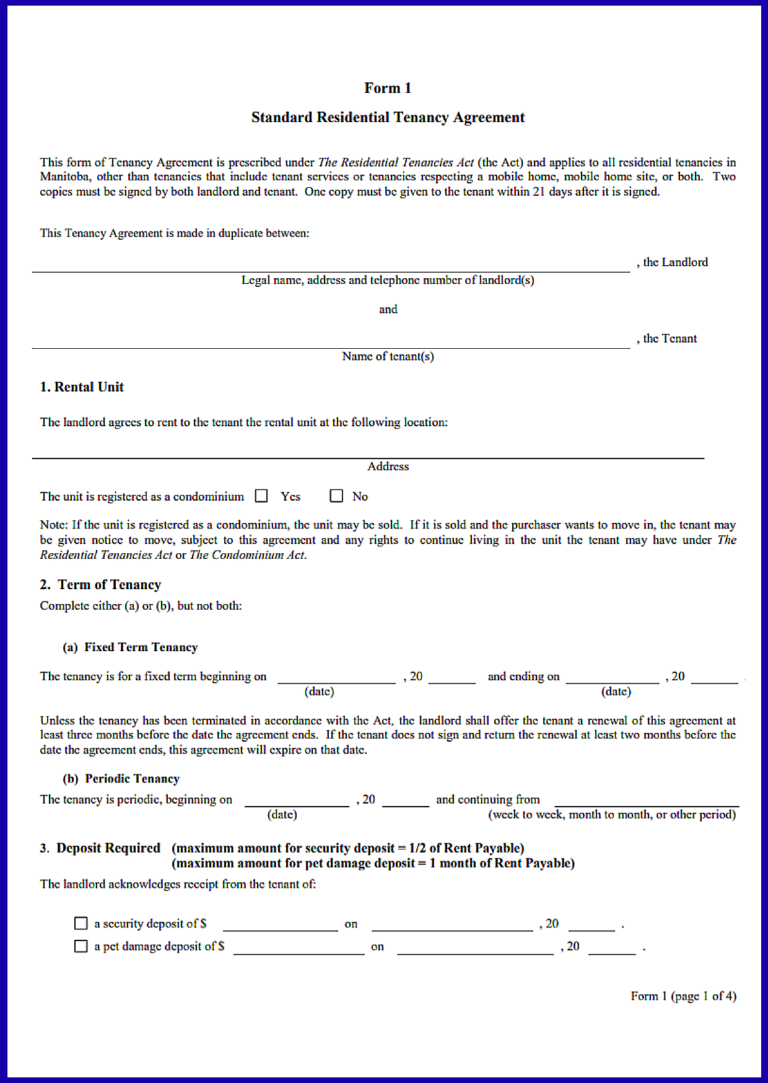
This general Saskatchewan residential lease template works for apartments, houses, condos, basement suites, and other long-term residential rentals. The template follows Saskatchewan tenancy laws and includes the standard tenancy conditions required under provincial regulations.

Saskatchewan Lease Rules That Common Online Templates Miss

Topic / Issue Saskatchewan Legal Rule Governing Statute
Governing Residential Tenancy Law Residential lease agreements in Saskatchewan are governed primarily by provincial tenancy legislation and administered through the Office of Residential Tenancies (ORT). The Residential Tenancies Act, 2006, S.S. 2006, c. R-22.0001; The Residential Tenancies Regulations, 2007, R-22.0001 Reg 1
Federal Criminal Law Interaction Federal law only intersects through collateral issues such as criminal interest rates and criminal harassment rules. Criminal Code, R.S.C. 1985, c. C-46, s. 347
Who Can Sign a Lease Owners, property managers, authorized agents, and tenants granted exclusive occupancy rights may legally sign the agreement. The Residential Tenancies Act, 2006, s. 2(f) & 2(n)
Witness Requirements Saskatchewan residential leases do not require witness signatures to be enforceable. The Residential Tenancies Act, 2006, s. 19
Notarization Requirements Residential lease agreements do not require notarization or affidavits of execution. The Residential Tenancies Act, 2006, s. 19
Minimum Legal Age Parties signing a residential lease must generally be at least 18 years old. The Age of Majority Act, R.S.S. 1978, c. A-6, s. 2
Mental Capacity Standard Parties must understand the financial obligations and operational terms of the lease when signing. Common law contractual capacity doctrines
Lease Copy Delivery Deadline Landlords must provide tenants with a fully signed copy of the lease within 20 days after entering the agreement. The Residential Tenancies Regulations, 2007, Schedule 1, Condition 2(1)
Mandatory Standard Conditions Every written tenancy agreement must include the exact Schedule 1 standard tenancy conditions. The Residential Tenancies Regulations, 2007, s. 4 & Schedule 1
Effect of Missing Schedule 1 If omitted, Schedule 1 conditions are automatically implied into the lease and conflicting custom clauses become void. The Residential Tenancies Regulations, 2007, s. 4 & Schedule 1
Mandatory Lease Information The lease must include landlord and tenant names, rental address, tenancy dates, tenancy type, rent details, utility breakdown, included services, and security deposit details. The Residential Tenancies Act, 2006, s. 19(1)(a)-(k)
Filing Requirements Saskatchewan residential leases are private contracts and are not filed with the ORT unless a dispute arises. The Residential Tenancies Act, 2006
Fixed-Term Lease End Date Requirement Fixed-term leases longer than three months must contain a specific calendar end date or they convert into periodic month-to-month tenancies. The Residential Tenancies Regulations, 2007, Schedule 1, Condition 2(2)
Illegal Full Deposit Demands Landlords cannot require 100% of the security deposit before possession. Tenants may pay part later under the statutory grace period. The Residential Tenancies Act, 2006, s. 25(2)
Illegal Rent Acceleration Clauses Clauses demanding all remaining lease rent after one missed payment are void and unenforceable. The Residential Tenancies Act, 2006, s. 41
Rent Suspension Rule If a landlord fails to provide a signed lease copy within 20 days, the tenant’s obligation to pay rent is suspended until the copy is delivered. The Residential Tenancies Regulations, 2007, Schedule 1, Condition 2(2)
No Automatic Month-to-Month Conversion Fixed-term leases do not automatically convert into month-to-month tenancies when the term expires. The Residential Tenancies Act, 2006, s. 55 & Regulations, s. 8.2
Renewal Notice Requirement Landlords must provide a formal Notice of Intention at least two months before the fixed term ends. The Residential Tenancies Act, 2006, s. 55 & Regulations, s. 8.2
Association-Based Rent Increase Rules Standard landlords require 12 months’ notice for rent increases, while Saskatchewan Landlord Association members may use a shortened 6-month notice period. The Residential Tenancies Act, 2006, s. 54 & Regulations, Schedule 1, Condition 9

One of the biggest surprises for Saskatchewan landlords is how strict the province becomes once a dispute reaches the Office of Residential Tenancies. Many people assume a basic online lease template is enough, but Saskatchewan law automatically inserts mandatory tenancy conditions into every residential agreement whether the landlord includes them or not. I’ve also seen landlords shocked to learn that missing a fixed end date on a “one-year lease” can legally convert the arrangement into a month-to-month tenancy instead.

The 20-day lease copy rule catches people off guard too. Under Saskatchewan law, if the landlord does not provide the tenant with a signed lease copy within 20 days, the tenant’s obligation to pay rent can be suspended until that copy is delivered. That creates serious leverage problems during disputes. Another common mistake involves demanding the entire security deposit upfront, even though tenants are legally allowed a grace period for part of the payment.

Types of Lease Agreements in Saskatchewan

Residential Tenancy Agreement

This is the standard lease used for:

  • Apartments
  • Condos
  • Detached homes
  • Basement suites

It works best for long-term residential occupancy.

Month-to-Month Lease Agreement

A month-to-month tenancy renews automatically each month until either side gives proper notice.

These leases are common when:

  • Tenants need flexibility
  • Landlords expect possible future occupancy changes
  • Temporary housing is involved

Under Saskatchewan law, notice periods must still follow provincial rules.

Fixed-Term Lease Agreement

Fixed-term leases have a specific end date.

These agreements are common for:

  • Student rentals
  • One-year apartment leases
  • Temporary work relocations

Saskatchewan law requires fixed-term leases longer than three months to be in writing. If a verbal fixed-term lease lasts longer than three months, the law may treat it as a month-to-month tenancy instead.

Room Rental Agreement

Room rental agreements are designed for shared housing.

They usually address:

  • Shared kitchens or bathrooms
  • Cleaning duties
  • Guest rules
  • Shared utility payments

These agreements help reduce roommate disputes.

Commercial Lease Agreement

Commercial leases apply to:

  • Retail stores
  • Office spaces
  • Business operations

Commercial leasing follows different legal principles than residential tenancy law.

Sublease Agreement

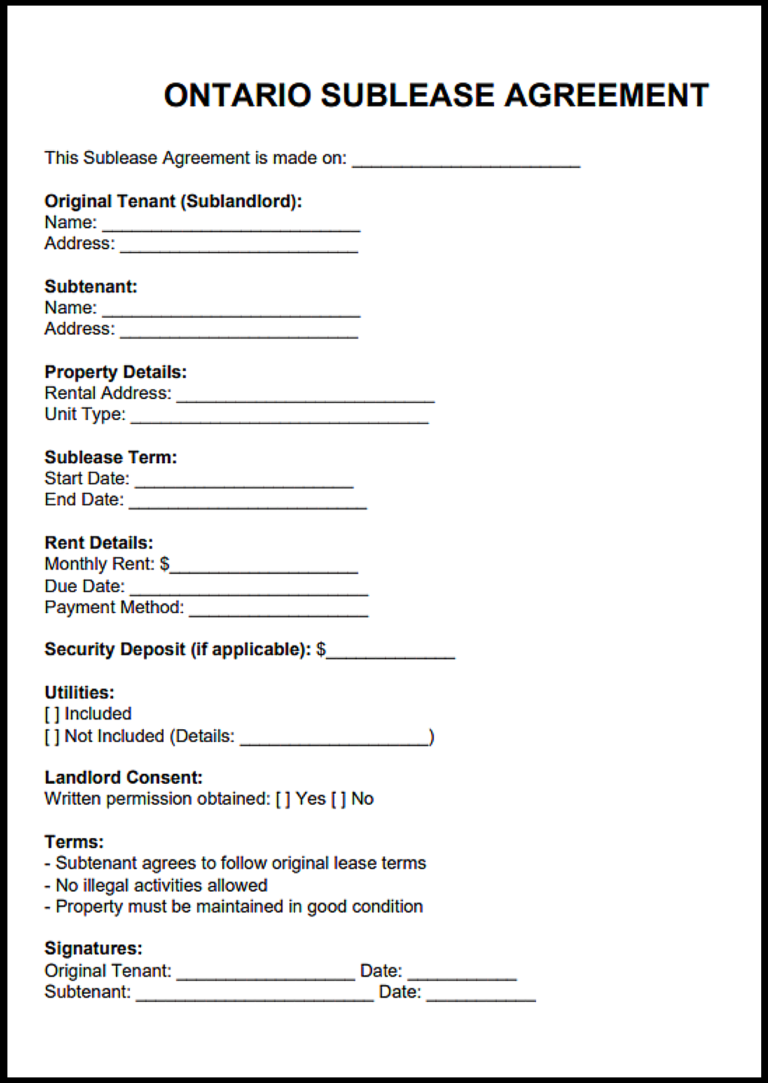
A sublease happens when an existing tenant temporarily rents the property to another person.

In most rental situations, landlord approval is important before subleasing.

Real-Life Rental Situations in Saskatchewan

University Students Renting in Saskatoon or Regina

Student housing often creates disputes involving:

  • Shared cleaning duties
  • Deposit deductions
  • Noise complaints
  • Utility splitting

Many student tenants mistakenly believe verbal agreements are enough. Problems usually appear when roommates move out unexpectedly.

Families Signing Long-Term Residential Leases

Families often focus on:

  • School stability
  • Parking availability
  • Yard maintenance
  • Utility costs

Clear lease wording helps avoid disagreements later.

Landlords Managing Month-to-Month Tenants

Month-to-month arrangements provide flexibility but require careful notice management.

Landlords should clearly communicate:

  • Rent increases
  • Entry notices
  • Renewal expectations

Basement Suites and Secondary Units

Basement rentals often create privacy concerns.

Leases should clearly explain:

  • Laundry access
  • Parking arrangements
  • Shared entrances
  • Utility sharing formulas

Tenant Disputes Escalating to the ORT

Many ORT disputes involve:

  • Missing written leases
  • Illegal fees
  • Deposit deductions
  • Poor inspection evidence

Good documentation often decides the outcome.

Key Elements of a Valid Saskatchewan Lease Agreement

Correct Legal Names and Rental Property Information

Every lease should clearly identify:

  • Full legal landlord names
  • Full tenant names
  • Accurate rental address
  • Service contact details
  • Emergency contact numbers

Missing information can create enforcement problems later.

Fixed-Term vs Periodic Tenancy Clauses

The lease should clearly state whether the tenancy is:

  • Fixed-term
  • Month-to-month
  • Weekly

Fixed-term leases must include an exact end date.

Rent Amount, Due Dates, and Payment Methods

The lease should explain:

  • Monthly rent
  • Due date
  • Accepted payment methods
  • Late payment procedures

Landlords are not allowed to force tenants to provide post-dated cheques or mandatory automatic withdrawals.

Security Deposit Rules

Under Saskatchewan law:

  • Security deposits cannot exceed one month’s rent
  • Combined deposits, including pet deposits, still fall under the one-month limit

Tenants also have a legal right to pay part of the deposit later under provincial rules.

Deposit Rule
Saskatchewan Requirement
Maximum security deposit Capped at 1 month’s rent (inclusive of all pet fees/deposits).
Mandatory upfront full deposit Prohibited; tenant may pay 50% at commencement and 50% over 2 months.
Pet Deposit Limits Must fit within the overall 1-month rent security deposit ceiling.
Non-Refundable Fees Generally void; deposits are refundable subject to actual damages/arrears.

The 7-Business-Day Deposit Return Deadline

Once a tenancy ends and the tenant vacates, The Residential Tenancies Act, 2006 gives landlords a strict 7 business days (excluding weekends and statutory holidays) to either return the full security deposit with interest (if applicable) or serve a formal written notice of claim against the deposit. If a landlord fails to send a claim notice or return the funds within this 7-business-day window, the tenant can apply directly to the Office of Residential Tenancies (ORT) for an immediate order compelling full repayment.

Utilities, Services, and Facility Breakdown

The lease should clearly explain responsibility for:

  • Heat
  • Water
  • Electricity
  • Internet
  • Parking
  • Snow removal
  • Lawn care
  • Laundry access

Unclear utility wording creates many ORT disputes.

Mandatory Standard Conditions

Saskatchewan requires all written leases to include the standard tenancy conditions found in Schedule 1 of the Residential Tenancies Regulations, 2007.

These conditions cover:

  • Quiet enjoyment
  • Repairs
  • Entry rights
  • Maintenance duties
  • Notice rules

Even if landlords forget to include them, the law still treats them as part of the agreement.

Signatures and Copy Delivery Requirements

Although witnesses are not legally required, signed written leases create stronger evidence during disputes.

Landlords must provide tenants with a signed lease copy within 20 days after tenancy starts.

How to Create or Complete a Saskatchewan Lease Agreement

Step 1 — Identify the Correct Lease Type

Choose the correct document for the situation:

  • Residential lease
  • Month-to-month lease
  • Room rental agreement
  • Commercial lease
  • Sublease agreement

Using the wrong form can create legal confusion.

Step 2 — Add Complete Rental Terms

The lease should clearly address:

  • Rent
  • Utilities
  • Deposits
  • Pets
  • Occupancy limits
  • Parking
  • Maintenance duties

Avoid vague wording.

Step 3 — Review Saskatchewan Rental Rules

Before signing, confirm compliance with Saskatchewan rules involving:

  • Deposit caps
  • Illegal fees
  • Tenant rights
  • Landlord obligations

Many online U.S. templates violate Saskatchewan law.

Step 4 — Sign and Deliver Copies

Both parties should keep signed copies.

Practical tips many landlords miss:

  • Save digital backups
  • Photograph move-in conditions
  • Complete inspection reports immediately

These records help during deposit disputes.

Legal Overview in Saskatchewan

Saskatchewan residential leases are private contracts, but provincial law still controls many important rules.

The Office of Residential Tenancies handles disputes involving:

  • Deposits
  • Evictions
  • Repairs
  • Rent increases
  • Lease interpretation

The ORT acts as the first major decision-maker in most residential tenancy disputes.

Summary of Applicable Laws

Topic Rule
Governing Statute
Residential lease framework Governs tenancy relationships
The Residential Tenancies Act, 2006
Standard lease conditions Mandatory tenancy terms
The Residential Tenancies Regulations, 2007
Legal contract age Age of majority is 18
The Age of Majority Act
Rental dispute resolution Administrative dispute authority
Office of Residential Tenancies


Common Saskatchewan Lease Agreement Mistakes

Charging Illegal Application or Processing Fees

Under Saskatchewan law, landlords are generally not allowed to charge rental application fees.

Trying to collect these fees can create ORT problems.

Using Non-Refundable Deposit Clauses

Many landlords incorrectly add:

  • Non-refundable cleaning fees
  • Mandatory carpet cleaning clauses

Saskatchewan law only requires tenants to leave the unit reasonably clean.

Forgetting Mandatory Standard Conditions

Missing Schedule 1 conditions often creates enforcement issues.

The ORT may still apply those conditions automatically.

Poor Move-In Inspection Documentation

Many deposit disputes happen because neither side documented the unit condition properly.

Best practices include:

  • Photos
  • Videos
  • Written inspection forms
  • Signed checklists

Illegal Rent Acceleration Clauses

Landlords cannot legally demand all remaining lease payments immediately after one missed rent payment.

These clauses are generally void under Saskatchewan law.

Relying Only on Verbal Agreements

Verbal agreements are harder to prove during disputes.

Written leases provide much stronger evidence.

Choosing the Right Rental Document

For Standard Long-Term Housing

→ Use a Saskatchewan Residential Lease Agreement

For Flexible Ongoing Rentals

→ Use a Saskatchewan Month-to-Month Lease

For Shared Housing or Roommates

→ Use a Saskatchewan Room Rental Agreement

For Business or Retail Property

→ Use a Saskatchewan Commercial Lease Agreement

For Temporary Tenant Replacement

→ Use a Saskatchewan Sublease Agreement

For Tenant Screening Before Approval

→ Use a Saskatchewan Rental Application Form

FAQs

Does a Saskatchewan lease agreement need to be notarized?

No. Saskatchewan residential leases do not require notarization to be legally valid.

Can a landlord charge an application fee in Saskatchewan?

In most residential rental situations, landlords are not allowed to charge application fees.

What is the maximum security deposit allowed?

The maximum security deposit is one month’s rent, including combined pet deposits.

Is a verbal lease agreement enforceable in Saskatchewan?

Some verbal agreements may still be enforceable, but written leases provide much stronger legal protection.

Can a landlord require post-dated cheques?

No. Landlords cannot force tenants to provide post-dated cheques or mandatory automatic withdrawals.

What happens if a tenant never receives a signed lease copy?

Under Saskatchewan law, the tenant’s obligation to pay rent may be suspended until the signed copy is delivered.

Similar Posts

Leave a Reply

Your email address will not be published. Required fields are marked *