Manitoba Rent Increase Notice (Free Template + Guide)
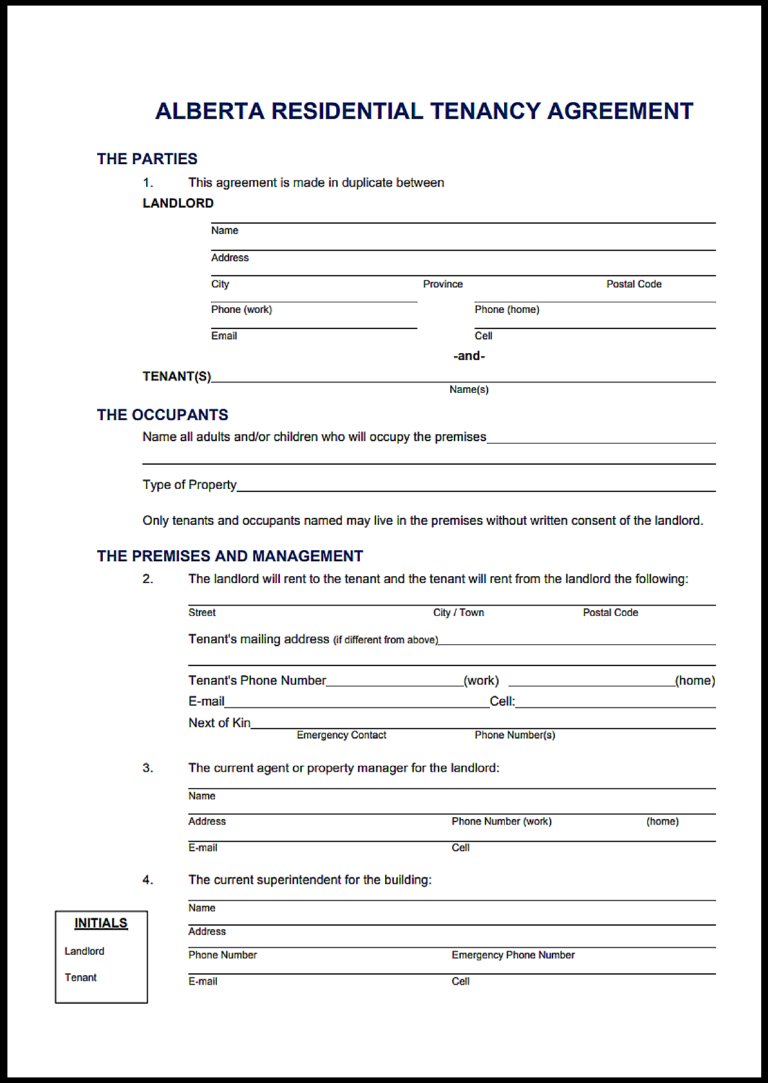
A landlord in Manitoba can do everything else right and still end up with a rent increase notice that doesn’t hold up because the date was off by a few days or the unit was exempt and they didn’t realize it. I remember a small duplex owner in Brandon who copied a notice from an Alberta website, changed the names, and handed it to the tenant himself at the door. Seemed fine to him. It wasn’t.
A proper Manitoba Rent Increase Notice is usually used by landlords, property managers, and sometimes even family members renting out inherited property, especially in buildings covered by provincial rent regulation rules. Under Manitoba’s Residential Tenancies Act, most rent increases for regulated units require at least three months’ written notice, and some increases above the annual guideline can trigger an application process through the Residential Tenancies Branch. People miss that part all the time. Or they half-read it and assume it’s the same everywhere.
I’ve seen rent increases thrown out entirely because the notice period didn’t line up with the tenant’s rental payment cycle, which meant the landlord had to wait months and absorb the difference. That gets expensive fast. You might be dealing with a tenant who already questions every repair delay, or maybe your mortgage payment jumped and you’re trying to make the numbers work before winter hits. Different pressure, same paperwork sitting in the middle of it. I once worked with a retired landlord near Steinbach who collected the lower rent for nearly seven extra months after serving an invalid notice copied from an old form somebody emailed him. No hearing fixed it afterward. The Branch treated the increase as never properly given. Fill out the template with the exact rent amount, service date, and effective increase date before you deliver anything to the tenant.
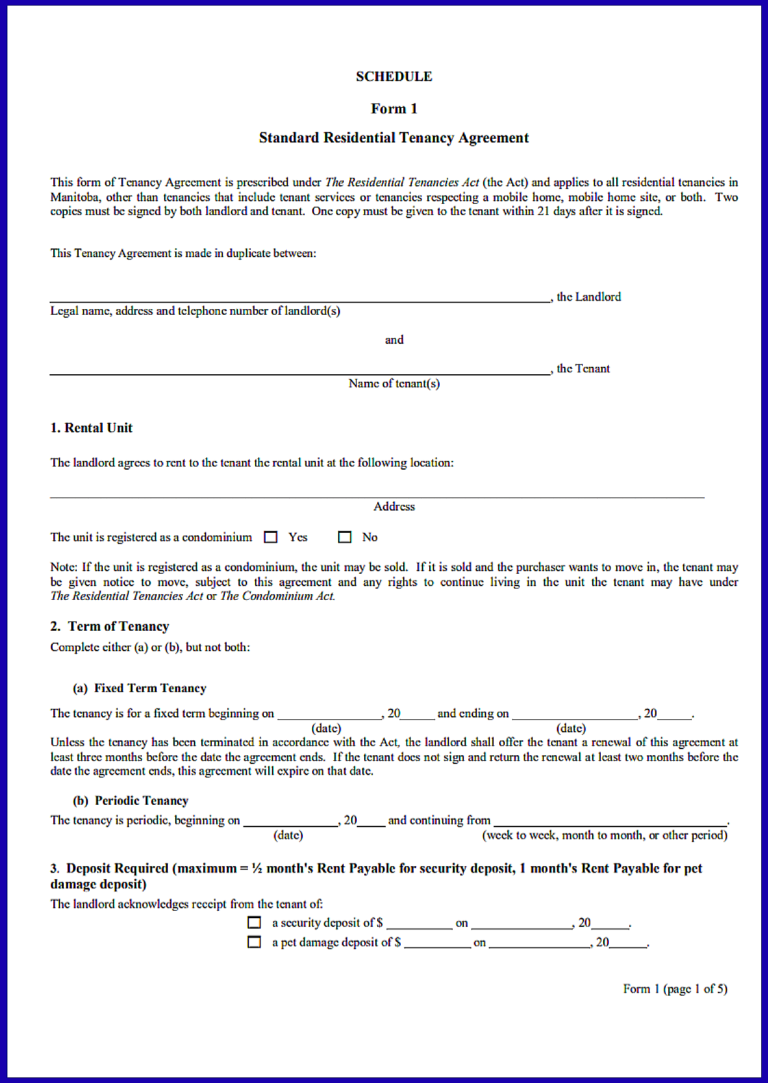
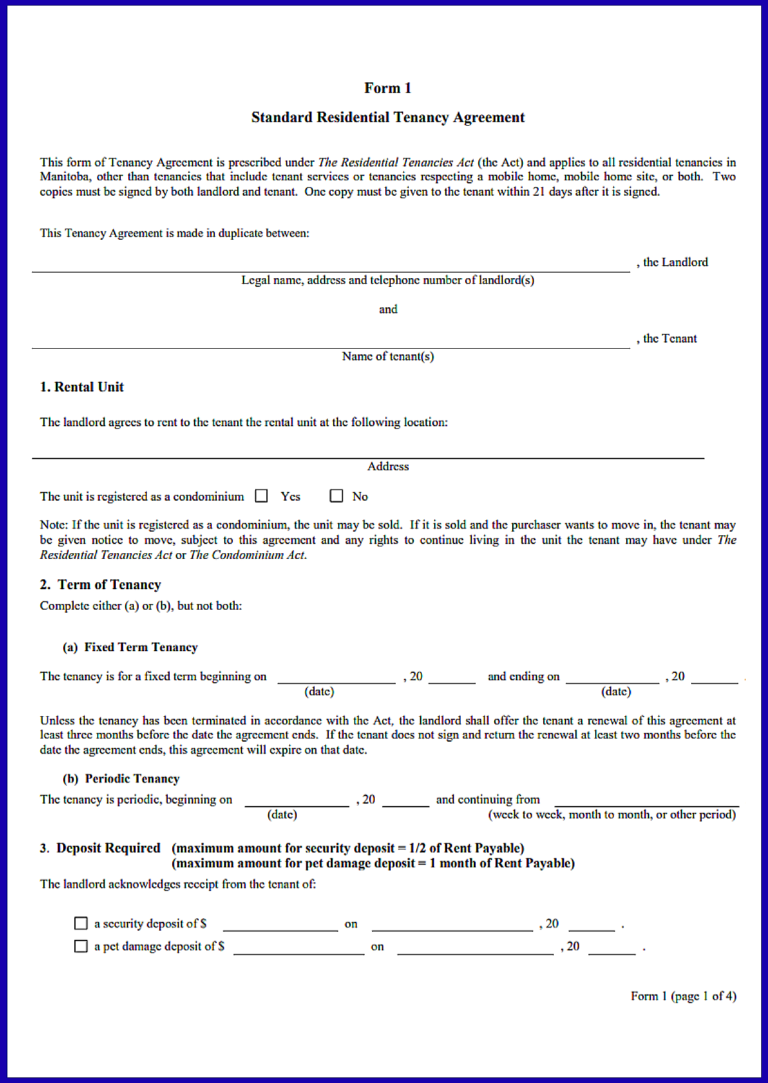
Manitoba Rent Increase Notice Template
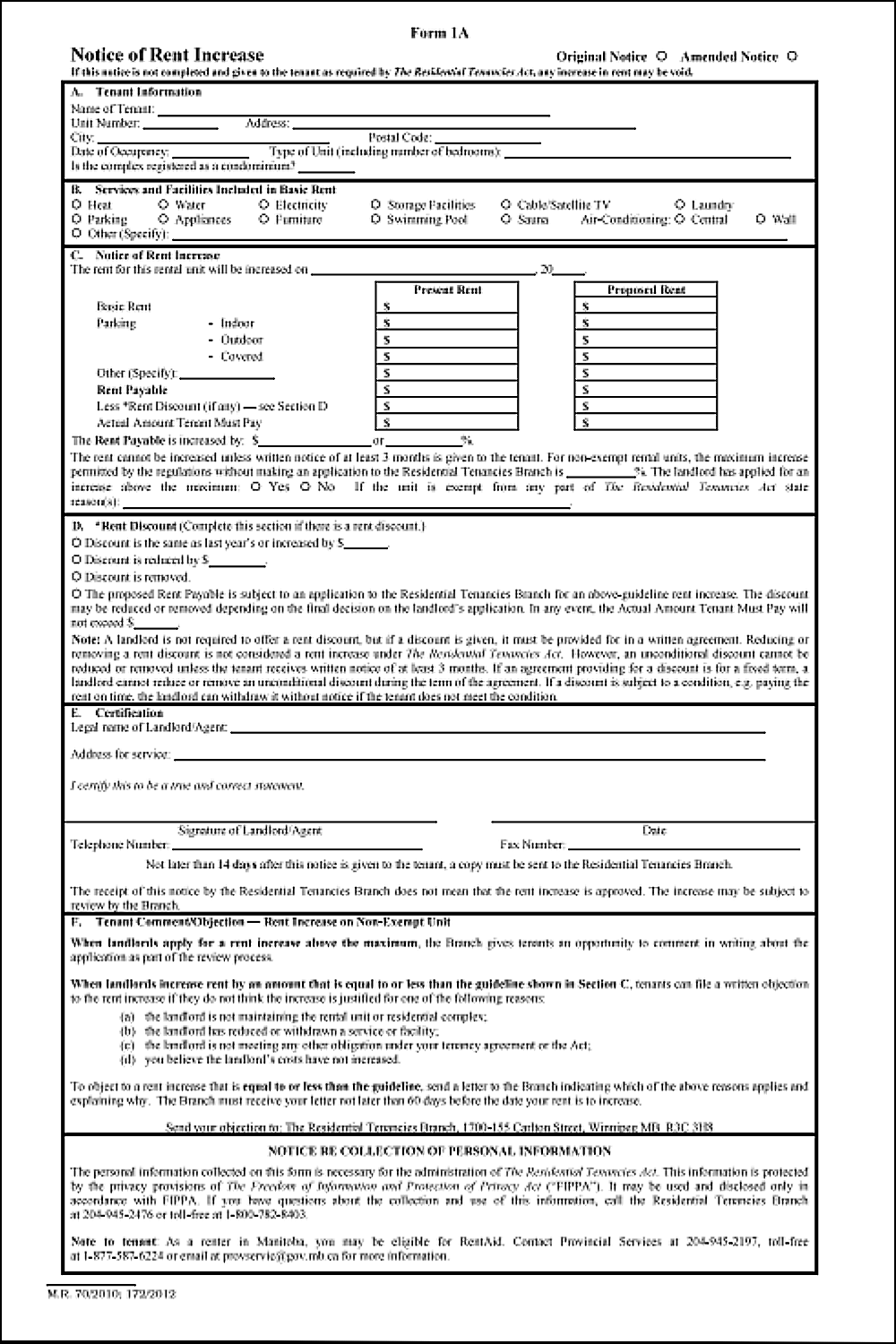
This template reflects Manitoba’s Form 1A-style legal structure and includes the major disclosures landlords generally need.
How Manitoba Rent Increase Law Actually Works
Under Manitoba law, rent increases are regulated primarily by The Residential Tenancies Act and Residential Tenancies Regulation. This means landlords are not allowed to increase rent casually or outside legal timing rules.
There are three critical legal pillars:
- Timing: Minimum three full months’ written notice
- Guideline limits: Annual guideline applies unless exemption or approval exists
Branch filing: An unsigned copy of the completed Form 1A must be submitted to the Residential Tenancies Branch (RTB) within 14 days after serving it to the tenant. Neglecting this step can completely invalidate the increase.
When a Landlord Can Legally Raise Rent
A landlord can usually raise rent when:
- At least 12 months have passed since the last increase or tenancy start
- Proper written notice is served
- RTB filing is completed
- Above-guideline approval is obtained if necessary
Manitoba’s 2026 rent increase guideline is capped at 1.8%. Landlords pursuing an above-guideline increase must submit Form 3 to the RTB within 14 days of notifying the tenant, backed by a filing fee (minimum $150) and verified historical operational cost spikes.
Applicable Laws for Manitoba Rent Increase Notice
Manitoba Rent Increase Legal Framework
| Topic / Issue | Precise Legal Rule | Governing Statute / Code |
| Notice Mandate | Requires at least 3 full rental payment periods of advance written notice before an increase takes effect. | The Residential Tenancies Act, s. 25(1) |
| Frequency Limit | Rent can only be raised once every 12 months on the established anniversary date of the rental unit. | The Residential Tenancies Act, s. 26 |
| Prescribed Forms | Landlords must use official Form 1A for standard guideline increases or Form 3 for above-guideline requests. | The Residential Tenancies Act, s. 25(2) |
| Filing Window | An unsigned copy of the notice must be delivered to the RTB within 14 days of serving the tenant. | The Residential Tenancies Act, s. 25(4) |
| 2026 Rent Cap | Standard annual rent increases are legally restricted to a maximum of 1.8% across Manitoba. | Residential Rent Regulation |
| High-Rent Threshold | Units with a monthly rental rate of $1,670 or higher in 2026 are entirely exempt from the guideline cap. | Residential Rent Regulation |
| New Build Exemption | Properties first occupied after March 2005 are shielded from provincial rent control caps for a rolling 20-year period. | The Residential Tenancies Act, s. 121 |
Mandatory Legal Requirements That Make the Notice Valid
A rent increase notice can fail if even one mandatory legal element is missing.
Required Rent Details
The notice must clearly state:
- Current rent amount
- New rent amount
- Dollar increase
- Percentage increase
Accuracy is essential.
Mandatory Tenant Rights Language
Under Manitoba law, tenants must be informed:
- They are receiving at least three months’ notice
- They can object through the Residential Tenancies Branch
Missing these disclosures can create serious compliance issues.
Effective Date Rules
If notice timing is even one day short, the increase may automatically shift by one full month.
Filing with Residential Tenancies Branch
Landlords must file a copy with RTB within 14 days after serving the tenant.
Proper Service Methods
Common valid methods include:
- Personal delivery
- Registered mail
- Other legally approved methods
Above-Guideline Increases (Important for Landlords)
Sometimes landlords seek increases above Manitoba’s annual guideline.
This may happen due to:
- Major capital improvements
- Significant operating cost increases
- Exceptional property expenses
However, landlords are not allowed to simply charge more without proper RTB approval where required.
Risks of unauthorized above-guideline increases include:
- Tenant disputes
- Notice rejection
- Administrative penalties
Common Mistakes That Void or Delay Rent Increases
Many landlords make preventable errors.
Common mistakes include:
- Serving notice one day late
- Missing mandatory phrases
- Incorrect percentage calculations
- Failing to file with RTB
- Using informal letters instead of proper notice
Real Consequences
These errors can lead to:
- Delay by an entire month
- Tenant objections
- Invalid notices
- Regulatory problems
For example, serving an October 1 notice for a January 1 increase may be too late if full notice timing is not met.
Tenant Rights and Objections in Manitoba
Tenants are not powerless they have their tenant rights.
They generally have rights to:
- Review guideline compliance
- Object to increases
- Contact RTB
- Challenge unlawful notices
Exemptions from the 1.8% cap apply to units renting for $1,670 or more per month in 2026, and buildings first occupied after March 2005 (exempt for 20 years from initial occupancy). The three-month advance notice obligation still firmly applies to these units.
Step-by-Step: How to Complete and Serve the Notice Correctly
Following the right process helps avoid disputes.
Step-by-Step Compliance Table
| Step | Action |
| 1 |
Check if rent increase is legally eligible
|
| 2 |
Confirm annual guideline or exemption
|
| 3 |
Calculate lawful increase correctly
|
| 4 |
Complete all mandatory disclosures
|
| 5 |
Serve tenant properly
|
| 6 |
File notice with RTB within 14 days
|
Rent Increase Notice vs Lease Renewal (Important Difference)
This is a common point of confusion.
Rent Increase Notice:
Used to raise rent during an existing lawful tenancy.
Lease Renewal:
May involve negotiating a new agreement.
Important distinctions:
- Fixed-term leases may have different timing considerations
- Month-to-month tenancies often rely more directly on notice rules
Confusing these concepts can create disputes.
Real-Life Manitoba Rent Increase Scenarios
Small Landlord Annual Increase
A landlord raises rent by the annual guideline and files correctly.
Apartment Building Operating Costs
A landlord seeks above-guideline approval due to major expenses.
Tenant Objects to Timing
A tenant challenges late notice and delays the increase.
New Owner Inherits Tenancy
New landlords must still follow Manitoba law.
If you’ve recently taken over a property with existing tenants, the rent increase rules are only one piece of what Manitoba law requires you to follow. A proper sublease or roommate arrangement in place before you took ownership can complicate things further.
Above-Guideline Renovation Request
Approval is often necessary.
Financial Impact and Planning Considerations
Rent increases affect both parties.
For Tenants:
- Monthly budget pressure
- Housing affordability
- Relocation decisions
For Landlords:
- Rising maintenance costs
- Vacancy risk
- Regulatory penalties for errors
Long-term planning matters more than short-term shortcuts.
FAQ
How much notice is required for a Manitoba rent increase?
At least three full months’ written notice is generally required.
How often can rent be increased?
Usually once every 12 months.
What is Form 1A?
It is Manitoba’s prescribed rent increase notice form or equivalent legal structure.
Can tenants dispute a rent increase?
Yes. Tenants may object through the Residential Tenancies Branch.
What happens if notice is late?
The increase may be legally delayed, often by a full month.