Free Ontario Sublease Agreement Form | PDF & Word Template
Ontario Sublease Agreement is a legal document used when a tenant rents out their unit to another person for a temporary period. If you’re planning to sublease in Ontario, this article gives you a free template + clear legal rules + step-by-step help.
A sublease agreement is when a tenant (not the landlord) rents their place to someone else for a short time.
Last Updated: September 2026
Simple example:
You rent an apartment in Toronto but leave for 3 months. Instead of paying empty rent, you allow someone else to stay there and pay rent during that time. That’s a sublease.
I’ve seen a lot of Ontario tenants get into trouble because they assumed a simple text message or verbal permission was enough for a sublease. In Ontario, missing landlord consent or using unclear terms can quickly turn into disputes over rent, damage, or even eviction applications.
Table of Contents
ToggleFree Ontario Sublease Agreement Template
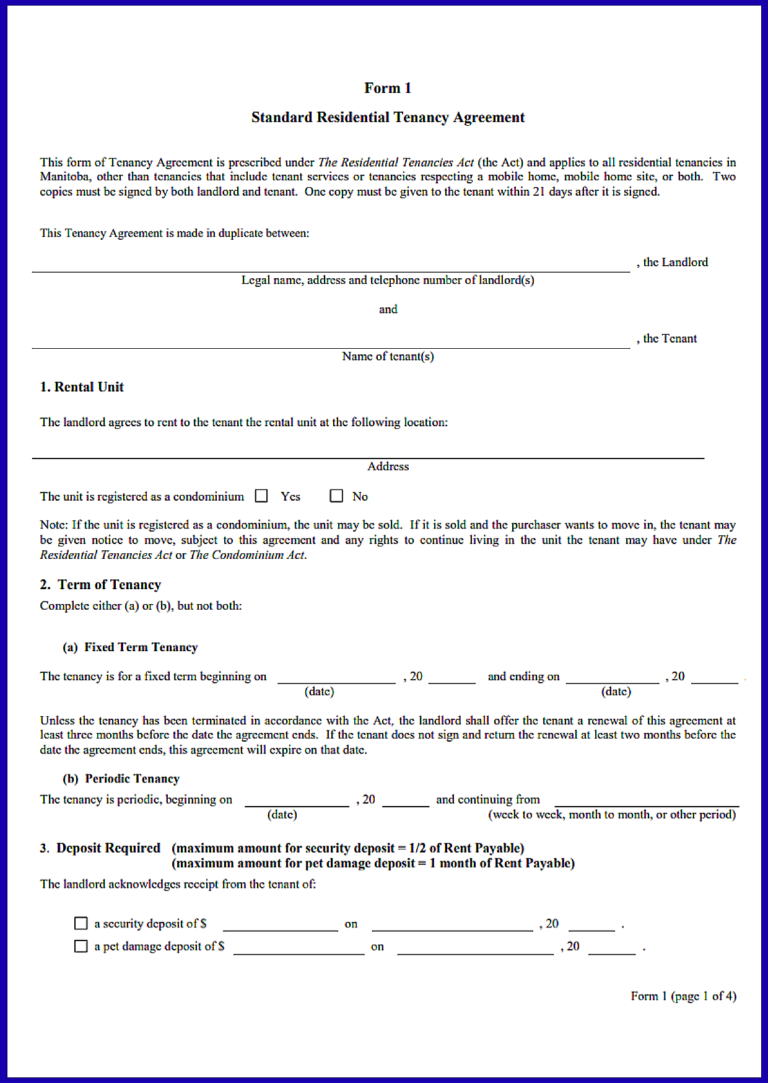
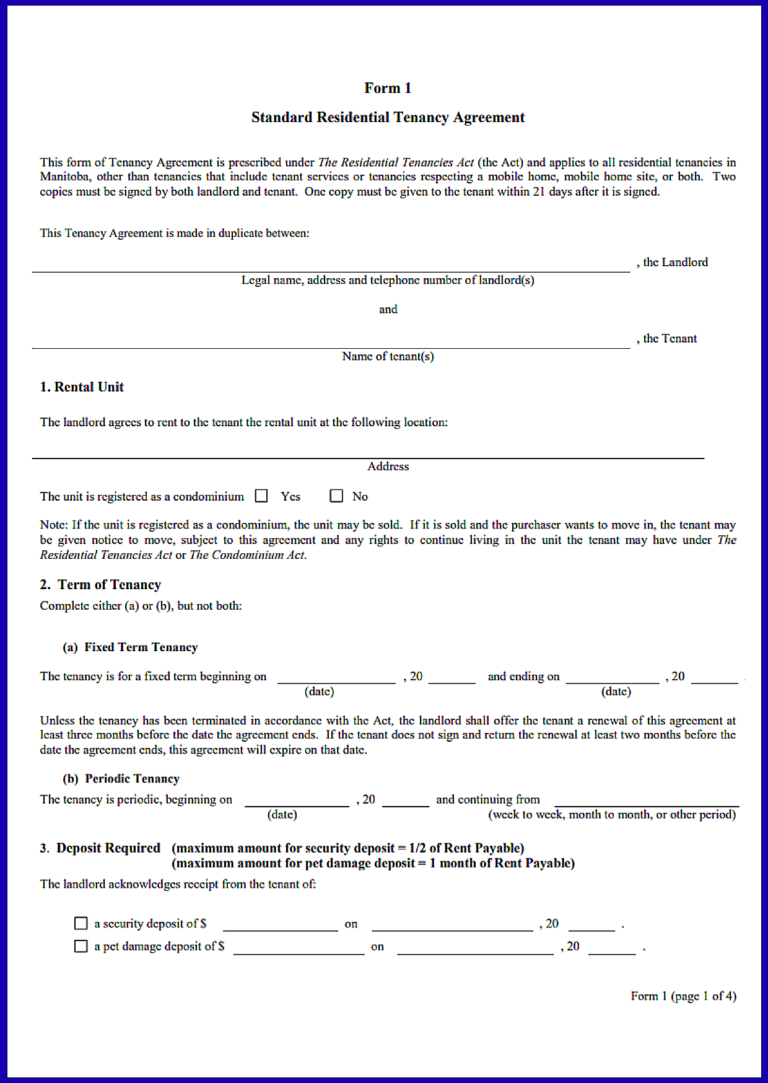
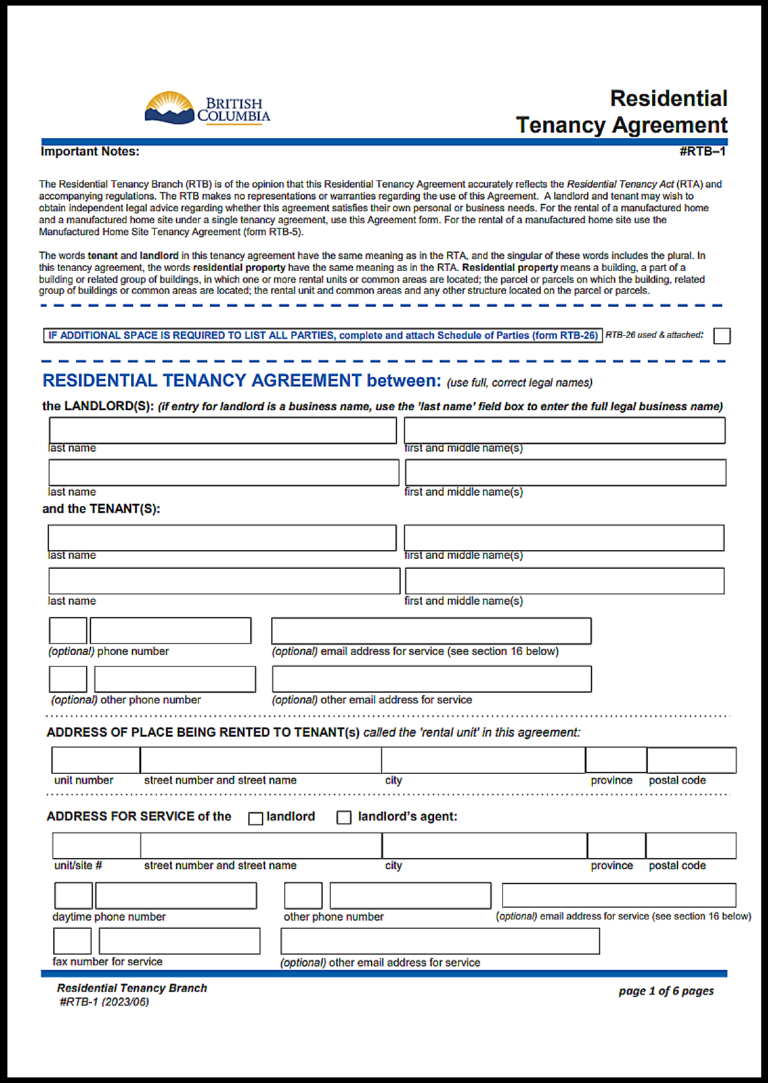
Use this simple template for personal use. Always make sure your landlord approves before signing.
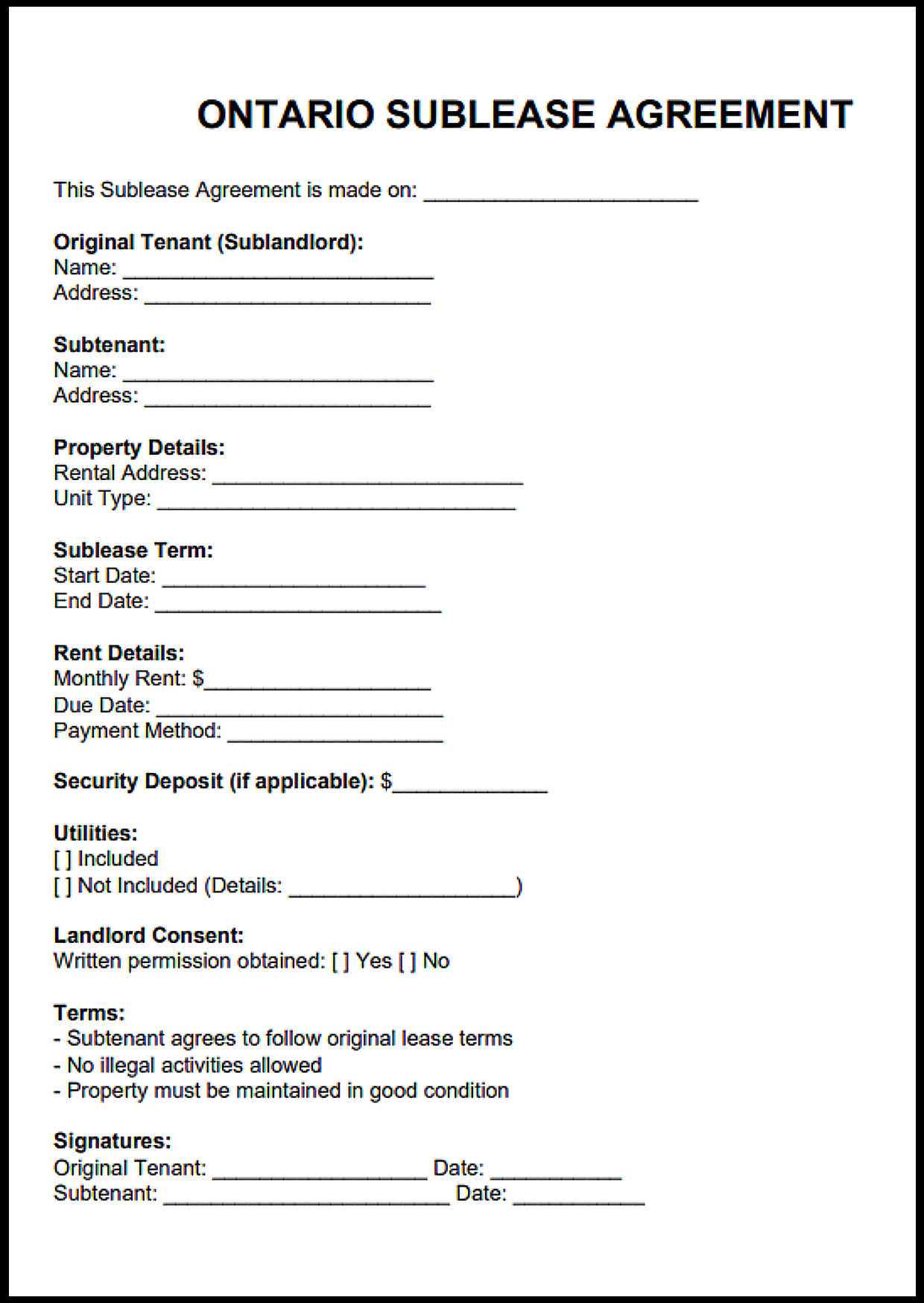
Tip: Keep a copy signed by both parties and share one with your landlord.
Ontario Sublease Laws & Legal Compliance Rules You Must Know
| Topic / Issue | Ontario Legal Rule | Governing Statute |
|---|---|---|
| Governing legislation | Residential subleases in Ontario are governed under the Residential Tenancies Act, 2006. | Residential Tenancies Act, 2006, S.O. 2006, c. 17 |
| Federal involvement | Residential tenancy law in Ontario is primarily governed by provincial legislation, including the Residential Tenancies Act, 2006. | Residential Tenancies Act, 2006, S.O. 2006, c. 17 |
| Who can legally sign | The tenant acting as sublandlord and the subtenant can enter into the sublease, but the tenant must obtain the landlord’s consent to sublet. | Residential Tenancies Act, 2006, s. 97(1) |
| Witness requirements | Ontario’s Residential Tenancies Act does not require a residential sublease agreement to be witnessed. | Residential Tenancies Act, 2006 |
| Notarization | Ontario law does not generally require notarization of a residential sublease agreement. | Residential Tenancies Act, 2006 |
| Age and legal capacity | Contractual capacity can depend on the circumstances. The age of majority in Ontario is generally 18, but special rules can apply to contracts involving minors. | Age of Majority and Accountability Act, R.S.O. 1990, c. A.7 |
| Sublease time limit | A sublet must end on a specified date before the end of the tenant’s term or period of the tenancy, and the tenant must retain the right to resume occupancy. | Residential Tenancies Act, 2006, s. 2(2) |
| Mandatory government form | Ontario does not require a specific government-issued standard form for a residential sublease agreement. | Residential Tenancies Act, 2006 |
| Landlord consent clause | A tenant must obtain the landlord’s consent before subletting. The landlord cannot arbitrarily or unreasonably withhold consent. | Residential Tenancies Act, 2006, s. 97(1)-(2) |
| Charging higher rent | A tenant cannot charge a subtenant more rent than the lawful rent charged by the landlord, and certain additional fees or premiums are also prohibited. | Residential Tenancies Act, 2006, s. 134(3)(a) |
| Filing or registration | A residential sublease agreement does not generally need to be filed with ServiceOntario or the Landlord and Tenant Board merely because it is a sublease. | Residential Tenancies Act, 2006 |
| Invalid sublease risk | A tenant who transfers occupancy without the required landlord consent may face an application concerning unauthorized occupancy. | Residential Tenancies Act, 2006, s. 100 |
| Assignment vs sublease issue | A sublease is different from an assignment. A sublease must have a specified end date before the end of the tenant’s tenancy and allow the tenant to resume occupancy. | Residential Tenancies Act, 2006, s. 2(2) |
| Unreasonable refusal by landlord | A landlord cannot arbitrarily or unreasonably withhold consent to a proposed sublet. | Residential Tenancies Act, 2006, s. 97(2) |
One of the biggest surprises for many Ontario tenants is that a landlord cannot simply reject a proposed sublease for an arbitrary or unreasonable reason. Under Ontario law, tenants have specific rights when consent to a sublet is unreasonably withheld.
Another important rule is the restriction on charging a subtenant more than the lawful rent charged by the landlord. Ontario also restricts certain fees and premiums connected with subletting.
A sublease without the required landlord consent can create serious problems for the original tenant. The Residential Tenancies Act provides a specific process for unauthorized occupancy, so tenants should obtain and document consent before the sublease begins.
The length of the arrangement also matters. Under the statutory definition, a sublet must end on a specified date before the end of the tenant’s term or tenancy period, and the tenant must retain the right to resume occupancy.
What Is a Sublease Agreement in Ontario?
Under Ontario law, a sublease is a temporary rental arrangement where:
- The original tenant remains the tenant under the primary tenancy
- A subtenant receives the right to occupy the rental unit temporarily
- The original tenant retains the right to resume occupancy after the sublease ends
- The sublease ends on a specified date before the end of the tenant’s term or tenancy period
A subtenant is a person to whom the tenant gives a right to occupy the rental unit under the subletting provisions of the Residential Tenancies Act.
Real-life example
A university student in Ottawa leaves for summer break. Instead of ending the lease, they sublease their room for 4 months and plan to return when the summer ends.
Key people involved:
- Original Tenant (Sublandlord) → You
- Subtenant → The person moving in
- Landlord → Property owner who must provide consent to the sublet
A sublease agreement in Ontario should follow the lawful terms of the primary lease contract. Tenants should also review their legal rights and ensure compliance with Ontario subletting laws. For shared living, a roommate agreement may be appropriate, while a month-to-month lease is a different type of tenancy arrangement.
Sublease vs Assignment
This is where many tenants get confused.
What is a Sublease?
- Temporary arrangement
- You intend to return to the unit
- You remain the tenant under the original tenancy
- The subtenant receives temporary occupancy rights
What is an Assignment?
- Permanent transfer of the tenancy
- Another tenant takes your place under the tenancy agreement
- You generally no longer have ongoing tenancy obligations after the assignment, although obligations arising before the assignment can remain relevant
Quick Comparison
| Feature | Sublease | Assignment |
| Duration | Temporary |
Permanent transfer
|
| Responsibility | Original tenant remains responsible under the tenancy |
Assignee generally becomes the tenant
|
| Lease control | Original tenancy continues with the original tenant |
Tenancy is transferred to the assignee
|
| Return to unit | Yes, the original tenant retains the right to resume occupancy |
No, because the tenancy has been assigned
|
If you plan to come back → sublease
If you’re leaving permanently → assignment
Is Subleasing Legal in Ontario?
Yes — subleasing is legal under Ontario law, but it comes with conditions.
Under the Residential Tenancies Act, tenants:
- Must obtain the landlord’s consent before subletting
- Must not have consent unreasonably withheld
- Must retain the right to resume occupancy under a true sublease
- Must ensure the sublease ends on a specified date before the end of their tenancy term or period
Important rule:
Landlords cannot arbitrarily or unreasonably withhold consent to a proposed sublet.
If the landlord arbitrarily, unreasonably, or capriciously refuses consent to a specific subtenant request:
- A tenant may use Form A2 (Application about a Sublet or an Assignment) to ask the Landlord and Tenant Board to determine issues relating to the proposed sublet.
- Under section 98, the Board may provide remedies where a landlord has unlawfully withheld consent, including authorizing the sublet in appropriate circumstances.
- A Form N9 should not be described as a general 30-day remedy for every refusal to sublet. Section 96 deals with particular assignment-related circumstances under section 95(4), not a blanket refusal-to-sublet rule.
Always obtain and keep landlord consent in writing. Although the legislation does not make every tenancy arrangement dependent on a particular written-consent format, written evidence is much safer if a dispute later arises.
When Should You Use a Sublease Agreement?
Subleasing is useful in many real situations:
Common scenarios:
- Temporary job in another city
- Traveling for a few months
- Students leaving during summer break
- Moving in with a partner temporarily
Example:
You move to Vancouver for a 3-month internship. Instead of paying double rent, you sublease your Ontario apartment for that temporary period and plan to return afterward.
Key Elements of a Valid Ontario Sublease Agreement
A good agreement should clearly cover these points:
Tenant and Subtenant Details
Include full names and addresses.
Rental Property Description
Write the exact unit address and type, such as a room, condo, apartment, or basement unit.
Sublease Duration
Include clear start and end dates. The end date should comply with Ontario’s statutory definition of a sublet.
Rent Amount and Payment Terms
- Monthly rent
- Due date
- Payment method
Under Ontario law, a tenant cannot charge the subtenant more rent than the lawful rent charged by the landlord. Certain additional fees and premiums are also restricted.
Landlord Consent Clause
State that landlord consent has been obtained, or make clear that the sublease will not proceed unless the required consent is obtained.
Rules from Original Lease
The subtenant should comply with the lawful terms that apply to their occupancy and the obligations set out in the sublease.
However, statutory rights cannot simply be removed by inserting conflicting terms into a sublease.
- Pet Restrictions: Section 14 of the Residential Tenancies Act makes a provision in a tenancy agreement prohibiting the presence of animals in or about a rental complex void. Exceptions can apply under the Act, including circumstances involving condominium status and other statutory rules.
- Noise and Conduct: The subtenant must not substantially interfere with the reasonable enjoyment of the residential complex for another tenant. Section 64 addresses termination where a tenant’s conduct substantially interferes with reasonable enjoyment.
- Maintenance: The original landlord’s statutory maintenance obligations cannot simply be transferred away through a private agreement. A sublease can still assign reasonable day-to-day responsibilities to the subtenant, such as keeping the unit clean.
Utilities and Responsibilities
Clearly mention:
- Who pays electricity
- Who pays internet
- Who pays water, where applicable
- Who handles ordinary cleaning
- Who is responsible for damage caused by the subtenant
How to Fill Out the Sublease Agreement (Step-by-Step)
Step 1: Get Landlord Permission
Obtain the landlord’s consent before the sublease begins. Without the required consent, the arrangement may create legal problems for the original tenant.
Step 2: Match Original Lease Terms
Review your original agreement and make sure the sublease does not conflict with lawful tenancy terms or statutory rights.
Step 3: Set Clear Rent and Dates
Avoid confusion by writing the exact rent, payment dates, start date, and end date.
Step 4: Add Conditions
Include:
- Cleaning rules
- Damage responsibility
- Guest policies
- Utility responsibilities
- Move-in and move-out conditions
Step 5: Sign and Share Copies
All parties should keep signed copies. Keep written evidence of the landlord’s consent with your records.
Legal Rules You Must Follow in Ontario
To stay compliant:
- You cannot charge the subtenant more than the lawful rent charged by the landlord
- You must respect the lawful terms of the original tenancy
- You remain responsible to the landlord under the original tenancy during the sublease
- The subtenant has rights and obligations under Ontario’s residential tenancy legislation
- The landlord may enforce lawful rights under the Residential Tenancies Act
The original tenant remains responsible to the landlord for the tenant’s obligations under the tenancy during the subtenancy. Section 97(4) specifically provides that the tenant remains entitled to the benefits of the tenancy and liable to the landlord for breaches during the subtenancy.
Important: If the subtenant causes damage or otherwise breaches the arrangement, the original tenant may still have obligations to the landlord. The original tenant may then have a separate claim against the subtenant depending on the sublease agreement and circumstances.
Risks and Common Mistakes to Avoid
Subleasing Without Permission
An unauthorized sublet can expose the original tenant to an application concerning unauthorized occupancy and other tenancy consequences. Section 100 allows a landlord to apply to the Board in specified circumstances.
Charging Higher Rent
Charging a subtenant more than the lawful rent charged by the landlord is prohibited under the Residential Tenancies Act.
Not Screening Subtenant
A poor choice of subtenant can lead to property damage, missed payments, or disputes.
Ignoring Original Lease Rules
Ignoring the original tenancy terms can result in disputes with the landlord.
No Written Agreement
A written sublease makes the rent, dates, responsibilities, and other terms much easier to prove.
Always document everything, including landlord consent, payments, inspections, and communications.
What Happens If Something Goes Wrong?
Subtenant damages property
The original tenant may remain responsible to the landlord under the primary tenancy. Depending on the circumstances, the original tenant may seek recovery from the subtenant under their separate agreement.
Subtenant stops paying rent
The original tenant generally remains responsible for rent owed under the primary tenancy. The subtenant’s failure to pay does not automatically release the original tenant from their obligations to the landlord.
Landlord takes action
The landlord may take action under the Residential Tenancies Act against the original tenant and, where the legislation permits, against the person occupying the unit.
Key rule:
The original tenant does not stop being responsible simply because another person is occupying the unit under a sublease.
Sublease Agreement vs Roommate Agreement
These are very different.
- Sublease → You temporarily give another person the right to occupy the unit while retaining the right to return.
- Roommate agreement → You continue living in the unit while another person shares the living space.
Key difference:
- Sublease = temporary transfer of the right to occupy
- Roommate = shared living arrangement
FAQs
Do I need landlord permission to sublease?
Yes. Section 97(1) of Ontario’s Residential Tenancies Act requires a tenant to obtain the landlord’s consent to sublet. The landlord cannot arbitrarily or unreasonably withhold consent.
Can I make profit from subleasing?
Generally, no. Section 134(3)(a) prohibits a tenant from charging a subtenant more rent than the lawful rent charged by the landlord. The Act also restricts certain additional fees and premiums connected with subletting.
Who pays rent to the landlord?
The original tenant remains responsible for their obligations under the primary tenancy. A subtenant’s payments to the original tenant do not automatically replace the original tenant’s responsibility to the landlord.
Can a subtenant be evicted?
A subtenant can lose their right to occupy the unit when the sublease ends, and the Residential Tenancies Act provides procedures for certain disputes involving subtenants and unauthorized occupancy. Form A2 can be used for specific sublet-related issues, including situations involving a subtenant who does not leave when required.
Is a verbal sublease valid?
Ontario’s Residential Tenancies Act recognizes that tenancy agreements can be written, oral, or implied in appropriate circumstances. However, a written sublease is strongly recommended because it clearly records the parties, rent, dates, responsibilities, and other terms.
Most importantly, the tenant must obtain the landlord’s consent before subletting under section 97(1). If the tenant transfers occupancy without the required consent, the landlord may have remedies for unauthorized occupancy under section 100. The landlord’s application under section 100 must generally be made no later than 60 days after the landlord discovers the unauthorized occupancy.