Alberta Divorce Agreement Template | Free Guide & PDF
An Alberta Divorce Agreement Template can be a practical starting point when spouses have reached their own arrangements, but it needs to reflect Alberta’s family property rules rather than relying on a generic Canadian document. I’ve seen matters reach the Court of King’s Bench of Alberta where an agreement looked complete until one spouse claimed important assets hadn’t been disclosed before it was signed, leaving the property issues open for further litigation instead of bringing the separation to a close.
That’s why the requirements found in Alberta’s Family Property Act matter just as much as the terms written into the agreement itself. Below you’ll find an Alberta-focused template, along with information about preparing it properly, avoiding common drafting mistakes, and understanding when additional court forms or legal advice may be appropriate.
Alberta Divorce Agreement Template
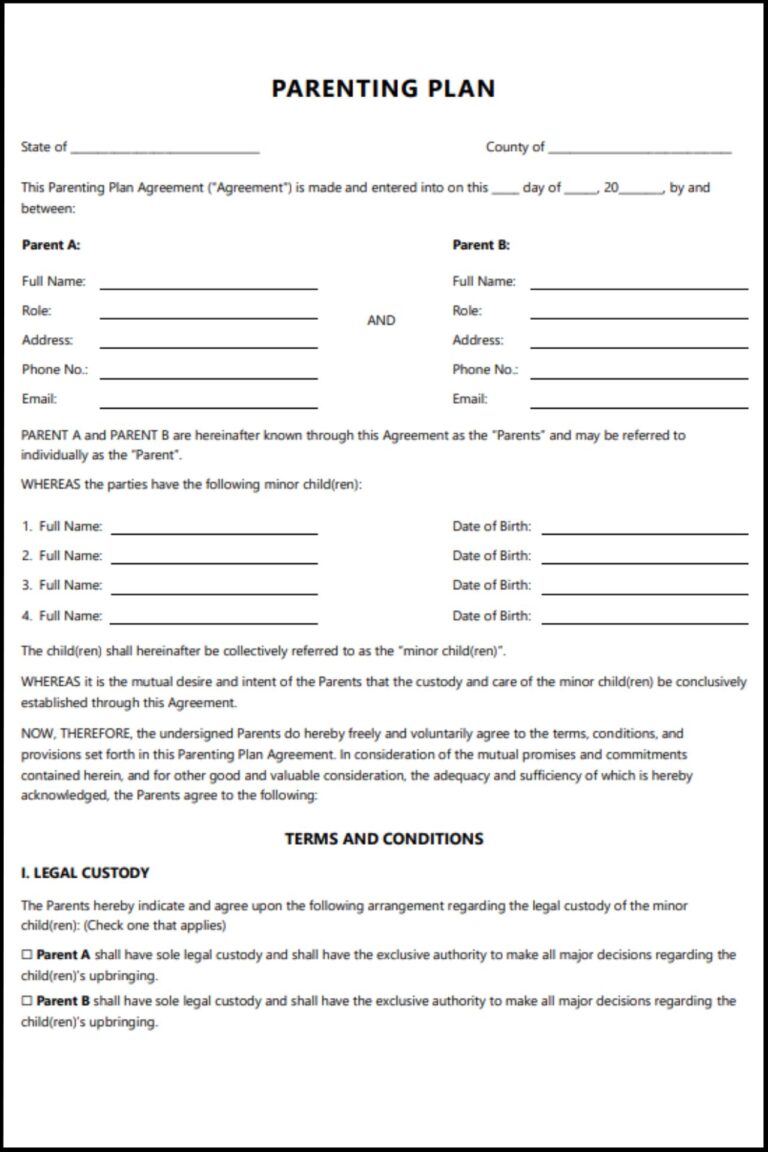
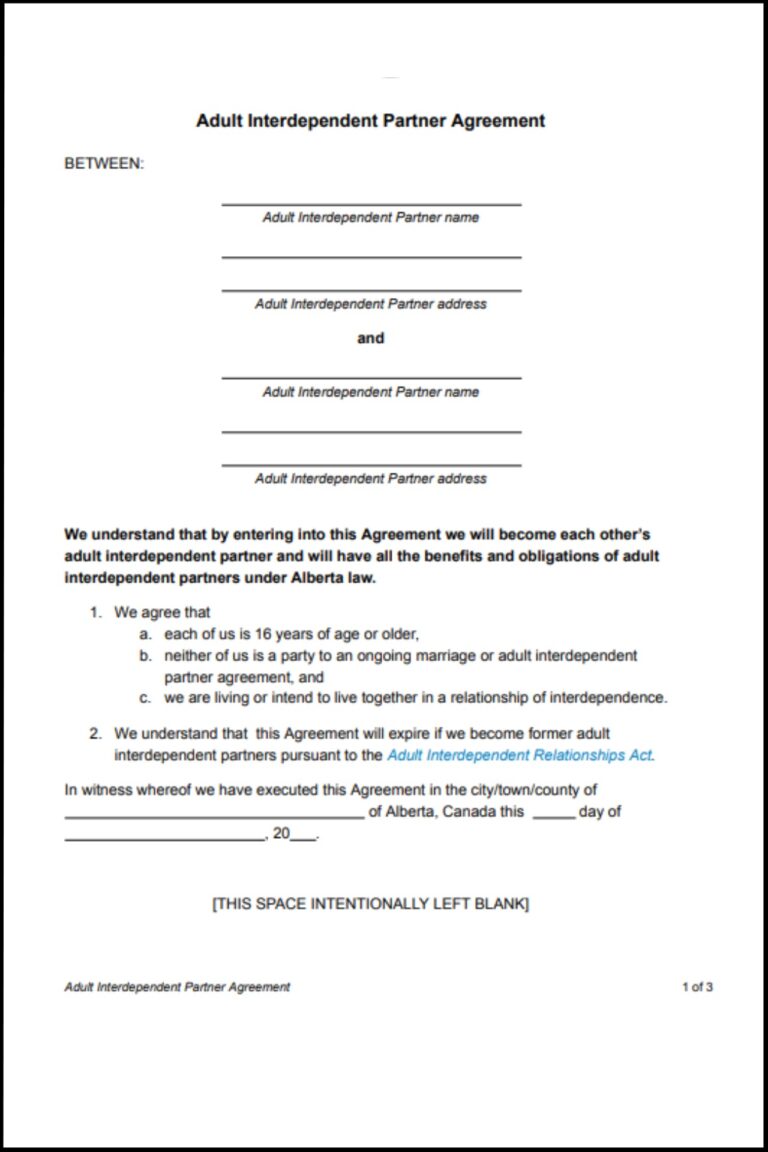
Many people preparing a Divorce Agreement hope they can complete the entire process themselves to save time and legal fees. While spouses can certainly negotiate the terms together and prepare a draft agreement, Alberta law draws an important distinction between drafting a document and making certain property provisions effective.
If the agreement deals with the division of family property or includes a waiver of statutory property rights, each spouse must receive Independent Legal Advice from a separate Alberta lawyer. The lawyer must complete the required Certificate of Independent Legal Advice confirming the acknowledgements required by sections 37 and 38 of the Family Property Act. Without those certificates, property division clauses may be void and unenforceable.
Some couples successfully negotiate every issue themselves before meeting with lawyers only for the purpose of obtaining the required legal advice. For example, spouses in Edmonton may agree on how to divide their savings, vehicles, and family home before each attending separate appointments with independent lawyers. This approach often reduces legal costs while still complying with Alberta’s statutory requirements.
Independent legal advice should not be viewed as a formality. The advising lawyer confirms that the client understands the agreement, appreciates the rights they may be giving up, and is signing voluntarily without pressure from the other spouse. These safeguards exist to reduce future disputes over whether the agreement was entered into fairly.
If the agreement only serves as a preliminary discussion draft and no property rights are being finalized, spouses may prepare their own working document before obtaining legal advice. However, once the agreement is intended to divide property or waive statutory rights, Alberta’s execution requirements become mandatory.
Summary of Applicable Laws
| Topic | Alberta Rule | Governing Statute |
|---|---|---|
| Independent Legal Advice | Property division clauses require separate Certificates of Independent Legal Advice from independent lawyers. | Family Property Act, ss. 37–38 |
| Property Division Deadline | Application must be commenced before the Judgment of Divorce or within two years after the Divorce Judgment. | Family Property Act, s. 6(1) |
| Child Support | The court must be satisfied that reasonable child support arrangements exist before granting a divorce. | Divorce Act, s. 11(1)(b) |
| Parenting Terminology | Agreements should use decision-making responsibility and parenting time rather than custody and access. | Divorce Act |
| Matrimonial Home | Additional Dower documentation may be required where only one spouse holds title to the family home. | Dower Act |
| Court Procedure | Contested family proceedings are subject to Alberta’s Family Focused Protocol introduced in 2026. | Verified Legal Facts |
The Dower Act Trap — Why Alberta’s Rules Differ From Other Provinces
One Alberta rule that surprises many separating spouses involves the Dower Act. If the matrimonial home is registered in only one spouse’s name but served as the family residence during the marriage, the non-owner spouse has statutory dower rights. A Divorce Agreement by itself does not remove those rights.
Imagine a family in Red Deer where one spouse purchased the home before the marriage and remained the only registered owner. During the divorce, the spouses agree that the property will be sold and the proceeds divided. Although the Divorce Agreement records that decision, additional Dower Consent and Acknowledgment, often supported by an affidavit, documentation may still be required before the transfer or sale can proceed.
This is one of the clearest examples of why a generic Canadian template may not be suitable for Alberta. Many national forms never mention the Dower Act, leaving readers unaware that separate documentation may be necessary to complete the transaction.
Common Mistakes That Void a Divorce Agreement in Alberta
Most Alberta Divorce Agreements fail because of procedural mistakes rather than disagreements over the wording itself. The verified legal framework identifies several recurring problems that frequently lead to disputes.
Common mistakes include:
- Failing to obtain Independent Legal Advice from separate Alberta lawyers.
- Missing the required Certificates of Independent Legal Advice under sections 37 and 38 of the Family Property Act.
- Signing before exchanging complete financial disclosure.
- Hiding or failing to disclose assets, debts, pensions, or investments.
- Using outdated terminology such as custody and access instead of decision-making responsibility and parenting time.
- Assuming a generic Canadian template automatically satisfies Alberta law.
These issues often don’t become apparent until months later when one spouse asks the court to rely on the agreement. Correcting them at that stage is usually more expensive than addressing them before signing.
Alberta’s New Family Focused Protocol — What Changed for 2026
Beginning January 2, 2026, the Court of King’s Bench of Alberta introduced the Family Focused Protocol (FFP) for contested family matters. The protocol is designed to encourage earlier resolution of disputes and improve financial transparency before litigation proceeds.
According to the verified legal framework, the protocol includes:
- Mandatory early financial disclosure.
- Completion of the Parenting After Separation (PAS) course where applicable.
- Participation in an Alternative Dispute Resolution (ADR) process before contested court applications proceed.
Although a privately negotiated Divorce Agreement may allow many couples to avoid contested litigation altogether, anyone expecting their matter to proceed through the Court of King’s Bench should be aware of these procedural requirements.
Frequently Asked Questions
Do both spouses need separate lawyers for an Alberta Divorce Agreement?
Yes. Where the agreement divides family property or waives statutory property rights, each spouse must receive Independent Legal Advice from a separate Alberta lawyer, and the required Certificates of Independent Legal Advice must be completed under sections 37 and 38 of the Family Property Act.
Is a Divorce Agreement the same as a divorce?
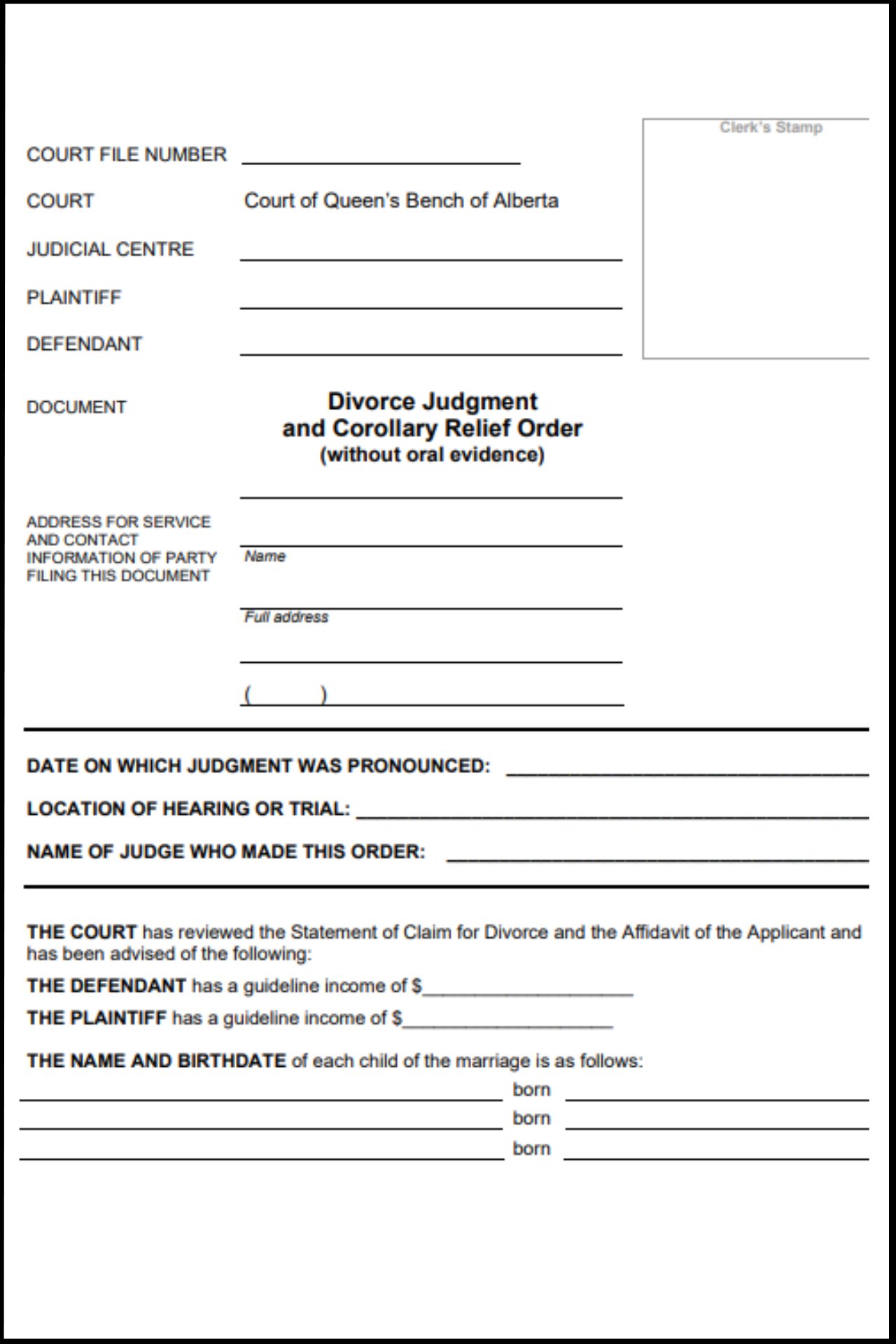
No. The agreement is a private contract that records the spouses’ arrangements. The divorce itself is granted by the Court of King’s Bench of Alberta, and the agreement may later be filed as part of an uncontested divorce proceeding.
What happens if we don’t obtain Independent Legal Advice?
The verified legal framework states that property division provisions may be void and unenforceable where the statutory requirements in sections 37 and 38 of the Family Property Act have not been satisfied.
Can a court reject our agreement after we’ve signed it?
Yes. Alberta courts may set aside property and support provisions where there has been material non-disclosure of financial assets or where statutory execution requirements have not been met.
Does every Divorce Agreement need to be filed with the court?
No. A Divorce Agreement begins as a private agreement. It may later be filed with the Court of King’s Bench of Alberta if the spouses wish to incorporate its terms into their divorce proceedings.