Affidavit VS Statutory Declaration British Columbia [Free PDF & Guide]
Affidavit vs Statutory Declaration British Columbia is one of the most common legal confusions people face in BC. Both are written statements of facts—but they are not the same, and using the wrong one can cause delays or rejection.
If you’ve ever been asked to “sign a legal statement,” you might wonder: Do I need an affidavit or a statutory declaration? In real life, this matters a lot. For example, a court case will usually require an affidavit, while government paperwork often asks for a statutory declaration.
I’ve seen people in BC sign a statutory declaration when the court actually required an affidavit, only to have their filing rejected and lose valuable time fixing it. In my experience, most first-time clients are surprised to learn that the biggest difference is not the wording—it’s whether the document is being used for court evidence or for government and administrative purposes.
In this article, I’ll explain the difference in very simple terms, show you when to use each, and give you a free template you can actually use.
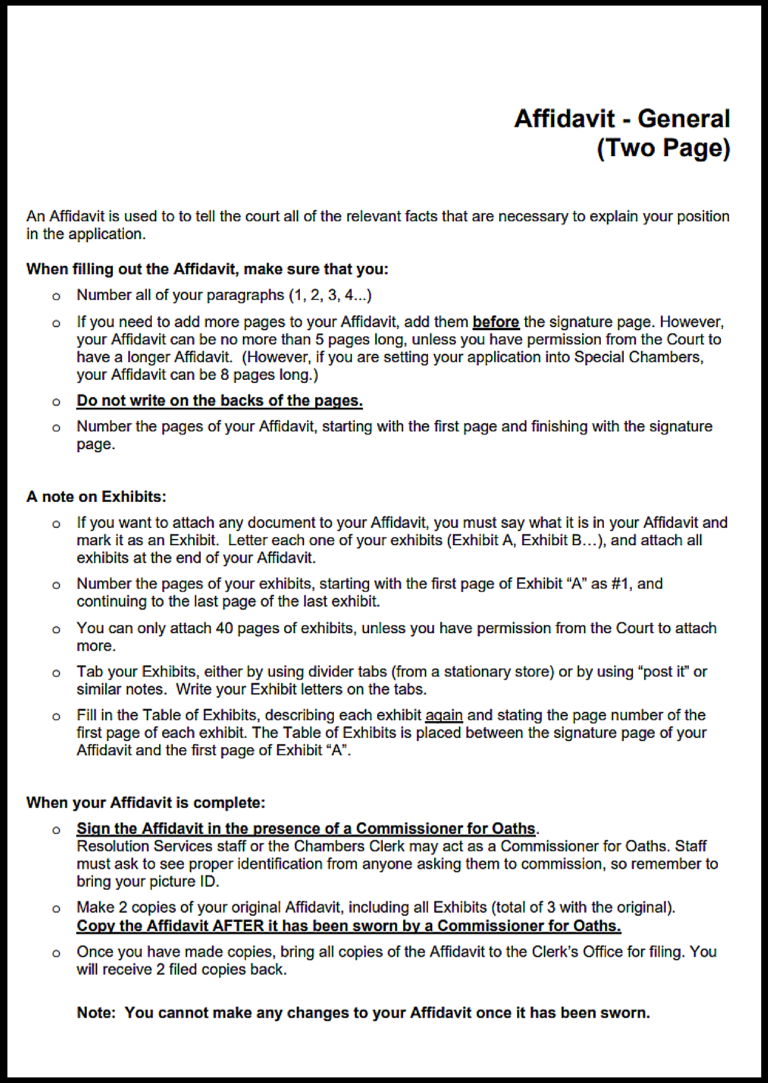
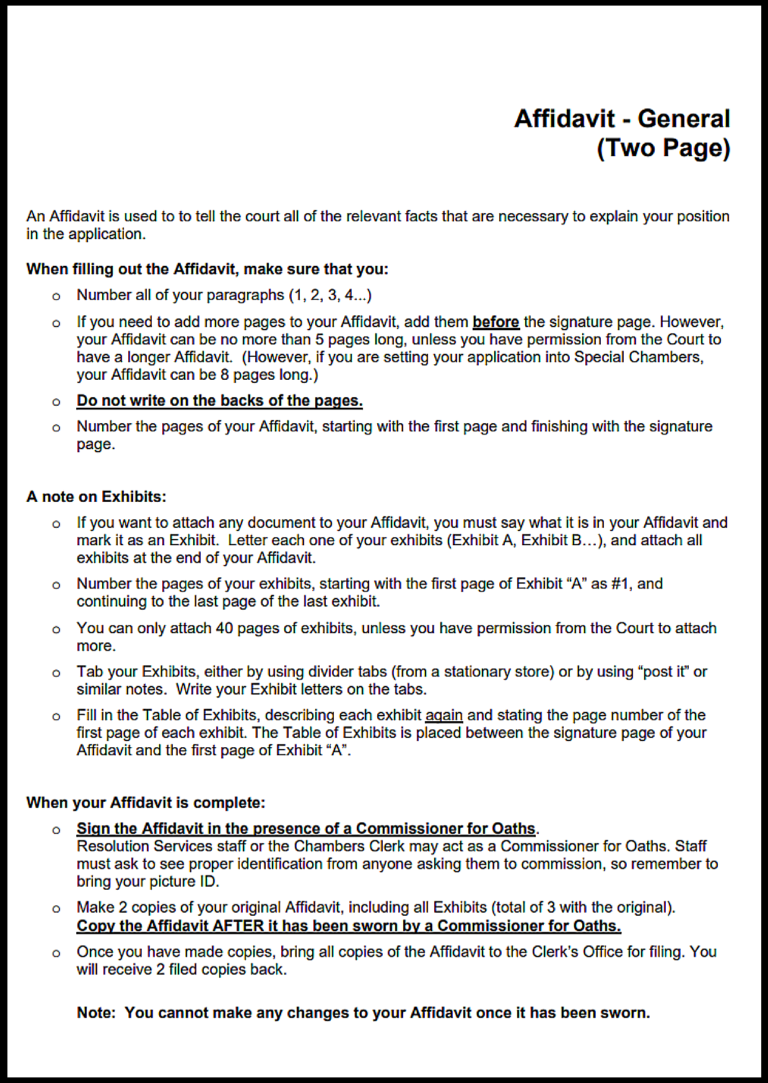
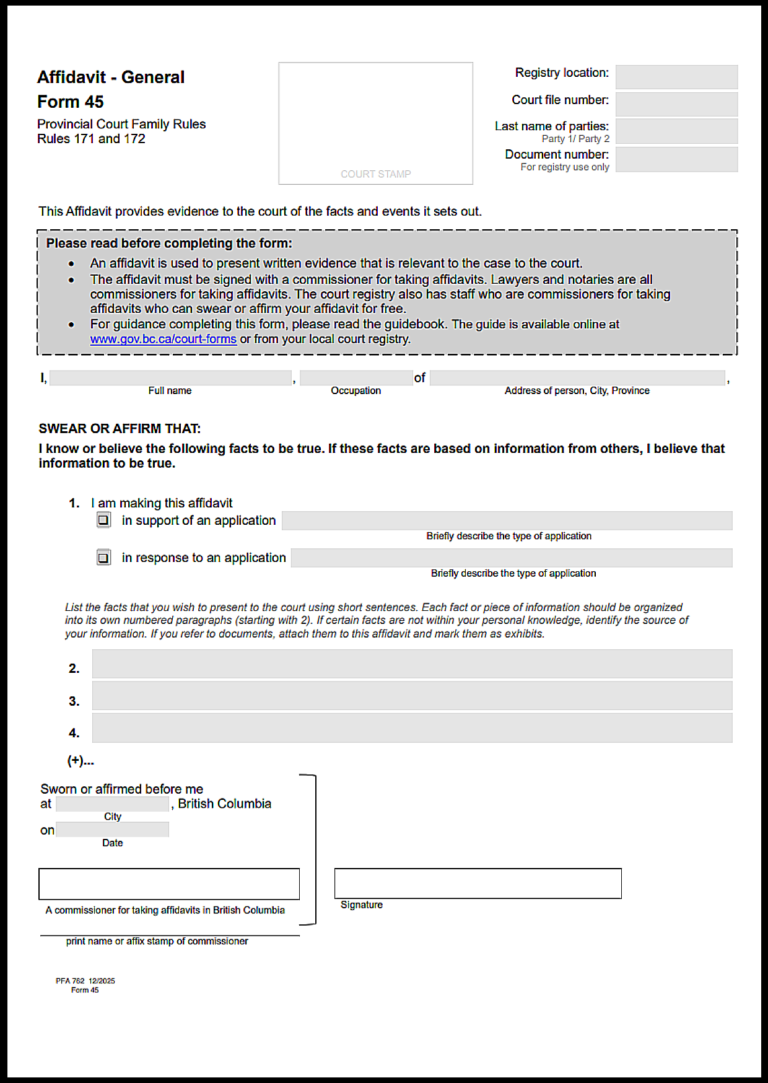
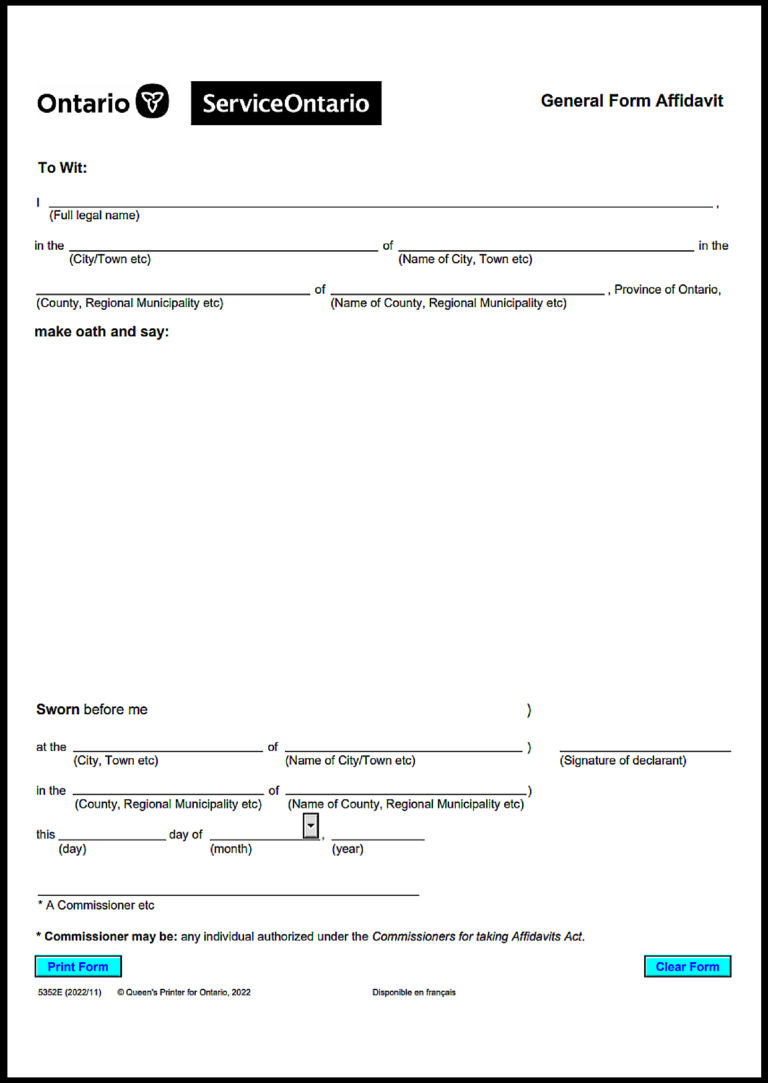
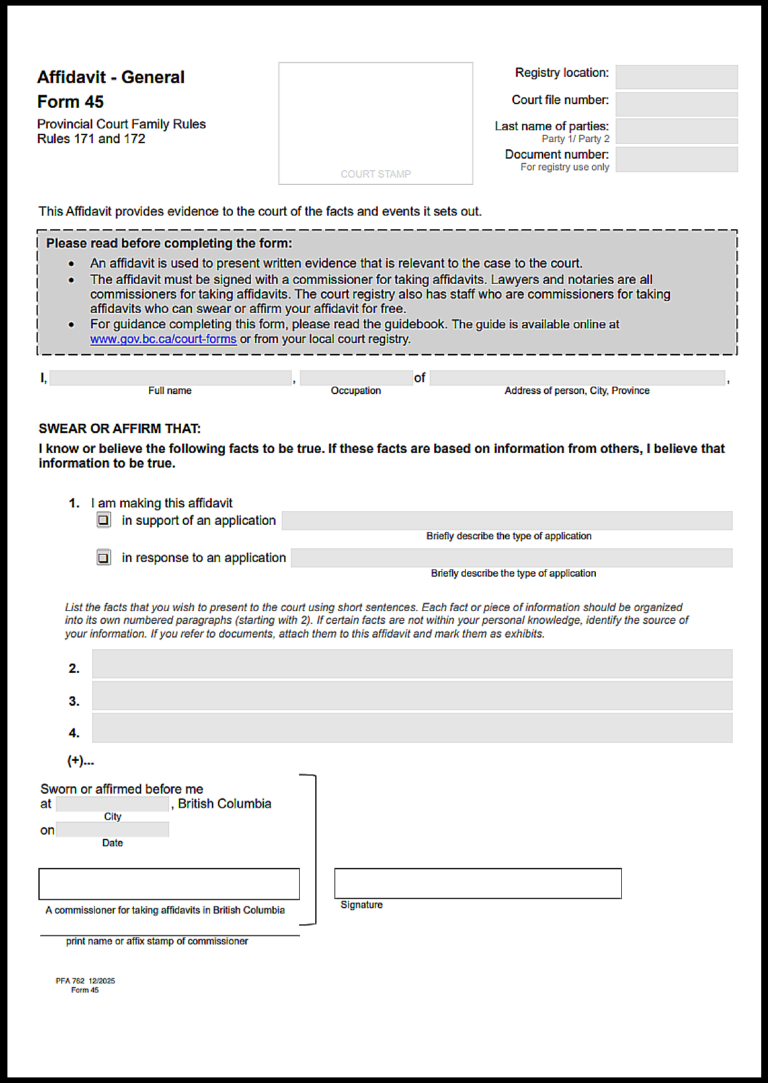
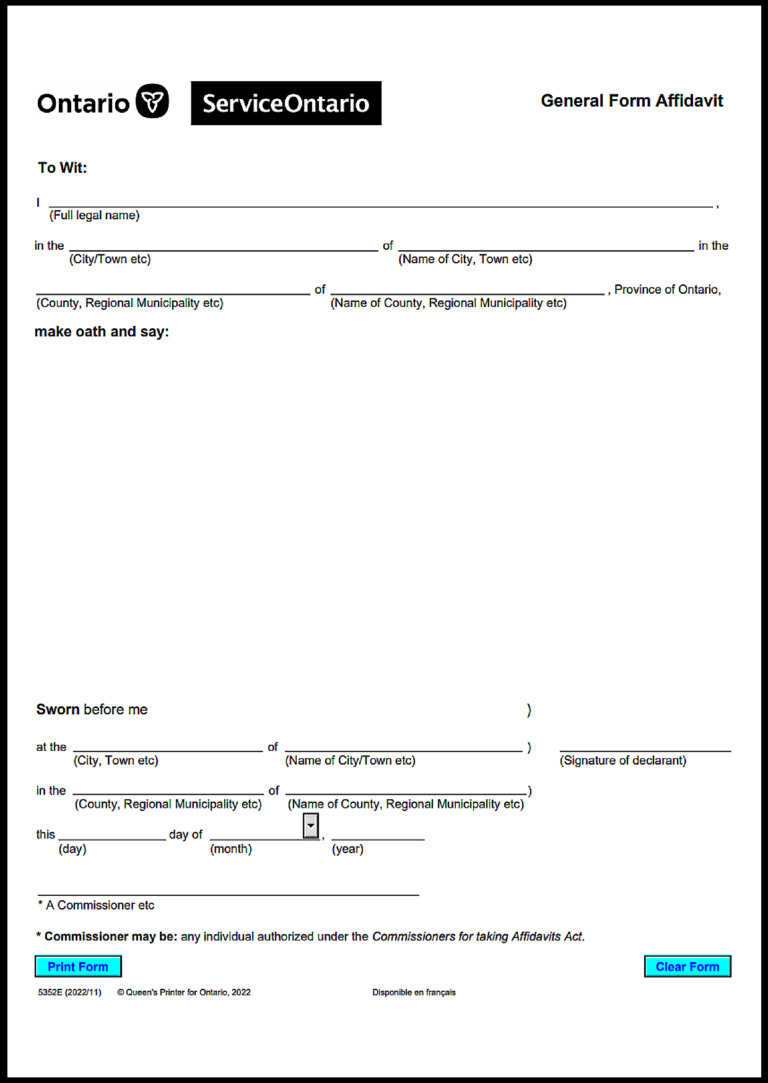
Free Affidavit vs Statutory Declaration Template (British Columbia)
Below is a simple combined template. You can use it for both documents—you just need to select the correct option before signing.
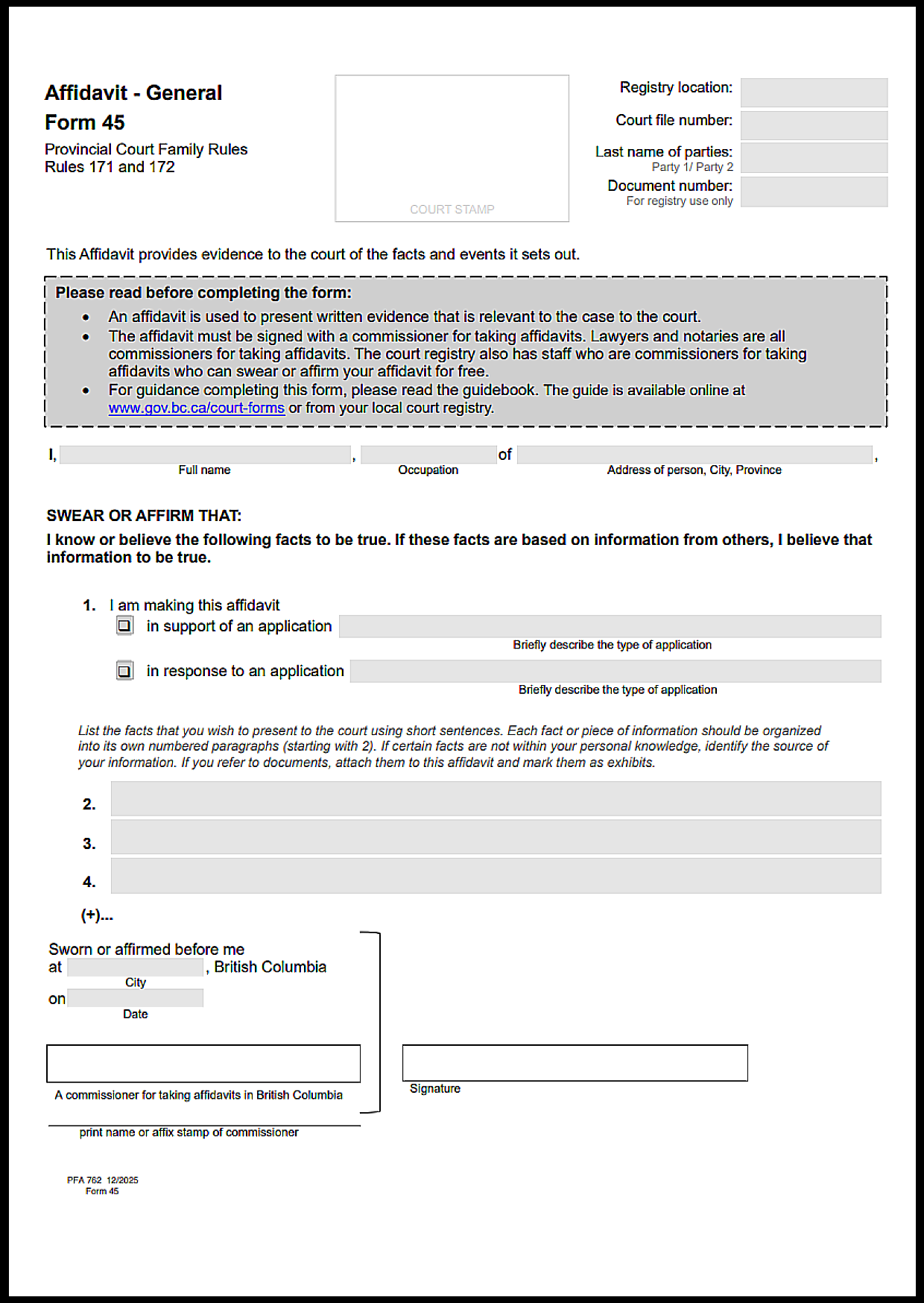
British Columbia Affidavit vs Statutory Declaration Rules, Witness Requirements & Legal Standards
| Topic / Issue | British Columbia Legal Rule | Governing Statute |
|---|---|---|
| Governing legislation | Affidavits and statutory declarations in British Columbia are governed by both provincial and federal legislation depending on the purpose of the document. | Evidence Act, RSBC 1996, c. 124; Supreme Court Civil Rules, BC Reg. 168/2009; Canada Evidence Act, RSC 1985, c. C-5 |
| Affidavit court rules | Affidavits used in BC civil proceedings are governed by Rule 22-2. | Supreme Court Civil Rules, Rule 22-2 |
| Federal statutory declarations | Federal statutory declarations are governed under federal evidence law. | Canada Evidence Act, s. 41 |
| Who can sign (Deponent) | Any person with knowledge of the facts may sign; corporations act through authorized officers or directors. | SC Civil Rule 22-2(4) |
| Witness requirements | The document must be signed before one authorized witness such as a commissioner or notary. | BC Evidence Act, s. 66 |
| Commissioner and notary authority | Lawyers and Notaries Public are automatically commissioners in BC. | BC Evidence Act, s. 56 & 60 |
| Expanded commissioner regulation | BC expanded the list of automatic commissioners in 2022 to include additional public officials. | Commissioners for Taking Affidavits for British Columbia Regulation, BC Reg 332/2021 |
| Age requirement | There is no fixed minimum age, but capacity to understand truth-telling is required. | Canada Evidence Act, s. 16.1 |
| Mental capacity | The person signing must understand the oath, affirmation, and document contents. | BC Evidence Act, s. 19-20 |
| Filing deadlines | Court rules may require filing within specific hearing timelines. | SC Civil Rule 8-1 |
| BC statutory declaration wording | Provincial statutory declarations must contain the exact declaration wording required by law. | BC Evidence Act, s. 69 |
| Federal statutory declaration wording | Federal declarations require wording under federal law. | Canada Evidence Act, s. 41 |
| Affidavit jurat wording | BC affidavits must contain the proper sworn or affirmed jurat section. | Form 109, Supreme Court Civil Rules |
| Court filing requirements | Affidavits and declarations for legal proceedings must be filed with the proper BC court registry. | Court registry requirements |
| Land title filing | Property-related affidavits or declarations must be filed with the LTSA. | LTSA filing requirements |
| Private document use | Documents used for insurance or private matters are generally not government registered. | Private use principles |
| Physical presence requirement | Signing later without the witness present makes the document invalid. | BC Evidence Act, s. 66 |
| Improper jurat issue | Missing the city, date, or sworn/affirmed wording can invalidate the affidavit. | SC Civil Rule 22-2 |
| Hearsay restriction | Final trial affidavits cannot rely on hearsay instead of personal knowledge. | SC Civil Rule 22-2(12) |
| BC commissioner system | BC automatically designates many public officials as commissioners. | Commissioners for Taking Affidavits for British Columbia Regulation |
| Remote commissioning rules | BC permanently allows remote video commissioning with required jurat wording. | SC Civil Rule 22-2 |
One of the most important differences in British Columbia is that affidavits and statutory declarations follow different legal rules depending on whether the matter is provincial or federal. Many people assume these documents are interchangeable, but using the wrong wording or wrong format can cause immediate rejection by courts or government offices.
The physical presence rule is especially important in real life. Under the BC Evidence Act, you cannot sign the document privately and send it to a notary later for stamping. The commissioner or notary must actually witness the signing, either in person or through the approved remote video process. If this step is skipped, the document may become legally worthless.
Another strict BC requirement involves affidavit wording and jurat details. Missing the city, date, or sworn/affirmed wording can invalidate the affidavit entirely. Courts in British Columbia are also strict about hearsay in final trial affidavits and may strike portions that are not based on personal knowledge.
To avoid delays and use the correct format from the beginning, download the free British Columbia affidavit and statutory declaration template below.
Many people confuse affidavits with statutory declarations because both documents involve formal written statements used for legal purposes. To understand how affidavits are commonly structured, you can review the main affidavit guide in Canada together with the British Columbia sworn affidavit template.
When to Use This Template
This template works for both documents, but you must adjust it properly:
- For an affidavit, keep the word “SWORN” and take an oath before signing
- For a statutory declaration, use “DECLARED” and confirm the truth without an oath
- Always choose the correct box before signing—this is legally important
In most affidavit situations, courts will reject a document if the wording is wrong. So take a moment to confirm what is required.
What Is an Affidavit in British Columbia?
Under British Columbia law, an affidavit is a written statement of facts that you swear is true under oath.
This means you are making a formal promise (often on a religious text or solemn affirmation) that everything written is true.
Affidavits are mainly used in legal settings, especially courts.
Common Uses of Affidavits
In British Columbia, affidavits are commonly used for:
- Court cases (family law, divorce, custody matters)
- Civil disputes (money claims, contracts)
- Filing evidence in legal proceedings
- Confirming identity in legal processes
In most cases, a judge or lawyer will specifically ask for an affidavit. If they do, you cannot substitute it with a statutory declaration.
The correct document often depends on the type of legal verification required in a specific situation. Address confirmation may involve an affidavit of residence, while personal verification matters frequently require an identity affidavit form.
What Is a Statutory Declaration in British Columbia?
A statutory declaration is also a written statement of facts—but instead of being sworn under oath, it is solemnly declared to be true.
There is no oath involved, but it is still legally binding.
These are usually used outside of court, especially for administrative or government purposes.
Common Uses of Statutory Declarations
In British Columbia, statutory declarations are often used for:
- Government forms and applications
- Insurance claims
- Replacing lost documents (passport, ID)
- Confirming identity or residency
Even though it feels less formal than an affidavit, it still carries legal responsibility.
Key Differences Between Affidavit and Statutory Declaration
Oath vs Declaration
- Affidavit → Sworn under oath (formal promise)
- Statutory Declaration → Declared true (no oath required)
Legal Use
- Affidavit → Used in court or legal proceedings
- Statutory Declaration → Used for administrative or government purposes
Legal Weight
Both documents are legally binding. However:
- Affidavits usually carry stronger weight in court
- Statutory declarations are accepted outside court but not always inside
Governing Law in BC
- Affidavits → Governed by the Evidence Act (British Columbia)
- Statutory Declarations → Governed by the Canada Evidence Act
Before signing either document, individuals may also need information about notarizing affidavits in British Columbia to ensure the declaration is legally witnessed and accepted.
Affidavit vs Statutory Declaration
| Feature | Affidavit | Statutory Declaration |
| Purpose | Legal evidence in court |
Administrative or official use
|
| Where Used | Courts, legal filings |
Government, insurance, organizations
|
| Oath Required | Yes (sworn under oath) |
No (declared true)
|
| Legal Authority | Evidence Act (BC) |
Canada Evidence Act
|
| Risk of False Statement | Perjury (serious offence) |
Legal offence (also serious)
|
When Should You Use an Affidavit vs a Statutory Declaration?
Choosing the correct document depends on the situation.
Choose an Affidavit If:
- You are filing documents in court
- A lawyer or judge asks for sworn evidence
- You are involved in legal proceedings
Choose a Statutory Declaration If:
- No court is involved
- A government office or organization requests it
- You need to confirm facts formally but outside court
Real-Life Examples
- Divorce case → Affidavit required
- Lost passport → Statutory declaration used
This is where many people make mistakes—using the wrong document can delay your process.
Legal Requirements in British Columbia (Important)
In British Columbia, both documents must follow strict rules set by the Government of British Columbia
Individuals are legally required to:
- Sign in front of an authorized person
- Show valid identification
- Confirm the statement is true
You must not sign the document beforehand.
Who Can Witness in BC
Authorized witnesses include:
- Lawyers
- Notaries Public
- Commissioners for Oaths
If the document is not properly witnessed, it may be rejected or considered invalid.
How to Properly Complete Each Document
Steps for an Affidavit
- Write facts clearly and in numbered points
- Avoid opinions—only include what you know is true
- Take an oath in front of a commissioner or notary
- Sign only when instructed
Steps for a Statutory Declaration
- Use proper declaration wording
- State facts honestly and clearly
- Confirm truth without oath
- Sign in front of an authorized witness
A simple tip: if you’re unsure, ask the authority requesting the document what they need.
Common Mistakes to Avoid
Using the Wrong Document Type
This is the biggest mistake.
For example, submitting a statutory declaration in court instead of an affidavit can lead to rejection.
Signing Before Meeting a Commissioner
If you sign early, the document may become invalid.
Always sign in front of the authorized person.
Including Opinions Instead of Facts
Courts only accept facts.
Avoid writing things like:
- “I believe…”
- “I think…”
Stick to what you know is true.
Missing Required Information
Incomplete documents can be refused.
Always include:
- Full legal name
- Location
- Date
- Signature
- Witness details
Legal Risks of False Statements in BC
Both affidavits and statutory declarations are serious legal documents.
Making a false statement can lead to:
- Charges of perjury (for affidavits)
- Legal offences under federal law
- Fines or other legal consequences
In simple terms: never include anything that is not true.
Can You Switch Between an Affidavit and a Statutory Declaration?
Sometimes, yes—but it depends on who requested the document.
- Courts usually require an affidavit specifically
- Government offices may accept only a statutory declaration
In most cases, you cannot freely switch between them after signing.
The safest approach is to confirm before preparing the document.
FAQs
Is an affidavit stronger than a statutory declaration?
Yes, in court situations. Affidavits are sworn under oath and usually carry stronger evidentiary value.
Can I write both documents myself?
Yes. You can draft both documents yourself, but they must follow proper format and be witnessed correctly.
Do I need a lawyer in BC?
Not always. Many people prepare these documents without a lawyer. However, for court matters, legal advice is helpful.
Is notarization required?
You need a commissioner for oaths or notary public. Not every document requires a notary, but it must be properly witnessed.
Are these documents valid across Canada?
Yes, in most cases. However, requirements may vary slightly by province or organization, so always confirm before use.
Quick Reference Table (At-a-Glance Decision Guide)
| Situation |
Use This Document
|
| Filing in court | Affidavit |
| Government application |
Statutory Declaration
|
| Legal dispute evidence | Affidavit |
| Insurance or ID confirmation |
Statutory Declaration
|
| Lawyer requested document | Affidavit |
| No court involvement |
Statutory Declaration
|
Final Thoughts
Understanding affidavit vs statutory declaration in British Columbia is not just a technical detail—it directly affects whether your document will be accepted.
If you remember one rule, let it be this:
- Court = Affidavit
- No court = Statutory Declaration
Take a few extra minutes to choose correctly, follow the proper process, and sign in front of the right authority. That small step can save you a lot of time and trouble.