British Columbia Affidavit Template (Free PDF & Easy Guide)
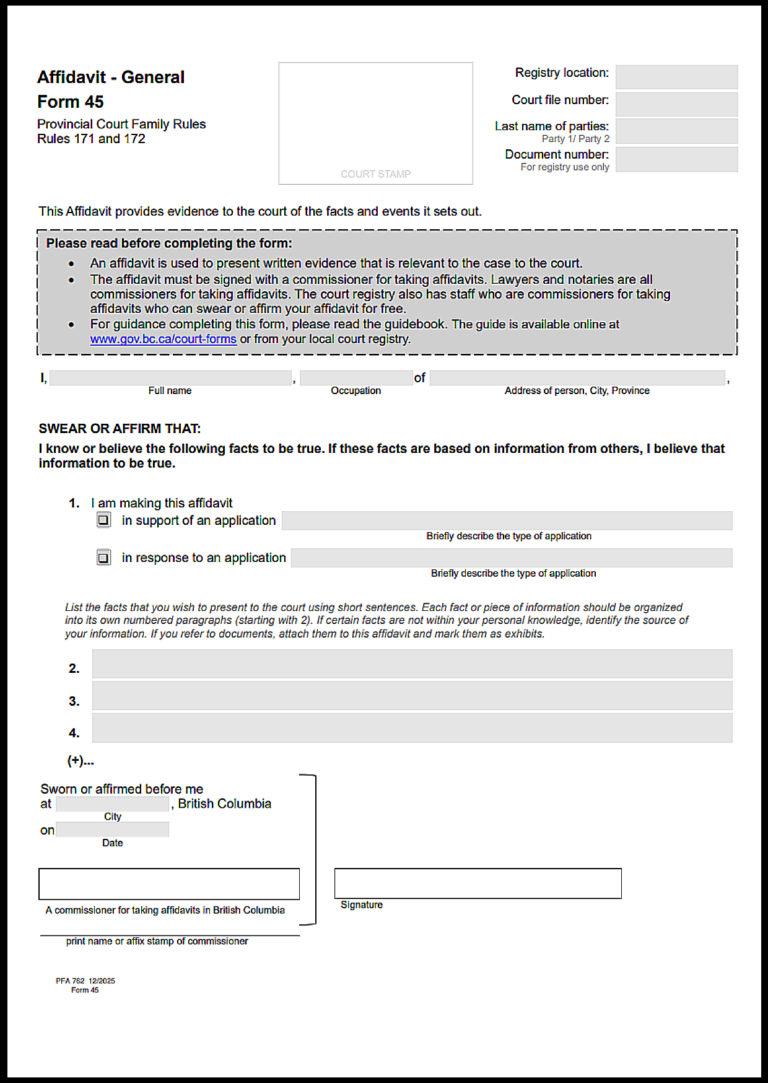
British Columbia Affidavit Template is a simple way to create a sworn legal statement that can be used in court or official matters. An affidavit is a written statement that you confirm is true by taking an oath or making an affirmation.
In British Columbia, affidavits are used as legal proof in courts, government applications, and many official processes. They must follow strict rules for formatting, signing, and witnessing. If not done correctly, your affidavit may be rejected.
I have seen affidavits in British Columbia get rejected over small mistakes like missing commissioner details, improper wording, or unsigned pages, especially when people try to complete them without understanding the court rules. When someone is already stressed about a legal matter, even a simple formatting error can delay hearings, applications, or important decisions.
Even if you have no legal background, this guide will help you understand everything step by step.
Last Updated: September 2026
Free British Columbia Affidavit Template
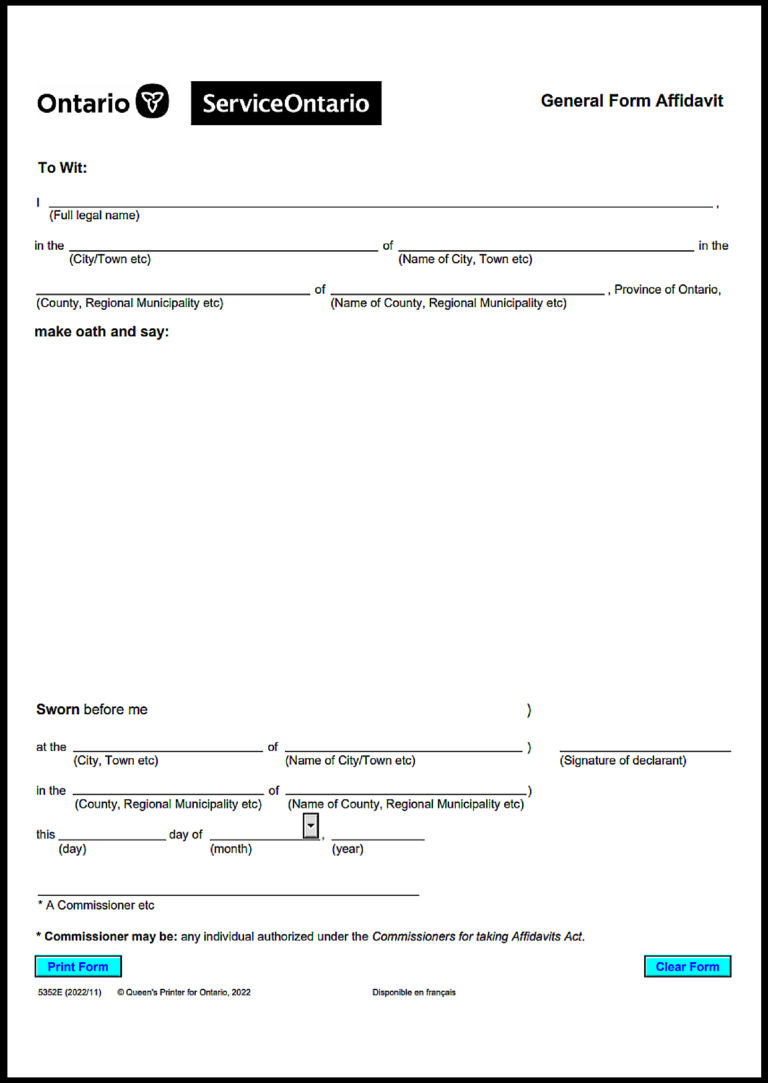
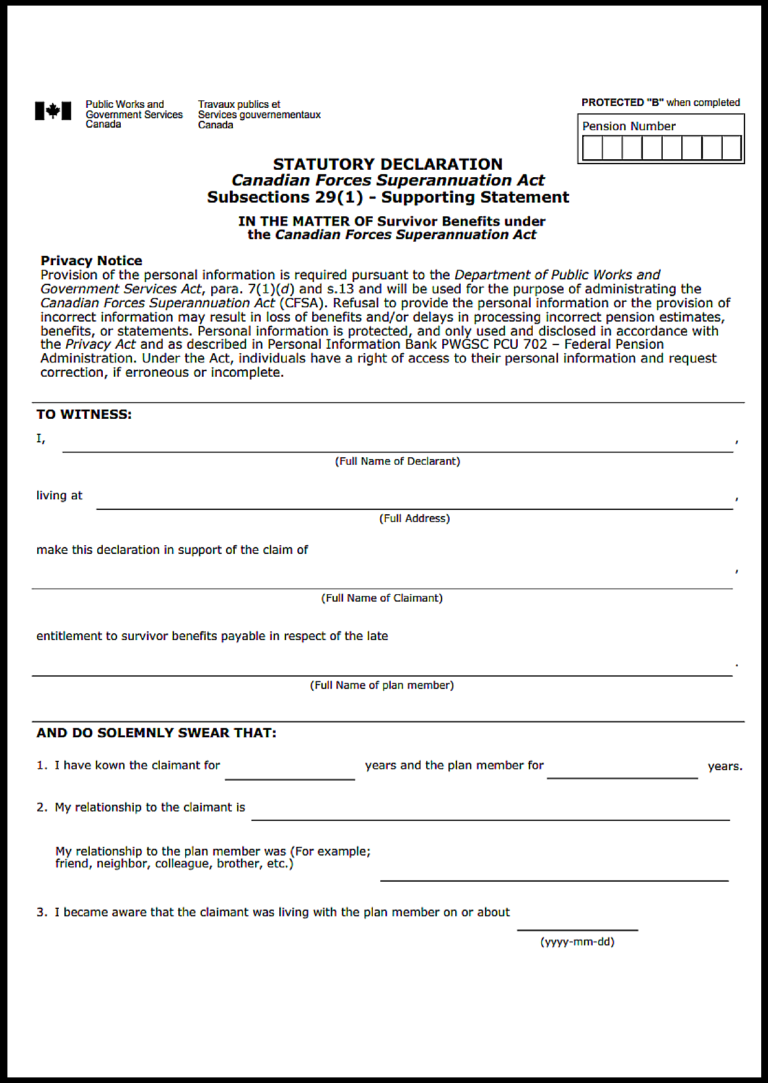
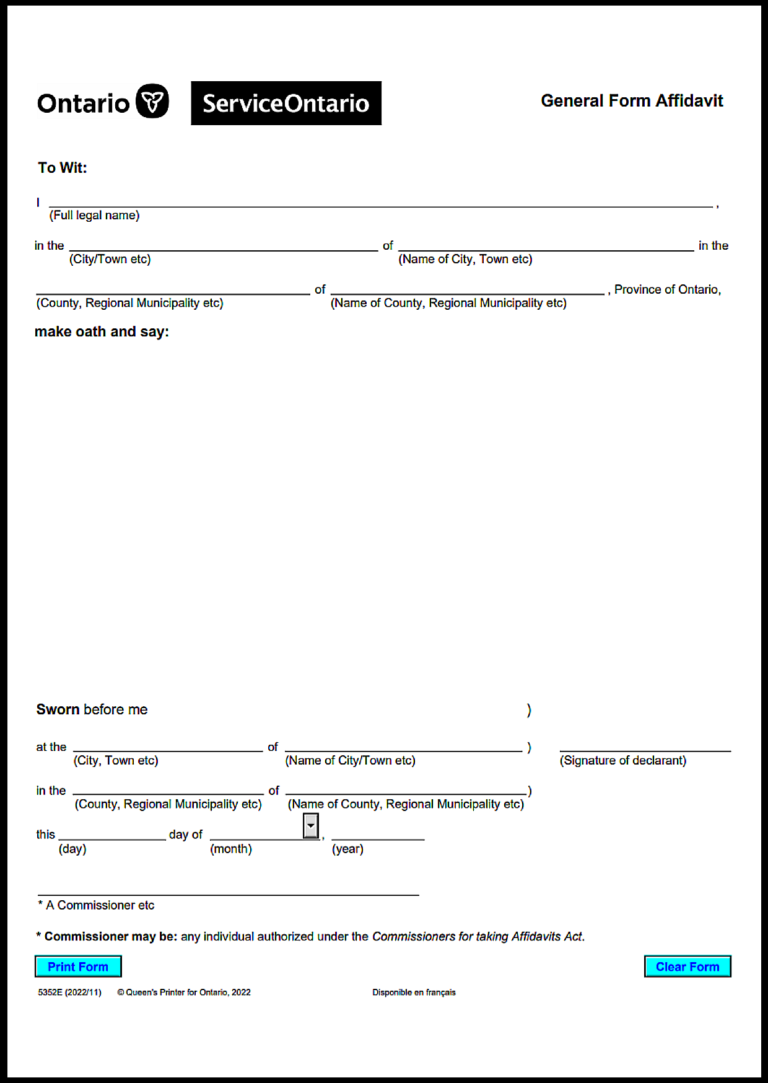
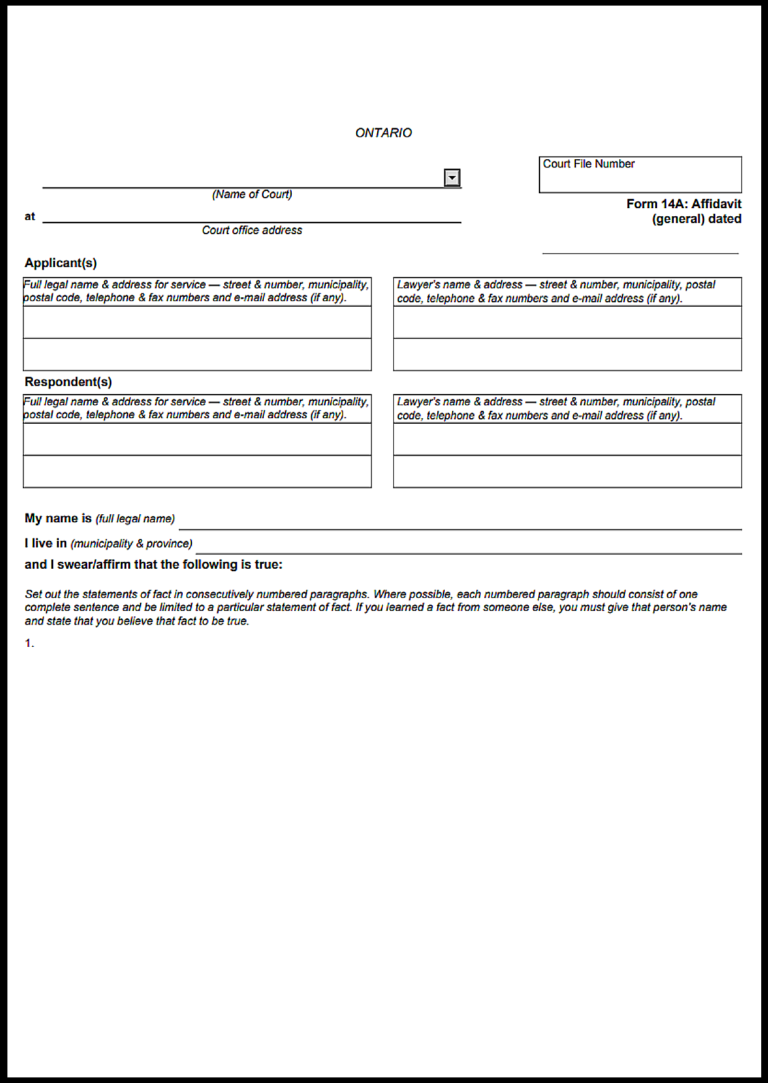
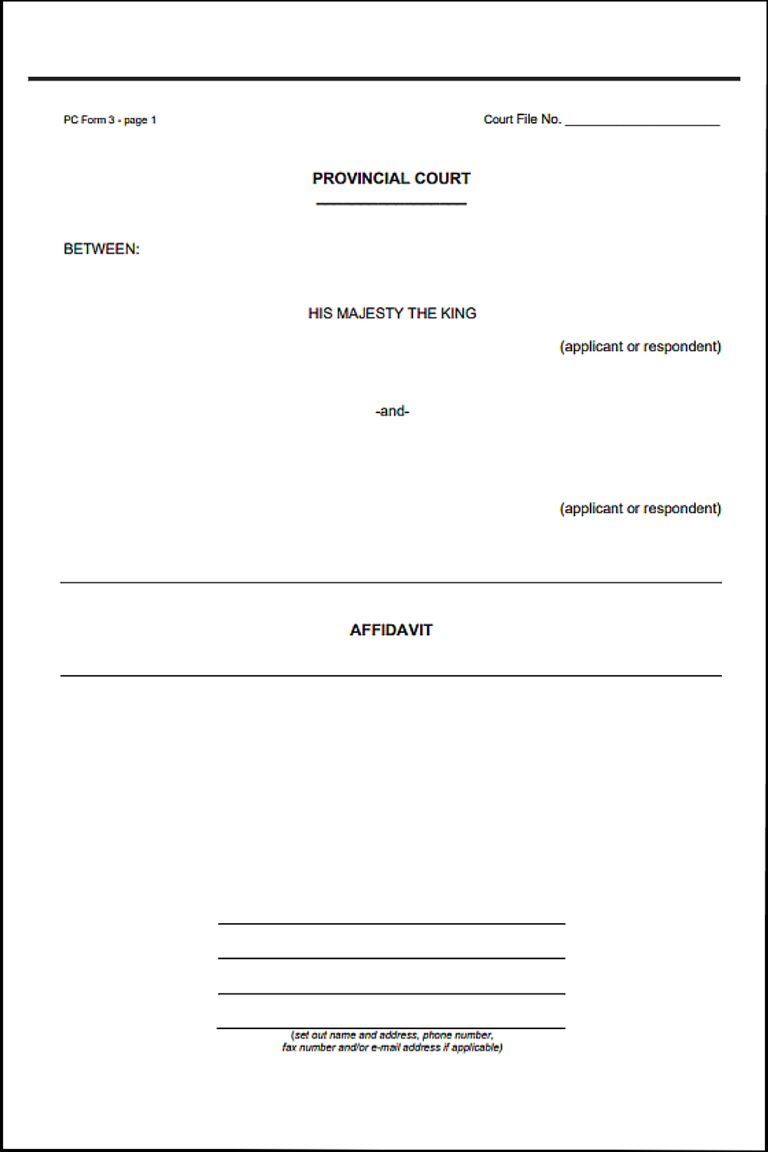
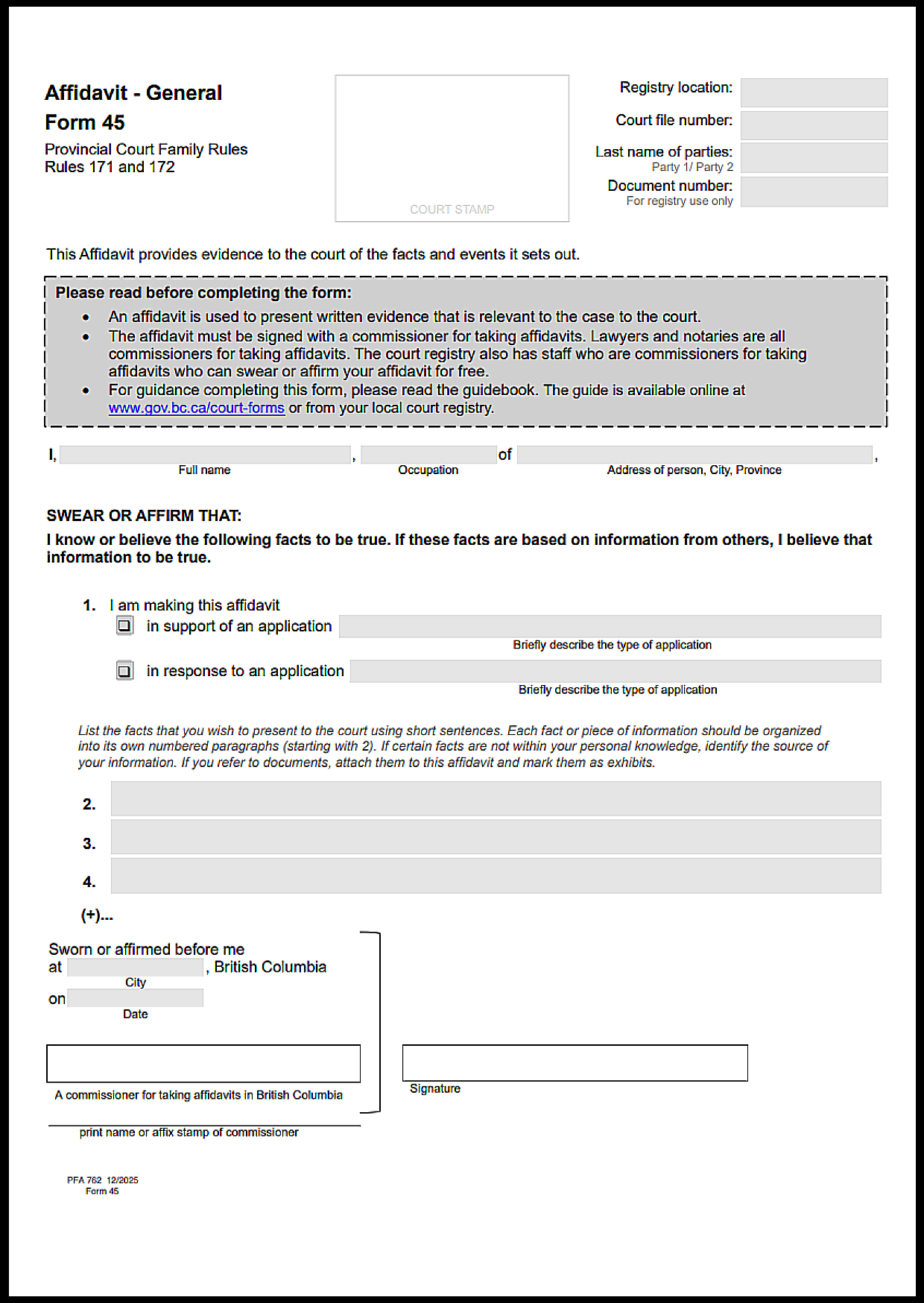
Below is a general-purpose affidavit template you can use for most situations such as identity confirmation, residency proof, or simple legal matters.
British Columbia Affidavit Rules, Court Requirements & Filing Standards
| Topic / Issue | British Columbia Legal Rule | Governing Statute |
|---|---|---|
| Primary Affidavit Law | Affidavits in British Columbia are governed by the Evidence Act together with any applicable court rules, including the Supreme Court Civil Rules and Supreme Court Family Rules. | Evidence Act, RSBC 1996, c. 124 |
| Civil Court Affidavit Rules | Affidavits used in a BC Supreme Court proceeding must comply with Rule 22-2, including requirements for form, identifying information, numbered paragraphs, exhibits and commissioning. | Supreme Court Civil Rules, BC Reg. 168/2009, Rule 22-2 |
| Family Court Affidavit Rules | Affidavits used in a BC family law case must comply with Rule 10-4 of the Supreme Court Family Rules, including requirements for form, identifying information and numbered paragraphs. | Supreme Court Family Rules, BC Reg. 169/2009, Rule 10-4 |
| Federal Affidavit Use | Federal evidence and procedural rules may apply where an affidavit is used in a federal proceeding or application. The specific proceeding should be checked to determine which rules apply. | Canada Evidence Act, RSC 1985, c. C-5 |
| Jurisdiction | The required form and execution of an affidavit depend on the proceeding and the rules that govern it. BC court proceedings are subject to the applicable BC court rules, while federal proceedings may be governed by federal legislation and procedural rules. | Applicable provincial or federal rules |
| Remote Commissioning Update | BC Supreme Court rules permit an affidavit to be sworn or affirmed by video conference, subject to the requirements in Rule 22-2, including the required video-conference statement. | Supreme Court Civil Rules, Rule 22-2 |
| Who Can Sign | The person making the affidavit, called the deponent, signs or marks the affidavit when it is sworn or affirmed. The affidavit must comply with the applicable rules about admissible evidence. | Supreme Court Civil Rules, Rule 22-2 |
| Witness Requirement | An affidavit must be sworn or affirmed before a person authorized by law to take affidavits, such as a commissioner for taking affidavits, lawyer or notary public. | Evidence Act; Supreme Court Civil Rules |
| Notarization / Commissioning | An affidavit must be sworn or affirmed before a person authorized by law to take affidavits. It does not necessarily need to be notarized if another authorized person commissions it. | Evidence Act |
| Age & Mental Capacity | A person making an affidavit must be capable of understanding and making the oath or affirmation. The specific capacity issues can depend on the circumstances. | Applicable evidence and procedural law |
| Filing Deadlines | An affidavit used in a BC court proceeding must be filed as required by the applicable rules and proceeding. There is no general automatic expiry date for every affidavit. | Supreme Court Civil Rules; applicable court rules |
| Style of Proceeding Requirement | A court affidavit must include the identifying information and format required by the applicable court rules. | Supreme Court Civil Rules, Rule 22-2 |
| Affidavit Identification Rule | A BC Supreme Court affidavit, other than an affidavit of service, must show the deponent’s name, sequential affidavit number and date in the top right corner of the first page. | Supreme Court Civil Rules, Rule 22-2(3) |
| Personal Information Requirement | A BC Supreme Court affidavit must be expressed in the first person and show the deponent’s name, address and occupation. | Supreme Court Civil Rules, Rule 22-2(2) |
| Information and Belief Statements | Rule 22-2 generally governs the evidence that may be included, and specified applications may permit information-and-belief statements when the source of the information and belief is given. | Supreme Court Civil Rules, Rule 22-2(12)-(13) |
| Remote Commissioning Clause | For a video-conferenced affidavit, the last numbered paragraph must state that the deponent was not physically present before the other person but was before that person by video conference. | Supreme Court Civil Rules, Rule 22-2(6.1) |
| Court Filing Location | Where an affidavit must be filed in a BC court proceeding, it must be filed through the court or registry process applicable to that proceeding. | Applicable BC court rules and procedures |
| Land Title Affidavits | Some property and land-title transactions require affidavits or statutory declarations under Land Title and Survey Authority procedures. The filing requirements depend on the specific application. | LTSA requirements |
| Private Use Affidavits | Some affidavits are prepared for private, administrative or other purposes and may not be filed with a court. The receiving authority determines what it will accept. | Applicable requirements |
| Commissioner Name Requirement | The prescribed commissioning statement for a BC Supreme Court affidavit includes the commissioner’s printed name or stamp. | Supreme Court Civil Rules, Rule 22-2 |
| Exhibit Certification Rule | Documents referred to as exhibits must be identified and marked in accordance with the applicable court rules. | Supreme Court Civil Rules, Rule 22-2 |
| Hearsay Restriction | A BC Supreme Court affidavit generally states matters the deponent would be permitted to give in evidence at trial, subject to the rules that allow information-and-belief evidence in specified circumstances. | Supreme Court Civil Rules, Rule 22-2(12)-(13) |
| Occupation Disclosure Difference | BC Supreme Court and Supreme Court Family Rules require the affidavit to state the deponent’s name, address and occupation. | Supreme Court Civil Rules, Rule 22-2(2); Supreme Court Family Rules, Rule 10-4(2) |
| Remote Commissioning Difference | BC Supreme Court affidavits sworn or affirmed by video conference must contain the statement required by Rule 22-2(6.1). | Supreme Court Civil Rules, Rule 22-2(6.1) |
One important BC court requirement is the commissioning process. For a Supreme Court affidavit, Rule 22-2 requires the affidavit to be sworn or affirmed, signed by the person making it, and completed by the person before whom it is sworn or affirmed. The rule also specifies the information that must appear on the affidavit.
Remote commissioning is also expressly permitted. When an affidavit is sworn or affirmed by video conference, Rule 22-2 requires a statement in the last numbered paragraph confirming that the person was not physically present but was before the commissioner by video conference.
Exhibits also have specific requirements. A defect does not automatically mean an affidavit can never be used. Section 67 of the Evidence Act allows a court or other authorized officer, in appropriate circumstances, to receive an affidavit despite certain defects or irregularities.
Download the free British Columbia Affidavit Template below to prepare your document more accurately and organize the information required for your particular purpose.
Before preparing a sworn legal statement, it helps to review the main affidavit guide in Canada, which explains how affidavits are commonly used for legal verification and provincial compliance. Individuals may also want to understand how to get an affidavit in British Columbia before completing the document.
Types of Affidavits in British Columbia
General Affidavit
Where no prescribed form applies, a general-purpose affidavit can be adapted to the purpose of the statement. A court proceeding may still impose additional format and content requirements.
It is commonly used for:
- Confirming simple facts
- Personal statements
- Other matters where a sworn statement is requested
Affidavit for Court (Litigation Affidavit)
This type is used in civil or family court cases. It must follow the rules applicable to that particular court and proceeding.
It usually includes:
- Evidence and facts
- Dates and timelines
- Supporting details
Affidavits can be important written evidence in civil and family proceedings, but their admissibility and weight depend on the applicable rules and circumstances.
Statutory Declaration (Alternative to Affidavit)
A statutory declaration is a formal solemn declaration made before a person authorized by law to receive it. It is distinct from an affidavit and should be used where the governing law, court or organization accepts a statutory declaration.
It may be used for:
- Government processes
- Administrative matters
- Other procedures that specifically request a statutory declaration
Affidavit of Identity
An affidavit of identity can be used to state facts about a person’s identity, but whether it is accepted as proof depends on the organization, court or government authority requesting it.
It is sometimes requested when:
- You lose ID documents
- An organization requires identity verification
- Legal identity proof is needed
Affidavit of Residency
An affidavit of residency can state facts about where a person lives. Its acceptance depends on the requirements of the organization or authority requesting it.
It may be used for:
- School admissions
- Government services
- Other administrative purposes
Affidavit of Service
This affidavit is commonly used to provide evidence that legal documents were served on another person.
It may include:
- Date and time of service
- Method of service
- Person who received the document
The exact requirements depend on the court rules and the document being served.
Financial Affidavit (Family Law)
Used in family law cases involving financial information, such as support or property matters.
It may include:
- Income
- Expenses
- Assets and debts
The specific information required depends on the proceeding and any prescribed court form.
Different situations may require more specialized sworn statements depending on the purpose of the document. Residency verification often involves an affidavit of residence template, while identity confirmation may require a legal identity affidavit form.
Real-Life Use Cases of an Affidavit
The purpose of an affidavit depends on the authority requesting it. In court, it may present evidence supporting an application. Outside court, an organization may request one to establish particular facts.
For example:
- You need to provide evidence about your identity
- You must establish a fact about where you live
- You are giving evidence in a family court matter
- You need to provide evidence concerning service of documents
- You are required to provide financial information in a court proceeding
An affidavit can provide formal evidence of facts, but whether it will be accepted depends on the requirements of the court, government body or organization receiving it.
In some legal or financial matters, parties may also need guidance on notarizing an affidavit in British Columbia to understand the commissioning process.
Key Elements of a Valid Affidavit in British Columbia
The requirements for an affidavit depend on its purpose and the rules governing the proceeding. BC Supreme Court and Family Rules prescribe specific requirements for affidavits used in those courts.
Full Legal Name and Personal Details
For a BC Supreme Court affidavit, Rule 22-2 requires the affidavit to be expressed in the first person and to show the deponent’s name, address and occupation.
Statement of Truth
The affidavit should accurately state the evidence the deponent intends to give under oath or solemn affirmation. The person making the affidavit should review the contents carefully before swearing or affirming it.
Facts Only (No Opinions)
Include relevant evidence that you are permitted to give. Avoid speculation and unsupported statements, and follow the applicable court rules on opinion, information and belief.
The Evidence Act expressly allows a person to make a statement of fact, opinion, belief or knowledge by affidavit, so an absolute rule that an affidavit can contain “facts only” is too broad.
Numbered Paragraphs
For BC Supreme Court affidavits, the affidavit must be divided into consecutively numbered paragraphs. The Supreme Court Family Rules contain a similar requirement for family law affidavits.
Swearing or Affirmation Clause
The affidavit must contain the required commissioning statement and be sworn or affirmed before the appropriate person.
Signature and Witness (Commissioner/Notary)
An affidavit generally must be sworn or affirmed before an authorized person before it can be used as a sworn affidavit. A lawyer, notary public or commissioner for taking affidavits may be authorized to take the affidavit, depending on the applicable law and circumstances.
How to Create or Complete an Affidavit
Creating an affidavit starts with checking what the receiving court or organization actually requires.
Start by writing the title and identifying the correct proceeding or purpose. Then organize the evidence in consecutively numbered paragraphs where the applicable rules require it.
After writing:
- Check all facts for accuracy
- Make sure the statements are truthful
- Do not sign the affidavit before it is ready to be sworn or affirmed
Next:
- Visit an authorized commissioner, lawyer or notary, as appropriate
- Sign or swear/affirm the affidavit as directed
- Keep copies for your records
Following the applicable commissioning and filing requirements helps ensure the affidavit is prepared in a form that can be used for the intended purpose.
Legal Overview in British Columbia
Under British Columbia law, affidavits are governed by the Evidence Act together with the applicable court rules, including the Evidence Act (British Columbia).
Individuals making an affidavit should:
- Swear or affirm their statements before an authorized person where required
- Provide truthful and accurate evidence
- Follow the formatting and filing requirements applicable to the proceeding
Affidavits may be sworn or affirmed before an authorized person, including:
- A Commissioner for Taking Affidavits
- A lawyer
- A notary public
Knowingly making a false statement under oath or solemn affirmation with intent to mislead can constitute perjury under section 131 of the Criminal Code. Perjury is an indictable offence and may result in imprisonment of up to 14 years.
Affidavits can be important evidence in court. Section 66 of the BC Evidence Act provides that an affidavit or affirmation referred to in the Act may be read and used in a BC court and has the same force as if taken in open court.
Affidavit vs Statutory Declaration (Quick Comparison)
| Feature | Affidavit |
Statutory Declaration
|
| Oath / Declaration | Sworn or affirmed before an authorized person |
Formal solemn declaration before an authorized person
|
| Used in Court | Commonly used where court rules permit or require affidavit evidence |
Depends on the applicable law and court or organization
|
| Legal Effect | Depends on the proceeding and governing requirements |
Depends on the proceeding and governing requirements
|
| Common Use | Court applications and other processes requiring sworn evidence |
Government, administrative and other processes that request a statutory declaration
|
Common Mistakes to Avoid
Many affidavit problems are caused by procedural details rather than the facts themselves.
Avoid these mistakes:
- Signing before meeting the commissioner
- Including speculation or unsupported statements
- Using unclear or vague language
- Missing required details such as dates or names
- Choosing a document type that the receiving authority does not accept
- Not following the court format when required
A final check against the applicable court rule can catch practical errors such as missing identifying information, incorrect numbering or an incomplete commissioning statement.
Choosing the Right Affidavit Type
Choose the document based on what the receiving court, government body or organization actually requires. A court proceeding may require a prescribed affidavit form, while an administrative matter may instead accept a statutory declaration or another specified document.
- If you need general proof → use a general-purpose affidavit where appropriate
- If it is for a court case → use the affidavit form or format required by that court
- If no oath is required → use a statutory declaration only where accepted
- If proving identity → use an affidavit of identity if the receiving authority requires it
- If confirming address → use an affidavit of residency if the receiving authority requires it
- If confirming document delivery → use an affidavit of service where required
- If dealing with finances → use the financial affidavit or form required for the proceeding
The safest approach is to start with the requirements of the court, government agency or organization receiving the document.
Related Templates in British Columbia
- General Affidavit Template BC
- Statutory Declaration Form BC
- Affidavit of Identity Template BC
- Affidavit of Residency Template BC
- Affidavit of Service Template BC
- Financial Affidavit BC (Family Law)
- Power of Attorney BC
- Legal Will Template BC
Frequently Asked Questions
Is an affidavit legally binding in British Columbia?
An affidavit is a formal sworn or affirmed statement that can be used as evidence where the applicable process permits it. Its evidentiary effect and weight depend on the proceeding and the applicable rules.
Who can sign an affidavit in BC?
The person making the affidavit signs it when it is sworn or affirmed. The signing takes place before a person authorized to take affidavits, such as a commissioner for taking affidavits, lawyer or notary public, depending on the applicable requirements.
Can I write my own affidavit?
Yes. You can prepare your own affidavit unless the relevant court or organization requires a prescribed form or legal assistance. Court affidavits must still comply with the applicable procedural rules.
What happens if an affidavit is false?
Knowingly making a false statement under oath or solemn affirmation with intent to mislead can constitute perjury under section 131 of the Criminal Code. Perjury is a serious criminal offence.
What is the difference between an affidavit and a statutory declaration?
An affidavit is a statement made under oath or solemn affirmation before an authorized person. A statutory declaration is a formal solemn declaration made under the applicable statutory requirements. Which document you should use depends on what the receiving court, government body or organization requires.
Legal Disclaimer
This content is for informational purposes only. It is not legal advice. Laws may change or vary depending on your situation. Always consult a qualified legal professional in British Columbia if you are unsure.