Free Notarizing Affidavit Alberta Template
Notarizing Affidavit Alberta is an important legal step that makes your affidavit officially valid and trusted. In simple words, notarizing means signing your affidavit in front of a Notary Public who checks your identity and confirms that you are signing willingly.
Many people get confused between signing, commissioning, and notarizing. Signing is just putting your signature on a document. Commissioning means signing in front of a Commissioner for Oaths. Notarizing is a higher level process where a Notary Public verifies your identity and adds an official seal. Under Alberta law, not every affidavit needs notarization, but it becomes important when the document is used outside Alberta or for serious legal matters.
I have seen many people in Alberta unknowingly sign an affidavit before meeting the Notary Public, only to have the document rejected later by courts, immigration offices, or out-of-province authorities. When someone is already stressed and handling legal paperwork for the first time, even a small notarization mistake can cause serious delays and extra costs.
Last Updated: August 2026
Table of Contents
ToggleFree Notarizing Affidavit Template (Alberta)
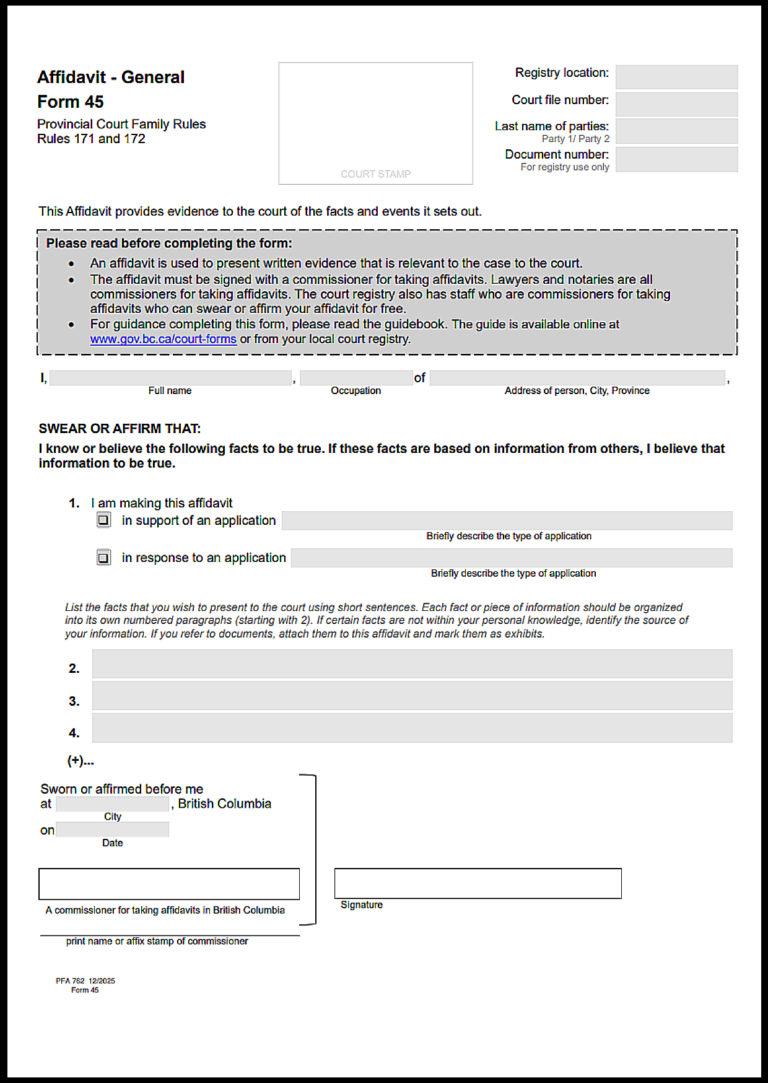
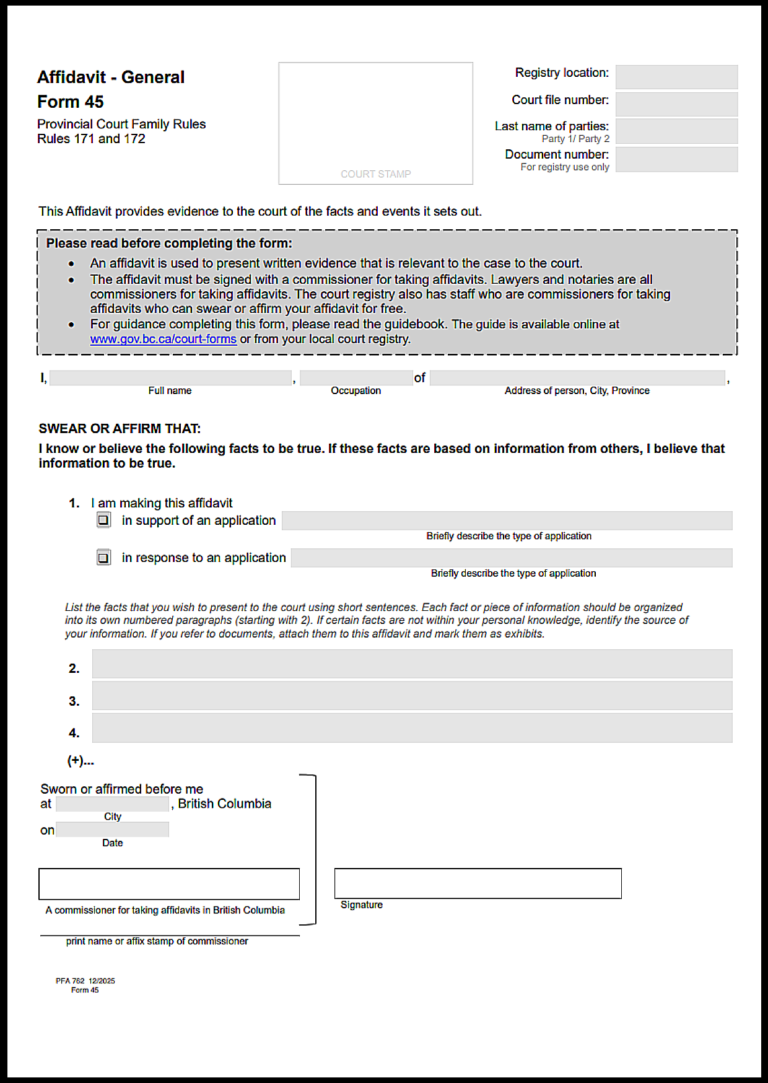
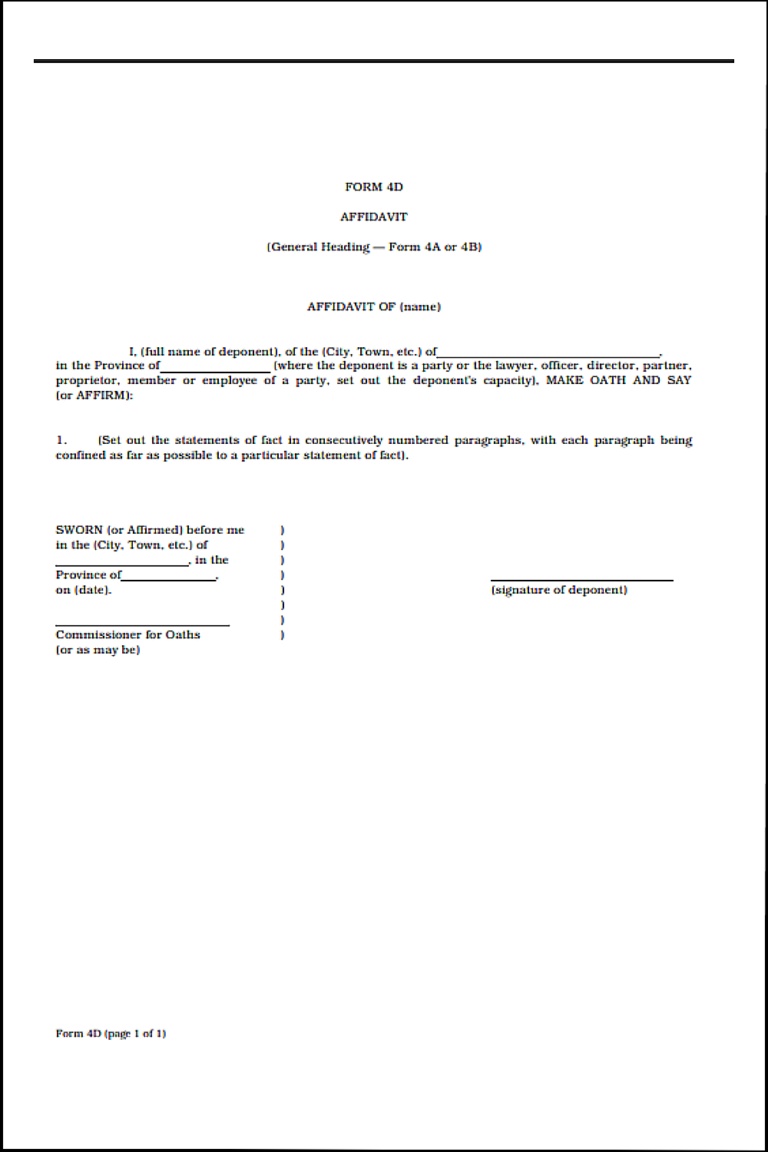
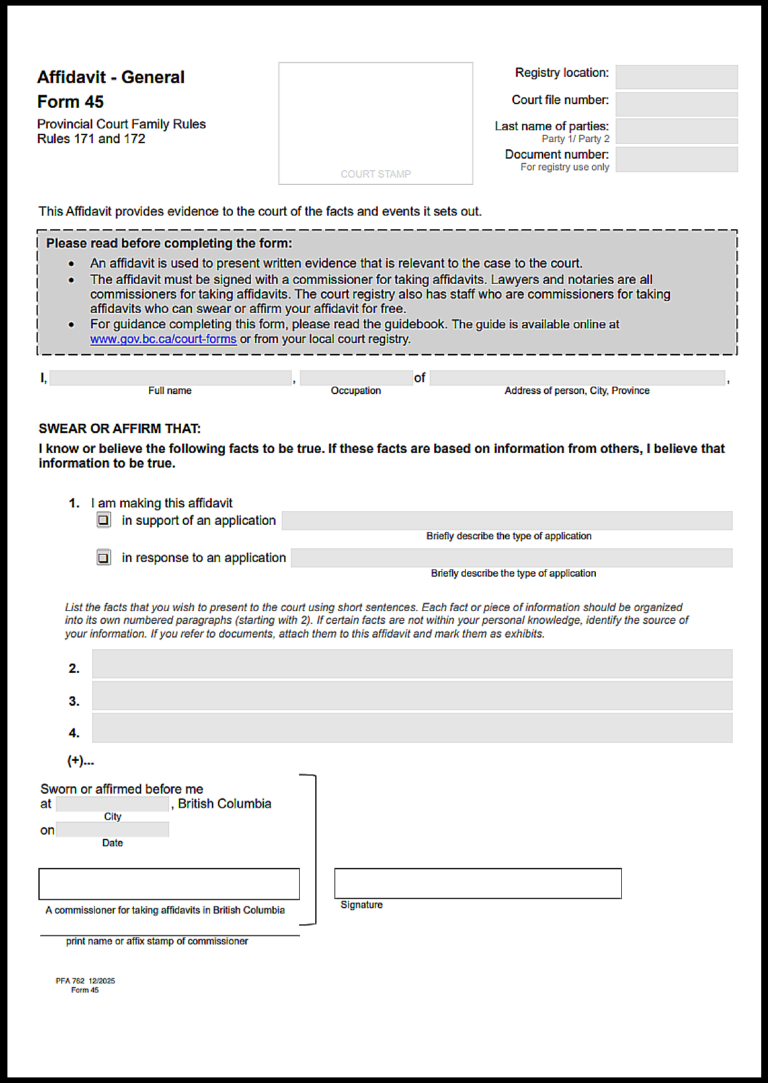
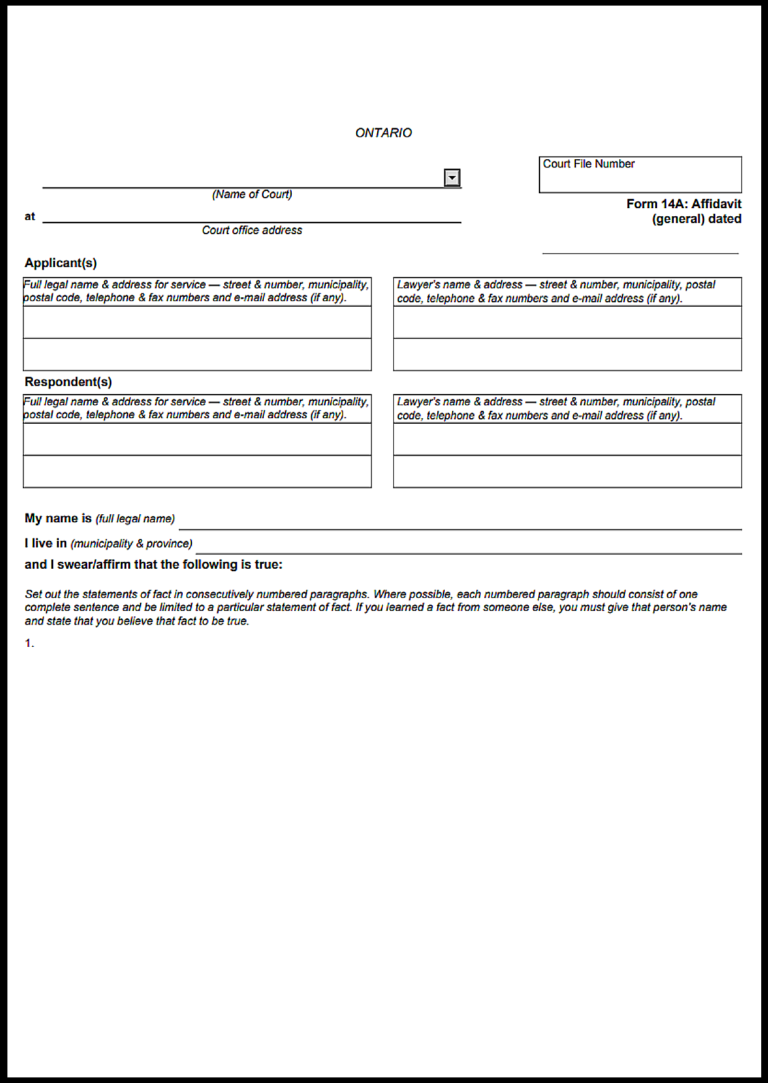
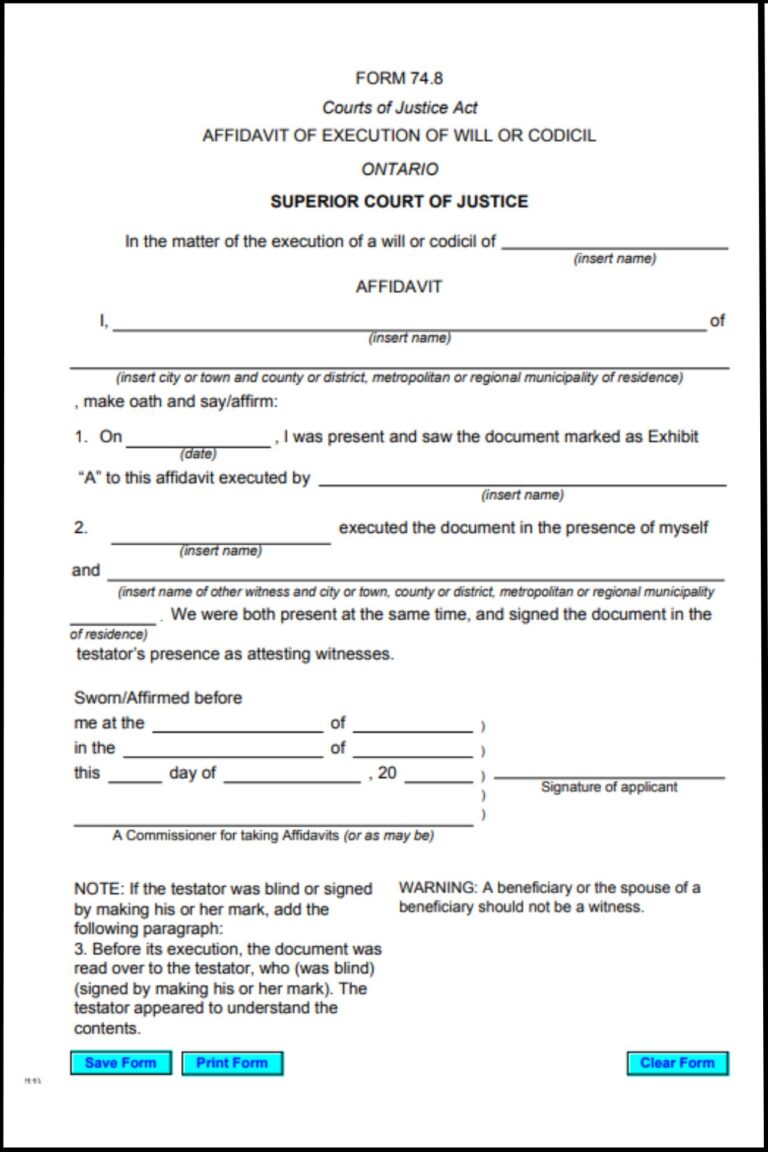
Below is a simple and clean affidavit template you can use:
Alberta Notarized Affidavit Rules That Commonly Cause Rejections
| Topic / Issue | Alberta Legal Rule | Governing Statute / Source |
|---|---|---|
| Main provincial law for notarization | Affidavits and the powers and formalities of Alberta Commissioners for Oaths and Notaries Public are governed principally by Alberta legislation, including the Notaries and Commissioners Act, SA 2013, c N-5.5. | Notaries and Commissioners Act, SA 2013, c N-5.5 |
| Evidence law | Affidavits used in an Alberta proceeding must comply with the applicable Alberta evidence and court rules. Federal proceedings may instead be governed by federal legislation and rules. | Alberta Evidence Act, RSA 2000, c A-18 |
| Court affidavit procedures | Court affidavits must follow the Alberta Rules of Court and any applicable court directions or practice requirements. | Alberta Rules of Court, Alta Reg 124/2010 |
| Federal use of affidavits | Federal proceedings may be governed by federal evidence legislation and the rules of the particular federal proceeding. An immigration application does not automatically mean every affidavit must be notarized. | Canada Evidence Act |
| Who signs the affidavit | For an Alberta Rules of Court affidavit, the person swearing the affidavit must sign or acknowledge it before a person empowered to administer oaths, and the affidavit must satisfy Rule 13.19. | Alberta Rules of Court, Rule 13.19 |
| Witness requirement | An affidavit must be properly sworn or affirmed before a person legally empowered to administer the required oath or affirmation. For many Alberta affidavits, this may be a Commissioner for Oaths or Notary Public. | Notaries and Commissioners Act; Alberta Rules of Court |
| Authority differences | Commissioners for Oaths generally administer oaths and take affidavits in Alberta for use in Alberta, subject to statutory exceptions. A Notary Public has additional statutory functions. | Notaries and Commissioners Act |
| Mental capacity requirement | The person administering the oath must follow the applicable requirements concerning the deponent’s ability to understand the affidavit and oath or affirmation. Alberta Evidence Act ss. 19–20 should not be treated as a general “sound mind” rule. | Alberta Evidence Act; Alberta Rules of Court |
| No second witness required | An affidavit generally does not require a separate second witness merely because it is an affidavit. The required oath or affirmation must be properly administered by an authorized person. | Alberta Rules of Court |
| Mandatory designation wording | A Commissioner for Oaths must provide the required Alberta designation below their signature. The wording depends on the basis of the commission. | Alberta Commissioner for Oaths requirements |
| Expiry date or lawyer status | An appointed Commissioner for Oaths must include the appointment expiry date. A commissioner acting by virtue of office or status must identify the applicable office or status. | Alberta Commissioner for Oaths requirements |
| Required jurat wording | Where an affidavit is required, its jurat or equivalent attestation must accurately record the required swearing or affirmation particulars and comply with the applicable procedural requirements. | Alberta Rules of Court, Rule 13.19 |
| Court filing requirement | Court affidavits must be filed according to the requirements of the particular Alberta court, proceeding, and applicable rules or directions. | Alberta Courts |
| Land Titles filing | Certain land-related affidavits and documents have specific Land Titles commissioning, notarization, or registration requirements. The exact requirement depends on the document. | Alberta Land Titles |
| Invalid without expiry date | An incomplete commissioner endorsement can result in a document being rejected or requiring correction, depending on the receiving authority and applicable requirements. | Alberta Land Titles |
| Invalid exhibits | For Alberta court affidavits, records used as exhibits must comply with Rule 13.21, including the applicable identification requirements. | Alberta Rules of Court, Rule 13.21 |
| Conflict of interest issue | A notary or commissioner should exercise caution where the person swearing the document is the official’s spouse because section 8 of the Alberta Evidence Act can raise issues concerning the administration of oaths. | Alberta Evidence Act, s. 8 |
| Alberta stamp requirements | Alberta has different formalities for commissioners and notaries. Commissioners must provide the required endorsement, while Notaries Public must affix the required notarial seal. | Alberta Land Titles |
| Remote notarization rules | Remote or virtual execution is not automatically appropriate for every affidavit or purpose. The applicable legal requirements and the receiving authority’s requirements should be confirmed before using a remote service. | Applicable Alberta law and receiving-authority requirements |
One of the most important Alberta rules is that you must properly sign or acknowledge and swear or affirm the affidavit before an authorized person. For affidavits governed by the Alberta Rules of Court, Rule 13.19 sets out specific requirements for the affidavit and its execution. (Alberta Rules of Court)
Many people accidentally sign the document at home first, thinking it saves time. Instead, check with the Commissioner for Oaths or Notary Public before signing so you follow the required procedure.
Another important issue is the commissioner’s information. Alberta Land Titles identifies missing commissioner information, missing signatures, and incomplete jurats as common reasons documents are returned for correction. It also specifically says to include the commissioner’s printed name and expiry date where applicable. (Alberta Land Titles — Common Reasons for Document Rejection)
The exhibit verification rule also matters. For affidavits governed by the Alberta Rules of Court, Rule 13.21 deals with records used as exhibits. Rule 13.24 should not be cited as the general exhibit rule.
What Does “Notarizing an Affidavit” Mean in Alberta?
Notarizing an affidavit means having a Notary Public perform the required notarial act, including administering the oath or affirmation and completing the applicable signing and sealing formalities.
The notary’s seal confirms the notary’s official act. It does not independently prove that every factual statement in the affidavit is true. The person making the affidavit remains responsible for the truth and accuracy of the statements.
A Commissioner for Oaths can also administer oaths and take affidavits in Alberta. A Notary Public has broader statutory functions, including certifying true copies and witnessing or certifying the execution of documents. (Alberta Land Titles — Commissioners and Notary Public)
Important points to remember:
- Not all affidavits require notarization
- Many Alberta affidavits can be sworn or affirmed before a Commissioner for Oaths
- A Notary Public may be required when the receiving authority specifically asks for notarization
- Documents intended for use outside Alberta or Canada may have additional authentication requirements
- Notarization does not guarantee acceptance by every court, government office, or foreign authority
When Do You Need a Notarized Affidavit in Alberta?
In many cases, a simple commissioned affidavit is enough. However, the need for notarization depends on the purpose of the document and the requirements of the authority receiving it.
You may need notarization when:
- The document will be used outside Canada and the receiving authority requires notarization
- It is part of an immigration application where the specific application instructions require notarization
- It involves property or financial transactions where the applicable institution or document requirements call for notarization
- It is used in business or legal agreements where notarization is specifically required
In local matters like Alberta court filings, a Commissioner for Oaths may be sufficient where the applicable court rules permit it. Alberta court affidavit requirements should always be checked for the particular proceeding. (Alberta Courts)
For example, if you are sending an affidavit to another country, the foreign authority may require notarization. It may also require authentication or an apostille. Alberta provides an apostille service for eligible documents intended for use in another country. (Alberta Apostille Services)
Notarizing an affidavit is an important execution step when notarization is required, but it does not by itself make an affidavit legally enforceable. Before proceeding, it helps to review the main affidavit guide in Alberta, which explains how these documents are structured and prepared.
Commissioner for Oaths vs Notary Public
Commissioner for Oaths
A Commissioner for Oaths is authorized to administer oaths and take and receive affidavits, affirmations, and declarations in Alberta.
They are commonly used for Alberta affidavits and other documents requiring an oath or affirmation. Most authorized Registry Agent Offices have a Commissioner for Oaths available, and many banks or other organizations may also have a commissioner available. (Alberta Land Titles)
The service may be free in some government or court settings, while private providers may charge a fee.
Notary Public
A Notary Public has additional statutory authority beyond the functions of a Commissioner for Oaths. A notary can administer oaths and take affidavits and can also certify true copies and perform other notarial functions.
An Alberta Notary Public must affix a notarial seal. The seal must include the notary’s name and the words “NOTARY PUBLIC” and “PROVINCE OF ALBERTA.” (Alberta Land Titles)
A Notary Public is therefore not simply a “higher level” Commissioner for Oaths. The two roles overlap for affidavits but have different statutory functions.
Quick Comparison Table
| Feature | Commissioner for Oaths | Notary Public |
| Use location | Generally Alberta for Alberta purposes, subject to statutory exceptions | Has broader statutory functions |
| Cost | Varies by provider | Varies by provider |
| Document type | Affidavits, affirmations, declarations, and other documents within commissioner authority | Affidavits plus additional notarial services |
| Seal required | No notarial seal required | Yes |
| Can take affidavits | Yes | Yes |
| Can certify true copies | Not generally as a Commissioner for Oaths | Yes |
In most affidavit situations, a Commissioner for Oaths may be enough. But if your document specifically requires notarization, use a Notary Public.
If your document is going outside Alberta, do not assume that a Notary Public is automatically required. Check the requirements of the authority receiving the document.
Step-by-Step: How to Notarize an Affidavit in Alberta
Step 1: Prepare Your Affidavit
Start by preparing your affidavit clearly and accurately. If the Alberta Rules of Court apply, use the required form and follow Rule 13.19.
Use numbered paragraphs and make sure the facts are accurate. Do not leave required sections incomplete.
Do not sign the document in advance unless the person administering the oath specifically tells you how to proceed.
Step 2: Find a Notary Public
You can find a notary at:
- Law offices
- Registry offices or other authorized service locations
- Private notary services
If the receiving authority specifically requires notarization, make sure you arrange an appointment with a Notary Public rather than assuming that any Commissioner for Oaths will satisfy the requirement.
Step 3: Bring Valid ID
You should bring government-issued photo ID such as a passport or driver’s license.
The notary or commissioner may require identification to verify your identity before completing the affidavit.
Alberta Land Titles also states that its commissioning services require valid photo identification and that the person must be able to understand English and be aware of the significance of the document being signed. (Alberta Land Titles)
Step 4: Sign in Front of Notary
The person administering the oath must complete the required swearing or affirmation procedure.
For an Alberta court affidavit, Rule 13.19 requires the affidavit to be signed or acknowledged and sworn before a person empowered to administer oaths.
You should not assume that signing the affidavit at home automatically satisfies the execution requirements.
Step 5: Notary Adds Seal and Signature
After completing the oath or affirmation and required execution formalities, the Notary Public signs and applies the required notarial seal.
For an Alberta Notary Public, the seal must include the notary’s name and the words “NOTARY PUBLIC” and “PROVINCE OF ALBERTA.” (Alberta Land Titles)
This completes the notarial formalities, but acceptance still depends on the requirements of the authority receiving the document.
Legal requirements for Notarized Affidavits in Alberta
Under Alberta law, affidavits must follow certain rules depending on their purpose. Court affidavits are subject to the Alberta Rules of Court, while Land Titles documents and other legal documents may have additional requirements.
A valid court affidavit must generally:
- Be in the prescribed form where the Alberta Rules of Court require one
- Be sworn or affirmed
- Be signed or acknowledged in the presence of an authorized person
- Include the required information about the deponent
- State the facts accurately
- Include the required swearing or affirmation particulars
- Include the required signatures and dates
For an Alberta Rules of Court affidavit, Rule 13.19 requires Form 49 and sets out specific requirements concerning the deponent’s name, residence, date sworn, numbered paragraphs, execution, and swearing particulars. (Alberta Rules of Court)
If any required element is missing, the affidavit may need to be corrected or may be rejected by the receiving authority.
You may be notarizing documents such as an identity affidavit or a residence verification statement. In most cases, users follow the affidavit preparation steps before notarization.
Key Elements of a Valid Notarized Affidavit
Identity of Deponent
For an affidavit governed by the Alberta Rules of Court, the document must state the person’s full name and place of residence.
The person administering the oath may also require identification before completing the affidavit.
Statement of Facts
All statements should be accurate and written in the form required by the applicable rules.
For an Alberta Rules of Court affidavit, the affidavit is generally written in the first person and divided into consecutively numbered paragraphs. The Alberta Rules of Court also contain rules dealing with statements based on information and belief. (Alberta Rules of Court)
Oath or Affirmation Clause
This section records that the affidavit was properly sworn or affirmed.
For an Alberta court affidavit, the document must state when, where, and before whom it was sworn.
Notary Section
This includes the formal execution details completed by the person administering the oath.
For a Notary Public, the required notarial seal must be affixed. For a Commissioner for Oaths, the required commissioner endorsement must be provided. (Alberta Land Titles)
Common Mistakes That Make an Affidavit Invalid
Many affidavits encounter problems because of incomplete information or failure to follow the requirements of the receiving authority. A defect does not necessarily mean that the affidavit can never be corrected, but it can cause rejection, delay, or a requirement to re-execute the document.
Common mistakes include:
- Signing before meeting the notary or commissioner without following the required procedure
- Missing notary seal or signature
- Missing required commissioner information
- Providing false or unclear information
- Leaving required sections incomplete
- Failing to properly identify an exhibit
- Making unauthorized alterations or erasures
- Using an official who is not legally authorized for the intended document or purpose
Alberta Land Titles specifically identifies incomplete jurats, missing commissioner information or signatures, and other incomplete affidavit requirements as common reasons for document rejection. (Alberta Land Titles — Common Reasons for Document Rejection)
Notarization Costs in Alberta
The cost of notarizing an affidavit in Alberta can vary depending on the service provider.
There is no single province-wide private fee that applies to every notarization.
Fees may vary depending on:
- Multiple pages
- Certified copies
- Additional documents
- Urgent services
- Other notarial services
Some government or court services may be provided without a fee, while private providers can set their own fees.
It is always a good idea to confirm the cost in advance.
If you separately require an apostille for an eligible document, Alberta’s current apostille service has its own government fee. (Alberta Apostille Services)
Can You Notarize an Affidavit Online in Alberta?
Remote or virtual execution is not appropriate for every purpose. Before using an online service, confirm both the applicable legal requirements and whether the receiving authority accepts remote execution.
Important points:
- Not all authorities accept online notarization or remotely executed affidavits
- Court, Land Titles, and international documents can have specific execution requirements
- Documents intended for use outside Canada may require additional authentication or an apostille
- Always confirm the requirements before using an online service
Alberta Land Titles currently provides specific guidance for documents executed using two-way video conferencing in applicable circumstances, including requirements for the supporting affidavit. (Alberta Land Titles)
Real-Life Example (Easy to Understand)
Suppose a person in Alberta needs to send an affidavit to the United States.
If the receiving authority requires a notarized affidavit, the person should arrange for a Notary Public rather than assuming that a Commissioner for Oaths will satisfy the foreign requirement.
The notary completes the required notarial formalities and applies the appropriate seal. However, the document is not automatically accepted internationally simply because it has been notarized.
The receiving authority may also require authentication or an apostille. Alberta provides an apostille service for eligible documents intended for use in another country. (Alberta Apostille Services)
Related Documents You May Need
In many situations, affidavits are used along with other legal documents. These may include:
- Statutory declaration
- Affidavit of identity
- Affidavit of residence
- Certified true copies
These documents can be used for legal, business, property, court, and government purposes. However, the signing and witnessing requirements can differ depending on the document and the authority receiving it.
FAQs
Is notarization mandatory for all affidavits in Alberta?
No, many affidavits only require a Commissioner for Oaths. For an Alberta affidavit, the correct official depends on the purpose of the document and the requirements of the receiving authority. A Notary Public is not automatically required simply because the document is an affidavit.
Can I notarize an affidavit myself?
No, it must be done by an authorized official. You must have the oath or affirmation properly administered by a person who is legally authorized to perform that function. You cannot notarize your own affidavit.
What ID is required for notarization?
You need a government-issued photo ID such as a passport or driver’s license. The Notary Public or Commissioner for Oaths may require identification to verify your identity before completing the affidavit.
How long does notarization take?
It usually takes around 10 to 15 minutes. The actual time can vary depending on the number of documents, whether the documents need to be reviewed, and whether additional services such as certified copies are required. It is best to ask the notary or commissioner when booking the appointment.
Is a notarized affidavit legally binding?
A properly completed and sworn or affirmed affidavit can be used as evidence where the applicable rules permit it.