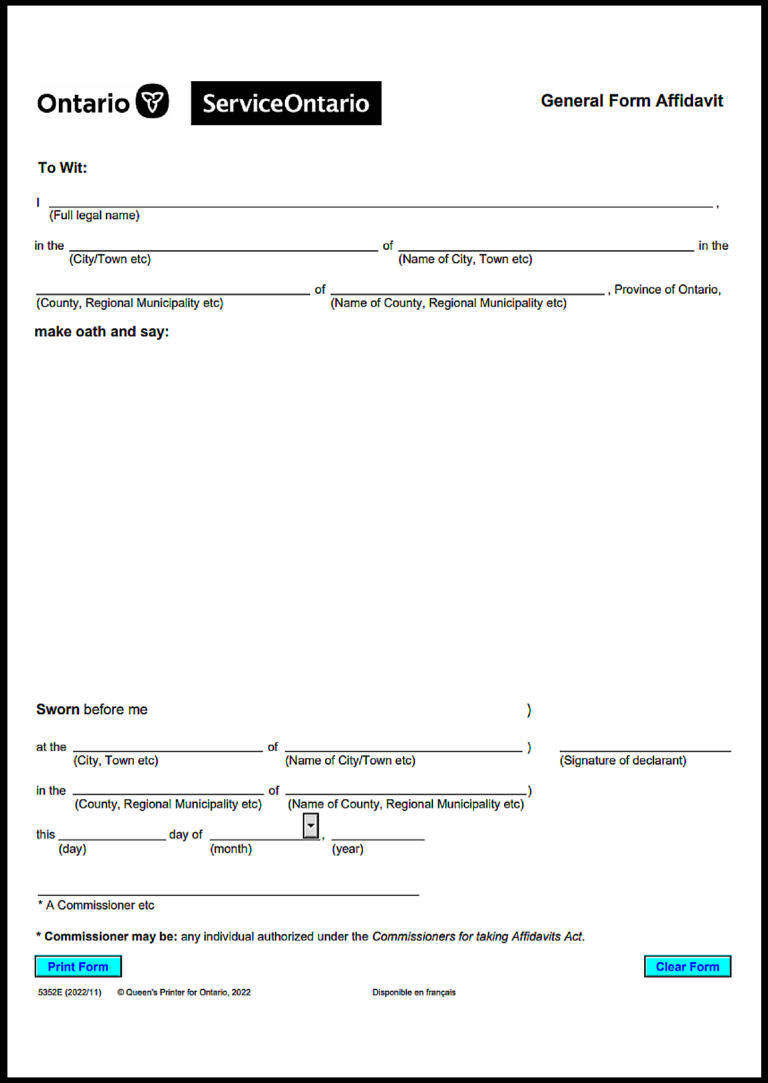
Affidavit VS Statutory Declaration British Columbia [Free PDF & Guide]
Affidavit vs Statutory Declaration British Columbia is one of the most common legal confusions people face in BC. Both are written statements of facts—but they are not the same, and using the wrong one can cause delays or rejection.
If you’ve ever been asked to “sign a legal statement,” you might wonder: Do I need an affidavit or a statutory declaration? In real life, this matters a lot. For example, a court case will usually require an affidavit, while government paperwork often asks for a statutory declaration.
I’ve seen people in BC sign a statutory declaration when the court actually required an affidavit, only to have their filing rejected and lose valuable time fixing it. In my experience, most first-time clients are surprised to learn that the biggest difference is not the wording—it’s whether the document is being used for court evidence or for government and administrative purposes.
In this article, I’ll explain the difference in very simple terms, show you when to use each, and give you a free template you can actually use.
Last Updated: September 2026
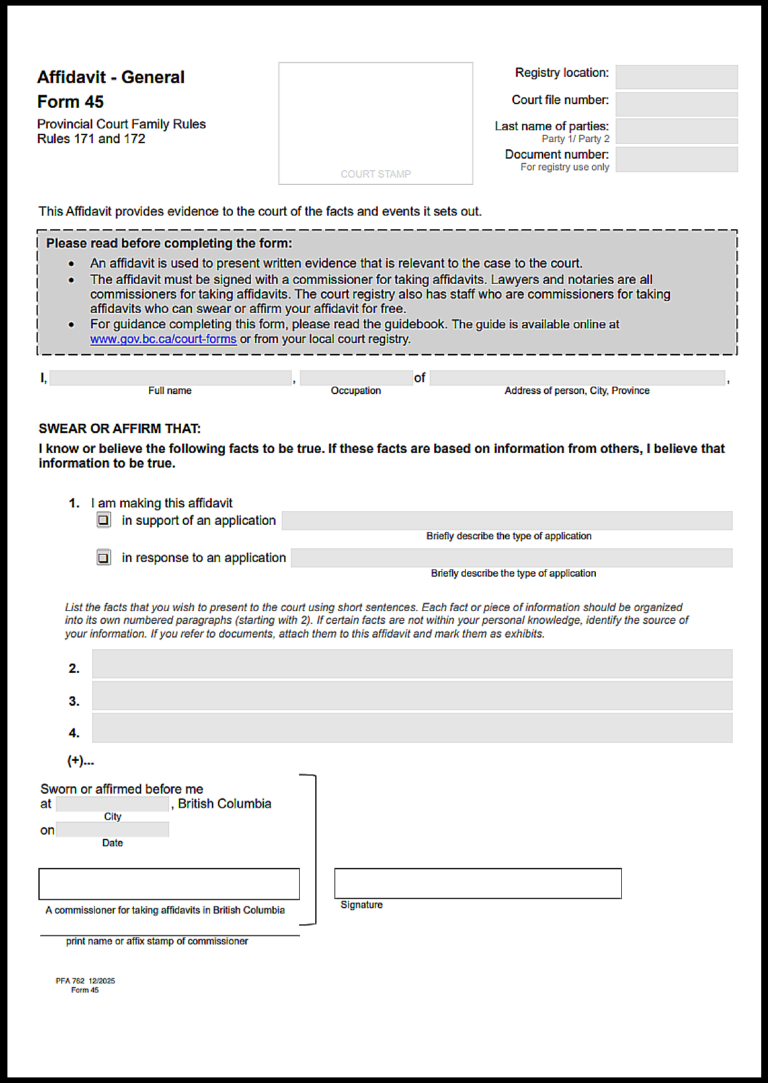
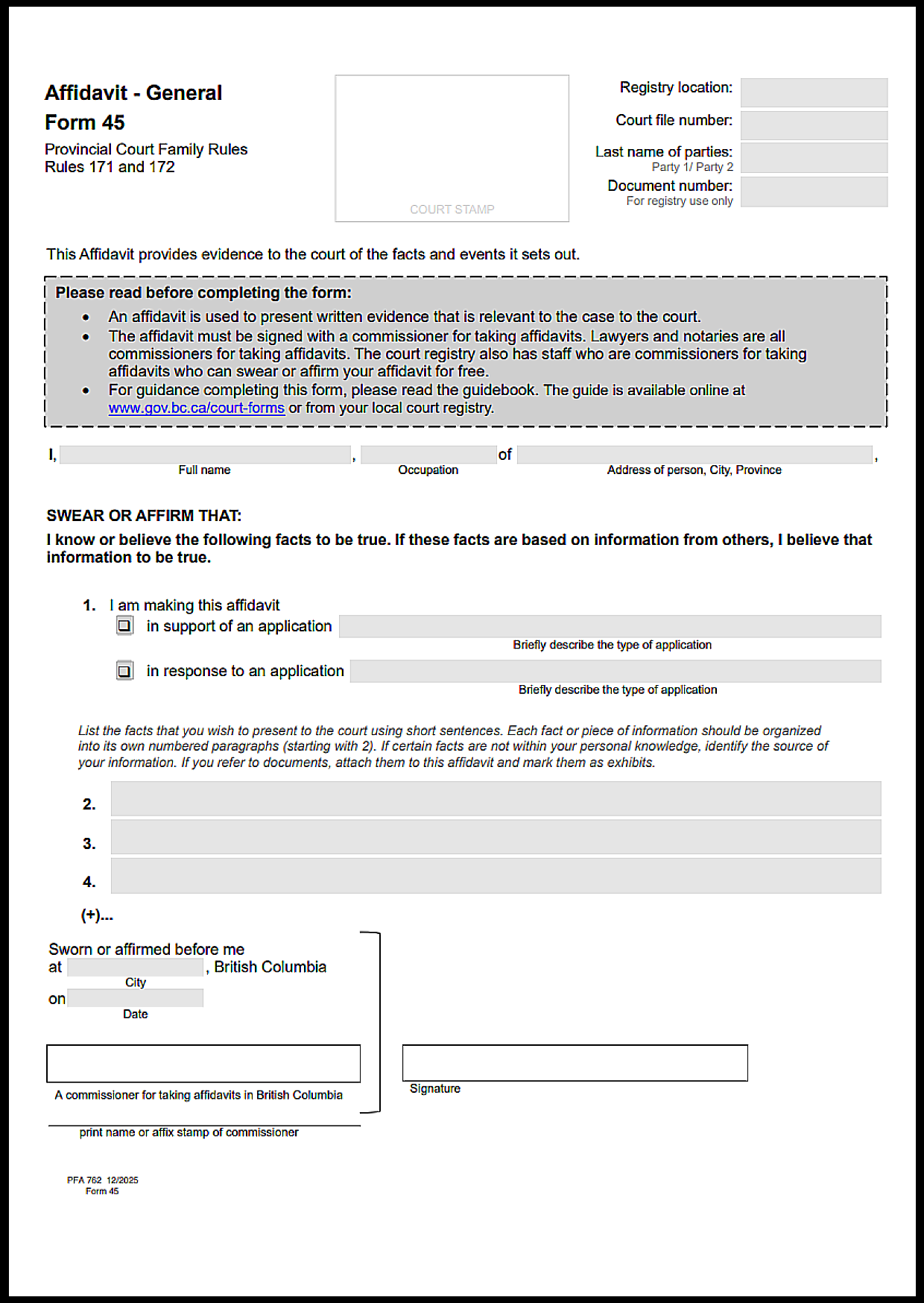
Free Affidavit vs Statutory Declaration Template (British Columbia)
Below is a simple combined template. You can use it for both documents—you just need to select the correct option before signing.
British Columbia Affidavit vs Statutory Declaration Rules, Witness Requirements & Legal Standards
| Topic / Issue | British Columbia Legal Rule | Governing Statute |
|---|---|---|
| Governing legislation | Affidavits and statutory declarations in British Columbia are governed by the Evidence Act and any applicable court, tribunal, federal, or other process-specific rules. | Evidence Act, RSBC 1996, c. 124; Supreme Court Civil Rules, BC Reg. 168/2009; Canada Evidence Act, RSC 1985, c. C-5 |
| Affidavit court rules | Affidavits used in BC Supreme Court civil proceedings are governed by Rule 22-2. Family proceedings have their own applicable rules and forms. | Supreme Court Civil Rules, Rule 22-2; Supreme Court Family Rules |
| Federal statutory declarations | Federal statutory declarations may be governed by federal legislation or the rules of the particular federal process. | Canada Evidence Act and process-specific federal law |
| Who can make an affidavit | The person making the affidavit must swear or affirm it, sign it, and complete the required process before a person authorized to take affidavits. | Evidence Act; Supreme Court Civil Rules |
| Authorized person | An affidavit must be sworn or affirmed before a person authorized by law to take affidavits. A separate ordinary witness is not required. | Evidence Act; applicable court rules |
| Commissioner and notary authority | Practising lawyers, notaries public, and other persons authorized under the Evidence Act may take affidavits. | Evidence Act, including s. 60 |
| Expanded commissioner regulation | Additional persons may have authority to take affidavits under the applicable BC legislation or appointment rules. | Commissioners for Taking Affidavits for British Columbia Regulation |
| Age and capacity | The article’s original general age rule should not be treated as a universal statutory requirement. The ability of a person to make the document depends on the applicable law and circumstances. | Evidence Act; applicable rules |
| Mental capacity | The person making the document must be able to understand the statement and the oath or solemn affirmation being made. | Evidence Act; applicable rules |
| Filing deadlines | Court filing deadlines depend on the particular proceeding, rule, order, and hearing schedule. | Applicable court rules and orders |
| BC statutory declaration wording | Section 69 of the Evidence Act provides wording for a solemn declaration made before a person authorized by law to administer an oath. | Evidence Act, s. 69 |
| Affidavit jurat wording | A court affidavit must contain the jurat or statement required by the applicable court rules. | Supreme Court Civil Rules, Rule 22-2 |
| Court filing requirements | An affidavit used in a proceeding must be filed in accordance with the applicable court rules. Service requirements depend on the proceeding. | Supreme Court Civil Rules and applicable court rules |
| Land title filing | Some land-title transactions may require an affidavit or statutory declaration, but the exact requirement depends on the Land Title Act process and LTSA requirements. | Land Title Act / LTSA requirements |
| Private document use | Documents prepared for private or administrative purposes are not automatically filed with government offices. | Process-specific |
| Physical presence / remote process | An affidavit must be properly sworn or affirmed before an authorized person using the procedure permitted for the intended purpose. BC Supreme Court rules permit video-conference commissioning in specified circumstances. | Supreme Court Civil Rule 22-2(6.1) |
| Improper jurat | A defect in an affidavit does not automatically prevent it from being received in evidence. The effect of a defect depends on the circumstances and applicable rules. | Evidence Act, s. 67 |
| Hearsay and information and belief | Supreme Court civil affidavits are governed by Rule 22-2, including provisions dealing with evidence based on information and belief in specified circumstances. | Supreme Court Civil Rule 22-2(12)-(13) |
| Remote commissioning rules | BC Supreme Court rules permit an affidavit to be sworn or affirmed by video conference in specified circumstances and require prescribed wording. | Supreme Court Civil Rule 22-2(6.1) |
One of the most important differences in British Columbia is that affidavits and statutory declarations serve different legal purposes. A court or other authority may prescribe which document it requires, so you should check the specific instructions before preparing one.
The physical-presence question also needs some care. For a BC Supreme Court affidavit, Rule 22-2 provides a process for video-conference commissioning in specified circumstances. You should follow the applicable rule rather than assuming that every document can be signed remotely.
Another important point is the distinction between an affidavit and a statutory declaration. A statutory declaration is not simply an affidavit with different wording. Section 69 of the BC Evidence Act provides for a solemn declaration made before an authorized person and states that it has the same legal force and effect as if made under oath. (bclaws.gov.bc.ca)
To avoid delays, use the document specifically requested by the court, government office, insurer, employer, or other organization.
Many people confuse affidavits with statutory declarations because both documents involve formal written statements used for legal or administrative purposes. To understand how affidavits are commonly structured, you can review the main affidavit guide in Canada together with the British Columbia sworn affidavit template.
When to Use This Template
This template can be adapted for either document, but you should select the correct form before completing the signing process:
- For an affidavit, use the affidavit wording and have the statement sworn or affirmed before an authorized person.
- For a statutory declaration, use the declaration wording required by the applicable statute or organization and make the solemn declaration before an authorized person.
Always confirm what the requesting authority requires before signing.
A court may require an affidavit rather than a statutory declaration, while another organization may specifically request a statutory declaration. The safest approach is to follow the instructions given for the particular matter.
What Is an Affidavit in British Columbia?
Under British Columbia law, an affidavit is a written statement made under oath or solemn affirmation.
The person making the affidavit is commonly called the deponent. The affidavit records evidence or facts that the person is permitted to provide under the applicable rules.
Affidavits are particularly common in court proceedings, where the applicable court rules determine what can be included and how the document must be prepared.
Common Uses of Affidavits
In British Columbia, affidavits are commonly used for:
- Court cases, including family and civil proceedings
- Applications where affidavit evidence is permitted or required
- Supporting evidence in legal proceedings
- Identity or other factual matters where a sworn statement is requested
If a court specifically requires an affidavit, a statutory declaration should not be substituted unless the court or applicable law permits it.
The correct document often depends on the type of legal verification required in a specific situation. Address confirmation may involve an affidavit of residence, while personal verification matters may involve an identity affidavit form.
What Is a Statutory Declaration in British Columbia?
A statutory declaration is a solemn declaration made before a person authorized by law to receive it.
Under section 69 of the BC Evidence Act, the declaration can be made in attestation of the execution of a writing, deed, or instrument, or of the truth of a fact or account. The section also provides that the declaration has the same legal force and effect as if it were made under oath. (bclaws.gov.bc.ca)
A statutory declaration is commonly used outside ordinary court affidavit procedures, including where legislation or an organization specifically calls for a declaration.
Common Uses of Statutory Declarations
In British Columbia, statutory declarations may be used for:
- Government forms and applications
- Insurance matters where a declaration is requested
- Confirming facts for an organization or administrative process
- Identity or residency matters where a statutory declaration is accepted
The exact purpose depends on the legislation or organization requesting the declaration.
Key Differences Between Affidavit and Statutory Declaration
Oath vs Declaration
- Affidavit → Sworn or affirmed statement
- Statutory Declaration → Solemn declaration made before a person authorized by law
Legal Use
- Affidavit → Commonly used as evidence in court proceedings where permitted or required
- Statutory Declaration → Commonly used for administrative or other legal purposes where legislation or the recipient permits or requires it
Legal Weight
Both documents can have legal significance, but it is not accurate to say that one is automatically “stronger” in every circumstance.
An affidavit may be the appropriate form of evidence in a court proceeding because the applicable court rules require or permit it. A statutory declaration may be appropriate where a statute or organization specifically requests one.
Governing Law in BC
- Affidavits → Governed by the Evidence Act and applicable court or tribunal rules
- Statutory Declarations → Section 69 of the Evidence Act provides for BC statutory declarations, while another statute or process may impose additional requirements
Before signing either document, individuals may also need information about notarizing affidavits in British Columbia to understand how the affidavit can be sworn or affirmed before an authorized person.
Affidavit vs Statutory Declaration
| Feature | Affidavit |
Statutory Declaration
|
| Purpose | Commonly used to provide evidence in proceedings where affidavit evidence is permitted or required |
Commonly used where a statute or organization requests a solemn declaration
|
| Where Used | Courts, legal proceedings, and other processes that request affidavits |
Government, insurance, organizations, and other administrative or legal processes
|
| Oath Required | Sworn or affirmed |
Solemn declaration
|
| Legal Authority | Evidence Act and applicable procedural rules |
Evidence Act, s. 69 and any applicable statute or process
|
| False Statement Risk | Knowingly false sworn statements can have serious legal consequences, including possible perjury where the Criminal Code requirements are met |
False statements can also have legal consequences depending on the declaration and applicable law
|
When Should You Use an Affidavit vs a Statutory Declaration?
Choosing the correct document depends on the instructions for the particular matter.
Choose an Affidavit If:
- You are filing a document in court and the court requires an affidavit
- A lawyer, court rule, or order asks for sworn or affirmed evidence
- You are involved in a legal proceeding where affidavit evidence is permitted or required
Choose a Statutory Declaration If:
- A government office or organization specifically requests one
- A statute requires a statutory declaration
- You need to formally declare facts outside a proceeding where an affidavit is specifically required
Real-Life Examples
- Family or civil court proceeding → An affidavit may be required
- Administrative application requesting a statutory declaration → A statutory declaration may be required
This is where many people make mistakes. The safest approach is to confirm the required document before preparing or signing it.
Legal Requirements in British Columbia (Important)
In British Columbia, the requirements depend on which document you are preparing and where it will be used.
Individuals preparing an affidavit or statutory declaration should:
- Use the form required by the applicable process
- Swear or affirm an affidavit before an authorized person
- Make a statutory declaration before a person authorized by law to receive it
- Ensure the information provided is accurate and truthful
You should not sign the document and treat it as already sworn or declared if the applicable procedure requires you to make the oath or declaration before an authorized person.
Who Can Witness in BC
For an affidavit, the document must be sworn or affirmed before a person authorized to take affidavits.
Depending on the circumstances, this can include:
- Lawyers
- Notaries Public
- Commissioners for Taking Affidavits
- Other persons authorized by law
The exact authority of the person should be appropriate for the document and its intended use.
If the document is not properly sworn, affirmed, or declared according to the applicable procedure, it may not satisfy the requirements of the receiving authority.
How to Properly Complete Each Document
Steps for an Affidavit
- Write the relevant evidence clearly
- Use consecutively numbered paragraphs where required
- Follow the applicable court or organizational format
- Swear or affirm the statement before an authorized person
- Sign as part of the required execution process
Steps for a Statutory Declaration
- Use the declaration wording required by the applicable law or organization
- State the relevant facts accurately
- Make the solemn declaration before a person authorized by law
- Complete and sign the declaration according to the applicable requirements
A simple tip: if you’re unsure, ask the authority requesting the document what they need before signing.
Common Mistakes to Avoid
Using the Wrong Document Type
This can create unnecessary delays.
For example, submitting a statutory declaration where a court requires an affidavit may not satisfy the court’s requirements. Likewise, preparing an affidavit when a particular government process requires a statutory declaration can result in additional work.
Signing Before Meeting a Commissioner
Do not treat the document as already sworn or affirmed merely because you signed it early.
Complete the required signing and oath or affirmation process before the authorized person in accordance with the applicable rules.
Including Opinions Instead of Facts
Affidavits should contain relevant evidence that complies with the applicable court rules.
Avoid unsupported statements such as:
- “I believe…”
- “I think…”
However, do not assume that every statement containing “I believe” is automatically prohibited. Rule 22-2 contains specific provisions dealing with information and belief.
Missing Required Information
Incomplete documents can cause problems.
Depending on the applicable form or process, you may need information such as:
- Full legal name
- Address
- Date
- Signature
- Required commissioner or authorized-person details
Always check the particular court or organization requirements.
Legal Risks of False Statements in BC
Both affidavits and statutory declarations are formal legal documents.
Knowingly making a false statement under oath or solemn affirmation, with intent to mislead, can constitute perjury where the requirements of section 131 of the Criminal Code are met.
A false statutory declaration can also have legal consequences depending on the applicable statute and circumstances.
In simple terms: never include information you know is false.
Can You Switch Between an Affidavit and a Statutory Declaration?
Sometimes, yes—but it depends on who requested the document and the legal process involved.
- A court may specifically require an affidavit
- A government office or organization may specifically require a statutory declaration
- Another statute may prescribe a particular form of declaration
Do not assume that one document can automatically replace the other. Confirm the requirement before preparing or signing the document.
FAQs
Is an affidavit stronger than a statutory declaration?
Not automatically. An affidavit may be the required form of evidence in a particular court proceeding, while a statutory declaration may be the appropriate document for an administrative or statutory process. The purpose and applicable rules determine which document is appropriate.
Can I write both documents myself?
Yes. You can generally draft an affidavit or statutory declaration yourself, but you should follow the requirements of the particular court, statute, organization, or authority that will receive it.
Do I need a lawyer in BC?
Not always. A lawyer is not generally required simply to prepare every affidavit or statutory declaration. Legal advice can be useful when the document is part of a complex court matter or another significant legal issue.
Is notarization required?
A Notary Public is not the only person who may be authorized to take an affidavit or receive a statutory declaration. The document must be properly sworn, affirmed, or declared before a person authorized for that purpose.
Are these documents valid across Canada?
Their use outside British Columbia depends on the requirements of the receiving jurisdiction, court, agency, or organization. Canadian provinces and territories have different legislation and procedures, so do not assume that a BC form or execution procedure will satisfy another jurisdiction.
Quick Reference Table (At-a-Glance Decision Guide)
| Situation |
Use This Document
|
| Filing in court where an affidavit is required | Affidavit |
| Government application specifically requesting a statutory declaration |
Statutory Declaration
|
| Legal proceeding requesting affidavit evidence | Affidavit |
| Insurance process requesting a statutory declaration |
Statutory Declaration
|
| Lawyer or court specifically requests an affidavit | Affidavit |
| No court involvement and the organization requests a statutory declaration |
Statutory Declaration
|
Final Thoughts
Understanding affidavit vs statutory declaration in British Columbia matters because the correct document depends on the purpose and the rules governing the particular process.
If you remember one rule, make it this:
- Court proceeding requiring affidavit evidence = Affidavit
- A statute or organization specifically requesting a statutory declaration = Statutory Declaration
Take a few extra minutes to confirm the required document before signing. Then follow the correct swearing, affirmation, or declaration process and keep a copy for your records.