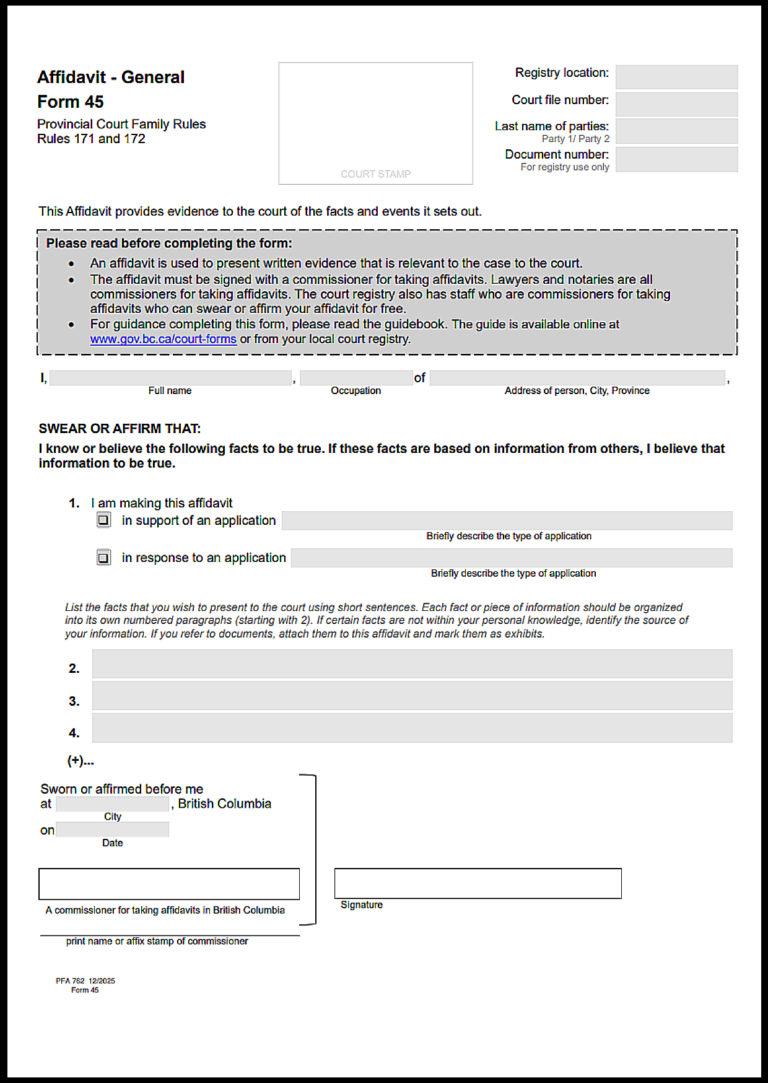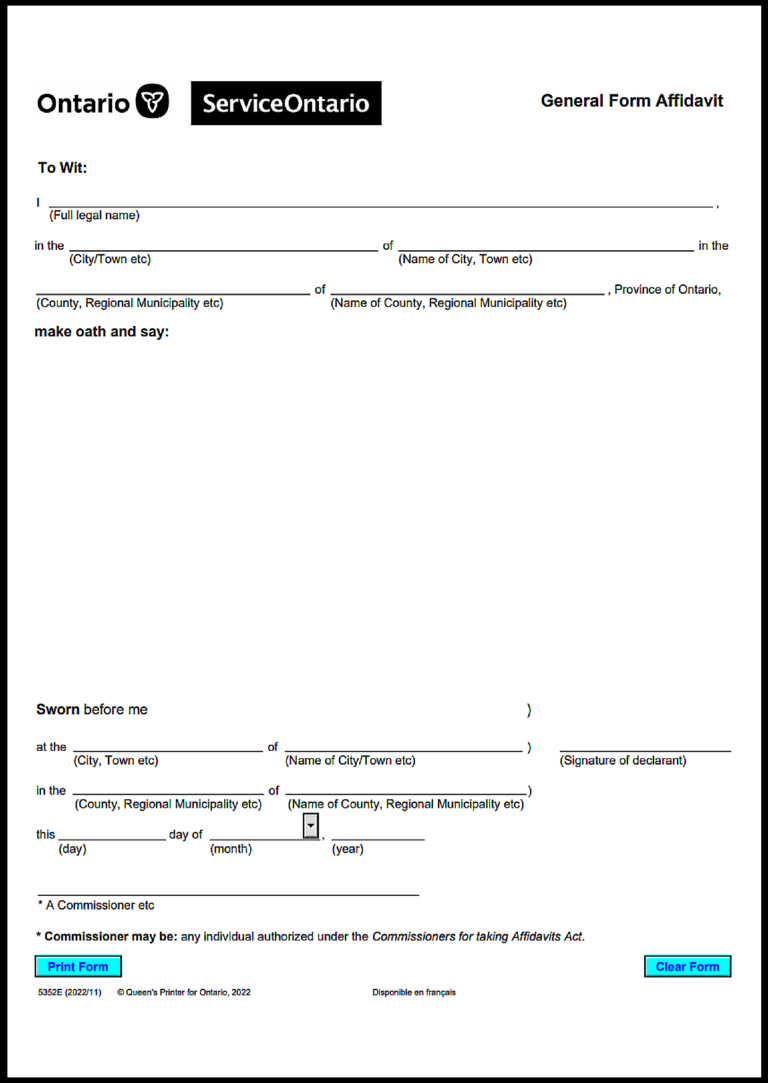
Free British Columbia Sworn Affidavit [Fillable PDF Template]
British Columbia Sworn Affidavit is a legal document used to present facts under oath or affirmation. It is commonly required in court cases, identity verification, and financial matters across British Columbia.
If you’re here, you likely need a simple way to create a valid affidavit without confusion. This article gives you exactly that—a ready-to-use template, clear explanations, and step-by-step help so you can complete your affidavit correctly the first time.
A sworn affidavit is a written statement where you promise that everything you’ve written is true. This promise is made in front of a legally authorized person, such as a commissioner for oaths or notary public.
I’ve seen affidavits rejected in British Columbia because people signed them incorrectly or included statements they could not properly support, which can delay court filings and even create credibility issues later. When someone is already stressed and handling legal paperwork for the first time, a small mistake in the wording or witnessing process can quickly turn into a much bigger problem.
Last Updated: September 2026
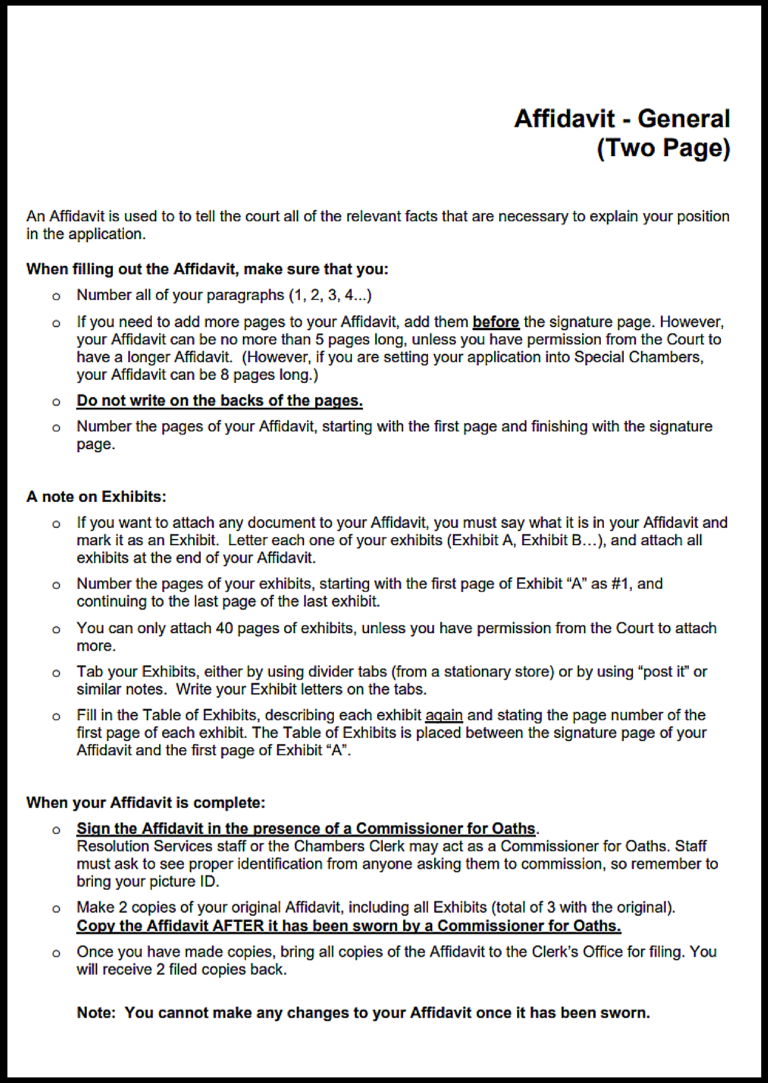
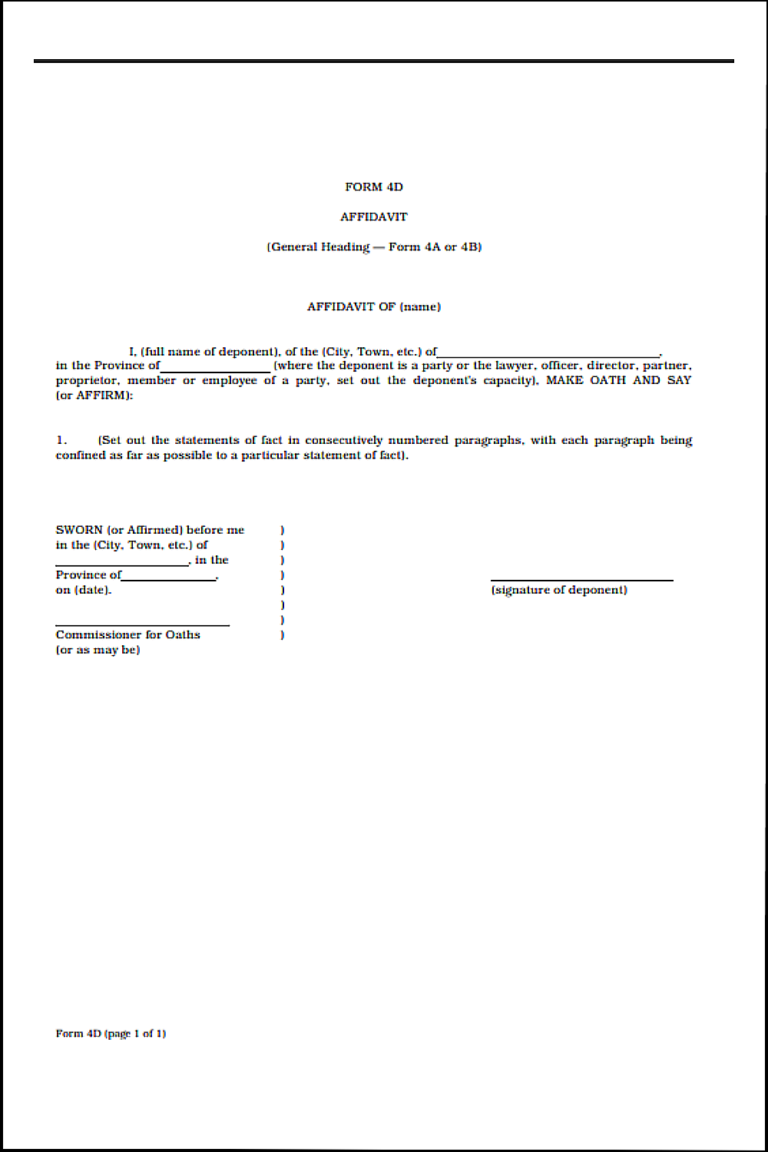
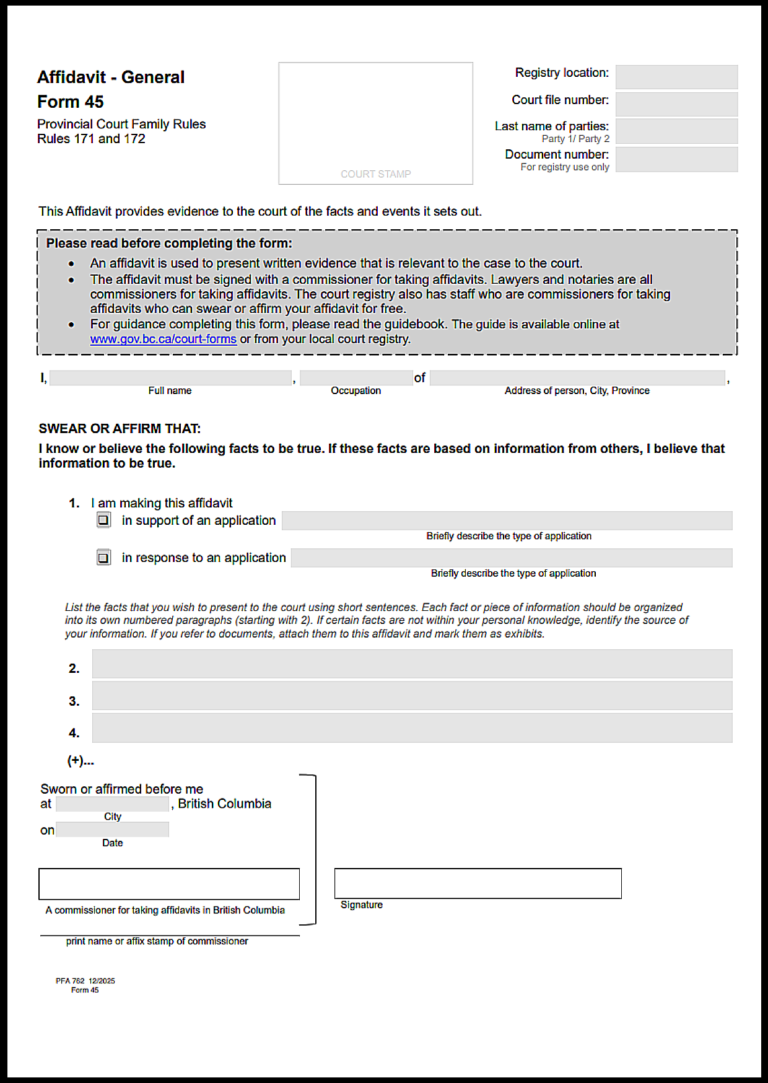
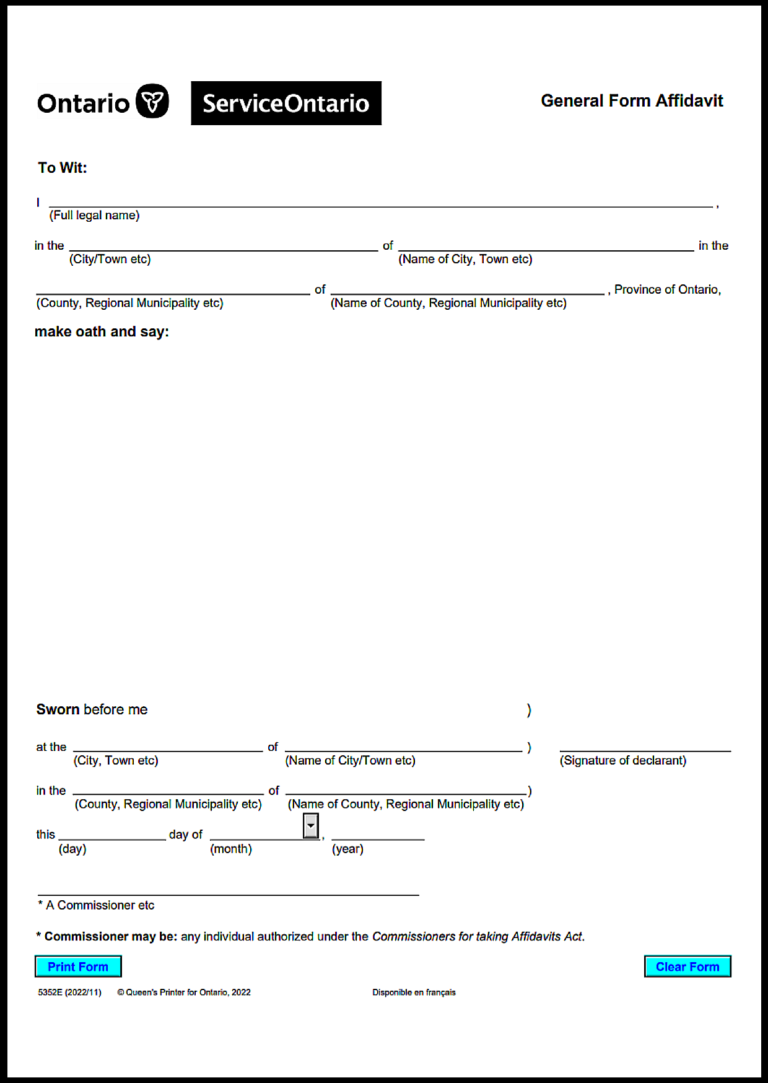
Free British Columbia Sworn Affidavit Template
You can copy, edit, and use this basic template for most situations:
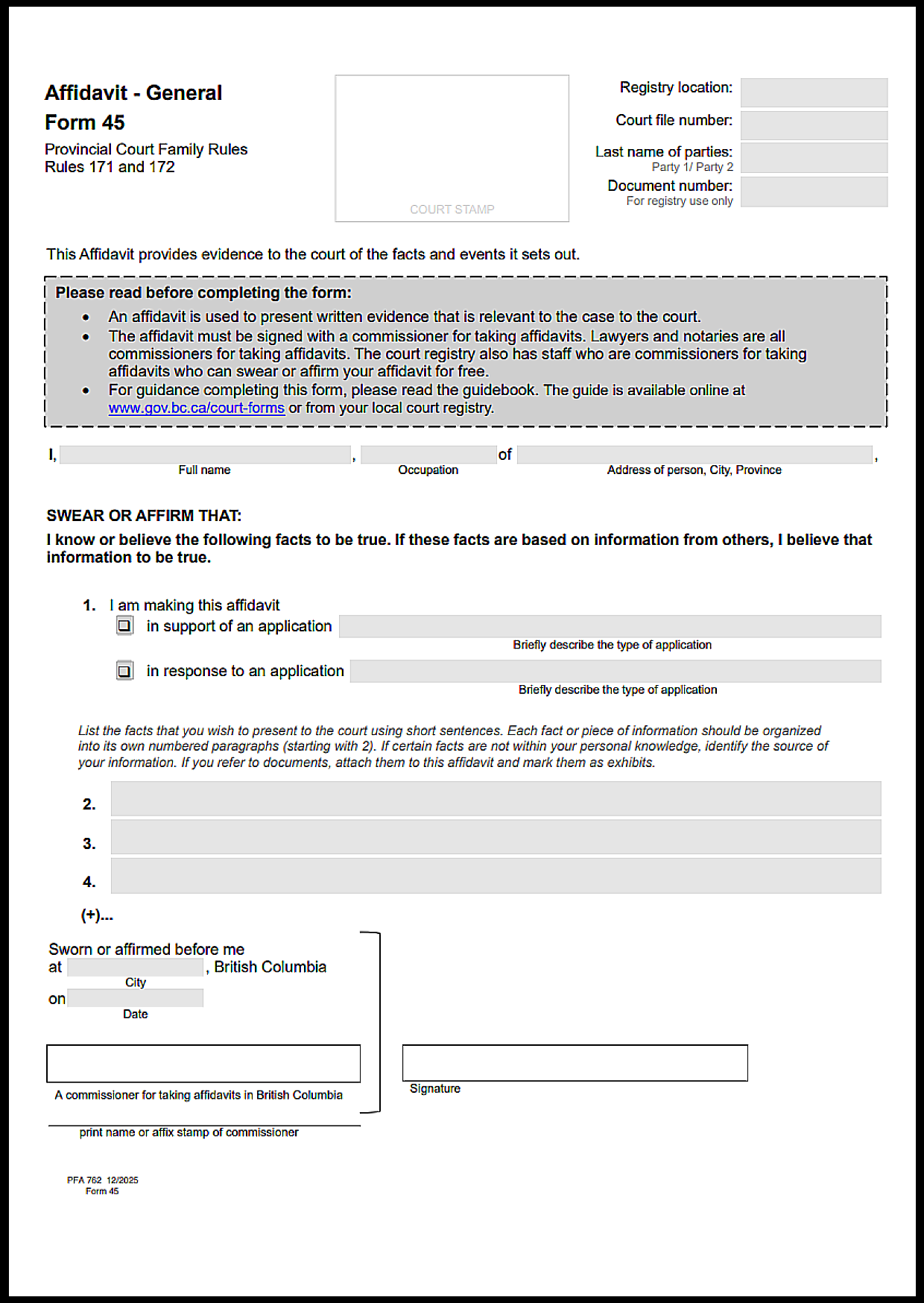
Quick note: Do not sign this document until you are in front of a commissioner or notary.
British Columbia Sworn Affidavit Rules, Court Requirements & Validity Standards
| Topic / Issue | British Columbia Legal Rule | Governing Statute |
|---|---|---|
| Governing legislation | Affidavits in British Columbia are governed by the Evidence Act and, when used in a court proceeding, the applicable court rules. Federal legislation and procedural rules may also apply in federal proceedings. | Evidence Act, RSBC 1996, c 124; Supreme Court Civil Rules, BC Reg 168/2009; Canada Evidence Act, RSC 1985, c C-5 |
| Who can sign (Deponent) | The person making the affidavit must swear or affirm its contents and sign it in accordance with the applicable rules. | Supreme Court Civil Rule 22-2 |
| Witness requirements | An affidavit must be sworn or affirmed before a person authorized to take affidavits. A separate ordinary witness is not required. | Evidence Act; Supreme Court Civil Rule 22-2 |
| Authorized commissioner | Persons authorized to take affidavits include practising lawyers, notaries public, and other persons authorized under the Evidence Act. | Evidence Act, s. 60 |
| Age requirement | There is no general rule in the Evidence Act requiring every affidavit deponent to be 19. The person’s ability to make the affidavit depends on the applicable law and circumstances. | Evidence Act; applicable rules |
| Mental capacity | The person making the affidavit must understand the statement being made and the oath or solemn affirmation being administered. | Evidence Act; applicable rules |
| Filing deadlines | Court affidavits may have filing and service deadlines under the applicable rules, court order, or proceeding. | Supreme Court Civil Rules and applicable orders |
| Jurat wording | A court affidavit must contain the jurat or statement required by the applicable court rules, including the required date and location information. | Supreme Court Civil Rules, Rule 22-2 |
| Required jurat language | The applicable court form or rule sets out the wording used to confirm where and when the affidavit was sworn or affirmed. | Supreme Court Civil Rules, Rule 22-2 |
| Identification clause | The top right corner of the first page of a Supreme Court affidavit, other than an affidavit of service, must include the deponent’s name, sequential affidavit number, and date. | Supreme Court Civil Rule 22-2(3) |
| Statement of truth | The person making the affidavit must swear or affirm the contents, and the authorized person completes the required statement. | Supreme Court Civil Rule 22-2 |
| Court filing requirement | An affidavit used in a BC Supreme Court proceeding must be filed. Service requirements depend on the particular proceeding and applicable rules. | Supreme Court Civil Rule 22-2(1) |
| Private transaction use | An affidavit may be requested for a private or administrative purpose, but any filing requirement depends on the particular process. | Process-specific |
| Numbered paragraphs requirement | BC Supreme Court affidavits must be divided into consecutively numbered paragraphs. | Supreme Court Civil Rule 22-2(2) |
| Exhibit certification | Documents referred to as exhibits must be identified and marked in accordance with Rule 22-2. | Supreme Court Civil Rule 22-2(8)-(10) |
| Hearsay restrictions | Supreme Court affidavits generally must state evidence the deponent could give at trial, subject to the information-and-belief exception in Rule 22-2(13). | Supreme Court Civil Rule 22-2(12)-(13) |
| “Affidavit #X” header rule | BC Supreme Court affidavits other than affidavits of service must show the sequential affidavit number in the top-right corner of the first page. | Supreme Court Civil Rule 22-2(3) |
| Remote commissioning | BC Supreme Court rules permit an affidavit to be sworn or affirmed by video conference, subject to the requirements of Rule 22-2(6.1). | Supreme Court Civil Rule 22-2(6.1) |
| One fact per paragraph practice | The rules require consecutive numbering. Clear paragraphing can make the evidence easier to follow, but there is no universal legal rule requiring exactly one fact in every paragraph. | Supreme Court Civil Rule 22-2 |
One distinctive BC Supreme Court requirement is the top-right identification on the first page: the deponent’s name, sequential affidavit number, and date. Rule 22-2 also requires consecutively numbered paragraphs. (bclaws.gov.bc.ca)
Affidavits should present relevant evidence clearly and in an organized way. In Supreme Court civil proceedings, Rule 22-2 generally limits affidavit contents to evidence the deponent could give at trial, while Rule 22-2(13) permits information-and-belief statements in specified circumstances when the source is identified.
BC Supreme Court Rule 22-2(6.1) permits video-conference commissioning. When that method is used, the affidavit must contain the prescribed statement confirming the video-conference process. Signing before the affidavit is properly sworn or affirmed, incomplete exhibit identification, or missing required jurat wording can create procedural problems and may require correction.
To avoid formatting mistakes and prepare your document carefully, use the free British Columbia Sworn Affidavit template below.
A sworn affidavit is commonly used when an individual needs to provide a formal statement under oath or solemn affirmation. To better understand how these declarations are used across provinces, you can review the main affidavit guide in Canada together with the comparison between affidavits and statutory declarations in British Columbia.
What Is a Sworn Affidavit in British Columbia?
A sworn affidavit is a written statement made under oath or solemn affirmation. When properly made, it can be used as evidence where the applicable law or procedure permits affidavit evidence; it is not a contract merely because it is sworn.
The key difference between an affidavit and a normal written statement is simple:
| Feature | Sworn Affidavit |
Regular Statement
|
| Legal status | Sworn or affirmed evidence when properly made |
Ordinary written statement whose legal significance depends on the circumstances
|
| Oath required | Yes, unless a solemn affirmation is used | No |
| Commissioning required | Yes, where an affidavit is required | No |
| Used in court | Commonly used where court rules permit or require affidavit evidence |
Depends on the proceeding
|
The oath or solemn affirmation is part of the process that makes the statement an affidavit. An affidavit can then be used as evidence where the applicable law permits it. Knowingly making a false statement under oath or solemn affirmation, with intent to mislead, can have serious legal consequences.
Example:
If someone loses their ID, they may use an affidavit to provide evidence about their identity if the organization or proceeding permits an affidavit for that purpose.
When You May Need a Sworn Affidavit
In many situations, affidavits are used to provide formal evidence of facts. Common situations include:
- Court cases, including family and civil proceedings
- Immigration or identity verification where the relevant authority accepts an affidavit
- Property or financial transactions where an affidavit is requested
- Lost or damaged documents
- Business or administrative processes
For example, in a family-law proceeding, a person may use an affidavit to present evidence about finances, parenting, or another issue relevant to the application.
Depending on the legal purpose involved, additional verification forms may also be required. Residency-related matters often use an affidavit of residence document, while identity confirmation may require an identity affidavit template.
Key Parts of a Valid Sworn Affidavit
Deponent Information
This includes the information required by the applicable court rule or form.
For a BC Supreme Court affidavit, the document must show the deponent’s name, address, and occupation.
Accuracy matters because this identifies who is making the statement.
Statement of Facts
Your evidence should:
- Be clear and organized
- Be written in consecutively numbered paragraphs where required
- Comply with the applicable rules concerning personal knowledge, opinion, and information and belief
Avoid speculation and unsupported assertions. Include evidence that you are permitted to give under the rules governing the proceeding.
Oath or Affirmation Clause
This is where you make the required oath or solemn affirmation concerning the truth of your statement.
You can either:
- Swear an oath, or
- Make a solemn affirmation instead of an oath
Signature Section
You must sign the affidavit as part of the process of making it. Do not sign it beforehand and treat it as already sworn.
Commissioner for Oaths / Notary Section
This section is completed by the authorized person before whom the affidavit is sworn or affirmed.
The authorized person completes the required jurat or statement and identifies the exhibits where required.
Many sworn declarations must also go through a formal witnessing process, which is why individuals often review the British Columbia affidavit notarization guide before signing the document.
Oath vs Affirmation: What’s the Difference?
Both forms can be used in British Columbia where an oath is required. Under the Evidence Act, a solemn affirmation has the same force and effect as an oath.
| Feature | Oath | Affirmation |
| Form | Sworn oath |
Solemn affirmation
|
| Legal value | Equal force and effect |
Equal force and effect
|
| Religious element | May reflect the person’s religious beliefs |
Does not require a religious oath
|
| Who uses it | Chosen according to the person’s circumstances and applicable procedure |
Chosen according to the person’s circumstances and applicable procedure
|
You may use an oath or solemn affirmation as permitted by the applicable procedure. A solemn affirmation has the same force and effect as an oath.
How to Fill Out a Sworn Affidavit (Step-by-Step)
Filling out an affidavit requires attention to the requirements of the particular proceeding.
Start by writing your full name and the other identifying information required by the applicable form or rule.
Then list your evidence in consecutively numbered paragraphs where required, keeping the statements clear and focused.
Avoid complicated legal language where plain wording is sufficient.
Do not sign the affidavit yet. Wait until you are before the authorized person who will administer the oath or affirmation, unless the applicable video-conference procedure is being used.
Before finalizing, review everything carefully:
- Check names and dates
- Ensure facts are correct
- Make sure required information is included
Who Can Witness a Sworn Affidavit in British Columbia
An affidavit must be sworn or affirmed before a person authorized to take affidavits.
These can include:
- Commissioners for Oaths
- Notary Public
- Practising lawyers
- Other persons authorized by the Evidence Act
You may find authorized persons through law offices, notarial offices, government services, or other providers depending on the service required.
Legal Rules You Must Follow in BC
The requirements for a BC affidavit depend on the purpose and proceeding.
- It must be sworn or affirmed before an authorized person
- The information provided should be truthful and accurate
- The affidavit must contain the wording required by the applicable process
- It must be signed and completed in accordance with the applicable rules
Knowingly making a false statement under oath or solemn affirmation, with intent to mislead, can constitute perjury where the requirements of section 131 of the Criminal Code are met.
Commissioner vs Notary Public
| Role | Commissioner for Oaths | Notary Public |
| Can administer oaths | Yes, within the scope of their authority | Yes |
| Can notarize documents | Not generally acting as a notary unless separately authorized | Yes |
| Common use | Affidavits and other authorized services |
Notarial services and affidavits, depending on the matter
|
| Cost | Varies by provider or service |
Varies by provider or service
|
Both roles can be authorized to take affidavits, but the services available and fees can vary.
Common Mistakes That Can Make Your Affidavit Invalid
Common problems include:
- Signing before the affidavit is properly sworn or affirmed
- Including incorrect or incomplete information
- Missing required signatures or dates
- Using a format that does not meet the applicable requirements
- Providing unsupported or irrelevant statements
Some errors can cause an affidavit to be questioned, returned, or require correction, depending on how and where it is used. An irregularity does not automatically prevent an affidavit from being received in evidence.
When a Sworn Affidavit Can Be Rejected
A court, authority, or organization may question, return, or refuse to rely on an affidavit if:
- Required information is missing
- The affidavit was not properly sworn or affirmed
- The format does not meet the applicable requirements
- The information is unclear or inconsistent
- The document does not satisfy the requirements of the proceeding or receiving organization
Where supporting documents are requested, the recipient may review them with the affidavit to assess the information provided.
Practical Tips to Make Your Affidavit Strong
Before signing, check the requirements of the receiving organization or court. Use the prescribed form when one is required, state the facts clearly, and ensure names and dates are accurate.
Attach supporting documents only when they are relevant or requested.
FAQs About British Columbia Sworn Affidavits
Is a sworn affidavit legally binding in BC?
Once properly sworn or affirmed, an affidavit is a formal sworn statement that can be used as evidence where the applicable process permits it. It is not a contract and should not be described simply as a “legally binding document.”
Can I write my own affidavit without a lawyer?
Yes. You can generally prepare your own affidavit, provided it meets the requirements of the court, authority, or organization for which it is intended. Legal advice may still be useful for complex matters.
How much does it cost to get it sworn?
Fees vary by provider and by the service requested. Check the current fee charged by the commissioner, notary, or lawyer you plan to use.
Can I use the same affidavit for multiple purposes?
Not always. An affidavit is generally prepared for a particular purpose or proceeding, so a separate affidavit or additional information may be required for another use.
What happens if I give false information?
Knowingly making a false statement under oath or solemn affirmation, with intent to mislead, can constitute perjury where the requirements of section 131 of the Criminal Code are met. Perjury is a serious criminal offence.