How to Get Affidavit British Columbia + Free Template
How to get affidavit British Columbia? If you’re asking this, you’re likely dealing with a legal, financial, or personal situation where a written, sworn statement is required.
An affidavit is simply a written statement of facts that you swear or affirm to be true. Under British Columbia law, affidavits are commonly used in court cases, identity verification, property matters, and even immigration paperwork.
I’ve seen many people in British Columbia sign an affidavit before it’s properly sworn or leave out key facts, only to have the document rejected by the court, bank, or government office later. When you’re already stressed and dealing with legal paperwork for the first time, even a small mistake in an affidavit can create delays, extra costs, or questions about your credibility.
In this article, you’ll learn exactly how to create, swear, and use an affidavit in British Columbia — step by step, with a free template and practical legal tips.
Last Updated: September 2026
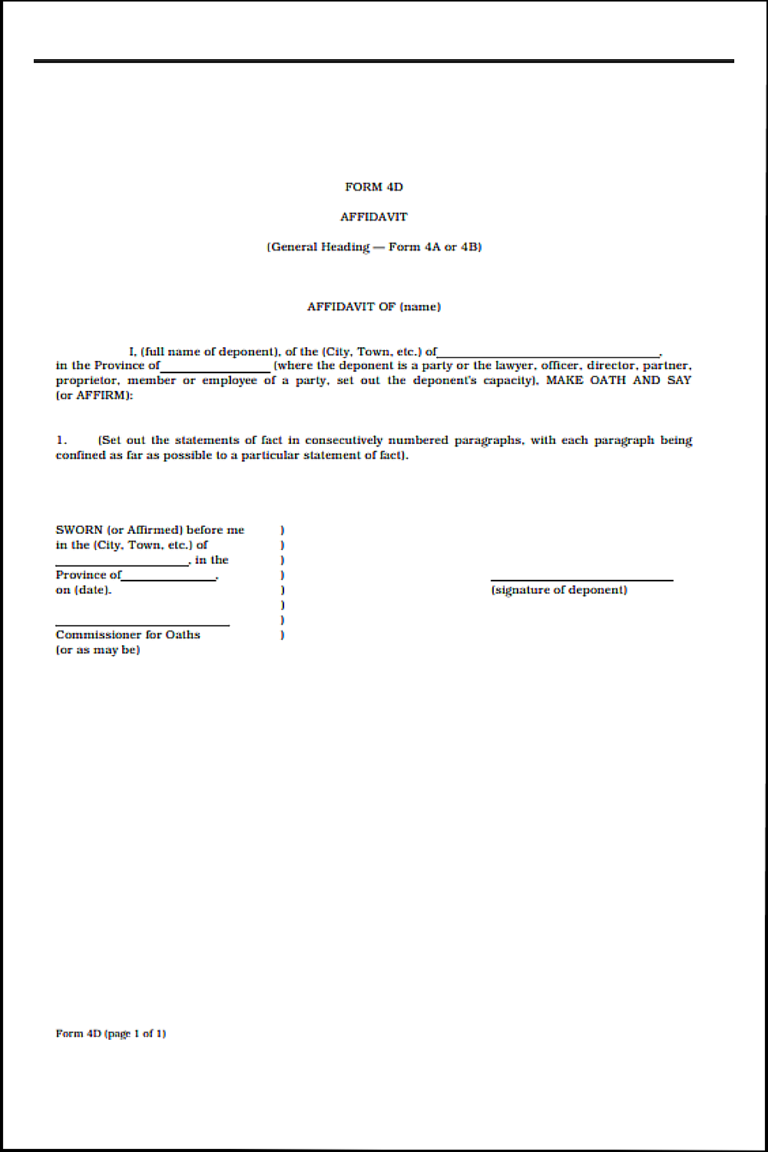
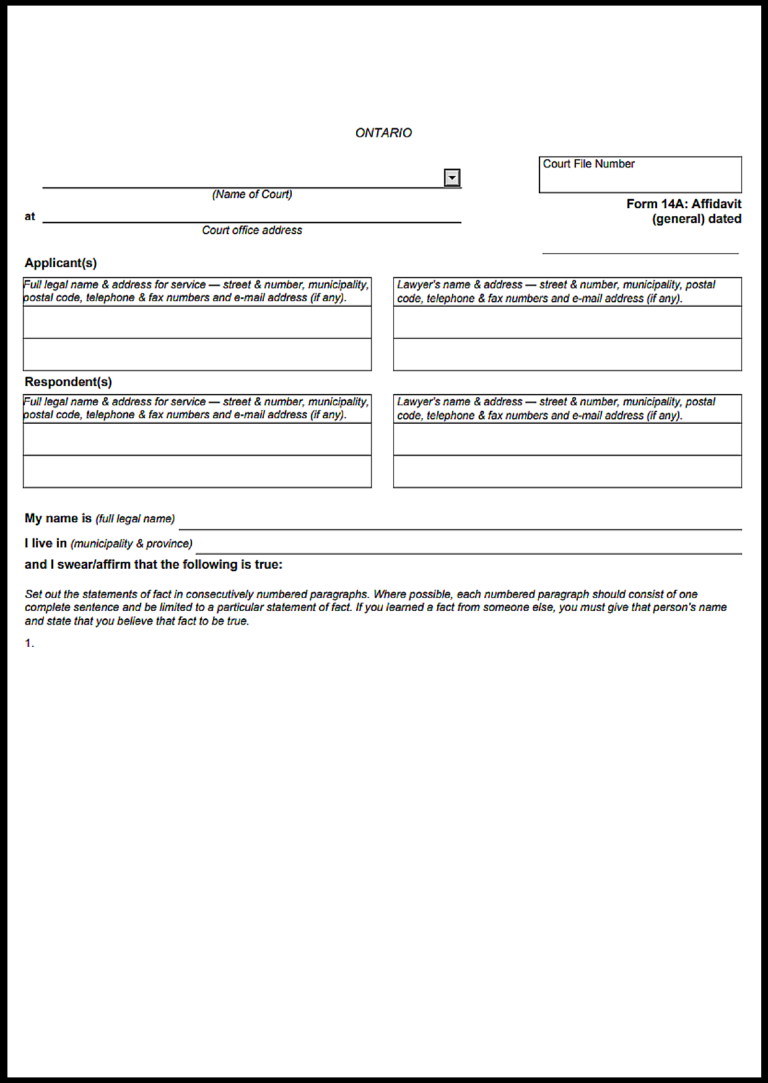
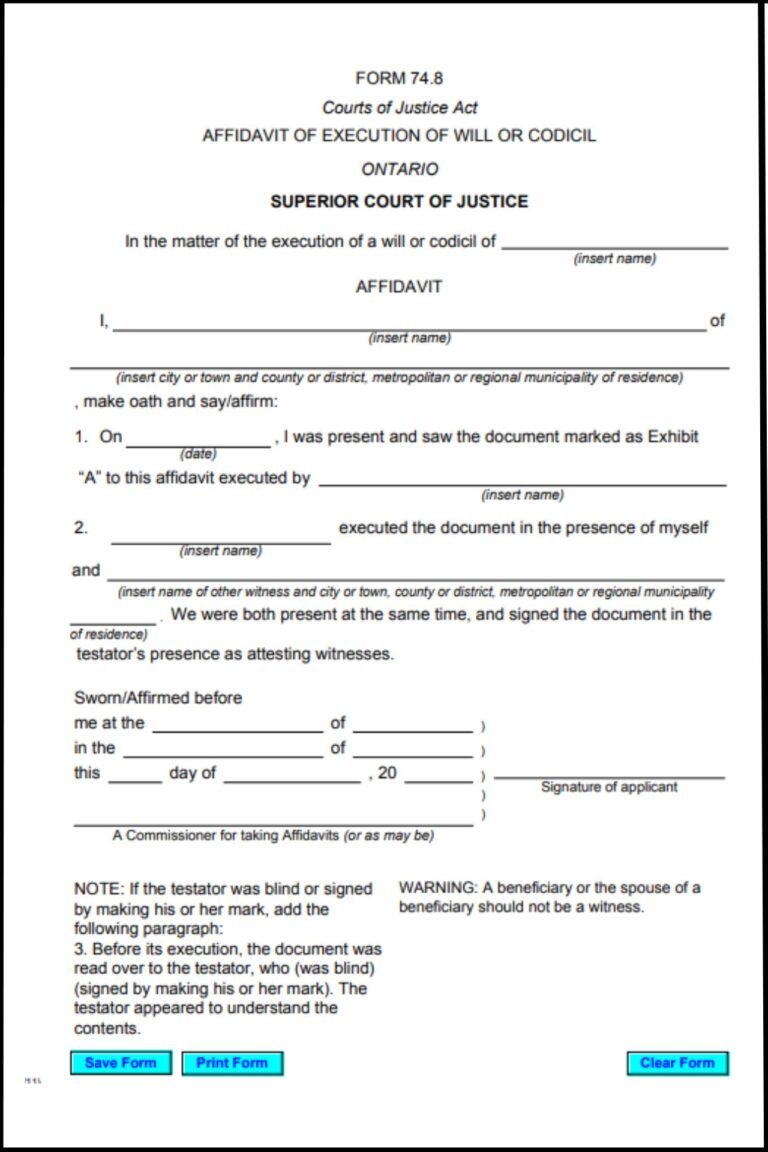
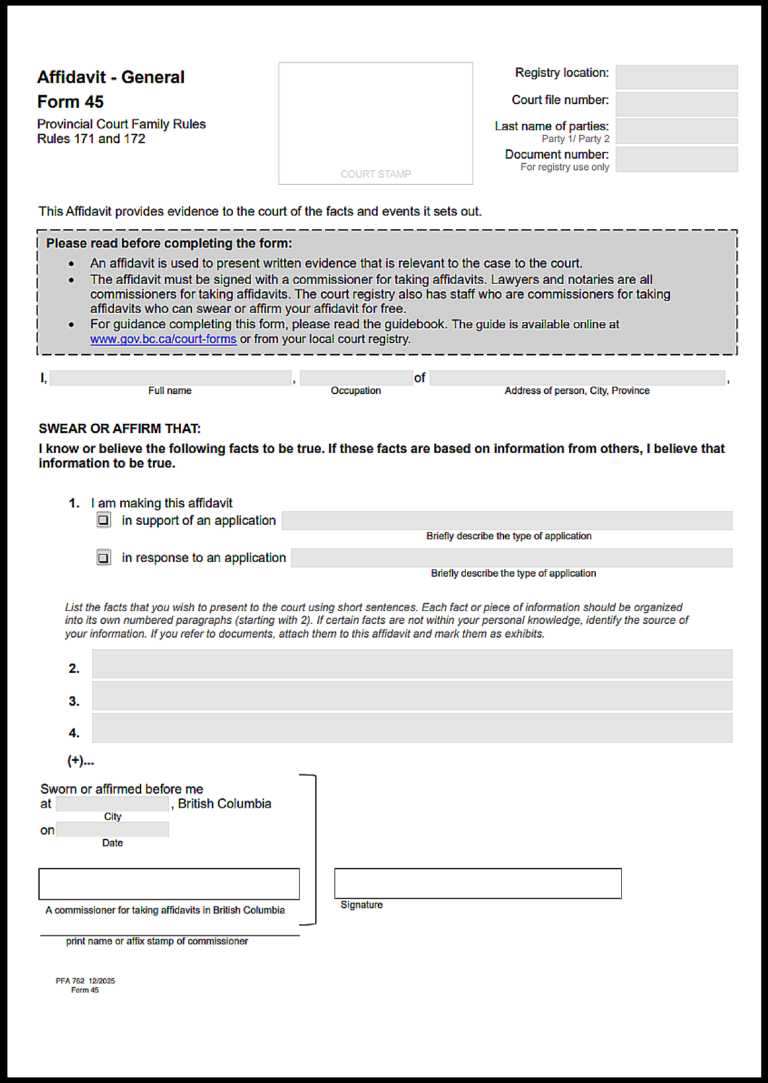
Free Affidavit Template (British Columbia)
Use this simple template to create your affidavit. You can copy and edit it based on your situation.
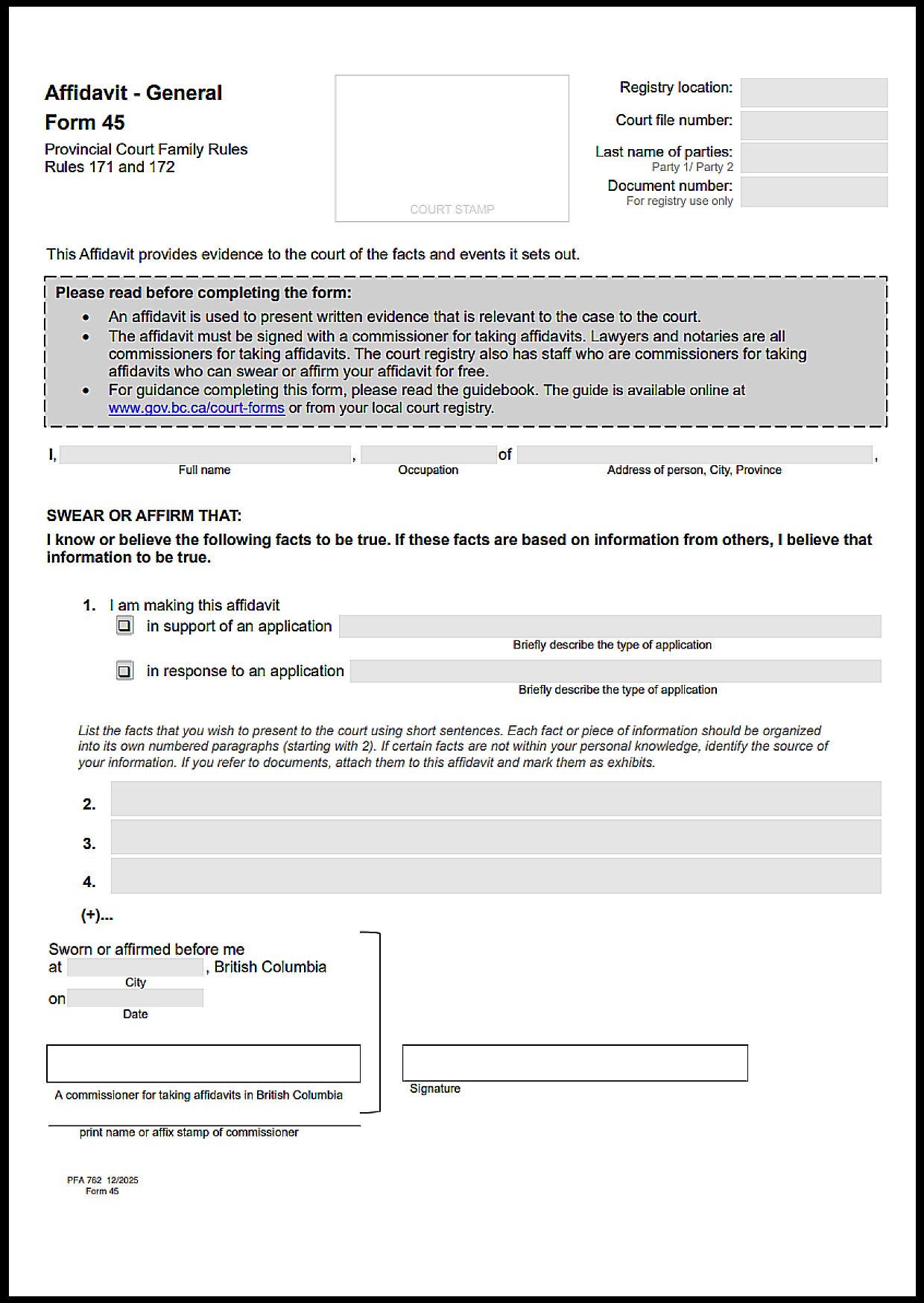
This format follows standard practice in British Columbia. You can adjust the content, but the structure should remain the same.
British Columbia Affidavit Process Rules, Filing Requirements & Legal Standards
| Topic / Issue | British Columbia Legal Rule | Governing Statute |
|---|---|---|
| Governing legislation | Affidavits in British Columbia are governed by the Evidence Act and, when used in court, the applicable court rules. Federal legislation and rules may also apply in federal proceedings. | Evidence Act, RSBC 1996, c. 124; Canada Evidence Act, R.S.C. 1985, c. C-5; Supreme Court Civil Rules, BC Reg 168/2009 |
| Family court affidavit rules | Family affidavits follow the applicable Supreme Court Family Rules or Provincial Court Family Rules, depending on the proceeding. | Supreme Court Family Rules, Rule 10-4; Provincial Court Family Rules |
| Remote commissioning update | BC Supreme Court rules permit affidavits to be sworn or affirmed by video conference in specified circumstances, subject to Rule 22-2(6.1). | Supreme Court Civil Rules, Rule 22-2(6.1) |
| Who can sign (Deponent) | The person making the affidavit must swear or affirm its contents and sign it in accordance with the applicable rules. | Supreme Court Civil Rule 22-2 |
| Witness requirements | An affidavit must be sworn or affirmed before a person authorized to take affidavits. A separate ordinary witness is not required. | Evidence Act; Supreme Court Civil Rules |
| Commissioner qualifications | Practising lawyers, notaries public, and other persons authorized under the Evidence Act may take affidavits. | Evidence Act, including s. 60 |
| Commissioner disqualification | The person taking the affidavit must have the authority required for the service and must comply with any applicable professional and procedural requirements. | Evidence Act; applicable professional and court rules |
| Age and capacity requirement | The Evidence Act does not establish a general rule that every affidavit deponent must be 19. The ability to make an affidavit depends on the applicable law and circumstances. | Evidence Act; applicable rules |
| Filing timelines | An affidavit used in a court proceeding must be filed and, where required, served according to the deadlines and procedures applicable to that proceeding. | Applicable court rules and orders |
| Affidavit header requirement | A BC Supreme Court affidavit, other than an affidavit of service, must show the deponent’s name, sequential affidavit number, and date in the top-right corner of the first page. | Supreme Court Civil Rule 22-2(3) |
| Required opening statement | A Supreme Court affidavit may be prepared using Form 109, subject to the requirements of Rule 22-2 and any applicable prescribed form. | Supreme Court Civil Rules |
| Knowledge clause | Affidavit evidence must comply with the applicable rules concerning personal knowledge, information and belief, and other permitted evidence. | Supreme Court Civil Rule 22-2(12)-(13) |
| Jurat requirement | The affidavit must contain the jurat or statement required by the applicable court rules, including the required date and location information. | Supreme Court Civil Rules, Rule 22-2 |
| Remote commissioning wording | An affidavit sworn or affirmed by video conference must contain the statement required by Rule 22-2(6.1) confirming the video-conference process. | Supreme Court Civil Rule 22-2(6.1) |
| Court filing requirement | An affidavit used in a BC court proceeding must be filed as required by the applicable court rules. Service requirements depend on the proceeding. | Supreme Court Civil Rules; applicable court rules |
| Land title filing | Some property transactions may require an affidavit or other supporting evidence. The exact filing requirements depend on the Land Title Act process and LTSA requirements. | Land Title Act / LTSA requirements |
| Private use affidavits | Affidavits prepared for private or administrative purposes are not automatically filed with a government office. Filing depends on the particular process. | Process-specific |
| Exhibit marking requirement | Documents referred to as exhibits must be identified and marked in accordance with the applicable court rules. | Supreme Court Civil Rule 22-2 |
| Personal appearance requirement | The person making the affidavit must appear before the authorized person in the manner permitted by the applicable procedure, which may include video conference. | Supreme Court Civil Rule 22-2(6.1) |
| Legal argument prohibition | Affidavit content must comply with the applicable evidence rules. In Supreme Court civil proceedings, Rule 22-2 limits affidavit content and provides specific rules for information and belief. | Supreme Court Civil Rule 22-2(12)-(13) |
| BC notary system | British Columbia has a regulated profession of Notaries Public whose members may provide the services authorized by the Notaries Act and other applicable law. | Notaries Act |
| BC age of majority difference | British Columbia’s age of majority is 19. | Age of Majority Act, s. 1 |
| Mandatory Form 109 formatting | BC Supreme Court Rule 22-2 provides specific affidavit identification and content requirements, and an affidavit may be in Form 109. | Supreme Court Civil Rules, Rule 22-2 |
One distinctive BC Supreme Court requirement is the top-right identification on the first page. The affidavit must show the deponent’s name, the sequential affidavit number, and the date. Rule 22-2 also requires consecutively numbered paragraphs.
Affidavits should present relevant evidence clearly and in an organized way. In Supreme Court civil proceedings, the rules generally require evidence the deponent could give at trial, while Rule 22-2(13) permits information-and-belief statements in specified circumstances.
BC Supreme Court Rule 22-2(6.1) permits video-conference commissioning. When that method is used, the affidavit must contain the statement required by the rule confirming that the deponent appeared before the commissioner by video conference.
These requirements matter because an affidavit that does not meet the applicable procedural rules can cause filing or evidentiary problems. That does not mean every defect automatically makes the affidavit unusable.
To avoid formatting mistakes and prepare your document correctly, use the free British Columbia affidavit template below.
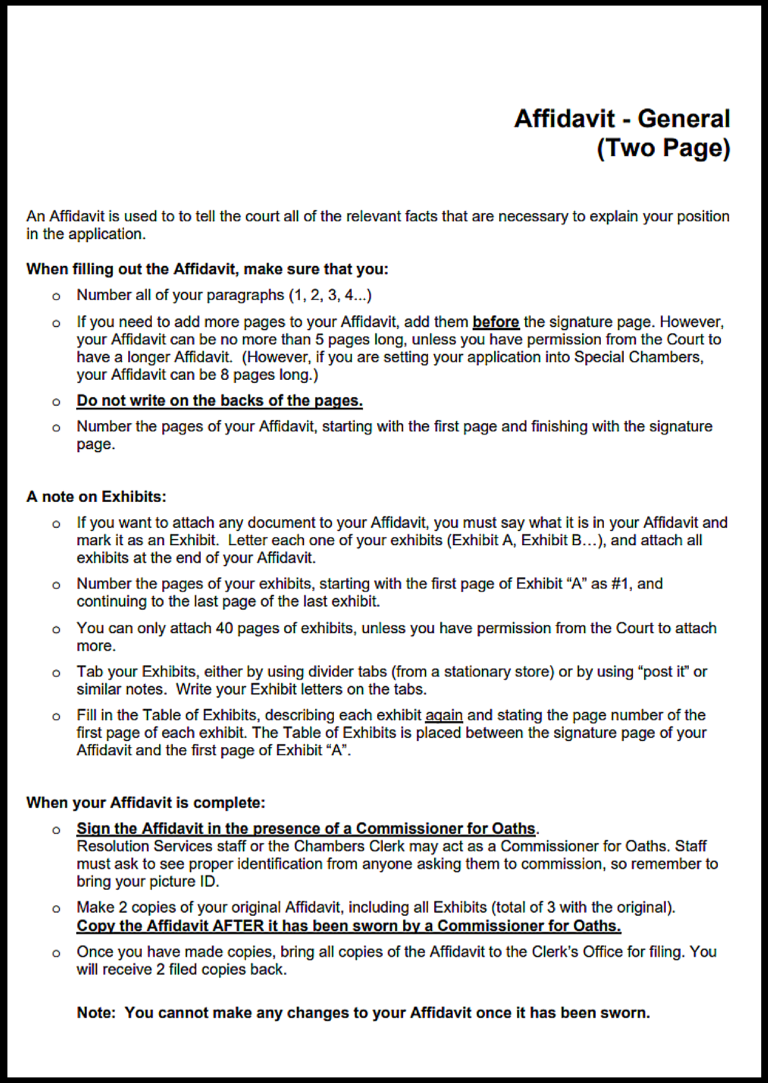
Getting an affidavit in British Columbia usually involves preparing a written statement, then properly swearing or affirming it before a person authorized to take affidavits. To understand how these documents fit into broader legal procedures, you can review the main affidavit resource for Canada along with the guide to notarizing affidavits in British Columbia.
What Does “Getting an Affidavit” Mean in BC?
Many people think they need to “apply” for an affidavit. Usually, that is not how the process works.
In many situations, you prepare the affidavit yourself and then have it properly sworn or affirmed before an authorized person.
There are three main parts:
- Writing the affidavit and setting out the relevant evidence
- Signing it as part of the swearing or affirmation process
- Having the oath or affirmation administered by an authorized person
For example, if you are submitting an affidavit to a BC court, you prepare the statement and then complete the required swearing or affirmation process before filing it. The exact requirements depend on the court and proceeding.
Step-by-Step: How to Get an Affidavit in British Columbia
Step 1: Write Your Statement
Start by writing your affidavit in simple English.
- Use clear sentences
- Focus on relevant evidence
- Avoid unsupported opinions or guesses
- Use numbered paragraphs where required
Example:
Instead of writing “I believe he was late,” write the factual information you personally know, such as “He arrived at 10:30 AM,” where that statement is based on your own knowledge.
For a BC Supreme Court affidavit, the evidence must comply with Rule 22-2, including the rules concerning personal knowledge and information and belief.
Step 2: Prepare Identification
The commissioner or notary may require identification before administering the oath or affirmation. The receiving court, organization, or service provider may also have its own identification requirements.
Common examples can include:
- Passport
- Driver’s license
- Government-issued identification
Make sure the personal information in the affidavit is accurate. Where names differ between documents, explain the discrepancy rather than assuming exact matching is always required.
Step 3: Find a Commissioner for Oaths or Notary
You cannot complete the affidavit process entirely by yourself. The affidavit must be sworn or affirmed before a person authorized to take affidavits.
You can find authorized persons through:
- Law offices
- Notarial offices
- Government or court services
The authorized person administers the oath or affirmation and completes the required statement.
Step 4: Sign in Front of the Commissioner
This is very important:
Do NOT sign your affidavit before arriving and treat it as already sworn.
The authorized person will administer the oath or affirmation and complete the required statement. Under Rule 22-2, an affidavit is made when it is sworn or affirmed, signed, and the authorized person completes and signs the required statement.
Where video-conference commissioning is permitted, the applicable remote procedure must be followed.
Step 5: Pay the Fee (if applicable)
Costs vary depending on the provider and service.
| Service Type | Cost in BC |
| Commissioner for Oaths |
Varies by provider or service
|
| Notary Public |
Varies by provider or service
|
| Some government services | May be free |
The exact fee should be confirmed directly with the person providing the service rather than relying on a universal price range.
The exact affidavit format may vary depending on the purpose of the declaration being prepared. Some individuals may require an affidavit of residence form, while others may need an identity verification affidavit for administrative or legal matters.
Who Can Commission an Affidavit in British Columbia?
Under British Columbia law, an affidavit must be sworn or affirmed before a person authorized to take affidavits.
These include:
- Commissioner for Oaths
- Notary Public
- Practising lawyers
- Other persons authorized under the Evidence Act
Their role is not to verify the truth of every factual statement. Their role includes administering the oath or affirmation and completing the required affidavit statement.
People comparing different types of sworn legal statements may also want to review the difference between affidavits and statutory declarations in British Columbia before choosing the appropriate document.
Oath vs Affirmation: What’s the Difference?
When making an affidavit, you may swear an oath or make a solemn affirmation.
| Option | Meaning | When to Use |
| Oath | A sworn oath |
When you choose to swear an oath
|
| Affirmation | A solemn affirmation made instead of an oath |
When you choose to affirm instead
|
Both have the same legal force and effect where an oath is required.
Key Parts of a Valid Affidavit (Important Checklist)
Deponent Details
- Full legal name
- Address
- Occupation where required by the applicable court rules
Statement of Facts
- Clear and organized paragraphs
- Relevant evidence
- Compliance with the rules governing personal knowledge and information and belief
Swearing Clause
- Appropriate oath or solemn affirmation
- Required jurat or statement showing where and when the affidavit was made
Signatures
- Your signature as the deponent
- The authorized person’s completed statement and signature
Quick checklist:
- Did you include relevant evidence?
- Did you complete the oath or affirmation before the authorized person?
- Are all names and dates correct?
- Have you followed the requirements of the court or organization receiving the affidavit?
If any required information or execution step is missing, the document may need correction before it can be used for its intended purpose.
Common Mistakes That Make an Affidavit Invalid
Many affidavit problems arise from simple errors.
Avoid these:
- Signing before completing the required swearing or affirmation process
- Including opinions or arguments where the applicable rules do not permit them
- Missing signatures or required dates
- Using incorrect or incomplete information
- Failing to follow the required court or organizational format
Some errors can cause an affidavit to be questioned, returned, or require correction. An irregularity does not automatically make every affidavit unusable.
When Do You Need an Affidavit in British Columbia?
Affidavits are used in many legal and administrative situations.
Common examples include:
- Court cases, including family-law and civil proceedings
- Identity verification where an affidavit is accepted
- Property or financial matters where an affidavit is requested
- Immigration or travel documentation where the receiving authority permits or requires one
Example:
If you need to confirm your identity for a particular legal process, an affidavit of identity may be requested as supporting evidence.
Can You Create an Affidavit Online in BC?
Yes, you can prepare your affidavit online.
But the affidavit still needs to be properly sworn or affirmed before an authorized person for the intended use.
BC Supreme Court Rule 22-2(6.1) permits video-conference commissioning in specified circumstances. Where that procedure is used, the affidavit must contain the required video-conference statement.
Not every organization uses the same procedure, so check the requirements of the recipient before relying on a remote process.
Be careful when using random templates online. A template may not contain the format or information required for the specific court or organization.
Legal Rules for Affidavits in British Columbia
The requirements for affidavits depend on their purpose and the proceeding in which they are used.
- The statement must be properly sworn or affirmed
- The information should be truthful and accurate
- The affidavit must be completed before an authorized person
- Court affidavits must follow the applicable court rules
Knowingly making a false statement under oath or solemn affirmation, with intent to mislead, can constitute perjury where the requirements of section 131 of the Criminal Code are met.
Individuals should also check whether their particular proceeding requires a prescribed affidavit form.
What Happens After You Get the Affidavit?
Once your affidavit is properly completed:
- Submit it to the required authority, such as a court or other organization
- Keep a copy for your records
- Provide additional supporting documents where requested
In a court proceeding, follow the applicable filing and service rules. An affidavit used in a BC Supreme Court proceeding must be filed under Rule 22-2.
In some cases, a separate affidavit may be needed for a different proceeding or purpose.
Frequently Asked Questions (FAQs)
How much does an affidavit cost in British Columbia?
Costs vary by provider and service. Some commissioners or public services may offer low-cost or free commissioning, while private lawyers or notaries may charge a fee.
Can I write my own affidavit?
Yes. You can generally prepare your own affidavit, provided it meets the requirements of the court, authority, or organization for which it is intended.
Do I need a lawyer for an affidavit?
No general rule requires a lawyer simply to prepare every affidavit. Legal advice may be useful where the affidavit relates to a complex court matter or significant legal issue.
How long does it take to get an affidavit?
The time required depends on how prepared your document is and whether an authorized person is available. The actual swearing or affirmation appointment may be brief once the affidavit is ready.
Is an affidavit legally binding in BC?
An affidavit is not a contract and should not be described as a “legally binding” document. Once properly sworn or affirmed, it is a formal sworn statement that can be used as evidence where the applicable process permits affidavit evidence. Knowingly making a false statement under oath or solemn affirmation, with intent to mislead, can have serious legal consequences.