Free British Columbia Non Disclosure Agreement Template
British Columbia Non Disclosure Agreement is a simple legal tool that helps protect your private business information when you share it with others. Whether you’re hiring an employee, talking to an investor, or working with a freelancer, an NDA keeps your sensitive data safe.
In British Columbia, many businesses use NDAs to prevent misuse of trade secrets, client lists, and business ideas. For example, if a startup founder shares a new app idea with a developer, an NDA ensures the developer cannot steal or disclose that idea.
I’ve seen business owners in British Columbia assume a handshake or casual email was enough, only to face expensive disputes later when confidential information was shared without proper protections in place. I always tell clients that a well-written NDA can save months of stress, especially when you’re dealing with contractors, employees, or new business partnerships for the first time.
In this article, you’ll learn how NDAs work under British Columbia law, when to use them, how to create one properly, and you’ll also get a free template you can copy and use.
Last Updated: September 2026
Table of Contents
ToggleFree British Columbia Non Disclosure Agreement Template
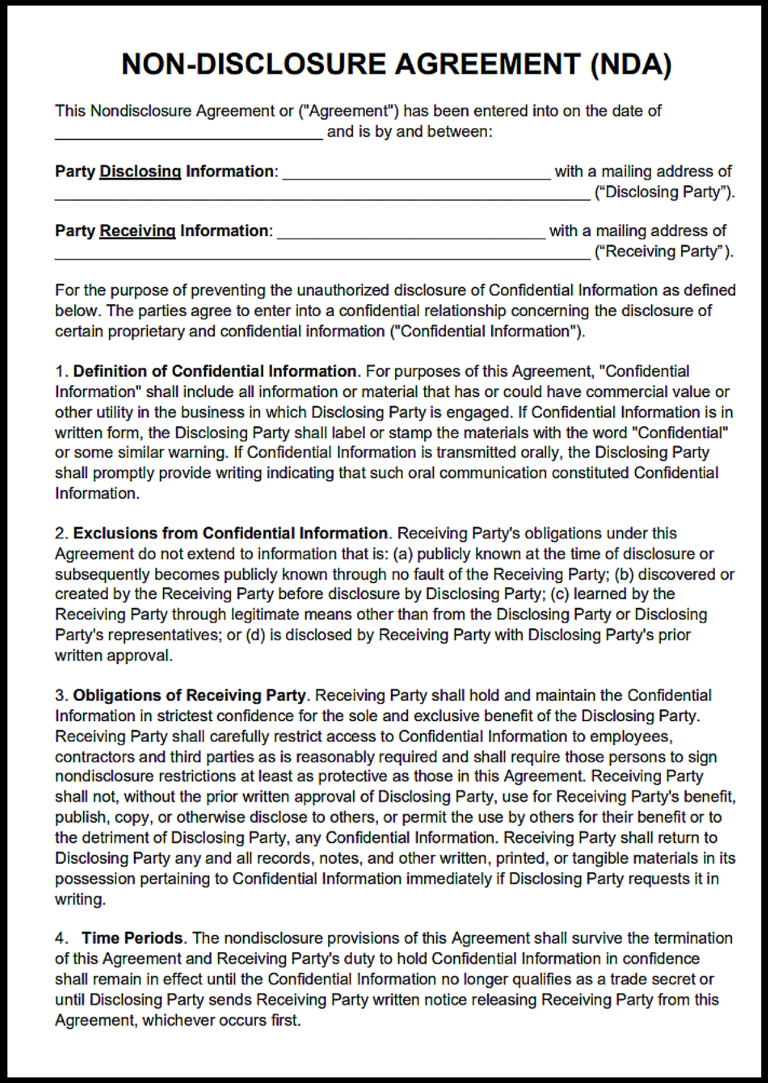
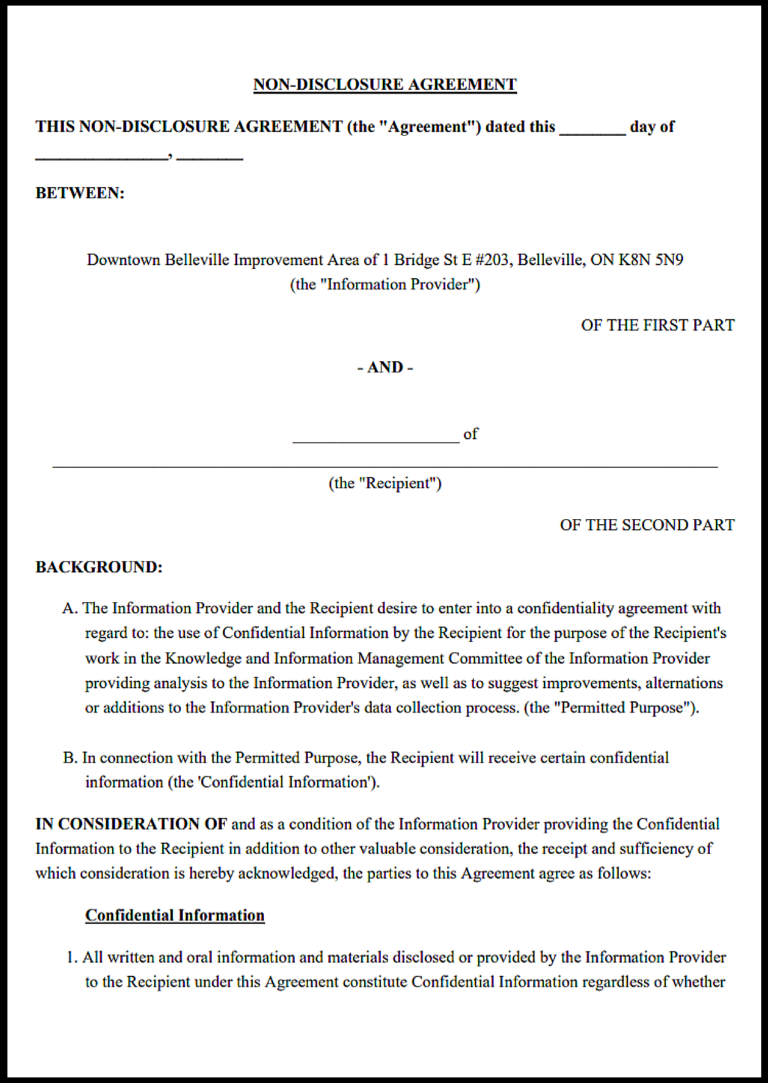
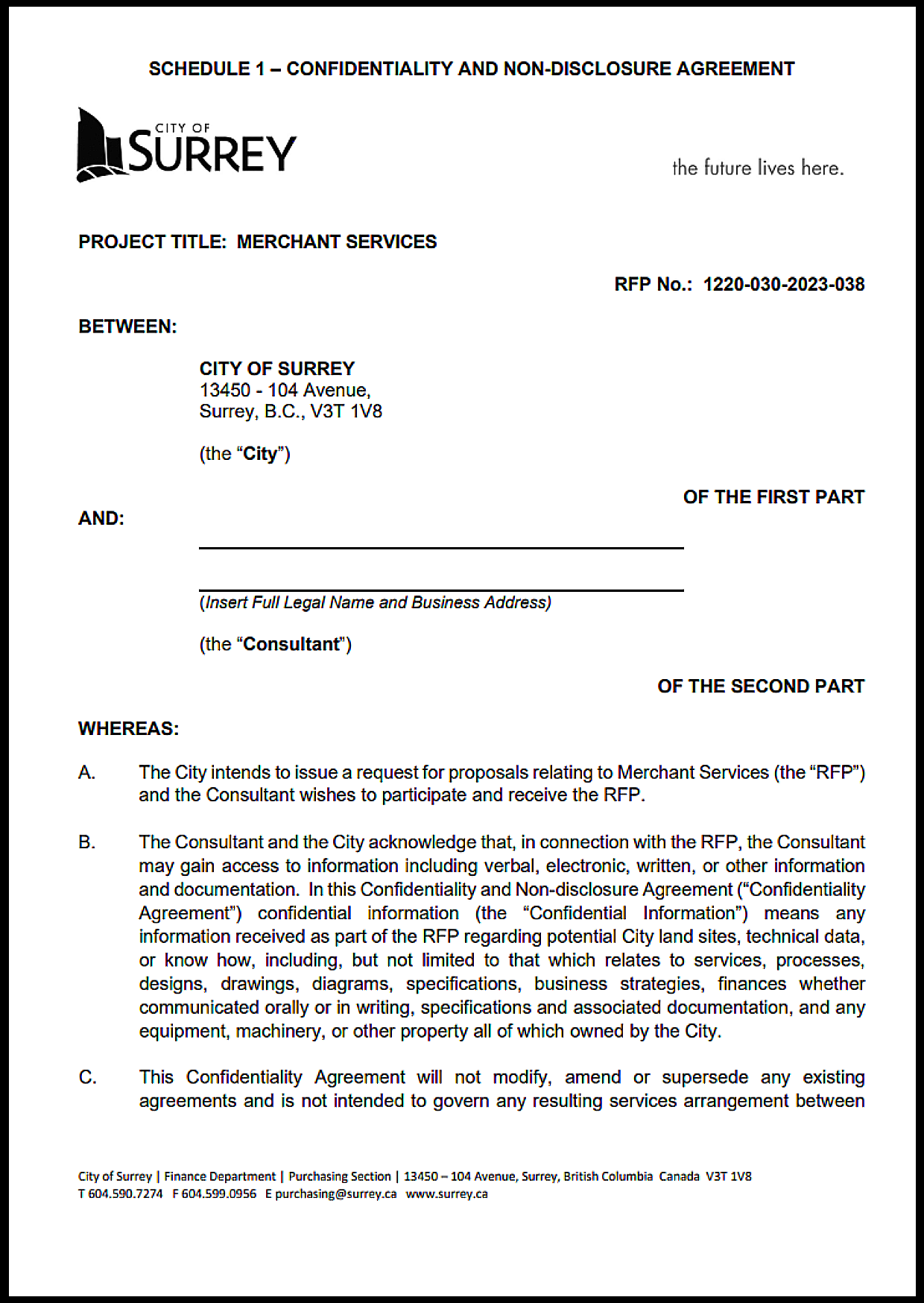
Below is a simple and practical NDA template you can copy, download, or customize based on your business needs. Always review and edit it before use to match your situation.
British Columbia Non Disclosure Agreement Laws, Enforceability Rules & Privacy Standards
| Topic / Issue | British Columbia Legal Rule | Governing Statute |
|---|---|---|
| Governing legislation | Non-Disclosure Agreements in British Columbia are generally governed by contract law principles, together with any legislation that applies to the particular relationship, disclosure, or transaction. | Law and Equity Act, RSBC 1996, c. 253 |
| Federal privacy overlap | NDAs involving personal information may also interact with federal privacy legislation where PIPEDA applies, including to certain federally regulated organizations and interprovincial or international commercial activities. | Personal Information Protection and Electronic Documents Act (PIPEDA) |
| Criminal law override | An NDA cannot lawfully prevent a person from complying with applicable law or lawful investigative, regulatory, or court processes. | Criminal Code, RSC 1985, c. C-46 |
| Who can sign | An individual may sign an NDA personally, while a corporation should have the agreement signed by a person who has authority to bind the corporation. | Business Corporations Act, SBC 2002, c. 57 |
| Witness requirement | Witnesses are not generally required for an ordinary NDA to be legally effective in British Columbia. | No general statutory requirement |
| Notarization requirement | Notarization is not generally required for a private commercial NDA in British Columbia. | No general statutory requirement |
| Age of majority | British Columbia’s general age of majority is 19, while contractual capacity is a separate issue governed by the applicable law and circumstances. | Age of Majority Act, RSBC 1996, c. 7, s. 1 |
| Mental capacity | The signer should have the legal capacity required to enter into the agreement and understand the contractual obligations being accepted. | Applicable contract and capacity law |
| Limitation period | Subject to the Limitation Act and its exceptions, a court proceeding in respect of a claim generally must be commenced within 2 years after the claim is discovered. | Limitation Act, SBC 2012, c. 13, s. 6 |
| Mandatory wording | British Columbia does not prescribe a government NDA form or mandatory wording for an ordinary NDA. | General contract law |
| Duration concerns | The appropriate confidentiality period depends on the information being protected, the agreement’s wording, and the circumstances; indefinite protection is not automatically invalid or valid in every case. | BC common law principles |
| Filing requirement | Ordinary NDAs are private contracts and are not generally filed with a government registry. | Private contractual practice |
| Overbroad restrictions | An NDA that goes beyond protecting confidential information and effectively restricts a person’s ability to work may raise enforceability issues under the applicable common-law rules. | BC common law principles |
| Obstruction of justice issue | An NDA should not prevent a person from making a disclosure or cooperating with law enforcement where the disclosure or cooperation is required or protected by law. | Criminal Code / applicable law |
| Lack of consideration | Introducing an NDA after employment has begun can raise enforceability issues depending on the circumstances, but lack of fresh consideration is not automatically determinative of a contractual variation in British Columbia. | BC common law; Rosas v. Toca, 2018 BCCA 191 |
| BC age difference | British Columbia’s general age of majority is 19. | Age of Majority Act |
| PIPA compliance | Where PIPA applies, an organization handling personal information must comply with its privacy requirements; PIPEDA may also apply in circumstances covered by federal law. | Personal Information Protection Act (PIPA), SBC 2003, c. 63 |
| Employment clause scrutiny | Non-solicitation, non-disparagement, and other restrictive provisions should be drafted carefully because their enforceability depends on the wording and the circumstances. | BC common law principles |
British Columbia does not prescribe an official NDA form or mandatory wording. A template still needs to be drafted clearly and tailored to the parties, information being protected, permitted disclosures, duration, and the circumstances of the agreement.
An NDA introduced after employment has already begun can raise a consideration and enforceability issue, particularly where the employee receives no new consideration for the new restriction. However, lack of fresh consideration is not automatically determinative of a contractual variation in British Columbia. The Supreme Court of British Columbia and Court of Appeal authorities must be considered according to the particular facts, including the principles discussed in Rosas v. Toca.
An NDA should also preserve disclosures and cooperation that a person is legally entitled or required to make. Confidentiality wording should not be drafted as though it can override mandatory legal duties or protected disclosures.
Because enforceability depends on the wording and circumstances of the agreement, the template should be reviewed and tailored before it is used.
Service agreements help businesses define professional responsibilities, payment expectations, and project deliverables during commercial relationships. To understand how these agreements fit into broader legal documentation, you can review with the British Columbia contract drafting guide.
What Is a Non Disclosure Agreement in British Columbia?
A Non-Disclosure Agreement (NDA) is a contract that sets out confidentiality and permitted-use obligations for information shared between parties.
In simple terms, it sets rules about what information must remain confidential and what the receiving party may or may not do with it.
Under British Columbia law, an NDA is generally analyzed using contract-law principles together with any legislation that applies to the particular relationship or disclosure.
NDA vs General Contract
| Feature | NDA |
General Contract
|
| Purpose | Protect confidential info |
Cover broader business terms
|
| Scope | Limited to confidentiality and related obligations |
Covers services, payment, duties
|
| Use case | Sharing sensitive data |
Business transactions
|
Types of NDAs
- One-way NDA → Only one party shares confidential information
- Mutual NDA → Both parties share and protect information
Common industries using NDAs in BC:
- Tech startups
- Marketing agencies
- Consultants and freelancers
- Manufacturing businesses
Service providers often use additional agreements depending on the type of business relationship involved. Independent professionals may also require an independent contractor agreement, while specialized advisory work frequently relies on a consulting agreement.
When Should You Use an NDA in BC?
In many business situations, an NDA can be useful whenever sensitive information is being shared and the parties want clear contractual confidentiality obligations.
Common situations:
- Hiring employees or contractors
- Sharing business ideas or trade secrets
- Working with investors or partners
- Selling or merging a business
Mini scenario:
A freelance designer is hired to create branding for a company. The company shares client information and internal strategy. An NDA can set clear contractual limits on how the freelancer may use or disclose that information.
Key Elements of a Strong BC NDA
A well-drafted NDA should address several core issues that can affect how clearly its obligations can be interpreted and enforced.
Clear Definition of Confidential Information
You should clearly identify what information is protected.
Good practice includes:
- Specific examples (client lists, pricing models)
- Avoiding overly broad wording like “all information”
- Stating whether information must be marked confidential or can be confidential by its nature
Purpose of Disclosure
This limits how the receiving party can use the information.
For example:
“Only for evaluating a business partnership.”
A defined purpose helps establish the permitted use of the information.
Time Period (Term Clause)
NDAs can be:
- Fixed-term (e.g., 2 years)
- Potentially ongoing for information that continues to qualify as a trade secret, subject to the agreement and applicable law
The appropriate term depends on the information being protected and the purpose of the agreement.
Obligations of Receiving Party
The agreement should clearly state what the receiving party must do:
- Keep information confidential
- Not share it without authorization
- Use it only for the agreed purpose
- Take reasonable steps to protect it where appropriate
Exceptions Clause
Not all information can or should remain protected indefinitely.
Typical exclusions:
- Public information
- Already lawfully known information
- Information required to be disclosed by law
- Information independently developed without using the confidential information, where the agreement provides for that exception
Governing Law Clause
A BC governing-law clause states the law the parties intend to apply to the agreement.
It can provide greater certainty where the parties or their activities involve more than one jurisdiction.
When service providers gain access to confidential operational information, businesses commonly include a non-disclosure agreement to help safeguard internal records and client data.
Is an NDA Legally Enforceable in British Columbia?
An NDA may be enforceable in British Columbia when it forms a valid contract and its terms are enforceable in the circumstances.
An NDA must satisfy the applicable requirements of contract law. The specific issues can differ depending on whether it is a new agreement, a contractual variation, or part of an existing employment or commercial relationship.
A simple three-part checklist of offer, acceptance, and consideration should not be treated as a complete statutory test for every NDA.
The Personal Information Protection Act (British Columbia) may also apply when an organization handles personal information within the scope of that legislation. An NDA does not replace privacy-law obligations. PIPA is current to August 4, 2026.
Courts may scrutinize NDAs that are:
- Too broad
- Unfair in the circumstances
- Vague or unclear
- Inconsistent with public policy or applicable legal rights
How to Fill Out a BC NDA (Step-by-Step)
Creating an NDA is easier when the agreement is tailored to the actual information-sharing relationship.
Step 1 – Identify Both Parties
Write the full legal names and addresses of the parties. Where a company is involved, identify the legal entity correctly and ensure the person signing has authority to bind it.
Step 2 – Define Confidential Information Clearly
List exactly what you want to protect. Avoid vague terms and identify useful categories or examples.
Step 3 – Set Duration of Agreement
Decide how long the NDA should last based on the information being protected and the purpose of the agreement.
Step 4 – Add Specific Restrictions
Clearly state what the receiving party cannot do with the information and what uses are permitted.
Step 5 – Sign and Date Properly
The parties should sign the agreement so there is a clear record of their assent. The legal effect of an unsigned agreement depends on the circumstances and applicable contract law.
Helpful tips:
- Keep language simple and clear
- Avoid copying random templates without editing
- Always tailor the NDA to your situation
Common Mistakes That Can Make Your NDA Weak
Common drafting problems include:
- Using overly broad definitions
- Not specifying duration
- Missing permitted-disclosure exceptions
- Using provisions that go beyond legitimate confidentiality protection
- Not signing or dating the agreement properly
- Copy-pasting US templates that don’t follow BC laws
A well-drafted NDA should be clear, balanced, and practical.
Business Risks of Not Using an NDA
Not using an NDA can make it harder to establish agreed confidentiality obligations when sensitive information is shared.
Main risks include:
- Loss or misuse of trade secrets
- Client data leaks
- Employees or contractors misusing confidential information
- Legal disputes about what was supposed to remain confidential
Once confidential information is disclosed, some harm may be difficult to reverse. Clear confidentiality terms can therefore be useful before information is shared.
NDA vs Confidentiality Clause (What’s Better?)
Both options can protect confidential information, but they are used differently.
| Feature | NDA |
Confidentiality Clause
|
| Structure | Separate agreement |
Part of another contract
|
| Use case | Before or during information sharing |
Inside service/employment contracts
|
| Flexibility | More detailed |
Can be narrower or tailored to the main agreement
|
In British Columbia business situations:
- Use an NDA when starting discussions or when confidentiality deserves a standalone agreement
- Use a confidentiality clause within contracts like employment or service agreements where the confidentiality obligations can be addressed as part of the larger contract
Frequently Asked Questions (FAQs)
Do NDAs need to be notarized in BC?
No. Notarization is not generally required for an ordinary NDA in British Columbia. A signed agreement is usually sufficient, assuming the agreement otherwise satisfies the applicable legal requirements.
How long does an NDA last?
It depends on the information being protected and the terms of the agreement. Some obligations have a fixed term, while protection for genuine trade secrets may continue while the information remains secret.
Can an NDA be broken?
Yes. A breach of an NDA can result in legal consequences, which may include a claim for damages or other relief depending on the agreement, applicable law, and circumstances.
Are NDAs valid for employees?
NDAs are commonly used in employment relationships to protect confidential business information. Their enforceability depends on the wording, the circumstances in which the agreement was introduced, and applicable employment and contract law.
Can I write my own NDA?
Yes. You can create your own NDA using a template. However, important or complex arrangements may require legal review, particularly where the agreement includes employment restrictions, non-solicitation provisions, personal information, trade secrets, or other significant obligations.
Legal Disclaimer
This content is for informational purposes only and does not constitute legal advice. Laws may change, and every situation is different. You should consult a qualified legal professional in British Columbia for advice specific to your case.