Free Alberta Employment Contract Template Guide
If you’re hiring an employee in Alberta, the employment contract is worth getting right before the first day of work. Salary, duties, hours and termination terms are much easier to deal with when the agreed terms are written down from the start.
I’ve seen Alberta employers end up in expensive disputes simply because job duties, overtime expectations, or termination terms were never written down properly. When someone is hiring for the first time, they often assume a verbal agreement is enough, but under Alberta employment laws, missing or unclear terms can quickly create legal and financial problems.
A written employment contract helps avoid these issues. It clearly explains what both sides agree to. Under Alberta law, having a clear contract gives legal protection, reduces disputes, and builds trust between employer and employee.
Last Updated: August 2026
Free Alberta Employment Contract Template
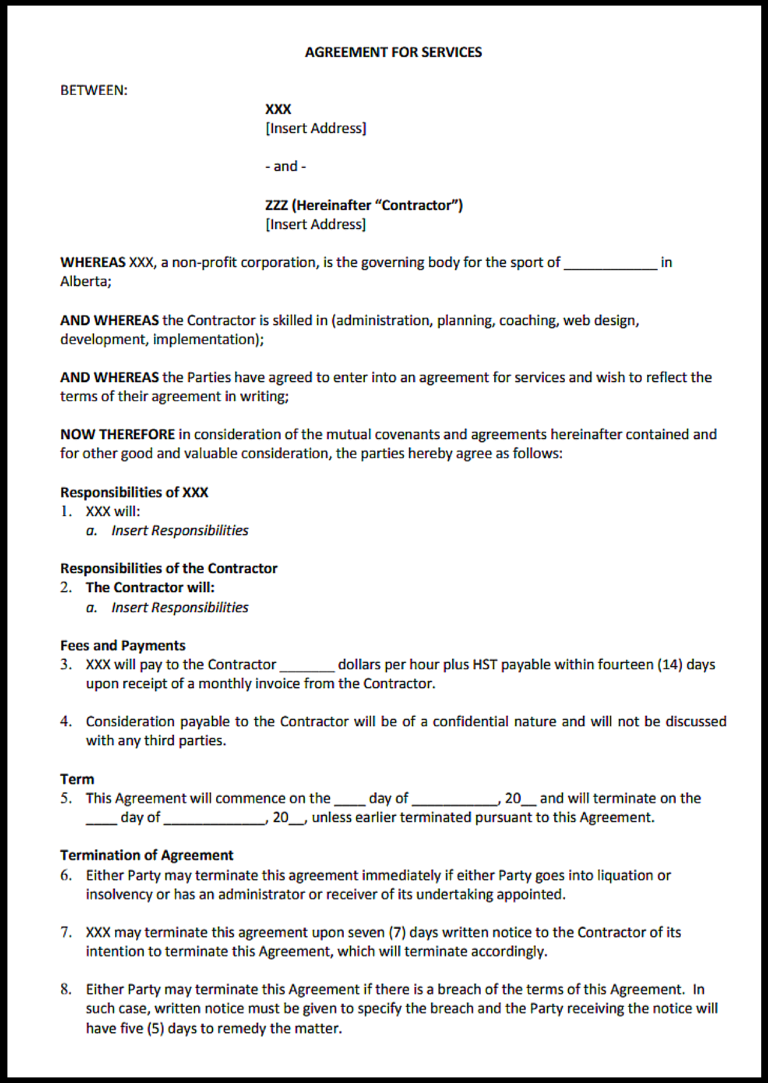
Below is a simple, ready-to-use template. You can copy, edit, and use it based on your needs.
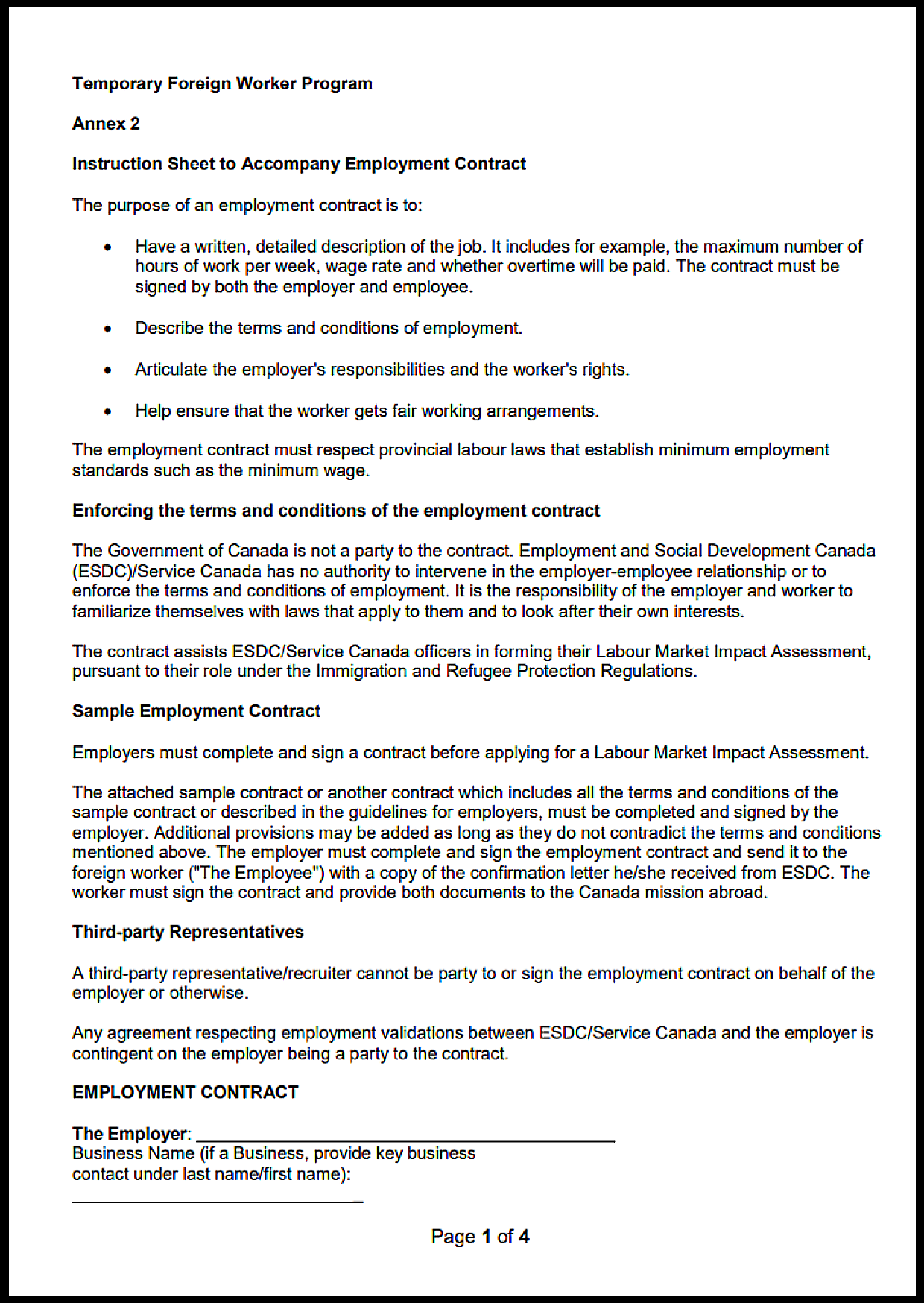
Tip: Always review the contract before signing. Once signed, it becomes legally binding under Alberta law.
Alberta Employment Contract Rules Employers Often Miss
| Topic / Issue | Alberta Legal Rule | Governing Statute |
|---|---|---|
| Main governing law | Most employment relationships in Alberta are governed by Alberta’s Employment Standards Code, although some industries and employees are federally regulated or subject to specific exceptions. | Employment Standards Code, RSA 2000, c E-9 |
| Federal industries | Federal employment standards apply to employees in federally regulated industries, including banking, telecommunications and interprovincial transportation. | Canada Labour Code, RSC 1985, c L-2 |
| Jurisdiction | Most Alberta employment contracts fall under provincial law. | Employment Standards Code, RSA 2000, c E-9 |
| Recent amendments | Alberta employment standards were significantly amended by the Restoring Balance in Alberta’s Workplaces Act, 2020, including changes to averaging arrangements, hours of work, rest periods and temporary layoff rules. | Employment Standards Code amendments |
| Who can sign | The employer and employee, or their authorized representatives, may enter into the employment contract. | Common law principles |
| Witness requirement | Alberta employment standards do not impose a general witness requirement for an employment contract. | No general statutory requirement |
| Notarization | Standard employment contracts do not generally require notarization under Alberta employment standards legislation. | No general statutory requirement |
| Minimum age rules | Alberta has different employment restrictions for children 12 and under, youth aged 13 to 14, and young persons aged 15 to 17. | Employment Standards Code; Employment Standards Regulation |
| Mental capacity | As a matter of general contract law, the parties must have the legal capacity to enter into the agreement and understand its nature and effect. | Common law principles |
| Signing timeline | It is good practice to finalize and sign the contract before employment begins. Where an existing employee is asked to accept materially new terms, separate consideration issues may arise under common law. | Common law principles |
| Deduction restrictions | Employers cannot deduct certain amounts from earnings for faulty workmanship or cash shortages or loss of property where the statutory conditions prohibit the deduction. | Employment Standards Code |
| Termination clauses | A termination clause cannot provide less than the minimum notice or termination pay required by Alberta employment standards, and its common-law effect depends on the wording of the contract and applicable case law. | Employment Standards Code, s. 56; common law |
| Overtime averaging agreements | Hours-of-work averaging arrangements are subject to specific statutory requirements, including written arrangements and requirements governing their duration, amendment and cancellation. | Employment Standards Code; Employment Standards Regulation, Part 2.1 |
| Filing requirement | Standard employment contracts generally remain private agreements and do not require routine registration with Alberta Employment Standards. | Alberta employment standards legislation |
| Immigration program exception | Signed contracts may need to be submitted for temporary foreign worker or AAIP applications, depending on the applicable immigration program and current application requirements. | Alberta Advantage Immigration Program / applicable federal requirements |
| Invalid minimum standard waivers | A contractual term that purports to waive or exclude an employment standard or its statutory remedies contrary to section 4 of the Employment Standards Code is against public policy and void. | Employment Standards Code, s. 4 |
| Mid-stream contract issue | When an existing employee is asked to accept materially different or less favourable contractual terms, enforceability may depend on whether fresh consideration was provided and on the circumstances in which the change was introduced. | Common law principles |
| Ambiguous termination clauses | An unclear termination clause may fail to displace an employee’s common-law entitlement to reasonable notice, as illustrated by Bryant v Parkland School Division, 2022 ABCA 220. | Bryant v Parkland School Division, 2022 ABCA 220 |
| Alberta severance difference | Alberta’s Employment Standards Code provides statutory termination notice or termination pay based on length of service; common-law reasonable notice or other contractual entitlements may also apply. | Employment Standards Code |
| Overtime rule difference | For most employees, Alberta’s overtime rule applies to hours worked over 8 hours in a day or 44 hours in a week, whichever is greater, subject to exemptions and special industry rules. | Employment Standards Code |
| Youth employment categories | Alberta has different employment restrictions for children 12 and under, youth aged 13 to 14, and young persons aged 15 to 17. | Employment Standards Code; Employment Standards Regulation |
Alberta’s current employment standards distinguish between provincially regulated employees and federally regulated industries. Alberta also has specific rules for youth employment, overtime, vacation, rest periods and other minimum workplace standards.
One of the biggest mistakes Alberta employers make is assuming they can write anything into an employment contract. Section 4 of the Employment Standards Code prevents contractual terms from improperly excluding statutory employment standards or their remedies. For example, an employer cannot simply contract out of minimum employment standards that the legislation requires.
Another important issue is the “mid-stream” contract problem. When an existing employee is asked to accept materially different or less favourable contractual terms, enforceability can depend on whether fresh consideration was provided and on the circumstances in which the change was introduced. A raise or promotion can be consideration, but the legal analysis is fact-specific.
Termination clauses are also more important than many employers realize. An unclear termination clause may fail to displace the employee’s common-law entitlement to reasonable notice. In Bryant v Parkland School Division, 2022 ABCA 220, the Alberta Court of Appeal considered whether the wording was sufficiently clear and unambiguous to limit that entitlement.
The overtime rule is another Alberta-specific detail businesses often overlook. For most employees, overtime applies to hours worked beyond 8 hours in a day or 44 hours in a week, whichever produces the greater overtime entitlement. There are exemptions and special rules for certain industries and occupations.
What Is an Employment Contract in Alberta?
An employment contract is a legal agreement between an employer and an employee. It explains job duties, salary, working hours, and other important terms.
In Alberta, contracts can be:
- Written (best option)
- Verbal (legally valid but risky)
The problem with verbal agreements is simple — there’s no written record of the exact terms. If a dispute happens, it can become one person’s word against the other.
In most business contract situations, a written agreement is safer because:
- It clearly records terms
- It reduces misunderstandings
- It can be used as evidence in disputes
When Do You Need an Employment Contract?
You should use an employment contract anytime you hire someone. But it becomes especially important in certain cases.
Common situations:
- Hiring your first employee
- Hiring full-time or part-time staff
- Hiring seasonal or temporary workers
- Hiring remote employees
- Hiring for specialized roles
When hiring employees, confidentiality clauses are often included within a broader non-disclosure agreement framework to protect company data. You can also review how NDAs work separately in the standalone NDA template in Alberta for more specific use cases.
Real example:
A small Alberta café hires a part-time worker without a contract. Later, the worker claims they were promised full-time hours. Without a written agreement, this can turn into a legal dispute.
Key Elements Every Alberta Employment Contract
Job Role and Responsibilities
Clearly define what the employee will do.
This avoids confusion and helps measure performance.
Salary, Wages, and Payment Terms
State:
- Hourly wage or fixed salary
- Payment schedule (weekly, bi-weekly, monthly)
Working Hours and Overtime Rules
Under Alberta law:
- Standard hours are typically 8 hours/day or 44 hours/week
- Overtime must be paid unless exempt
For most employees, Alberta’s overtime rule applies to hours worked over 8 hours in a day or 44 hours in a week, whichever is greater. Exemptions and special rules apply to certain employees, industries and occupations.
Vacation, Leaves, and Benefits
Employers must follow minimum standards:
- At least 2 weeks of vacation after 1 year
- At least 3 weeks of vacation after 5 years
- Vacation pay rules apply
Alberta’s minimum vacation entitlement generally increases from 2 weeks after 1 year to 3 weeks after 5 years of employment.
Termination and Notice Period
Both employer and employee must follow applicable notice rules.
Notice depends on how long the employee worked and whether the circumstances qualify for an exception such as just cause.
Confidentiality and Non-Disclosure
This protects business information like:
- Client lists
- Trade secrets
- Internal processes
Employment agreements frequently connect with documents like a service agreement structure or a consulting contract format, depending on the nature of the working relationship. For independent roles, a contractor agreement template may be more appropriate.
Alberta Employment Laws You Must Follow
Under Alberta law, employment contracts must follow the Employment Standards Code. You cannot contract out of minimum standards.
Key rules include:
| Rule | Requirement |
|---|---|
| Minimum Wage | Must meet Alberta minimum wage laws |
| Overtime | Paid after standard hours unless exempt |
| Vacation | Minimum 2 weeks after 1 year and 3 weeks after 5 years |
| Termination Notice | Based on length of service, subject to applicable exceptions |
| Rest Periods | Generally at least 30 minutes of rest during shifts of 5 to 10 hours, with additional rules for shifts of 10 hours or more |
Alberta currently provides a general minimum wage of $15 per hour for most employees, while an eligible student wage of $13 per hour applies to certain workers under 18.
For rest periods, employees are generally entitled to one 30-minute paid or unpaid break after the first 5 hours for shifts between 5 and 10 hours. For shifts of 10 hours or more, the rules provide for longer break arrangements. Exceptions and additional rules can apply.
If your contract goes against these rules, those parts may not be enforceable.
Why compliance matters:
- Avoid fines and penalties
- Prevent employee claims
- Protect your business reputation
Employee vs Independent Contractor
Many business owners confuse employees with contractors. This can create serious legal problems.
Key differences:
| Factor | Employee | Independent Contractor |
|---|---|---|
| Control | Employer controls work | Worker generally controls how the work is performed |
| Tools | Employer may provide | Worker may provide |
| Payment | Salary/wages | Often paid per project or according to an agreement |
| Benefits | May receive benefits | Generally not entitled to employee benefits |
| Legal protection | May be covered by employment laws | Classification depends on the actual relationship |
Example:
If you hire someone full-time, set their schedule, and control their work, those facts may point toward an employment relationship. However, worker classification is fact-specific, and no single factor determines whether someone is an employee or an independent contractor.
Misclassification can lead to:
- Back pay claims
- Penalties
- Legal disputes
How to Fill Out an Alberta Employment Contract (Step-by-Step)
Step 1: Add correct legal names
Use full legal names of both employer and employee.
Step 2: Define job role clearly
List exact duties to avoid confusion later.
Step 3: Set payment and hours
Include salary, payment frequency, and working hours.
Step 4: Include legal clauses
Add:
- Termination terms
- Confidentiality clause
- Overtime rules
Step 5: Review before signing
Check compliance with Alberta law before finalizing.
Common Mistakes to Avoid
Many employers make small mistakes that lead to big problems.
- Missing termination clause
- Not following Alberta employment laws
- Using vague job descriptions
- Copy-paste contracts from other provinces
- Not updating contracts over time
Practical tip: Laws vary by province. A contract from Ontario or BC may not meet Alberta rules.
Legal Risks Without a Proper Employment Contract
A written contract is not a substitute for Alberta’s employment standards, but it can make the agreed contractual terms much easier to establish if a dispute later arises.
Common risks:
- Disputes over salary or duties
- Wrongful termination claims
- Government penalties
- Loss of business reputation
In most business contract situations, unclear agreements can make employment disputes more difficult and expensive to resolve.
FAQs About Alberta Employment Contracts
Is an employment contract required in Alberta?
Alberta does not generally require every employment relationship to have a written employment contract. A written agreement is still strongly recommended because it records the agreed terms while Alberta’s employment standards continue to apply.
Can I use the same contract for all employees?
You can use a base template, but each contract should be reviewed and customized for the employee’s role, compensation, hours, termination terms, and any applicable Alberta employment-standard exemptions or special rules.
Can an employee refuse to sign a contract?
Yes. An employee can refuse. In that case, you may choose not to proceed with hiring, subject to any applicable legal obligations.
Are verbal employment agreements valid?
Yes, verbal employment agreements can be legally binding. However, they can be harder to prove because there may be no written record of the exact terms agreed between the parties.
Can I change an employment contract later?
Yes, the parties can agree to change an employment contract, but changes to existing employment terms can raise separate enforceability and consideration issues. Material changes should be documented clearly and reviewed before they are implemented.