British Columbia Employment Contract Template & Guide
A British Columbia Employment Contract is a written agreement between an employer and an employee that explains job duties, salary, and working conditions. In most business situations, having this contract in writing protects both sides and avoids confusion later.
For example, if you hire a full-time employee for your small business in British Columbia, this contract clearly sets expectations. It helps prevent disputes about pay, hours, or termination.
I have seen many British Columbia employers rely on verbal job offers or copied online contracts, only to face disputes later over overtime, probation periods, or termination pay. When people are hiring for the first time, they often do not realize that a poorly written employment contract can create expensive problems under BC employment laws.
Last Updated: September 2026
Table of Contents
ToggleFree British Columbia Employment Contract Template
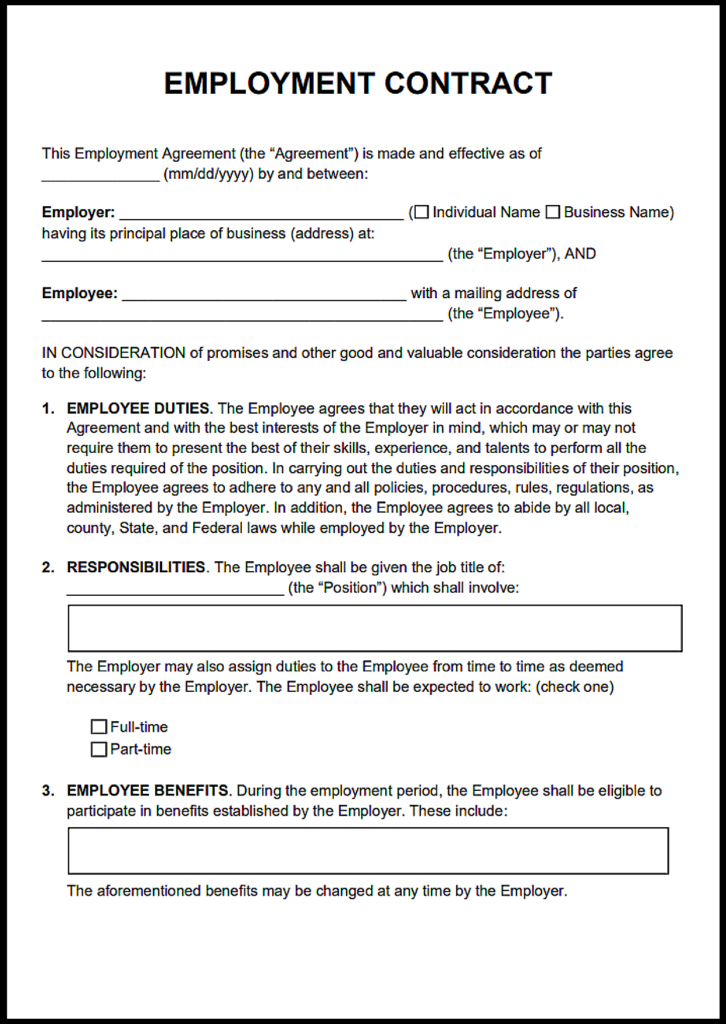
You can copy, edit, and use this template based on your needs. Always review it to match your business situation.
 Get
Get British Columbia Employment Contract Laws You Should Know
| Topic / Issue | British Columbia Legal Rule | Governing Statute |
|---|---|---|
| Governing Employment Law | Most employees working in British Columbia are covered by the provincial Employment Standards Act and Regulation unless they work in a federally regulated industry or occupation. Federally regulated workplaces are generally covered by the Canada Labour Code. | Employment Standards Act [RSBC 1996] c. 113; Canada Labour Code |
| 2024 and 2026 Amendments | B.C. introduced employment-standard protections for app-based ride-hail and delivery workers effective September 3, 2024. The province’s general minimum wage increased to $18.25 per hour effective June 1, 2026. | Employment Standards Act; Employment Standards Regulation |
| Who Can Sign the Contract | An employment contract should be signed by the employer or a person authorized to act for the employer, and by the employee. | Applicable contract and corporate law |
| Witness Requirements | An ordinary employment contract does not generally require a witness in British Columbia. | No general statutory requirement |
| Notarization Requirements | An ordinary employment contract does not generally require notarization in British Columbia. | No general statutory requirement |
| Age of Majority | British Columbia’s general age of majority is 19. A contract made by a person under 19 is subject to the special rules in Part 3 of the Infants Act and is not automatically governed by a general “necessaries or beneficial service” exception. | Age of Majority Act, s. 1; Infants Act |
| Mental Capacity | Until the contrary is demonstrated, every adult is presumed to be capable of making decisions about personal care, health care, legal matters and the adult’s financial affairs, business or assets. | Adult Guardianship Act, s. 3 |
| Signing Deadline | It is generally useful to put employment terms in writing before work begins. For an existing employee, however, a new or materially changed contract can raise separate common-law issues about consideration and enforceability. | Applicable common law |
| Foreign Worker Disclosure | Employers must make available or provide foreign workers with information about their rights under the Temporary Foreign Worker Protection Act, in the form provided or approved by the director. | Temporary Foreign Worker Protection Act |
| Domestic Worker Agreements | For a domestic worker covered by section 14 of the Employment Standards Act, the employer must provide a written employment contract stating the required employment conditions. | Employment Standards Act, ss. 14–15 |
| Wage Deductions | Except where permitted or required by law, an employer must not withhold, deduct or require payment of an employee’s wages. Additional rules apply to deductions and assignments of wages under the Employment Standards Act and Regulation. | Employment Standards Act, s. 21 |
| No Waiver of ESA Rights | An agreement to waive the minimum requirements of the Employment Standards Act or Regulation generally has no effect, subject to the exceptions set out in the Act. | Employment Standards Act, s. 4 |
| Filing Requirements | Ordinary employment contracts are not generally filed with the government, although particular categories of workers and employers can have separate registration, reporting or record-keeping requirements. | Employment Standards Act and Regulation |
| Domestic Worker Registration | Employers must provide the required registration information for a covered domestic worker to the director within 30 days after the employee is hired. | Employment Standards Regulation, s. 13 |
| Temporary Foreign Worker Registry | Employers that intend to hire temporary foreign workers through most specified federal foreign-worker programs must register with the British Columbia government, subject to statutory and regulatory exemptions. | Temporary Foreign Worker Protection Act |
| Invalid Contract Terms | Contract terms that provide less than the minimum standards required by the Employment Standards Act or Regulation generally have no effect to the extent they attempt to waive those minimum standards. | Employment Standards Act, s. 4 |
| Lack of Consideration | When an existing employee is asked to accept a new or materially changed employment contract after employment has begun, enforceability can depend on whether valid consideration or another recognized basis for the change exists. | Applicable common law |
| Ambiguous Termination Clauses | A termination clause must be drafted carefully so that it complies with the Employment Standards Act and applicable common-law rules. A defective clause can create significant uncertainty about the employee’s termination entitlements. | Employment Standards Act, s. 63 |
| Paid Sick Leave Rights | After 90 days of employment, eligible employees are entitled to up to 5 paid days and 3 unpaid days of job-protected illness or injury leave per calendar year. | Employment Standards Act, s. 49.1 |
Section 4 of the Employment Standards Act makes the Act’s requirements minimum standards and generally gives no effect to an agreement that attempts to waive those standards. This is particularly important when reviewing termination, overtime, vacation, wage, and leave provisions.
British Columbia’s general age of majority is 19. The Infants Act contains specific rules for contracts made by people under 19, so an employment agreement involving a person under the age of majority should be assessed under those rules rather than treated as automatically valid or invalid.
After 90 days of employment, eligible BC employees can take up to 5 paid and 3 unpaid illness or injury days of job-protected leave per calendar year.
As of June 1, 2026, British Columbia’s general minimum wage is $18.25 per hour.
Employment contracts help define workplace responsibilities, compensation terms, and expectations between employers and workers. To understand how these agreements fit within broader legal documentation practices, you can review with the British Columbia contract enforceability guide.
What Is an Employment Contract in British Columbia?
A British Columbia employment contract sets out the agreed terms of the employment relationship, including the position, compensation, duties, hours, and other employment conditions, subject to applicable minimum employment standards.
Under British Columbia law, this contract can apply to:
- Full-time employees
- Part-time employees
- Fixed-term employees
An employment relationship can exist without a detailed written contract. A written agreement, however, gives the employer and employee a clearer record of the terms they agreed to.
When Do You Need an Employment Contract?
Using a written employment contract is useful when hiring an employee or changing important employment terms. A written contract is not generally required for every BC employment relationship, although specific categories of workers have statutory written-contract requirements.
Common situations include:
- Hiring a new employee
- Promoting someone to a new role
- Changing salary or benefits
- Running a small business with limited staff
Without clear written terms, misunderstandings can develop about duties, pay, hours, benefits, or termination arrangements.
Employers often use related service and contractor documents depending on the type of working relationship involved. Businesses hiring self-employed professionals may also require an independent contractor agreement, while project-based collaborations commonly involve a consulting agreement.
Key Elements Every BC Employment Contract Must Include
Job Role and Responsibilities
The contract should clearly define what the employee is expected to do.
A useful description can identify the employee’s position, main duties, reporting relationship, and any reasonable changes that may be made to the role.
Salary, Wages, and Payment Terms
You must clearly state:
- Hourly wage or salary
- Payment schedule
- Any agreed commission, bonus, or other compensation
The stated compensation must comply with applicable employment standards. As of June 1, 2026, BC’s general minimum wage is $18.25 per hour, subject to different minimum rates that can apply to particular occupations.
Working Hours and Overtime
For employees covered by the British Columbia Employment Standards Act, ordinary overtime rules generally apply when an employee works more than 8 hours in a day or 40 hours in a week, subject to exemptions and statutory averaging arrangements.
Under the ordinary overtime rules, employees generally receive 1.5 times their regular wage for hours worked over 8 in a day and for qualifying hours over 40 in a week. Double-time rules can also apply to qualifying hours worked over 11 in a day.
Probation Period
A contract may describe an initial probationary or introductory period, but British Columbia’s Employment Standards Act does not create a general three-month probation period that removes statutory employment standards or automatically eliminates termination entitlements.
The agreement should not assume that an employee can be terminated without applicable statutory or contractual entitlements simply because the employee is within three months of starting.
Termination and Notice Period
The contract should clearly address termination terms, including any contractual notice provisions, but those provisions must comply with applicable employment standards and common-law requirements.
For employees covered by the Employment Standards Act, statutory compensation for length of service generally depends on the employee’s period of employment and the applicable statutory rules.
Confidentiality and Non-Compete Clauses
Confidentiality clauses and non-compete clauses are governed by different legal principles.
A confidentiality clause can protect legitimate confidential business information. Non-compete clauses are generally scrutinized strictly at common law, so their scope, duration, geographic reach, and legitimate business purpose should be assessed carefully.
Companies handling confidential employee information may additionally rely on a non-disclosure agreement template to help protect internal business operations and sensitive workplace data.
Employment Standards Act (BC) – What You Must Follow
Under British Columbia law, employment contracts must comply with the minimum standards established by the Employment Standards Act and Regulation. An agreement generally cannot waive those minimum statutory protections.
Here are key rules:
| Topic |
Legal Requirement in BC
|
| Minimum Wage |
The general minimum wage is $18.25 per hour effective June 1, 2026, subject to different minimum rates that apply to certain occupations.
|
| Overtime Pay |
For employees covered by the ordinary overtime rules, overtime generally applies after more than 8 hours in a day or 40 hours in a week.
|
| Vacation |
Employees receive minimum vacation and vacation-pay entitlements under the Employment Standards Act.
|
| Public Holidays |
Eligible employees can have statutory-holiday entitlements and pay under the Employment Standards Act.
|
Important: A contract cannot generally reduce the minimum statutory standards that apply to the employee.
How to Fill Out the Employment Contract (Step-by-Step)
Start with the parties’ legal names, the position, compensation, hours, benefits, and termination terms. Then check each provision against the current British Columbia employment standards before signing.
Follow these steps:
- Use correct legal names of both parties
- Clearly describe the job role
- Set compensation and working hours that comply with BC requirements
- Include appropriate clauses for termination, overtime, vacation, confidentiality, and other relevant terms
- Get signatures from both employer and employee
The safest approach is to check the contract’s wage, hours, overtime, leave, and termination provisions against the current BC rules before the agreement is signed.
Common Mistakes Employers Make
Most drafting problems come from leaving important terms unclear or copying clauses without checking whether they comply with current BC employment standards.
Some common mistakes include:
- Not following BC employment laws
- Using a termination clause that does not comply with applicable minimum standards
- Using unclear job descriptions
- Copy-pasting templates without editing
These mistakes can create uncertainty or result in contract terms that do not operate as the employer expected.
Legal Risks of Not Having a Proper Contract
Not having a proper written contract can create uncertainty about important parts of the employment relationship.
For example:
- Employee disputes over pay or duties
- Wrongful dismissal claims
- Complaints or claims concerning employment standards
- Confusion about responsibilities
Courts may construe ambiguous employment terms against the party responsible for the ambiguity, depending on the contract, surrounding circumstances, and applicable legal principles.
Fixed-Term vs Permanent Employment Contracts
| Feature | Fixed-Term Contract |
Permanent Contract
|
| Duration | Ends on a specified date or when the agreed term ends |
Ongoing unless the employment relationship ends
|
| Flexibility | Can be useful where employment is genuinely limited to a defined period |
Generally suited to ongoing employment
|
| Risk | A defective or repeatedly renewed fixed-term arrangement can create unexpected termination consequences |
Entitlements depend on the contract, Employment Standards Act, and applicable common law
|
| Use Case | Temporary or defined projects |
Long-term or indefinite roles
|
A fixed-term contract can be useful where employment is genuinely intended to last for a defined period.
However, the termination consequences of a fixed-term arrangement depend on the contract and the applicable statutory and common-law rules. Repeated renewals should not be assumed to avoid those obligations.
Employee vs Independent Contractor
This is an important legal distinction.
| Factor | Employee |
Independent Contractor
|
| Control | Employer generally has greater control or direction over the work |
Worker generally operates an independent business and controls how the work is performed
|
| Payment | Usually receives wages or salary under the employment relationship |
Usually invoices or is paid for contracted services
|
| Benefits | Employees may be entitled to statutory and contractual benefits |
Independent contractors are generally outside the Employment Standards Act, but other laws, contracts and common-law rules may apply
|
| Legal Protection | Covered by the Employment Standards Act if within its scope |
Not generally covered by the Employment Standards Act
|
Calling someone an independent contractor in a written agreement does not by itself decide the issue. The actual relationship and surrounding circumstances matter. The BC Employment Standards Branch states that the Act applies to employees regardless of whether they are full-time, part-time, temporary or permanent, while independent contractors are outside the Act.
Misclassifying a worker can lead to employment-standard, tax, and other legal consequences.
FAQs
Is an employment contract required in British Columbia?
No, it is not generally legally required for every employment relationship. However, a written agreement can provide a clearer record of the employment terms, and certain categories of workers have specific statutory written-contract requirements.
Can I terminate an employee without notice?
It depends on the circumstances, the employee’s length of service, the contract, and applicable law. The Employment Standards Act provides minimum termination-related entitlements in qualifying cases, while additional common-law obligations can also arise. Serious misconduct can affect an employee’s entitlement, but termination should be assessed carefully rather than assumed to be automatically without notice.
Can I change a contract after signing?
Yes, but an employer and employee should agree to the changes. When an existing employee is asked to accept a new or materially changed employment contract, separate common-law questions about consideration and enforceability can arise.
Are verbal agreements valid?
An employment relationship can exist without a detailed written contract. However, oral arrangements can be harder to prove, especially where the parties later disagree about compensation, duties, hours, or termination terms.
Do small businesses need employment contracts?
Small businesses do not generally have a universal statutory requirement to use a written employment contract for every employee. However, written agreements can provide useful evidence of the terms agreed between the employer and employee and can help identify provisions that need to comply with BC employment standards.