Manitoba Affidavit Template (Free Fillable PDF, WORD)
A Manitoba affidavit usually shows up after something has already gone sideways. A lender needs sworn proof of identity because names don’t match across documents. A contractor is being asked to confirm unpaid invoices before a lien deadline closes in. I once had a client in Brandon swear an affidavit with the wrong commissioner section copied from an Alberta form, and the court clerk kicked it back the same morning. Small thing, expensive delay. People using a Manitoba Affidavit Template are often dealing with probate filings, land matters, court applications, or sworn financial statements, and in this province the form and commissioning rules are tied closely to The Manitoba Evidence Act and the King’s Bench Rules. The wording matters more than people think it does.
I’ve seen affidavits tossed aside because the exhibits weren’t marked properly, and suddenly a hearing gets adjourned that someone waited three months for. That’s the kind of mess you’re usually trying to avoid here. Maybe you need sworn facts for a family court filing in Winnipeg, maybe a business dispute, maybe an estate issue where relatives have already stopped returning calls.
Different pressure every time, same document sitting in the middle of it. I had one client lose a sale on rural property after an affidavit of execution was rejected and the registration missed closing by two days. Cost him real money. Read through the template carefully, fill in the facts exactly as they happened, and sign it only in front of a qualified Manitoba commissioner for oaths or notary public.
This general-use affidavit template is suitable for many personal, administrative, or supporting legal situations unless a specialized affidavit form is specifically required.
Table of Contents
ToggleManitoba Affidavit Compliance: Provincial Rules, Legal Traps, and Filing Standards
| Topic / Issue | Manitoba Legal Rule | Governing Statute |
|---|---|---|
| Governing provincial law | Manitoba affidavits are primarily governed by provincial evidentiary law. | The Manitoba Evidence Act, C.C.S.M. c. E150 |
| Court procedure rules | Court affidavits must comply with procedural and formatting rules, including Rule 4.07 and Rule 39. | Court of King’s Bench Rules, Man. Reg. 553/88 |
| Federal use only | Canada Evidence Act applies only when the affidavit is for a federal matter. | Canada Evidence Act, R.S.C. 1985, c. C-5 |
| Who can sign | The deponent must sign in the physical or virtual presence of an authorized official. | The Manitoba Evidence Act, s. 62 |
| Authorized officials | Commissioners for Oaths, Notaries Public, Justices of the Peace, and Manitoba Lawyers may administer affidavits. | The Manitoba Evidence Act, s. 62(1) |
| Witness requirements | No second witness is statutorily required; the Commissioner or Notary acts as sole witness. | No statutory requirement — governed by common law principles |
| Notarization vs. commissioning | A Commissioner for Oaths administers statements intended strictly for intra-provincial use, while a Notary Public is required for documents leaving Manitoba. | The Manitoba Evidence Act, C.C.S.M. c. E150 |
| Age and capacity | Deponents must possess full adult legal capacity to independently execute binding statements and affidavits, with the age of majority set at 18. | The Age of Majority Act, C.C.S.M. c. A7, s. 1 |
| Remote commissioning | Videoconference commissioning is permitted only if the full 8-step verification process is followed. | Remote Commissioning Regulation, M.R. 78/2021 |
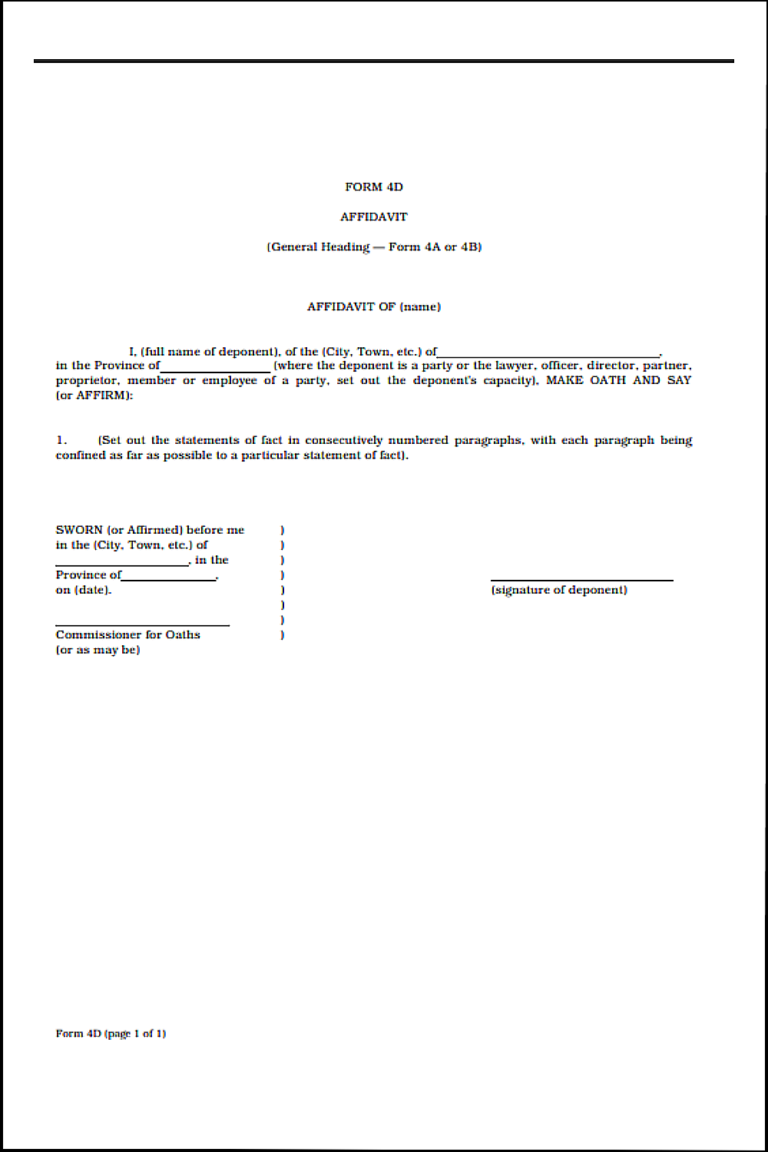
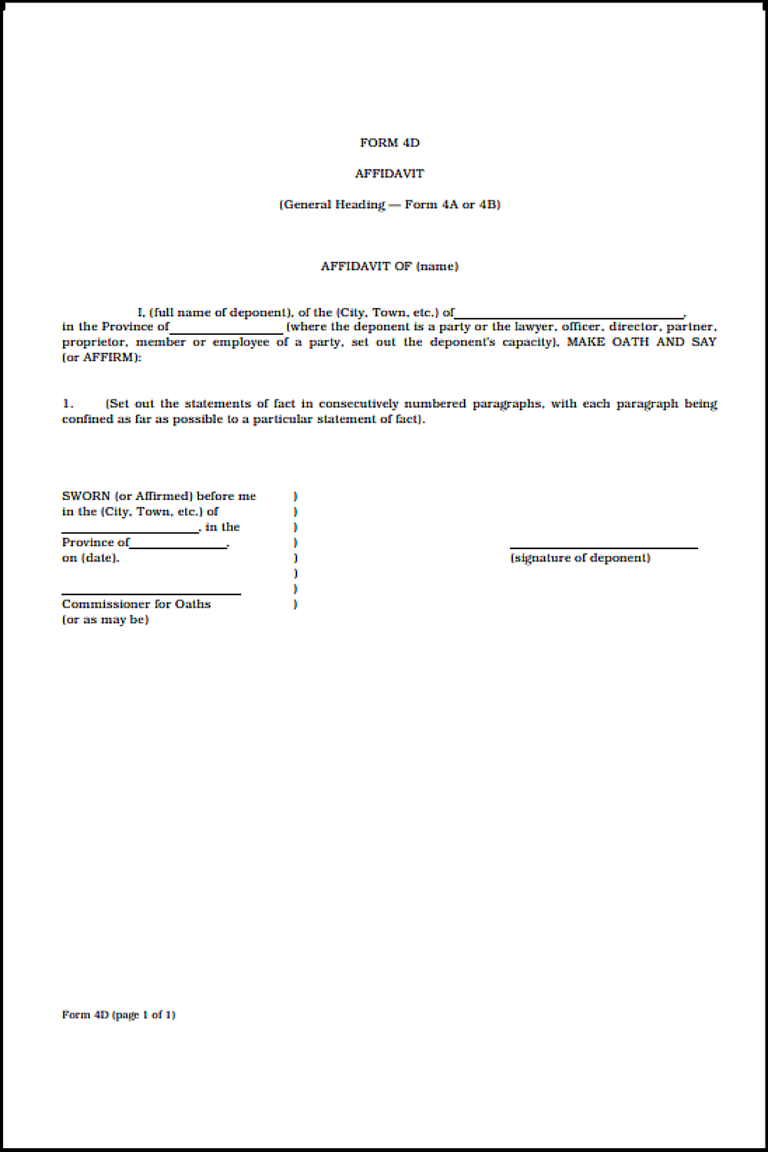
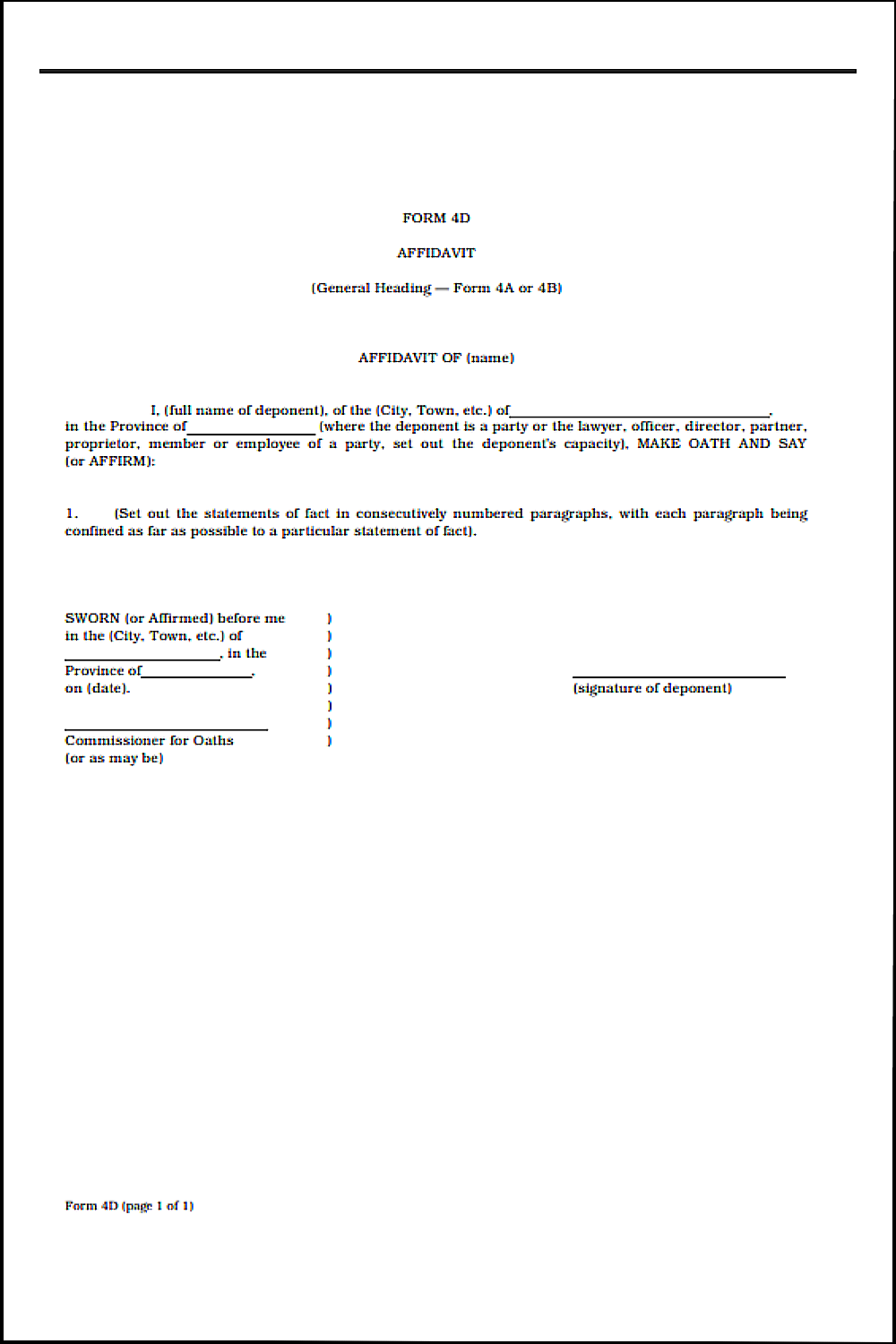
| Mandatory jurat wording | Jurat must follow Form 4D wording exactly. | Court of King’s Bench Rules, Form 4D |
| Exhibit certification | Every exhibit must include required certification language. | Court of King’s Bench Rules, Rule 4.07(3) |
| Commissioner identification | Every officer witnessing a sworn statement must explicitly state their official designation and commission expiration timeline directly below their signature. | The Manitoba Evidence Act, C.C.S.M. c. E150, s. 62(2) |
| Court filing | Affidavits intended for civil litigation or family motions must be submitted directly to the Court of King’s Bench registry. | Court of King’s Bench Rules, M.R. 553/88 |
| Land titles registration | Affidavits of Execution for property transfers must be registered with Teranet Manitoba. | Land Titles Office requirement |
| General private use | Private affidavits may be retained between parties depending on purpose. | Purpose-dependent; no specific statute provided |
| Font size requirement | Court affidavits filed in Manitoba require 14-point font. | Court of King’s Bench Rules, Rule 4.07 |
| Missing commissioner expiry | Omitting the commissioner’s signature title or active commission expiration date constitutes a technical defect that can render the entire document inadmissible. | The Manitoba Evidence Act, C.C.S.M. c. E150, s. 62(2) |
| Hearsay limits | “Information and belief” is inadmissible in trial affidavits where personal knowledge is required. | Court of King’s Bench Rules, Rule 39.01(4) |
| Exhibit tabs and binding | Exhibits must be tabbed and bound securely. | Court of King’s Bench Rules |
| Remote commissioning strictness | Manitoba uses a prescriptive statutory 8-step process rather than guideline-based remote practices. | Remote Commissioning Regulation, M.R. 78/2021 |
Manitoba’s affidavit rules are stricter than many people expect, and some of the biggest surprises are technical, not factual. The 14-point font rule alone can get a court affidavit rejected even when every statement is true, which catches plenty of people who copy generic online templates. The commissioner’s expiry date is another easy miss that can technically undermine the document, especially for probate, family motions, or business disputes where delays cost real money.
Remote commissioning sounds convenient, but Manitoba’s mandatory 8-step verification process means casual video signing is not enough. Even exhibit tabs and binding matter here. These details are exactly why handwritten statements or recycled forms often fail when filed in King’s Bench. Getting one small requirement wrong can mean rejected filings, postponed hearings, or expensive corrections. Download the free Manitoba Affidavit Template and start with the right format before paperwork problems multiply.
Real-Life Situations Where a Manitoba Affidavit Is Used
Court Proceedings
Affidavits are often critical for:
- Family motions
- Civil disputes
- Supporting evidence
- Procedural filings
Property and Land Transactions
Land-related affidavits may support:
- Mortgage execution
- Witness verification
- Land Titles requirements
Government and Administrative Requests
These often include:
- Residency proof
- Lost document declarations
- Identity verification
Private Legal Protection
Affidavits may help protect individuals in:
- Insurance disputes
- Name mismatch cases
- Personal record issues
Key Legal Elements of a Valid Manitoba Affidavit
The Deponent’s Legal Capacity
The person signing (called the deponent) must understand the oath or affirmation and the meaning of the document.
Personal Knowledge Requirement
In most court affidavit situations, statements should generally be based on firsthand knowledge, not rumor or unsupported claims.
Sworn or Affirmed Before Authorized Official
Common authorized officials include:
- Commissioner for Oaths
- Notary Public
- Lawyer
- Justice of the Peace
Mandatory Jurat Language
A Manitoba affidavit typically requires proper jurat wording showing:
- Sworn or affirmed status
- Date
- Place
- Commissioner signature
Court Formatting Standards
Court affidavits often require:
- First-person wording
- Numbered paragraphs
- Residence information
- Proper exhibit labeling
Remote Commissioning Rules
Remote swearing may be possible if identity verification and real-time communication standards are properly met.
How to Complete a Manitoba Affidavit Properly
Step 1: Choose the Correct Affidavit Type
Different legal needs require different affidavit structures.
Step 2: Draft Facts Clearly and Truthfully
Use short, direct factual statements.
Step 3: Avoid Hearsay or Unsupported Claims
Unsupported claims may weaken court use.
Step 4: Attend Swearing or Affirmation
Do not sign early unless instructed by the authorized official.
Step 5: Review for Alterations Before Signing
Post-signing changes can create legal problems.
Step 6: File or Use Based on Purpose
Court, land, federal, or private use may each follow different procedures.
Common Manitoba Affidavit Mistakes That Can Invalidate the Document
Many affidavit problems come from technical errors rather than false facts.
Missing Jurat
Without proper jurat wording, the affidavit may fail legally.
Signing Before Completing Content
Blank spaces create major risk.
False Statements or Perjury Risks
False statements may lead to criminal prosecution.
Unauthorized Witnessing
Not everyone can legally commission an affidavit.
Improper Exhibit Attachment
Exhibits should be properly certified.
Post-Signing Alterations
Unapproved changes can undermine admissibility.
Using the Wrong Document Type
A statutory declaration is not always interchangeable with a court affidavit.
Choosing the Right Manitoba Legal Declaration
If You Need Court Evidence → Use Court Affidavit
Best for legal proceedings.
If You Need Address Proof → Use Affidavit of Residence
Useful for schools or agencies.
If You Need Delivery Proof → Use Affidavit of Service
Supports procedural compliance.
If You Need Non-Court Formal Statement → Use Statutory Declaration
Often administrative.
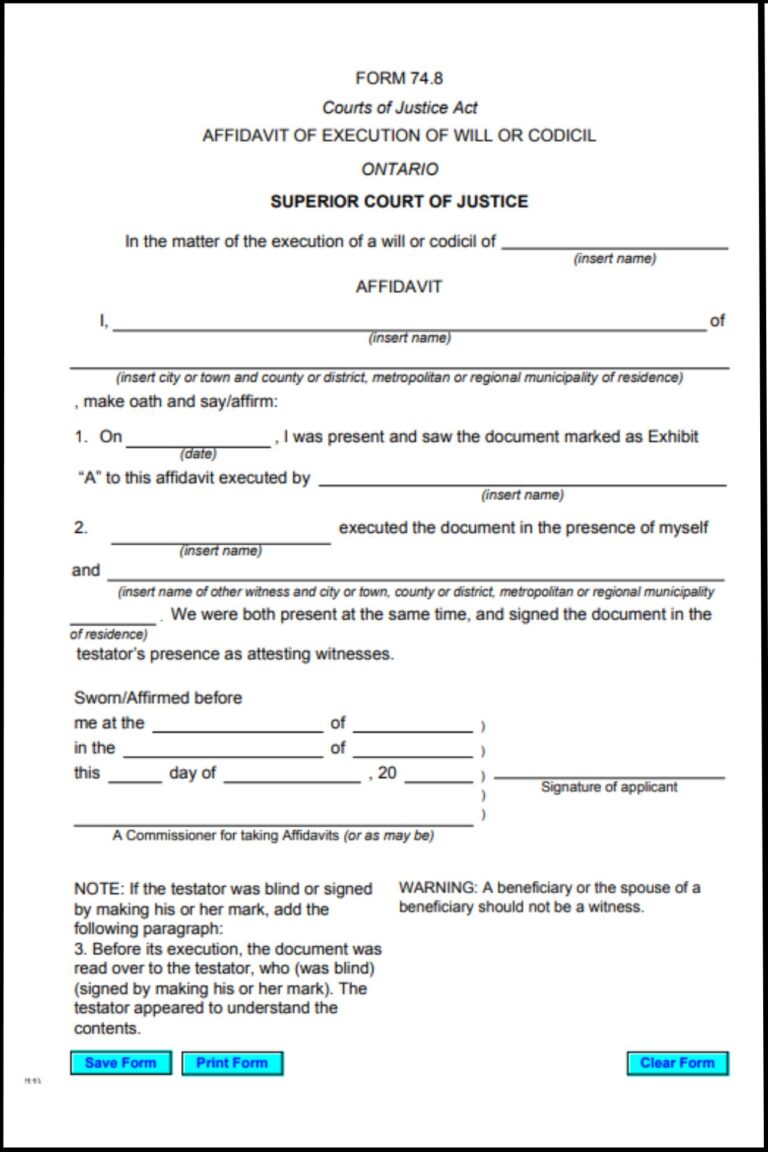
If You Need Land or Mortgage Support → Use Affidavit of Execution
Common in property matters.
Manitoba Affidavit Type Comparison
| Document Type | Primary Use |
Common Setting
|
| General Affidavit | Sworn factual statement | Personal/admin |
| Affidavit of Service | Delivery confirmation | Court |
| Affidavit of Residence | Address proof |
Government/school
|
| Affidavit of Execution | Signature witnessing | Real estate |
| Statutory Declaration | Formal declaration | Non-court |
Is notarization required for every Manitoba affidavit?
Not always. A Commissioner for Oaths may be sufficient depending on purpose.
Can a Commissioner for Oaths sign remotely?
In some situations, remote commissioning may be permitted if legal safeguards are met.
What happens if an affidavit contains false information?
False statements may result in perjury charges.
Can I write my own affidavit?
Yes, but it must still meet legal formatting and execution requirements.
Is a statutory declaration the same as an affidavit?
No. They are similar, but often used differently depending on context.
Are affidavits always filed in court?
No. Many are used privately, administratively, or for land matters.