Affidavit of Execution Ontario | Free PDF & Word Form

An  Affidavit Of Execution Ontario is typically prepared when an estate trustee needs to prove that a will was properly witnessed before the court will issue a Certificate of Appointment of Estate Trustee, and Ontario’s Rule 74 requires specific evidence of that execution rather than a generic affidavit. I’ve seen probate applications in the Ontario Superior Court of Justice pause because the affidavit wasn’t properly commissioned or failed to establish the witness’s evidence of due execution, even though the will itself appeared valid.

That’s one reason national templates can create problems—they often miss Ontario’s required Form 74D format and the province’s probate procedure. Whether you’re an estate trustee, one of the subscribing witnesses, or helping administer an estate, this page explains when an eAffidavit of Execution is needed, how it should be completed in Ontario, and the information commonly included before it’s filed with the court.

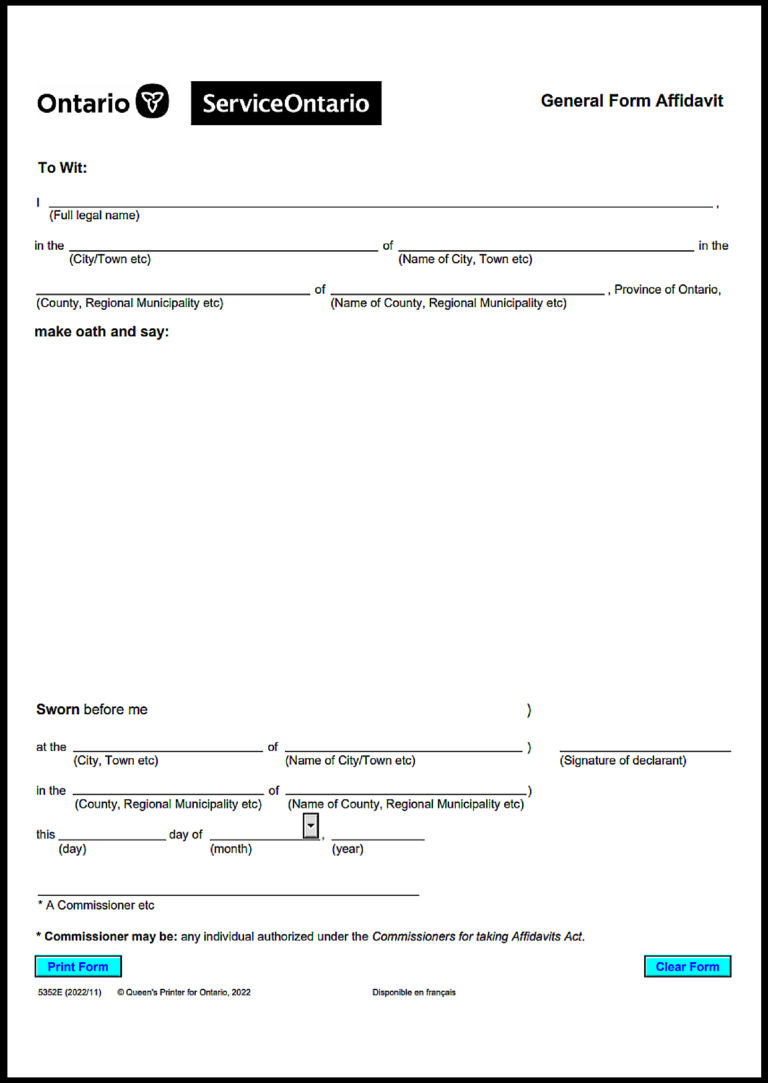
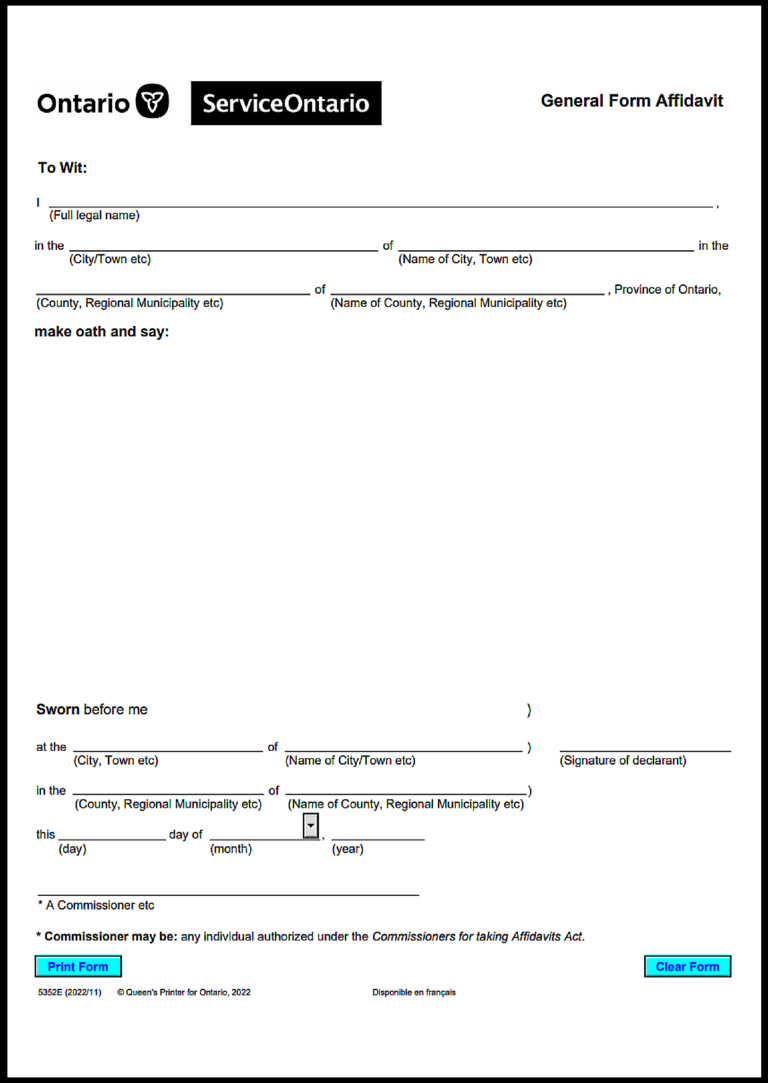
Ontario Affidavit Of Execution
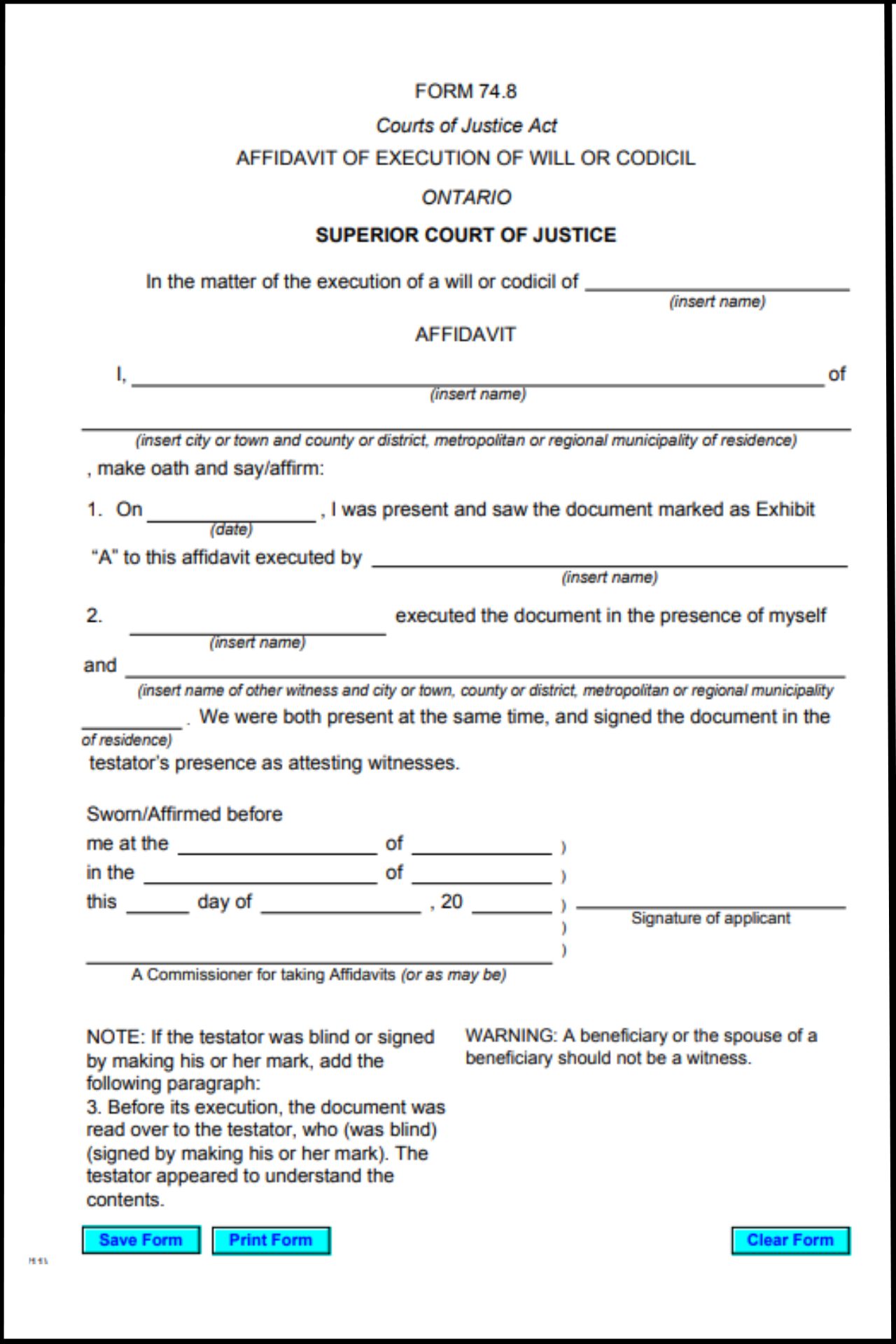
Affidavit Of Execution Ontario

Get PDF | WORD

When Is an Affidavit of Execution Legally Required in Ontario?

In Ontario, an Affidavit of Execution is used most often during the probate process to prove that a deceased person’s will was properly signed and witnessed. The affidavit forms part of the application filed with the Ontario Superior Court of Justice when an estate trustee applies for a Certificate of Appointment of Estate Trustee.

Under Rule 74.04(1)(d)(i)(A) of the Rules of Civil Procedure, one of the original attesting witnesses must provide sworn evidence using Form 74D confirming the will was executed correctly (whereas clause (c) governs the draft Certificate of Appointment). The applicable court rules are available through Ontario’s Rules of Civil Procedure. I’ve seen probate applications delayed because this affidavit was omitted or completed incorrectly, requiring additional evidence before the registrar would continue processing the file. While an Affidavit of Execution can also prove the signing of other legal documents, that use is uncommon, and most Ontario readers are looking for information relating to wills and probate.

Who Can Sign an Affidavit of Execution for a Will?

Only one of the original attesting witnesses who personally observed the signing of the will may complete the Affidavit of Execution in Ontario. Rule 74.04(1)(c) of the Rules of Civil Procedure requires the affidavit to come from an original subscribing witness rather than an executor, beneficiary, or family member who was not present when the will was signed. The witness must also understand the nature and consequences of taking an oath or affirmation, as required by section 18 of the Ontario Evidence Act. A common issue arises when one witness cannot be located years later, leaving the estate trustee to gather alternative evidence before probate can move forward. Simply knowing the deceased or acting as executor does not allow someone to replace the original witness.

Common Mistakes That Get an Affidavit of Execution Rejected at Probate

Many probate delays happen because small procedural requirements are overlooked rather than because the will itself is invalid. One of the most common mistakes is failing to identify and attach the original will as “Exhibit A” to the affidavit. Under Rule 4.06(3) of the Rules of Civil Procedure, the original document must be properly marked, and if that exhibit marking is missing, the probate application may be rejected until the deficiency is corrected.

Another frequent problem occurs when the witness signs the affidavit before appearing before a Commissioner for Taking Affidavits or when remote commissioning does not comply with O. Reg. 431/20. The oath must be administered in real time, whether in person or through an approved two-way video process. Completing the affidavit in advance or skipping the commissioning requirements can invalidate the sworn evidence.

Errors involving the original will can also create problems. Under section 4(1) of the Succession Law Reform Act, the witnesses must have been present together when the testator signed the will. If the affidavit reveals that the witnesses signed at different times, it may demonstrate that the will itself was not executed properly, creating significant complications during probate.

If the testator signed with a mark or was blind when the will was executed, Ontario also requires additional prescribed wording. Omitting that required clause can result in the court requesting further evidence before the estate application proceeds.

Myth-Busting: Can You Use a Generic or Out-of-Province Affidavit of Execution in Ontario?

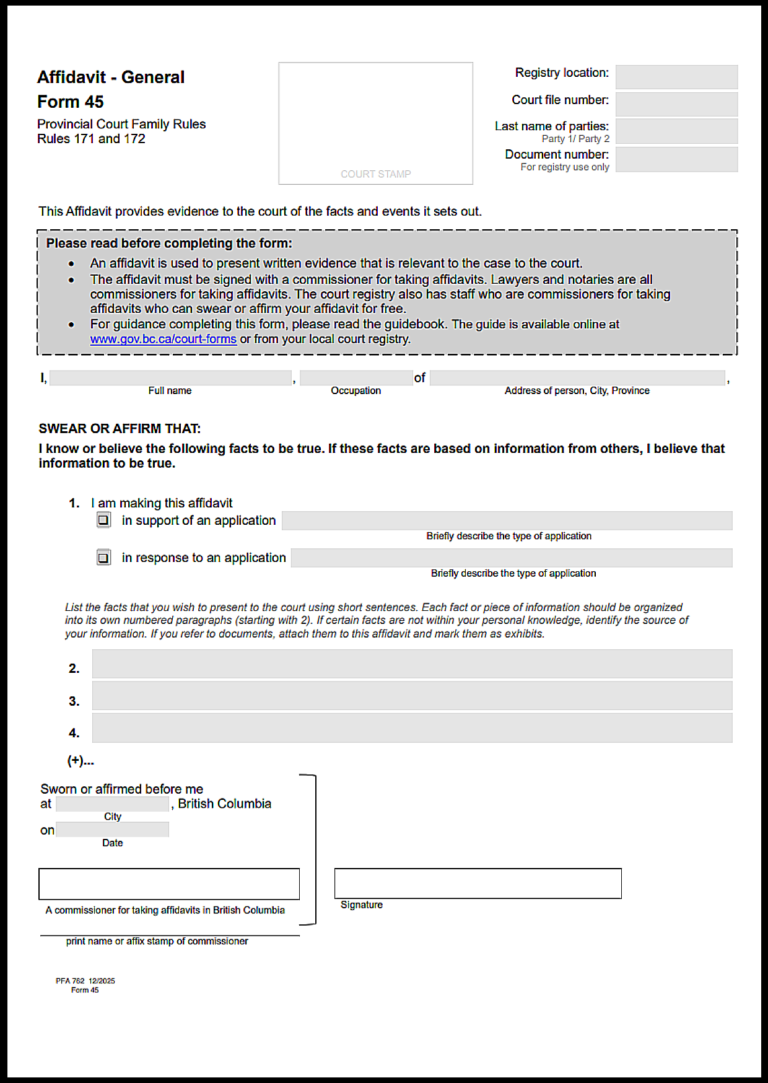
No. Ontario has its own prescribed court wording for an Affidavit of Execution relating to a will, and the document must comply with Form 74D under the Rules of Civil Procedure (renumbered from the legacy Form 74.8 during provincial probate court form consolidations). Generic Canadian forms, American templates, or versions prepared for another province frequently omit Ontario-specific language or procedural requirements.

This is especially true where remote commissioning or special execution circumstances are involved. A form designed for another jurisdiction may not include the wording required by O. Reg. 431/20, nor will it necessarily address Ontario’s exhibit-marking requirements or the prescribed warning relating to beneficiaries acting as witnesses.

Using a non-Ontario form may save a few minutes when preparing paperwork, but it often creates unnecessary delays once the probate application reaches the Ontario Superior Court of Justice. Choosing a document that follows Ontario’s prescribed requirements from the beginning is usually the simplest approach.

Frequently Asked Questions

What is an Affidavit of Execution used for?

In Ontario, it is primarily used to prove that a will or codicil was properly signed and witnessed before an application for probate is processed by the Ontario Superior Court of Justice.

Who has to sign an Affidavit of Execution for a Will?

The affidavit must be completed by one of the original attesting witnesses who personally witnessed the execution of the will.

Can an Affidavit of Execution be signed virtually in Ontario?

Yes. Remote commissioning is permanently permitted under O. Reg. 431/20, provided the affidavit is commissioned through a compliant two-way audio-visual process and all required information is included.

What happens if a beneficiary witnesses the Will?

Ontario’s prescribed form contains a warning stating that a beneficiary or the spouse of a beneficiary should not act as a witness. Depending on the circumstances, this can create legal issues affecting the estate.

Do I need a lawyer to complete an Affidavit of Execution?

No. However, the affidavit must be sworn before a person legally authorized to commission affidavits, such as a Commissioner for Taking Affidavits, lawyer, paralegal, or notary where permitted by Ontario law.

Is an Affidavit of Execution the same as an Affidavit of Subscribing Witness?

No. The two documents are closely related but are used in different contexts. Although both involve evidence from a witness, they are not interchangeable.

Similar Posts

Leave a Reply

Your email address will not be published. Required fields are marked *